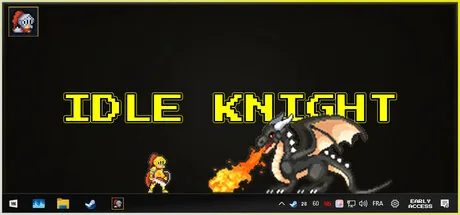
Game review
Idle Knight
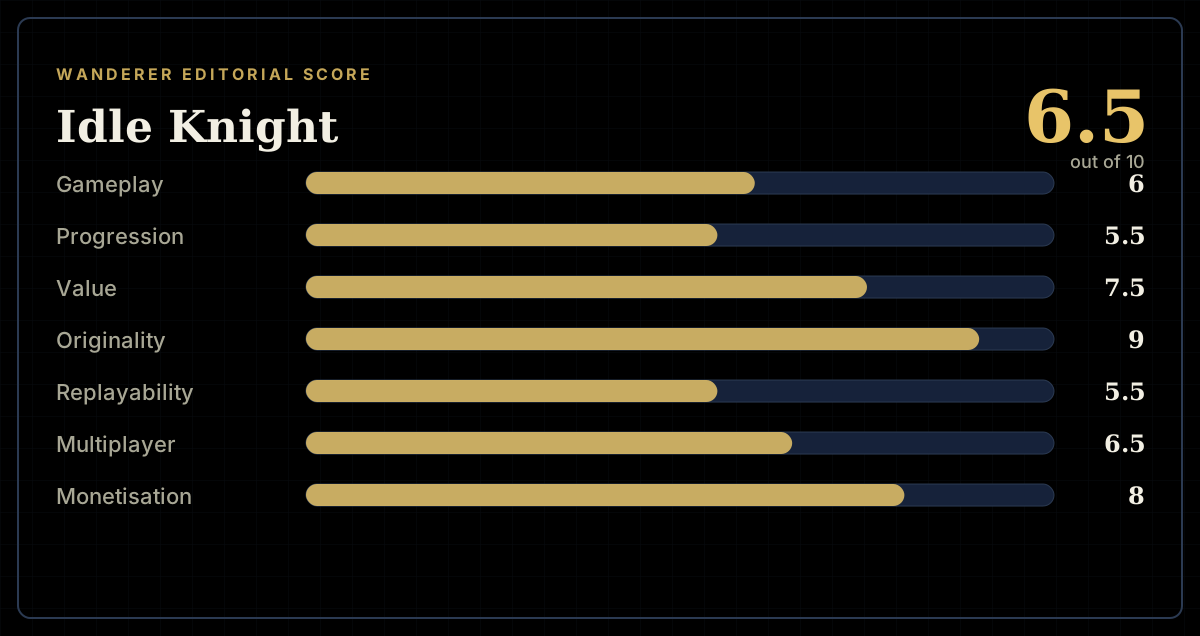
6.5 / 10
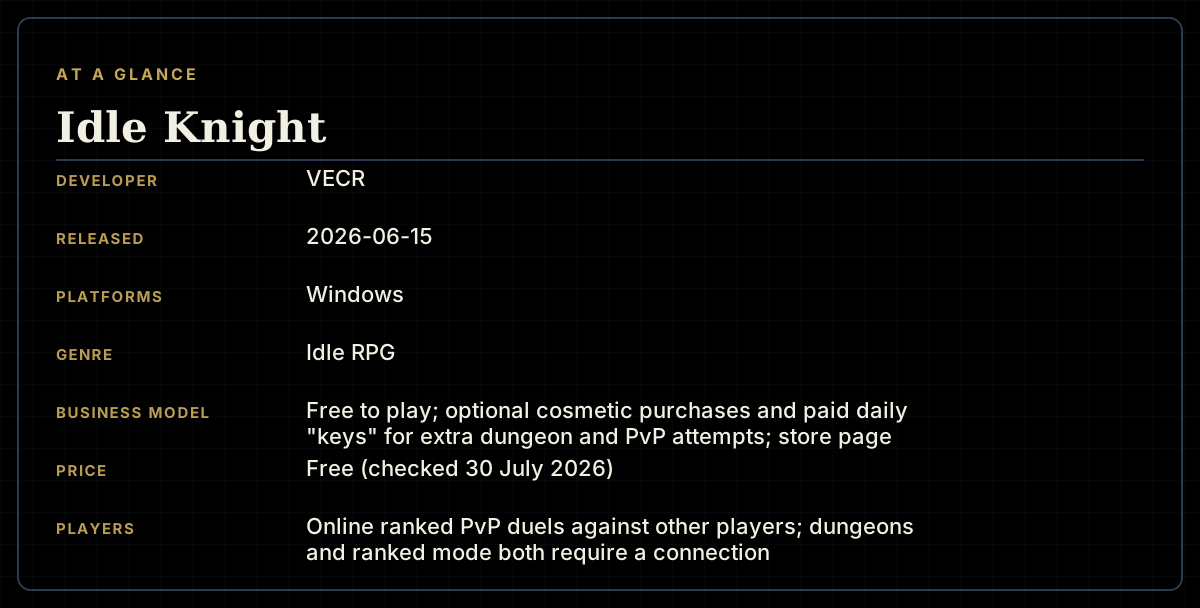
- Developer
- VECR
- Publisher
- VECR
- Released
- 15 June 2026
- Platforms
- Windows
- Genre
- Idle RPG
- Monetisation
- Free to play; optional cosmetic purchases and paid daily "keys" for extra dungeon and PvP attempts; store page states no pay-to-win system and all gameplay-relevant progression is earnable for free
- Players
- Online ranked PvP duels against other players; dungeons and ranked mode both require a connection
The short version
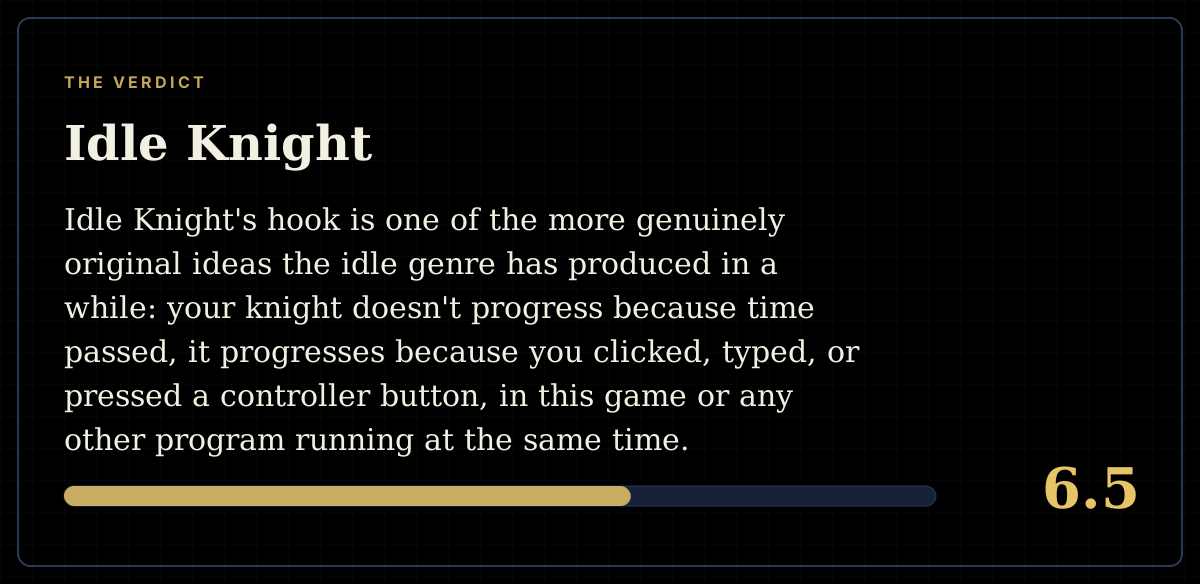
Idle Knight's hook is one of the more genuinely original ideas the idle genre has produced in a while: your knight doesn't progress because time passed, it progresses because you clicked, typed, or pressed a controller button, in this game or any other program running at the same time. That's a clever answer to the usual idle-game complaint that "leaving it open" isn't really playing anything.
Six weeks into Early Access, though, the systems built around that hook are thin. Dungeon runs and ranked duels are both rationed to a handful of daily attempts, which turns most sessions into watching a chest timer rather than making decisions, and the anti-cheat built to keep ranked mode fair has a habit of flagging players for using macros in completely unrelated software.
Biggest strengths
- Converting real mouse clicks, keystrokes and controller inputs into XP — regardless of which program has focus — is a genuinely novel spin on "idle"
- No pay-to-win: cosmetics and extra daily keys are the only purchases, and dungeons and ranked mode both stay clearable through free progression
- The Phoenix Feather item lets you reset your HP/DMG/AGI build while keeping your level, so an early mis-allocated build isn't a dead end
Biggest weaknesses
- Dungeon and ranked attempts are both capped by a small daily allowance of "keys," so most of a session is spent waiting rather than playing
- The anti-cheat's macro and automated-input detection can flag players for running legitimate auto-clickers or macros in other, unrelated games while Idle Knight sits in the background
- Early levels ask for thousands of individual inputs with no meaningful curve yet, which reads as a wall rather than a ramp
Who it's for: Players who like the idea of passive progression but want it tied to something more interesting than a countdown clock — and who are patient enough to stick with a genuinely new Early Access build while its systems fill in.
Our recommendation: Worth installing for free and letting it run in the background for a week before deciding. The core loop costs nothing and asks nothing of your attention, but don't expect a full session's worth of decisions yet — most of what exists today is demonstrating the idea rather than building a deep game around it.
6.5 / 10
Every idle game makes the same promise: progress happens whether you're watching or not. Idle Knight makes a subtly different one. It doesn't care whether time passed — it cares whether you did anything. Leave it running while you write an email, edit a spreadsheet, or grind through a completely different game, and your knight is earning XP off the same clicks and keystrokes you were already making. Walk away from the keyboard entirely and, unlike almost everything else in the genre, nothing happens at all.
That's a genuinely different answer to a question the idle genre has been asking for over a decade, and it's the most interesting thing about a game that, six weeks into Early Access, is still mostly a proof of that one idea.
How the loop actually works
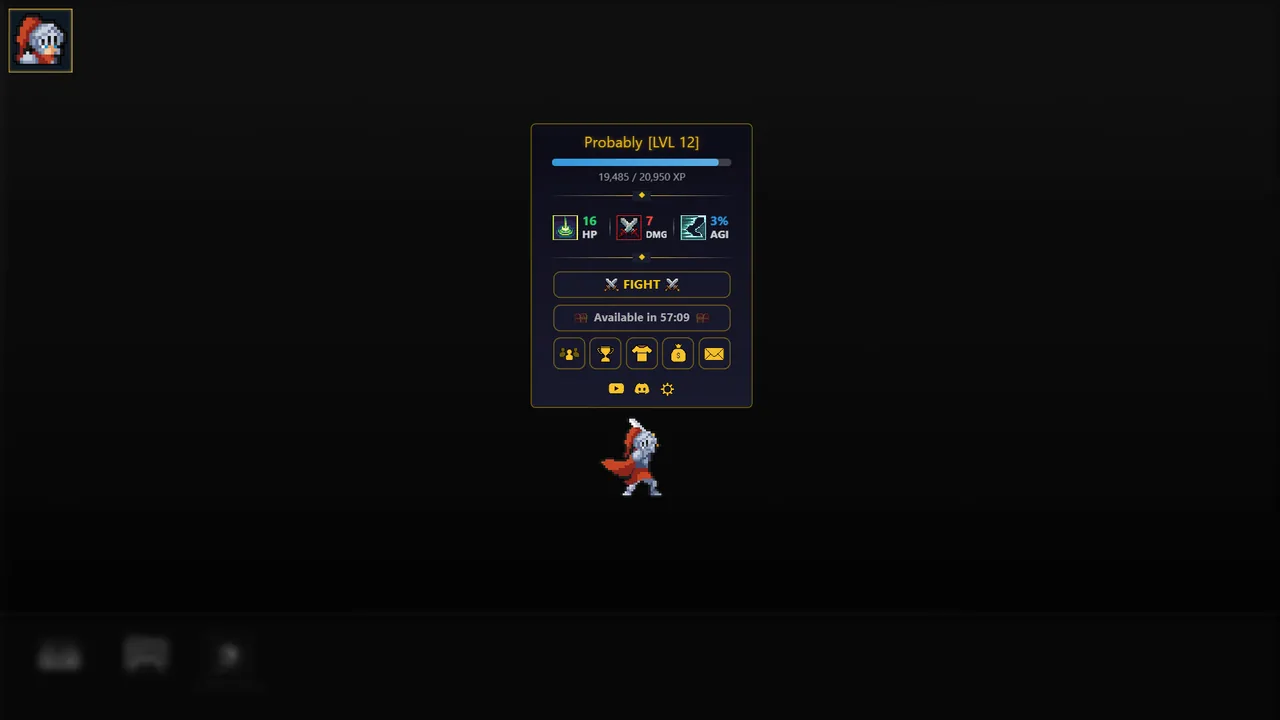
Every mouse click, keystroke or controller input generates a small amount of XP, tracked by a custom engine VECR built specifically for this game's real-time input monitoring. Levelling up hands out points across three stats — HP, DMG and AGI — and there's no single correct distribution. A glass-cannon DMG build clears content differently than a tanky HP build or an AGI build leaning on evasion and action speed, and a Phoenix Feather item lets you reset your stat allocation without losing your level, so testing a different build doesn't mean starting over.
The catch, and it's the one the store page is upfront about, is that this ramps down hard. Early levels move quickly because almost anything you'd normally be doing at your PC generates input. Player accounts of the early game describe needing a few thousand XP for the first few levels, achievable in minutes just by using the computer normally. Push further and the curve steepens fast enough that several early reviewers describe hitting a wall rather than a slope — the point where the game stops being something that happens to you and starts being something you have to actively plan around.
Dungeons and the key economy
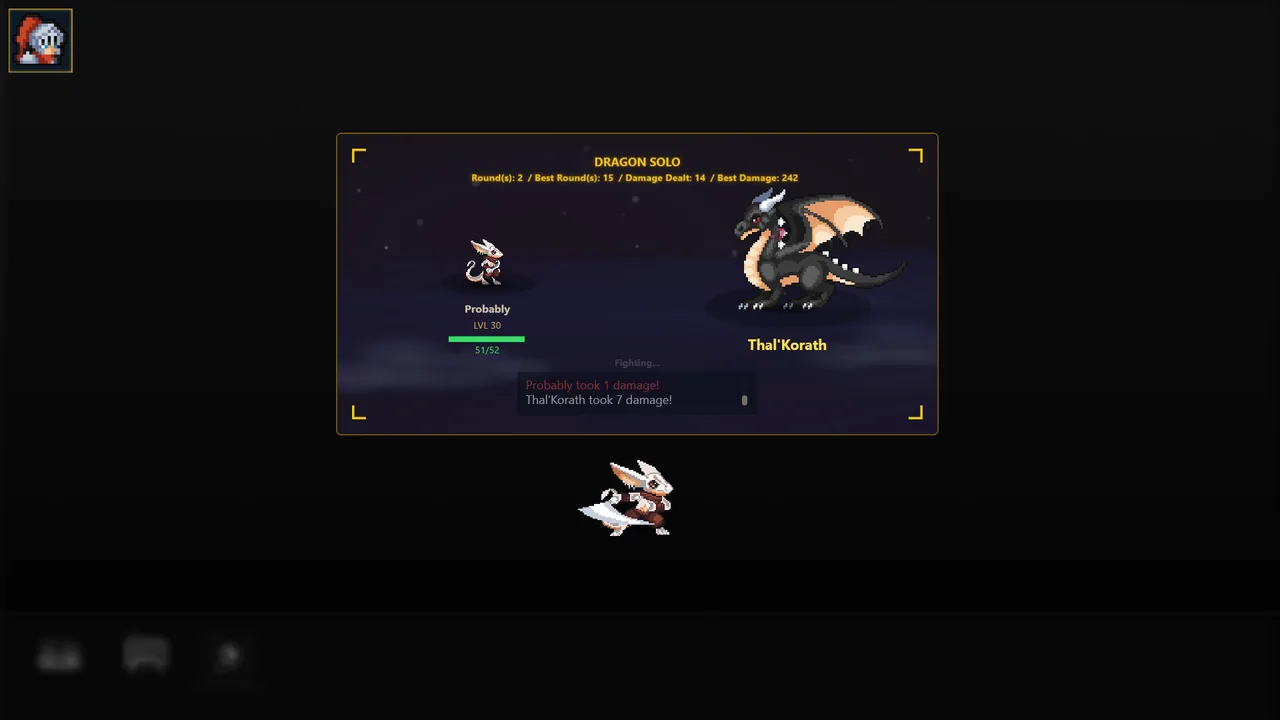
Once you're past the opening levels, most of the actual game happens in two systems: dungeons and ranked PvP. Dungeons are floor-based runs with a recommended level and a difficulty rating — climb through enemies, beat the boss, collect rewards scaled to how well you did. It's a sensible structure, and a well-built character clears floors a badly-built one can't.
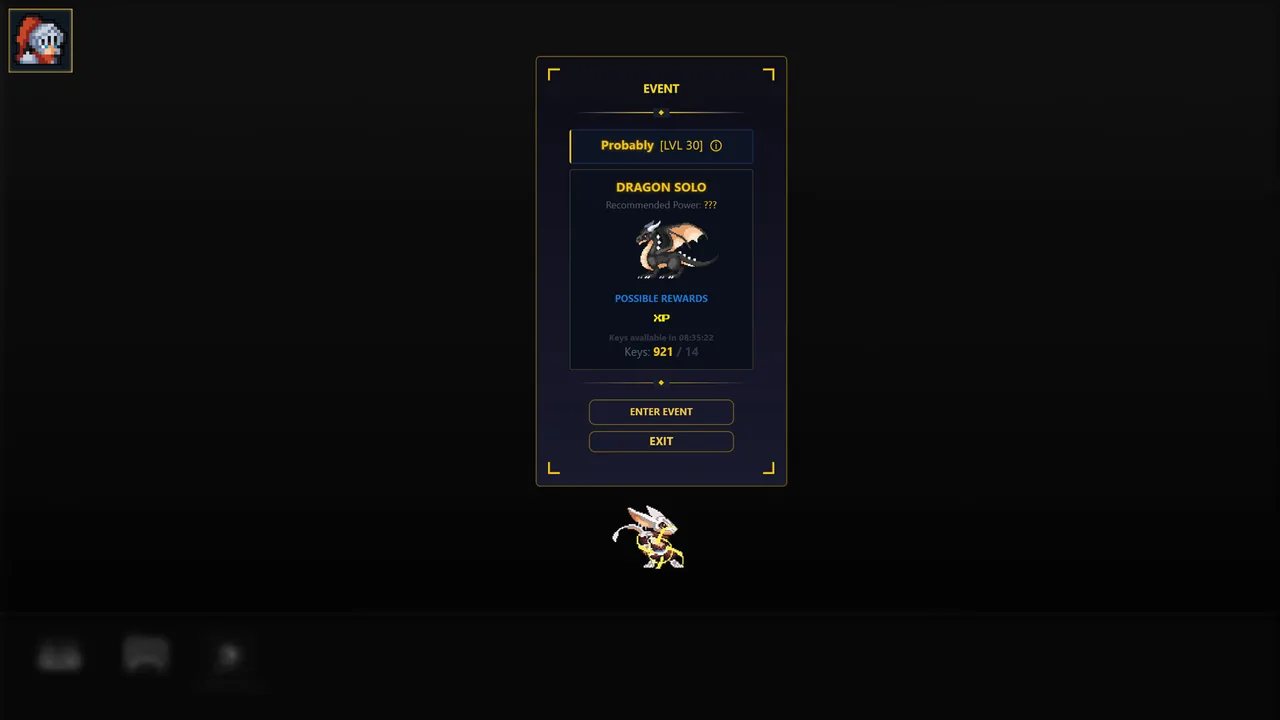
The problem is access. Both dungeon runs and ranked attempts are gated behind a small daily allowance of "keys" — player accounts put dungeon keys at around two a day and PvP attempts at around five — and once they're spent, that's it until the next reset. For a game explicitly designed to run in the background, that's a defensible way to prevent burnout. For a game you sit down to actually play for ten minutes, it produces exactly the complaint that shows up repeatedly in user reviews: open the game, spend your handful of attempts in under a minute, and then there's an hourly chest to wait for and nothing else to do. Several one-star reviews aren't describing bugs so much as describing that gap directly — "nothing to do other than wait for a chest" is a fair summary of what an active session currently looks like once the keys run out.
Ranked PvP and the rank ladder
The competitive layer runs through a six-tier ladder — Farmer, Stable Boy, Infantryman, Knight, Royal Knight, Warlord — with wins pushing you up and losses pushing you back down. It's a clean, legible structure, and because outcomes depend on build quality rather than raw playtime, a well-optimised low-level character can plausibly outperform a higher-level one with a sloppier stat spread. That's a good design instinct for a game whose whole premise is that not everyone gets equal input time.
What undercuts it is the same daily cap that limits dungeons. Five ranked attempts a day is enough to test a build's direction but not enough to genuinely grind rank, which pushes the mode toward something you check in on rather than something you sit with.
The anti-cheat problem
Because XP comes from detected input rather than elapsed time, Idle Knight ships with an anti-cheat system specifically watching for macros, automated inputs and other unnatural input patterns — a sensible precaution for a game with a competitive ranked mode attached to a click-counting core loop.
The friction shows up in exactly the place you'd expect: players who legitimately use macros or auto-clickers in other software. Several recent reviews describe getting flagged or warned while running Idle Knight passively in the background alongside an unrelated game that itself uses repeat-click macros or looter automation — not because they were cheating in Idle Knight, but because the detection can't always tell the difference between "cheating in this game" and "using ordinary tools in a different one." For a design built around running invisibly behind whatever else you're doing, that's a real tension rather than an edge case: the more successfully the game blends into the rest of your PC use, the more likely it is to notice something it doesn't like happening in a completely different window. It's not a dealbreaker for most players, but anyone who already relies on macros elsewhere should know it's a live risk before leaving this running unattended.
Monetisation and Early Access reality
The store page is explicit that Idle Knight is free-to-play with no pay-to-win system, and player reviews back that up more consistently than the single "P2W" complaint in the sample would suggest — what's actually for sale is cosmetics, which the store states have no gameplay effect, and additional daily keys for players who want more dungeon or PvP attempts than the free allowance provides. Buying keys shortens the wait rather than unlocking something otherwise unreachable, and that's a fair trade for a free game rather than a predatory one.
What's harder to grade fairly is how little game currently sits around that fair monetisation. Idle Knight has been in Early Access for about six weeks at the time of writing, and it plays like it: an XP-from-input hook, a handful of dungeon floors, a rank ladder, hourly chests, and not much else yet. That's not automatically a problem for Early Access — plenty of good idle games started this bare — but it does mean the 70% positive Steam score (43 of 61 reviews, as close to even as a small sample gets) reads less like a settled verdict and more like an audience betting on where this goes next. The recurring praise for how visibly the developer engages on Discord and how quickly patches follow feedback is the strongest signal that the bet is a reasonable one to make.
Verdict
Idle Knight deserves credit for asking a genuinely different question than the rest of its genre. Tying progression to real input rather than real time is a clean, clever idea, the build system built around HP, DMG and AGI gives that progression some shape, and a free-to-play model with no pay-to-win and a responsive developer behind it are all things this genre gets wrong far more often than it gets right.
It settles at 6.5 because the systems wrapped around that idea are still doing very little six weeks in. Daily key limits turn active sessions into a five-minute errand followed by a wait, the anti-cheat's blind spot around macros used in other software is a real and recurring complaint rather than a rare one, and Windows-only distribution keeps it away from a chunk of the audience who'd get the most out of a true background app. None of that erases what the core hook gets right — it just means there isn't much game built around it yet.
Install it for free, let it tick along while you do something else, and check back on it in a few months once dungeons, PvP and the key economy have had time to grow past this early shape. Right now it's a genuinely interesting proof of concept more than a game that rewards sitting down with it.
If what you actually want is a persistent RPG world that keeps moving while you're away and gives you a full session's worth of decisions when you come back to it, Wanderer is built around exactly that trade.
Pros and cons
Pros
- Converting real mouse clicks, keystrokes and controller inputs into XP — regardless of which program has focus — is a genuinely novel spin on "idle"
- No pay-to-win: cosmetics and extra daily keys are the only purchases, and dungeons and ranked mode both stay clearable through free progression
- The Phoenix Feather item lets you reset your HP/DMG/AGI build while keeping your level, so an early mis-allocated build isn't a dead end
- Player reviews consistently single out the developer's Discord presence and how quickly feedback turns into patches
- Runs quietly in the background of whatever you're actually doing, without demanding a window of its own
Cons
- Dungeon and ranked attempts are both capped by a small daily allowance of "keys," so most of a session is spent waiting rather than playing
- The anti-cheat's macro and automated-input detection can flag players for running legitimate auto-clickers or macros in other, unrelated games while Idle Knight sits in the background
- Early levels ask for thousands of individual inputs with no meaningful curve yet, which reads as a wall rather than a ramp
- Windows-only, with no Mac, Linux or Steam Deck support, cuts out a chunk of the background-app audience this design is built for
- Six weeks into Early Access, the loop still shows its skeleton: hourly chests, a few dungeon floors and a rank ladder, with comparatively little else to make a session distinct from the one before it
Screenshots
-
Idle KnightImage: VECR via Steam -
Idle KnightImage: VECR via Steam -
Idle KnightImage: VECR via Steam -
How the review scores each part of the gameWanderer Editorial -
The game at a glanceWanderer Editorial -
The short versionWanderer Editorial