
Game review
Idle Keep Review
5 / 10
- Developer
- PixelBitGames
- Publisher
- PixelBitGames
- Released
- 24 June 2026
- Platforms
- ["Windows"]
- Genre
- RPG
An "Excel RPG Idler" With a Wyvern Problem
Idle Keep sets out its premise fast: wyverns have raided your keep and stolen the Kingdom's Light, draining its magic, and it's up to the player and a rotating cast of townsfolk to rebuild, gather resources, and eventually confront the Wyvern Queen. Developer PixelBitGames slots the game into the Melvor Idle school of "skilling" idlers — one reviewer describes it precisely as an "Excel RPG Idler in the same vein as Melvor and Astaryn," a menu-driven progression game where the point isn't reflexes but steadily unlocking more efficient ways to gather, craft, and fight. Eight disciplines — Woodcutting, Mining, Blacksmithing, Fishing, Cooking, Agriculture, Crafting, and Alchemy — form the game's skill backbone, each gated behind experience and unlocking new resources and recipes as it levels.
It's a small release: at the time of writing it has just 10 total Steam reviews (7 positive, a Mostly Positive score), which means everything below should be read as a snapshot of a handful of detailed, thoughtful accounts rather than a broad consensus. That said, the reviews that do exist are unusually substantive, and several reviewers converge on the same strengths and the same specific frustrations.
A Genre Entry With a Few Genuine Touches
Where Idle Keep tries to distinguish itself from the wall-of-spreadsheets look common to this style of game is visual: job-specific background artwork changes as the player's townsfolk switch tasks, which one reviewer credits with making "the game feel more lively than most spreadsheet-style idlers." A large passive skill tree sits across all disciplines, pets can be collected along the way (one reviewer wishes they "impacted the game a little more"), and the tone stays lightly comic — several reviewers single out being able to "dig up chickens" while farming as a specific, memorable bit of texture in an otherwise fairly dry genre.
Structurally, reviewers describe the loop as a good fit for the genre's classic promise — "easy to play in the background while working," in one reviewer's words — but with real limits on how far "idle" actually extends. Multiple reviewers note there's no way to queue up an instruction like "build until you run out of resources, then stop," and no parallel task handling: a townsperson can only farm, fight, or craft at any one time, with no minions or hirelings to delegate subtasks to the way more developed idlers in this space allow. Combat compounds this — there's no automatic healing, so a player has to be present and paying attention during fights rather than letting them resolve unattended, which one detailed pros-and-cons review flags as the single biggest drag on the "idle" half of the experience: "making combat more tedious than it needs to be."
A Slow Start, and a Sharper Critique From Genre Veterans
The most pointed criticism in the sample doesn't come from someone unfamiliar with the genre — it comes from a reviewer with over 2,500 hours in Melvor Idle, who still can't bring themselves to recommend Idle Keep: "I don't want to not recommend this but it's just not a game... It feels like a screensaver." That's a harsher framing than the Mostly Positive score alone suggests, and it lines up with a separate reviewer's account of a slow, uneventful opening stretch: Idle Keep "lacks that exciting first 15–30 minutes where you're constantly unlocking new things" that better examples of the genre lean on to hook new players early. A third reviewer adds that the game's three combat stats don't have their own dedicated skill trees, leaving combat progression feeling "a bit shallow" next to the depth on offer in the gathering and crafting disciplines.
There's also a real concern about ongoing support: one reviewer who initially enjoyed the game — "I already know the game is gonna have me wanting more after I beat it" — later edited their review to warn that "the dev seems to be MIA," noting a few bugs and no sign of further updates, while still confirming the game is playable start to finish as it stands.
One Detailed Technical Complaint Worth Flagging
A single, unusually specific negative review reports a cluster of technical problems: the game will only run fullscreen at a 1920x1080 resolution, it "frequently messes up my audio so that any other app playing sound will just put out static," loot from combat or crafting sometimes fails to appear in the inventory, and Windows Task Manager reportedly flags the game as "very high" power usage despite its simple 2D presentation. The same reviewer speculates the design "feels to me like it was the result of a prompt to generative AI" — a serious accusation, but one made by a single reviewer rather than corroborated elsewhere in this sample, so it's presented here as that reviewer's stated impression rather than a confirmed fact. The audio and resolution-lock complaints, though, are concrete and specific enough to be worth a clear warning to prospective buyers even from a single account, especially given how few reviews exist to cross-check them against.
Verdict
Idle Keep has real ideas — job-specific art that breaks up the genre's usual visual monotony, a broad set of gathering and crafting disciplines, and a sense of humour that occasionally pokes through the spreadsheet trappings. But it's held back by structural choices that undercut the "idle" premise itself, most notably a lack of parallel tasking and no auto-healing in combat, plus a small but detailed cluster of technical complaints — audio corruption, a forced fullscreen resolution, unclear support status — from a review base too small to say how widespread any of it really is. Genre veterans in the sample are unimpressed, newer players are more forgiving, and at NZ$6.72 with no in-game purchases, it's a low-stakes gamble either way — just one to make with clear eyes about how thin the evidence base currently is.
Screenshots
-
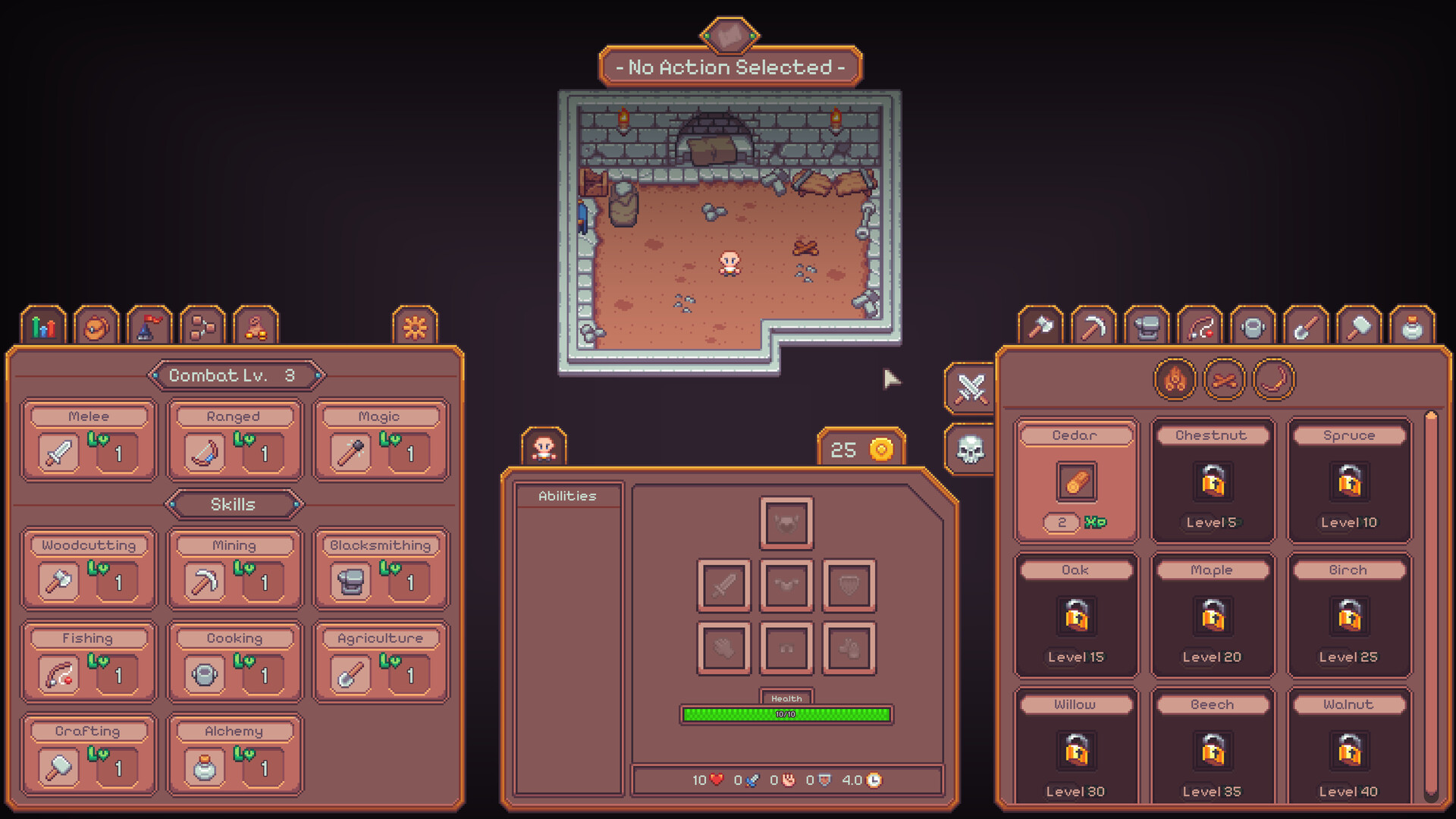
The early game is sparse — every skill starts at Lv.1 and there's no action queued yet.Image: PixelBitGames via Steam -
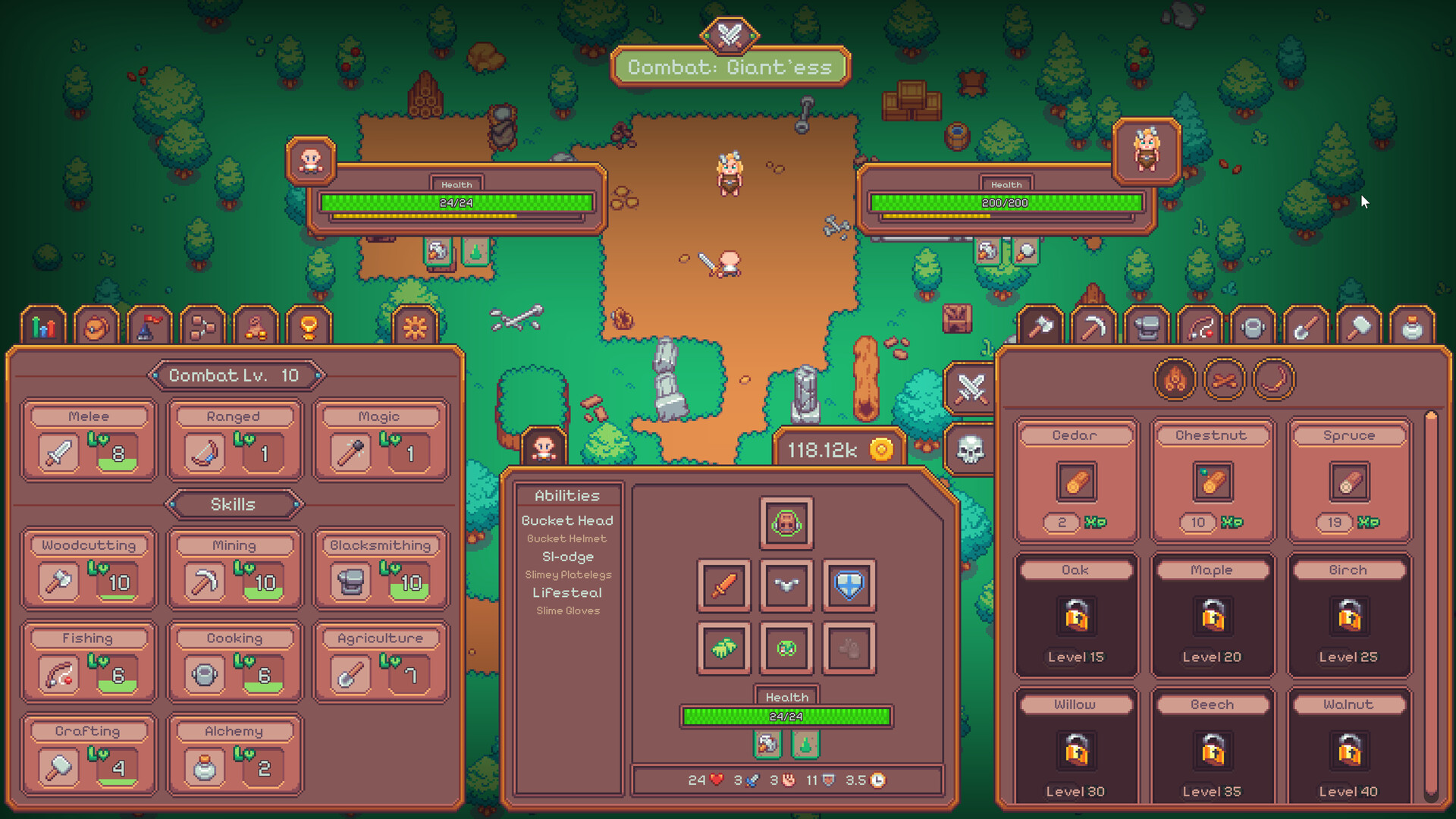
Later-game combat and the wood-gathering tree, with several skills levelled into double digits.Image: PixelBitGames via Steam -
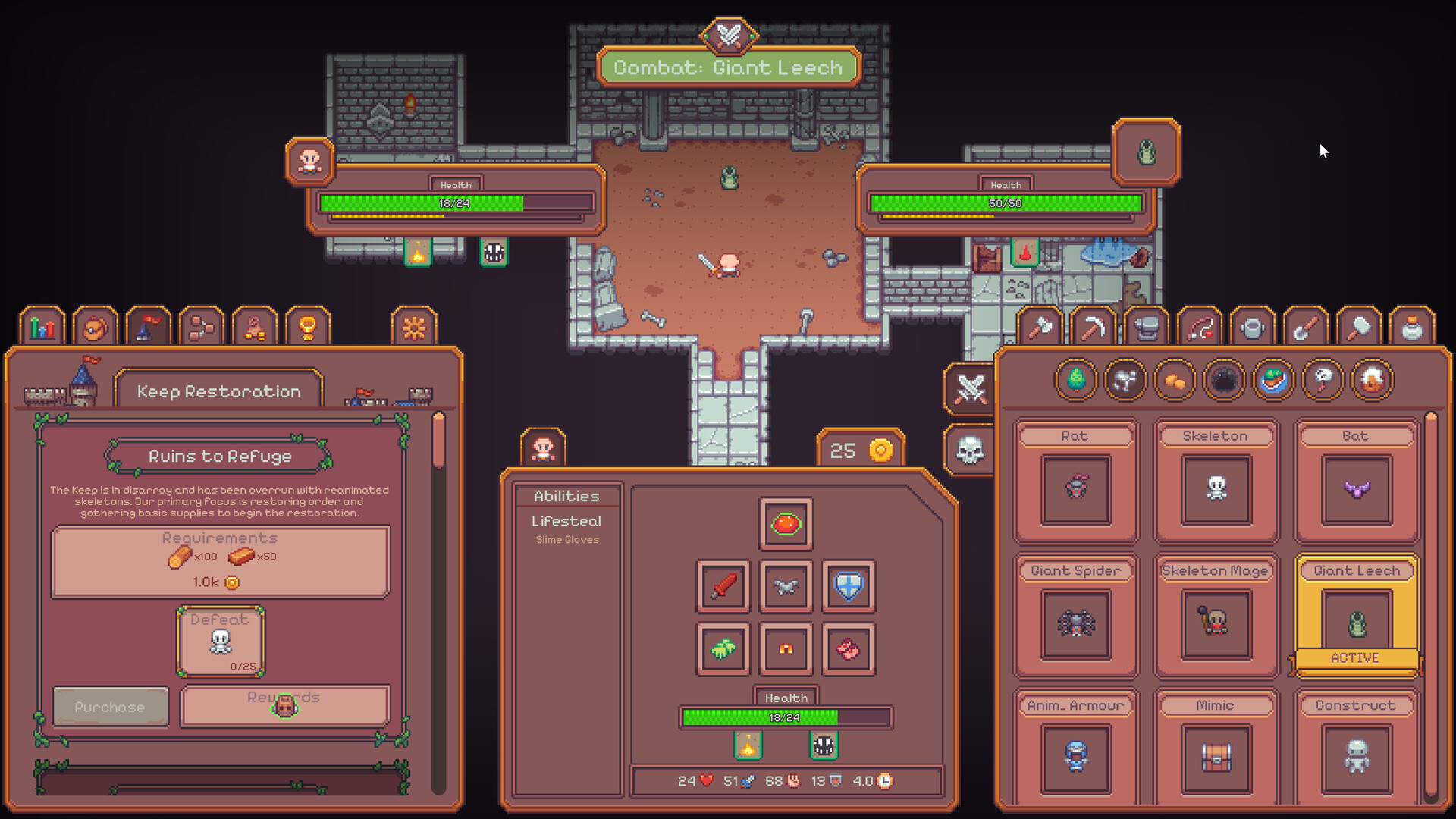
The Keep Restoration questline and bestiary, mid-fight against a Giant Leech.Image: PixelBitGames via Steam