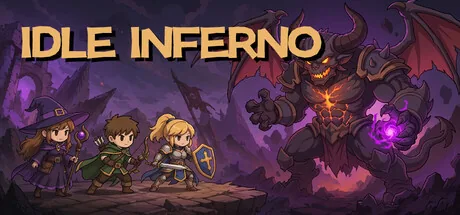
Game review
Idle Inferno
6.5 / 10
- Developer
- TUNA TUN
- Publisher
- TUNA TUN
- Released
- 4 August 2026
- Platforms
- Windows
- Genre
- Idle RPG
- Monetisation
- One-time purchase — no DLC listed on Steam, no "In-App Purchases" category among the store page's own listed categories, and no real-money storefront visible inside the game beyond a gold-only trading tab
- Players
- None in the play sense — combat is fully automated and single-player, but an in-game tab labelled "Steam Market" lets players list and buy items for in-game gold, matching the store page's own "Asynchronous Multiplayer" tag
The short version
Idle Inferno's pitch is a real one: dock a genuinely deep action-RPG loot system — talent trees gated by character level, gear with randomised affixes, socketable gems that need individually identifying, a forge for enhancement, and two separate endgame tracks — into a small panel that sits over the corner of your desktop rather than taking it over, so it can run while you do something else. The systems underneath are more substantial than most idle games attempt, and the official screenshots reveal a genuine answer to new players' loudest worry: the 50-stage story path is not the ceiling, because an Endless Ascension ladder with its own escalating debuffs picks up where it stops. What the game doesn't yet have is polish to match that ambition. The combat window is fixed to one corner of the screen with no way to move it, gem identification is a one-by-one drag chore, the character sheet doesn't show what its own gems and enhancements are adding, and early reviewers report a freeze bug triggered by switching skills at the moment of death. Three days old with nine reviews on record, all of them in Chinese, this is a genuinely ambitious idle ARPG that needs a stability and interface pass before its scope pays off.
Biggest strengths
- A genuinely deep buildcrafting system for the genre — a level-gated talent tree, gear with randomised affixes, socketable gems, and a forge for enhancement — none of it padding around a single idle number
- Two separate endgame tracks: a 50-stage story dungeon path with speed-clear star rewards, and an Endless Ascension ladder above it with its own escalating per-tier debuffs, which directly answers new players' "does it end at level 50?" worry
- The panel docks into a corner of the screen over your live desktop rather than taking it over, matching the store page's promise of a game you can leave running while you work
Biggest weaknesses
- The combat window is fixed to the top-right corner of the screen with no way to reposition it, which one early reviewer already asked for directly
- Gem identification requires dragging each gem individually rather than in bulk, and the character stat sheet doesn't reflect all of the bonuses those gems and enhancements are actually adding
- Early reviewers report a freeze bug when switching skills at the moment of death (grey, unresponsive screen, no way back to town), a crash tied to selling identified rune stones, and lag that worsens at higher levels
Who it's for: Idle and ARPG-loot players who want a real buildcrafting system — skill trees, affix hunting, gem sockets, gear enhancement — rather than a single number going up, and who don't mind running a small, fixed window in the corner of a screen they're using for something else.
Our recommendation: At NZ$7.86 for a system this dense, the price is fair and the one-time-purchase model with no visible in-app purchases is about as clean as this genre gets. The catch is that it shipped three days ago to nine reviews, all in Simplified Chinese, and those reviewers are already naming a crash on selling identified runes, a freeze on switching skills at the moment of death, and lag that sets in at higher levels. If a locked-position window and some early rough edges don't bother you, the design underneath is worth the asking price. If you want a finished, stable idle game today, it may be worth waiting for a patch or two.
6.5 / 10
Most idle games ask for one kind of attention: glance at the number, tap the upgrade, look away again. Idle Inferno asks for a different kind entirely. Behind its small, fixed panel sits a genuine action-RPG's worth of systems — a level-gated talent tree, gear that rolls randomised affixes, gems that need socketing and identifying, a forge for enhancing what you've already got, and two distinct endgame tracks stacked on top of each other. It is, by design, meant to run in the corner of your screen while you do something else entirely, which is either the smartest positioning decision in this year's idle-game crop or its biggest liability, depending on how much you mind a window you can't move. Three days after launch, with nine reviews on record and every one of them written in Simplified Chinese, it's too early to say which — but the shape of the game underneath is already clear.
A panel, not a screen
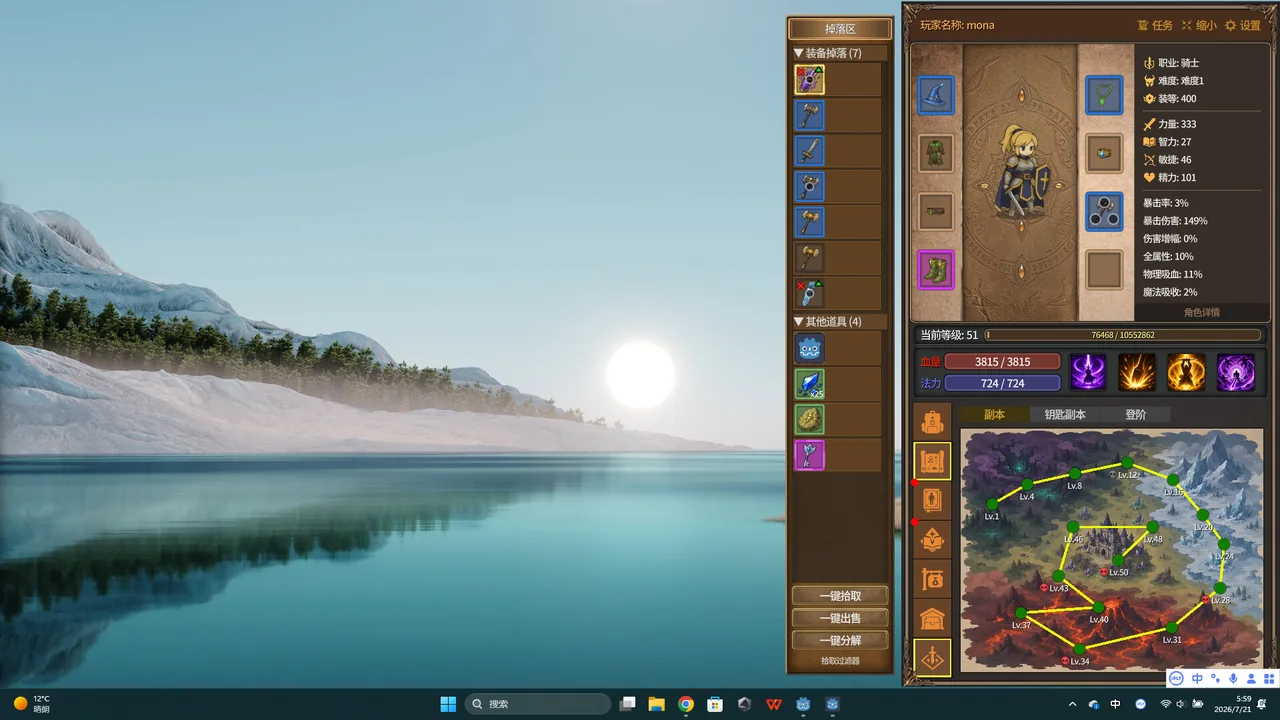
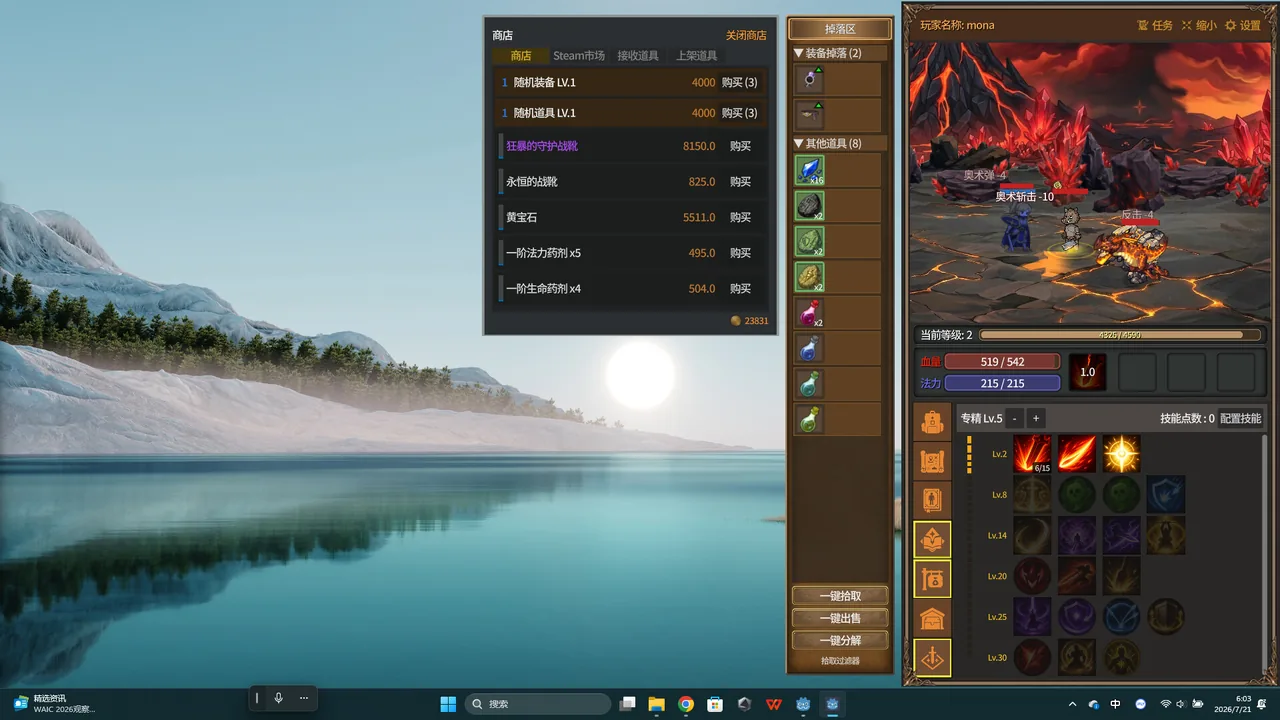
The eleven official screenshots make Idle Inferno's whole design thesis visible in one glance: every single one shows a serene desktop wallpaper — a lake at sunset, snow-capped mountains — with the Windows taskbar and search bar sitting untouched along the bottom edge, and the actual game confined to a vertical strip along the right-hand side of the screen. That's not a staging choice for the marketing art; it's the interface. The store description says as much — this is built to be "a game to idle in the corner of your screen to keep you company during your downtime" — and the screenshots back it up literally rather than figuratively. Inside that strip sits a full character sheet (class, difficulty tier, item level, four core stats, five combat stats including crit rate and lifesteal), an equipment grid, a resource bar, a talent tree unlocking new skill slots at character levels 2, 8, 14, 20, 25 and 30, and tabs for dungeons, key-dungeons, Ascension and the shop. It's a genuinely dense piece of UI packed into roughly a fifth of a 1080p screen, and the one direct complaint already on record about it is exactly what you'd expect: a player asking whether the panel can be dragged somewhere other than the top-right corner, because right now it can't be.
Automated combat wrapped around a real buildcrafting system
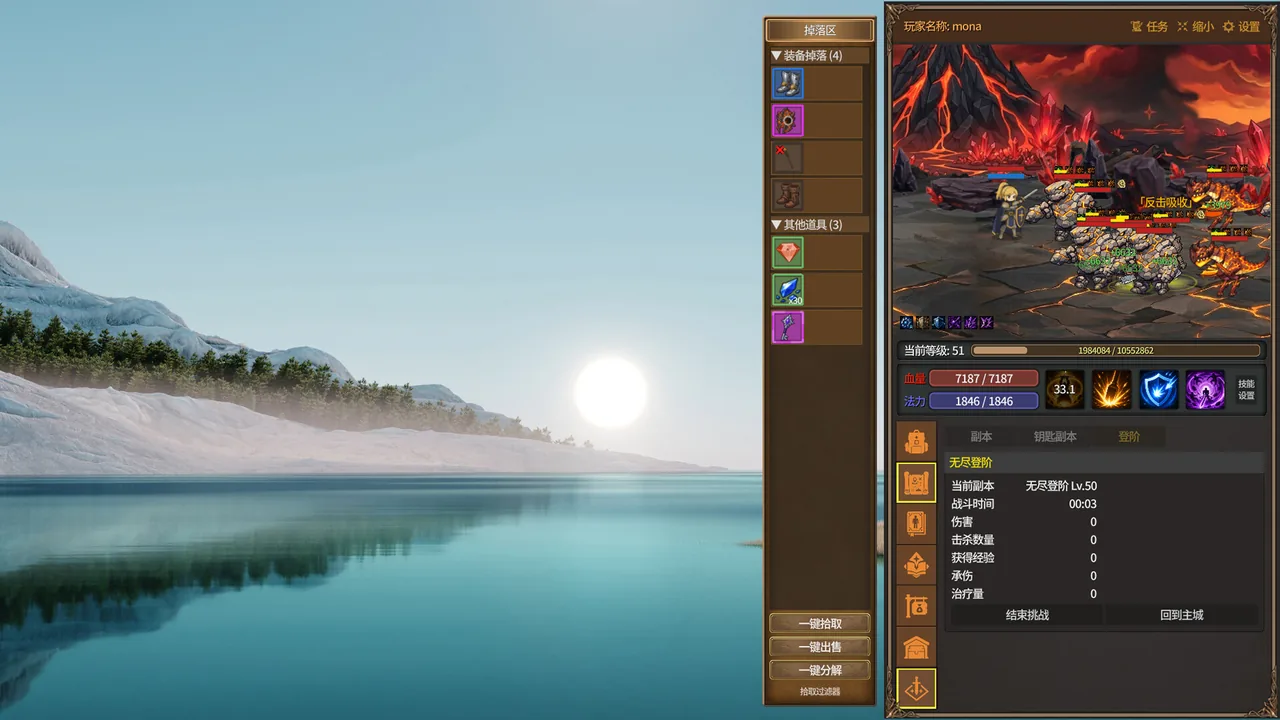
Once a fight starts, the panel expands into a small isometric arena where a chibi-sprite hero auto-targets and auto-casts against whatever's in front of them, damage numbers and buff icons stacking up in real time — the "screen-filling loot" the store page promises is a literal description of what one of the combat screenshots shows, gear icons queued up seven and eight deep in a drop panel waiting to be bulk-sold or bulk-salvaged. The systems feeding that combat are where the game earns its "hardcore buildcrafting" half of the pitch: gear drops with randomised affixes across defensive and offensive stats, gems socket into equipment slots and have to be identified before their bonuses apply, and a forge lets players push gear beyond its base limits. Two of the nine early reviews single out rough edges in exactly this loop — one wants bulk auto-decompose and auto-sell rather than one-click-per-item, another says gem identification is "too much trouble" dragged one at a time, and a third simply couldn't find where forging happens at all. None of that reads as the system being shallow; it reads as a genuinely deep set of mechanics whose front door isn't clearly signposted yet, which is a fixable problem but a real one for a genre that lives or dies on how quickly a new player understands what they're looking at.
Level 50 isn't the ceiling — it's a launchpad
One of the nine early reviews raises the question every idle-ARPG buyer eventually asks: with a visible dungeon path running from level 1 to level 50, does the game just stop once you clear it in a day? The official screenshots answer that question more completely than any review does. Past the linear story path and a separate "key dungeon" track (matching the store page's promise of keys unlocking "unpredictable, high-yield challenges"), there's a third tab called Ascension, and inside it an Endless Ascension mode that keeps climbing past level 50 with no visible cap, tracking battle time, kills, damage taken and healing done per run. Individual high-level dungeon stages carry their own debuffs on top of that — one screenshot shows a "Thorns" modifier that reflects 20 to 100 true damage back on every attack you land — alongside a three-star speed-clear structure that pays out escalating gold, experience and a guaranteed legendary item for clearing a stage inside tightening time windows. It's a more thorough answer to "what's the endgame" than most three-day-old idle games bother building before launch, even if none of the nine current reviews have logged enough time to say how it actually feels a hundred hours in.
Early, rough, and almost entirely unseen by English speakers
Idle Inferno's Steam Achievements make for an unusually blunt progress curve for a game this young: 100% of players have cleared the first milestone, 71% have hit the second, then the numbers fall to 22.8%, 2.4% and 0.0% for the top tier. Read uncritically that looks like a familiar idle-game story — most players stop early — but three days after launch it more likely measures elapsed real time than abandonment; milestone achievements built around long-run accumulation simply haven't had time to be earned yet by anyone. More concrete, because they're named directly rather than inferred from a curve, are the bugs: a crash tied to selling identified rune stones, a targeting bug where a ranged skill keeps firing at a monster too far away to hit while ignoring the one standing next to the player, clunky automatic skill-switching when a mixed group of single-target and group-target enemies is on screen at once, lag that "gets extremely laggy" the further a run progresses, and — the most serious of the five — a freeze triggered by switching skills at the exact moment the character dies, leaving a grey, unresponsive screen with no way back to town. One reviewer who has already logged 27 hours calls the game shallow and not worth more than about NZ$5, feeling "scammed" after a day of idling; five of the other eight are more measured, praising the art style, the trading feature and the completeness of the systems while asking for exactly the quality-of-life fixes listed above. What's missing entirely is an English voice: every one of the nine reviews on record is in Simplified Chinese, despite English being a listed supported language, and Steam's news feed for the game is empty — no post-launch communication from TUNA TUN yet, whose only other Steam credit is a smaller casual title called Casual Fishing.
Final verdict
Idle Inferno earns a 6.5 for building something more ambitious than most idle games attempt — a real talent tree, real itemisation with gems and enhancement, and two layered endgame tracks culminating in an uncapped Ascension ladder — and for pricing that ambition fairly with a monetisation model that has nothing to apologise for. It doesn't score higher because the interface built to carry all of that complexity is, right now, a fixed window you can't move, a gem-identification flow players are already calling tedious, and a stat sheet that doesn't show everything it should; because performance and a same-week freeze bug are real enough that three separate reviewers named them independently; and because there is, at the time of writing, no way to know whether this holds up over the dozens of hours its own endgame is clearly built for. The idea is sound and the systems underneath are the real thing. Whether the execution catches up is a question for TUNA TUN's first patch, not this review.
Pros and cons
Pros
- A genuinely deep buildcrafting system for the genre — a level-gated talent tree, gear with randomised affixes, socketable gems, and a forge for enhancement — none of it padding around a single idle number
- Two separate endgame tracks: a 50-stage story dungeon path with speed-clear star rewards, and an Endless Ascension ladder above it with its own escalating per-tier debuffs, which directly answers new players' "does it end at level 50?" worry
- The panel docks into a corner of the screen over your live desktop rather than taking it over, matching the store page's promise of a game you can leave running while you work
- A one-time NZ$7.86 purchase with no DLC and no "In-App Purchases" category listed anywhere on the store page — a clean monetisation model for the genre
- Real accessibility options baked in from launch — Keyboard Only, Mouse Only and Playable without Timed Input are all listed store categories, not afterthoughts
Cons
- The combat window is fixed to the top-right corner of the screen with no way to reposition it, which one early reviewer already asked for directly
- Gem identification requires dragging each gem individually rather than in bulk, and the character stat sheet doesn't reflect all of the bonuses those gems and enhancements are actually adding
- Early reviewers report a freeze bug when switching skills at the moment of death (grey, unresponsive screen, no way back to town), a crash tied to selling identified rune stones, and lag that worsens at higher levels
- Nowhere on the store page, in the game's systems, or in any review is there a claim that progress continues once the application itself is fully closed — this is a "leave it running in the corner" idle game, not one that banks time away from your PC
- Nine total reviews three days after launch, every one of them in Simplified Chinese despite English being a listed supported language, so there is effectively no English-speaking account of the game yet
Screenshots
-
Idle InfernoImage: TUNA TUN via Steam -
Idle InfernoImage: TUNA TUN via Steam -
Idle InfernoImage: TUNA TUN via Steam -
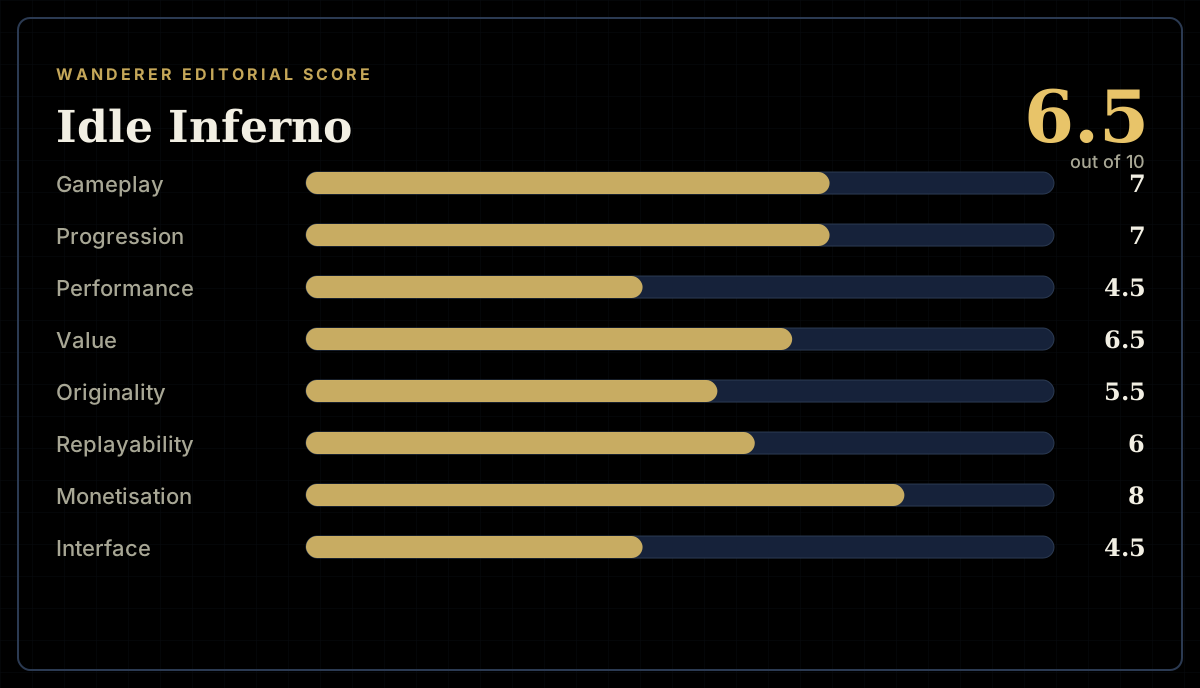
How the review scores each part of the gameWanderer Editorial -
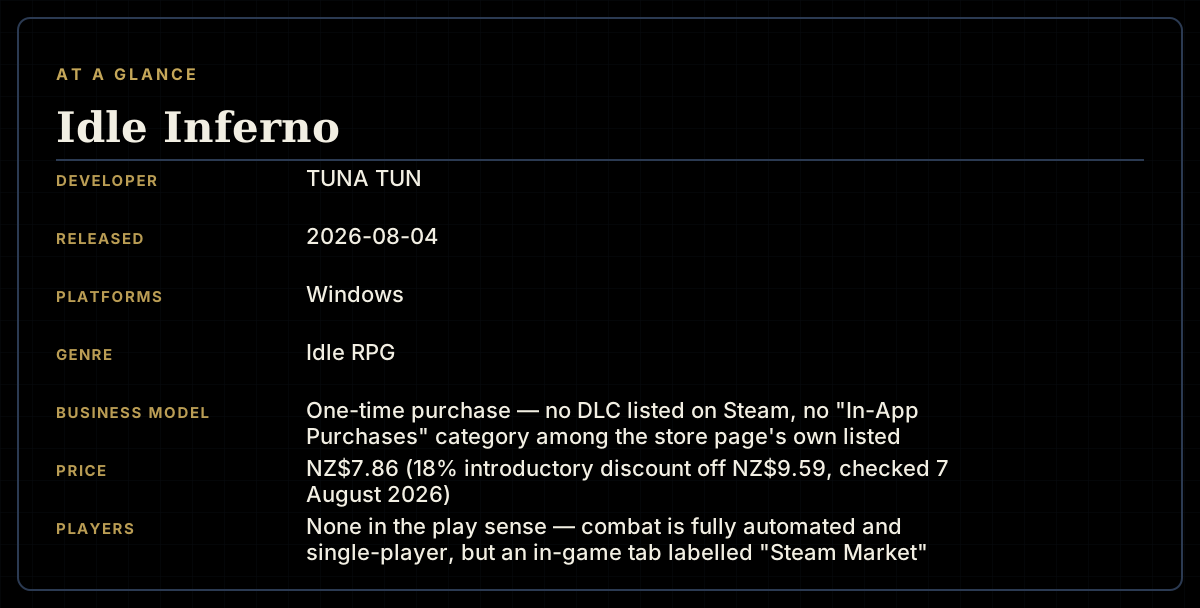
The game at a glanceWanderer Editorial -
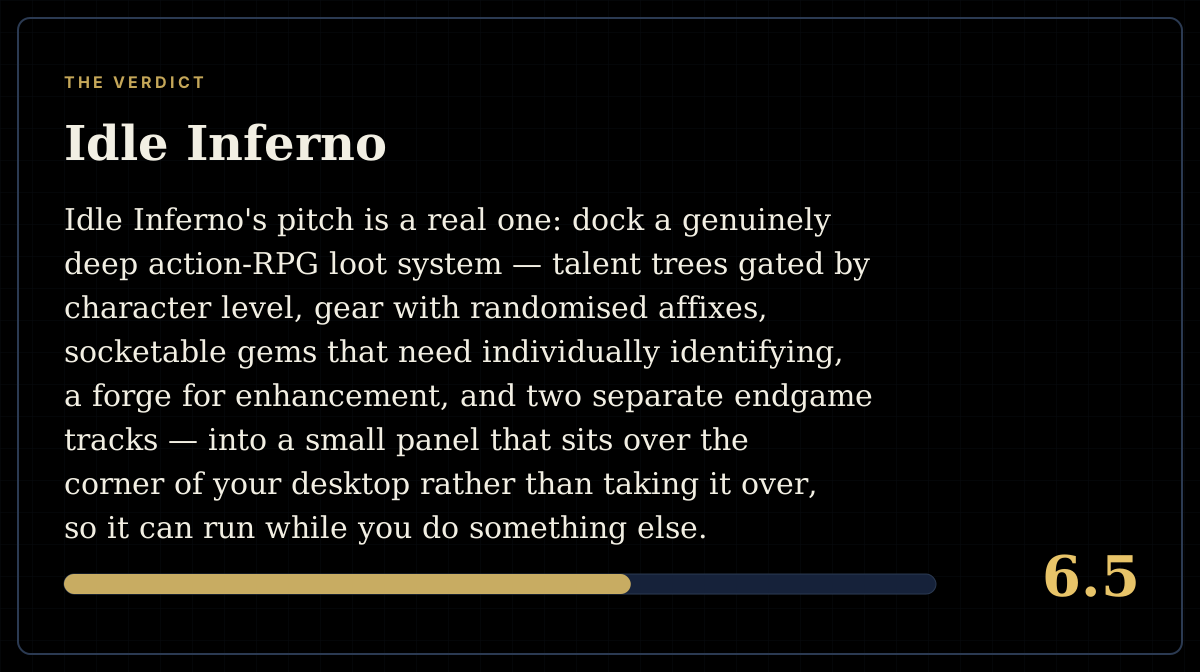
The short versionWanderer Editorial