Game review
Idle Evolution
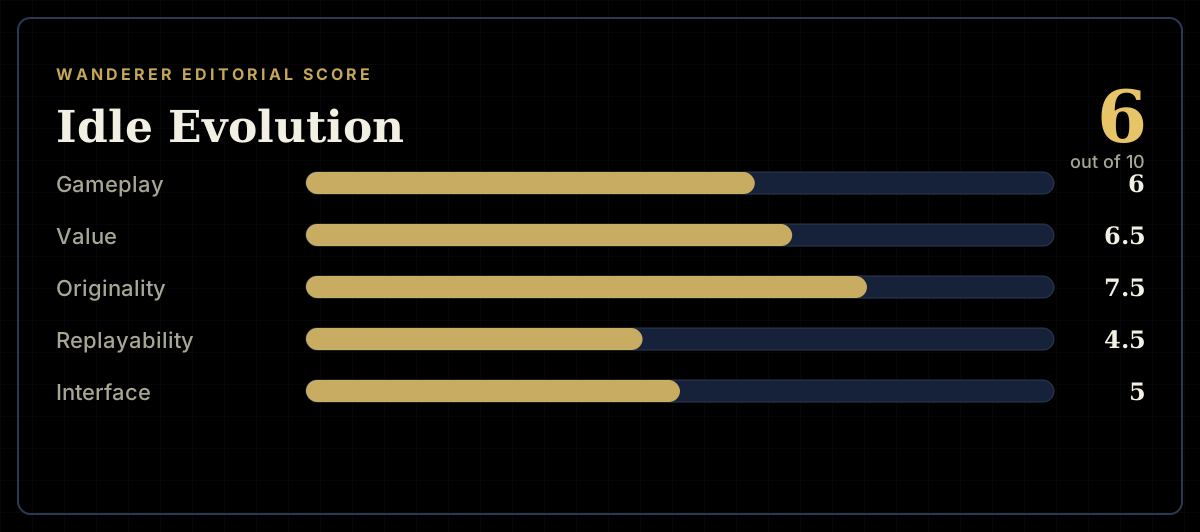
6 / 10
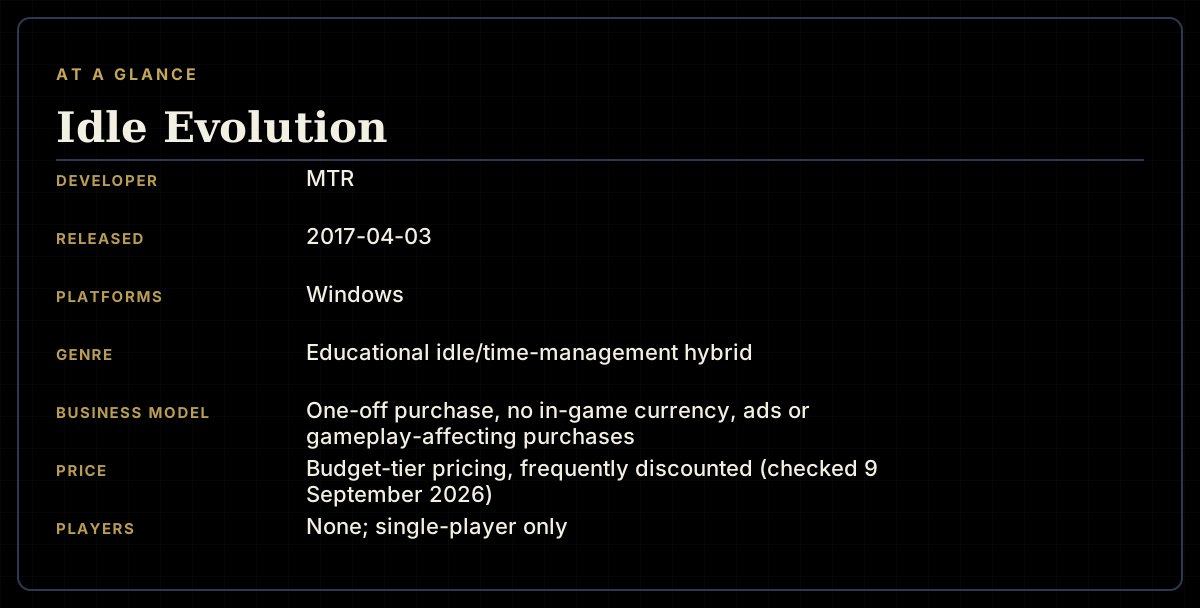
- Developer
- MTR
- Publisher
- NewProject
- Released
- 3 April 2017
- Platforms
- Windows
- Genre
- Educational idle/time-management hybrid
- Monetisation
- One-off purchase, no in-game currency, ads or gameplay-affecting purchases
- Players
- None; single-player only
The short version
Idle Evolution earns real credit for doing something few idle games attempt: teaching actual periodic-table chemistry through its progression systems, confirmed by a self-identified chemist reviewer as "fairly legit" science rather than dressed-up trivia. Rebuilt from a free 2015 Kongregate original into a paid, deeper Steam release, it's honest about not being a pure idle game — the developer's own description says it was "transformed to make it fully active," and reviewers who accept that framing generally find a polished, cheap, unusually educational few hours. Where it runs into real trouble is a specific, repeated structural complaint: a "clinch" mechanic gating level completion adds friction several reviewers call unnecessary, the game ends with a hard stop after roughly 10-13 hours rather than the endless loop the genre trains players to expect, and rough English localization muddies objectives enough that at least one reviewer got stuck without understanding why. A genuinely rare, unprompted return to patch the game in late 2025, eight years after its last substantive update, shows a level of long-term care worth crediting even where the underlying design still shows its age.
Biggest strengths
- Genuinely accurate periodic-table chemistry content, confirmed directly by a reviewer with real chemistry background as legitimate rather than dumbed-down trivia
- A distinctive, rarely-attempted premise (evolving matter from atoms through the history of Earth to a final civilization) gives it real identity relative to generic clicker reskins
- Honest genre framing from the developer itself, describing the game as "fully active" rather than falsely marketing it as a passive idler the way several other games in this lane did
Biggest weaknesses
- A "clinch" mechanic gating progress between levels draws repeated, specific criticism as unnecessary friction, with one reviewer calling it "totally unnecessary" and citing it as the reason interest drops off around level four
- The game concludes with a hard, finite stop after roughly 10-13 hours rather than the open-ended replayable loop idle-genre veterans expect, a structural choice multiple reviewers call jarring and unfitting for the genre it's sold alongside
- Rough, at-times unclear English localization is called out by several reviewers as actively obscuring objectives, with at least one detailed account getting stuck on a level without understanding what was required
Who it's for: Chemistry-curious players and idle-genre fans specifically looking for something with real educational content rather than pure number-watching. Less suited to idle-genre purists who want an endless, replayable loop, or anyone who needs precise English instructions to follow an unfamiliar system.
Our recommendation: A worthwhile cheap pickup for the genuinely legitimate chemistry content and distinctive premise, with realistic expectations that it's a finite, single-playthrough experience rather than a traditional endless idler.
6 / 10
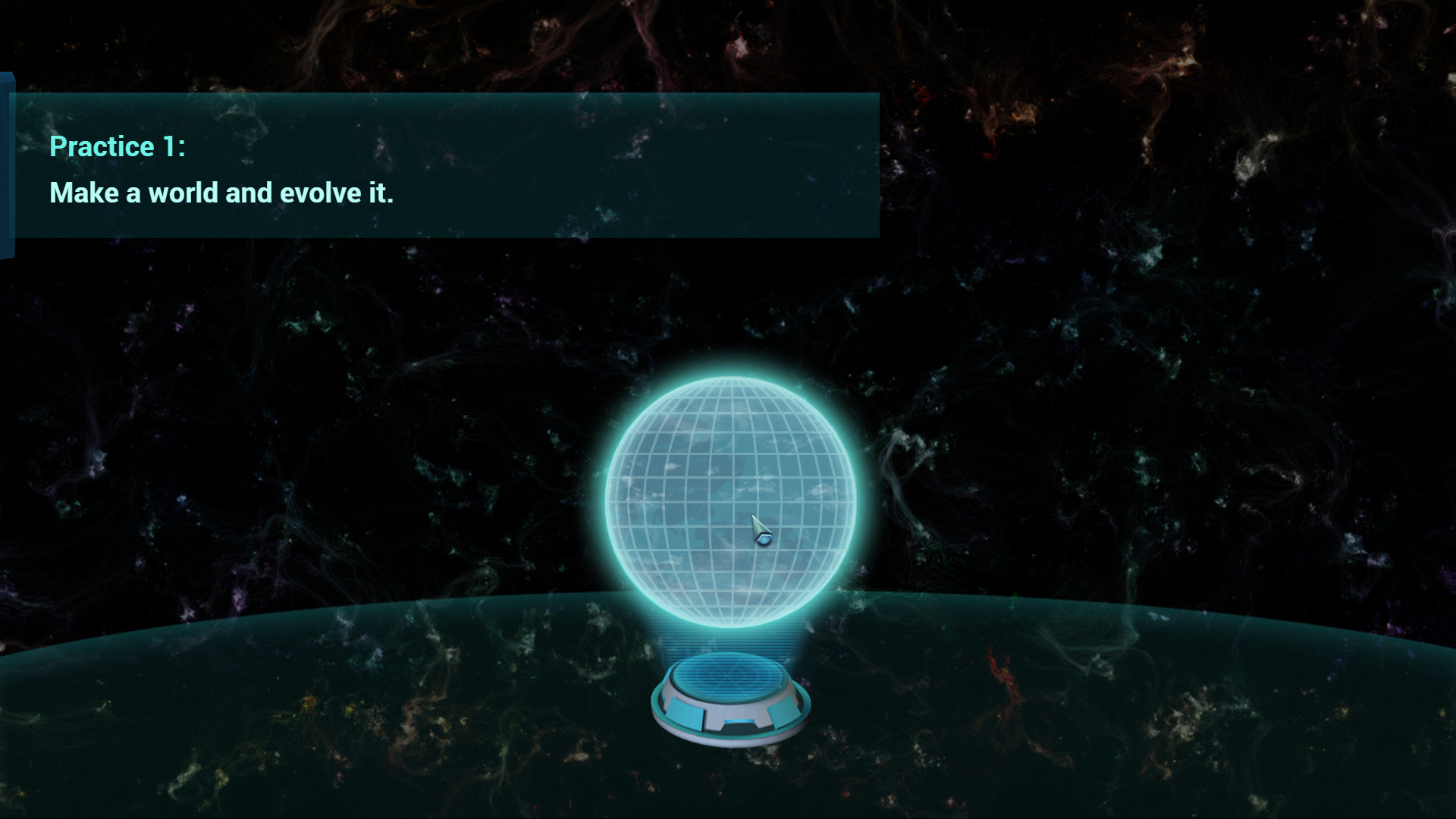
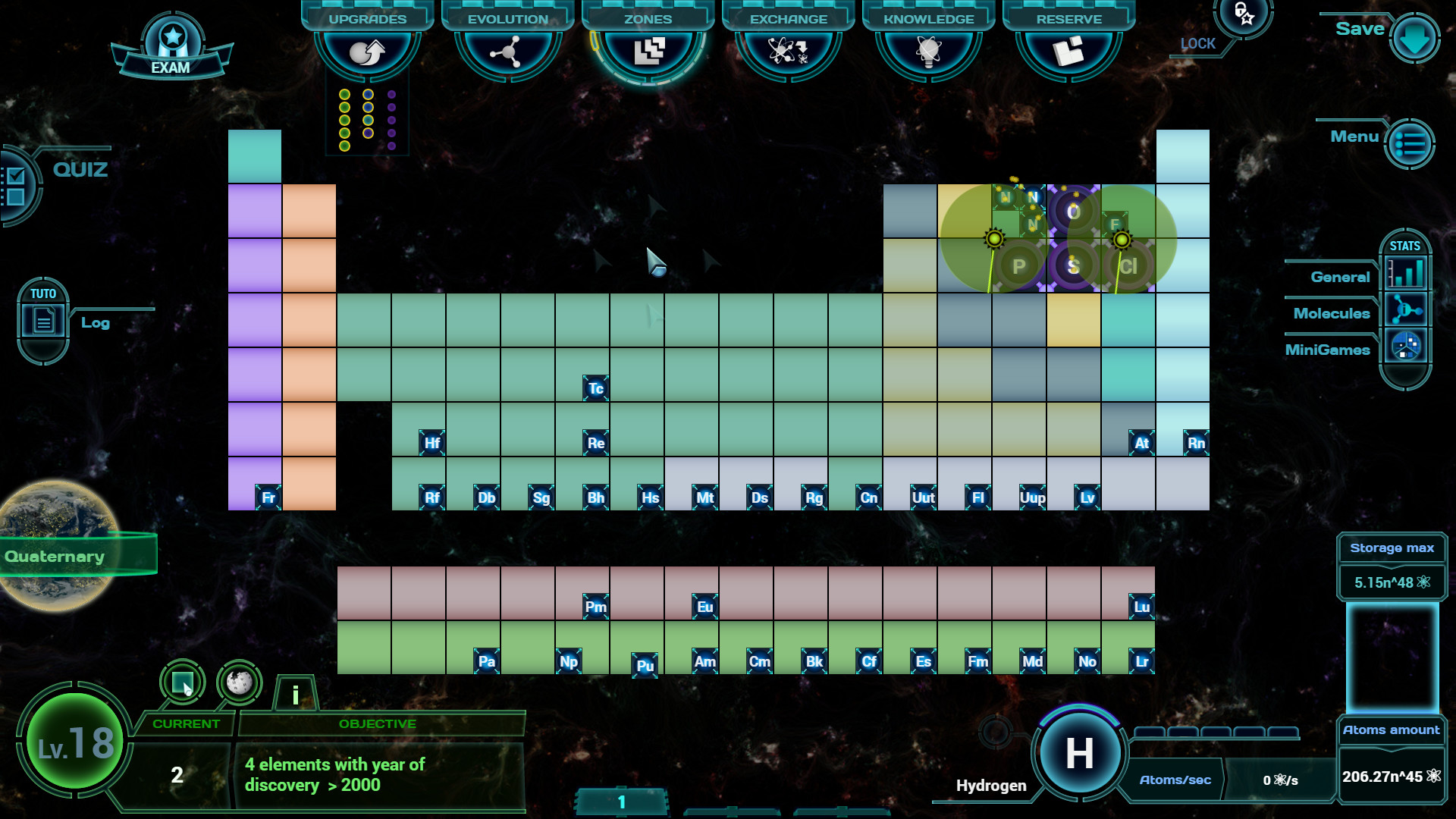
Idle Evolution asks a genuinely uncommon question for the idle genre: what if building up numbers also taught you real chemistry? Starting from a single atom, players combine elements, unlock the periodic table piece by piece, and guide a world through geological and biological ages toward a "final evolution," all wrapped in progression systems the developer itself is upfront about not being a pure passive idler — its own store description states plainly that the game was "transformed to make it fully active" relative to a typical clicker. Originally a free 2015 Kongregate browser game, this Steam release deepened the concept into a paid, standalone product in April 2017, and eight years later, the developer's own quiet, unprompted return to patch it in October 2025 is itself part of the story worth telling.
Chemistry that actually holds up
The strongest, most specific praise in the review sample comes from reviewers with real subject knowledge, and it's worth weighing that credibility directly. One reviewer identifying as a chemist writes: "It has a lot of meaningful complexity - and connects in with some fairly sound science... as a chemist I can say a lot of this is fairly legit." A second reviewer with STEM comfort but no formal chemistry training separately confirms the educational content is approachable without requiring specialized background. That's a meaningfully different, stronger endorsement than the vague "you'll learn something" framing educational games often earn — it's a specific claim about accuracy from someone positioned to judge it, corroborated by a second, independent account.
Honest about what kind of game it is
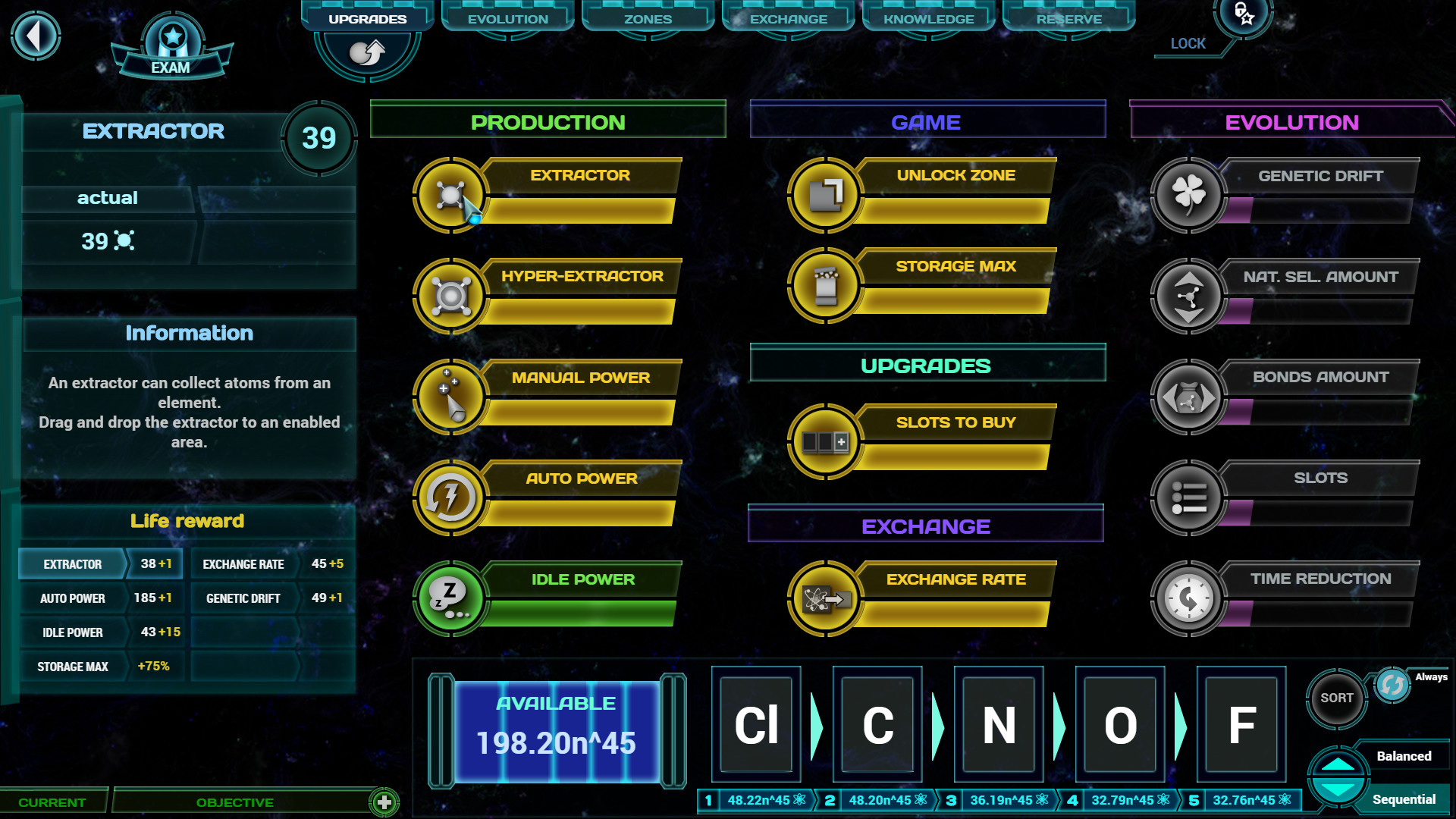
Where several other games in this lane oversold an "idle" label their mechanics didn't back up, Idle Evolution does the opposite: its own marketing plainly states it's "based on the idle/clickers, but was transformed to make it fully active." Reviewers who accept that framing generally rate the experience well — one calls it "one of the best idle clickers I've played at this point," another recommends it directly: "It's good. It's cheap. Buy it." A useful distinction one detailed review draws: "it is culturally a clicker but isn't quite one because there isn't really an option to speed up gameplay by wearing out your mouse... clicking does nothing" beyond the strategic layer underneath. That's an unusually precise, accurate piece of genre labeling for a budget indie release, and it heads off the mismatched-expectations complaints that plagued other games covered in this same research window.
The friction the genre framing doesn't excuse
Even reviewers otherwise positive on the concept converge on one specific structural complaint: a "clinch" mechanic gating progress between levels. One detailed review calls it "totally unnecessary" and pinpoints it as the reason "it gets really boring after level 4," while another lists removing the clinch requirement as the single biggest change that would turn the game from "mostly good" into genuinely great. A second, related complaint concerns the ending itself: several reviewers note the game concludes with a hard, finite stop after roughly 10-13 hours rather than looping endlessly the way idle games typically do, one calling it "jarring and unfitting" for the genre. Neither complaint suggests the game is broken — both describe specific, addressable design choices that a meaningful share of the game's own fans wish had gone differently.
Real bugs, and real, if rough, communication
Localization quality draws consistent, specific criticism: one reviewer describes objectives as unclear "due to really, REALLY bad English," comparing it to unedited machine translation, while a more measured review separately notes "the dev's English skills are limited but" still finds the game worth recommending despite it. One detailed account documents something more serious than a translation gripe: a reproducible exploit involving purchasing upgrades beyond their intended limits that broke core game balance and left a save file softlocked. That's a genuine, specific bug report worth taking at face value rather than dismissing as user error, given the level of detail provided.
A developer who came back after eight years
The most distinctive fact in this game's entire history shows up in its own patch record: after a last substantive update in 2019 (adding Traditional/Simplified Chinese and Korean language support), the developer returned completely unprompted in October 2025 to ship two more updates. The first, Build 35, states its purpose directly: "After several years, it was time to spend some time updating everything a bit," fixing visual bugs, refreshing text, and updating the underlying engine and Steam libraries. The very next update, Build 36, specifically corrected the game's oxidation-state chemistry and related missions — a direct, dated response to the exact category of "the science has errors" complaint reviewers raised years earlier. Vanishingly few budget indie games from 2017 get any attention eight years on; that this one did, and that the attention targeted a specific accuracy complaint rather than just cosmetic polish, is worth real credit.
Verdict
Idle Evolution is a genuinely distinctive, honestly-labeled hybrid that does something rare and worth respecting: teaching real, chemist-verified periodic-table science through play rather than bolting trivia onto generic number-watching. A gatekeeping "clinch" mechanic and a finite, hard-stop ending frustrate a meaningful share of its own fans, and rough localization occasionally muddies what the game is even asking of the player. But a developer who quietly returned after eight years specifically to fix a chemistry-accuracy complaint earns a level of trust few games at this price point have demonstrated. Worth a look for the education and the novelty; go in expecting a finite, imperfectly-translated few hours rather than an endless clicker.
Sources: Steam store page and appdetails API (release date, pricing, platform data, current feature description); Steam's aggregate review data (query_summary totals, English-language sample); individually read user reviews, both positive and negative, sorted by helpfulness and recency; Steam's global achievement statistics API; the developer's own partner-events patch notes from 2017 launch through language updates in 2017-2019 and a renewed patch cycle in October 2025.
Pros and cons
Pros
- Genuinely accurate periodic-table chemistry content, confirmed directly by a reviewer with real chemistry background as legitimate rather than dumbed-down trivia
- A distinctive, rarely-attempted premise (evolving matter from atoms through the history of Earth to a final civilization) gives it real identity relative to generic clicker reskins
- Honest genre framing from the developer itself, describing the game as "fully active" rather than falsely marketing it as a passive idler the way several other games in this lane did
- No microtransactions on a paid, one-off purchase, a point multiple reviewers specifically praise relative to typical F2P idle games
- A genuinely rare unprompted return to development in October 2025, eight years after the previous substantive patch, fixing visual bugs and updating the underlying engine
Cons
- A "clinch" mechanic gating progress between levels draws repeated, specific criticism as unnecessary friction, with one reviewer calling it "totally unnecessary" and citing it as the reason interest drops off around level four
- The game concludes with a hard, finite stop after roughly 10-13 hours rather than the open-ended replayable loop idle-genre veterans expect, a structural choice multiple reviewers call jarring and unfitting for the genre it's sold alongside
- Rough, at-times unclear English localization is called out by several reviewers as actively obscuring objectives, with at least one detailed account getting stuck on a level without understanding what was required
- One detailed reviewer documented a reproducible exploit — buying upgrades beyond their intended limits — that broke game balance entirely and softlocked their save
- A more demanding reviewer with genre expertise argues the game doesn't go deep enough mechanically, suggesting it layers educational content onto a fairly shallow incremental system rather than building the two together
Screenshots
-
Idle EvolutionImage: NewProject via Steam -
Idle EvolutionImage: NewProject via Steam -
Idle EvolutionImage: NewProject via Steam -
How the review scores each part of the gameWanderer Editorial -
The specsWanderer Editorial -
The short versionWanderer Editorial