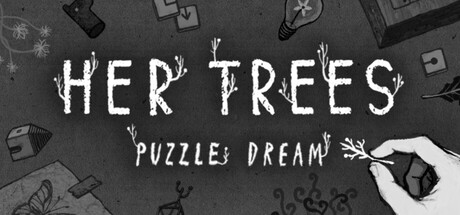
Game review
HER TREES : PUZZLE DREAM
7.5 / 10
- Developer
- Stone
- Publisher
- Stone
- Released
- 10 February 2026
- Platforms
- Windows
- Genre
- Adventure, Indie
- Monetisation
- One-time purchase
- Players
- Single-player
The short version
HER TREES : PUZZLE DREAM, released 10 February 2026 by solo developer Stone, is a sequel to 2024's Her Trees: Puzzle House, wrapping a single, consistently reused visual puzzle mechanic, clicking letters on a hidden 3x3 grid in the right order by finding hidden patterns in a monochrome dream world, into dozens of individually inventive scenarios. Its review sample is Overwhelmingly Positive, praising the art, the soothing atmosphere, and a graduated hint system that never simply hands over the answer. The one consistent complaint, raised across almost the entire sample regardless of star rating, is length: most players finish everything in two to four hours.
Biggest strengths
- A single core mechanic, deducing which letters to click on a hidden 3x3 grid by interpreting visual clues in the environment, is reused across dozens of puzzles that reviewers repeatedly describe as individually inventive rather than repetitive in feel
- A distinctive monochrome art style paired with a soothing, unhurried soundtrack draws consistent praise for creating a genuinely calming, low-pressure atmosphere with no time pressure, no failure state, and no audio required
- A graduated hint system, offering progressively more specific nudges rather than an instant answer, earns specific praise for preserving the satisfaction of solving a puzzle unaided while still preventing players from getting permanently stuck
Biggest weaknesses
- The most consistently repeated complaint across the entire review sample, positive and negative alike, is length, most reviewers report finishing all content in two to four hours, with several explicitly questioning the value proposition at full price for that amount of playtime
- Because every puzzle relies on the same underlying 3x3 letter-grid mechanic, a meaningful minority of reviewers found the game repetitive by its later stages, wishing for a wider variety of puzzle types rather than new dressings on the same core idea
- Several reviewers report an inconsistent difficulty curve, with sudden spikes in difficulty that arrive without a corresponding increase in the clarity of the visual clues, leading some to rely on trial and error rather than pure deduction
Who it's for: Fans of calm, visual-logic puzzle games like A Little to the Left or Is This Seat Taken, and returning players of the earlier Her Trees: Puzzle House who want more of the same clever mechanic in new scenarios.
Our recommendation: A genuinely inventive, beautifully presented puzzle game that's easy to recommend at its low price point, provided buyers understand upfront that it's a short, focused experience rather than a lengthy campaign.
7.5 / 10
HER TREES : PUZZLE DREAM drops the player into a wordless, monochrome dream world, following a small black cat from room to room and deducing, through careful observation rather than direct instruction, which of nine letters on a hidden grid need to be clicked, and in what order, to solve each scene. Released 10 February 2026 by solo developer Stone, it's a direct sequel to 2024's Her Trees: Puzzle House, and its review sample shows a game that has refined a genuinely clever idea rather than reinventing it, to the clear delight of returning fans and newcomers alike.
One trick, played with real inventiveness
Every puzzle in HER TREES : PUZZLE DREAM technically asks the same question: which letters, in what order, on a fixed 3x3 grid. What earns the game consistent praise across this review sample is how differently that single question gets dressed up from scene to scene, through shadow play, object combination, spatial reasoning, and visual pattern-matching that reviewers repeatedly compare to Professor Layton's puzzle design or the deduction-driven satisfaction of The Witness. Several reviewers specifically highlight the moment a solution "clicks," describing an audible reaction when a seemingly abstract arrangement of objects suddenly resolves into an obvious answer. One detailed review calls the game "a well designed intellectual conversation between the artist and the player," a sentiment echoed by several others who describe feeling like they got to know the designer's particular way of thinking by the end.
Calm on purpose
The presentation draws just as much consistent praise as the puzzle design itself. A striking black-and-white art style, a soothing, unhurried soundtrack, and the complete absence of time pressure, fail states, or required audio combine, in reviewer after reviewer's account, into a genuinely restful experience best suited to background play or a quiet evening. The recurring black cat that wanders through each scene is singled out repeatedly as a small, charming touch that several reviewers specifically call out wanting to pet. The graduated hint system, offering a soft nudge before ever revealing a full solution, and in some cases charging a higher in-game cost for a more direct hint, earns specific praise for respecting the player's desire to solve things unaided while still preventing anyone from getting permanently stuck.
Over before you know it
Set against that near-universal praise is one complaint repeated so consistently it shows up in reviews across the entire ratings spectrum: the game is short. Reviewers commonly report finishing all available content in two to four hours, with several giving even more specific numbers, one completed the entire game in a single two-hour sitting without hints, another explicitly finished in "less than 2 hours." A handful of reviewers frame this directly as a value concern, one arguing a "1 hour of fun per dollar spent" rule of thumb wasn't met at the price they paid, though the large majority frame the short runtime more as a wistful "I wanted more" than as a genuine complaint about value, especially given the game's modest asking price. Reviewers who'd played the earlier Her Trees: Puzzle House and other entries in the series describe this game as the most ambitious yet in terms of puzzle count, suggesting the length has grown with each release even if it remains brief by most standards.
A single mechanic wearing thin for some
A smaller but genuine thread of criticism concerns repetition. Because the entire game hinges on the same 3x3 letter-grid deduction, a portion of reviewers, including several who otherwise enjoyed the game, describe the concept feeling stretched by its later stages, wishing for a broader variety of puzzle mechanics rather than new visual dressings applied to the same underlying structure. A related complaint concerns difficulty consistency: several reviewers report unexpected spikes where a puzzle's difficulty jumps without a corresponding increase in the clarity of its visual clues, pushing some toward frustrated trial and error rather than the confident deduction the game otherwise encourages. One reviewer specifically contrasted this with the more gradual curve of the developer's earlier game, suggesting the later puzzles in this entry lean harder into obscurity than some players would prefer.
Part of a growing series
This is the third entry in Stone's Her Trees series, following 2024's Her Trees: Puzzle House, and reviewers who've followed the series closely describe a clear sense of iteration rather than repetition between installments. Several long-time fans note quality-of-life improvements carried over from the earlier games, faster access to hints, a clearer visual language for how objects can be combined, and describe this entry as noticeably more ambitious in scope, with a larger puzzle count and, according to a few reviewers, some of the trickiest individual puzzles the developer has designed to date. One reviewer who described playing through the entire series, including an earlier installment not available on Steam, called each successive game "better than the last," attributing that consistency to the developer's evident skill at teaching a visual language early and then testing it in increasingly demanding ways. That continuity is likely to matter most to existing fans deciding whether to jump back in, but it also means newcomers who enjoy this entry have a small back catalogue, and reportedly a fourth game already anticipated by the community, to look forward to.
Final Verdict
HER TREES : PUZZLE DREAM is a small, confident, beautifully made puzzle game that does one thing and does it with real craft: dressing up the same elegant deduction mechanic in dozens of genuinely inventive visual disguises, wrapped in a calm, monochrome dream world that's a pleasure just to sit inside. Its Overwhelmingly Positive reception is well earned, and the graduated hint system is a model for how to keep a puzzle game from ever feeling punishing. The catch, and it's one the review sample agrees on almost unanimously, is that it's over quickly, two to four hours for most players, and its single core mechanic wears thinner for some than others by the closing stretch. At its low asking price, that's an easy trade to recommend for genre fans looking for a focused, memorable few hours rather than a lengthy campaign.
Pros and cons
Pros
- A single core mechanic, deducing which letters to click on a hidden 3x3 grid by interpreting visual clues in the environment, is reused across dozens of puzzles that reviewers repeatedly describe as individually inventive rather than repetitive in feel
- A distinctive monochrome art style paired with a soothing, unhurried soundtrack draws consistent praise for creating a genuinely calming, low-pressure atmosphere with no time pressure, no failure state, and no audio required
- A graduated hint system, offering progressively more specific nudges rather than an instant answer, earns specific praise for preserving the satisfaction of solving a puzzle unaided while still preventing players from getting permanently stuck
Cons
- The most consistently repeated complaint across the entire review sample, positive and negative alike, is length, most reviewers report finishing all content in two to four hours, with several explicitly questioning the value proposition at full price for that amount of playtime
- Because every puzzle relies on the same underlying 3x3 letter-grid mechanic, a meaningful minority of reviewers found the game repetitive by its later stages, wishing for a wider variety of puzzle types rather than new dressings on the same core idea
- Several reviewers report an inconsistent difficulty curve, with sudden spikes in difficulty that arrive without a corresponding increase in the clarity of the visual clues, leading some to rely on trial and error rather than pure deduction
- Steam achievements are not supported, a small but specifically noted omission for players who value that kind of completion tracking
Screenshots
-
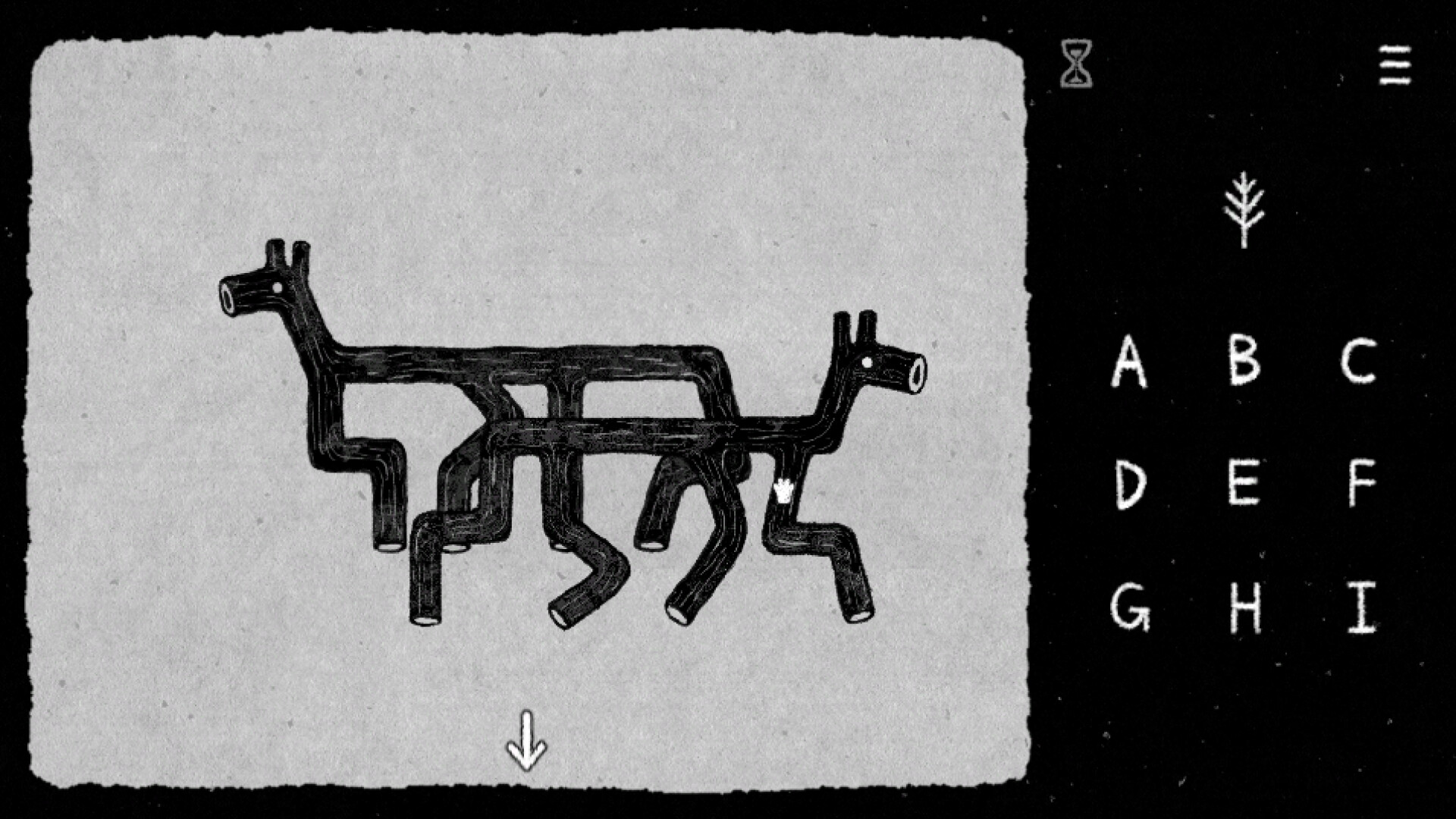
HER TREES : PUZZLE DREAMImage: Stone via Steam -
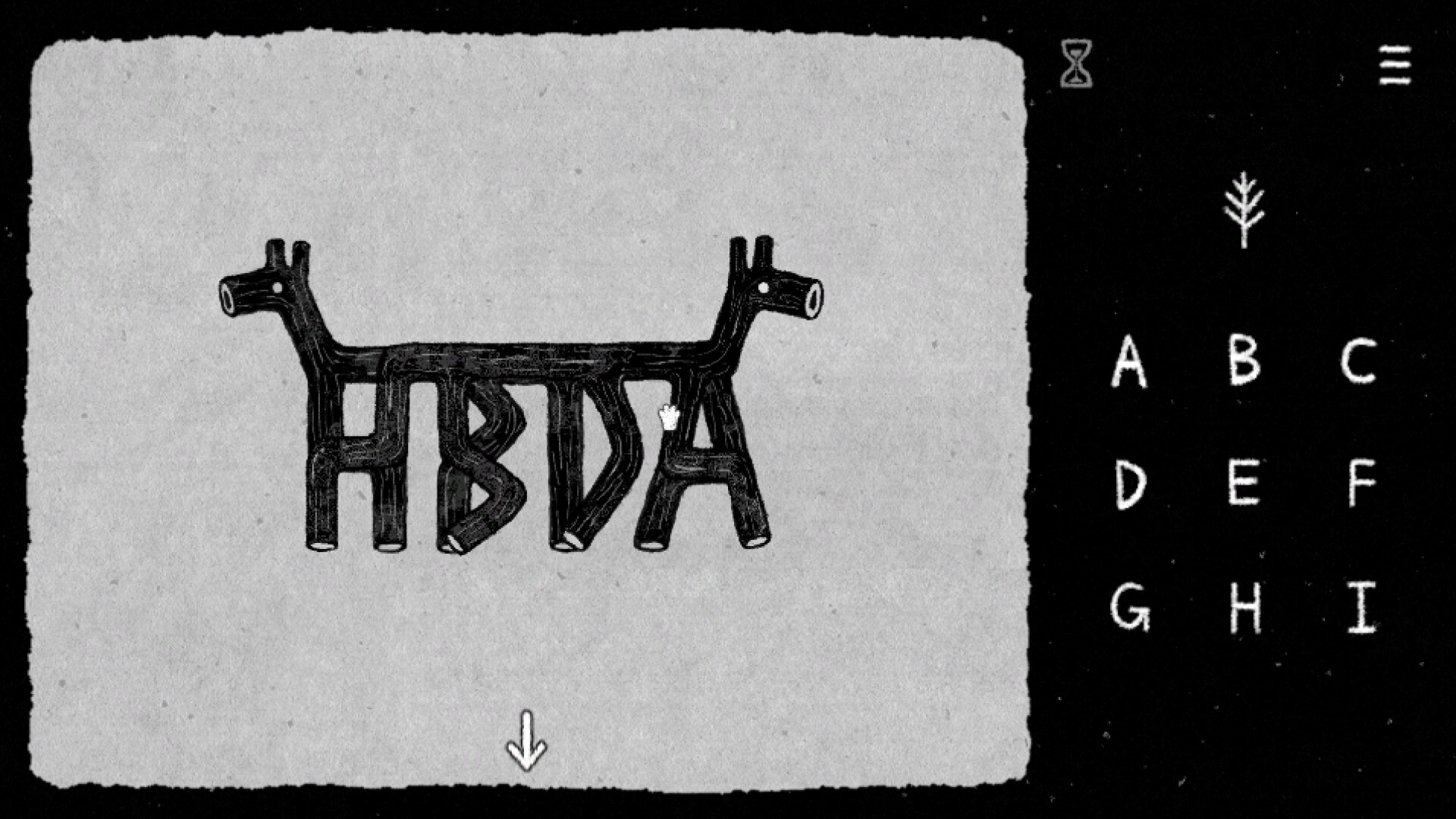
HER TREES : PUZZLE DREAMImage: Stone via Steam -
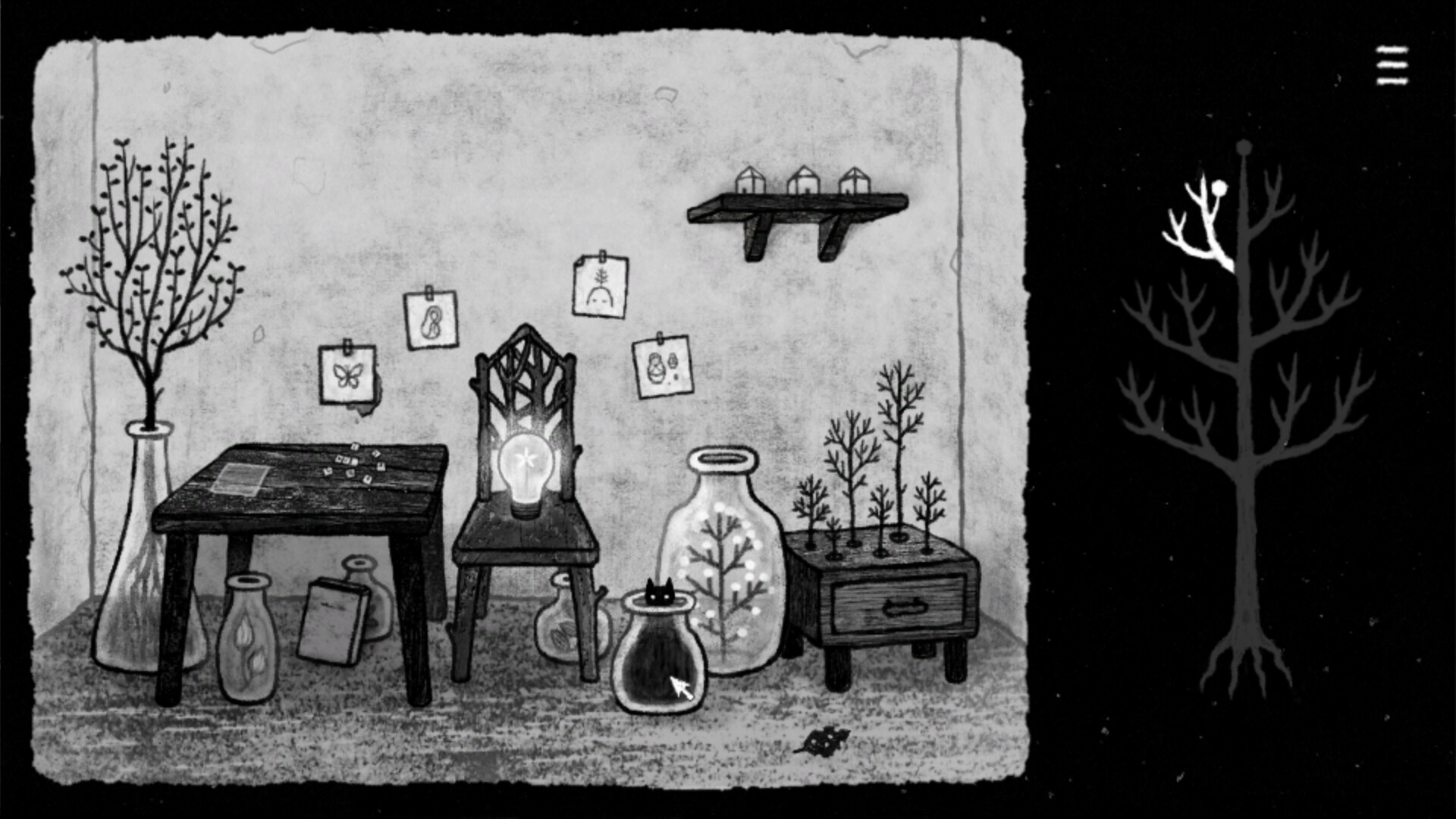
HER TREES : PUZZLE DREAMImage: Stone via Steam