
Game review
GORE
5.4 / 10
- Developer
- CosmicArcade
- Publisher
- CosmicArcade
- Released
- 29 October 2025
- Platforms
- [Windows]
- Genre
- Horror
- Monetisation
- Paid
- Players
- Single-player only
The short version
GORE is a brief, cheap Lovecraftian walking-sim horror game that leans almost entirely on atmosphere, lighting and unsettling fleshy creature design to do its work, and for roughly its first half, reviewers agree it succeeds. Where opinion splits sharply is the back half, where a narrative pivot toward "the Backrooms" trend divides the sample between players who see it as a fun connective thread to the developer's other games and players who feel it undercuts the cosmic-horror premise the game spent its first half building. At a couple of dollars for thirty to ninety minutes of polished dread, it's a low-risk way to spend an evening, provided you go in with expectations calibrated to a very short, very linear experience.
Biggest strengths
- Strong atmosphere, lighting and sound design that multiple reviewers singled out as the game's clear strength
- A genuinely unsettling fleshy alien creature design that delivers on its unnerving marketing
- Very cheap for the experience delivered, which several reviewers explicitly factored into their recommendation
Biggest weaknesses
- Very short, with most reviewers finishing in well under two hours and several under an hour
- Strictly linear, with invisible walls preventing exploration off the intended path
- A late narrative pivot toward "the Backrooms" trope split the sample, with some feeling it clashed with the game's cosmic-horror setup
Who it's for: Horror fans who enjoy short, atmosphere-first walking sims and don't mind a divisive, trend-chasing twist ending.
Our recommendation: Worth the low asking price for the atmosphere and setting alone, but temper your expectations around length, linearity and where the story ultimately goes.
5.4 / 10
A Half-Hour Descent Into the Rocky Mountains
GORE drops players into a national park somewhere in the Rocky Mountains, tasked with investigating the spread of a fleshy, alien bio-mass that reviewers consistently describe as the game's biggest asset. One reviewer called it "a Lovecraftian walk in the park with a touch of The Thing," while another compared the creature design favourably to the 1980s creature-feature film The Deadly Spawn, praising the "variety of gross creatures to look at" and describing "a new, worsening horror around every bend." The developer's own content warning describes the bio-mass as closely resembling dismembered remains, and the review sample largely agrees that's an accurate, if unsettling, description — this is body horror built on texture and implication rather than combat or graphic violence.
Structurally, GORE is a first-person walking simulator in the vein of the developer's earlier games, and reviewers who'd played those previous titles picked up on the connective tissue quickly. Runtime estimates across the sample cluster tightly around thirty minutes to two hours, with most players reporting somewhere close to a single hour to see everything, aided by achievements that several reviewers noted unlock more or less automatically along the way.
Atmosphere Carries a Story That Can't Quite Land Its Ending
Where the sample is most consistent is on the game's presentation: lighting, sound design and environmental storytelling come up unprompted in nearly every review, positive or negative. One reviewer wrote that "the vibes on this are really good," adding that even without traditional scares, "the game has a way of leaving you feel real uneasy during the whole playthrough," while another specifically praised a minimal, humming ambient sound choice as "a perfect choice for the game." A more critical reviewer, while ultimately recommending it, still credited "the interplay of lighting and placement of set pieces" as the game's strongest asset even as they took issue with the story built around it.
That story is where the sample splits. GORE's narrative pivots late toward "the Backrooms," the popular internet horror concept involving endless, liminal architectural spaces, and reaction to that pivot ranges from delighted to actively frustrated. Several reviewers connected it directly to the developer's other game, Poolscape, treating the crossover as a fun bit of world-building rather than a narrative misstep — one wrote they "didn't mind another lil quick trip" having already played Poolscape, and encouraged the developer to "keep dropping games and adding characters to this lil universe." Others were considerably harsher: one detailed negative review argued the twist "chases a horror trend rather than elaborating on the premise," criticizing it as feeling "less thought out and more like it was analog horror refrigerator poetry than anything substantial or scary." A separate reviewer bluntly dismissed the entire back half as "more backrooms slop." The disagreement isn't really about execution so much as taste: whether a Lovecraftian cosmic-horror setup benefits from, or is undercut by, a swerve into a much more internet-native horror trope right before the credits roll.
A Loose Shared Universe With Poolscape and Land of Pain
CosmicArcade appears to be building a connected catalogue of short horror experiences, and GORE leans into that explicitly enough that prior familiarity with the studio's other games noticeably shapes reception. Reviewers who mentioned having played Poolscape beforehand tended to read GORE's ending as an intentional easter egg rather than a tonal misfire, treating the overlapping lore — including a mysterious missing character named Jake that multiple reviewers asked about directly in their reviews — as a reason to stay invested in whatever the studio releases next. One reviewer explicitly compared GORE unfavourably to an earlier game in the same loose series, Land of Pain, writing that the earlier title "was much more interesting" by comparison, suggesting the studio's quality and ambition have varied somewhat release to release rather than climbing steadily.
This shared-universe approach is a double-edged strength: for returning fans, it rewards continued engagement and gives otherwise slight, single-sitting games a sense of accumulating mythology. For first-time players going in cold, however, the abrupt tonal and thematic swerve at the end can read as arbitrary rather than purposeful, since the connective tissue to the studio's other work isn't something a newcomer has any way to recognize.
Short, Cheap, and Divisive on Value
Price comes up constantly in the sample, almost always as a mitigating factor for the game's brevity. Reviewers repeatedly frame their recommendation in terms of cost-to-experience ratio — "worth the $2," "not bad at all" for a dollar, "good game for the price" — suggesting that GORE's asking price is doing real work to soften criticism of its short runtime. Not everyone was won over by that math: one negative reviewer wrote plainly that there's "not enough meat on the bone," specifically frustrated that the linear path prevents any real exploration off the intended route, calling out invisible walls as an active irritation rather than a minor limitation. A separate critical review flagged unexpectedly rough performance despite the game's fairly simple, low-poly visuals, joking that "the real horror about GORE is the performance it delivers."
Taken together, the sample suggests GORE is best approached as a cheap, atmospheric mood piece rather than a fully realized horror game — strong on texture and dread in its opening stretch, more contentious in how it resolves, and priced low enough that even reviewers who didn't love the ending mostly still walked away satisfied with what they paid for it.
Verdict
GORE delivers exactly what its short runtime and low price promise: a tightly atmospheric, unsettling walk through a body-horror premise that mostly works, undercut for some players by a late narrative swerve into Backrooms territory that others found charming rather than jarring. It won't satisfy anyone looking for meaningful exploration or a lengthy campaign, but as a cheap, moody hour of dread, it's a reasonable, low-stakes pick for horror fans.
Pros and cons
Pros
- Strong atmosphere, lighting and sound design that multiple reviewers singled out as the game's clear strength
- A genuinely unsettling fleshy alien creature design that delivers on its unnerving marketing
- Very cheap for the experience delivered, which several reviewers explicitly factored into their recommendation
- A loose shared universe with the developer's other horror games that returning players seemed to enjoy tracking
Cons
- Very short, with most reviewers finishing in well under two hours and several under an hour
- Strictly linear, with invisible walls preventing exploration off the intended path
- A late narrative pivot toward "the Backrooms" trope split the sample, with some feeling it clashed with the game's cosmic-horror setup
- At least one reviewer reported performance issues despite the game's relatively simple visuals
Screenshots
-
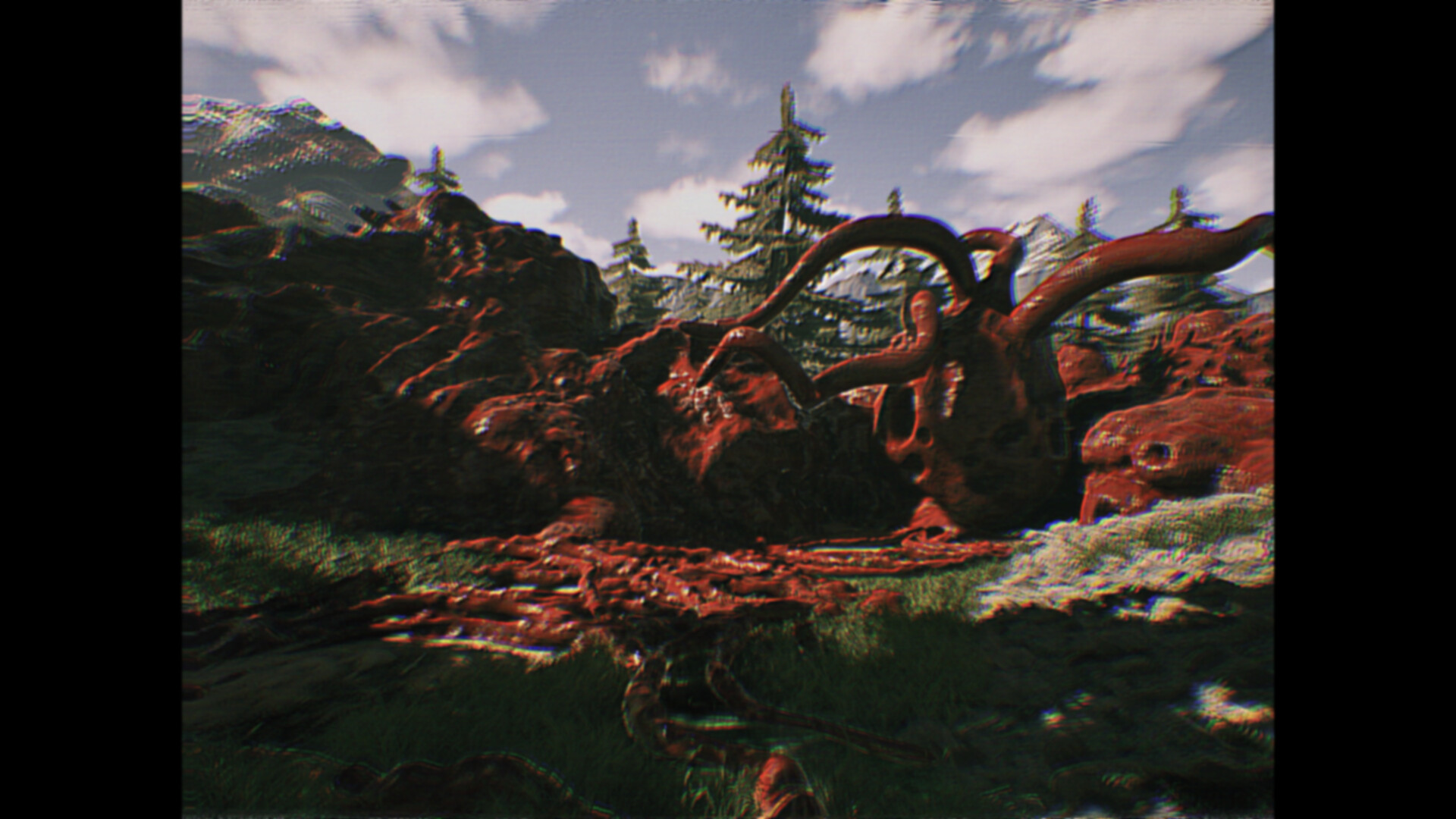
The alien bio-mass spreading through the Rocky Mountains, the body-horror imagery reviewers praised as the game's strongest assetCosmicArcade -
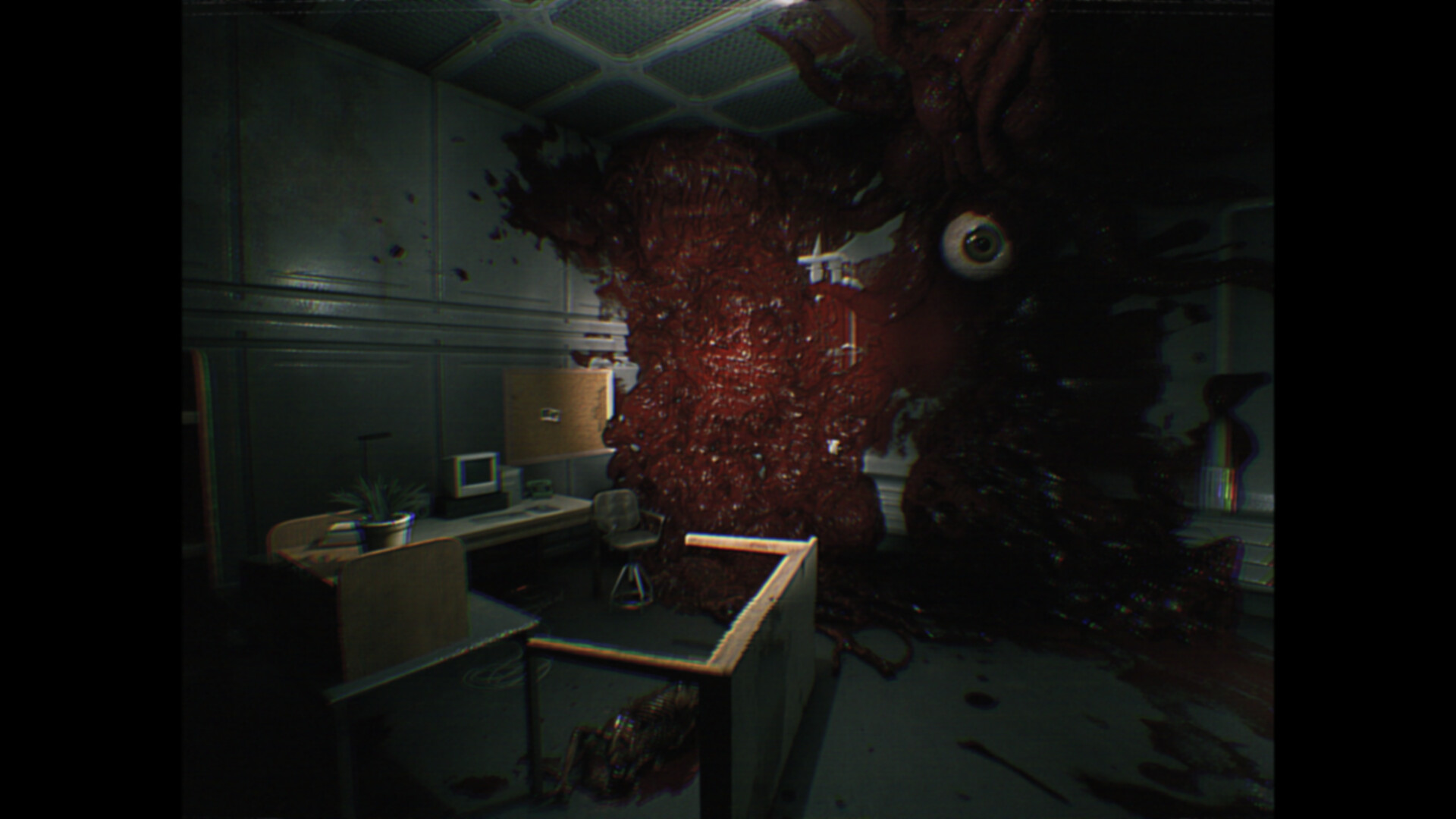
A later encounter inside an abandoned facility, where the game's tone shifts from open wilderness to claustrophobic interiorsCosmicArcade -
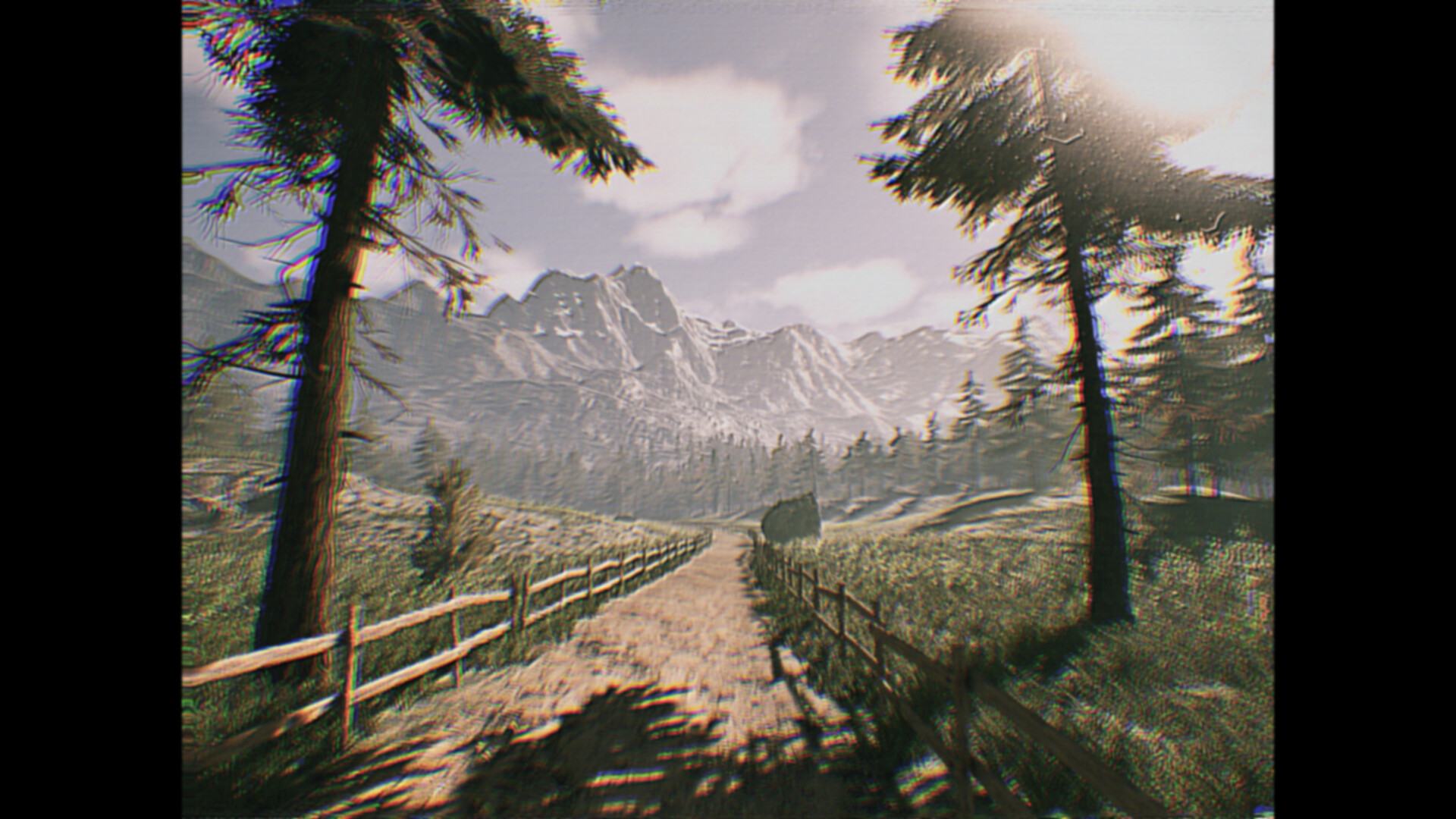
One of the game's calmer, more peaceful stretches, the kind of environmental storytelling reviewers said carried the experienceCosmicArcade -
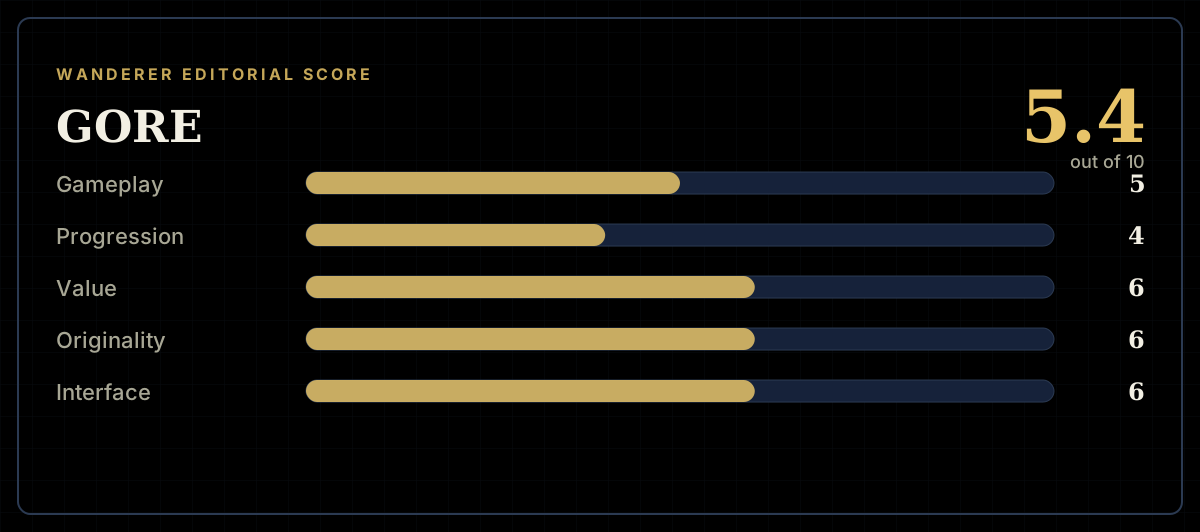
How the review scores each part of the gameWanderer Editorial -
The short versionWanderer Editorial