
Game review
Goat Simulator
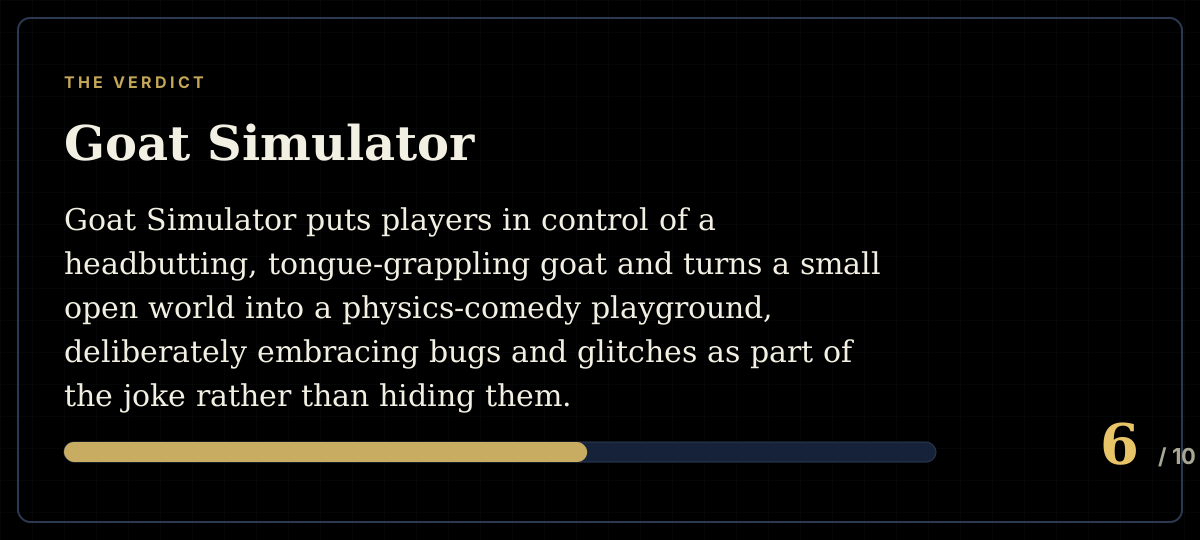
6 / 10
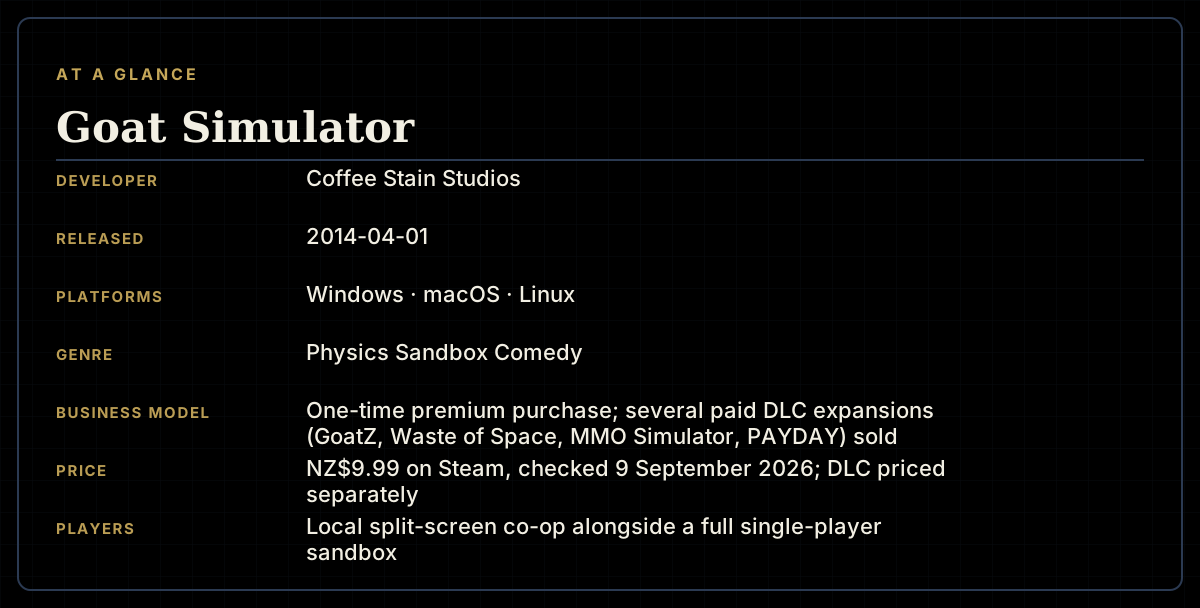
- Developer
- Coffee Stain Studios
- Publisher
- Coffee Stain Publishing
- Released
- 1 April 2014
- Platforms
- Windows, macOS, Linux
- Genre
- Physics Sandbox Comedy
- Monetisation
- One-time premium purchase; several paid DLC expansions (GoatZ, Waste of Space, MMO Simulator, PAYDAY) sold separately
- Players
- Local split-screen co-op alongside a full single-player sandbox
The short version
Goat Simulator puts players in control of a headbutting, tongue-grappling goat and turns a small open world into a physics-comedy playground, deliberately embracing bugs and glitches as part of the joke rather than hiding them. The review sample here is dominated by exactly the absurdist, meme-style enthusiasm you'd expect — genuinely funny, specific accounts of chaos and destruction that reviewers clearly had a great time creating. One detailed, more measured review praises the huge amount of interactive detail packed into each of the game's three zones, reporting no true game-breaking bugs across roughly twenty hours of largely couch co-op play.
A real, specific, and well-corroborated dissent runs alongside that enthusiasm, though, and it's worth taking seriously: multiple detailed reviewers independently describe the core joke wearing off within roughly the first half hour, after which a genuinely small map and a limited set of repeatable actions leave little left to do. A separate, more surprising technical complaint recurs too — reviewers report unexpectedly poor performance for a game this visually simple, with one comparing its demands unfavorably to a much more graphically ambitious title.
Biggest strengths
- A genuinely funny, distinctive comedic premise that reviewers describe producing real, specific, memorable moments of chaos rather than generic silliness
- A large amount of interactive detail packed into each of the game's zones, with reviewers praising the sheer number of objects and structures that can be destroyed or interacted with
- Local split-screen co-op specifically praised as a strong way to enjoy the game with a partner or family member, adding real replay value beyond solo play
Biggest weaknesses
- A specific, well-corroborated complaint: multiple independent reviewers describe the core joke wearing off within roughly the first half hour, after which repetitive actions and a genuinely small map leave little remaining to do
- Reviewers report unexpectedly poor performance for a visually simple game, with one directly comparing its demands unfavorably against a far more graphically ambitious title
- The base game's single included map is widely described as too small to sustain long-term engagement without additional purchased DLC content
Who it's for: Players who want a short, genuinely funny physics-comedy experience, especially in local co-op with friends or family. Less suited to players expecting substantial, sustained content, or anyone hoping for smooth performance from what looks like an undemanding game.
Our recommendation: A fun, cheap novelty best enjoyed in a short session with friends or family rather than as a game with lasting depth — check performance on your own hardware first given reviewers' surprising complaints, and don't expect the joke to sustain itself much past the first half hour.
6 / 10
Goat Simulator started life as an April Fools' Day joke from Coffee Stain Studios and became a genuine commercial success, spawning an entire wave of deliberately absurd "simulator" comedy games in its wake. Players control a goat capable of headbutting nearly anything, grappling objects with an improbably long tongue, and generally causing as much chaos as the game's small, deliberately janky physics engine allows.
Genuine, specific comedy that clearly landed
The vast majority of this review sample reads exactly as you'd expect from a game built around chaos and absurdity — genuinely funny, specific accounts of destruction rather than generic praise. One reviewer describes crashing "into a garden party, set everyone on fire with a stove and dragged them into the forest, to sacrifice the people to satan, so I could become a demon goat," concluding simply: "10/10 would play again." Beyond the jokes, one notably more measured, detailed review lends real substance to the praise, describing roughly twenty hours spent largely in local co-op with a partner, reporting genuinely dense interactive detail across the game's zones and no game-breaking bugs beyond what the developers openly acknowledged they wouldn't be fixing.
A specific, well-corroborated complaint: the joke runs out fast
Set against that enthusiasm, a genuinely serious and specific critique recurs across a meaningful share of detailed reviews, and it's worth engaging with directly rather than dismissing as humorless nitpicking. "After all of 30 minutes, the novelty of 'I can run up to X and headbutt it' passes," one reviewer writes, adding that "as a game that is for sale it falls short of reasonable expectations" even while acknowledging it succeeds brilliantly as a joke. Another reviewer, having gone in with high expectations from watching videos, reports the same arc: "within about an hour your frame rates" and enjoyment both start dropping, describing "the extent of the fun" as exhausted quickly once the initial novelty wears off. That's not one dissenting voice — it's a consistent, independently reached conclusion across enough detailed reviews to treat as a real limitation rather than a minority complaint.
An unexpectedly demanding game to run
A separate, more surprising technical complaint recurs alongside the content concerns: several reviewers report performance noticeably worse than the game's simple visuals would suggest. "This game has some serious performance issues," one reviewer writes, "I don't mind the bugs but the game tanked my PC more than Crysis 2 on maximum settings" — a specific, pointed comparison against a far more graphically ambitious title. That's worth checking against your own hardware directly before buying, since it runs counter to the reasonable assumption that a small, simple-looking sandbox would be undemanding to run.
What the completion data adds
Steam's achievement statistics offer a useful independent check on how much of the game's content players actually engage with. Roughly half the tracked playerbase earns the mid-tier achievements tied to specific goofy actions and unlockable goats, but the game's harder, more obscure achievements — tied to specific hidden interactions and secrets — drop to around 1.4%. That's a meaningful gap between casually poking around and thoroughly exploring everything the game offers, consistent with the review sample's split between players who bounce off after a short session and a smaller, more dedicated group who dig deeper into the game's easter eggs and secrets.
The game that launched a genre
It's worth noting the wider legacy this specific release had. Goat Simulator's commercial success directly inspired an entire wave of similarly absurdist "simulator" games in the years that followed, turning what began as a throwaway April Fools' joke into a recognized comedy subgenre in its own right. Reviewers who've followed that wider trend generally credit this game specifically as the genre's true originator, for better or worse, which is part of why it still draws steady attention years after release even from players who ultimately find the core loop thin.
DLC and Workshop support extend the content, at a cost
For players who do get hooked, several paid expansions add new maps and mechanics, from a zombie-survival parody to a space-set add-on, alongside active Steam Workshop support for user-created content. At least one reviewer specifically frames buying into the DLC catalogue as the real path to sustained enjoyment, arguing the base game alone is best understood as a taste of what the wider package offers rather than the full experience. That's a reasonable, practical piece of guidance for anyone who tries the base game and finds themselves wanting more once the initial small map runs its course, though it does mean the full experience costs meaningfully more than the appealingly low base price suggests.
Where it lands
Goat Simulator earns its cult reputation through genuinely funny, specific chaos that clearly delivers exactly what it promises, backed by a surprising amount of interactive detail packed into its zones for anyone willing to explore rather than rush through. The well-corroborated complaint that its core joke and its small map both run dry quickly is concrete enough to weigh seriously against the asking price, and the reported performance issues are worth checking before assuming this lightweight-looking game will run without trouble. As a short, genuinely funny novelty best shared with a friend or family member over a single session rather than played solo for hours on end, it remains an easy, cheap recommendation — just keep expectations calibrated to match, and treat the base price as covering roughly one good laugh-filled afternoon rather than a game you'll keep returning to on its own.
Pros and cons
Pros
- A genuinely funny, distinctive comedic premise that reviewers describe producing real, specific, memorable moments of chaos rather than generic silliness
- A large amount of interactive detail packed into each of the game's zones, with reviewers praising the sheer number of objects and structures that can be destroyed or interacted with
- Local split-screen co-op specifically praised as a strong way to enjoy the game with a partner or family member, adding real replay value beyond solo play
- A wide range of unlockable mutators and ridiculous achievements that give dedicated players additional goals beyond pure chaos
- Historically significant as the game that helped launch an entire "simulator" comedy genre that followed in its wake
Cons
- A specific, well-corroborated complaint: multiple independent reviewers describe the core joke wearing off within roughly the first half hour, after which repetitive actions and a genuinely small map leave little remaining to do
- Reviewers report unexpectedly poor performance for a visually simple game, with one directly comparing its demands unfavorably against a far more graphically ambitious title
- The base game's single included map is widely described as too small to sustain long-term engagement without additional purchased DLC content
- As a deliberately buggy game by design, the developers have publicly stated they won't fix most bugs, which some reviewers found charming and others found genuinely frustrating when it affected their ability to complete specific objectives
- Beyond its comedic hook, there's little underlying gameplay depth or progression, which won't bother players seeking a short novelty but will disappoint anyone wanting a longer-term game
Screenshots
-
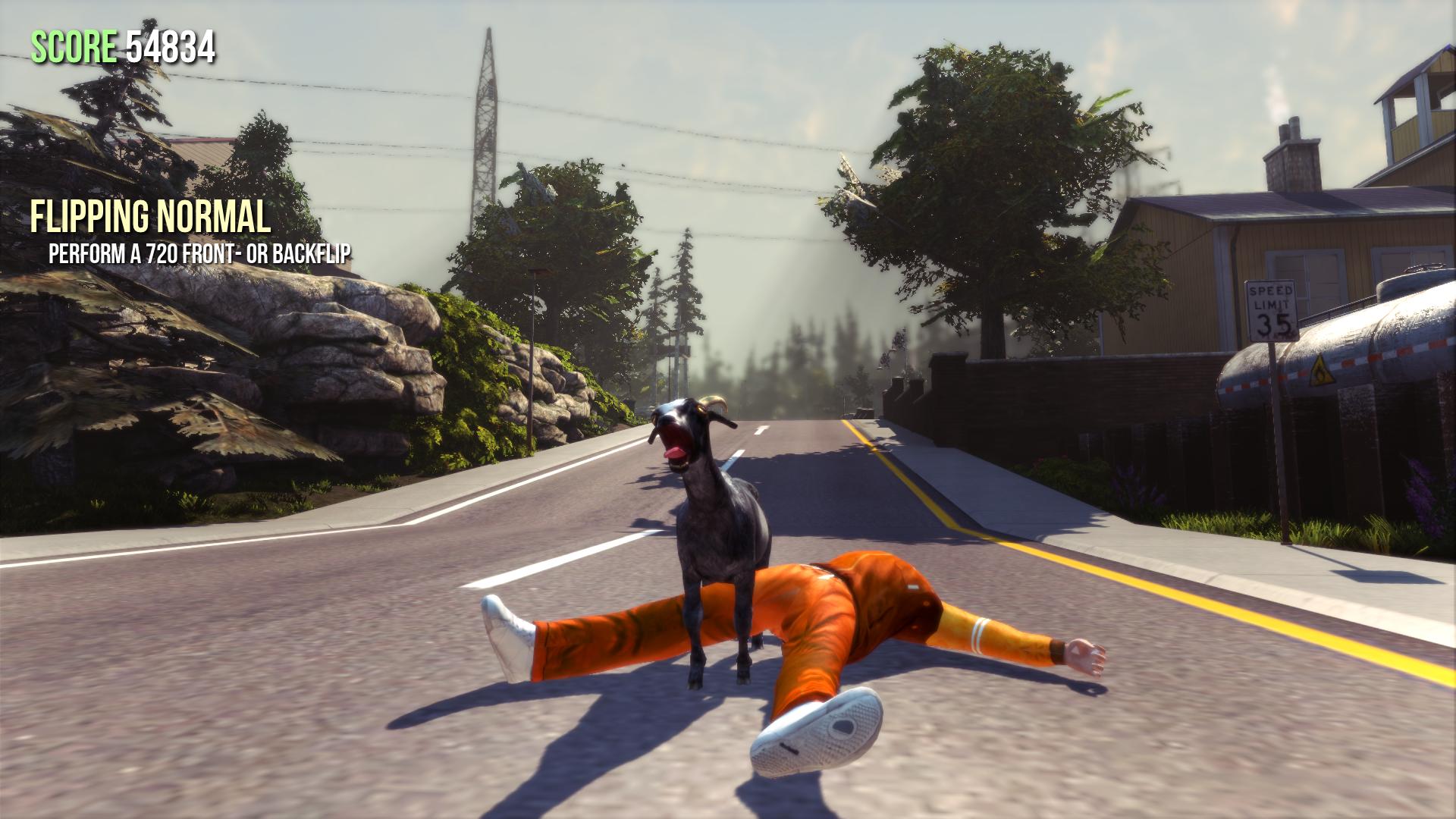
Goat SimulatorImage: Coffee Stain Publishing via Steam -
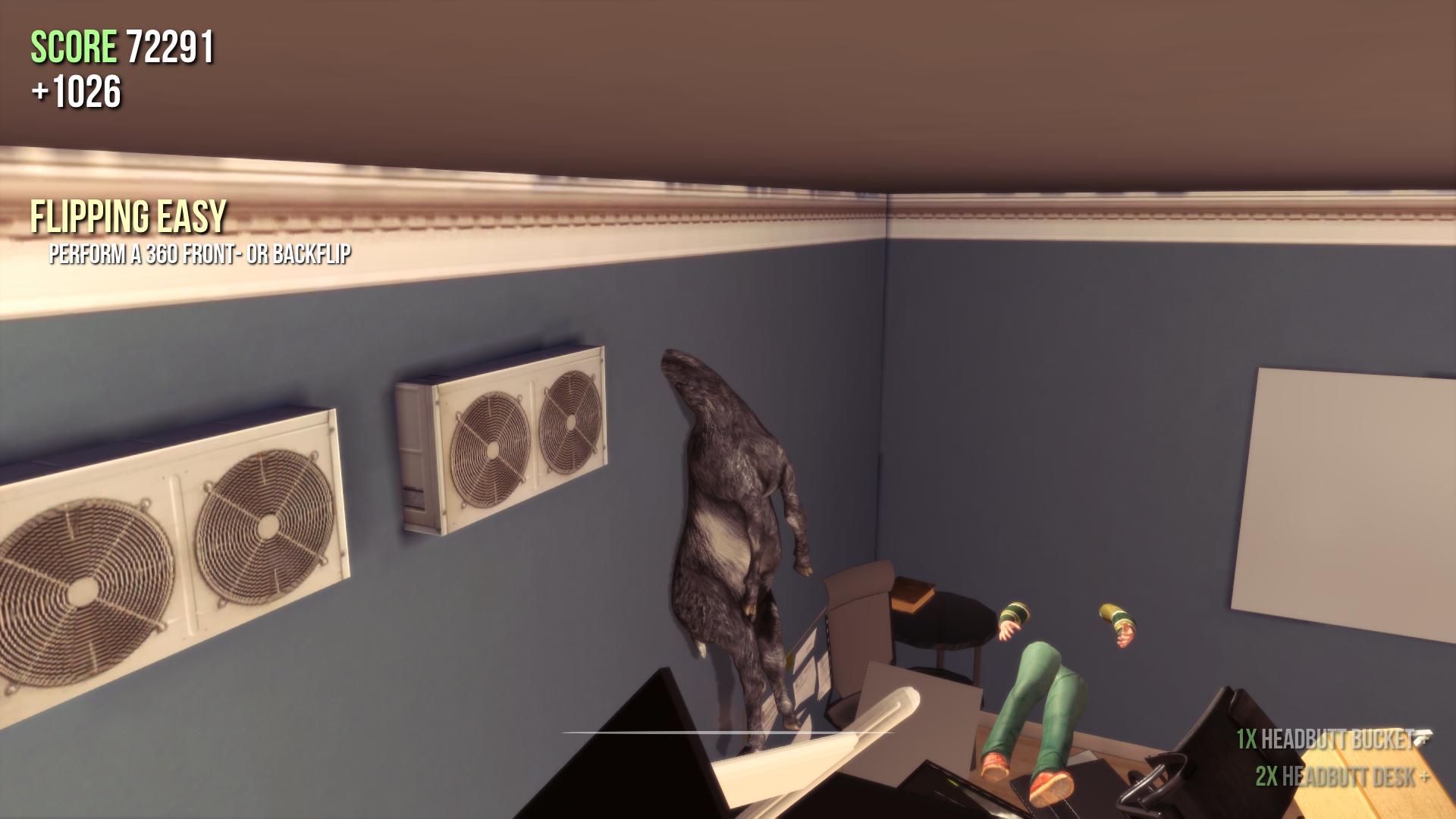
Goat SimulatorImage: Coffee Stain Publishing via Steam -
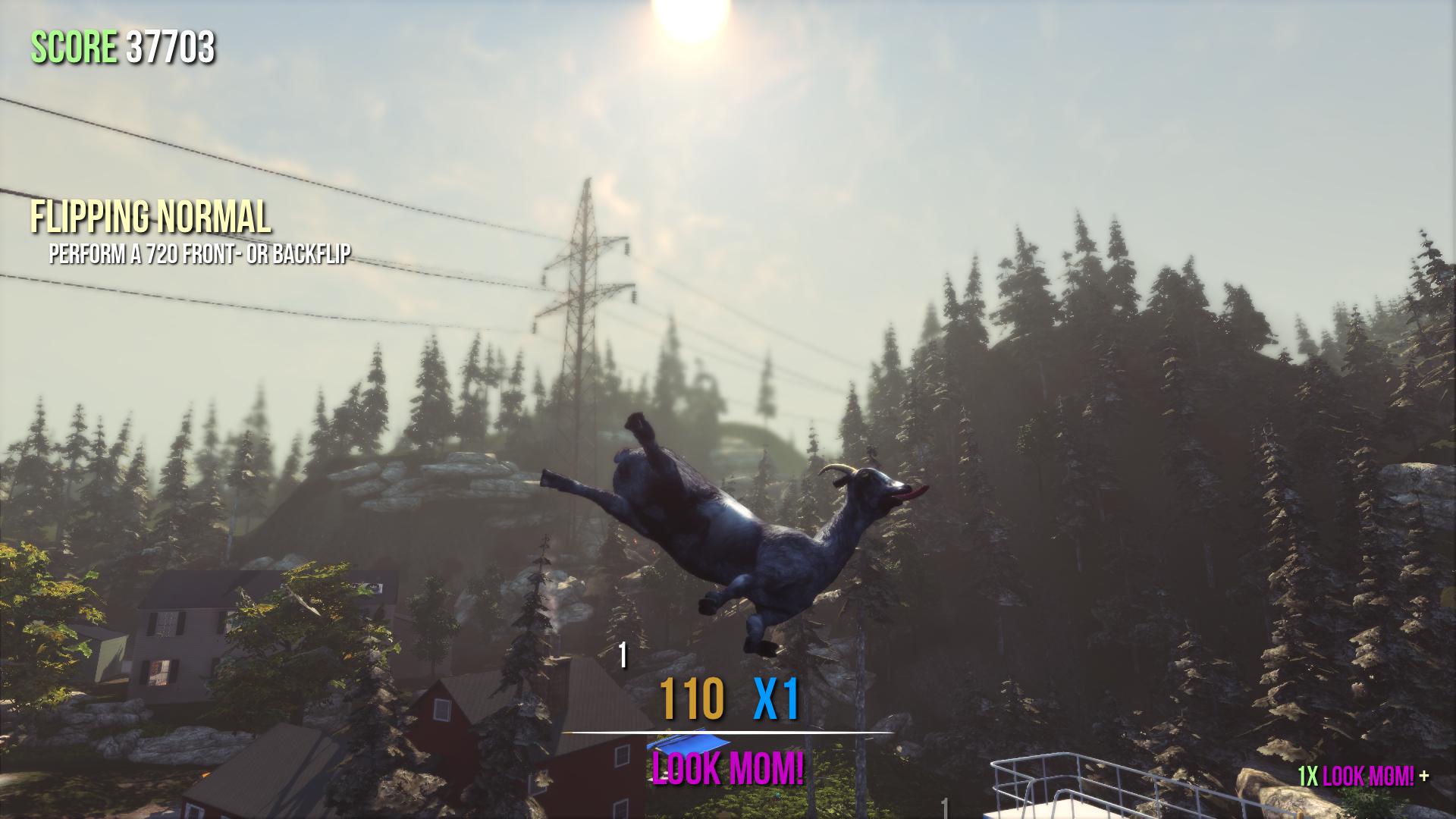
Goat SimulatorImage: Coffee Stain Publishing via Steam -
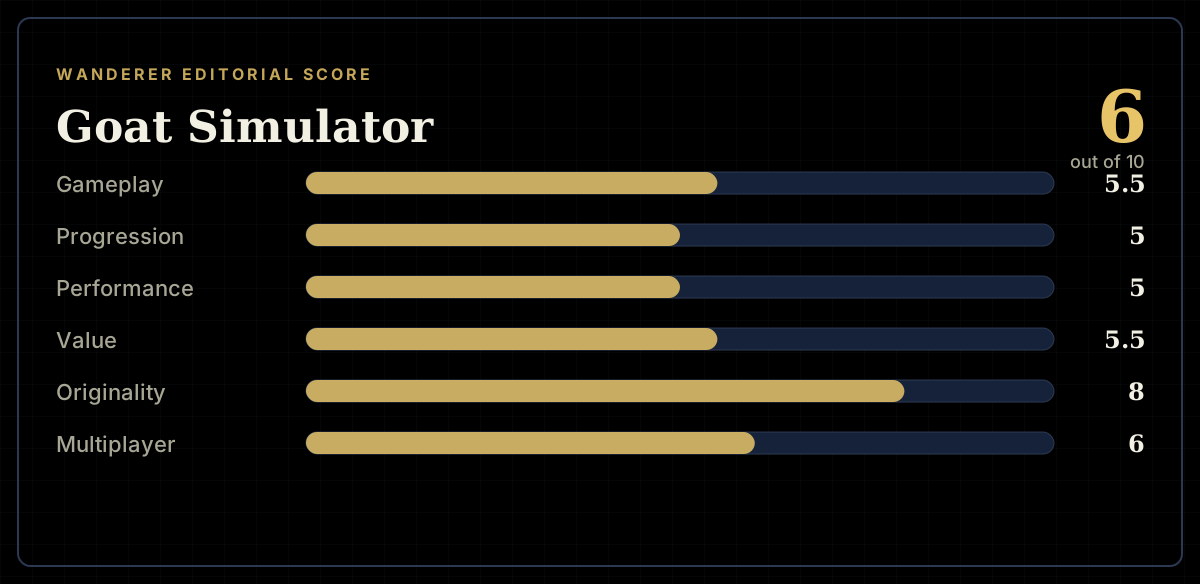
How the review scores each part of the gameWanderer Editorial -
The specsWanderer Editorial -
The short versionWanderer Editorial