Game review
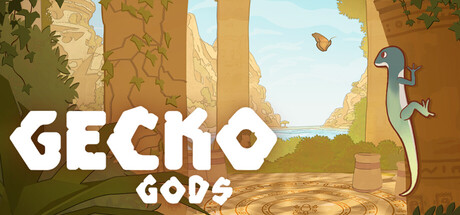
Gecko Gods
5.9 / 10
- Developer
- Inresin
- Publisher
- Super Rare Originals
- Released
- 16 April 2026
- Platforms
- Windows
- Genre
- Puzzle-Adventure
- Monetisation
- Premium
- Players
- Single-player
The short version
Gecko Gods nails its central fantasy of being a tiny, sticky-footed lizard loose in a crumbling ancient world, and that alone carries it a long way. The puzzles rarely test you, the camera fights back more than it should, and the ending asks for a precision the rest of the game never demanded — but the climbing, the scale, and the quiet, curious atmosphere make it an easy recommendation for anyone chasing a cosy few hours of exploration.
Biggest strengths
- Climbing any surface, walls and ceilings included, makes traversal and puzzle-solving feel genuinely distinct from other exploration games
- Dense, beautifully rendered archipelago rewards curiosity and off-path wandering
- Strong sound design and an evolving soundtrack that shifts with the environment
Biggest weaknesses
- Puzzle variety is thin; most solutions boil down to levers, hoops, and sliding-tile variants repeated across the map
- Camera can be genuinely disorienting near walls and overhangs, and caused motion sickness for at least one reviewer until the auto-camera was disabled
- The story is present but forgettable, delivered through slow, skippable bird dialogue that undercuts the game's better instinct to let players work things out themselves
Who it's for: Fans of cosy exploration games, low-stakes puzzle-platformers, and anyone who wants to play as a small animal doing small-animal things.
Our recommendation: Recommended, especially with a controller and a relaxed pace in mind.
5.9 / 10
A Small Lizard in a Big World
Gecko Gods puts players in the tiny, sticky-footed body of the title creature and sets it loose on a small, sun-bleached archipelago dotted with crumbling temples and sleeping gods. The pitch is disarmingly simple: climb, explore, eat bugs, solve the odd puzzle, wake up some deities. It works because the developers committed fully to what makes a gecko a gecko. Players can scuttle up nearly any surface — walls, ceilings, the undersides of ruined bridges — and the game's puzzles, level layouts, and secrets are built specifically around that ability rather than treating it as a gimmick bolted onto a standard platformer.
That commitment is the game's biggest strength. Reviewers repeatedly single out the climbing as the thing that makes traversal itself enjoyable, not just a means of getting to the next objective. Falls are rarely fatal — the gecko shrugs off drops that would kill most video-game protagonists — which keeps the pace unhurried and lets the world's scale do the talking. Islands are stacked with nooks, hidden ledges, and half-buried structures that reward simply looking up, or walking away from an obvious path to see what's around the back of a cliff.
Puzzles That Rarely Bite
The puzzle design is where opinions split hardest. At its best, Gecko Gods uses its climbing mechanic to turn otherwise mundane puzzle types into something more physical: pulling a lever might mean scaling a wall, crossing a ceiling, and dropping through a gap rather than just walking up and pressing a button. Several players single out specific stretches — one reviewer calls out a "desert island" section in particular — where the puzzle design, level layout, and evolving soundtrack all click together for a genuinely excellent few hours.
The trouble is consistency. Multiple reviewers note the puzzles lean on a small handful of ideas repeated throughout the run: levers, hoops, mirrors, and sliding-tile variants that show up again and again with little escalation in complexity. Sliding puzzles in particular draw specific complaints for overstaying their welcome. None of this makes the game unpleasant to play, but it does mean players hoping for a puzzle-forward challenge on par with the climbing mechanic's novelty may come away wanting more. This is very much a game built for a relaxed audience rather than one chasing difficulty, and it says so with its own design choices — recovery from mistakes is quick, checkpoints are frequent (with one notable exception discussed below), and there's little punishment for experimentation.
Atmosphere Carries What Story Doesn't
Where Gecko Gods clearly excels is mood. The archipelago is rendered with real care, and the soundtrack draws consistent praise for shifting naturally with the environment and mood rather than looping a single theme throughout. More than one reviewer describes simply sitting still on a hillside listening to the music as a highlight, which says a lot about how well the game's quieter moments land.
The narrative side is weaker. Bird characters deliver exposition through dialogue that several reviewers describe as slow, over-explanatory, and easy to accidentally skip entirely thanks to a fast-forward input that sometimes jumps past whole conversations. The lore itself — ancient gods, a forgotten civilisation, ruins to reawaken — is pleasant window dressing rather than a compelling hook, and the game is at its best when it trusts players to piece things together from the environment rather than being told directly. Some reviewers explicitly compare the design philosophy, favourably, to Wind Waker-era Zelda in its use of environmental storytelling and gentle, non-intrusive guidance — though the writing itself doesn't reach that same level of polish.
Camera Jank and a Late-Game Gauntlet
The most consistent criticism across the review sample is the camera. Because the gecko can cling to almost any surface, the camera has to constantly reorient around three-dimensional geometry, and it doesn't always manage gracefully. Reviewers describe snap detachments when crossing overhangs, awkward behaviour on elevators and near water, and general disorientation that at least one player found genuinely nauseating until they disabled the auto-camera setting entirely — a fix a developer reportedly reached out directly to help with. Playing with a controller is repeatedly recommended over mouse and keyboard, with several reviewers calling the keyboard experience noticeably more cumbersome.
Beyond the camera, players report a scattering of minor bugs: geometry clipping, texture pop-in on later areas, an auto-aim bite mechanic that occasionally overcorrects, and an ambiguous auto-save system that gives no clear indication of when progress has actually been recorded. None of these are described as game-breaking, but they add up to a game that feels a little less finished than its central mechanic deserves.
The sharpest point of frustration, though, is the ending. After an otherwise low-stakes, exploration-focused game, Gecko Gods closes with an escape sequence demanding tight, repeated precision — a sudden tonal and mechanical shift that several completionist reviewers single out as a genuine roadblock, made worse at launch by a lack of mid-sequence checkpoints that forced failed attempts to restart from the beginning. To the developers' credit, a patch roughly two months after release specifically slowed or adjusted this sequence to make it more forgiving, which later reviewers confirm resolved the worst of the frustration.
Worth the Climb
Gecko Gods is a short, focused game — most reviewers finish in the six-to-twelve-hour range, with full completion taking a bit longer thanks to collectibles and an active achievement-hunting community around it. At NZ$28.99 that's a reasonable trade for a game this polished in its central conceit, even if the puzzle variety and camera don't quite match the quality of the climbing mechanic and the atmosphere built around it. It's a game clearly built for a specific mood: put on a controller, don't rush, and let a small lizard's-eye view of a big, curious world do the rest. Players chasing mechanical depth or narrative ambition may find it slight, but as a cosy few hours of climbing, exploring, and eating bugs, it delivers exactly what it promises.
Pros and cons
Pros
- Climbing any surface, walls and ceilings included, makes traversal and puzzle-solving feel genuinely distinct from other exploration games
- Dense, beautifully rendered archipelago rewards curiosity and off-path wandering
- Strong sound design and an evolving soundtrack that shifts with the environment
- Generous, well-signposted collectible and achievement systems that don't punish players for missing things
Cons
- Puzzle variety is thin; most solutions boil down to levers, hoops, and sliding-tile variants repeated across the map
- Camera can be genuinely disorienting near walls and overhangs, and caused motion sickness for at least one reviewer until the auto-camera was disabled
- The story is present but forgettable, delivered through slow, skippable bird dialogue that undercuts the game's better instinct to let players work things out themselves
- A late-game escape sequence demands twitch precision the rest of the game never asks for, and originally had no forgiving checkpoint
Screenshots
-
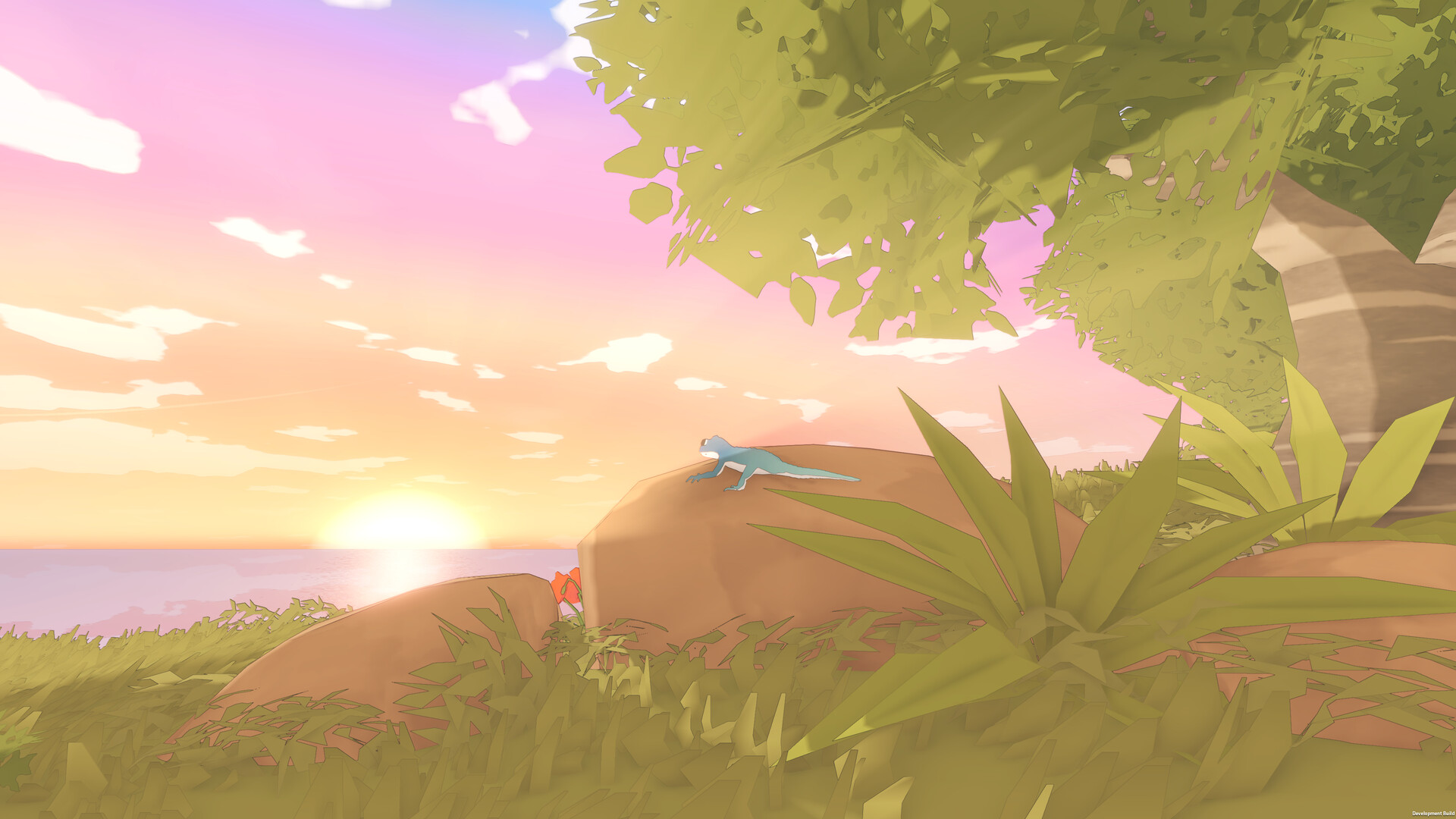
The archipelago's quieter moments are a big part of the appealSuper Rare Originals -
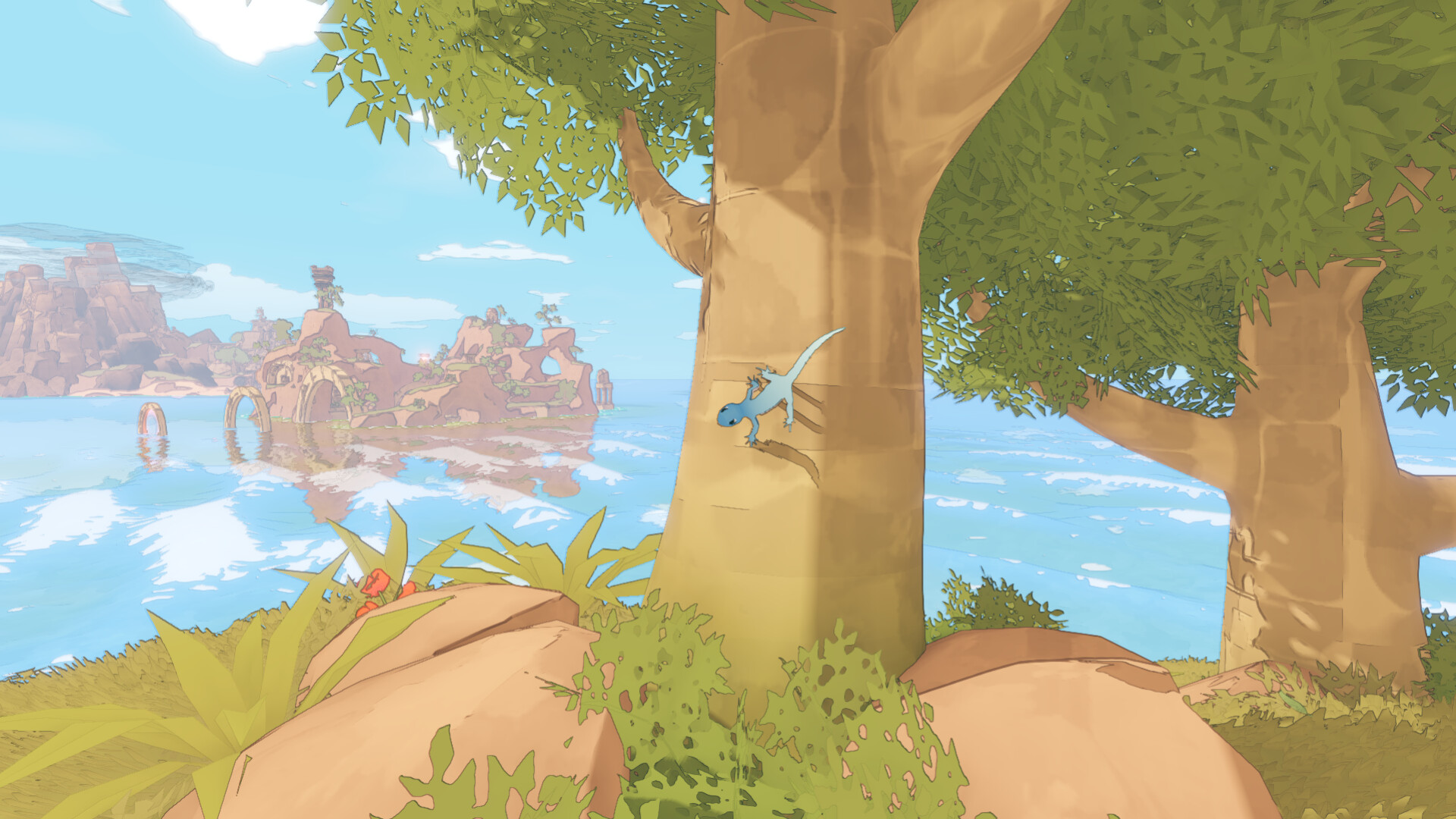
Climbing any surface, walls and tree trunks included, is what makes exploration feel distinctSuper Rare Originals -
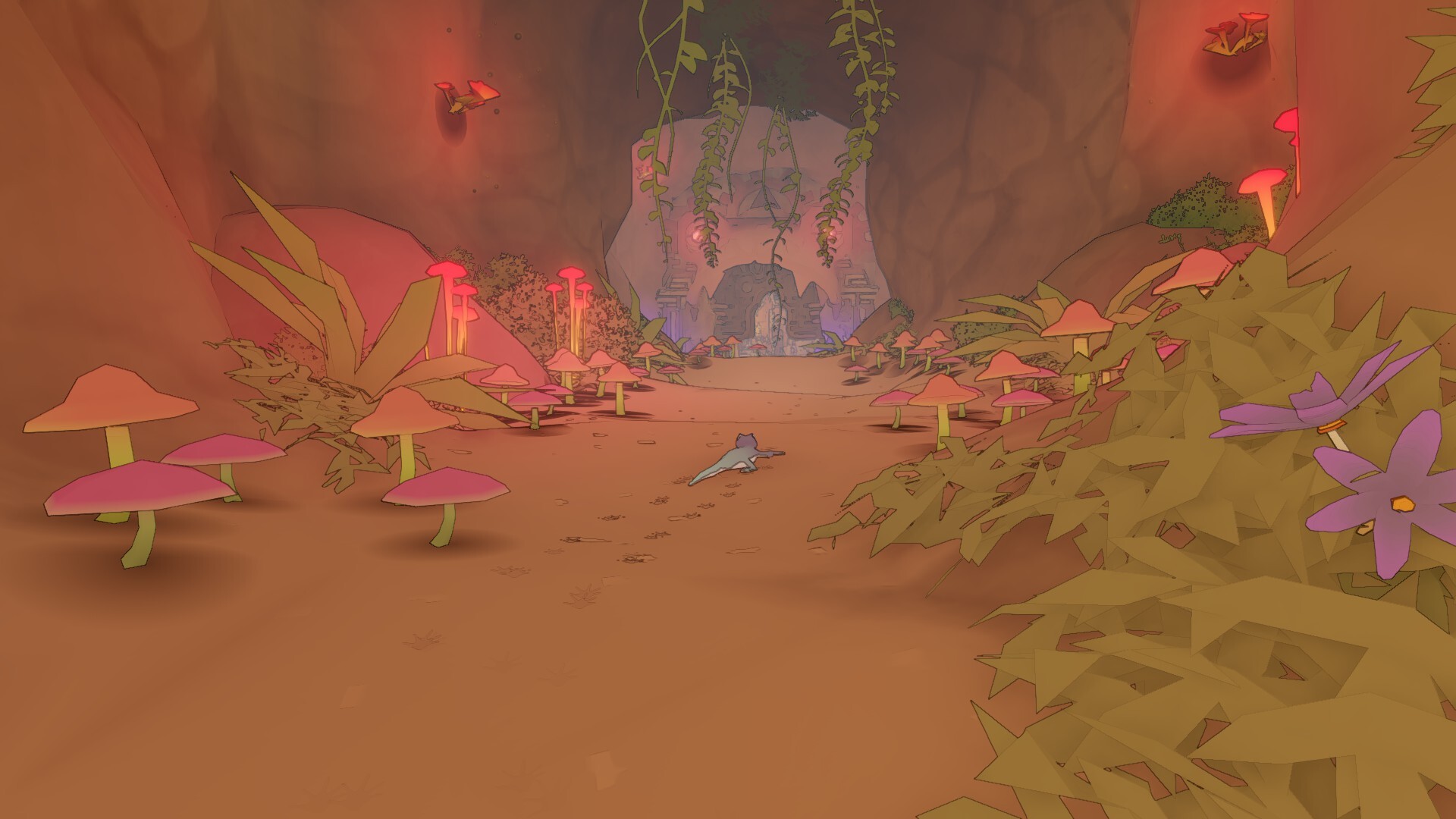
Ancient temples and ruins dot the archipelago, waiting to be reawakenedSuper Rare Originals -
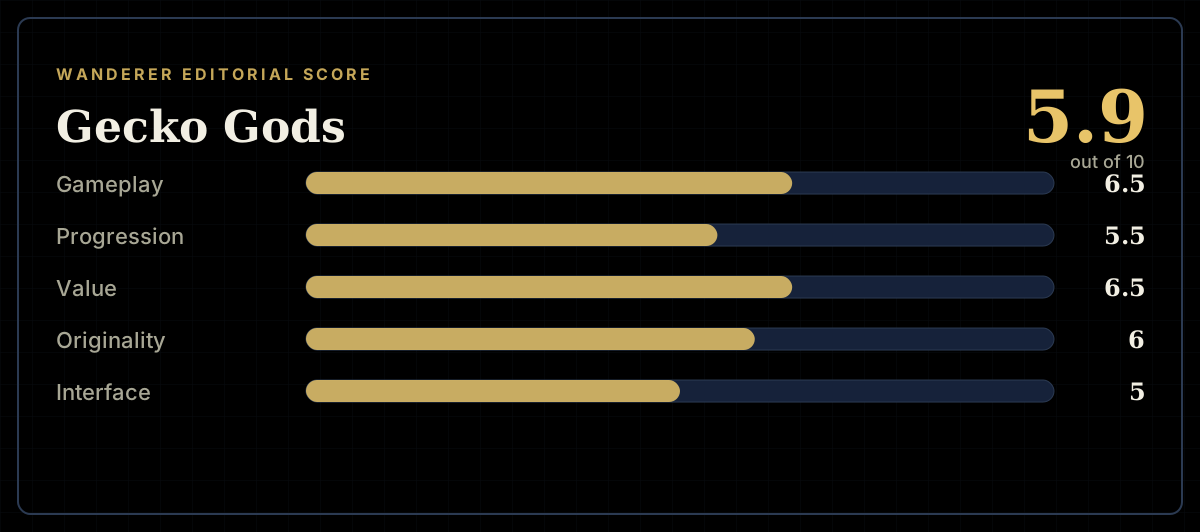
How the review scores each part of the gameWanderer Editorial -
The short versionWanderer Editorial