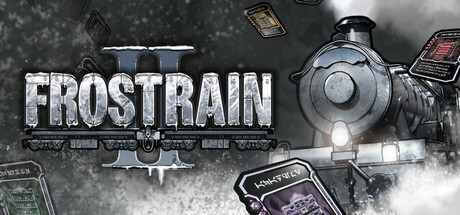
Game review
Frostrain 2 Review
7.5 / 10
- Developer
- nemonan
- Publisher
- nemonan
- Released
- 13 January 2026
- Platforms
- ["Windows"]
- Genre
- Strategy
A Sequel Built On A Beloved Free Predecessor
Frostrain 2 is solo developer nemonan's follow-up to Frostrain, a free train-building roguelike deckbuilder that built a small, devoted following before this paid sequel entered Steam Early Access on January 13, 2026 (the storefront's "Jul 16, 2026" date marks the game's 1.0 exit from Early Access, not its original release). At $10.99, it has drawn a review pool that leans heavily on comparisons to its predecessor: the vast majority of this game's 72 English reviews open by referencing "the first game" or "the demo," treating Frostrain 2 less as a new discovery and more as a continuation fans were already primed to buy. That pool sits at 89% positive across its full 386-review, all-language count, "Very Positive," comfortably clearing this review's minimum bar and then some for a still-evolving Early Access strategy title.
A Train-Building Roguelike That Earns Its FTL And Frostpunk Comparisons
The core loop, assembling a train of specialized cars, choosing a conductor with a unique passive, and running a frozen, resource-starved route while fending off raiders and the cold itself, draws consistent favorable comparisons to FTL, Into the Breach, Frostpunk, and card-based roguelikes like Slay the Spire, Monster Train, and Balatro. "This game has the depth of a 4X strategy game packed into bite-sized roguelite runs," wrote one reviewer with substantial playtime logged, praising how each car's synergies with its neighbors and with the chosen conductor create genuinely different builds run to run. Several reviewers singled out the conductor choice as the game's strongest design element, since it reshapes an entire run's strategy from the outset rather than being a cosmetic flavor pick, and the resource-management tension, balancing fuel, food, and warmth against the train's ever-present forward momentum, was repeatedly cited as the mechanic that makes each decision feel consequential rather than rote.
Fans Of The Original Frostrain Are Split On Whether The Sequel Actually Improves It
The most interesting fault line in this pool isn't between fans and critics, it's between fans of the free original and fans of the paid sequel, who don't always agree these are the same audience. A meaningful cluster of reviewers, several explicitly citing hundreds of hours in Frostrain 1, described Frostrain 2 as what one called "sideways development," arguing the sequel traded away specific systems they loved, including a faith or morale-style mechanic tied to harder moral choices, in exchange for broader but shallower additions. "The first game made every stop feel like it mattered because of what you'd lose. This one is bigger but somehow lower-stakes," read one such review. Others pushed back hard on that framing, insisting the sequel's added car variety, conductor roster, and route structure represent a genuine improvement rather than a lateral move, and that early complaints reflect nostalgia for a free game more than an honest comparison. Both camps agree on one thing: this is a direct, run-it-back sequel to a specific prior game, not a reinvention, and how much that matters to a given player depends entirely on how attached they already were to the first one.
A Late-Game "DPS Check" And RNG Swings Draw The Sharpest Complaints
Beyond the sequel-comparison debate, the pool's most concrete mechanical complaint centers on a specific late-game failure state several reviewers independently flagged: a poison or frost damage-over-time effect that can overwhelm an under-optimized train almost instantly once it appears, regardless of how well the run had gone up to that point. "You can be cruising for hours and then hit a DPS check you had no way to see coming and lose the whole run in two turns," wrote one reviewer, a complaint echoed closely enough by others that it reads as a real balance issue rather than one player's bad luck. A related, softer complaint describes the mid-to-late game snowballing into a "win more" spiral, where a strong early build compounds advantages so heavily that losses become rare until the aforementioned spike hits without warning. A smaller number of reviewers asked for an endless or sandbox mode once the main route is beaten, framing it as the natural next step for a system deep enough to support one.
Reviewers Disagree Sharply Over Whether The Art Is AI-Assisted, Hand-Drawn, Or Just Placeholder
A distinct, recurring thread in this pool concerns the game's visual presentation, and reviewers do not agree on what they're looking at. Several reviewers explicitly accused the current art of being AI-generated or AI-assisted, with one writing bluntly, "I see AI but also AI can hit a mark," treating it as a mark against the game's presentation even while praising the mechanics. Others described the opposite trajectory, crediting the developer with moving away from AI-generated art over the course of development: one reviewer wrote that "the developers switched from AI to hand-drawn art which gives it its unique charm," scoring the visuals well specifically on that basis. A third position defended the developer outright against the accusation, arguing "they do not deserve the slander and hate they get for using AI. AI is a tool, something to assist them in the short term," framing any AI use as a stopgap for a solo developer rather than a substitute for effort. Separately from the AI question, a number of reviewers described some of the current art as placeholder-quality regardless of its origin, cautioning that players for whom visual theming is a priority may find the current presentation the game's weakest link while it remains in Early Access.
An Actively Supported Early Access Title With Real Depth Underneath It
Running through nearly every review, positive or critical, is praise for nemonan's post-launch responsiveness: frequent patches, visible engagement with player feedback, and a sense that the January Early Access launch was the start of active development rather than a soft-launched cash grab. A handful of more critical reviewers still flagged the expected Early Access shortcomings, limited content variety, replayability that depends on how much the roguelike structure appeals to a given player, and features still clearly in progress, but even those reviews tended to frame these as growing pains rather than red flags, given the visible development pace.
Verdict
Frostrain 2 is a well-regarded, actively developed train-building roguelike deckbuilder that earns its comparisons to FTL, Frostpunk, and the best card-based roguelites, built by a solo developer with a track record of shipping a beloved free predecessor and now iterating quickly on its paid sequel. Its biggest tension isn't a design flaw so much as a fandom split, whether trading some of the original's harder-edged systems for broader scope counts as progress, alongside a genuinely sharp late-game difficulty spike and a visual-presentation debate that reviewers themselves can't agree on. At $10.99 with active, responsive Early Access development behind it, it's a strong pick for roguelike deckbuilder fans willing to accept some rough edges, and an easy one for anyone who already loved the original Frostrain.
Screenshots
-
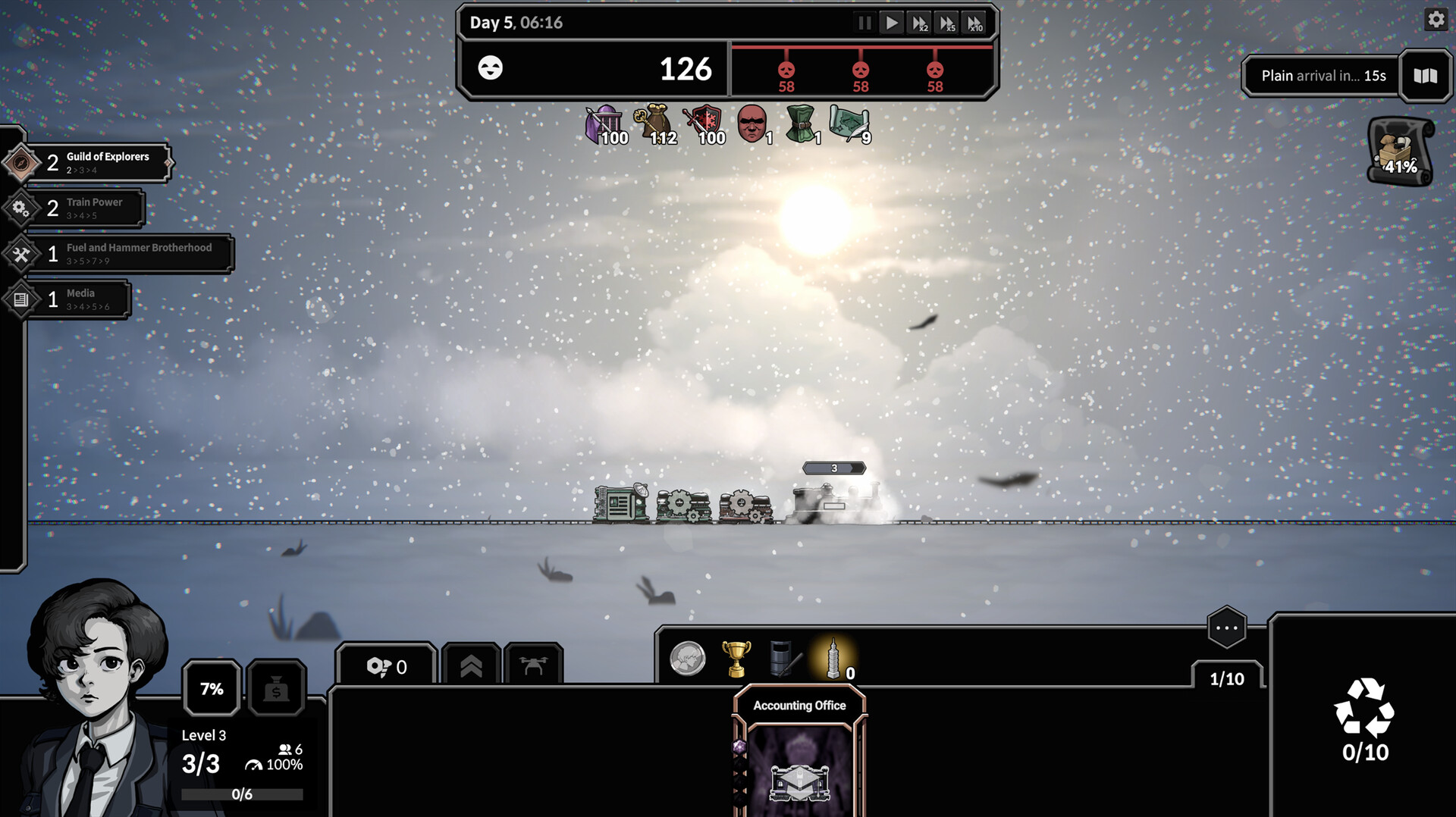
The train crosses an open plain, with faction reputation tracks, resource counts, and the conductor portrait all visible along the edges of the run's main view.Image: nemonan via Steam -
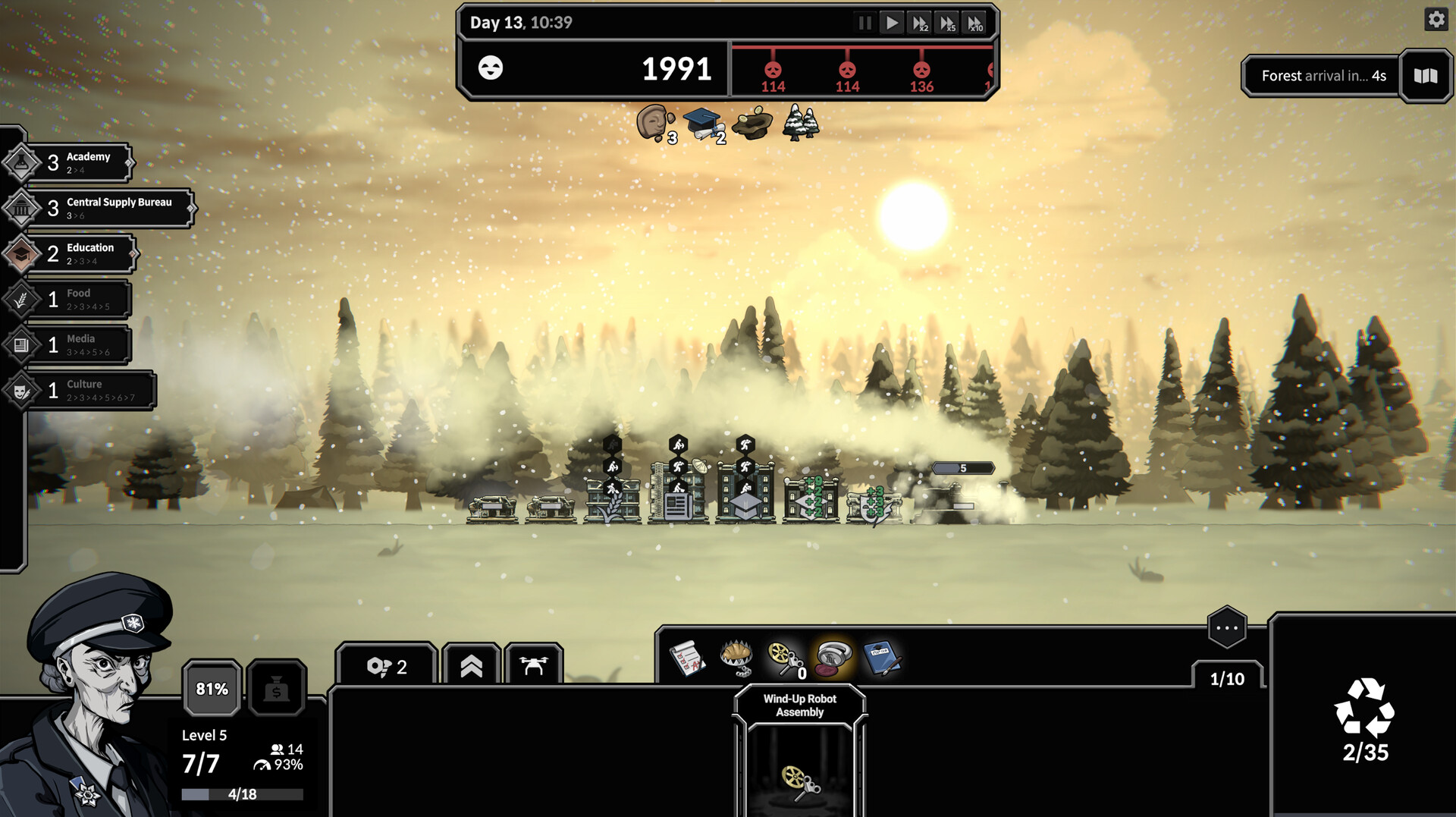
By day 13 the train has grown considerably longer, with new car types like the Wind-Up Robot Assembly and a much larger population to sustain.Image: nemonan via Steam -
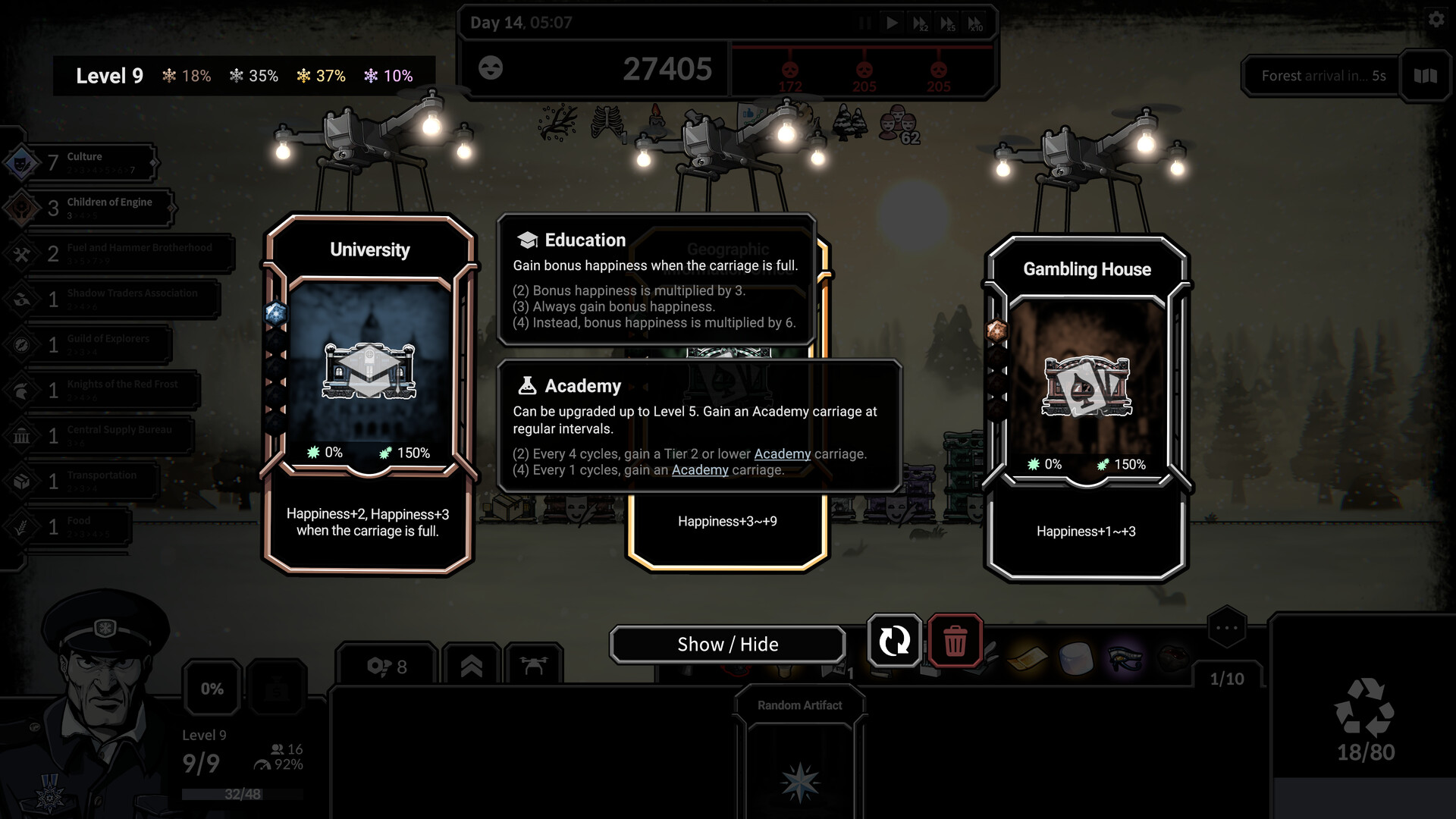
Choosing a new train car between stops, with each option's happiness bonuses and level-up conditions spelled out on its card.Image: nemonan via Steam