
Game review
Goblin Sushi Review
7.5 / 10
- Developer
- Old Cake Factory
- Publisher
- Metaroot
- Released
- 9 February 2026
- Platforms
- ["Windows"]
- Genre
- Strategy
Sushi Go Round Meets a Roguelike Deckbuilder
Goblin Sushi entered Early Access on February 9, 2026 from the two-person studio Old Cake Factory, taking the fast-food time-management genre that flash games made famous and bolting a roguelite deck of upgrade cards onto it: you serve increasingly chaotic goblin customers sushi, grilled meats, and shakes, building a run-specific menu out of randomized recipe and buff cards as the pace ramps up. At $9.99 it's a modest ask, and at review time it had built a genuinely large and enthusiastic pool for a young Early Access game, 400 all-language reviews (357 positive, "Very Positive") with a 191-review English subset carrying the same "Very Positive" score, 183 positive to 8 negative.
A Genre Mashup That Clicks
The review most reviewers reach for is a direct lineage claim, tracing Goblin Sushi back to classic flash-era cooking games while crediting it for adding real strategic depth on top. "You have NO IDEA how many HOURS I spent playing the Sushi-Go-Round flash game as a kid," one reviewer wrote, going on to praise how the roguelite shop mechanics let you "unlock a random assortment of recipes... plus price/efficiency modifiers" instead of a fixed menu. Multiple reviewers reach for the same two touchstones independently, "scratched that itch that balatro triggered in me too" and "balatro meets Sushi Go Round if it was a little gross and bigger" both appear, alongside comparisons to Cook, Serve, Delicious and the old Papa's Pizzeria series. One especially detailed review recommended learning the game "like a typing game with full keyboard layout vs manually clicking everything" since "the sushi has rhythm" and key combos run noticeably faster than the mouse, a specific mechanical tip several other reviewers echoed independently.
Charm, Gross-Out Humor, and Goblin Chaos
Beyond the mechanics, reviewers consistently single out the game's presentation and tone as a major draw. One reviewer described being won over by "very funny visual gags with the clients, ingredients and the Landlord," while another specifically enjoyed the game's willingness to get gross, joking about strategies for "how can I only serve poop to customers in this run and still make money." The sound design gets its own specific praise, several reviewers mentioned the "munch noises" the goblin customers make while eating, calling it a small detail that adds outsized charm. One longer review captured the overall tone well, calling it "balatro meets Sushi Go Round" but "with a gnarlier coat of paint," noting the game features things like "caterpillars in a sushi roll" and "smiling poop platters" that give the fast-paced cooking loop a distinct comic personality most competitors in the genre don't bother with.
The "Just One More Run" Problem, in a Good Way
A recurring theme across the pool is how hard the game is to put down, reviewers repeatedly describe runs as short, roughly 20 minutes according to one estimate, but compulsively repeatable. "It's become my 'just one more time' game," one reviewer wrote, while another simply logged 84 hours and called it "great relax game, worthy for the price," specifically praising the replay value that comes from randomized card offers changing the ideal strategy each run. A two-hand accessibility note from one reviewer flagged the flip side of the speed-focused design, they specifically asked for a slower-paced "relaxing mode" so streamers and players with disabilities could still enjoy the game without the fastest difficulty settings, a request framed constructively rather than as a dealbreaker.
Rough Edges: Balance, Content Pace, and a Keyboard-Only Bug
The negative end of the pool clusters around two related complaints: build balance and the pace of Early Access content updates. One reviewer flagged that "some builds are ridiculously overpowered compared to others," a sentiment echoed by another who wanted "more meta-progression between runs, more automation, clear in-game achievements, and greater build variety." A separate, more pointed complaint concerned the update schedule itself, one reviewer, writing in June after several months post-launch, noted the developers had "added virtually nothing to the game since it released in February," predicting the small two-person team's slow cadence "is NOT encouraging for this game" if it continues. A specific accessibility bug also surfaced: one reviewer reported that using a mouse instead of the keyboard for upgrade selection would sometimes pick the wrong option, "always picks the middle power up instead of the one I selected," a problem they said actively worked against players who can't keep up with keyboard-only play. None of these complaints were universal, most reviewers who raised balance or pacing concerns still recommended the game overall, but they mark real, specific soft spots in an otherwise very warmly received Early Access build.
Verdict
Goblin Sushi takes a well-worn genre, the frantic flash-era cooking game, and finds a genuinely fresh angle by fusing it with roguelite deckbuilding, wrapping the whole thing in gross-out goblin humor that reviewers keep specifically praising rather than just tolerating. Its "just one more run" pull and its keyboard-rhythm-based combo system are real, distinctive strengths that a two-person team should be proud of, while its build-balance rough edges, a content update cadence some reviewers already consider too slow for an Early Access title, and a keyboard-vs-mouse upgrade-selection bug mark it as a game still very much in progress. At $9.99, with 96% of a substantial 400-review pool recommending it, it's a strong pick for anyone who likes roguelite deckbuilders or cooking-management games and doesn't mind a young Early Access build still working out its pacing, though anyone burned by slow-updating Early Access titles before should watch the roadmap before buying in.
Screenshots
-
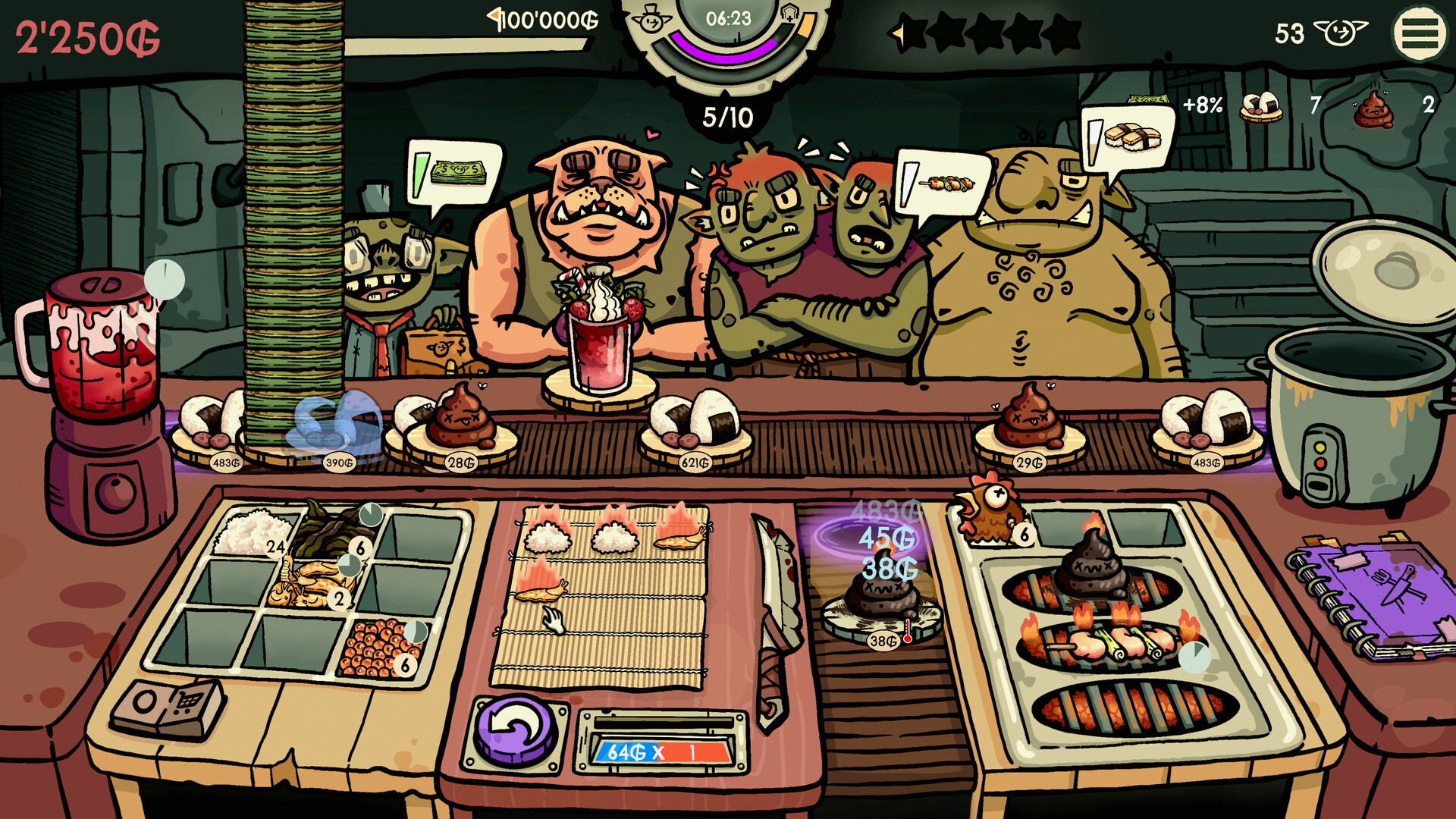
A mid-run rush, juggling a blender, a sushi mat, a grill, and a line of increasingly impatient goblin customers at once.Image: Metaroot via Steam -
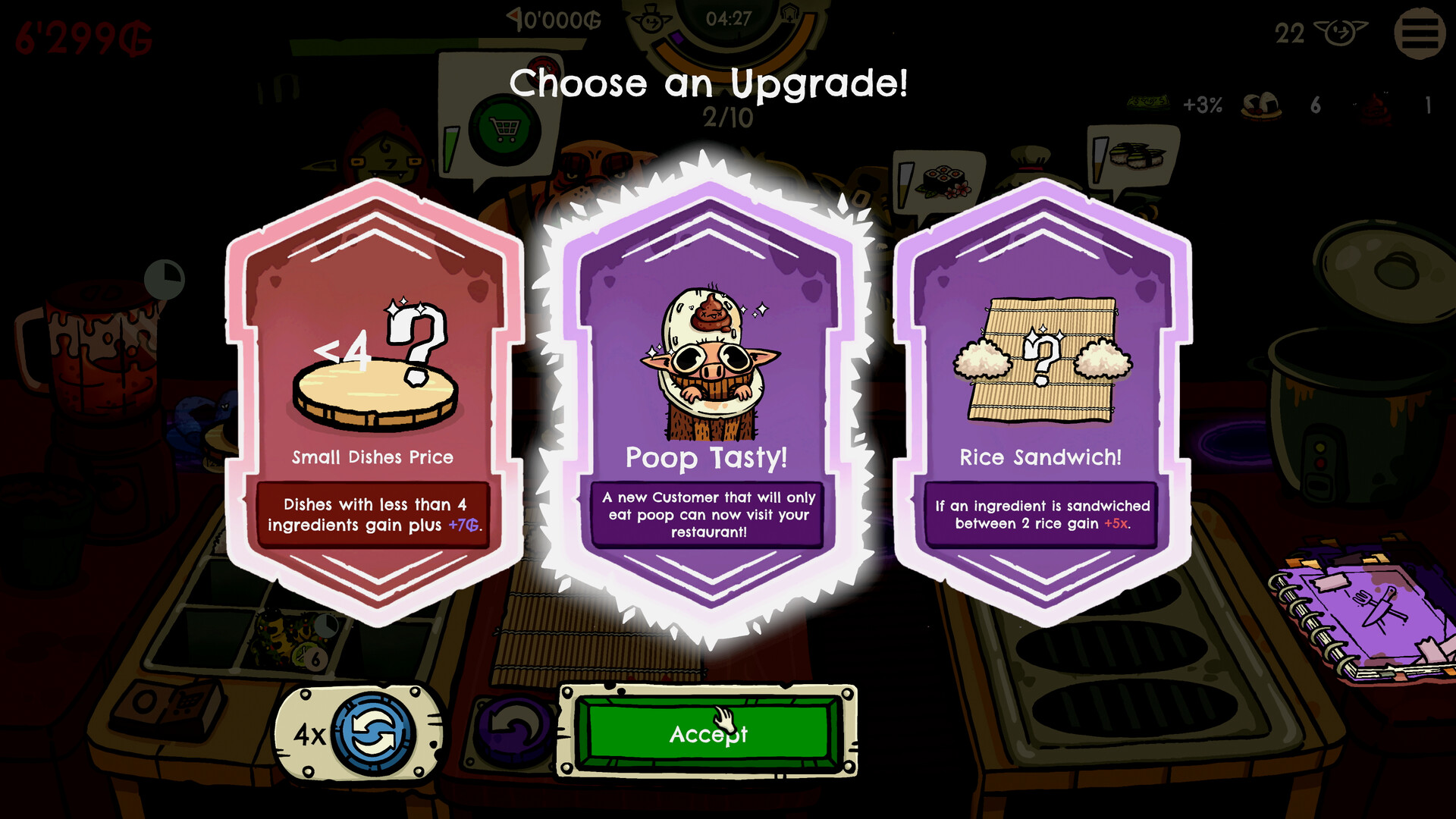
One of the run-defining upgrade-card choices, part of the roguelite deckbuilding layer reviewers keep comparing to Balatro.Image: Metaroot via Steam -
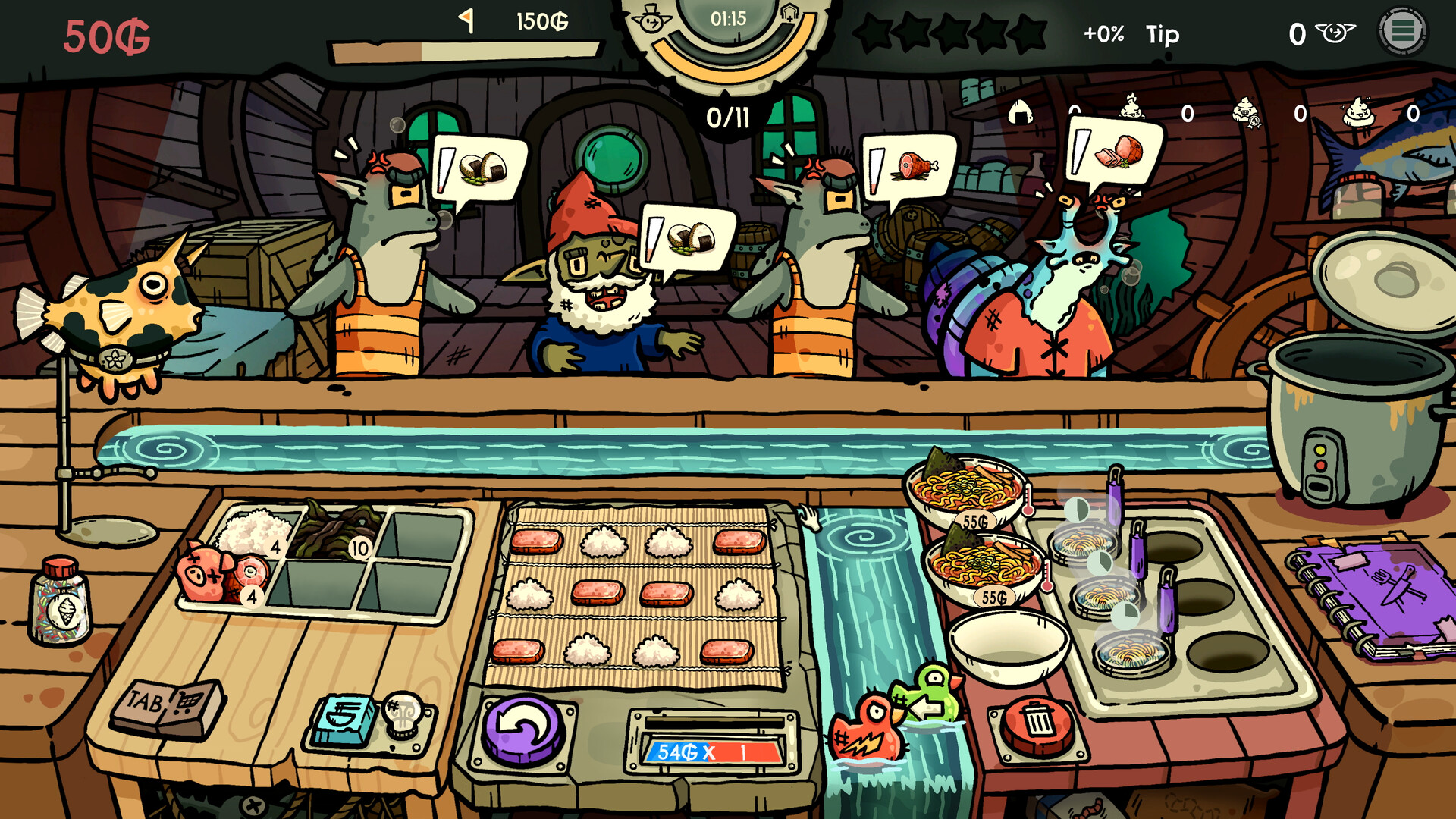
A later restaurant location with a nautical theme and a new customer cast, one of the map variety reviewers said they wanted more of.Image: Metaroot via Steam