Game review
Runeomicon Review
6.7 / 10
- Developer
- TLR Games
- Publisher
- Joystick Ventures
- Released
- 16 September 2026
- Platforms
- ["Windows"]
- Genre
- Strategy
A Tower Defense Game Where Your Mouse Hand Is the Weapon
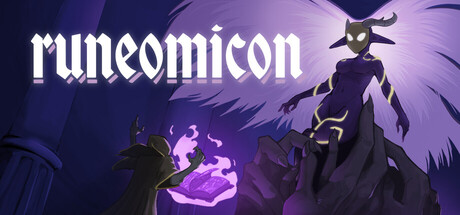
Runeomicon casts the player as a disgraced dark wizard, woken mid-nap from exile and immediately besieged by an armed mob of villagers intent on stopping a forbidden ritual before it summons the goddess of death. The hook is a genre mashup reviewers keep reaching for the same shorthand to describe: tower defense crossed with a rhythm-precision drawing game, closer to Osu! than to any traditional base-defense title. Under time pressure, with waves of villagers closing in, the player traces intricate connect-the-dots rune patterns with the mouse; drawing them cleanly channels magic that fuels defenses, summons, and spells, while breaking the pattern or hesitating lets the ritual falter and the defenses crumble. As runs progress, players can summon six ancient dark gods, each unlocking a distinct set of spells and abilities that reshapes how runes are drawn and how the defense is built around them, layered on top of branching upgrade paths between rounds that fortify defenses and speed up rune execution. Developed by TLR Games and published by Joystick Ventures, Runeomicon launched on Steam on September 16, 2026, priced at $9.99, for Windows only, following a roughly ten-month public run of demo builds that included appearances at Steam Next Fest, Day of the Devs, and Gamescom 2026.
The pitch leans hard into escalation: the game explicitly frames its own arc as starting in frantic survival and gradually transforming into precise mastery as the runes grow more complex and the player's hand and memory catch up.
A Small, Very Positive Launch Pool
Runeomicon has drawn 26 reviews so far, with 23 positive and 3 negative for an 88% "Positive" approval rating, spanning English, Spanish, German, Russian, and Ukrainian players. Multiple reviewers explicitly mention discovering the game at Gamescom 2026 or through its long-running demo before buying at launch, giving this small pool an unusually well-informed base of hands-on familiarity with the finished product.
A Genuinely Fresh Hook, and a Soundtrack Reviewers Keep Praising
The praise across the pool centers overwhelmingly on how distinctive the core rune-drawing loop feels within an otherwise crowded genre. One reviewer calls it a very fresh take on the tower defense and survivors-horror space, saying there's enough depth to justify more than 10 hours at the asking price. A German reviewer who first tried the game at Gamescom and then again through the demo at home sums it up as "Tower Defense x Osu!", praising the pixel art style and the slowly escalating difficulty, and recommends it outright for the price. Another English-language reviewer breaks down the structure approvingly: a timed, randomized puzzle layered under constant assault, wrapped around tower-defense combat and meta-progression resource management between rounds, with what they call good onboarding and tutorializing for new players. A Spanish-language reviewer describes losing track of time entirely, saying an hour felt like a minute once immersed, while a Russian reviewer specifically singles out the soundtrack as excellent alongside the overall feel of the game. Several reviewers highlight the writing and pacing of the story delivery as a specific strength, with one praising how little the game explains up front, letting the world and light dialogue carry the narrative instead of dumping exposition, and calling that restraint unusual for an indie game. The sprite work and character art also draw specific compliments, with one reviewer calling out the game's central antagonist figure by name as visually striking alongside the rest of the pixel art.
A Steep Difficulty Curve, Hand Cramps, and a Reported Save Bug
The negative and mixed reviews cluster tightly around one specific issue: how sharply the rune complexity escalates once the early, more forgiving levels end. One negative English-language review describes going from a casual, laid-back rune-drawing game to what felt like doing calculus within two levels, arguing the combination of a tight completion timer and constant enemy pressure turns a relaxed atmosphere unreasonably high-pressure without warning. A Russian reviewer echoes the same frustration more bluntly, calling the game "torture by drawing" once ten new runes get dumped on the player right after they'd finally memorized the previous set. Even several positive reviews carry the same caveat: one reviewer describes level three as "a kick to the teeth" after two levels that felt great, noting the difficulty triples again just as a rune finally clicks, and wishes the game offered a difficulty selection at the start rather than defaulting everyone into the same escalation curve; another says playing on the hardest starting difficulty with ten possible runes from the outset isn't meant for "mere mortals," though they're sticking with the challenge rather than switching down. A recurring physical complaint shows up across multiple English-language reviews: drawing runes repeatedly with a mouse causes real hand and wrist strain after extended sessions, with one reviewer joking about their carpal tunnel and another wishing for an alternative control scheme, like finger-drawn input, to relieve the cramping. One Russian-language review flags a more serious technical issue: a reported bug where all progress resets after quitting and relaunching the game, though it appears to be an isolated report rather than a pattern echoed elsewhere in the pool.
Verdict
Runeomicon takes a genre as thoroughly picked-over as tower defense and finds a genuinely novel hook in it, turning rhythm-precision rune drawing into both the offense and the defense, and its 88% approval across a demo-primed launch pool reflects real enthusiasm for that idea rather than hype alone. The pixel art, restrained storytelling, six-god summon system, and a soundtrack reviewers keep calling out by name all land as intended, and the central loop of drawing under mounting pressure clearly hooks the players it's aimed at. The recurring friction point is just as clear: a difficulty curve that several reviewers, including some who still recommend the game, describe as a sudden and punishing spike once the tutorial-friendly opening levels end, compounded by a control scheme that causes real physical strain during longer sessions and no difficulty option offered up front to soften the ramp. At $9.99, Runeomicon is an easy recommendation for players who want a genuinely different spin on tower defense and don't mind their hand getting a workout, with the caveat that anyone hoping for a purely cozy, low-pressure puzzle experience should try the free demo first and see how level three treats them.
Screenshots
-
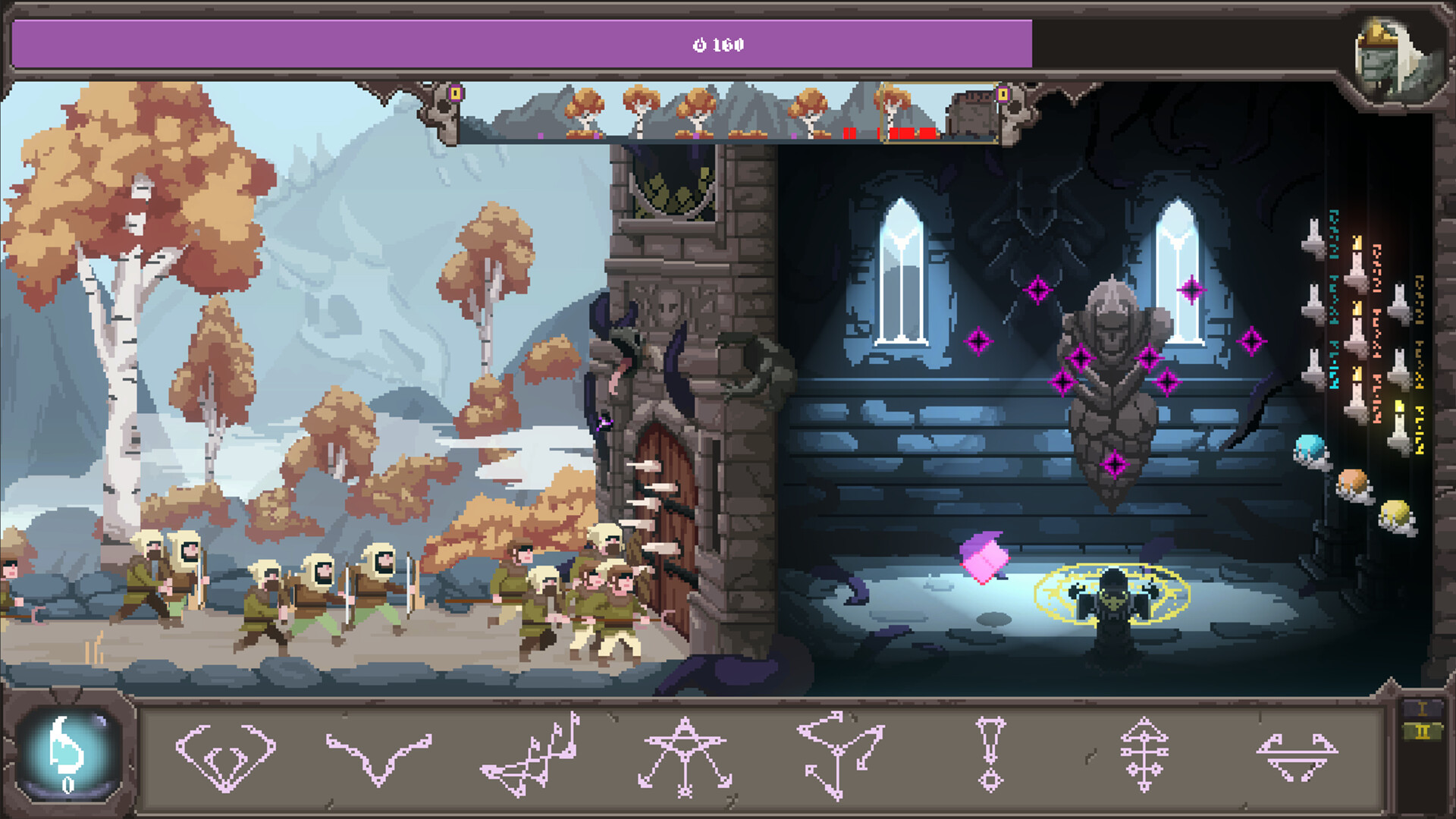
The split-screen view keeps the villager assault outside visible while runes are drawn inside the sanctuary, with the row of selectable rune patterns for available spells lined up along the bottomImage: Joystick Ventures via Steam -
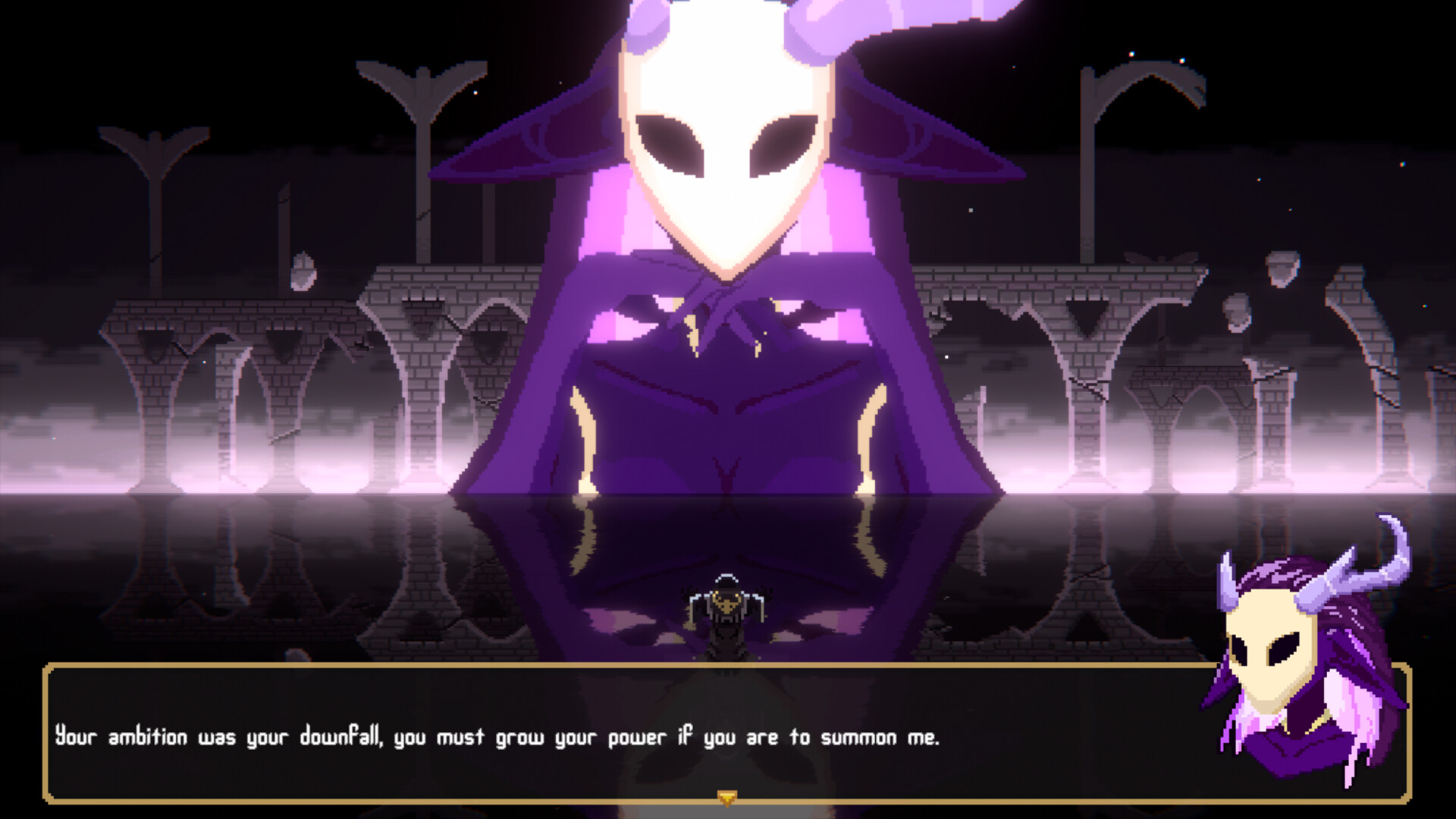
The goddess of death herself, glimpsed here in a story beat, is the ultimate target of the ritual the wizard is fighting to completeImage: Joystick Ventures via Steam -
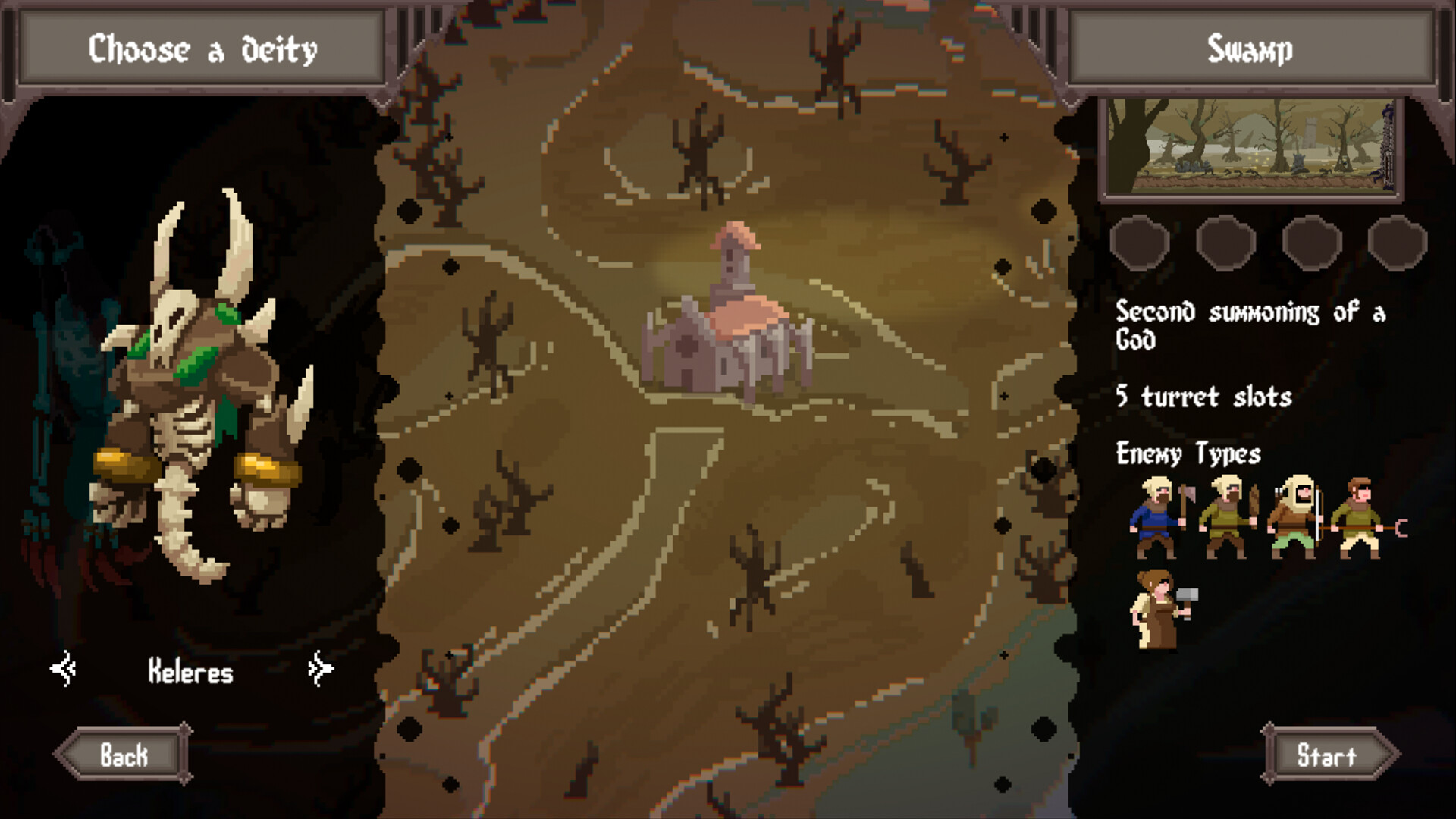
Choosing between the game's six dark gods, like this skull-horned deity before a swamp level, is how runs branch into different builds and turret loadoutsImage: Joystick Ventures via Steam