Game review
Dread Admiral Review
6.1 / 10
- Developer
- Tescrin Games
- Publisher
- Tescrin Games
- Released
- 3 September 2026
- Platforms
- ["Windows"]
- Genre
- Strategy
A Fleet You Build Once and Can Lose Forever
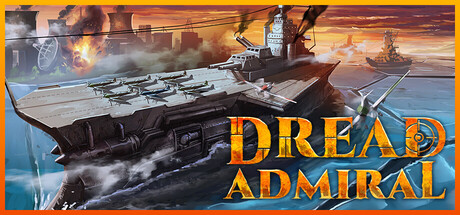
Dread Admiral is a turn-based naval roguelite that hands the player a persistent fleet across a campaign against a hostile archipelago, with a single rule hanging over every decision: any ship lost in battle is gone for good. Every turn spent on a mission is a turn the Black Fleet, a relentless enemy force, spends closing in, forcing a constant tension between gathering more resources and ships versus abandoning a mission early to buy time. Combat plays out through alternating activations, where every ship on the board, from sneaky submarines and patrol boats to carriers and battleships, has a defined tactical role in a rock-paper-scissors relationship with the others. The store page pitches it directly at fans of FTL, Urtuk: The Desolation, and Darkest Dungeon, and reviewers just as consistently reach for a different, older touchstone: the 1993 DOS naval strategy game Grandest Fleet, whose hex-based fleet combat and slow-burn buildup Dread Admiral is repeatedly described as reviving. Developed and published solo by Tescrin Games, Dread Admiral released on Steam on September 3, 2026 following an extended public demo period, priced at $13.99, for Windows only.
Ranks, Perks, and Flagship upgrades persist and grow even after a failed run, giving the roguelite structure a metaprogression layer on top of the pure permadeath tension, while mission modifiers and AI Admirals with distinct personalities and tactics are meant to keep no two campaigns feeling identical.
A Strong Post-Launch Debut, Built On a Long Demo
Dread Admiral has drawn 60 reviews so far, with 53 positive and 7 negative for an 88% "Very Positive" approval rating, spanning English, Russian, Simplified Chinese, and Traditional Chinese players. Several reviewers explicitly note their playtime figures run high partly because they'd already logged hours in the public demo before the 1.0 launch, and the review pool as a whole reads as unusually engaged and detailed for a week-old release, a byproduct of that extended pre-launch visibility.
Grandest Fleet's Spiritual Heir, With Addictive Just-One-More-Turn Pull
The praise across the pool is remarkably consistent in what it credits. Multiple reviewers independently invoke Grandest Fleet, with one calling it "pretty similar in scope and theme" to the 1993 DOS classic and praising its good music, neat visuals, and strong AI, while another says it "reminds me of the old days" and calls it simply a great game with lots of replay value. One reviewer, an explicit fan of hex-based tactics games, describes it as "completely addictive," while another calls the gameplay loop "addictive just-one-more-turn," noting it's reliably winnable on Normal difficulty once its systems click, even if the sheer number of moving parts each turn makes individual missions time-consuming. The pixel art and presentation draw specific praise too, with one reviewer highlighting the cinematic pixel visuals and a dedicated fleet painter for customizing ship colors and flags, and another singling out the sound design broadly, from the satisfying ping of sonar detecting a submarine to gunfire that's audibly distinct between ship types. A Traditional Chinese reviewer writing in both languages praises the combined-arms synergy between battleship fleets, carrier groups, cruiser squadrons, and destroyers, and specifically credits the shipped 1.0 version for being noticeably more balanced and less punishing on Easy than the demo build had been. Several reviewers also single out the developer directly, describing a solo dev who is unusually responsive to community feedback and has already addressed early balance issues within days of launch, with one reviewer explicitly revising their overall sentiment upward after the developer personally posted tactical advice for a difficult first mission.
A Blockade Meta, Unreliable Controls, and Translation Gaps
The negative and mixed reviews cluster around a few specific, recurring complaints rather than scattered vague dissatisfaction. Several Chinese-language reviewers argue the campaign's core strategic depth collapses into a single dominant tactic: rushing submarines and destroyers to blockade an enemy port, defeating whatever remaining fleet is left, and then snowballing into the next mission, with one reviewer bluntly comparing it to victory-point rushing in Hearts of Iron IV and calling the approach "almost absurd" given the genre's naval-combat premise, and another describing the blockade mechanic as "almost destroying the entire game's strategy." A separate cluster of complaints targets controls and difficulty: one negative English-language review specifically cites "unreliable controls" where misclicks can cost an entire match, alongside queued movement commands the reviewer calls "the devil," while acknowledging the aesthetics, animation, and soundtrack are all strong even as the mechanics frustrated them. Balance complaints appear on both sides of the language divide, with one detailed Simplified Chinese review praising the game's content and polish overall while separately flagging what the reviewer sees as wildly inconsistent anti-air odds for carriers losing planes to torpedo boats, and a slow experience-point curve that awards the same tiny amount of XP for a fast ten-minute match as for a full hour-long battle. Translation quality draws its own specific criticism, with one Simplified Chinese reviewer noting that some port-construction interface text remains untranslated English and that the translated portions read as clearly machine-generated, though they add it doesn't meaningfully impede understanding. A handful of reviewers also flag that the AI opponent appears to see the full map without needing scouted vision in a genre built around information scarcity, which one reviewer suggests undercuts the tension the fog-of-war-style naval premise is meant to create.
Verdict
Dread Admiral takes a genuinely underserved niche, hex-based naval tactics in the tradition of a thirty-year-old DOS cult favorite, and rebuilds it as a modern permadeath roguelite with real metaprogression, distinctive ship roles, and a solo developer who reviewers consistently praise for fast, responsive post-launch support. Its 88% approval across 60 reviews reflects genuine enthusiasm for that addictive just-one-more-turn pull and its cinematic pixel presentation, but the pool is just as consistent about where the cracks show: a blockade-rush strategy that multiple reviewers say flattens the tactical depth the premise promises, controls and queued movement commands that can cost a match to a misclick, incomplete translation work outside English, and balance rough edges around anti-air odds and experience gain that a week-old 1.0 release hasn't fully sanded down yet. At $13.99 for a genre this specific and this rarely attempted, Dread Admiral is a strong pickup for anyone who remembers Grandest Fleet or wants an FTL-style permadeath structure wrapped around naval combat, provided they're prepared for a steep difficulty curve and a developer still actively working through balance and control feedback in real time.
Screenshots
-
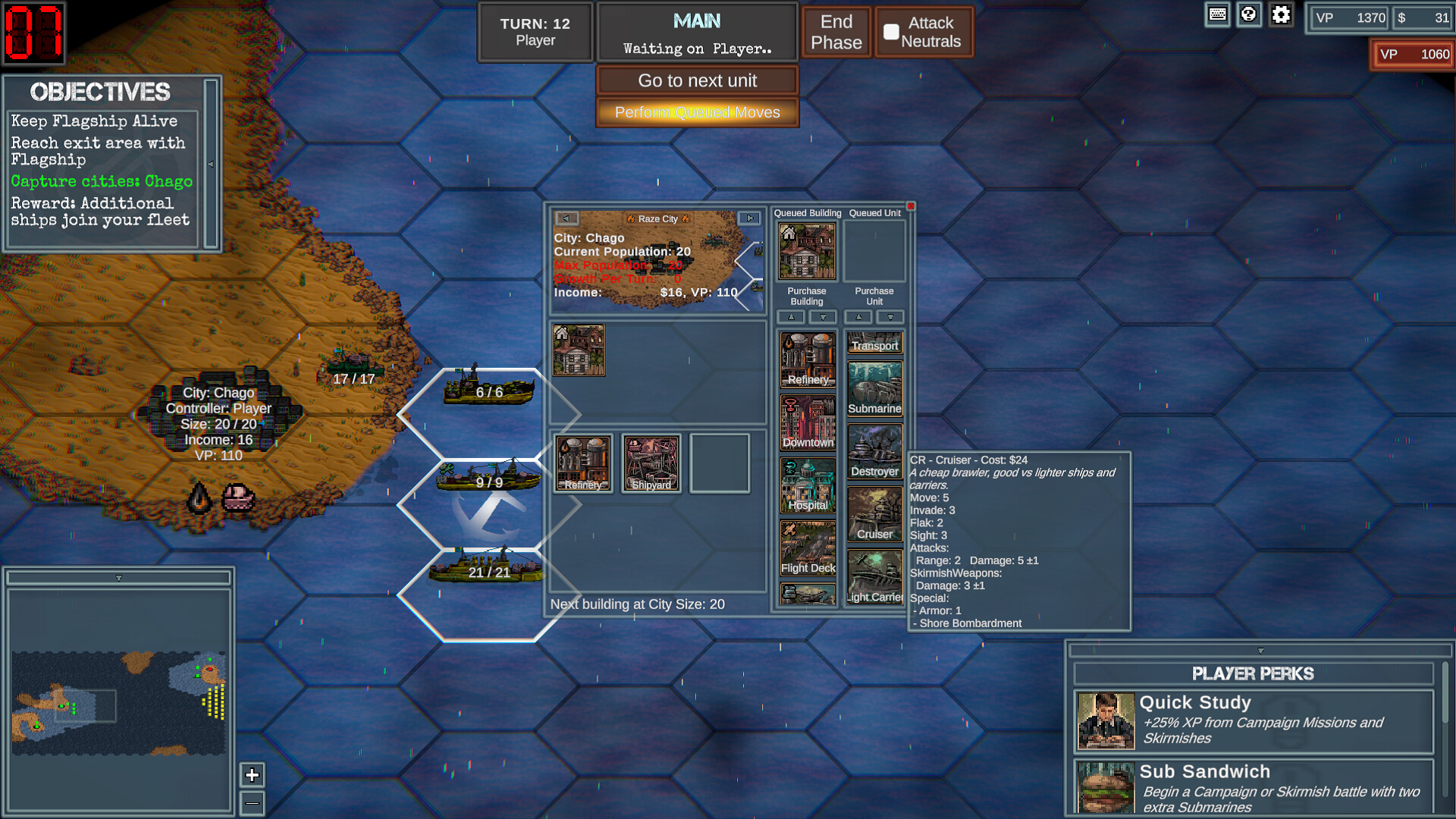
Captured port cities like this one drive the campaign's economy, queuing up buildings and new ships between missions, the metaprogression reviewers said keeps runs replayableImage: Tescrin Games via Steam -
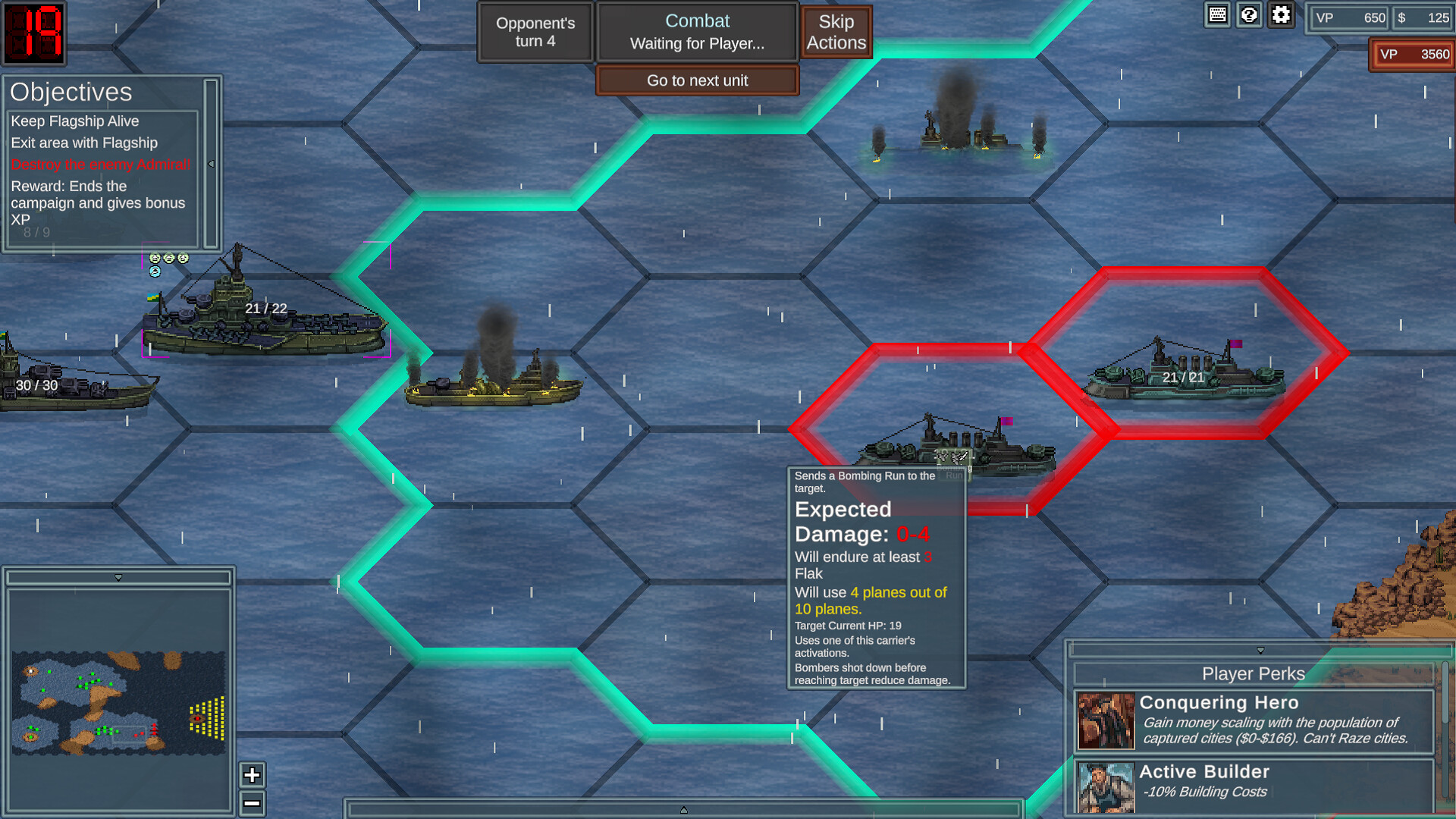
Carrier bombing runs come with detailed odds up front, like the expected 0-4 damage and flak losses shown here, the kind of granular tactical math reviewers praised and occasionally called unpredictableImage: Tescrin Games via Steam -
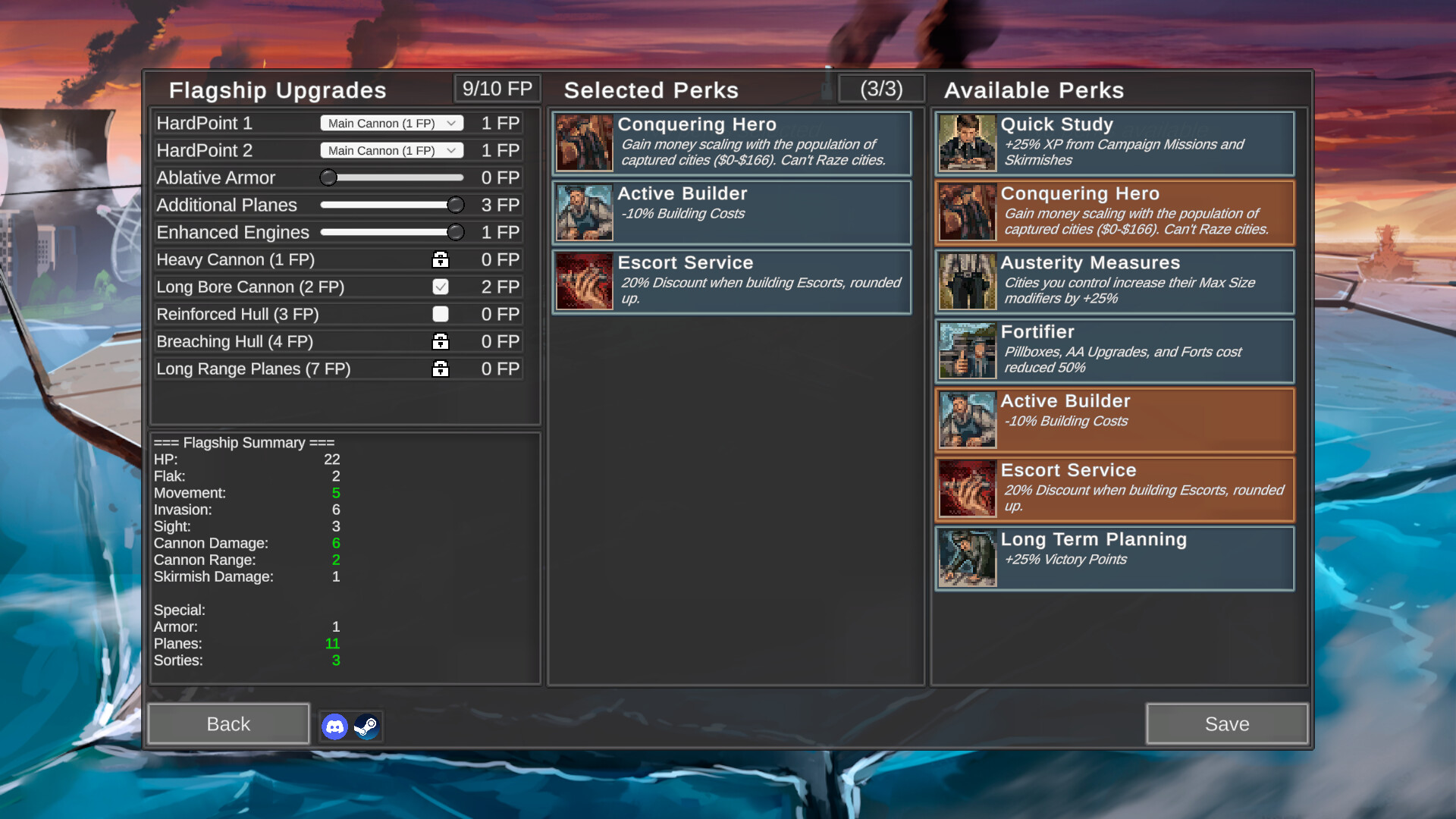
Flagship upgrades and perks like Conquering Hero and Active Builder carry across a run, the persistent progression system reviewers called satisfying if occasionally slow to build upImage: Tescrin Games via Steam