Game review
Find My Frogs: Branches Review
6.6 / 10
- Developer
- My Eye Studio
- Publisher
- My Eye Studio
- Released
- 26 August 2026
- Platforms
- ["Windows"]
- Genre
- Casual
Uncle Froger's Hat, and a Tree Full of Frogs
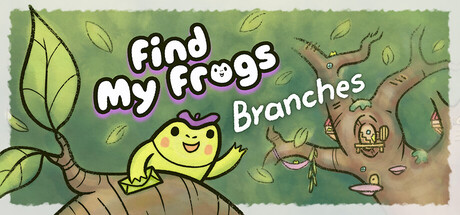
Find My Frogs: Branches is My Eye Studio's follow-up to their earlier hidden-object game Find My Frogs, and it keeps the same low-key premise: Uncle Froger has lost his hat to the wind, and it's landed somewhere near the top of an ancient tree crowded with frog and toad neighbors. Players climb through the tree's branches scene by scene, clicking through hand-drawn rooms to spot camouflaged frogs, toads, and a menagerie of bonus critters and objects tucked into every corner. There's no combat, no fail state, and no timer — just quiet, methodical searching set to an ambient soundtrack that reviewers describe, almost unanimously, as some of the most relaxing background noise they've found in the genre.
Structurally, the game plays like an interconnected map rather than a series of isolated levels. Players explore one room, unlock a path to the next by finding keys, and can backtrack freely without anything resetting. A map screen tracks completion per area and enables fast travel, while a hint system draws a circle around an unfound object on a short cooldown — generous enough, by reviewer consensus, that using it liberally never threatens the game's achievements. A day/night toggle changes the lighting and mood of each scene, and players can switch to a black-and-white mode if they prefer a different visual challenge, though several reviewers note the day/night cycle functions more as an atmospheric flourish than a meaningful difficulty adjustment, since actual object difficulty barely changes between the two settings.
A Sequel That Actually Adds Something
Reviewers who played the original Find My Frogs are consistent in describing Branches as a genuine, if modest, improvement rather than a straight reskin. Several specifically praise the addition of key-gated progression — unlocking new branches of the tree by finding items rather than everything being open from the start — as something they'd asked for after the first game, with more than one reviewer noting the developer appeared to act on that exact community feedback. New character types (goblins standing in for the first game's gnomes) and additional room types, including an eye doctor's office among the tree-bound scenes, give returning players fresh things to find even within a familiar structure. Reviewers who are new to the series report no trouble picking the game up without playing its predecessor first, since Branches functions as a self-contained experience.
Art and Sound Carry the Genre Entry
The hand-drawn art draws the strongest and most consistent praise in the review pool. Reviewers repeatedly point to the personality baked into individual frog designs — animated reactions when found, frogs peeking out with just a limb or a "butt" visible, environmental details like glowing mushrooms and candles that shift with the day/night cycle — as the actual selling point of the genre entry, more so than the puzzle difficulty itself. Sound design earns similarly strong marks, with reviewers calling out specific touches like a snoring toad or bubbling hot spring audio layered into individual scenes rather than a single looping ambient track. One reviewer, contrasting the game's evident hand-crafted care with the flood of low-effort, AI-generated hidden-object clones on Steam, singles out that sense of an "artful soul" behind every scene as the reason they keep coming back to this specific developer's games over similar, cheaper alternatives.
The Trade-Off of Staying Small
The criticism that surfaces most often isn't really criticism of execution so much as of scope. Several reviewers note that Branches, like its predecessor, sticks to the same green, tree-based biome, and more than one reviewer explicitly hopes the next entry moves the setting somewhere new rather than revisiting the same environment a third time. The game is also short: most reviewers report completing it, including 100% achievement completion, in somewhere between one and two hours, and while nearly everyone frames this as appropriate for the low asking price, a few flag it as the one thing holding them back from an unreserved recommendation, wishing there was simply more tree to climb.
A couple of smaller usability points come up as well. The hint system, while praised overall, only applies to finding frogs and bonus objects — it doesn't cover the keys needed to unlock new areas, which at least one reviewer found genuinely frustrating when stuck without any way to get help. Another reviewer suggests an optional no-hint mode with a small reward for players who want more of a challenge, since the default difficulty leans very forgiving. None of these are described as serious flaws, more as small gaps in an otherwise tightly, thoughtfully made package.
Verdict
Find My Frogs: Branches is a small, unhurried hidden-object game that knows exactly what it's trying to be and executes it with real craft — hand-drawn scenes packed with personality, a hint system generous enough to keep frustration at bay, and sound design that reviewers describe as genuinely therapeutic. It doesn't reinvent its own formula so much as refine it, staying inside the same tree-bound setting as its predecessor and offering only an hour or two of content for players chasing full completion. For fans of cozy, no-stress hidden-object games, it's an easy recommendation at its price; players hoping for a larger, more varied world should treat the short runtime as a known trade-off rather than a surprise.
Pros:
- Hand-drawn art with genuine personality in every frog and scene detail
- Relaxing, detail-rich sound design that reviewers single out repeatedly
- Generous, low-cooldown hint system paired with a fast-travel map
- Meaningful structural improvements over the first game, including key-gated progression
- Low-stress design with no timers, fail states, or difficulty spikes
Cons:
- Reuses the same tree-based biome as its predecessor with little environmental variety
- Very short, typically one to two hours for full completion
- Hint system doesn't cover keys, only frogs and bonus objects
- Day/night cycle functions mostly as atmosphere rather than a real gameplay variable
- No optional harder mode for players who find the default hints too generous
Screenshots
-
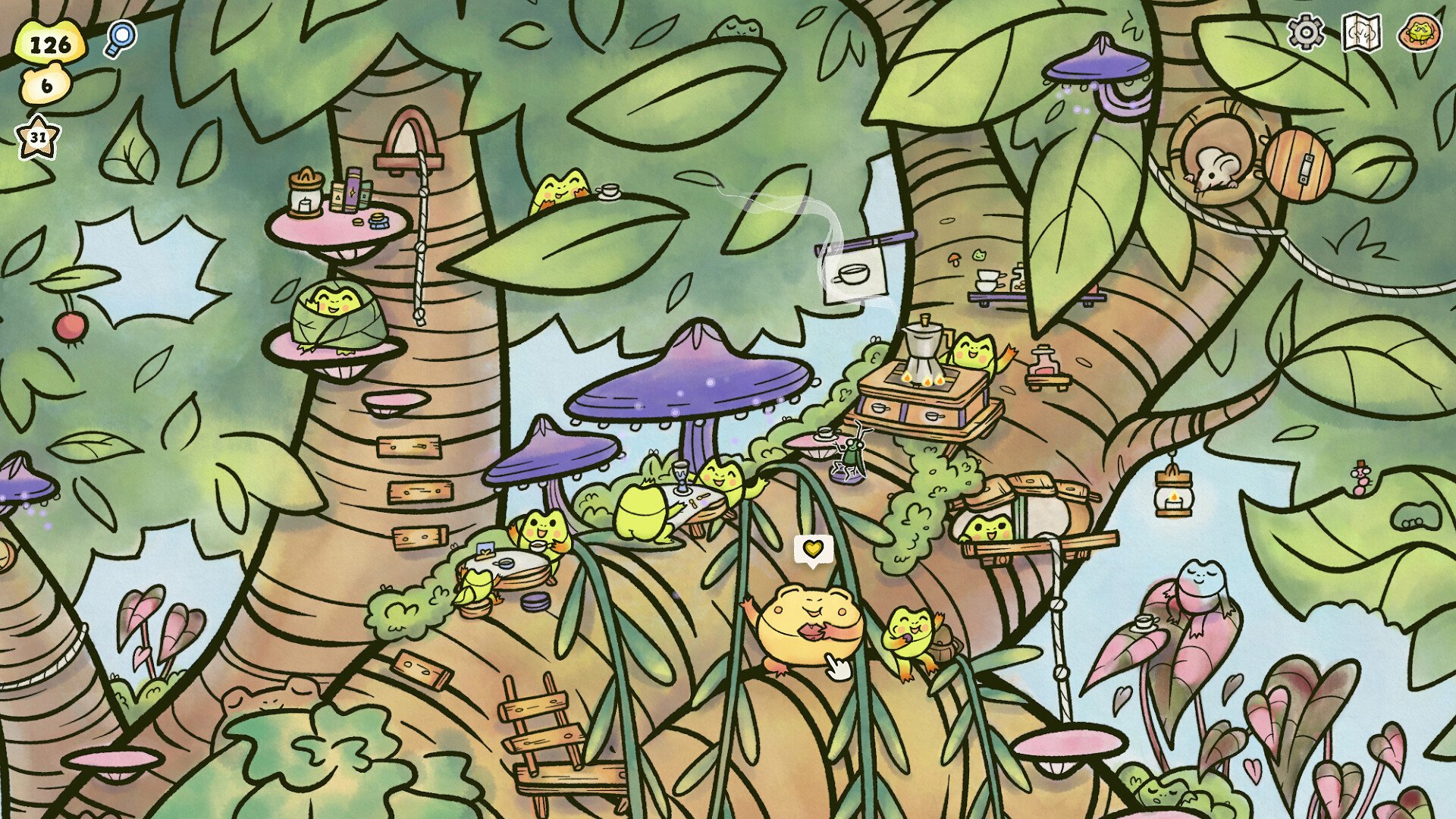
A daytime scene in the tree, dense with frogs and hidden objects to findImage: My Eye Studio -
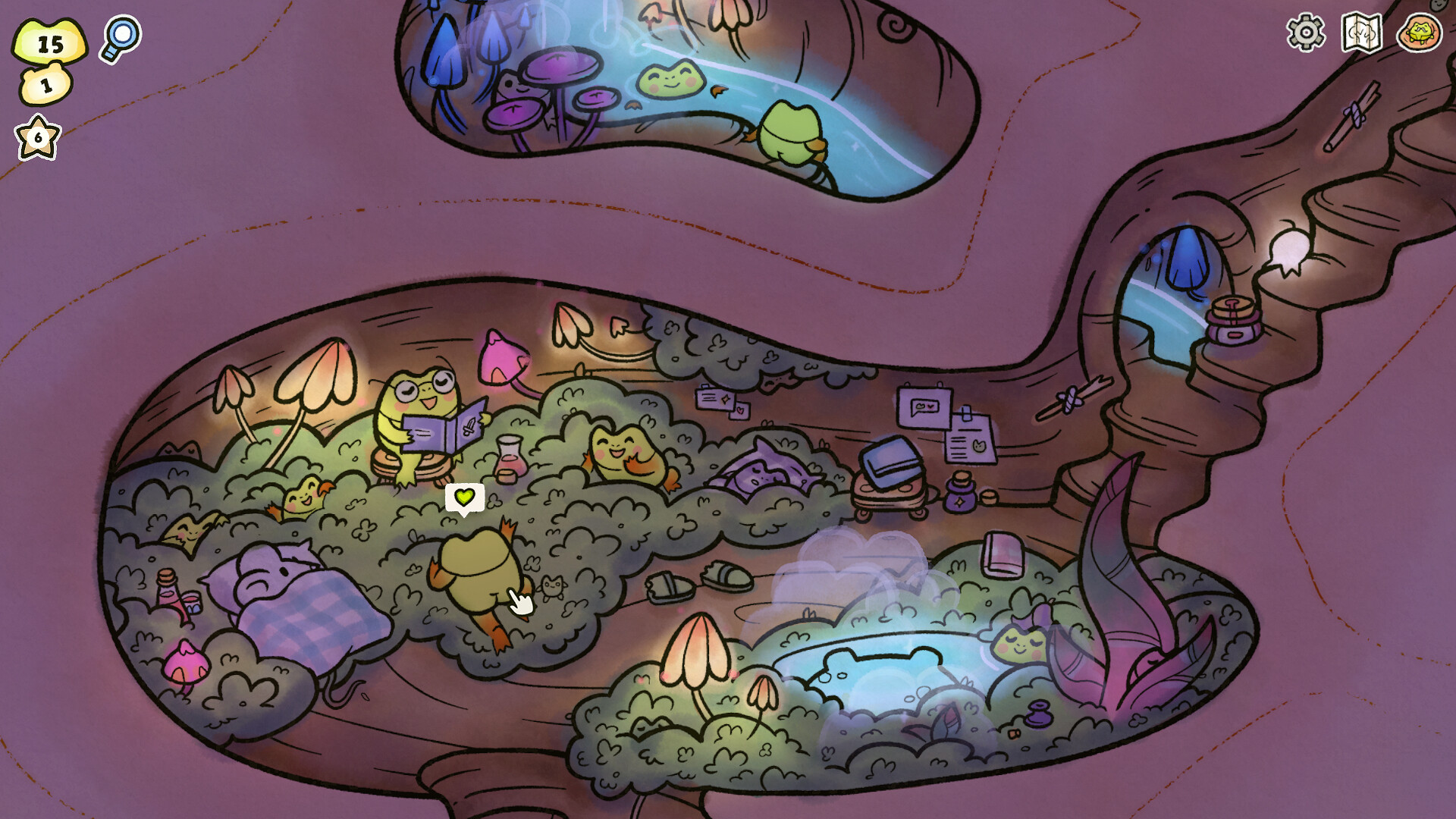
A nighttime burrow scene lit by glowing mushrooms and lanternsImage: My Eye Studio -
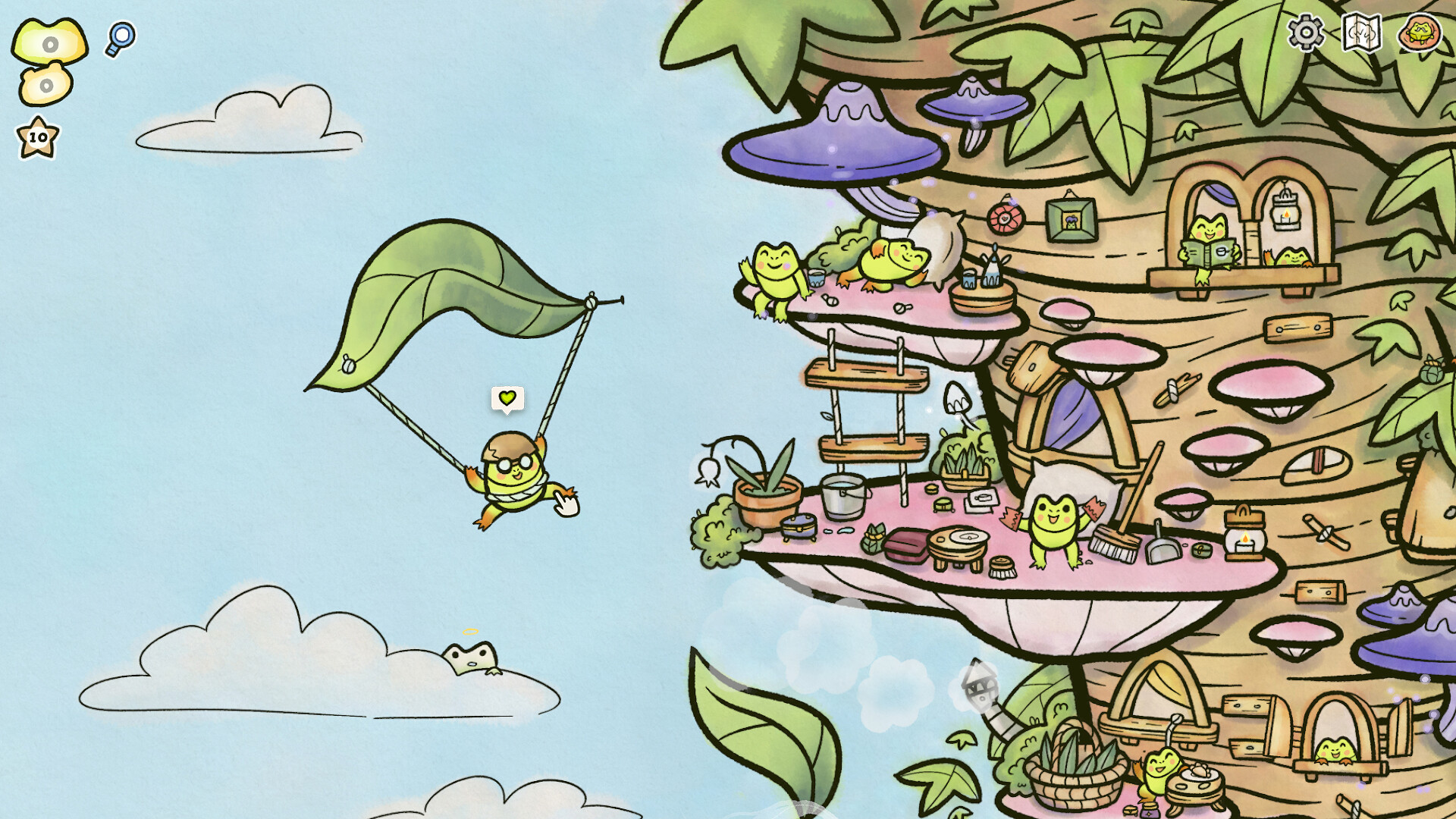
Uncle Froger gliding toward one of the tree's upper platformsImage: My Eye Studio -
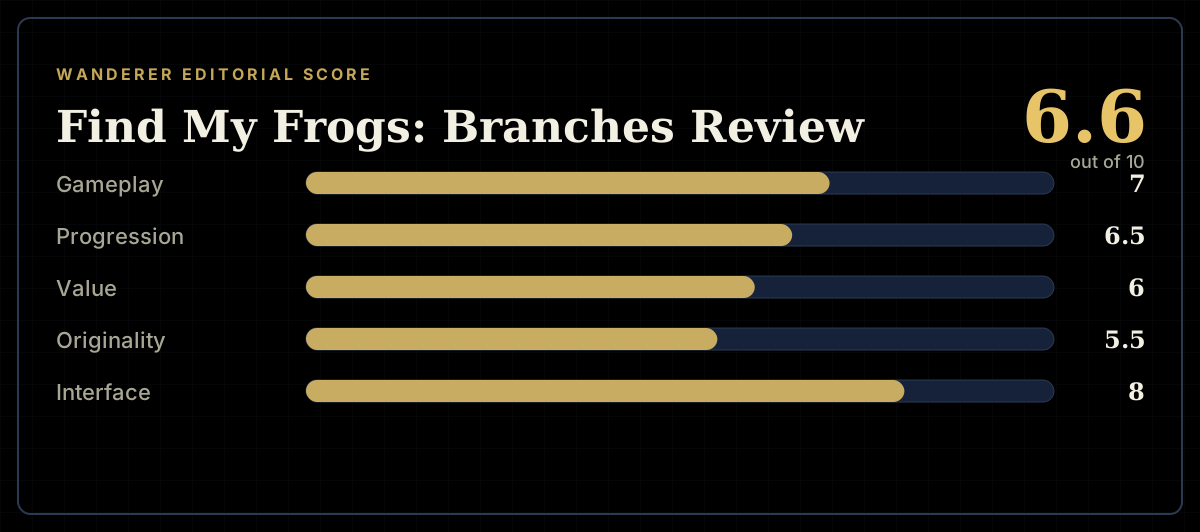
How the review scores each part of the gameWanderer Editorial -
The short versionWanderer Editorial