Game review
Post Office: Tidy Up! Review
6.4 / 10
- Developer
- Mao Den Games
- Publisher
- Mao Den Games
- Released
- 13 September 2026
- Platforms
- ["Windows"]
- Genre
- Casual
An Earthquake, a Depot, and 3,360 Parcels
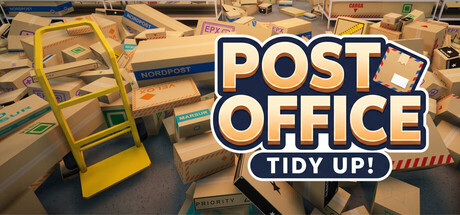
Post Office: Tidy Up! drops you into a postal depot scattered by an earthquake, with a straightforward job: read the label on each of its 3,360 parcels, work out its courier, country, and numbered slot, and put it back exactly where it belongs. It's a clear entrant in the sorting-sim wave that's crowded onto Steam over the past year or so, and reviewers who've played widely across that genre are explicit about where they think this one lands — several name-check genre peers like Shelve the Potions, Sort Them Ducks, and the various "supermarket" sorting games directly, and more than one reviewer singles this title out as a well-made, non-rushed entry rather than a shoddy copy riding the trend.
What sets it apart mechanically, according to the reviewers who've spent the most time with it, is a deliberate refusal to lean on genre shortcuts. There's no magical self-sorting, no X-ray vision that tells you where an item belongs, and no shortcut abilities like a magnet that auto-collects nearby parcels. One reviewer calls this out as the whole appeal: "finally a sorting game without magic and a lil bit of thinking." Every parcel has exactly one correct slot determined by its printed code, and multiple reviewers describe a genuine satisfaction in realizing there's no ambiguity to second-guess once you've learned to read the label correctly — no shelf that could plausibly hold five different chocolate types, no surprise duplicate storage locations to trip over.
Decoding the Numbers Is the Whole Game
The core loop is entirely built around cracking that numbering system, and the review pool is remarkably consistent about what that experience is like: confusing for the first hour, then suddenly clicking into a "meditative," methodical rhythm that keeps players coming back for hours at a stretch. One of the more detailed reviews describes the resulting loop as "lowkey but methodical," reporting over eight hours played across just three sessions once the system clicked, and several others report similarly long, satisfied sessions — one finishing the full 3,360-parcel campaign in around nine hours.
Power-ups and upgrades reinforce that grounded, no-magic identity: increased carry capacity, faster walk speed, and a trolley for bulk hauling are the main progression track, described by reviewers as "practical and realistic" rather than exciting, though a couple of more critical reviews find the trolley specifically underwhelming — by the time you've unlocked it, loaded it, and unloaded it again, more than one player says it's often just as fast to keep grabbing boxes by hand. The weight system that caps how many parcels you can carry regardless of your slot upgrades draws a similar mixed reaction: some players call it a fair layer of resource management, others call it an arbitrary tax on progression that adds patience rather than depth.
A Launch That Skipped Its Own Tutorial
The most consistent and pointed criticism in the review pool has nothing to do with the sorting concept itself and everything to do with how the game explains it. Post Office: Tidy Up! shipped without a proper in-game tutorial for its numbering system, leaving players to reverse-engineer what each digit on a parcel's label actually means through trial and error — several reviewers explicitly note they had to learn the system themselves, with one estimating it took roughly an hour of misplacing parcels before the logic clicked. A "How to Play" guide was added in a post-launch patch, which multiple reviewers acknowledge helped, but at least one reviewer who refunded specifically calls out its absence at launch as evidence the game "was rushed."
A second, related complaint concerns basic legibility: shelf numbers are described by more than one reviewer as rendered in a low-contrast grey-on-grey that's genuinely hard to read at a glance, forcing players to squint or guess rather than confidently identify the right slot. One of the two negative reviews in the pool cites exactly this issue as the reason for a refund. A smaller but real complaint concerns the endgame: if you misplace even a single parcel somewhere in the sprawling depot, there's no efficient way to track it down again, and one frustrated reviewer describes having to comb back through every previously-sorted package by hand after finishing the main campaign only to discover the game considered it incomplete.
A Small, Honest Entry in a Crowded Genre
None of that friction seems to have derailed the overall reception; twelve of the fifteen English-language reviews recommend the game, and the broader pool leans clearly positive despite the rough launch communication. What comes through consistently is that reviewers respect the game's restraint — its refusal to pad the loop with magic or gimmicks reads, to genre fans specifically, as a sign of a developer who understands what makes sorting games satisfying in the first place, even if the execution around explaining that system needed more polish before launch. At $4.99, with a 20% launch-week discount bringing it to $3.99, reviewers consistently frame it as a low-risk pickup for anyone who already enjoys the genre, with the caveat that newcomers to sorting sims specifically might want to wait for the post-launch tutorial patch to fully take hold before diving in.
Verdict
Post Office: Tidy Up! is a small, disciplined sorting sim that earns real goodwill from genre fans by refusing the magical shortcuts that have crept into so many of its competitors, building a genuinely meditative loop around correctly decoding a parcel numbering system with no ambiguity once you've learned it. Where it stumbles is almost entirely in presentation rather than design: a missing launch-day tutorial, hard-to-read shelf numbers, and a frustrating lack of tools for tracking down a single misplaced parcel late in a run all cost it more goodwill than the core loop deserves to lose. It's not going to convert anyone who's tired of the genre, but for players already primed to enjoy it, this is a well-made, honest $4.99 entry that rewards patience over flash.
Pros:
- No-magic sorting loop with a genuinely satisfying, unambiguous placement system
- Grounded, realistic power-ups instead of genre-typical shortcuts and gimmicks
- Reviewers with wide genre experience call it a standout, non-rushed entry
- Long, meditative play sessions praised by players once the numbering system clicks
- Cheap and already discounted at launch, low financial risk for genre fans
Cons:
- Shipped without an in-game tutorial for its own numbering system
- Shelf numbers rendered in low-contrast grey-on-grey text are hard to read
- No efficient way to locate a single misplaced parcel late in a playthrough
- The trolley and weight-limit systems feel more like busywork than real depth to some players
- Small review pool this early makes the overall reception harder to fully gauge
Screenshots
-
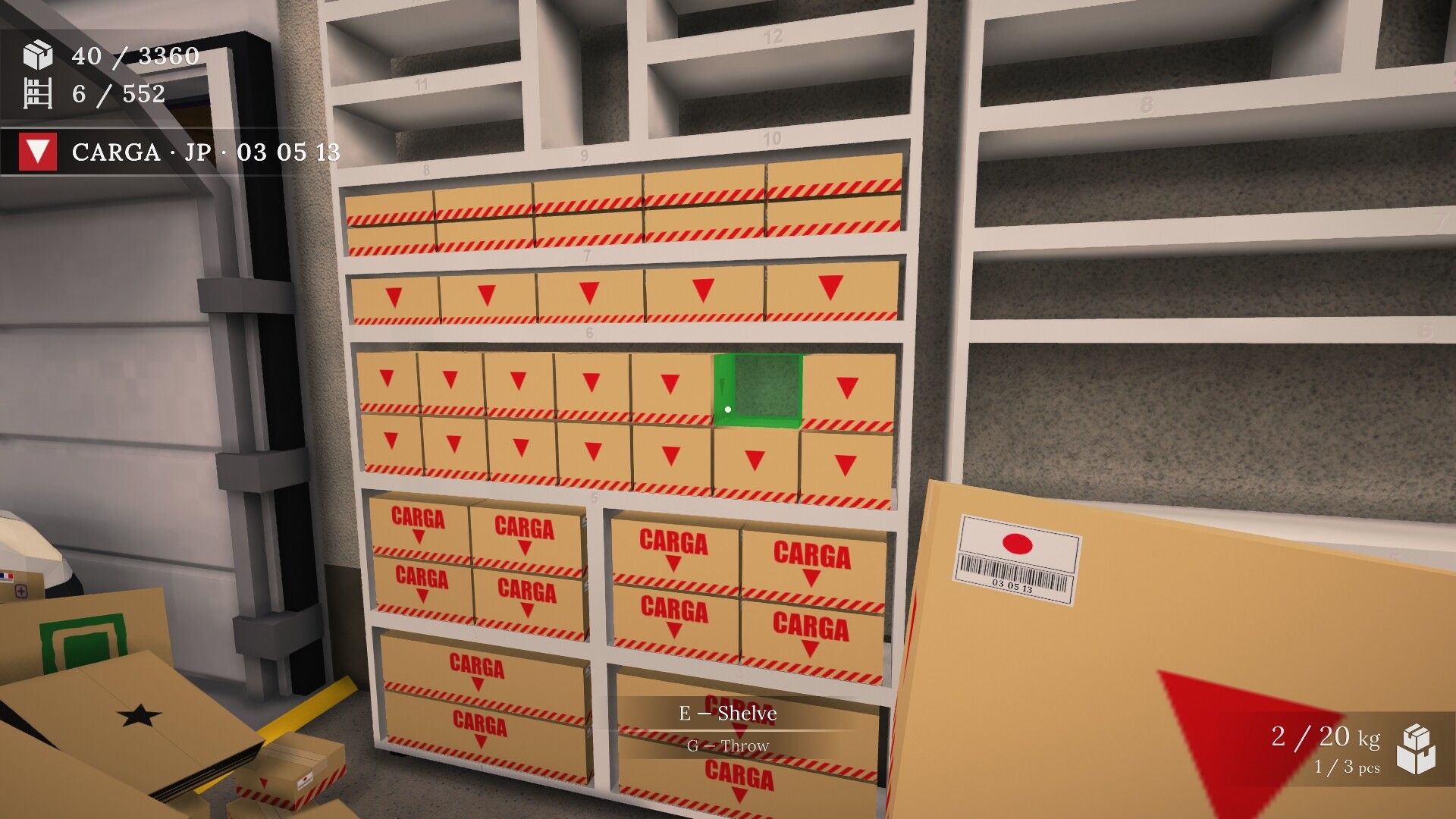
Each parcel has exactly one correct slot, tracked against a running total of the full 3,360-parcel depotImage: Mao Den Games via Steam -
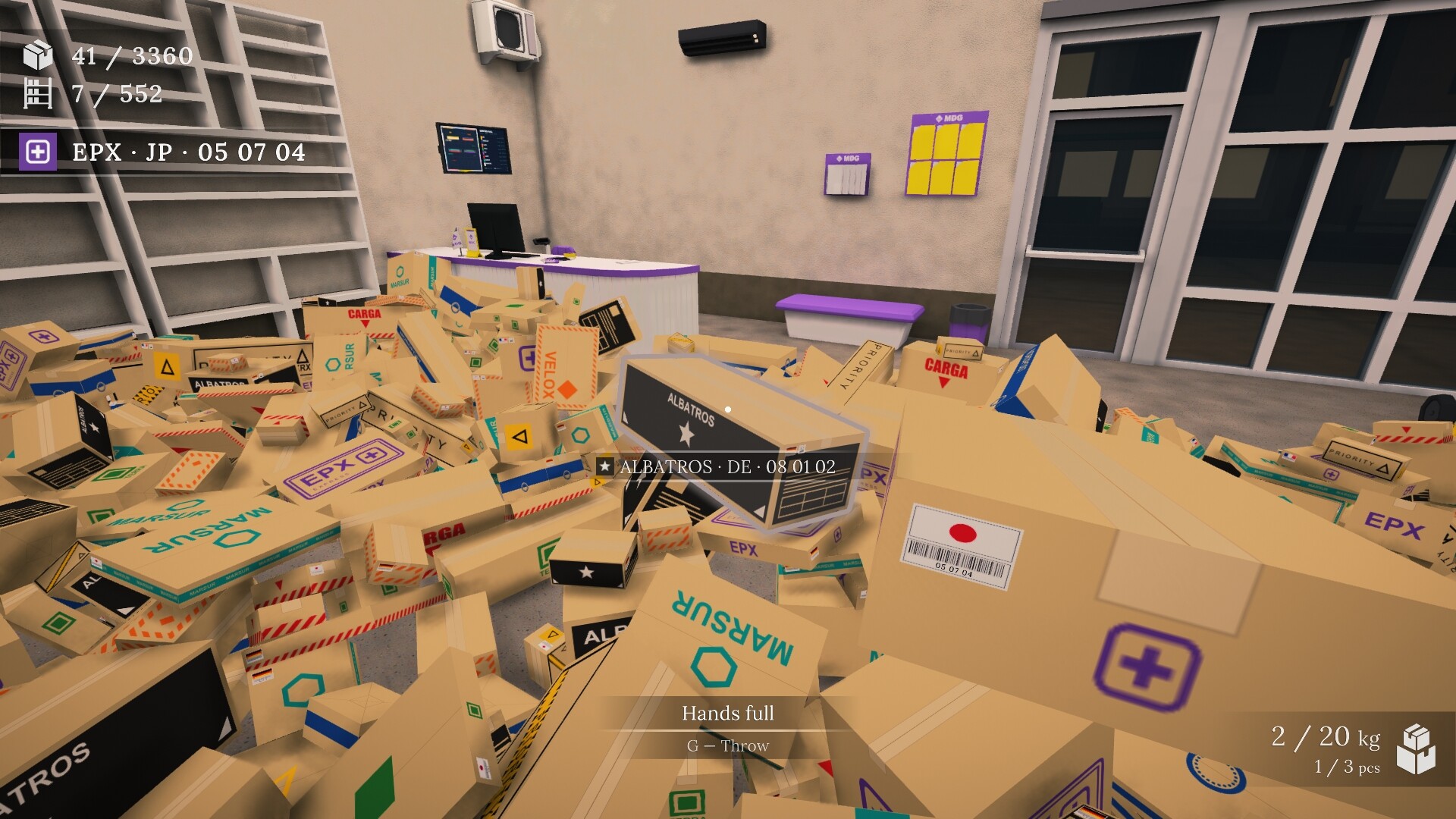
The earthquake leaves parcels from a dozen fictional couriers scattered across the depot floorImage: Mao Den Games via Steam -
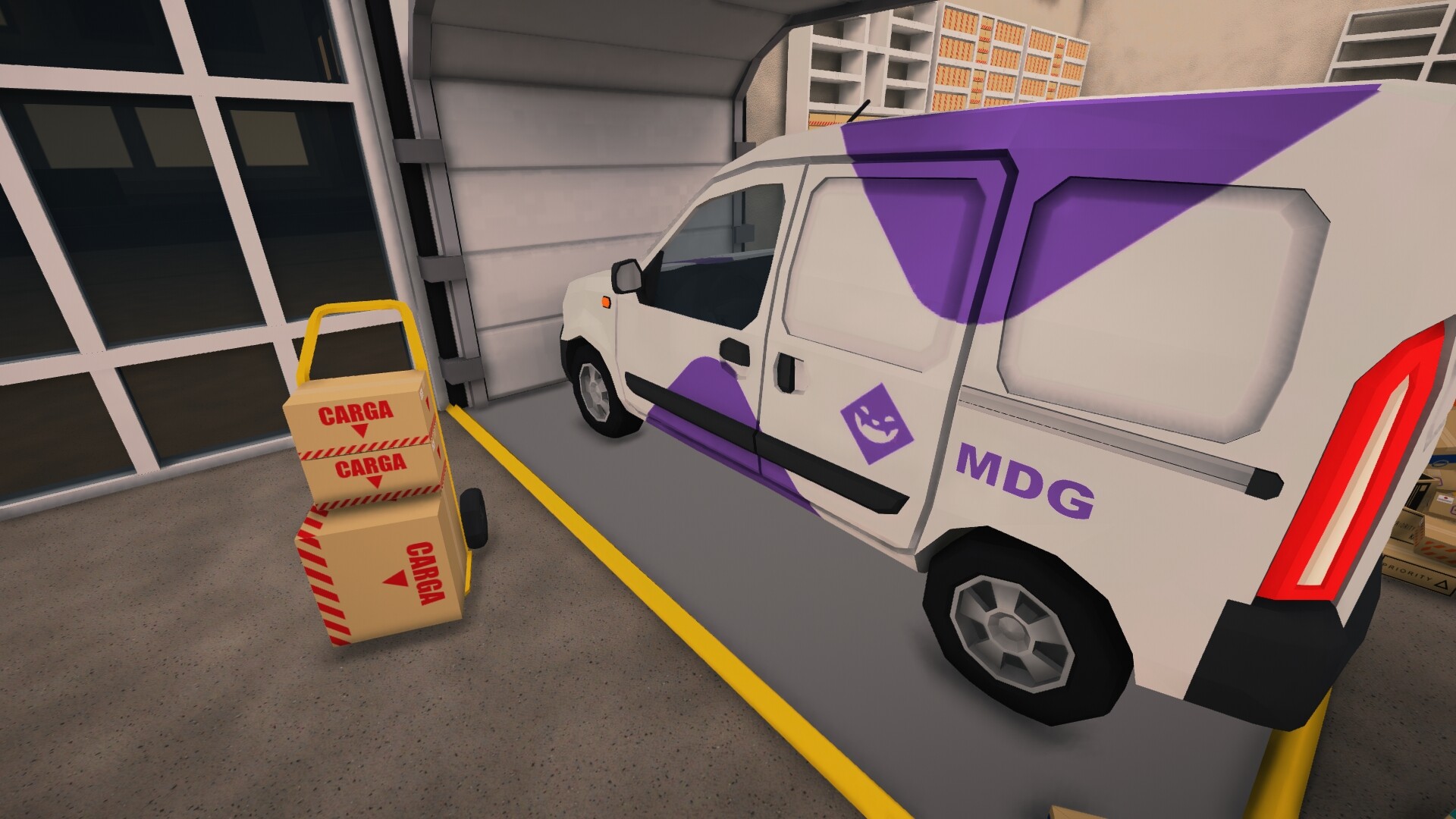
A trolley and delivery van upgrade path lets players haul more parcels at once as they progressImage: Mao Den Games via Steam -
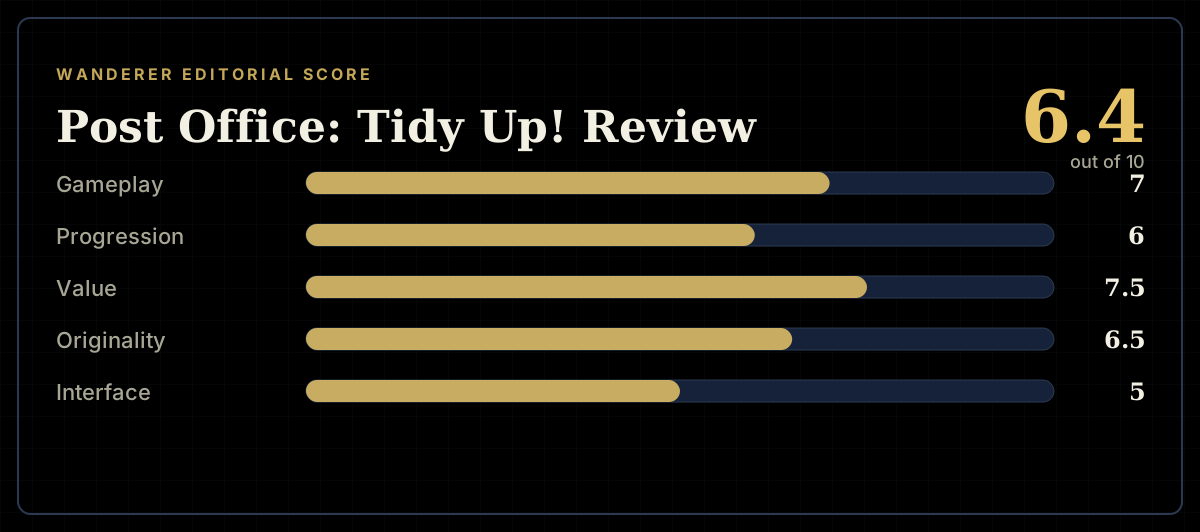
How the review scores each part of the gameWanderer Editorial -
The short versionWanderer Editorial