Game review
Heroes Suck Review
5.7 / 10
- Developer
- Dawning Light
- Publisher
- Dawning Light
- Released
- 15 September 2026
- Platforms
- ["Windows"]
- Genre
- Strategy
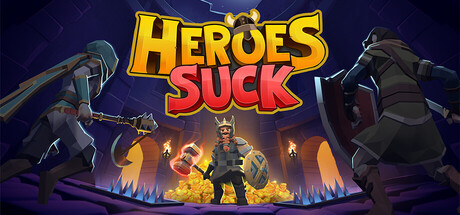
You Are the Dungeon, Not the Hero
Heroes Suck flips the tower defense premise into something closer to Dungeon Keeper: you're the Keeper of a mountain dungeon hired by a dwarf named Kaelviir to make sure the "heroes" who wander in looking for treasure don't wander back out again. The comic voice is the first thing anyone notices, and it's baked into the mechanics, not just the flavor text — invading heroes complain about their knees when they get launched by a trap, announce they're soloing your dungeon while getting bowled over by their own party members, and ask where the restroom is mid-raid. It's a joke the game is fully committed to, and reviewers consistently single out the writing and comic tone as a highlight, even the ones with real complaints about everything else.
Underneath the jokes is a genuinely physics-driven trap-building system. Every one of the seven trap types — Hidden Spears, a hallway-width Pendulum Axe, a Wall Crusher that removes the wall and the front rank of heroes with it, a lingering Flame Jet, a chaining Lightning Pylon, Arrow Rain, and a damage-free Time Warper that just holds enemies still for everything else to finish the job — fires into a live physics simulation rather than a scripted animation. Heroes get launched into each other, set on fire, and knocked into their own allies, and one reviewer specifically calls out how satisfying it is to watch a well-placed trap chain reaction ragdoll an entire wave at once.
A Genre-Bending Base You Actually Build
Where Heroes Suck earns its most enthusiastic praise is in how much genre-mixing it manages without the mash-up feeling forced. It's tower defense at its core, but it borrows base-building and progression systems from RPGs and dungeon-management sims: you rebuild a ransacked town with a forge, shop, scriptorium, storehouse, and town hall, all individually upgradeable, and the town hall keeps collecting taxes even while the game is closed. Three permanent mastery trees, paid for with knowledge harvested off fallen heroes, mean every trap grade and skill node you unlock carries forward into every stage after it — there's no resetting between fights, so the dungeon gets meaningfully harder to survive the longer a run goes.
One reviewer who put over 1,500 minutes into the game describes it as a "simplified Dungeon Master type of game, but with just the meat and potatoes," and says clearing the campaign on hard difficulty required real grinding and felt genuinely challenging rather than padded. Another highlights a specific design touch that a lot of tower defense games skip entirely: the ability to revisit previously cleared levels and replay a harder version of them for extra money when you're stuck on the current stage, calling the systems around that "thoughtful and well developed." The soundtrack draws unprompted praise as well, and multiple players describe themselves as having a genuinely great time with the moment-to-moment loop of designing a base with branching, connecting paths and watching the physics sim make a mess of whoever walks through it.
The Cheese Runs Out Before the Ideas Do
The recurring complaint across the review pool is length, and it's specific enough to be worth taking seriously: the campaign consists of a prologue and four chapters totaling 45 stages, but multiple reviewers say the game essentially ends abruptly partway through, describing chapter four in particular as feeling rushed compared to the hours of steady upgrading and base-building that came before it. One reviewer who otherwise enjoyed the game says they were left looking for information about where the rest of it had gone, notes you can't even fully upgrade the town hall to its final level, and jokes that they expected a "part two" advertisement to pop up at the credits rather than the game just stopping. Another explicitly calls the whole thing "far, far too short" for the asking price, estimating it's worth more like five dollars than the full $19.99 list price, and describes the finished product as feeling more like a tech demo than a complete release.
Translation quality is a smaller but pointed complaint — one reviewer who otherwise loved the concept says the English localization needed real editing, describing having to re-read sentences and guess at intended meaning throughout, and specifically singling out the writing quality as a letdown given how much the game's comic voice is supposed to be carrying the experience. There's also a complaint about trap variety feeling thin once the novelty wears off: one player who unlocked every trap and achievement within an hour describes the traps as "boring" and the game as repetitive beyond surface-level percentage upgrades, and refunded as a result.
A Cozy, Funny Loop for the Right Price
The overall reception splits along a fairly predictable line: players who came in expecting a full-length strategy campaign and got roughly ten to twenty hours out of it before hitting an apparent wall feel shortchanged at $17.99, while players who treat it as a shorter, funnier, more design-focused tower defense experience tend to come away satisfied. The "cozy/casual tower defense, fairly low pressure and fast paced" framing one reviewer uses fits the tone well — this isn't trying to be a hardcore optimization strategy game, it's trying to be a game where the jokes land as often as the traps do, and on that front it mostly succeeds. At a discount, the value math gets noticeably easier to justify; at full price, it's a harder sell given how many reviewers specifically flag the campaign's length and ending as the game's biggest weakness.
Verdict
Heroes Suck nails its central joke — a physics-driven dungeon-defense game where the "heroes" complain about their knees while getting launched into lava — and builds a surprisingly deep base-building and mastery-tree system around it, enough that fans of the genre-blend describe real, substantial hours of satisfying trap design and progression. Where it stumbles is in following through on that promise for the full price being asked: a campaign that multiple players describe as ending abruptly, rough English localization, and trap variety that thins out for some players well before the credits roll all work against it at $17.99, even as the writing, soundtrack, and physics-based combat draw consistent, specific praise. If the premise makes you laugh and you can catch it discounted, there's a genuinely clever, funny strategy game here; at full price, go in knowing the joke may end before you're ready for it to.
Pros:
- Genuinely funny, fully-committed comic writing baked into the mechanics themselves
- Satisfying physics-driven trap combat with real chain-reaction potential
- Persistent mastery trees and town upgrades give real long-term progression
- Thoughtful design touches like replaying cleared levels for extra money
- Well-regarded soundtrack and a strong genre-blend of tower defense and base-building
Cons:
- Campaign reportedly ends abruptly, with chapter four feeling rushed by comparison
- Multiple reviewers call the length not worth the $17.99 asking price
- English localization/translation quality draws specific, pointed criticism
- Trap variety can feel thin and repetitive once the novelty wears off
- Structured more like a strong prologue than a fully realized full-length campaign
Screenshots
-
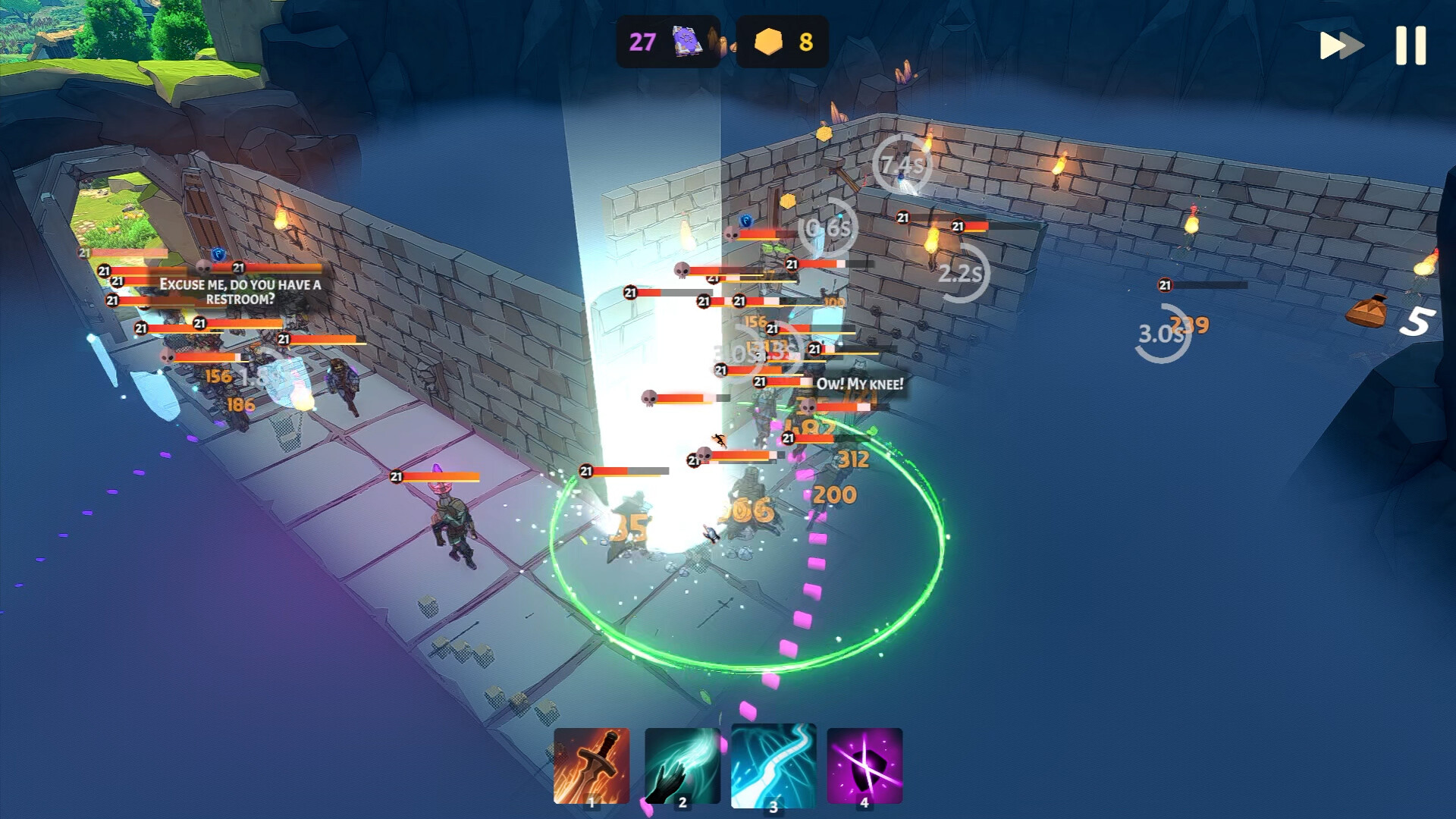
The physics-driven traps chain into each other, and the heroes never stop complaining about itImage: Dawning Light via Steam -
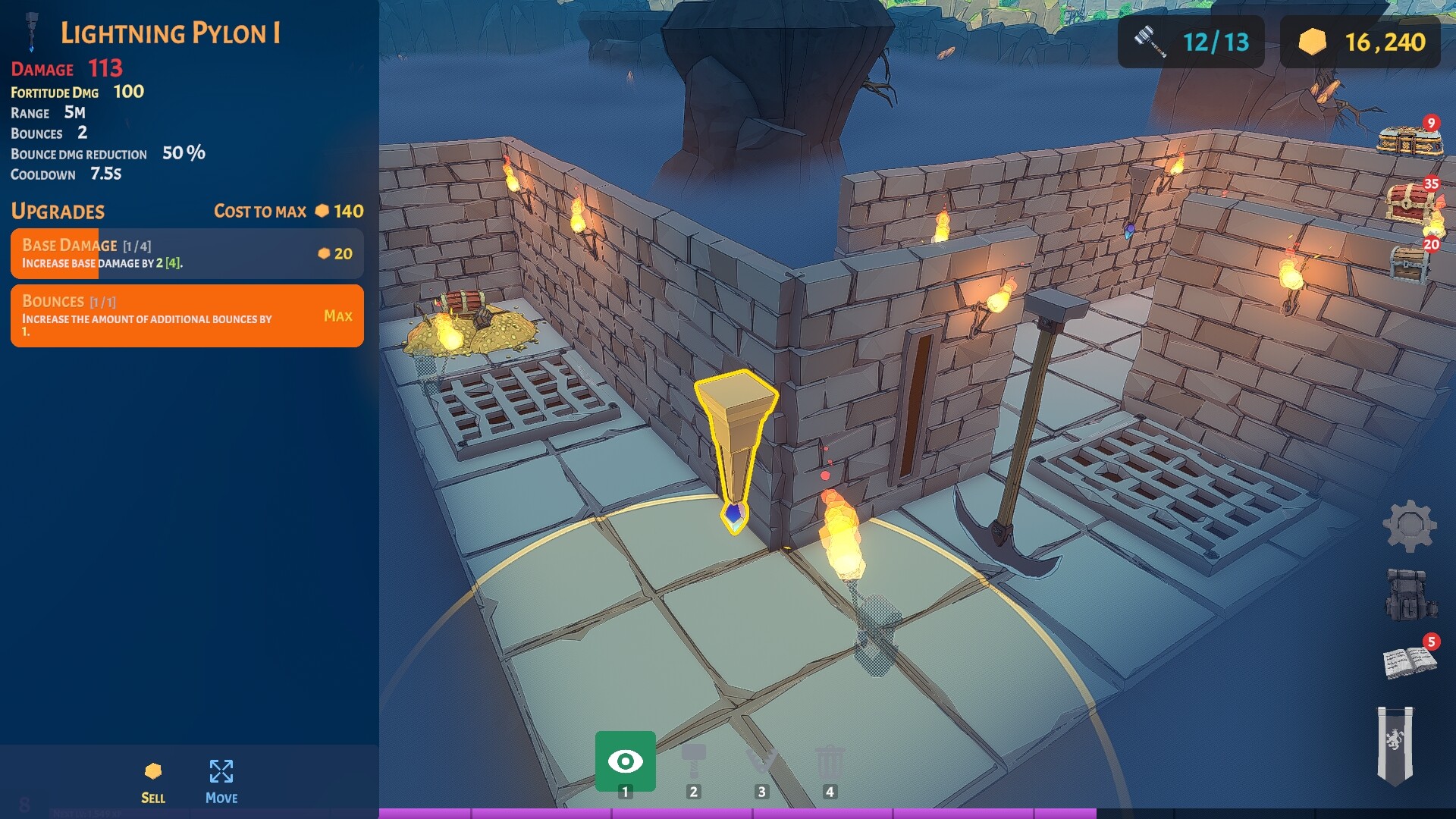
Every trap has its own upgrade tree, feeding into the game's persistent mastery progressionImage: Dawning Light via Steam -
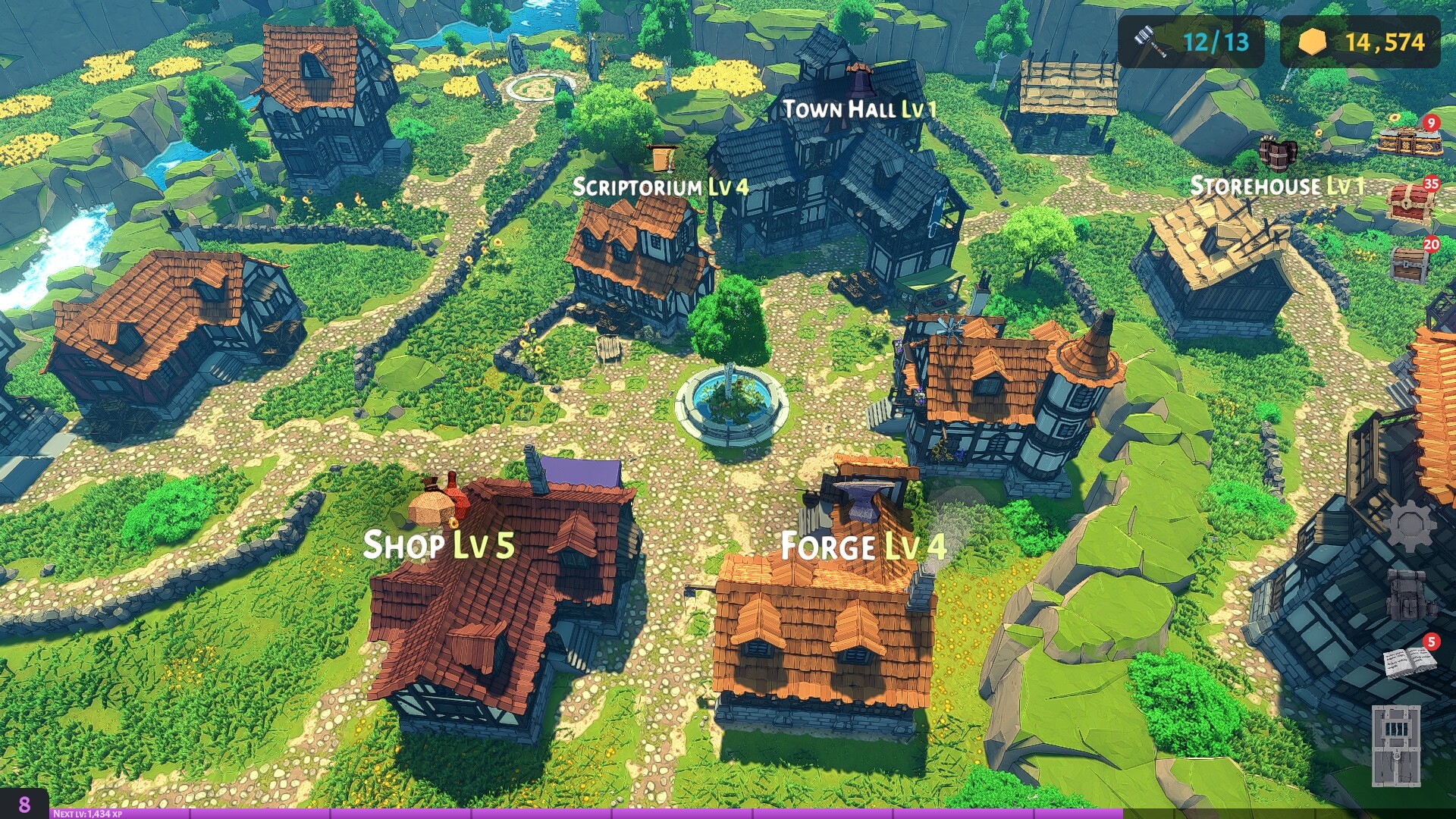
Between raids, players rebuild and upgrade a full town of permanent structuresImage: Dawning Light via Steam -
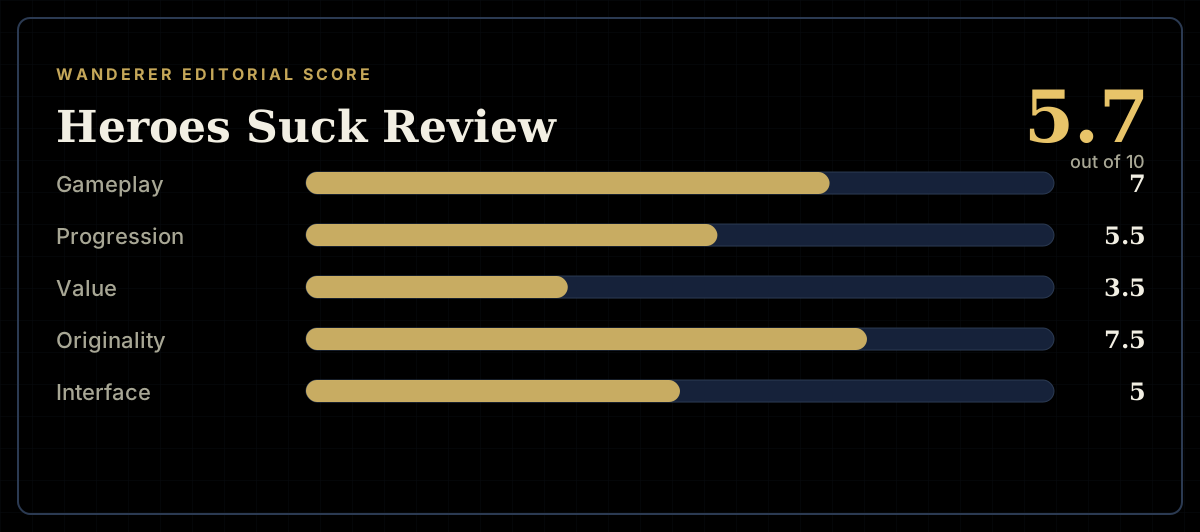
How the review scores each part of the gameWanderer Editorial -
The short versionWanderer Editorial