Game review
Farmagia
5 / 10
- Developer
- Marvelous Inc.
- Publisher
- XSEED Games, Marvelous USA Inc., Marvelous Europe
- Released
- 1 November 2024
- Platforms
- Windows
- Genre
- Action RPG, Monster Collecting
- Monetisation
- One-time purchase, no in-game store
- Players
- Single-player only
The short version
Farmagia casts the player as Ten, a Farmagia raising and commanding an army of monsters to free the people of Felicidad, built on character designs by famed manga artist Hiro Mashima. Developed by Marvelous Inc. and published by XSEED Games, it released on 1 November 2024. Its 41 English-language Steam reviews sit at Mixed, roughly 61%, and this review reads the full available negative sample of 16 reviews alongside the top positives to find a striking consensus spanning both sides of the split: the game's menu-driven, roguelike-dungeon structure badly mismatches the Rune Factory and Harvest Moon comparisons its marketing invited, and even its defenders broadly agree its premium price outran the amount of content actually on offer.
Biggest strengths
- Character and creature designs by Hiro Mashima draw consistent, genuine praise as the game's strongest asset, cited by reviewers on both sides of the recommendation split as a real reason to appreciate the presentation
- Several reviewers who understood the game's actual genre going in — a monster-collecting action RPG rather than a farming sim — report a genuinely enjoyable, if simple, experience
- The monster-raising system draws some specific credit for offering real build variety in stat allocation and creature specialisation for players willing to engage with it deeply
Biggest weaknesses
- The single most consistent complaint, echoed by reviewers on both sides of the split, is that Farmagia is functionally closer to a visual novel than the Rune Factory or Harvest Moon-style farming RPG its marketing suggested, with every location accessed through a menu rather than an explorable open world
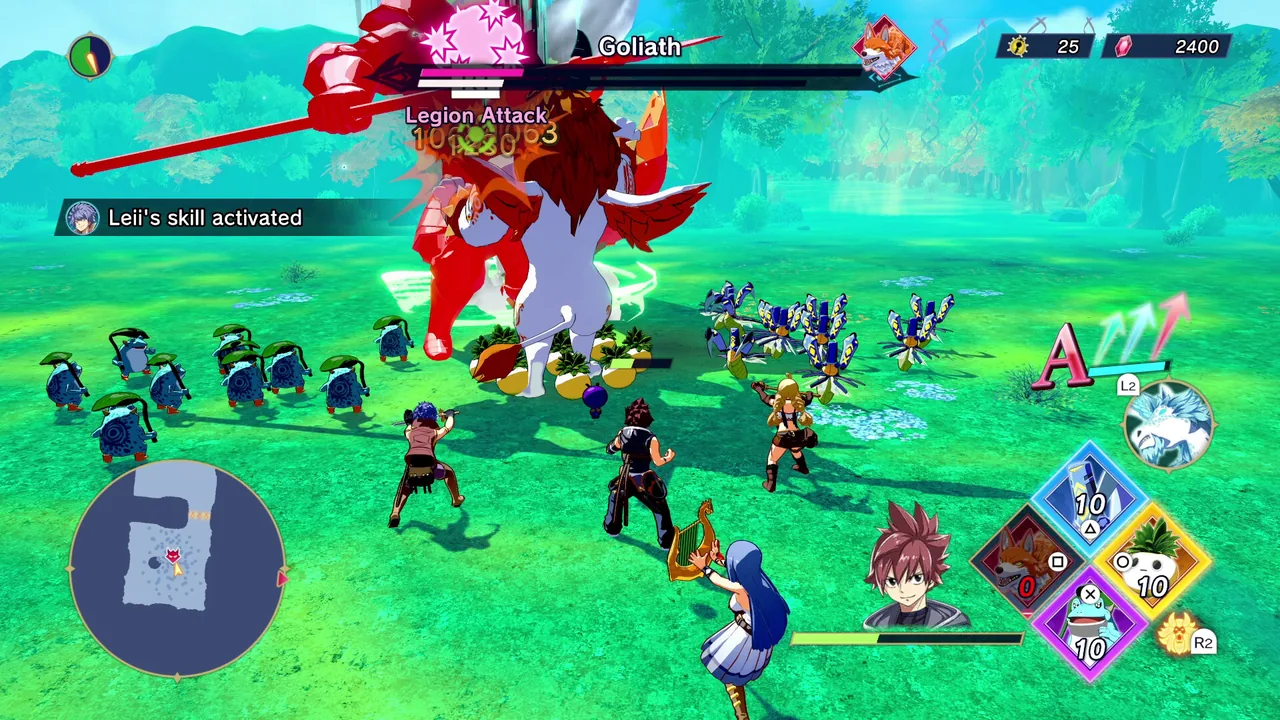
- Combat draws pointed criticism for clunky camera control on small maps, block-centric mechanics that force repeated army repositioning, and a limited usable monster pool relative to how many are collected
- Story and characters draw consistent criticism as simplistic, with multiple reviewers independently describing the writing as aimed at a much younger audience than the game's price point and presentation suggest
Who it's for: Fans of Hiro Mashima's art and monster-collecting action games who understand this isn't a farming sim before buying; a poor fit for anyone drawn in specifically by Rune Factory or Harvest Moon comparisons, since reviewers on both sides say that expectation is badly mismatched.
Our recommendation: A visually striking but structurally thin game best bought at a significant discount, with the clear understanding that its farming elements are a minigame layered onto a menu-navigated, arena-based action RPG rather than anything resembling a life sim.
5 / 10
Introduction
Farmagia casts the player as Ten, one of the titular Farmagia who raise and command armies of monsters, on a mission to free the people of Felicidad in a world designed around character work by famed Fairy Tail creator Hiro Mashima. Marvelous Inc. developed it and XSEED Games published it on 1 November 2024. Reading the full available negative sample of 16 English-language reviews alongside the top positives, out of a Mixed corpus (roughly 61% across 41 reviews), finds an unusually unified verdict cutting across the recommendation split, on both structure and price.
An identity crisis its marketing invited
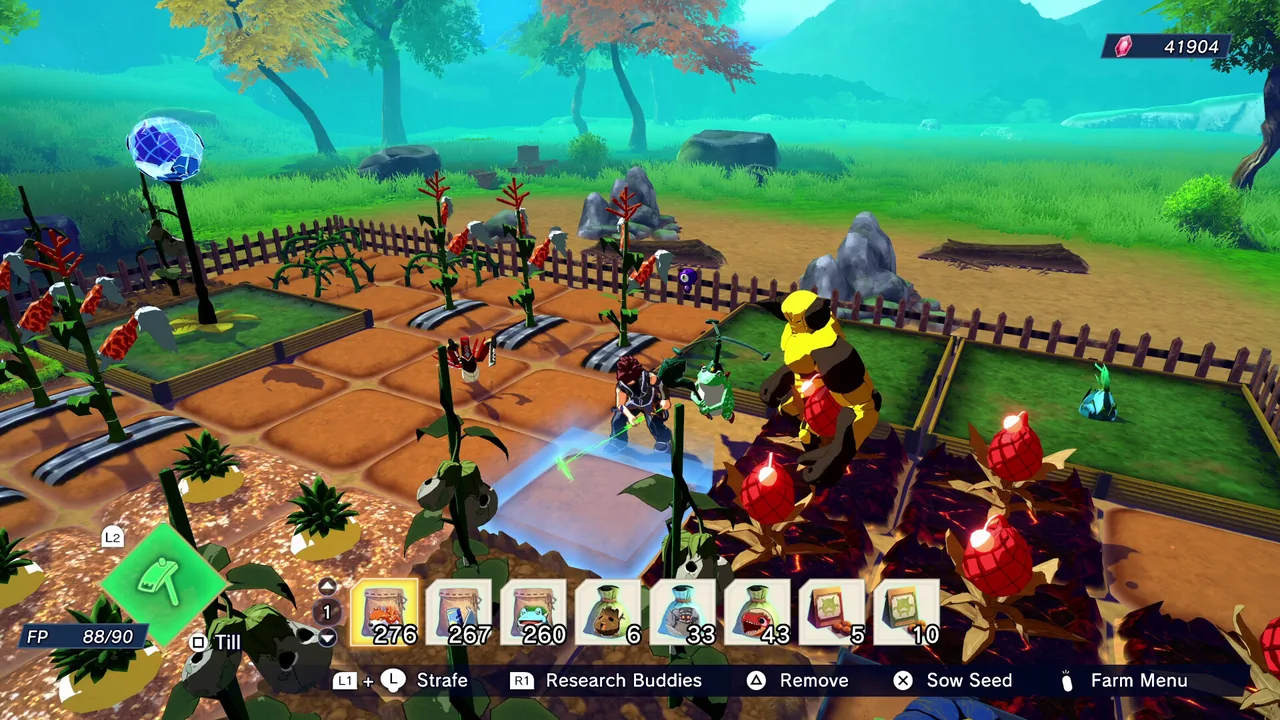
The most consistent complaint in this review's sample concerns what kind of game Farmagia actually is, versus what its comparisons suggested. One of the most-upvoted reviews in the entire sample — 352 votes — opens directly: "If you're looking for something Rune Factory/Harvest Moon esque with the farming aspect, look elsewhere. It's essentially a visual novel with every location only accessible through a menu." Crucially, this isn't only a negative-side complaint: a highly-upvoted positive review makes essentially the same point in service of a more forgiving verdict, writing that "this game's expectations were all over the place... it's not" a farming game, going on to explain the actual farming mechanic amounts to tilling soil and watering plants purely to gain experience for growing monsters. Multiple reviewers on the negative side independently describe the experience as feeling more like a visual novel than a JRPG, with dungeons structured as roguelike-style menu selections rather than an explorable world.
Combat, story and presentation
Beyond the structural mismatch, combat draws specific, repeated criticism: a clunky camera on cramped maps, block-heavy mechanics that force constant army repositioning, and a usable monster pool reviewers describe as considerably smaller than the total roster collected over a playthrough. Story and characters draw consistent criticism as simplistic, with one detailed review describing the writing as feeling "written for 10-year-olds" despite the game's premium price and mature presentation elsewhere. Where the game earns real, unreserved praise is its art — Hiro Mashima's character and creature designs draw genuine appreciation from reviewers on both sides of the split, consistently cited as the strongest single element of the package regardless of overall verdict.
A price both sides agree outran the content
What makes this review's sample unusually clear-cut is how consistently value complaints appear regardless of recommendation. Reviewers who liked the game and reviewers who didn't independently converge on similar suggested prices — several say NZ$30 to NZ$45 would feel fair, well under the game's roughly NZ$71 launch price. One detailed positive review, having spent 80 hours reaching 100% completion, concluded plainly that the game "does not offer the depth of content to justify" its asking price despite finding real enjoyment in the experience. That kind of agreement across the recommendation divide is a stronger signal than either side's complaints in isolation — this isn't a matter of taste splitting the audience, it's a broadly shared sense that the price doesn't match what's delivered.
Final Verdict
Farmagia's strongest asset — Hiro Mashima's character and creature art — earns real, consistent praise from reviewers regardless of their overall verdict, and players who understood going in that this is a menu-navigated, arena-based action RPG rather than a farming sim report genuine enjoyment in its monster-raising and combat systems. Where the game runs into trouble, and where this review's sample speaks with unusual unity across the recommendation split, is a mismatch between what its marketing implied and what it delivers, combined with a price both critics and fans agree outran the actual content. Buy it for the art and the monster-collecting hook specifically, at a discount, with clear expectations set correctly from the start.
Pros and cons
Pros
- Character and creature designs by Hiro Mashima draw consistent, genuine praise as the game's strongest asset, cited by reviewers on both sides of the recommendation split as a real reason to appreciate the presentation
- Several reviewers who understood the game's actual genre going in — a monster-collecting action RPG rather than a farming sim — report a genuinely enjoyable, if simple, experience
- The monster-raising system draws some specific credit for offering real build variety in stat allocation and creature specialisation for players willing to engage with it deeply
- At least one reviewer who completed the game to 100% over 80 hours found real, if uneven, value in the full experience despite pricing concerns
Cons
- The single most consistent complaint, echoed by reviewers on both sides of the split, is that Farmagia is functionally closer to a visual novel than the Rune Factory or Harvest Moon-style farming RPG its marketing suggested, with every location accessed through a menu rather than an explorable open world
- Combat draws pointed criticism for clunky camera control on small maps, block-centric mechanics that force repeated army repositioning, and a limited usable monster pool relative to how many are collected
- Story and characters draw consistent criticism as simplistic, with multiple reviewers independently describing the writing as aimed at a much younger audience than the game's price point and presentation suggest
- Value is the most cross-cutting complaint in this review's entire sample — reviewers who both recommend and don't recommend the game repeatedly suggest a fair price closer to NZ$30-45, well under its premium launch price
Screenshots
-
FarmagiaImage: XSEED Games via Steam -
FarmagiaImage: XSEED Games via Steam -
FarmagiaImage: XSEED Games via Steam -
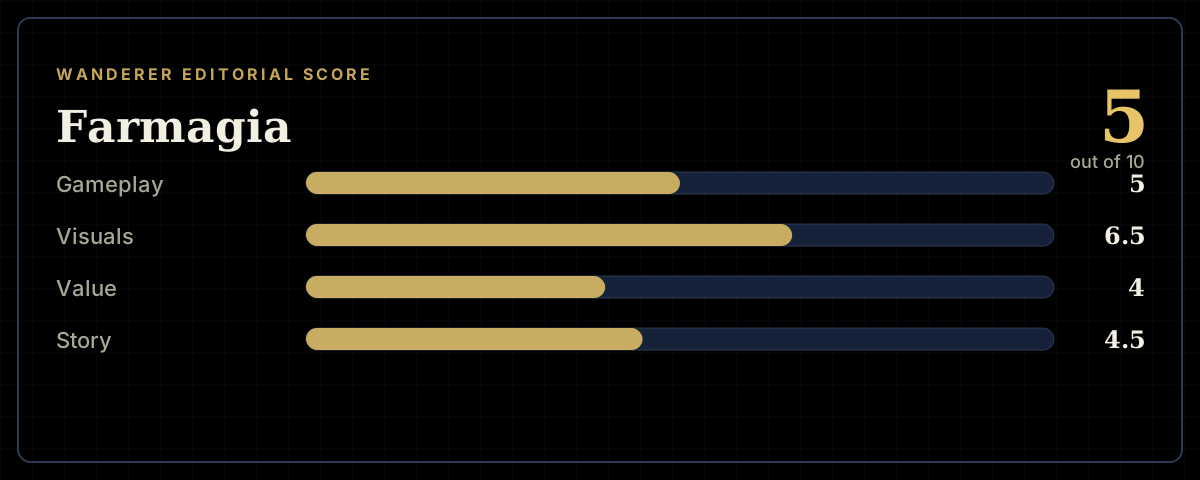
How the review scores each part of the gameWanderer Editorial -
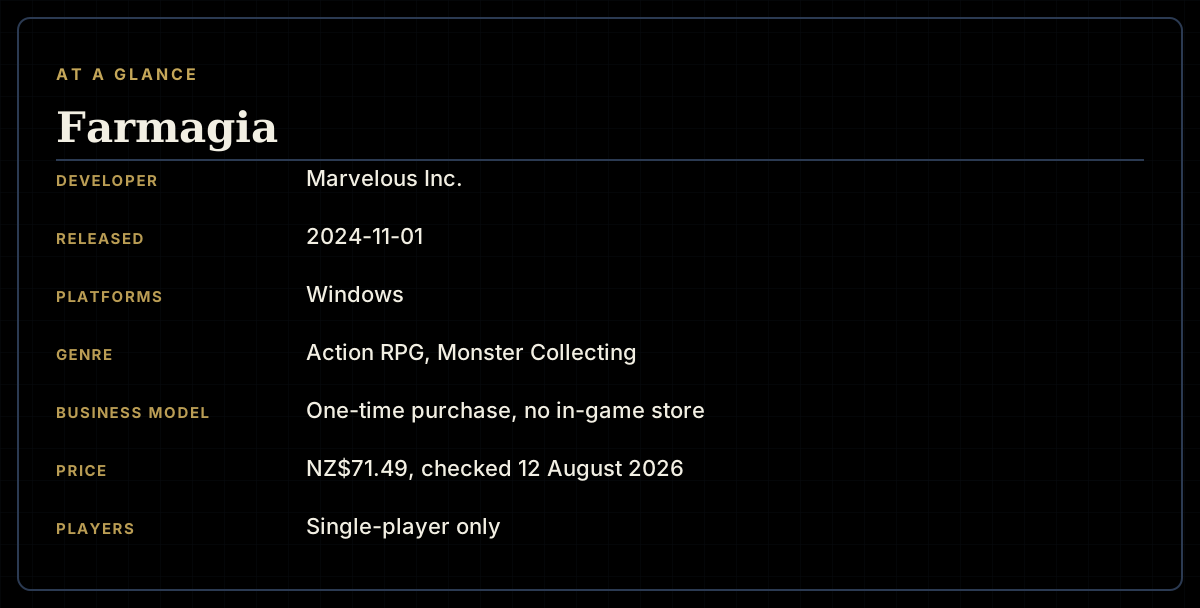
The essentials at a glanceWanderer Editorial -
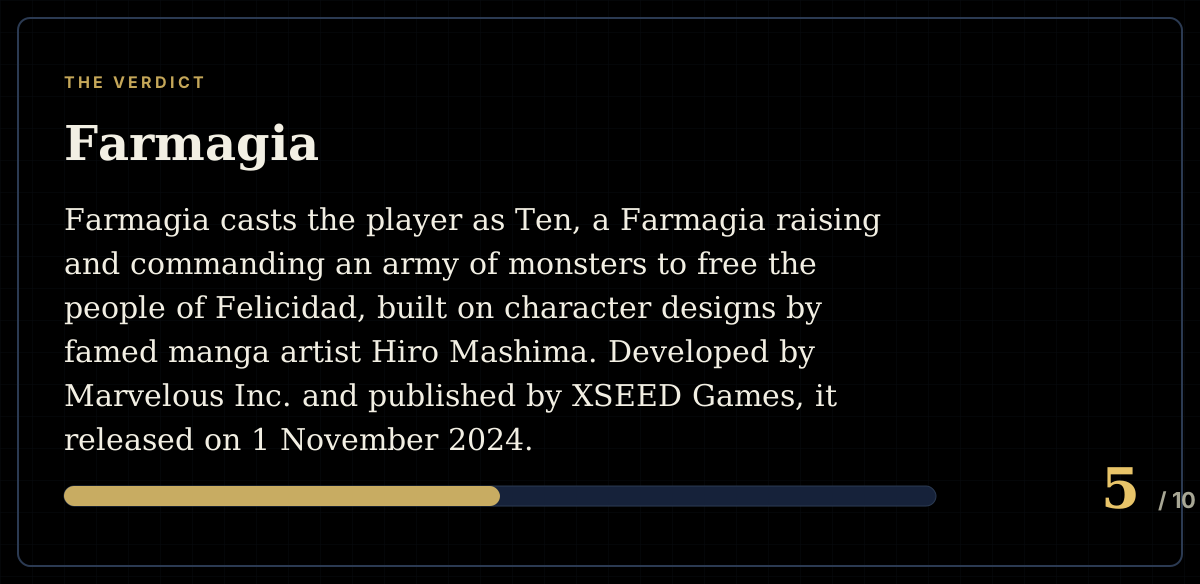
The short versionWanderer Editorial