
Game review
Everything is Crab: The Animal Evolution Roguelite
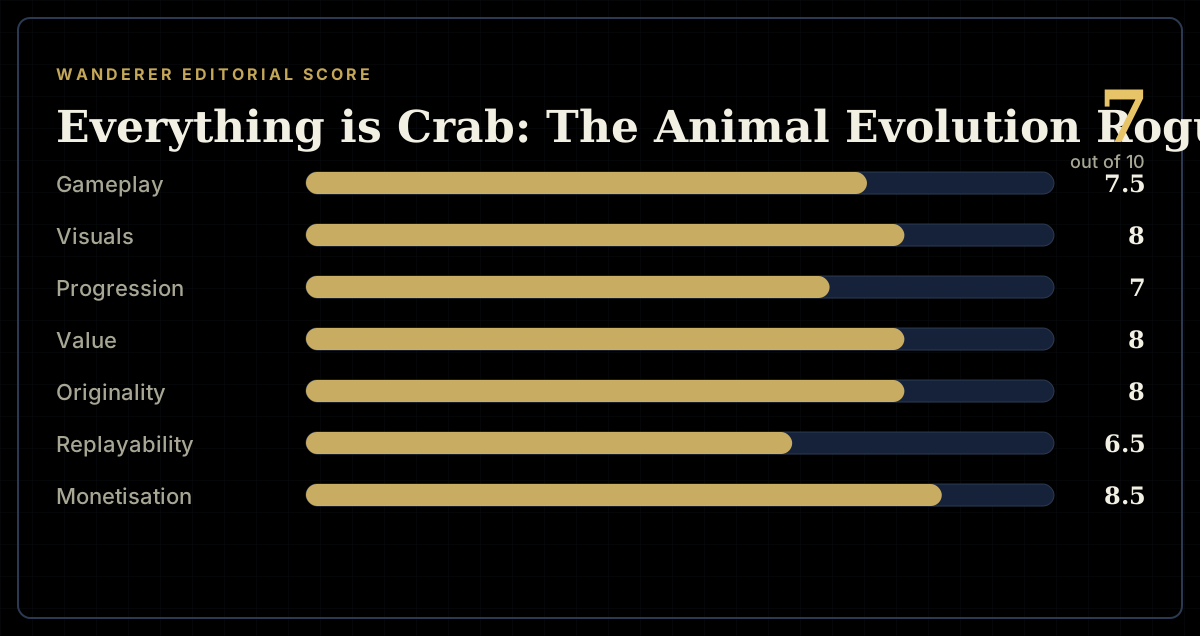
7 / 10
- Developer
- Odd Dreams Digital
- Publisher
- Secret Mode
- Released
- 8 May 2026
- Platforms
- Windows
- Genre
- Survival Roguelite
- Monetisation
- One-time purchase with an optional cosmetic-only Supporter Pack add-on; no ads, no energy systems, no premium currency
- Players
- None — single-player only
The short version
Everything is Crab takes Spore's creature-building itch and compresses it into 20-minute runs, where every meal you eat can unlock a new mutation and change what kind of animal you're even playing. The ecosystem framing — where the thing stalking you might also be someone else's next meal — is genuinely the game's best idea, and the pixel art sells every grotesque mutation you bolt onto your creature.
The catch is depth versus width. A hundred and twenty-five evolutions sounds bottomless, but several of the game's own reviewers converged on the same complaint: a handful of strong builds keep reappearing, bosses stop surprising you once you've learned their patterns, and the dodge-and-hit combat underneath all that customisation is simpler than the character sheet suggests.
Biggest strengths
- Over 125 evolutions let you reshape your creature's entire kit mid-run, and the mutations are visible on the creature itself rather than buried in a stat screen
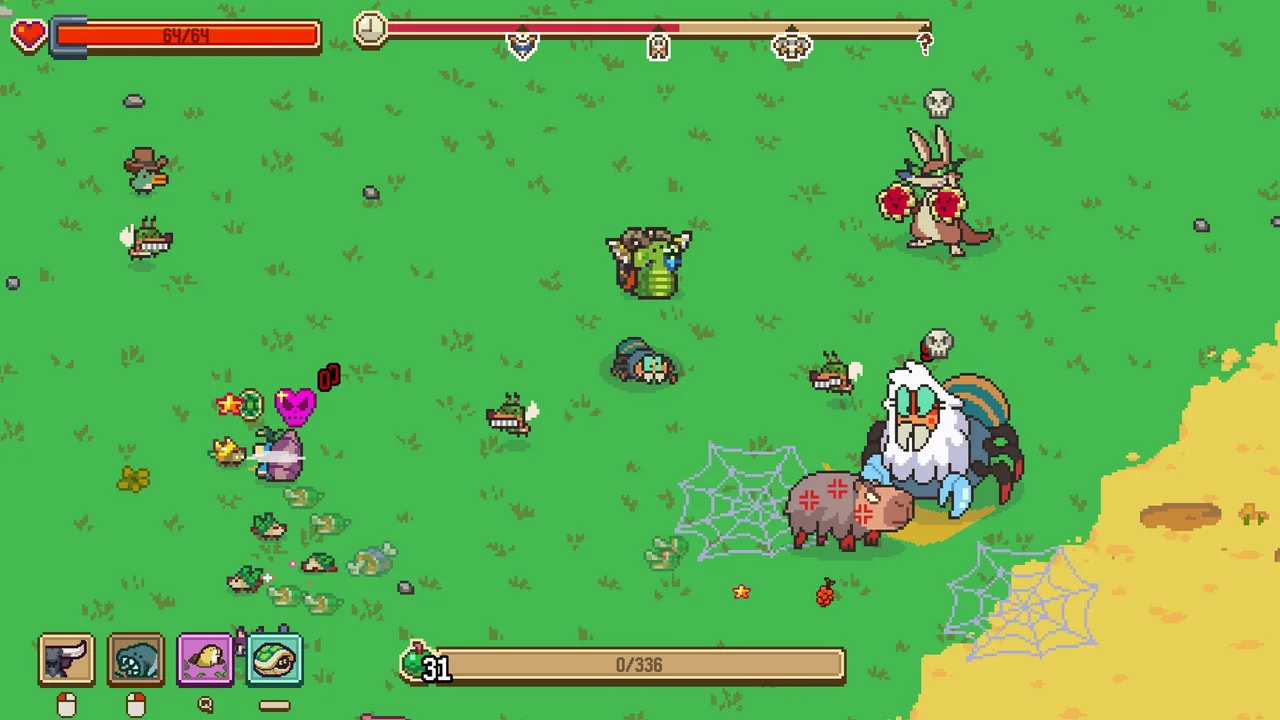
- The ecosystem framing, where disguised prey, alpha variants and a day-night cycle all change how dangerous a run feels, gives exploration real tension beyond just levelling up
- A persistent codex and full run-history log give the meta-progression a scrapbook quality that most 20-minute roguelites don't bother building
Biggest weaknesses
- Bosses reach their pattern ceiling quickly; multiple reviewers independently noted fights become predictable rather than harder as pressure levels rise
- Enemy variety within a given biome repeats often enough that the same small set of strong evolution paths keeps resurfacing run after run, undercutting the promise of 125 options
- The dodge-and-headbutt combat foundation is functional but shallow next to the depth of the evolution system built on top of it
Who it's for: Roguelite players who want short, evolution-driven runs and don't mind builds converging after a dozen or so hours; a good fit for anyone who bounced off Spore's creature stage wanting more mechanical teeth.
Our recommendation: Worth the asking price for what it does well in short sessions. Go in expecting a very good 20-minute loop rather than a deep, endlessly varied roguelite, and it will outperform that expectation more often than not.
7 / 10
The best idea in Everything is Crab isn't that you evolve — plenty of roguelites hand out upgrades between deaths. It's that everything else on the map is evolving too, on the same clock you are, and some of it is disguising itself as the fruit you were about to eat. That single design choice does more to sell the "living ecosystem" pitch than the evolution tree itself, and it's the reason the game's opening hours land as well as they do.
A body that changes shape as you play
Runs last around 20 minutes, and the loop is simple to state: forage, hunt, level up, choose an evolution, repeat until either a boss or the clock ends you. What makes it interesting is that the more than 125 available evolutions aren't a passive stat sheet — picking one visibly reshapes your creature, and some paths lock out others entirely, so a run spent going small and fast with powerful jaws looks and plays nothing like one spent going enormous with a defensive tail. That legibility matters. You can look at another player's screenshot, or your own run history, and immediately read what kind of animal they built without opening a menu.
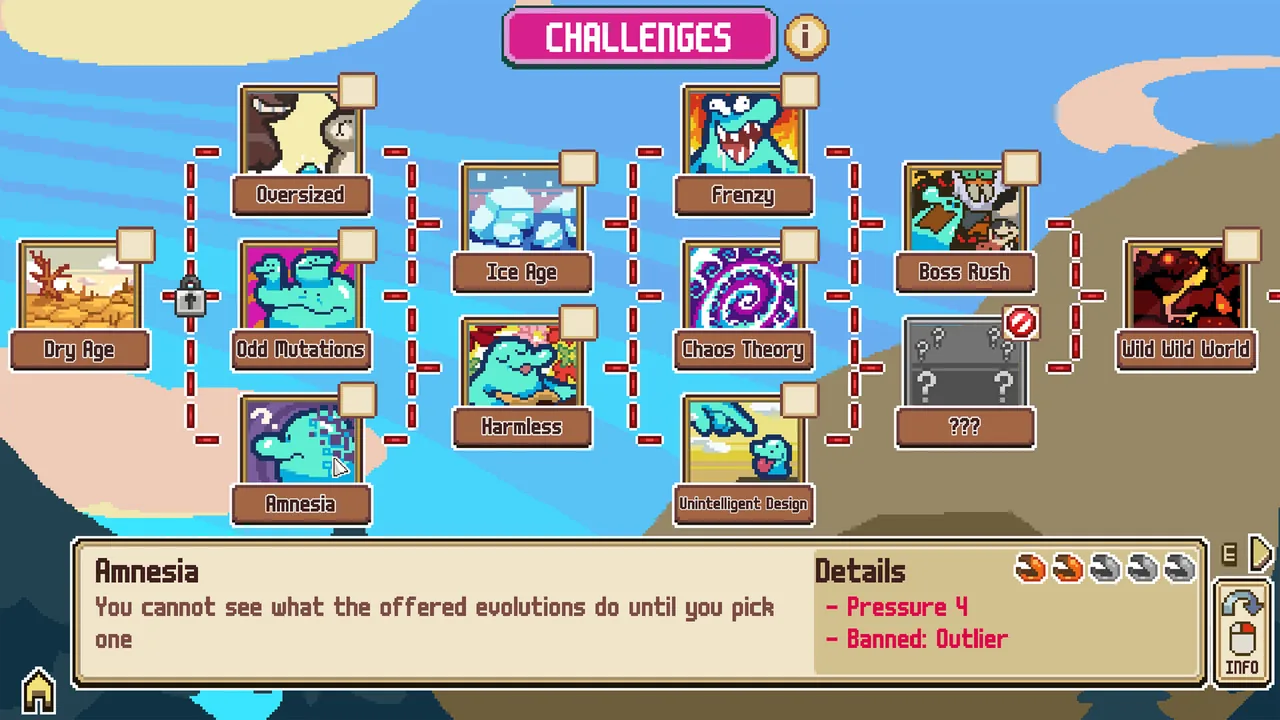
A day-night cycle raises predator aggression and cuts visibility at night, and higher "Pressure" tiers — currently stacked up to twenty — scale enemies and bosses on top of that. Standalone challenge modes, like a Dry Age restriction and an Amnesia mode that strips your memory of prior unlocks, exist specifically to force different decisions out of a system that otherwise rewards repeating whatever worked last time. That's a smart move for a game whose core loop is this short — it buys variety without waiting on a content patch.
The ecosystem sells it, the combat doesn't quite keep up
Being prey as often as predator is the game's sharpest hook. Alpha variants roam biomes offering better rewards for bigger risk, ordinary creatures can disguise themselves as harmless food, and the sense that you're one thread in a food web rather than the main character of it gives exploration a texture most survival roguelites skip. It's the part of the pitch that actually earns the Spore comparisons critics keep reaching for, and it's more interesting than Spore's own creature stage ever managed.
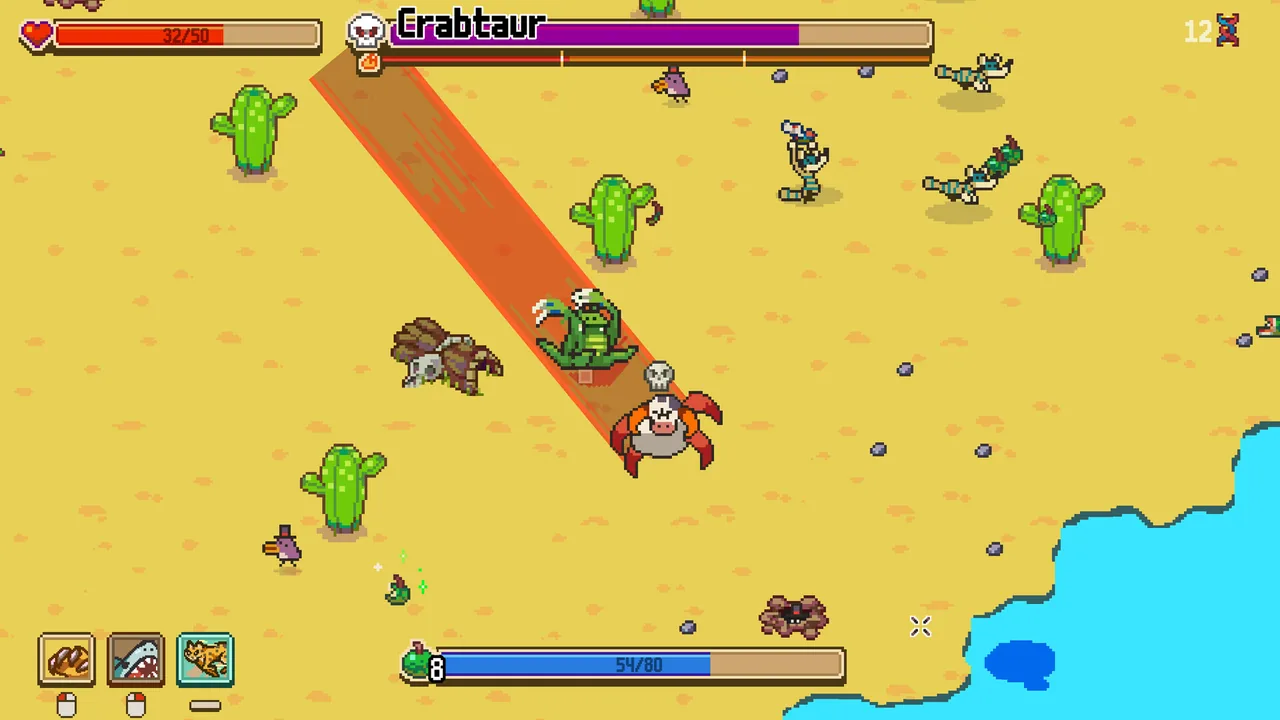
Where the reception gets more mixed is combat itself. Strip away the evolution layer and you're left with a fairly conventional dodge-and-hit foundation, and several reviewers have pointed out that it doesn't carry the game on its own merits — it's the mutation system doing the heavy lifting, and once you've settled into a comfortable build, the actual moment-to-moment fighting doesn't ask much new of you. Bosses draw the same complaint from multiple independent reviews: they're identifiable and beatable quickly, and pressure levels raise their numbers rather than meaningfully changing what you have to do to beat them.
A hundred and twenty-five evolutions, fewer than a hundred and twenty-five builds
This is the game's real tension. A skill tree this size should produce wildly different runs, and for the first several hours it genuinely does. The complaint that's surfaced consistently across critic coverage is that a smaller set of strong, synergistic evolution paths keeps reasserting itself once players have learned the system — an "illusion of choice" is how one reviewer put it, where the branching tree is real but the practically viable routes through it are narrower than the headline number suggests. That's a common growing pain for roguelites built around a single large unlock pool rather than curated builds, and it's the kind of problem patch content and balance passes can actually fix, rather than a structural flaw in the concept.
Presentation and value
The pixel art is doing more work than it might get credit for. Creatures read as "adorably weird" as mutations stack up, animations stay smooth even as your silhouette changes shape entirely, and the visual feedback loop — see a new part, watch it graft onto your creature, immediately understand what it does — is part of why the evolution system feels good to engage with even when the underlying combat is plain.
On value, there isn't much to complain about. The base price sits well below most premium roguelites, the included content already spans dozens of hours across pressure tiers and challenge modes, and the only add-on is a cosmetic Supporter Pack that reskins your creature without touching progression. There's no premium currency, no timer, no pressure to spend beyond the initial purchase — about as clean a monetisation model as a paid indie game gets.
Final verdict
Everything is Crab earns its "mostly positive" reception honestly. The ecosystem hook, the visible evolution system and the tight 20-minute run length combine into something genuinely addictive across its first stretch of hours, and the price asked for that experience is fair. It settles at a 7 rather than higher because the depth promised by 125-plus evolutions doesn't fully survive contact with repeat play — predictable bosses and a shrinking pool of builds that actually feel strong mean the ceiling is lower than the character sheet implies.
Players who want a short, replayable evolution loop for a session here and there will get real value out of it, especially at this price. Players hoping for a roguelite with the build diversity of the genre's best will hit its limits faster than they'd like.
Anyone who likes the idea of progression continuing to matter over the long haul, rather than resetting every 20 minutes, might also want to look at Wanderer — a persistent world where nothing you build gets wiped at the end of a run.
Pros and cons
Pros
- Over 125 evolutions let you reshape your creature's entire kit mid-run, and the mutations are visible on the creature itself rather than buried in a stat screen
- The ecosystem framing, where disguised prey, alpha variants and a day-night cycle all change how dangerous a run feels, gives exploration real tension beyond just levelling up
- A persistent codex and full run-history log give the meta-progression a scrapbook quality that most 20-minute roguelites don't bother building
- Standalone challenge modes like the Dry Age and Amnesia restrictions add genuine variety without waiting on new content updates
- Launch pricing sits well under most premium roguelites, and the optional Supporter Pack is a cosmetic skin, not a gameplay shortcut
Cons
- Bosses reach their pattern ceiling quickly; multiple reviewers independently noted fights become predictable rather than harder as pressure levels rise
- Enemy variety within a given biome repeats often enough that the same small set of strong evolution paths keeps resurfacing run after run, undercutting the promise of 125 options
- The dodge-and-headbutt combat foundation is functional but shallow next to the depth of the evolution system built on top of it
- Windows-only at launch, so Steam Deck-curious and console players are locked out despite full controller support already being in place
Screenshots
-
Everything is Crab: The Animal Evolution RogueliteImage: Secret Mode via Steam -
Everything is Crab: The Animal Evolution RogueliteImage: Secret Mode via Steam -
Everything is Crab: The Animal Evolution RogueliteImage: Secret Mode via Steam -
How the review scores each part of the gameWanderer Editorial -
The short versionWanderer Editorial