Game review
Everfall 2: Idle Dungeon RPG
6.5 / 10
- Developer
- GameDevJoey
- Publisher
- GameDevJoey
- Released
- 13 March 2026
- Platforms
- Windows
- Genre
- Idle RPG
- Monetisation
- Paid game with no in-app purchases, ads or loot boxes
- Players
- Single-player only
The short version
Everfall 2 is a competent idle dungeon-crawler built around picking four heroes from a roster of six and pushing them through skill trees, keystones, runes and a genuinely substantial endgame. It's a real step up from its predecessor, which shipped in December 2025 to a Mostly Negative reception built largely on save corruption. The sequel fixes the reputation problem more than it fixes every underlying issue: onboarding is still rough, the interface still needs work, and a cluster of recent user reviews raise concerns about AI-generated art assets that are worth knowing about before you buy.
Judge it as what it is — a one-person passion project charging eight to fifteen dollars, not a polished studio release — and there's a lot to like in how much build variety it packs into that price. Judge it against genre leaders and the seams show quickly.
Biggest strengths
- Six heroes with genuinely distinct build paths give the four-person squad more real theorycrafting room than most idle RPGs bother with
- Vault Dungeons, Rune Trials, the Divine Arena and a Pinnacle Boss give the endgame actual structure instead of just larger enemy health bars
- A seven-tier loot ladder running all the way to Unique weapons keeps drops feeling like decisions rather than vendor trash
Biggest weaknesses
- New players are dropped into skill trees, keystones and runes with very little guided explanation, and several recent reviews describe the early hours as more confusing than engaging
- The interface draws the same complaints as the systems underneath it — cramped menus, no resolution options, and comparison screens that get harder to parse once modifiers start stacking
- A handful of user reviews report lingering save and balance bugs, including in the party leveling math, echoing (on a smaller scale) the technical reputation that dogged the original
Who it's for: Idle-RPG regulars who want real build depth (skill trees, keystones, runes, pet synergies) and don't mind a rough interface, plus anyone curious whether a troubled solo developer's second game actually fixed the first one's problems.
Our recommendation: Worth a purchase at the current discount for genre fans willing to tolerate some
6.5 / 10
A sequel with something to prove
GameDevJoey's first Everfall launched in December 2025 and immediately ran into the kind of problem that ends a small game's life on Steam: players reported the save file corrupting or disappearing outright, and the game settled into Mostly Negative territory with roughly a third of its (small) review pool giving it a thumbs up. Three months later, Everfall 2: Idle Dungeon RPG arrived as a full-priced rebuild rather than a patch, and it's currently sitting at Mostly Positive — around three-quarters of a review pool that, as of this writing, is still only in the low forties. That's the headline improvement, and it's real. It's also worth being honest about what "low forties" means for confidence: this is not yet a verdict backed by thousands of players, and a run of bad luck with one build could shift the percentage meaningfully. Treat the Mostly Positive tag as an encouraging early signal, not a settled reputation.
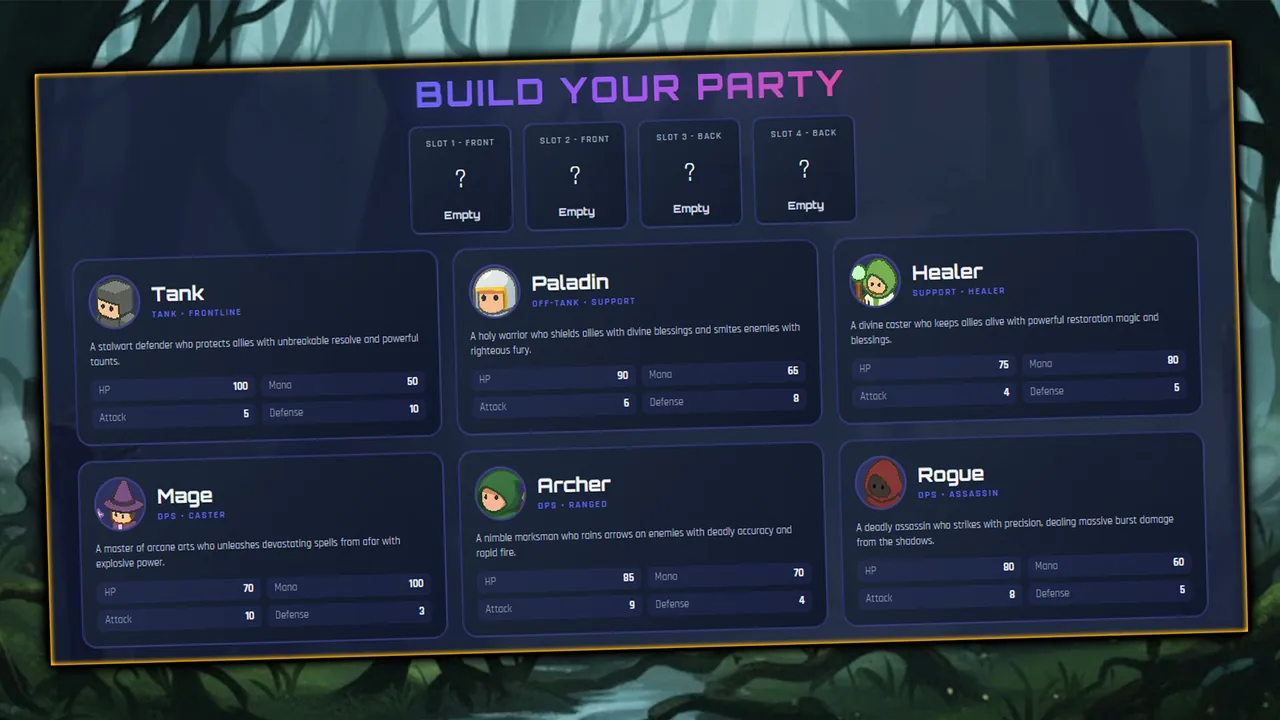
What makes the turnaround interesting is that Everfall 2 isn't just Everfall with the save bug patched. It's a heavier, more ambitious game built around the same idle-auto-battler shell: you assemble a four-hero party from a roster of six, send them into procedurally escalating dungeon runs, and spend the loot and experience they generate on skill trees, keystones, runes and pet upgrades between pushes. The core loop will be instantly familiar to anyone who's played Melvor Idle's combat side or a mobile idle-RPG clicker, and it doesn't try to reinvent that shape. What it tries to do is give the loop somewhere to go.
Party building and progression
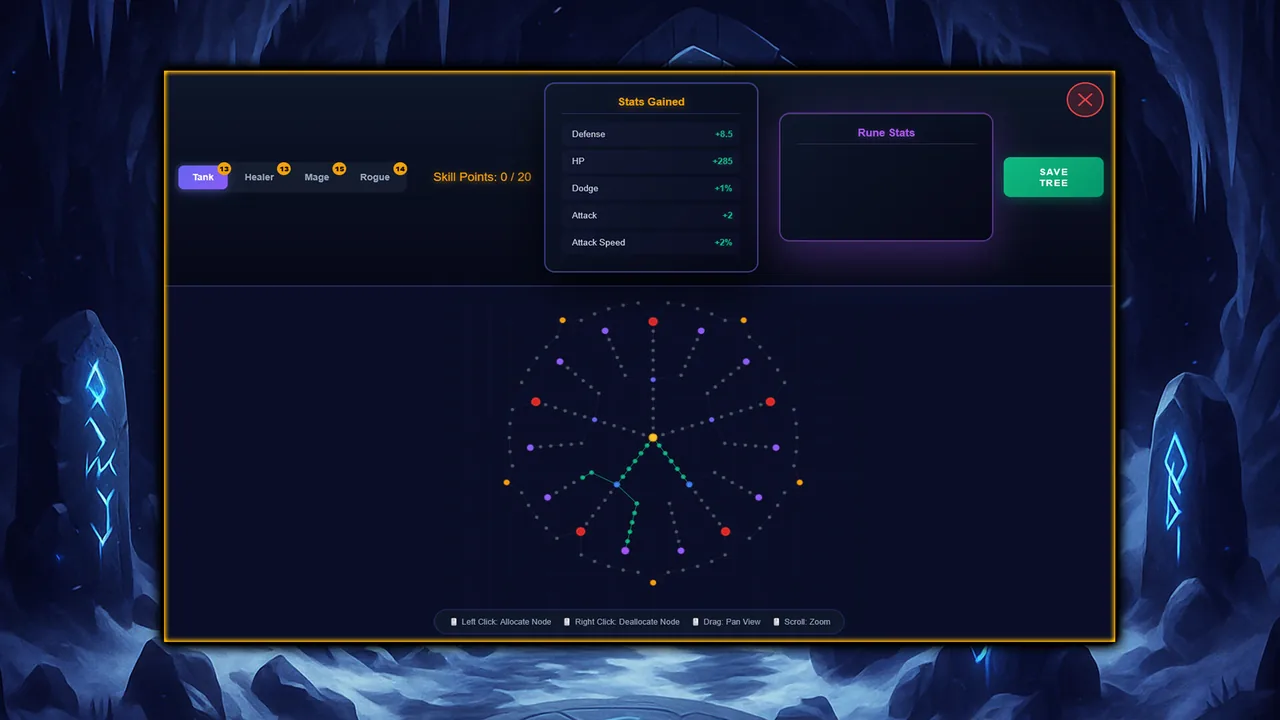
Six heroes is a small roster by RPG standards, but Everfall 2 leans on making each one flexible rather than numerous. Every character reportedly supports multiple ability sets and skill-tree paths, so the real variable isn't which four heroes you pick out of six combinations — it's how you build each of the four you settle on. Keystones function as the game's build-defining modifiers, the kind of single choice that reroutes a hero's entire playstyle, while runes layer on finer tuning. Combat pets sit alongside the heroes as a secondary progression track, adding passive bonuses and synergies rather than a fifth party slot.
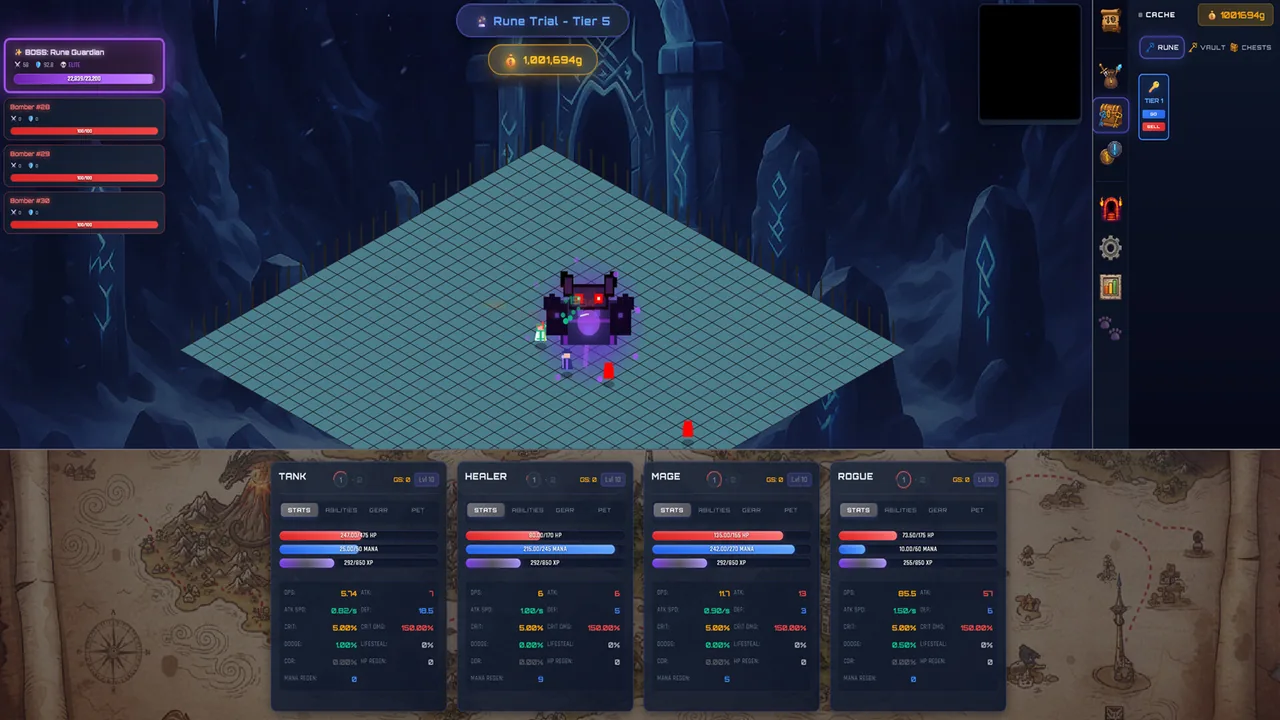
Loot follows a seven-tier rarity ladder — Common through Uncommon, Rare, Epic, Legendary, Mythic and finally Unique — with Unique weapons reserved for the game's toughest bosses. That's a wide enough spread to keep drops meaningful across a long playthrough, and pairing it with a real endgame is what separates Everfall 2 from idle games that peter out once the numbers get big. Vault Dungeons are key-gated, loot-focused boss runs with scaling rewards; Rune Trials are harder fights that specifically test whether your rune and keystone choices actually hold up under pressure; the Divine Arena and a climactic Pinnacle Boss sit above both as the "why you keep playing" tier, with the Pinnacle Boss dropping its own unique weapons. A rare Breach Fiend spawn — reportedly around a 1% chance per encounter — guarantees a Breach Key when killed, giving even routine farming runs an occasional reason to pay attention.
The three explorable zones reinforce that variety rather than just reskinning the same fight: Everfall itself runs longer, more attritional battles, Stoneforge trades length for speed and lethality, and Umbral Depths throws larger enemy swarms at reduced individual stats. For an idle game, that's a genuinely thoughtful way to keep farming from becoming one grind wearing three costumes.
Where the rough edges still show
None of that build depth means much if players can't find their footing early, and that's Everfall 2's clearest weakness. A recurring theme in user feedback is that the opening hours throw skill trees, keystones and runes at the player with too little explanation, so a system designed to reward experimentation instead reads as overwhelming until something clicks. That's a survivable problem in a genre used to some jargon, but it's compounded by an interface that reviewers describe as cramped, short on basic options like resolution settings, and increasingly hard to parse once gear comparisons start stacking multiple modifiers on top of each other. This is a solo-developer UI, and it looks and behaves like one.
More concerning, given the original game's history, are the scattered but persistent reports of save issues and balance bugs — including complaints about how party members level relative to each other — turning up in Everfall 2's review pool. It's a much smaller problem than the original's, and nowhere near save-corruption territory, but it means the technical trust the sequel needed to rebuild isn't fully banked yet.
The other pattern worth flagging honestly: a cluster of recent reviews specifically call out AI-generated visual assets as a quality concern, and it lines up with what the game actually looks like on screen — flat, inconsistent art direction that doesn't always match itself from scene to scene. For a solo developer working without an art budget, leaning on generated assets for backup art is an understandable shortcut, but it's clearly landing badly with a vocal slice of the audience, and it's the kind of thing worth knowing before you buy rather than discovering after.
Value and who it's for
At a shade under fifteen dollars full price — currently discounted 40% — Everfall 2 is priced like what it is: a passion project, not a AAA release. There's no IAP shop, no energy system, no battle pass, and nothing gating the build systems behind a second purchase. For genre fans who want real theorycrafting and don't mind some jank, that's a fair trade. Players who bounce hard off unclear onboarding or a cluttered interface will bounce off this one too, and anyone burned by the original Everfall's save problems is owed the caveat that this is a different game built by the same developer, carrying an improved but not spotless track record.
Everfall 2 doesn't need co-op or PvP to be a satisfying idle RPG, and it doesn't try to add either. What it does need — clearer early guidance, a more comfortable interface, and a bit more consistency in its visual presentation — are fixable problems for a developer who's already shown he'll rebuild rather than abandon a bad launch. Players who like watching a build come together over dozens of hours of automated dungeon runs will find real substance here. Players looking for their next visually polished obsession should look elsewhere for now.
Wanderer players who like builds that keep working while they're away from the keyboard will recognise the appeal of Everfall 2's core loop, even if the two games solve the offline-progress problem in very different ways.
Pros and cons
Pros
- Six heroes with genuinely distinct build paths give the four-person squad more real theorycrafting room than most idle RPGs bother with
- Vault Dungeons, Rune Trials, the Divine Arena and a Pinnacle Boss give the endgame actual structure instead of just larger enemy health bars
- A seven-tier loot ladder running all the way to Unique weapons keeps drops feeling like decisions rather than vendor trash
- A single up-front price with no IAPs, energy timers or battle pass means the whole build system is available from the moment you buy it
- The Everfall/Stoneforge/Umbral Depths zone split (long fights, fast-and-lethal fights, swarm fights) gives farming actual variety instead of one grind dressed up three ways
Cons
- New players are dropped into skill trees, keystones and runes with very little guided explanation, and several recent reviews describe the early hours as more confusing than engaging
- The interface draws the same complaints as the systems underneath it — cramped menus, no resolution options, and comparison screens that get harder to parse once modifiers start stacking
- A handful of user reviews report lingering save and balance bugs, including in the party leveling math, echoing (on a smaller scale) the technical reputation that dogged the original
- Recent Steam reviews specifically flag AI-generated visual assets as a quality concern, which shows up in the game's flat, inconsistent art direction
- No multiplayer or co-op of any kind, despite several players asking for it, in a genre where Wanderer's own audience increasingly expects some social layer
Screenshots
-
Everfall 2: Idle Dungeon RPGImage: GameDevJoey via Steam -
Everfall 2: Idle Dungeon RPGImage: GameDevJoey via Steam -
Everfall 2: Idle Dungeon RPGImage: GameDevJoey via Steam -
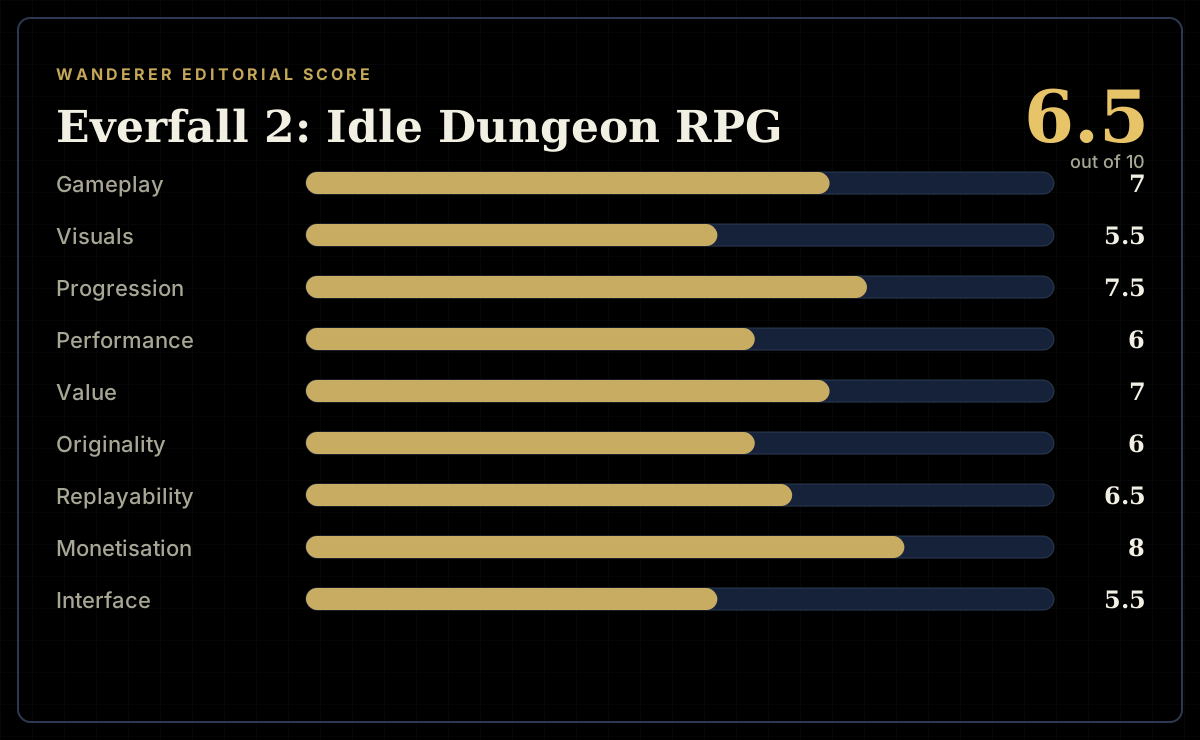
How the review scores each part of the gameWanderer Editorial -
The short versionWanderer Editorial