Game review
Eiyuden Chronicle: Hundred Heroes
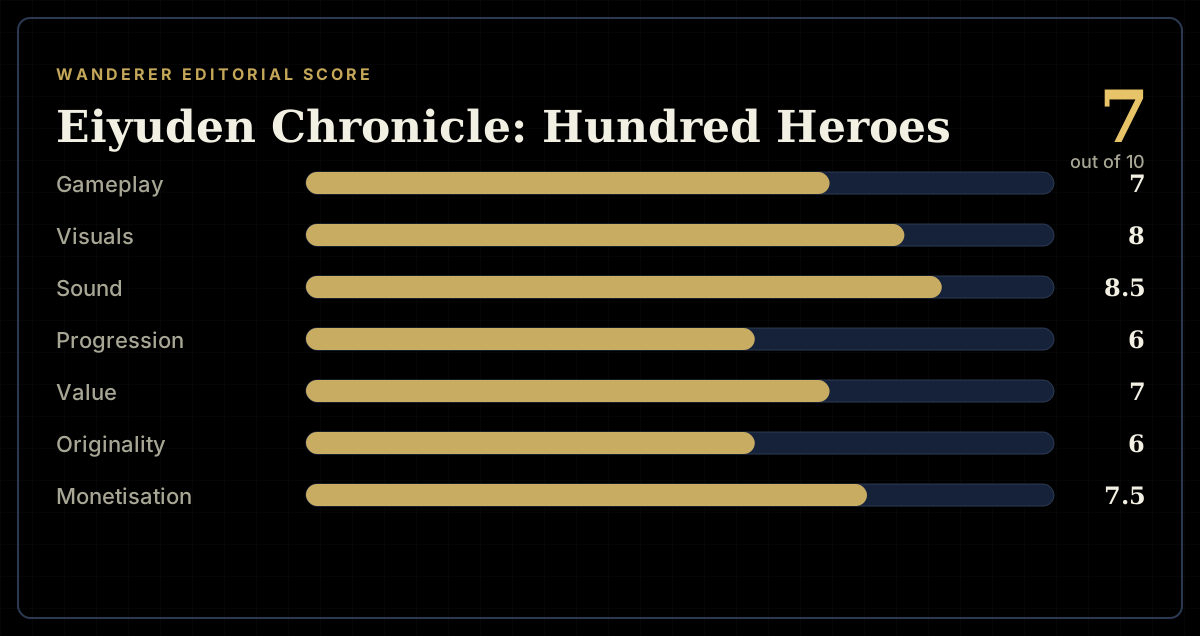
7 / 10
- Developer
- Rabbit & Bear Studios
- Publisher
- 505 Games
- Released
- 23 April 2024
- Platforms
- Windows, PlayStation 4, PlayStation 5, Xbox One, Xbox Series X|S, Nintendo Switch
- Genre
- JRPG
- Monetisation
- Premium, one-off purchase. Steam lists eight pieces of paid DLC (checked 3 August 2026): three narrative Story Expansions — the Chapters of Markus, Seign and Marisa, NZ$11.95 each, or bundled as a NZ$37.95 Season Pass — and four small cosmetic packs for decorating the player's home base (Pioneer Pack NZ$3.95, HQ Makeover Package NZ$6.95, Allraan Artistry Pack NZ$14.95, Hope of the Alliance HQ Statue NZ$2.95). Nothing in any of it was found to affect combat stats or story content; the expansions add new scenarios, the rest is decoration.
- Players
- Single-player only. Steam's store page lists no multiplayer, co-op or online category of any kind.
The short version
Eiyuden Chronicle: Hundred Heroes is exactly the Suikoden successor its Kickstarter backers asked for: a home base you renovate as your army grows, a cast of well over a hundred recruitable characters, and turn-based war battles sitting alongside standard duels. It is also a game whose own Steam reviews spend as much time on a rough English script and a demanding true-ending checklist as they do on any of that. Both things are true of the same release.
Biggest strengths
- Recruiting well over a hundred named characters and watching the home base physically grow to house them is the specific Suikoden hook this game gets right
- War battles built on rock-paper-scissors tactics sit alongside standard duels and one-on-one showdowns, giving combat more shape than a single repeated loop
- The Japanese voice cast and composer Suikoden veterans deliver a soundtrack and performance that consistently outpace the English text describing them
Biggest weaknesses
- The English script strains badly enough in places that one player who switched the game to Spanish described a noticeably better-written story underneath
- Random overworld encounters add friction without testing anything the story's proper battles don't already ask of you
- Recruiting every character for the true ending turns the second half into a checklist a casual player is unlikely to complete without a guide
Who it's for: Suikoden veterans and turn-based JRPG fans who want a genuine collector's army-building RPG, and who can tolerate some clunky English prose to get there. Less suited to players who want a tightly written, modern-feeling script, or who have no patience for tracking down every optional recruit.
Our recommendation: Worth playing for the genre it's reviving and the scale of its recruitable cast, but go in knowing the English localization is the thing this game's own players complain about most, and that seeing everything it has to offer means hunting down a lot of very missable characters.
7 / 10
Yoshitaka Murayama did not live to see how Eiyuden Chronicle: Hundred Heroes turned out. The writer and director behind Suikoden and Suikoden II at Konami in the 1990s died on 6 February 2024, a little over two months before his spiritual successor to those games finally shipped — funded years earlier by one of the largest video game Kickstarter campaigns ever run. That fact sits over any honest conversation about this game whether the conversation wants it there or not. It is worth saying plainly before anything else: Hundred Heroes earns its place in the genre on its own mechanical terms, and it also carries the unmistakable feel of a project whose creator didn't get to see the reaction to it.
Recruiting the cast Suikoden built its name on
The specific promise Rabbit & Bear Studios made to backers was a return to Suikoden's collector-RPG structure, and that's the part Hundred Heroes delivers on most directly. Well over a hundred named characters are scattered across the map, most tied to a small favour, a side conversation or a recruitment condition rather than a story beat you can't miss, and every one added to the roster gets folded into a home base — a fortress that visibly grows new wings, shops and facilities as the cast fills it out. It's a slower, more deliberate kind of progression than most modern JRPGs bother with, closer to populating a town than levelling a character, and it's the single mechanic Hundred Heroes' own backers and reviewers consistently point to as the thing no other current release quite replicates.
Two different shapes of combat, not one
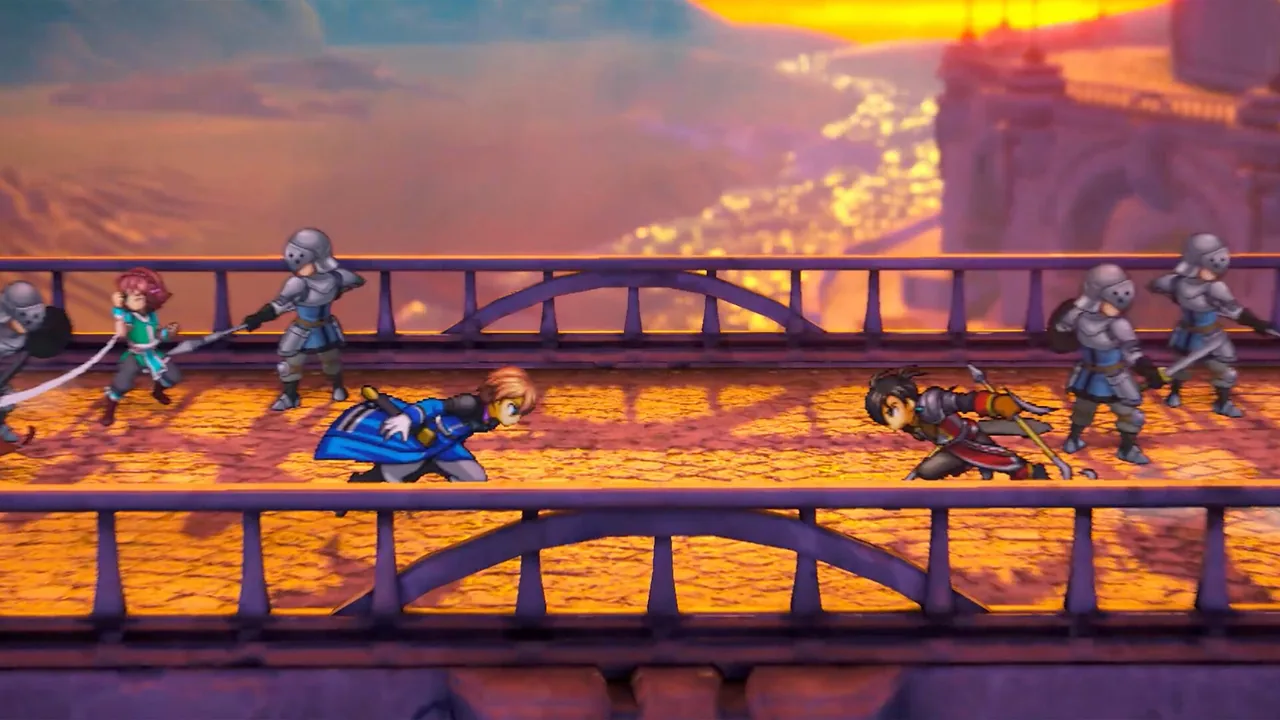
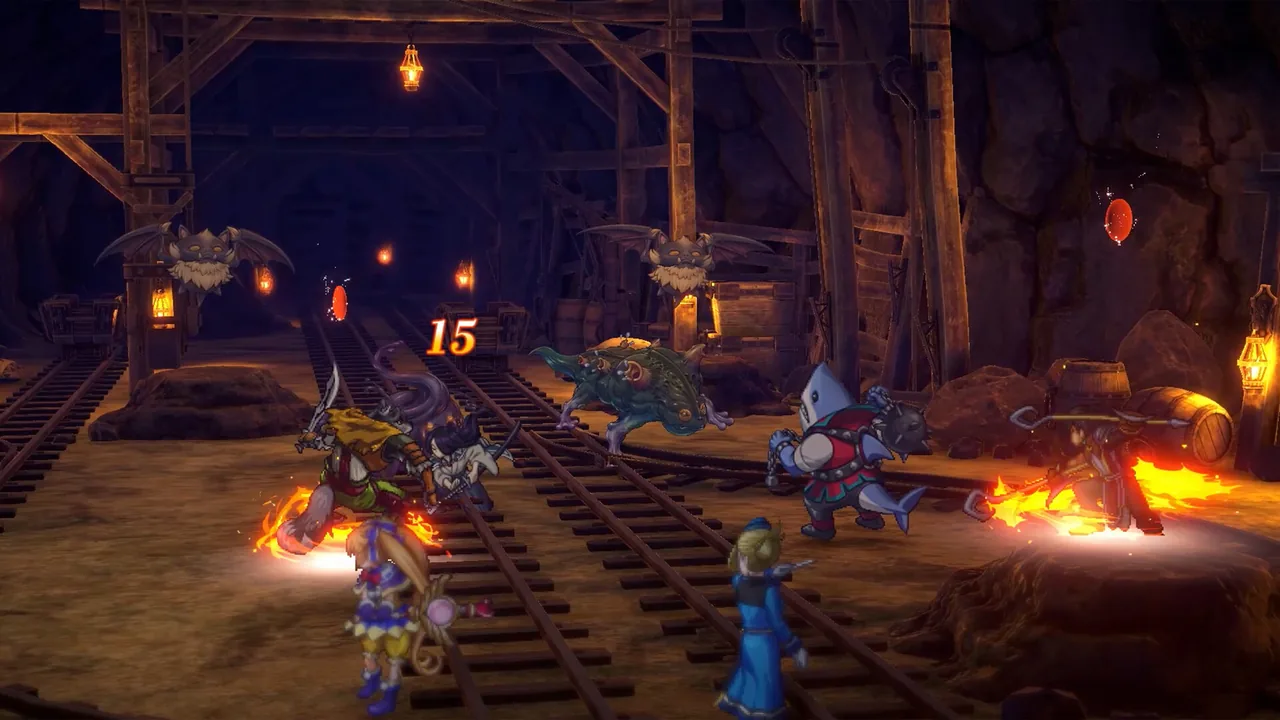
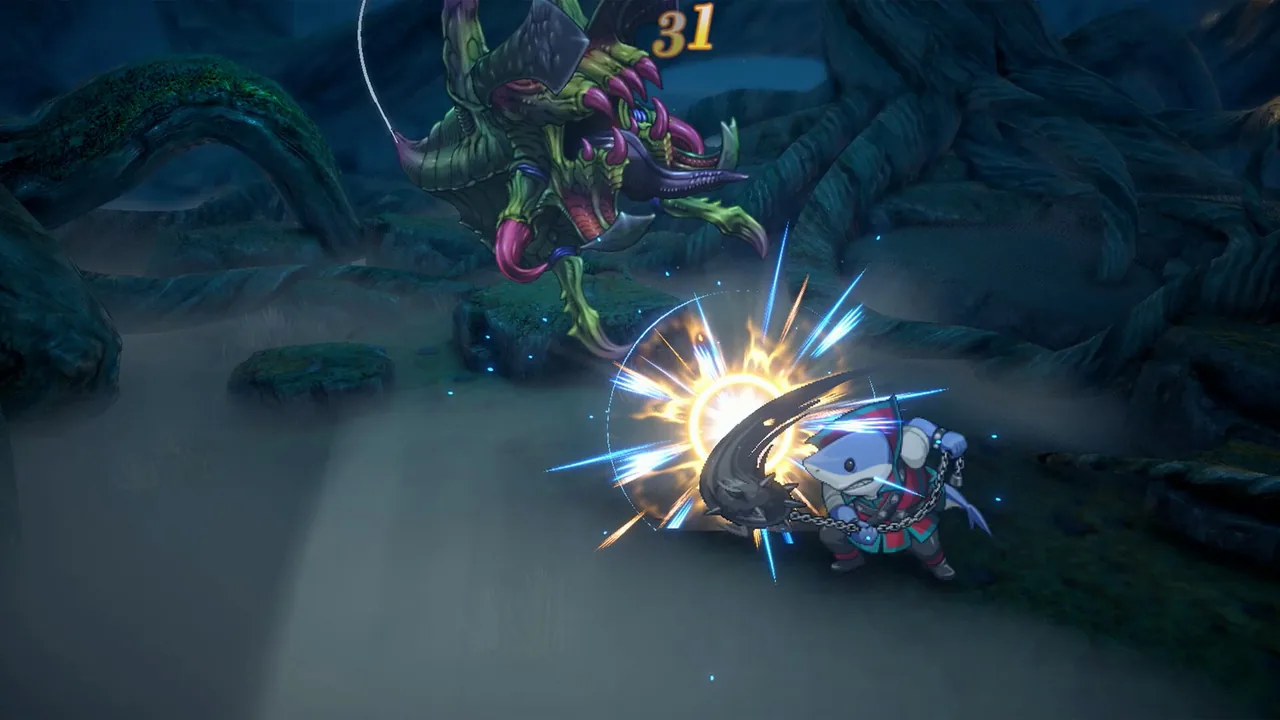
Standard encounters run as a fairly conventional turn-based JRPG loop — six-character parties, elemental and positional matchups, one-on-one duel cutscenes lifted straight from Suikoden's playbook for dramatic confrontations. Layered on top of that are war battles: larger-scale, rock-paper-scissors-driven skirmishes where unit types counter each other directly and the correct call matters more than raw stats. Having both keeps the game from settling into a single repeated rhythm for its length, though the standard side isn't universally loved — several negative reviews single out the row-based positioning system duels borrow from Suikoden as mechanically inert, and random overworld encounters draw the most consistent complaint of padding without teaching anything the scripted fights don't already cover.
The script Steam reviews can't stop discussing
Roughly three in ten of this game's negative Steam reviews raise its English localization specifically, independent of anything about mechanics or pacing, and the language used is unusually pointed for a genre where translation quality rarely becomes the headline complaint. One detail from the review sample is worth repeating precisely because it isolates the problem: a player who switched the in-game text to Spanish after reading the English complaints described a noticeably different, better-written experience underneath — evidence that the issue sits in this specific localization pass rather than in the underlying script Murayama and his team wrote. For a game this dependent on dialogue to sell a hundred-plus-character cast, a translation that undercuts delivery is a real cost, not a cosmetic one.
What finishing the story actually asks of you
Getting the "true" ending requires recruiting a large share of that hundred-plus cast rather than simply reaching the credits, and roughly a quarter of the negative review sample raises exactly this — not as a minor gripe, but as the reason a player who otherwise liked the game stopped short of finishing it properly. That structure rewards the kind of player Suikoden always rewarded: someone willing to consult a guide, backtrack, and treat recruitment as its own parallel game. It punishes anyone expecting a single clean playthrough to show them everything the story has, and the back half of the campaign reads noticeably more like a checklist once that requirement becomes clear.
A technical complaint that hasn't gone quiet
Bugs and crashes come up in a meaningful share of this game's negative reviews, and it isn't only a launch-week phenomenon — one review posted well over a year after release specifically describes an unresolved issue blocking story progress at a late-game encounter, adding that the problem was still present two years on. That single account isn't proof the game is broadly unstable today, and Rabbit & Bear did ship a hotfix and several story-expansion patches across 2024 and 2025, but the pattern across the wider negative sample is common enough that it belongs in any honest account of the game rather than being written off as launch noise that's since been resolved.
Where the presentation carries the weight
Whatever the script's problems, Hundred Heroes looks and sounds like the project the Kickstarter backers were promised. The art blends 2D character sprites over three-dimensional environments in a way that reads as a deliberate, well-executed update of the late-90s look Suikoden fans are chasing rather than a budget compromise, and the Japanese voice cast carries emotional scenes the English text sometimes can't. The soundtrack, from a team with real Suikoden pedigree, is one of the more consistently praised elements across both positive and negative reviews — proof that even players who came away disappointed by the writing still credit the parts of the production that were finished the way the team intended.
What's actually for sale
The base game sits at NZ$79.95 with no discount active at the time of writing, and the eight pieces of paid DLC split cleanly into two kinds: three Story Expansions — the Chapters of Markus, Seign and Marisa — that add new post-campaign scenarios for NZ$11.95 each or NZ$37.95 as a bundled Season Pass, and a handful of purely cosmetic packs for redecorating the home base, the most expensive of which runs NZ$14.95. Nothing in that catalogue was found to touch combat stats, story access or the true-ending requirements above — a meaningfully cleaner monetisation model than several premium JRPGs manage, and one where the DLC tail is genuinely optional rather than a quiet pressure valve.
Verdict
Seven out of ten. Hundred Heroes does the one thing it absolutely had to do — it makes recruiting and housing a hundred-plus-character army feel as good as Suikoden fans remember, backed by a score and voice cast that consistently outperform the text around them. What keeps it from climbing higher is just as specific: an English localization that a meaningful share of its own audience considers the game's biggest flaw, a true ending gated behind completionist legwork most players won't finish without help, and a technical-complaint pattern that hasn't fully gone away years after launch. For the audience it was actually built for — people who wanted more Suikoden and were prepared to fund a Kickstarter to get it — that trade is worth making. For anyone coming in cold, it's a harder sell than the pedigree alone suggests.
Fans of turn-based collector RPGs with a similar homage streak might also look at Chained Echoes, an indie built on the same era of JRPGs without Hundred Heroes' localization baggage. And for players put off by how much of this game's back half depends on hunting down missable recruits, Wanderer's own progression asks for time rather than a checklist — nothing here is missable in the same way.
Price, DLC list and review counts checked 3 August 2026.
Pros and cons
Pros
- Recruiting well over a hundred named characters and watching the home base physically grow to house them is the specific Suikoden hook this game gets right
- War battles built on rock-paper-scissors tactics sit alongside standard duels and one-on-one showdowns, giving combat more shape than a single repeated loop
- The Japanese voice cast and composer Suikoden veterans deliver a soundtrack and performance that consistently outpace the English text describing them
- Steam's own review sample shows negative feedback coming overwhelmingly from players with dozens of hours logged, not from people who bounced off the opening
Cons
- The English script strains badly enough in places that one player who switched the game to Spanish described a noticeably better-written story underneath
- Random overworld encounters add friction without testing anything the story's proper battles don't already ask of you
- Recruiting every character for the true ending turns the second half into a checklist a casual player is unlikely to complete without a guide
- A meaningful share of negative reviews raise bugs or crashes, including reports of unresolved issues surfacing years after launch
Screenshots
-
Eiyuden Chronicle: Hundred HeroesImage: 505 Games via Steam -
Eiyuden Chronicle: Hundred HeroesImage: 505 Games via Steam -
Eiyuden Chronicle: Hundred HeroesImage: 505 Games via Steam -
How the review scores each part of the gameWanderer Editorial -
The short versionWanderer Editorial