
Game review
Dungreed
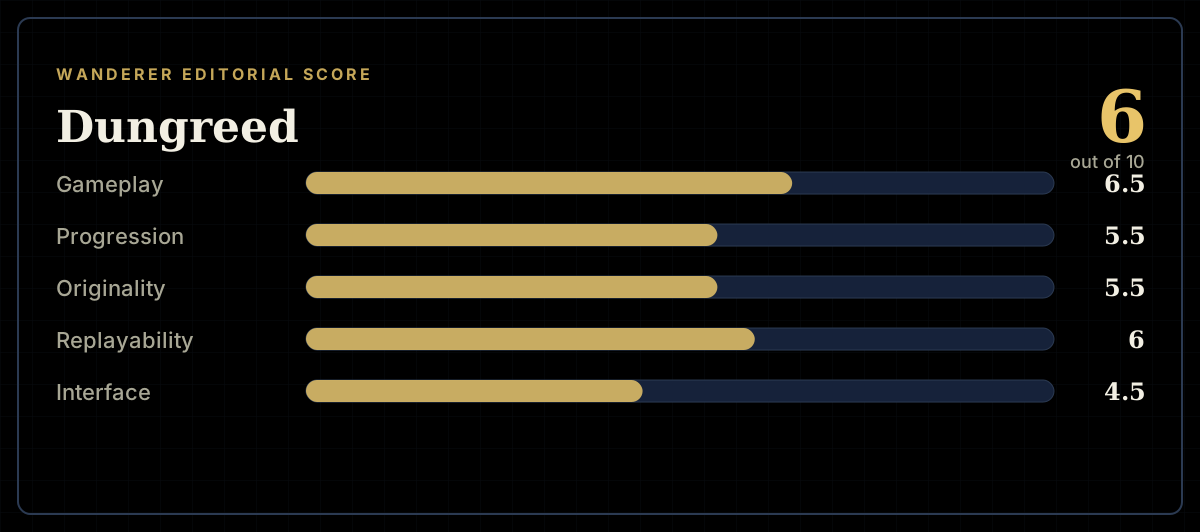
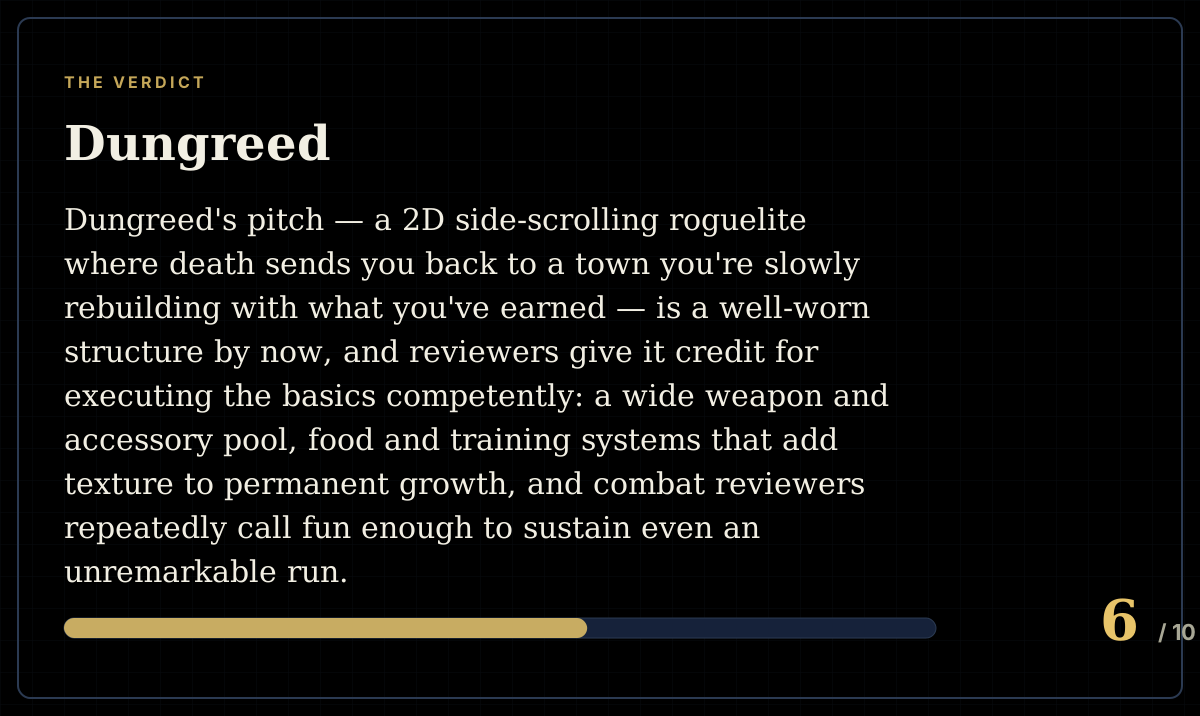
6 / 10
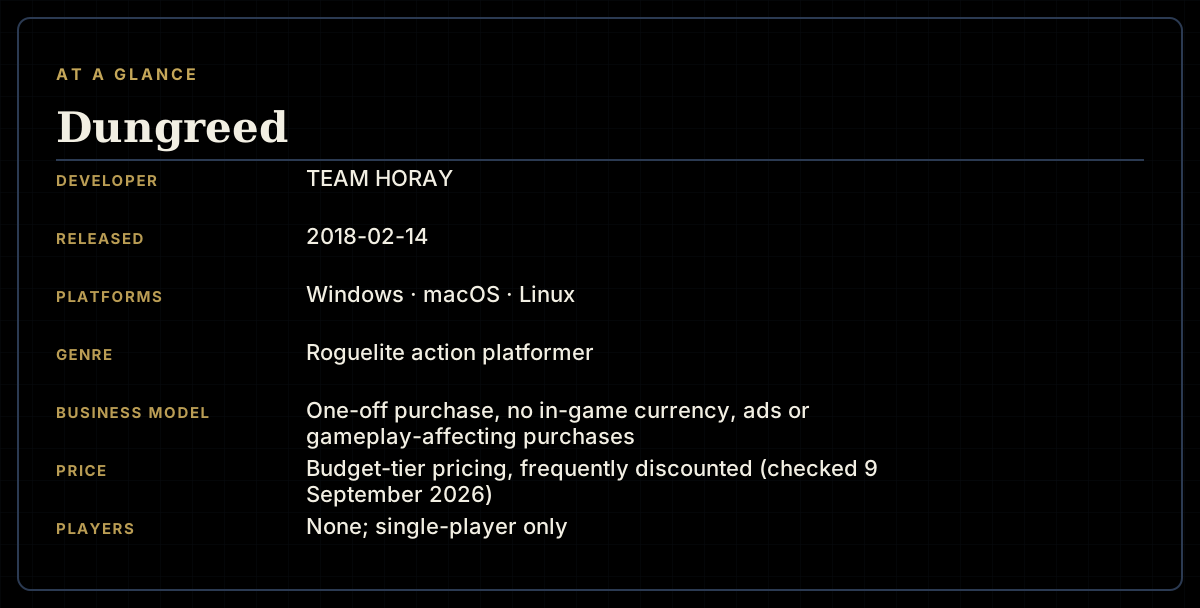
- Developer
- TEAM HORAY
- Publisher
- TEAM HORAY
- Released
- 14 February 2018
- Platforms
- Windows, macOS, Linux
- Genre
- Roguelite action platformer
- Monetisation
- One-off purchase, no in-game currency, ads or gameplay-affecting purchases
- Players
- None; single-player only
The short version
Dungreed's pitch — a 2D side-scrolling roguelite where death sends you back to a town you're slowly rebuilding with what you've earned — is a well-worn structure by now, and reviewers give it credit for executing the basics competently: a wide weapon and accessory pool, food and training systems that add texture to permanent growth, and combat reviewers repeatedly call fun enough to sustain even an unremarkable run. Set against that is a specific, recurring cluster of complaints: an unintuitive, mouse-direction-tied control scheme several reviewers say never clicks even after dozens of hours, spotty controller detection that can make the game unplayable outright, item and build balance criticized as pushing most players toward the same two or three viable setups, and room layouts described as repetitive once the initial novelty wears off. Achievement data shows a real, if steadily steepening, drop-off through the game's later chapters, consistent with reviewers who say the difficulty curve turns unfair rather than challenging in the back half. The developer supported it for roughly six years before moving on to a spiritual successor, Sephiria, which more than one reviewer here recommends over this game outright.
Biggest strengths
- A wide, varied pool of weapons and accessories that multiple reviewers say keeps individual runs feeling fresh even well past the first few hours
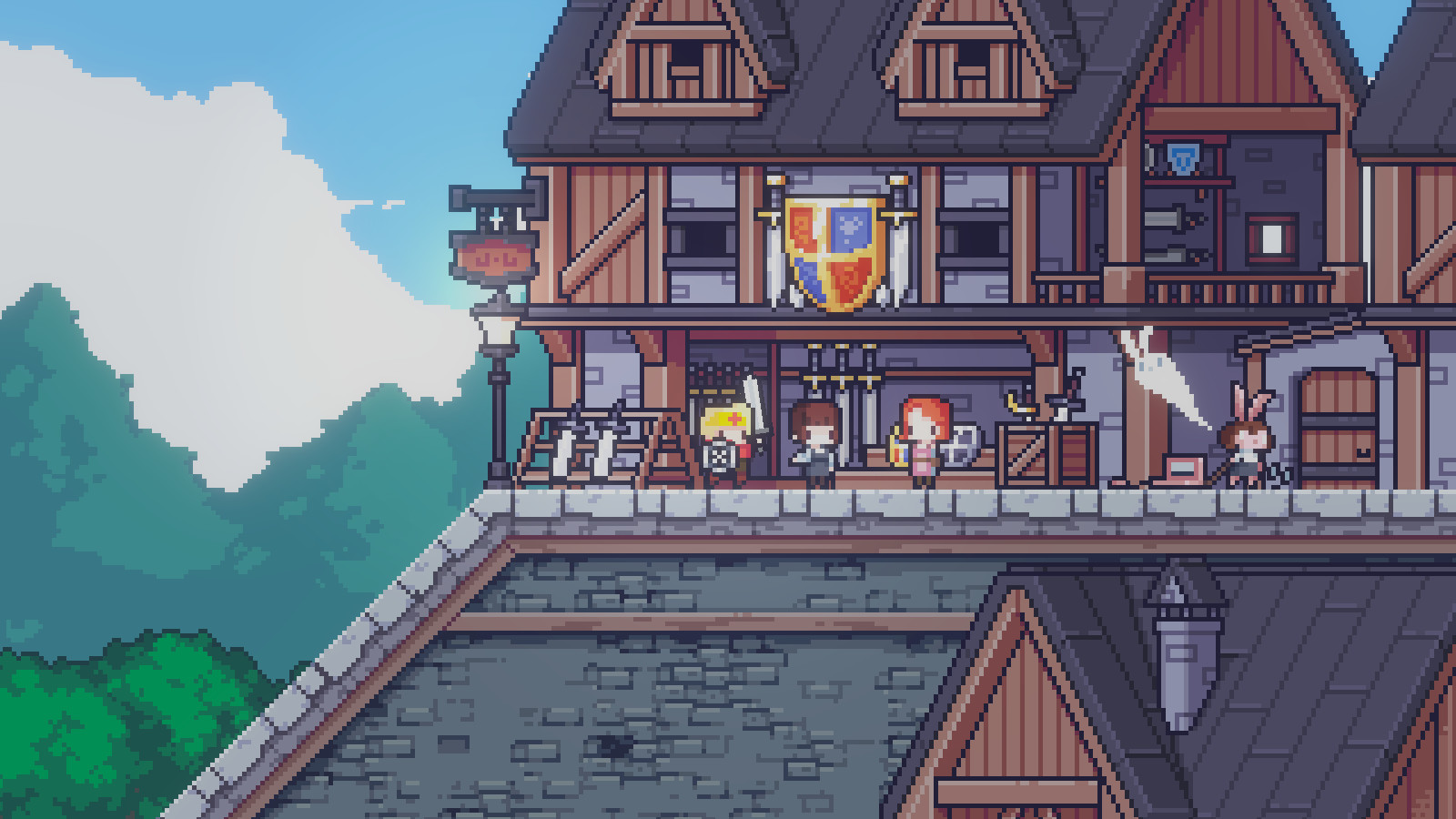
- A persistent town-rebuilding layer between runs gives permanent, visible progress alongside the roguelite loop's usual randomness
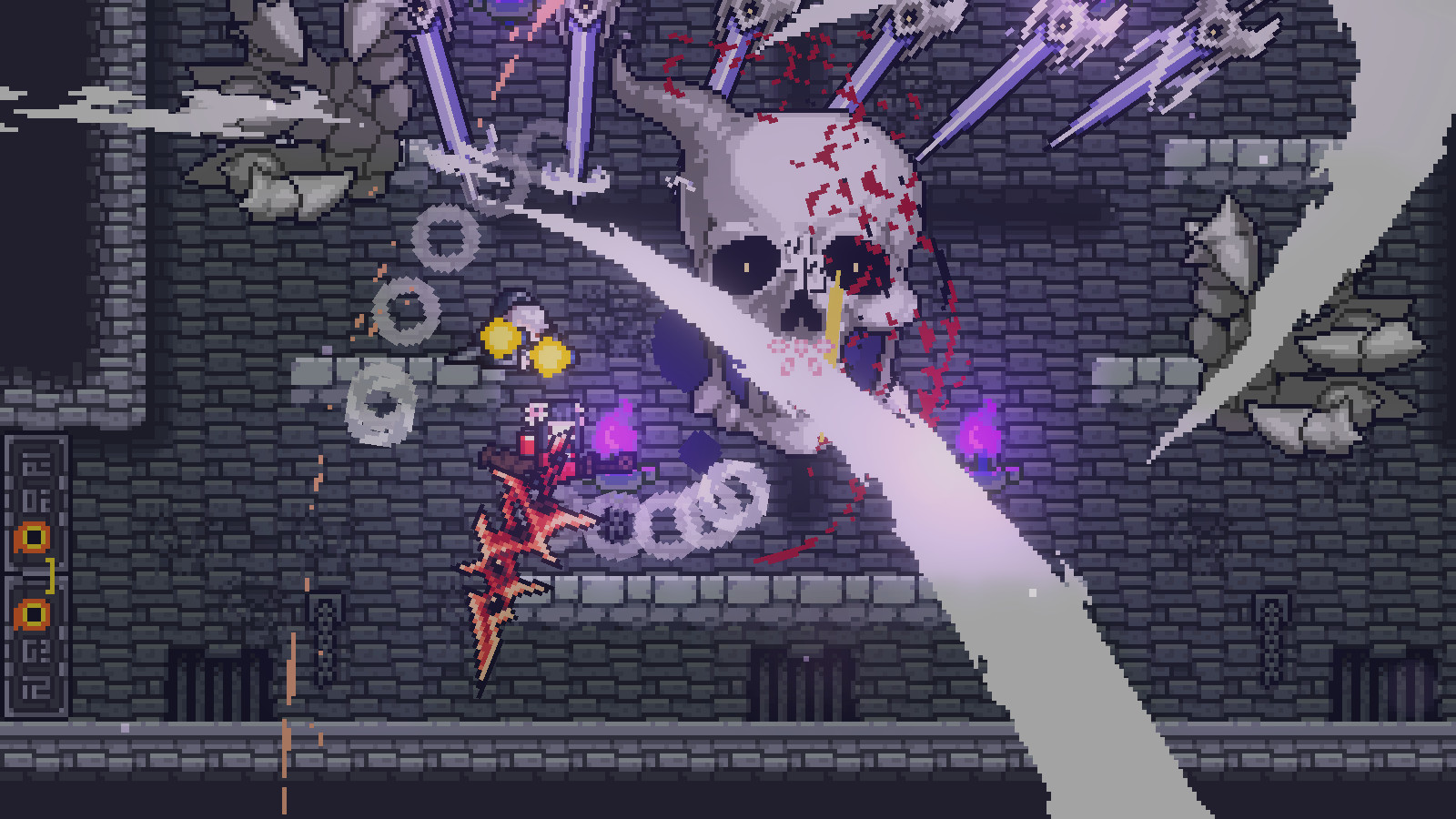
- Combat reviewers repeatedly describe as satisfying enough on its own to carry an otherwise unremarkable run to its natural end
Biggest weaknesses
- An unusual, mouse-direction-tied control scheme draws sustained, specific criticism, with multiple reviewers reporting it never becomes intuitive even after extensive play
- Inconsistent controller detection is reported as a specific, reproducible bug, with one detailed account describing the game alternating between two different controller profiles mid-session and becoming nearly unplayable as a result
- Item and build balance draws repeated criticism, with more than one reviewer specifically noting some "legendary" items perform worse than common ones and viable builds narrow to two or three metas
Who it's for: Roguelite fans looking for a budget-priced, unpretentious dungeon-crawling loop with real loot variety, who can tolerate a control scheme that takes real adjustment. Less suited to players who need precise, traditional controls from the outset or who bounce off grindy, meta-narrowing build systems.
Our recommendation: A reasonable budget pick for roguelite fans willing to push through an unconventional control scheme; go in aware that the developer's own newer game may now be the better version of this idea.
6 / 10
Dungreed drops a lone adventurer into a dungeon that swallowed their entire town, tasking them with fighting through procedurally arranged rooms, collecting an ever-expanding pool of weapons and gear, and slowly rebuilding the town hub between runs with whatever they manage to bring back. Released in February 2018 after a brief pre-launch beta period, it built a steady, positive following — 93% Very Positive across 2,501 English reviews — on the strength of a familiar roguelite formula executed with real care in its loot systems. Reading through the review sample closely shows a game whose fans and critics converge on a similar shortlist of specific strengths and specific frustrations, rather than splitting into opposing camps.
Loot variety that earns its praise
The most consistent praise centers on breadth of build options. One reviewer sums it up simply: "Fun variety of weapons and accessories. The basic gameplay is fun enough that even a marginal run is worth pursuing to its natural end." Another calls it "the epitome of roguelike, and should be the gold standard for the genre" after logging 249 hours. A third, more measured, still credits "lots of items and builds" as the reason they kept coming back. That's specific, repeated praise for the same underlying system — a large enough item and weapon pool that individual runs feel meaningfully different from each other, which is exactly the quality a roguelite needs to justify its repetition-based structure in the first place.
A control scheme reviewers say never clicks
The most sustained, most specific complaint targets the controls themselves. One detailed reviewer writes: "such an awful control setup. If you want to play on keyboard, just give up. Everything happens towards the position the mouse is pointed, you will always find yourself dashing upwards and taking free dmg." Another, with decades of gaming experience behind the comparison: "The most unintuitive controls in a video game that I have even seen, and I've been gaming since the 1980's [...] there just wasn't anything bar an awful control scheme." A third reviewer with 35 hours invested calls the controls "terrible" and specifically blames them for physical hand strain. This isn't a matter of players needing an adjustment period — the specific, repeated language ("never clicks," "give up," "unintuitive") across independent reviewers with meaningfully different playtimes suggests a genuine design problem in how the core input scheme was built.
Controller support that sometimes just breaks
A distinct, more technical thread concerns controller detection specifically. One reviewer's detailed account is worth quoting at length: "the game jumps between detecting 2 different kind of controllers: Xbox and 'Undefined' which causes the game to change my inputs mid-game making it almost impossible to play. The kicker? I have a PS5 controller." That's a specific, reproducible bug report rather than a vague compatibility complaint, and it compounds the keyboard-and-mouse control criticism above into a broader picture of an input layer that never quite got the polish the rest of the game received.
Balance complaints that converge on the same specifics
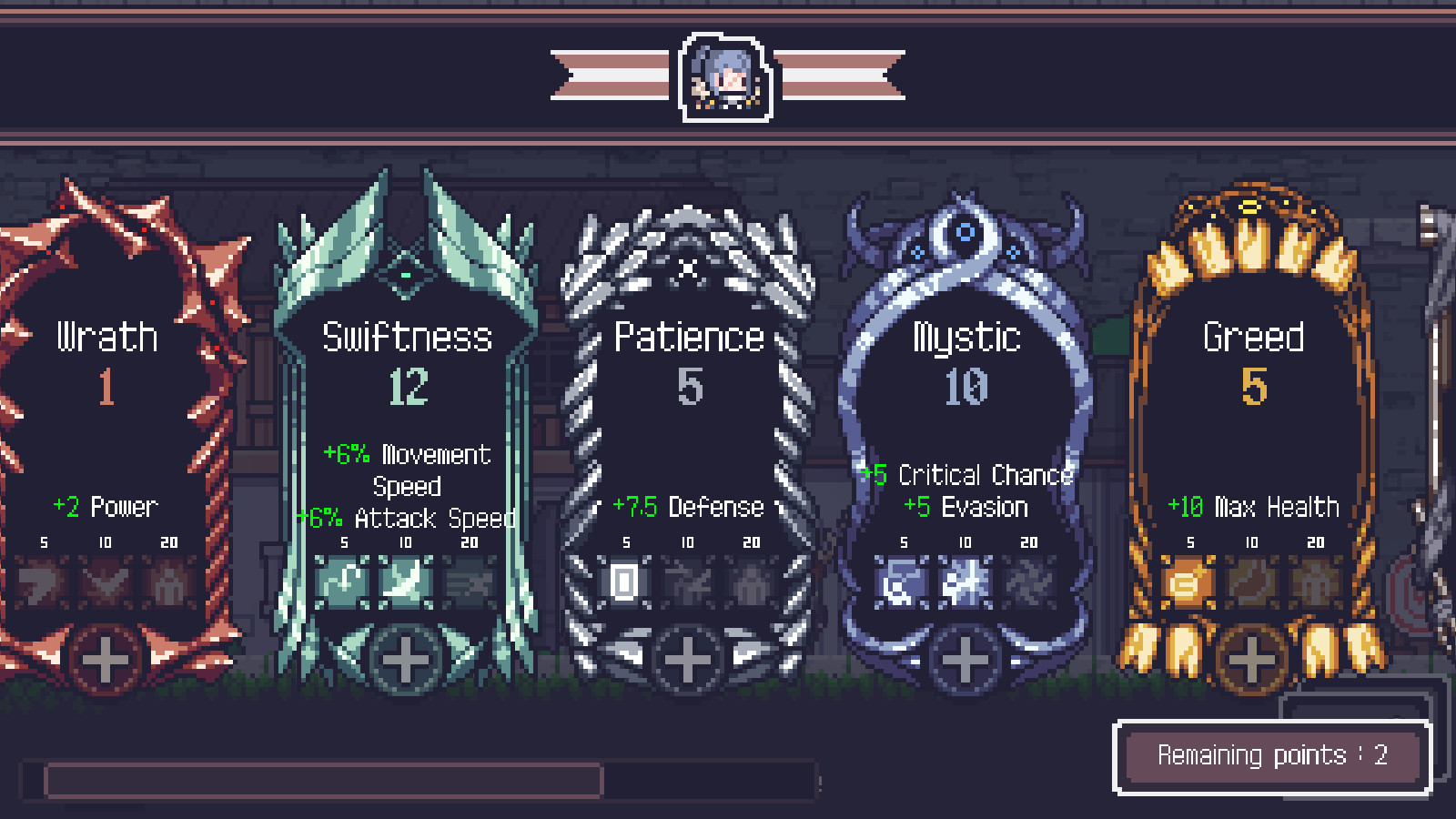
Beyond controls, a cluster of reviewers raise near-identical concerns about itemization and balance. One writes plainly: "the rarity of items barely means anything, a lot of 'legendary' items are worse than the common items [...] the runs feel very random, severely punishing unorthodox builds if you get unlucky, pigeonholing you into the same 2-3 meta builds as a result." A separate reviewer frames a related but distinct frustration with the skill-point system, noting most point investments "increase stuff by either one point or a fraction of a point," with meaningful power jumps gated behind specific breakpoints that make early investment feel underwhelming. Together these complaints describe a progression system with real surface-level variety that narrows sharply once players start optimizing for actual results.
What the achievement curve confirms about difficulty
Global achievement data lines up closely with reviewer accounts of a back-half difficulty spike. The first story-chapter milestone sits at a healthy 40.7% of the playerbase, but chapter two drops to 32.3%, and the game's harder late-game and completionist achievements fall into the single-digit percentages. That steady, compounding drop-off is consistent with more than one reviewer's account of runs feeling "sickeningly unfair in the late game" rather than simply harder — a curve that punishes rather than rewards the persistence a roguelite is supposed to encourage.
A developer that moved on to a spiritual successor
Dungreed's own partner-events history shows genuinely sustained support: numbered updates continued at a steady clip from launch through a 1.7.6 update in December 2023, at which point the same announcement introduced the studio's next project. That project, Sephiria, launched in April 2025, and at least one Dungreed reviewer recommends it directly over this game: "its okay but honestly just play sephiria instead." Roughly six years of active support is a genuinely strong track record for a budget indie roguelite, and it's worth crediting alongside the specific complaints above — this isn't an abandoned game, it's one whose developer eventually built what sounds like a more refined take on the same idea.
Verdict
Dungreed delivers a competent, loot-varied roguelite loop that a meaningful share of its audience genuinely loves, anchored by real developer support across roughly six years. Its control scheme and balance systems draw specific, repeated criticism serious enough to weigh heavily against that loop, and the achievement data confirms a real, punishing difficulty spike in its back half. Worth its low price for roguelite fans who can push through an unconventional control layout; players who bounce hard off unintuitive controls should look at the developer's newer Sephiria first.
Sources: Steam store page and appdetails API (release date, pricing, platform data); Steam's aggregate review data (query_summary totals, English-language sample); individually read user reviews, both positive and negative, sorted by helpfulness and recency; Steam's global achievement statistics API; TEAM HORAY's own partner-events patch history from the 2017 pre-launch beta through the studio's 2025 follow-up title.
Pros and cons
Pros
- A wide, varied pool of weapons and accessories that multiple reviewers say keeps individual runs feeling fresh even well past the first few hours
- A persistent town-rebuilding layer between runs gives permanent, visible progress alongside the roguelite loop's usual randomness
- Combat reviewers repeatedly describe as satisfying enough on its own to carry an otherwise unremarkable run to its natural end
- A distinctive food and training system adds a layer of permanent character growth beyond typical roguelite meta-currency spending
- Sustained developer support for roughly six years after launch, with steady numbered updates through late 2023 before the studio moved on to a successor title
Cons
- An unusual, mouse-direction-tied control scheme draws sustained, specific criticism, with multiple reviewers reporting it never becomes intuitive even after extensive play
- Inconsistent controller detection is reported as a specific, reproducible bug, with one detailed account describing the game alternating between two different controller profiles mid-session and becoming nearly unplayable as a result
- Item and build balance draws repeated criticism, with more than one reviewer specifically noting some "legendary" items perform worse than common ones and viable builds narrow to two or three metas
- Room and level variety is described by multiple reviewers as repetitive after enough hours, with recognizable, recurring layouts undercutting the sense of procedural freshness
- Achievement data confirms a real difficulty spike in the back half, matching reviewer accounts of late-game runs feeling unfair rather than merely harder
Screenshots
-
DungreedImage: TEAM HORAY via Steam -
DungreedImage: TEAM HORAY via Steam -
DungreedImage: TEAM HORAY via Steam -
How the review scores each part of the gameWanderer Editorial -
The specsWanderer Editorial -
The short versionWanderer Editorial