
Game review
Dragon Ruins II Review: A Dungeon Crawler for Tired People, Done Right
6.4 / 10
- Developer
- Graverobber Foundation
- Publisher
- Graverobber Foundation
- Released
- 16 January 2025
- Platforms
- ["PC"]
- Genre
- Dungeon Crawler RPG
- Monetisation
- Paid
- Players
- false
The short version
Dragon Ruins II is a first-person grid dungeon crawler that resolves combat automatically, leaving the player to focus on party building, equipment, and exploration. Reviewers consistently praise its atmosphere, retro presentation, and especially its soundtrack, and just as consistently note that the fully automatic combat is a love-it-or-leave-it proposition -- along with a genuine, unresolved dispute over whether the game's difficulty curve actually rewards levelling up.
Biggest strengths
- Reviewers consistently and independently single out the soundtrack as a standout, describing specific tracks as genuinely moving
- The retro CRT-filtered visual style and dungeon-synth atmosphere are repeatedly praised as a big step up from the original game
- Considered a substantial expansion over the first Dragon Ruins, adding quests, equipment, and a passive skill system
Biggest weaknesses
- Fully automatic combat is polarising -- some reviewers find it relaxing and ideal for casual play, others find it makes the game boring
- Reviewers directly disagree over whether the game's difficulty curve rewards levelling up, with one detailed account claiming enemies scale with the party and another explicitly disputing that claim
- Character classes are repeatedly described as feeling mechanically similar to one another, with limited build variety
Who it's for: Fans of classic first-person dungeon crawlers (Wizardry, Etrian Odyssey) who want a low-effort, low-friction version of the genre, and don't mind combat they don't directly control.
Our recommendation: Recommended for casual dungeon-crawler fans at its low asking price, with the caveat that fully automatic combat and a somewhat repetitive dungeon-clearing loop won't suit everyone.
6.4 / 10
Dragon Ruins II, from solo studio Graverobber Foundation, sits at 87% positive across 209 Steam reviews -- a strong score for a genre as niche as the first-person, grid-based dungeon crawler. A detailed sample of 20 English-language reviews, spanning launch week through mid-2026, shows a game that reviewers agree on in some respects and genuinely, substantively disagree on in others.
A Sequel That Expands Considerably on the Original
Multiple reviewers frame this specifically as a big step up from the first Dragon Ruins. One writes that the game "drastically expands on the concepts of Dragon Ruins 1," pointing to "a lot more dungeons, an equipment system, and passive skill choices on level up," replacing the original's "fixed set of gear for each party slot" with individual items to find and upgrade. Another describes it as "the dungeon crawler for tired people," a phrase that recurs across several reviews and seems to have become something of a community shorthand -- the game rewards short, low-effort sessions rather than demanding sustained attention. A reviewer who found the original "an extremely simplistic game to its own detriment" specifically calls this sequel "the game I wanted," with systems that are "simple, but not lacking complexity."
Automatic Combat: The Sample's Clearest Split
The game's defining mechanical choice -- combat that resolves automatically as your party explores, with the player managing party composition, equipment, and when to retreat rather than issuing individual commands -- draws consistently divided reactions. Reviewers who like it frame it as the whole point: one calls it "great way to end a night on a positive note" that "respects your time," while another says simply "it's called a dungeon crawler for tired people because everyone naps for 2 months when you get back to town," referencing an in-game rest mechanic with clear affection. But reviewers who dislike it are just as direct. One writes that "the fully automatic combat makes it all a bit, well... boring to me," specifically because "the gameplay is nearly exclusively tuned around gauging how far into the dungeon you can make it" without any combat input. Another, a launch-window review, frames the lack of manual control as actively hurting the pacing: exploration becomes "very stop-and-go: You fill out your minimap, wait for the battle to finish, step through a door, and repeat." This is a real, substantive design trade-off rather than a minor nitpick -- whether it works for a given player is close to the single biggest factor in whether they'll enjoy the game.
A Genuine, Unresolved Dispute Over Difficulty Scaling
The sample contains an unusually direct disagreement between two detailed reviewers on a specific factual claim about the game's systems. One reviewer states plainly that "the strength of enemies is directly dependent on the strength of your party," arguing this means "levelling up and getting new equipment just means the stuff you're fighting gets stronger as well," which they found demotivating enough to stop playing. A later, similarly detailed reviewer directly contradicts this: "the top negative review is complete BS: enemies do not scale with your party. Early game enemies will appear in later dungeons in large groups and they always do 1 point of damage." That second reviewer goes further, arguing the actual problem is closer to the opposite -- that the game "becomes overly braindead in the second half" because the player's party ends up overpowered relative to what it faces. Rather than resolving this dispute one way, it's worth reporting both positions as genuinely held and specific: one experienced player-driven power stagnation, another experienced the reverse (trivial late-game difficulty), and it's plausible both accounts are accurate reflections of different playstyles or patch states, but prospective buyers concerned about difficulty and progression should weigh both.
Where the Sample Agrees: Atmosphere and Music
If there's one area with close to universal agreement, it's presentation. A launch-week reviewer calls the game's atmosphere-carrying track, "Stars over Faselei," "such a hauntingly beautiful track that invokes a sense of sadness, but also the will to keep persevering." A separate, much longer and more critical review still concedes the soundtrack is "absolutely killer with flavors of retro RPG OSTs, 80s synthesizer-driven horror soundtracks a la John Carpenter, dungeon synth, atmospheric black metal, dark ambient," calling it "worth the price of admission on its own." A third reviewer, otherwise focused on gameplay mechanics, separately praises "great vibe, great music." Three independent, otherwise quite different reviews converging on the same specific praise -- the music -- is a strong signal that this is a genuine strength rather than a subjective quirk of taste.
Recurring Structural Complaints
Beyond the scaling dispute, a handful of more specific criticisms recur across multiple reviewers. Several note that character classes don't feel meaningfully distinct: one writes "a dwarf is going to fight exactly like a warlock would," since "every class has access to the same skills." Another notes there's "no proper ending cinematic, or at least a 'you won' screen" after clearing every dungeon the game has to offer, calling it an anticlimactic finish to a otherwise well-built game. A more recent review flags that the game's bigger, later dungeons can feel "largely empty," with "no mark up" making it a "slog" to relocate a boss room after exploring. These are consistent, specific complaints rather than vague dissatisfaction, and they paint a picture of a game whose systems are sound in the early hours but thin out with extended play.
Value
At around NZ$17.50, reviewers overwhelmingly consider this good value, particularly for the genre. One reviewer who logged 27 hours and beat the game's secret final boss calls it "an instabuy if you're a fan of dungeon crawlers," while another, more measured about combat, still says "no longer a microgame, but still a good game for tired people if u like dungeon crawling." Even several of the more critical reviews frame their complaints as wanting more from a game they otherwise enjoyed, rather than regretting the purchase outright.
Final Verdict
Dragon Ruins II succeeds clearly in the areas reviewers agree on -- atmosphere, music, and a genuine expansion over its predecessor's systems -- while remaining a fundamentally divisive game on the question of whether hands-off, automatic combat is a feature or a flaw. Add in a real, unresolved disagreement among reviewers about how its difficulty curve actually behaves, and this is a game best suited to players who already know they enjoy low-friction, presentation-forward dungeon crawling, rather than players looking for a tightly-tuned tactical RPG.
Pros and cons
Pros
- Reviewers consistently and independently single out the soundtrack as a standout, describing specific tracks as genuinely moving
- The retro CRT-filtered visual style and dungeon-synth atmosphere are repeatedly praised as a big step up from the original game
- Considered a substantial expansion over the first Dragon Ruins, adding quests, equipment, and a passive skill system
Cons
- Fully automatic combat is polarising -- some reviewers find it relaxing and ideal for casual play, others find it makes the game boring
- Reviewers directly disagree over whether the game's difficulty curve rewards levelling up, with one detailed account claiming enemies scale with the party and another explicitly disputing that claim
- Character classes are repeatedly described as feeling mechanically similar to one another, with limited build variety
Screenshots
-
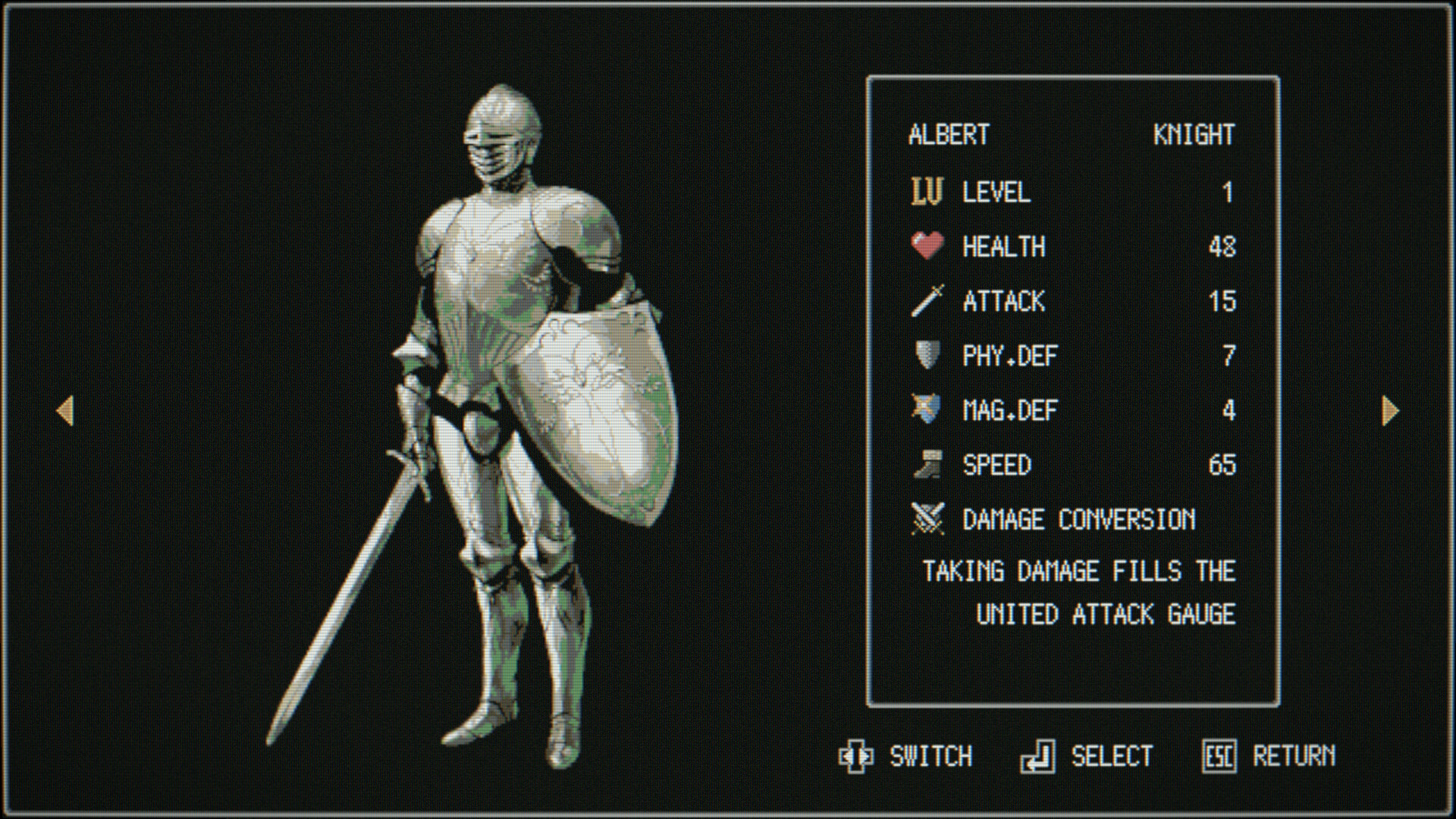
The equipment and stat screen -- one of the sequel's biggest additions over the original gameGraverobber Foundation -
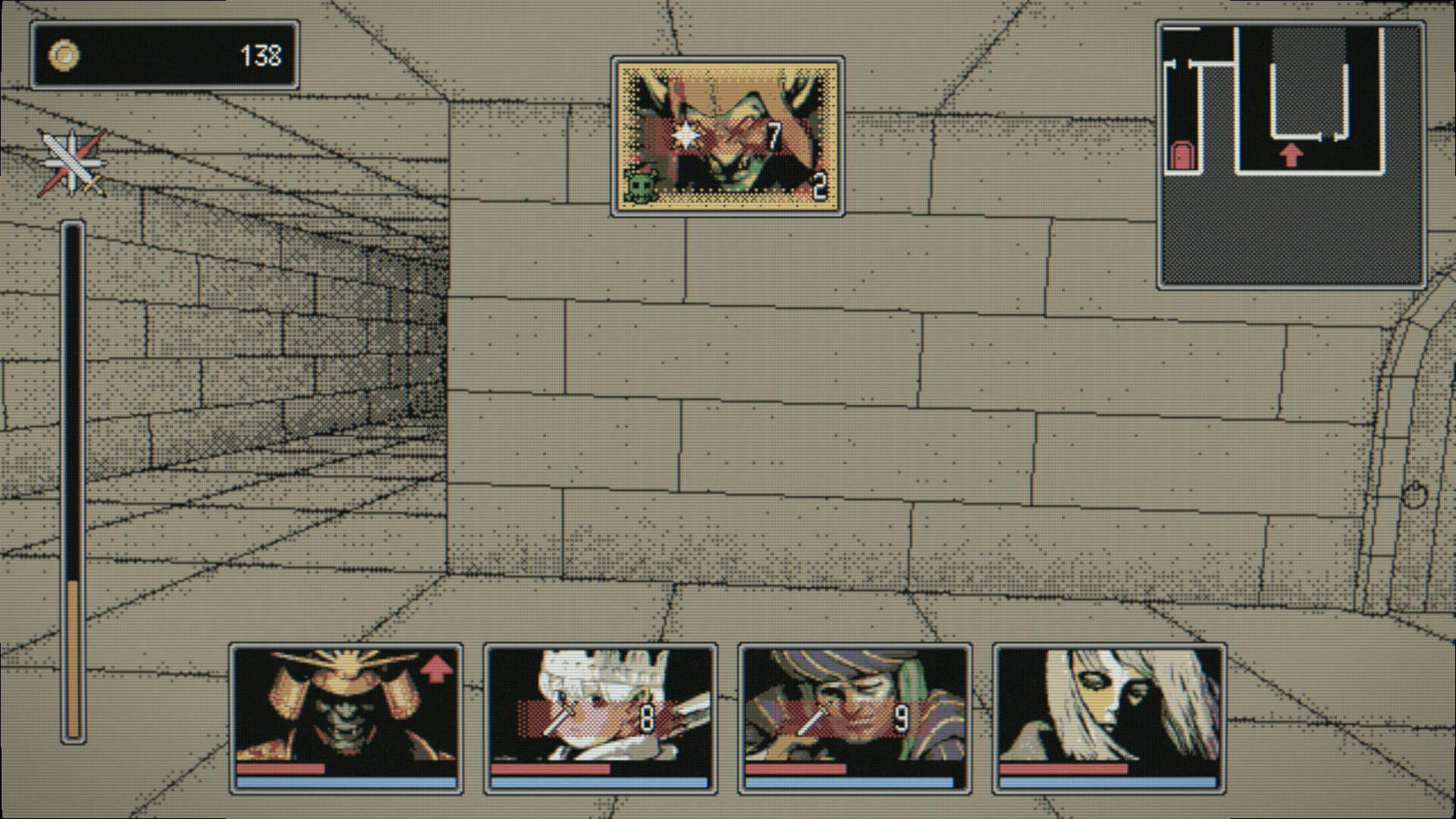
Exploring a corridor in first person, with the four-character party's status displayed along the bottomGraverobber Foundation -
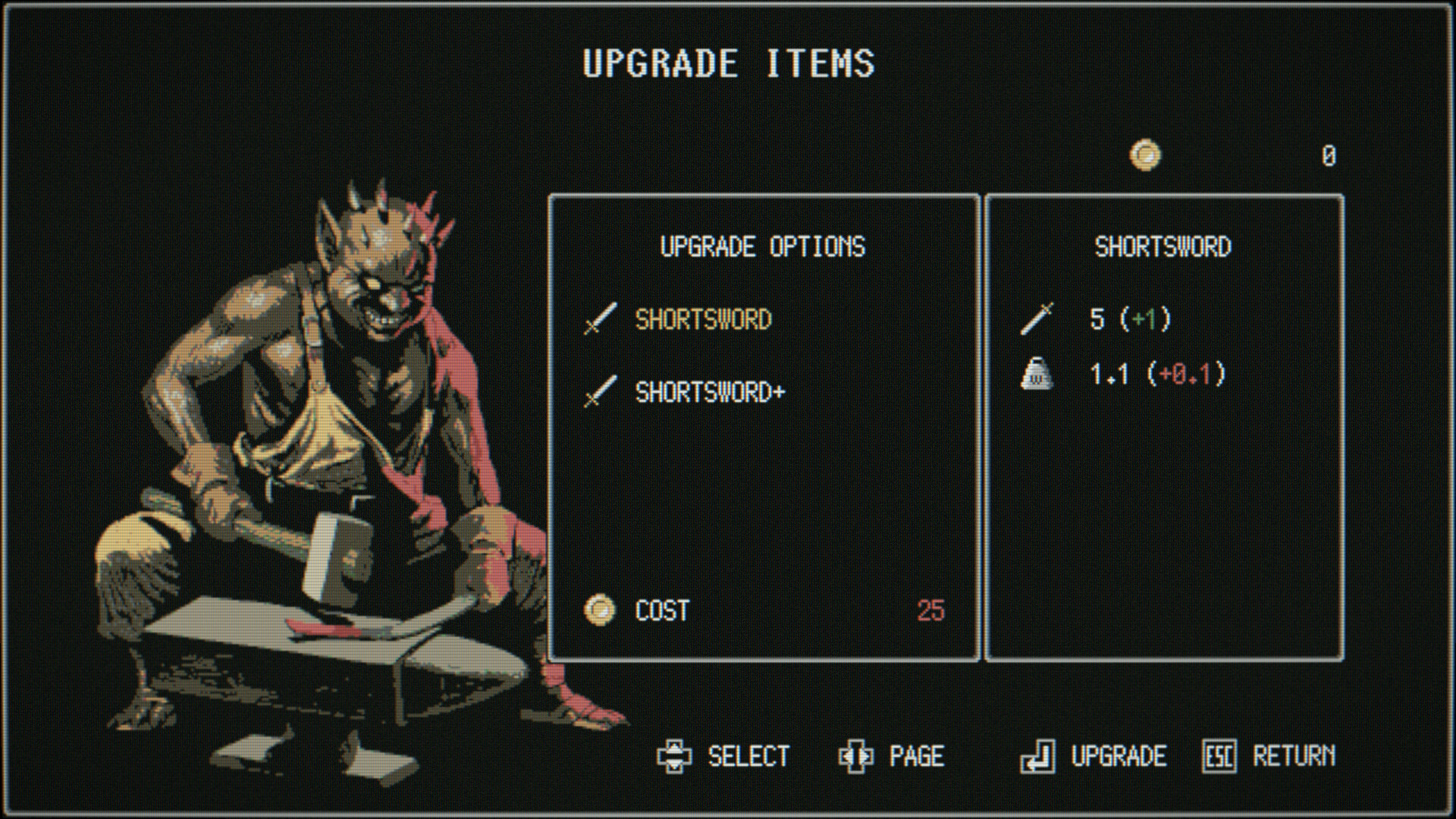
Upgrading gear at the blacksmith, part of the sequel's new individual-item equipment systemGraverobber Foundation -
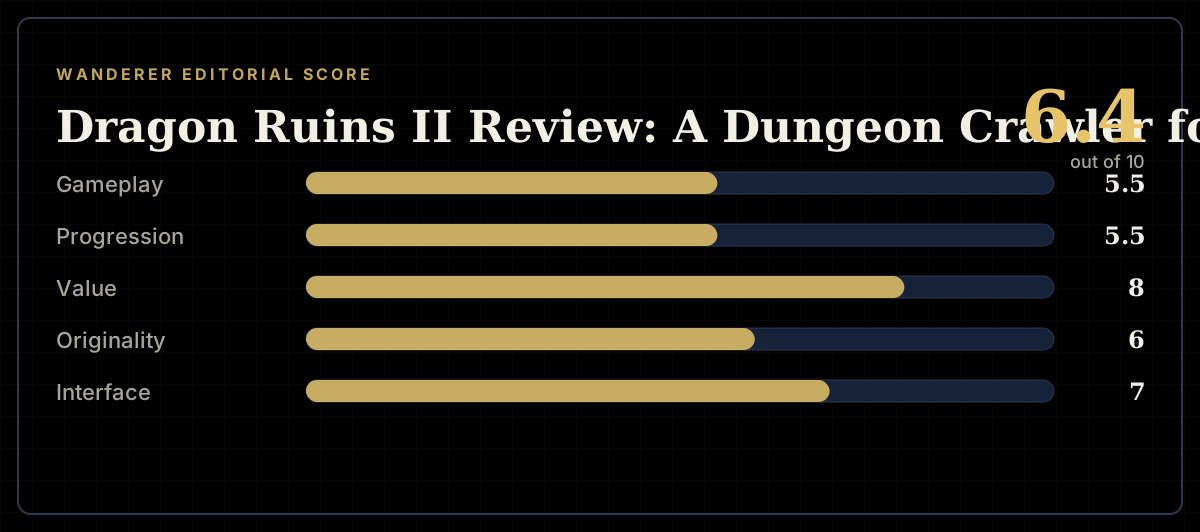
How the review scores each part of the gameWanderer Editorial -
The short versionWanderer Editorial