Game review
Drag'N Dungeon
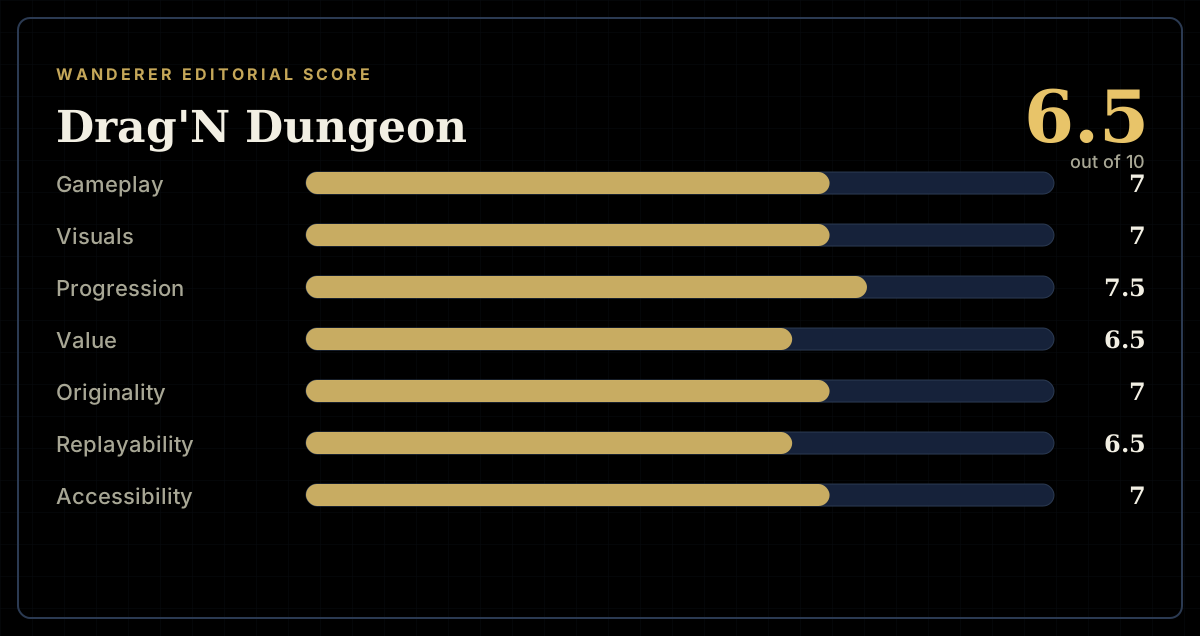
6.5 / 10
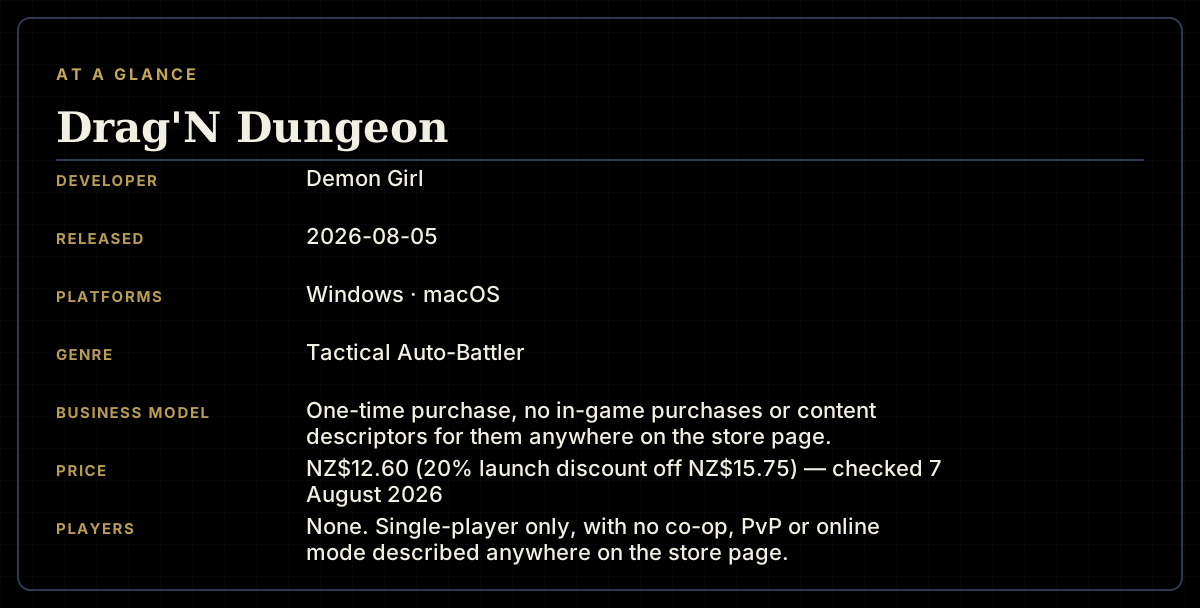
- Developer
- Demon Girl
- Publisher
- Tambù Digital
- Released
- 5 August 2026
- Platforms
- Windows, macOS
- Genre
- Tactical Auto-Battler
- Monetisation
- One-time purchase, no in-game purchases or content descriptors for them anywhere on the store page.
- Players
- None. Single-player only, with no co-op, PvP or online mode described anywhere on the store page.
The short version
Drag'N Dungeon drops a captured hero into a voxel dungeon and asks the player to escape by clearing rooms with a squad they place, unit by unit, into a battlefield that has no grid at all — positioning is a literal drag-and-drop rather than a snap to a tile. What's underneath that hook is a genuinely structured meta-progression: 28 Steam achievements decode into 90-plus numbered Challenges split across bronze, silver and gold difficulty tiers, and a separate unlock ladder for a roster that climbs toward "Ultimate Roster — unlock all Fighters," matching the store page's claim of up to 40 playable heroes. Steam files it under Indie and RPG, and its own tag list adds Strategy RPG, Auto Battler, RTS, Creature Collector, Mystery Dungeon, Tactical RPG and Real Time Tactics on top of that — a spread wide enough to suggest even the developers weren't settled on what to call it, and none of those documented systems include the things that usually earn the RPG label: no character leveling, no itemisation, no branching dialogue or quests beyond the framing device of escaping the dungeon. Two days after launch there is exactly one English-language user review, positive, and a live player-count check that returned zero — a single dated snapshot, not a verdict on the population, but the only outside evidence currently available.
Biggest strengths
- A decoded achievement list confirms a genuinely tiered meta-progression — 90-plus numbered Challenges across bronze, silver and gold difficulty bands, plus a separate roster-unlock ladder running from a first Fighter up to an "Ultimate Roster" achievement for all of them
- Grid-free, drag-based unit placement is a real point of difference from typical auto-battlers, forcing precise positioning in tight spaces rather than snapping units to a tile
- Full controller support, DualShock-specific support and a "playable without timed input" accessibility option are unusually generous for a small studio's debut release
Biggest weaknesses
- The RPG framing oversells the mechanics on record — no character leveling, no itemisation or loot, and no story or dialogue system beyond the "trapped in a dungeon, escape by unlocking allies" premise; this reads much closer to a tactical auto-battler with a creature-collector unlock layer
- Two days after launch there is exactly one English user review and a live Steam player-count check that returned zero — essentially no independent evidence yet of how balance, pacing or difficulty actually hold up across those 90-plus Challenges
- Neither the developer, Demon Girl, nor the publisher, Tambù Digital, has a previously released Steam title to judge post-launch support by — their other credited games are an OST DLC and titles still marked coming soon or TBA
Who it's for: Fans of hero-collector tactics games and auto-battlers who want a real unlock ladder to climb, and who don't mind buying into a brand-new debut studio with no track record and no meaningful review corpus yet.
Our recommendation: The core design is more thoughtful than a typical launch-week indie — a real, well-tiered progression system and a distinctive placement mechanic — but almost nothing about its execution has been independently confirmed yet, and the RPG tag oversells what's actually a tactics and roster game. Buy it for the systems on paper, not for the genre label on the store page.
6.5 / 10
A dungeon escape built on drag, not click
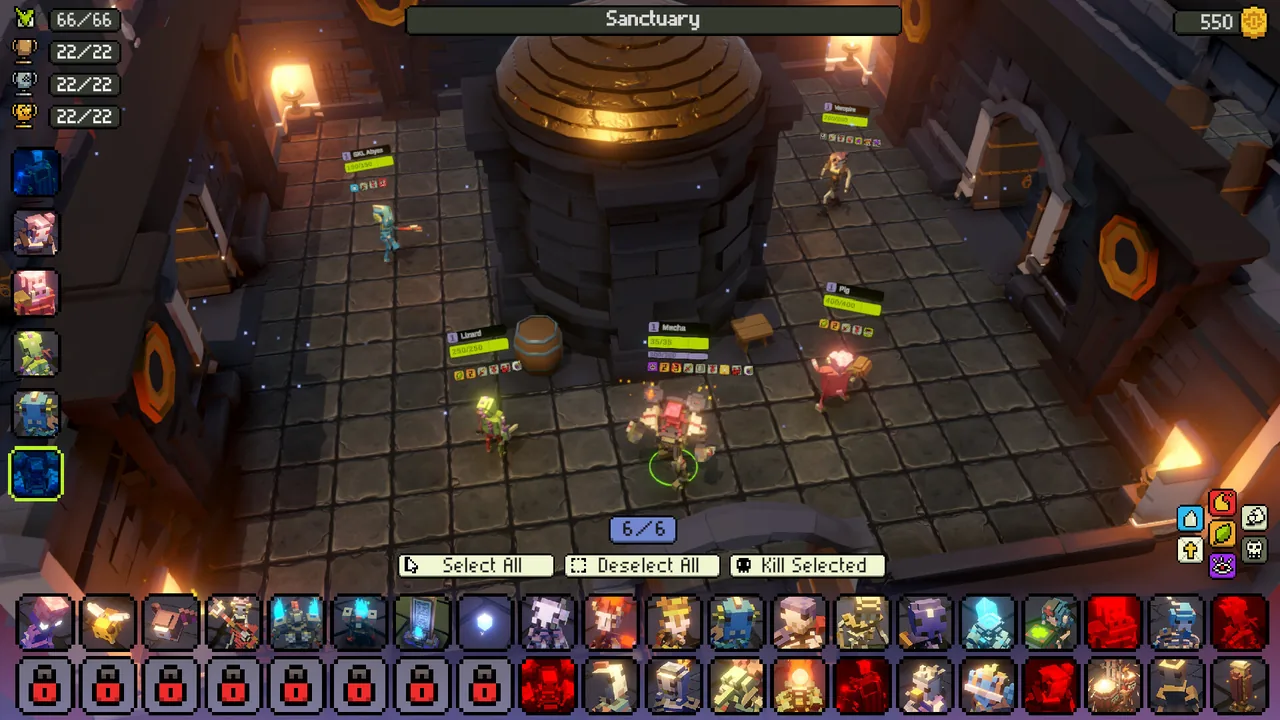
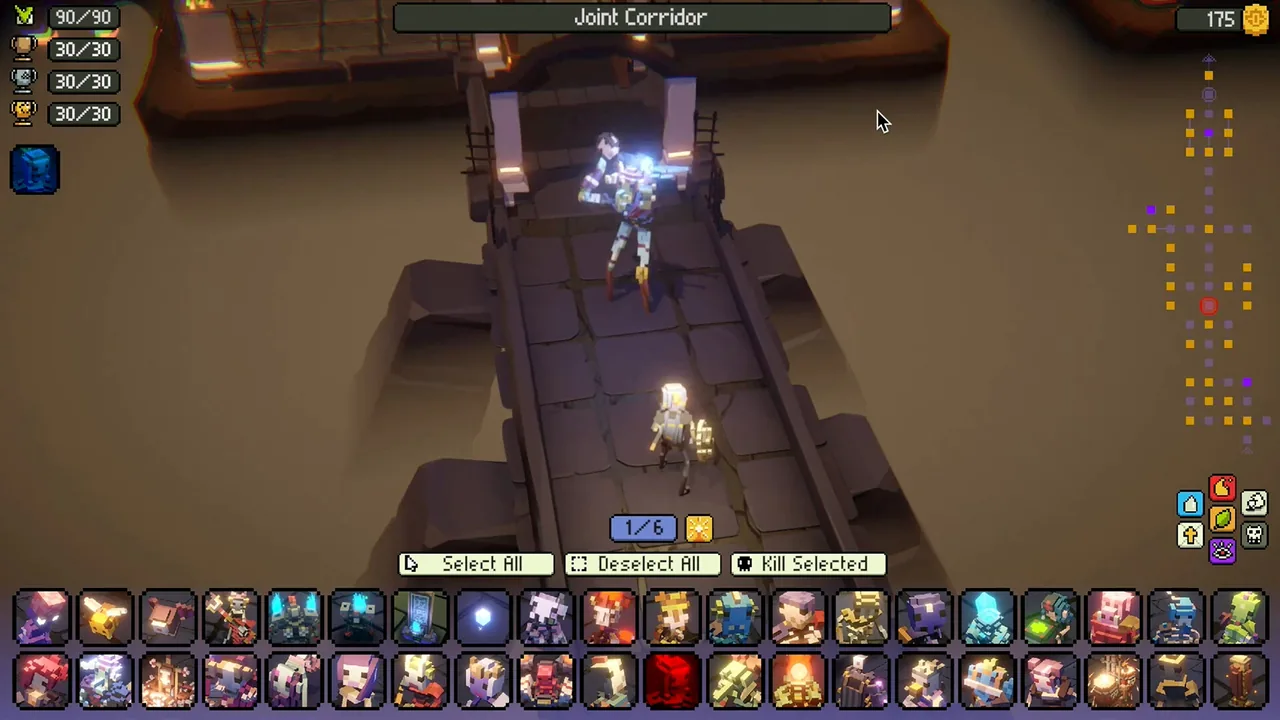
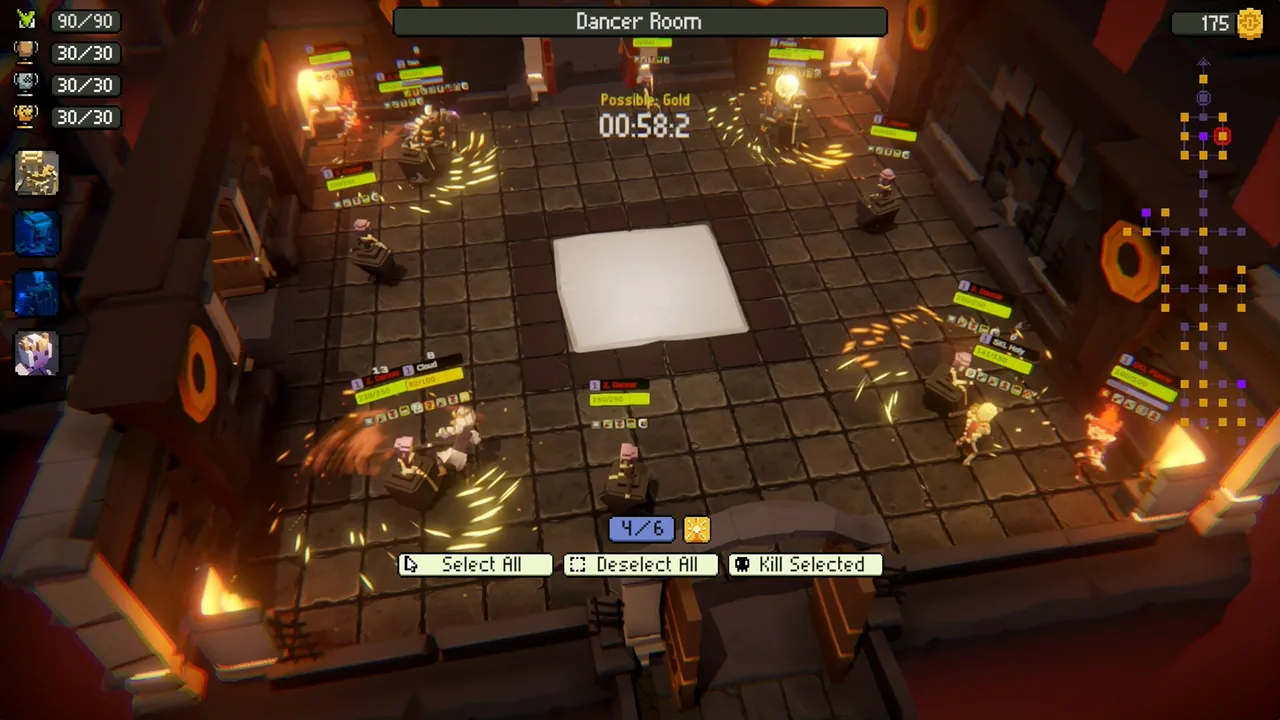
Drag'N Dungeon's premise is simple to state and a little unusual to execute: a hero is trapped in a voxel dungeon, and the way out is room by room, with a squad the player assembles from an unlockable roster and physically drags into position before each fight. There's no grid. Steam's own tag list flags this as a real design decision rather than a throwaway line — "Grid-Free Auto-Battler" sits alongside "Real Time Tactics" and "Time Management" — and the screenshots back it up: named rooms like "Sanctuary" and "Joint Corridor" show units standing on open floor tiles with health bars and status icons floating above them, selected and issued orders through "Select All," "Deselect All" and a blunt "Kill Selected" button rather than anything resembling a traditional RPG command menu. One captured screenshot from a room called "Dancer Room" shows six named enemies, four active heroes and a countdown labelled "Possible: Gold" ticking down from under a minute — a bonus-objective clock layered on top of the core fight, which is the kind of detail that suggests more design thought went into pacing individual rooms than the store page's short description lets on.
The progression is real — the achievement list proves it
Where this game earns real credit is in its unlock structure, and the evidence for that isn't marketing copy, it's the 28-item Steam achievement list, which decodes into two parallel ladders. The first tracks numbered Challenges — "First Challenge," then Seeker (5), Hunter (10), Explorer (20), Veteran (30), Master (40), Champion (50), Elite (60), Legend (70), Hero (80) and Conqueror (90) — with three further achievements for clearing every Bronze, Silver and Gold Challenge specifically, confirming the game sorts its 90-plus trials into at least three difficulty bands rather than one flat list. The second ladder tracks the hero roster itself: First Fighter, Rising Roster (3), Team Builder (5), Fighter Recruiter (10), Battle Squad (15), Arena Commander (20), Elite Roster (25), Warband Leader (30), Champion Collector (35) and finally Ultimate Roster for unlocking every Fighter — a count that lines up closely with the store page's claim of "up to 40 unique heroes." Four more achievements point to secret, narratively-flagged unlocks outside that main count: a "mysterious psychic creature," a vampire referenced twice under different achievement names, and a "mysterious demonic creature." That's a genuine run-to-run meta- progression system, not a hollow tag — the kind of thing this library has flagged as missing entirely on other games that claimed it. Drag'N Dungeon's claim checks out.
The RPG label is doing more work than the mechanics support
Here's the complication the brief exists to catch. Steam's genre field lists Drag'N Dungeon under Indie and RPG, and its own community tags widen that to Strategy RPG, Tactical RPG and Creature Collector alongside Auto Battler, RTS and Real Time Tactics — nine genre-adjacent labels for one game, which usually means a small team casting a wide net for search visibility rather than a confident genre identity. Nothing in the documented systems matches what "RPG" conventionally promises. There's no character leveling described anywhere in the store text or the about-the-game copy — heroes have fixed "abilities and stats" per the developer's own wording, not stats that grow through play. There's no itemisation or loot system on record, no equipment slots, no branching dialogue, and no quest structure beyond the single framing premise of escaping the dungeon. What the evidence actually supports is a tactical auto-battler with a creature-collector unlock layer sitting on top of it — a description that undersells nothing the game has actually shown, and doesn't promise a story-and-stats RPG that isn't there. Buyers going in expecting a conventional RPG's growth systems are the ones most likely to come away disappointed, not because the game is bad, but because the label promised something the mechanics don't deliver.
Presentation, accessibility and the fine print
The voxel dungeon reads clean in the available screenshots — isometric camera, warm torchlight against grey stone, chunky low-poly heroes and enemies that stay readable even with a dozen units on screen at once, which matters more than texture fidelity in a game asking the player to track several units' health bars simultaneously mid-fight. Accessibility gets real attention for a debut studio: full controller support, specific DualShock controller support, custom volume controls and a "Playable without Timed Input" option all appear as store categories, meaning reflex-dependent input isn't mandatory even in a real-time combat system. The business side is equally clean — a one-time purchase at NZ$12.60 during the launch discount (NZ$15.75 at full price), no in-game purchases listed as a content descriptor, and no AI Generated Content Disclosure section anywhere on the store page, meaning there's no developer statement on generative tooling either way. Two gaps stand out: Linux isn't supported at all, and the macOS build requires Apple Silicon specifically, with no Intel Mac path listed. Age ratings from DEJUS, USK and IGRS all cite generic fantasy violence at a 10–13 age gate, consistent with a stylised voxel combat game rather than anything graphic.
What two days of launch data can and can't tell you
Honesty matters more than usual here, because the available evidence is thin by design of the calendar rather than by any fault in the game. A direct check of Steam's GetNumberOfCurrentPlayers endpoint returned zero concurrent players at the moment of this review — a single snapshot that can and likely will shift for a brand-new release, not a verdict on the game's population going forward. Exactly one English-language user review exists, positive, from roughly two and a half hours of recorded playtime, and it raises a specific, concrete complaint: a UI element "taking up half my screen." That lines up with what the official screenshots show — a roster bar running the full width of the bottom of the frame, packed with dozens of hero portraits (many still locked behind red padlocks) plus three separate control buttons above it. One review is nowhere near enough to treat as a pattern, but it's the entirety of the independent record right now, and it's specific enough to be worth flagging rather than ignoring. The global achievement percentages tell a matching story from another angle: all 28 sit at a flat 0.0%, which on a two-day-old release means the tracking simply hasn't caught up yet, not that the challenges are impossibly hard. Neither Demon Girl nor Tambù Digital has a previously released Steam title on record — Demon Girl's other credits are a 2019 OST DLC and two unreleased 2026 titles, and Tambù Digital's other listed games are still marked coming soon or to-be-announced — so there's also no history of post-launch patching or support to point to either way.
Final verdict
Drag'N Dungeon earns a 6.5 for a meta-progression system that's genuinely well-built on paper — a tiered, achievement-verified unlock ladder across both a 90-plus Challenge list and a roster that climbs toward 40 heroes — wrapped around a grid-free placement mechanic that's a real point of difference from other auto-battlers in its space. It doesn't score higher because almost everything beyond the design documents is currently unverifiable: a player-count snapshot of zero, a single user review, an achievement curve too fresh to read, and a developer and publisher with no prior release to judge follow-through by. It also doesn't score lower, because none of that is evidence the game plays badly — it's evidence that nobody has said much of anything yet. The RPG tag is the one thing worth correcting before you buy: this is a tactical auto-battler with a creature-collector's unlock structure, not a game with leveling, loot or branching story, and going in with that expectation set correctly is most of what separates a fair verdict on this game from a disappointed one.
Pros and cons
Pros
- A decoded achievement list confirms a genuinely tiered meta-progression — 90-plus numbered Challenges across bronze, silver and gold difficulty bands, plus a separate roster-unlock ladder running from a first Fighter up to an "Ultimate Roster" achievement for all of them
- Grid-free, drag-based unit placement is a real point of difference from typical auto-battlers, forcing precise positioning in tight spaces rather than snapping units to a tile
- Full controller support, DualShock-specific support and a "playable without timed input" accessibility option are unusually generous for a small studio's debut release
- A clean one-time purchase with no in-game purchase content descriptor and no AI Generated Content Disclosure section on the store page
- A public demo has been available since May 2025, over a year before the 1.0 launch, pointing to real iteration time rather than a rushed release
Cons
- The RPG framing oversells the mechanics on record — no character leveling, no itemisation or loot, and no story or dialogue system beyond the "trapped in a dungeon, escape by unlocking allies" premise; this reads much closer to a tactical auto-battler with a creature-collector unlock layer
- Two days after launch there is exactly one English user review and a live Steam player-count check that returned zero — essentially no independent evidence yet of how balance, pacing or difficulty actually hold up across those 90-plus Challenges
- Neither the developer, Demon Girl, nor the publisher, Tambù Digital, has a previously released Steam title to judge post-launch support by — their other credited games are an OST DLC and titles still marked coming soon or TBA
- No Linux support, and macOS is limited to Apple Silicon (M1 minimum) rather than Intel Macs
- The single existing review, while positive, specifically flags a UI element covering roughly half the screen — a complaint the official screenshots partly corroborate, given how much space the roster bar and control buttons occupy at the bottom of the frame
Screenshots
-
Drag'N DungeonImage: Tambù Digital via Steam -
Drag'N DungeonImage: Tambù Digital via Steam -
Drag'N DungeonImage: Tambù Digital via Steam -
How the review scores each part of the gameWanderer Editorial -
The game at a glanceWanderer Editorial -
The short versionWanderer Editorial