
Game review
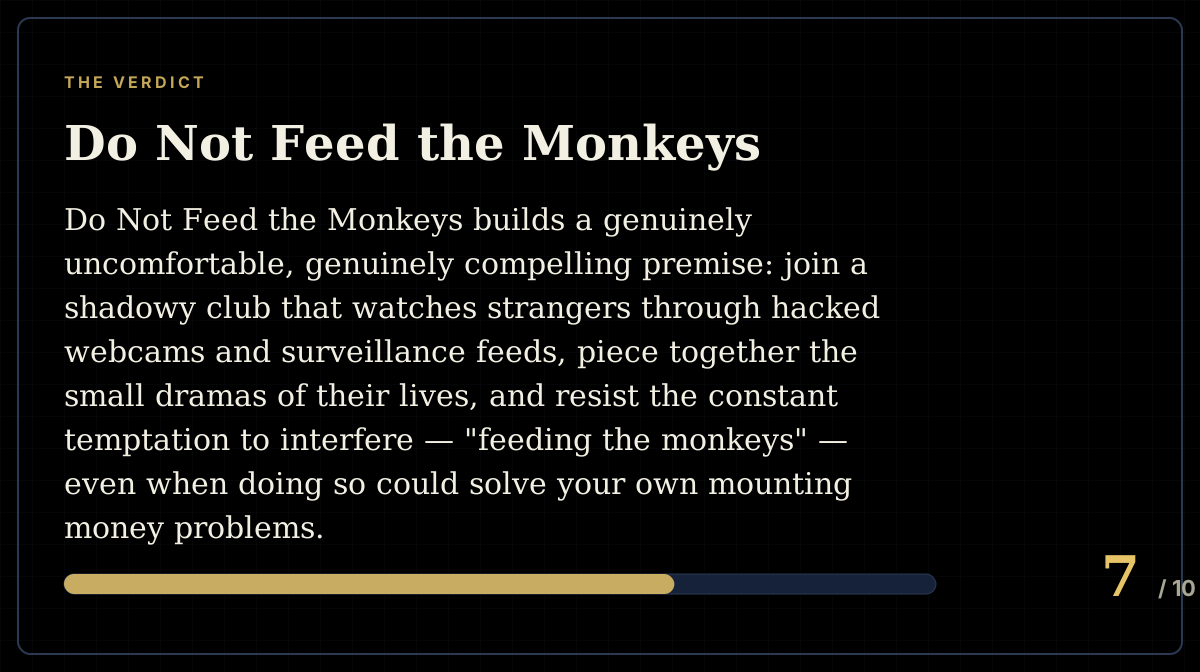
Do Not Feed the Monkeys
7 / 10
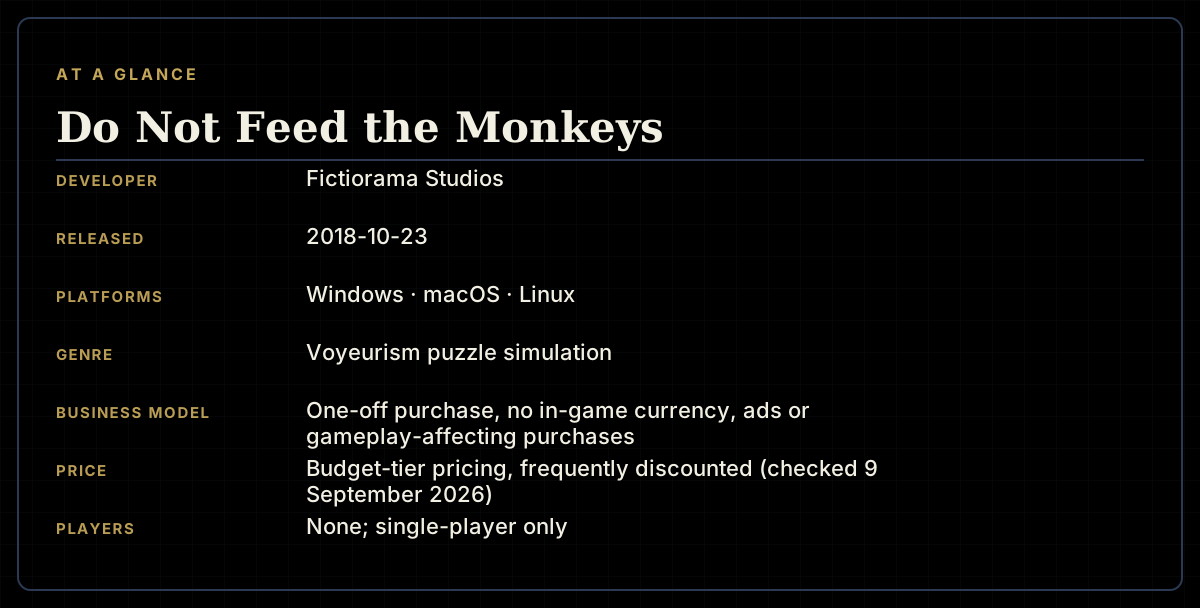
- Developer
- Fictiorama Studios
- Publisher
- Alawar
- Released
- 23 October 2018
- Platforms
- Windows, macOS, Linux
- Genre
- Voyeurism puzzle simulation
- Monetisation
- One-off purchase, no in-game currency, ads or gameplay-affecting purchases
- Players
- None; single-player only
The short version
Do Not Feed the Monkeys builds a genuinely uncomfortable, genuinely compelling premise: join a shadowy club that watches strangers through hacked webcams and surveillance feeds, piece together the small dramas of their lives, and resist the constant temptation to interfere — "feeding the monkeys" — even when doing so could solve your own mounting money problems. Reviewers consistently describe the dozens of individual "cages" as small, well-told stories worth discovering on their own terms, and the game's central moral test lands as intended for most of its audience. What a real, specific minority of detailed reviews push back on is everything surrounding that premise: managing your own character's money, food, health, and sleep is frequently described as tedious busywork that competes with the voyeurism hook rather than supporting it, and a harsh restart structure means a single missed detail or wrong dialogue choice can mean redoing a scenario from scratch. Both readings come from real engagement with the same game, and the honest recommendation depends on how much patience a reader has for resource-management friction in exchange for a premise nothing else on Steam quite replicates.
Biggest strengths
- A genuinely uncomfortable, genuinely original premise — watching strangers' lives unfold through hacked cameras while resisting the urge to interfere — that reviewers consistently describe as nothing else on Steam quite replicates
- Dozens of individually written "cage" scenarios function as small, self-contained stories, giving the game real narrative density across many short vignettes rather than one thin plot
- A genuine, well-handled moral test running throughout: interfering with a subject's life can solve your own character's mounting financial problems, and reviewers describe real internal conflict over whether to do it
Biggest weaknesses
- A meaningful minority of detailed reviews describe managing your own character's money, food, health, and sleep as tedious busywork that competes with the voyeurism hook rather than reinforcing it
- Watching a single camera feed for long stretches in search of a specific clue is described by more than one reviewer as genuinely boring rather than tense
- A harsh restart structure means missing a single detail or making one wrong dialogue choice can force redoing an entire scenario, a frustration one detailed reviewer describes turning an initially "chill" experience into "an endless world of guides"
Who it's for: Players drawn to narrative-driven puzzle games with a genuine moral hook, and anyone curious about a uniquely uncomfortable premise handled with restraint (its own marketing describes the voyeurism as "PG-13"). Less suited to players who want streamlined pacing without resource-management overhead, or anyone frustrated by punishing restart requirements.
Our recommendation: Worth its typical low price for a genuinely distinctive concept and real, small, well-told stories — go in accepting the character-upkeep systems as the cost of admission rather than expecting them to disappear.
7 / 10
Do Not Feed the Monkeys invites players into the fictional "Primate Observation Club," a shadowy group that watches strangers through compromised webcams and hacked surveillance systems. The game's own glossary of terms sets its tone precisely: "monkeys" are the dozens of strangers under observation, "feeding the monkeys" means interacting with or interfering in their lives, and doing so is "strictly prohibited" — a rule the game spends its entire runtime tempting players to break. Released in October 2018, it built a genuinely devoted following — 91.6% Very Positive across 2,314 English reviews — around a premise its own marketing candidly describes as voyeurism kept "PG-13." Reading through the sample reveals a near-consensus on what makes the concept work, alongside a real, specific minority pushing back on the systems built around it.
A premise that earns its discomfort
The strongest, most consistent praise credits the game for making its uncomfortable premise genuinely compelling rather than merely provocative. One reviewer calls it "such a great concept with an even better execution," specifically praising how "a plethora of scenarios... test your morality" as your own character struggles to pay rent and stay fed. Another describes the atmosphere with real specificity: "this game perfectly captures the 'shut-in online detective' vibe through the visual setting," starting the player in a bare apartment with nothing but a bed, a fridge, and the computer that's the only connection to the outside world. That specificity — reviewers describing the mood and moral tension in concrete terms rather than vague enthusiasm — suggests the game's central hook lands as intended for most of its audience.
A real complaint about what surrounds the hook
Set against that is a specific, recurring pushback from detailed critical reviewers about everything wrapped around the voyeurism itself. One writes plainly: "The game loop is pretty terrible. The deduction and piecing clues together is nice but for the most part its just resource and time management." Another elaborates on the tedium directly: "Watching the same cage for like 15 real-time minutes looking for hints is actually pretty boring for me, but most of the cages you buy are pointless filler and don't offer anything." A third reviewer frames the whole experience as better suited to a different platform entirely: "Maybe with some tweaks it could become a good mobile game... You're literally on bird watch while playing a strict point-and-click puzzle." These are specific, substantive complaints about pacing and structure rather than a taste mismatch with the premise, and they're worth weighing seriously against the enthusiasm above.
A restart structure that turns some players into note-takers
One particularly vivid, all-caps review captures a shape of frustration echoed more calmly elsewhere: "the first 4-5 runs were actually pretty chill, but then the game turned into an endless world of guides. Memorizing the monkeys' schedule and checking every single dialogue choice so god forbid I don't mess up the room, only to redo everything 10 times or just restart from scratch." That's a specific, concrete description of a design choice — punishing small mistakes with full scenario resets — that a genre built around patient observation and moral nuance arguably undercuts by forcing players toward external guides and rote memorization rather than in-the-moment judgment calls.
What the numbers say about how far players get
Global achievement data shows real, if uneven, engagement across the game's more than thirty distinct scenarios. Early and mid-tier achievements sit in a healthy 30-70% range, but completion falls steeply for the later, more obscure content, with several scenarios completed by under 10% of the playerbase. That's consistent with a game whose main, more accessible stories reach a broad audience while its harder or more obtuse puzzle scenarios — the ones most likely to trigger the restart frustration described above — are finished only by the most determined players.
Humor as a counterweight to the discomfort
Several reviewers specifically credit the writing's sense of humor with keeping the premise from becoming purely uncomfortable. One reviewer calls the game "weirdly hypnotic" while noting it's "funny af," and another praises the soundtrack as full of "bangers" — an unexpected but consistent thread of reviewers describing genuine amusement alongside the moral tension. The developer's own glossary of terms, quoted in its store description, sets this tone directly with its own dry self-awareness about the premise's obvious ethical discomfort, and that self-aware humor appears to carry through into the actual scenario writing rather than staying confined to the marketing copy.
A studio that kept building this specific idea
Beyond the direct sequel already noted, Fictiorama Studios' subsequent output shows the concept here was formative rather than a one-off experiment: the studio went on to release The Fabulous Fear Machine, another game built around morally ambiguous manipulation of strangers' lives from a remove, suggesting the specific tension this game established — watching, judging, and being tempted to interfere with people you have no real relationship to — became something of a studio signature rather than a single successful gimmick.
Verdict
Do Not Feed the Monkeys earns its reputation on a genuinely distinctive, well-executed premise: real moral tension, real small stories worth discovering, and an atmosphere reviewers describe with unusual specificity and affection. It's held back for a meaningful minority of players by the resource-management systems wrapped around that premise, which several detailed reviews describe as tedious filler rather than a meaningful complement to the voyeurism hook, compounded by a restart structure that can turn patient observation into rote memorization. Worth its low price for the concept alone; go in accepting the character-upkeep busywork as part of the deal.
Sources: Steam store page and appdetails API (release date, pricing, platform data, content descriptors); Steam's aggregate review data (query_summary totals, English-language sample); individually read user reviews, both positive and negative, sorted by helpfulness and recency; Steam's global achievement statistics API; Fictiorama Studios/Alawar's own partner-events history, confirming continued studio investment in the concept through a full sequel, Do Not Feed the Monkeys 2099, released in 2023.
Pros and cons
Pros
- A genuinely uncomfortable, genuinely original premise — watching strangers' lives unfold through hacked cameras while resisting the urge to interfere — that reviewers consistently describe as nothing else on Steam quite replicates
- Dozens of individually written "cage" scenarios function as small, self-contained stories, giving the game real narrative density across many short vignettes rather than one thin plot
- A genuine, well-handled moral test running throughout: interfering with a subject's life can solve your own character's mounting financial problems, and reviewers describe real internal conflict over whether to do it
- Achievement data confirms real engagement across a wide spread of the game's 30-plus scenarios rather than most players stopping after only a handful
- The developer's continued investment in the concept — a full sequel, Do Not Feed the Monkeys 2099, released years later — confirms the core idea had real, lasting commercial and creative legs
Cons
- A meaningful minority of detailed reviews describe managing your own character's money, food, health, and sleep as tedious busywork that competes with the voyeurism hook rather than reinforcing it
- Watching a single camera feed for long stretches in search of a specific clue is described by more than one reviewer as genuinely boring rather than tense
- A harsh restart structure means missing a single detail or making one wrong dialogue choice can force redoing an entire scenario, a frustration one detailed reviewer describes turning an initially "chill" experience into "an endless world of guides"
- The ending is described by at least one reviewer as arriving abruptly relative to the investment built up across a full playthrough
- Achievement completion falls off steeply for the game's later, more obscure scenarios, with several under 10%, suggesting the harder or more obtuse content reaches only the most determined players
Screenshots
-
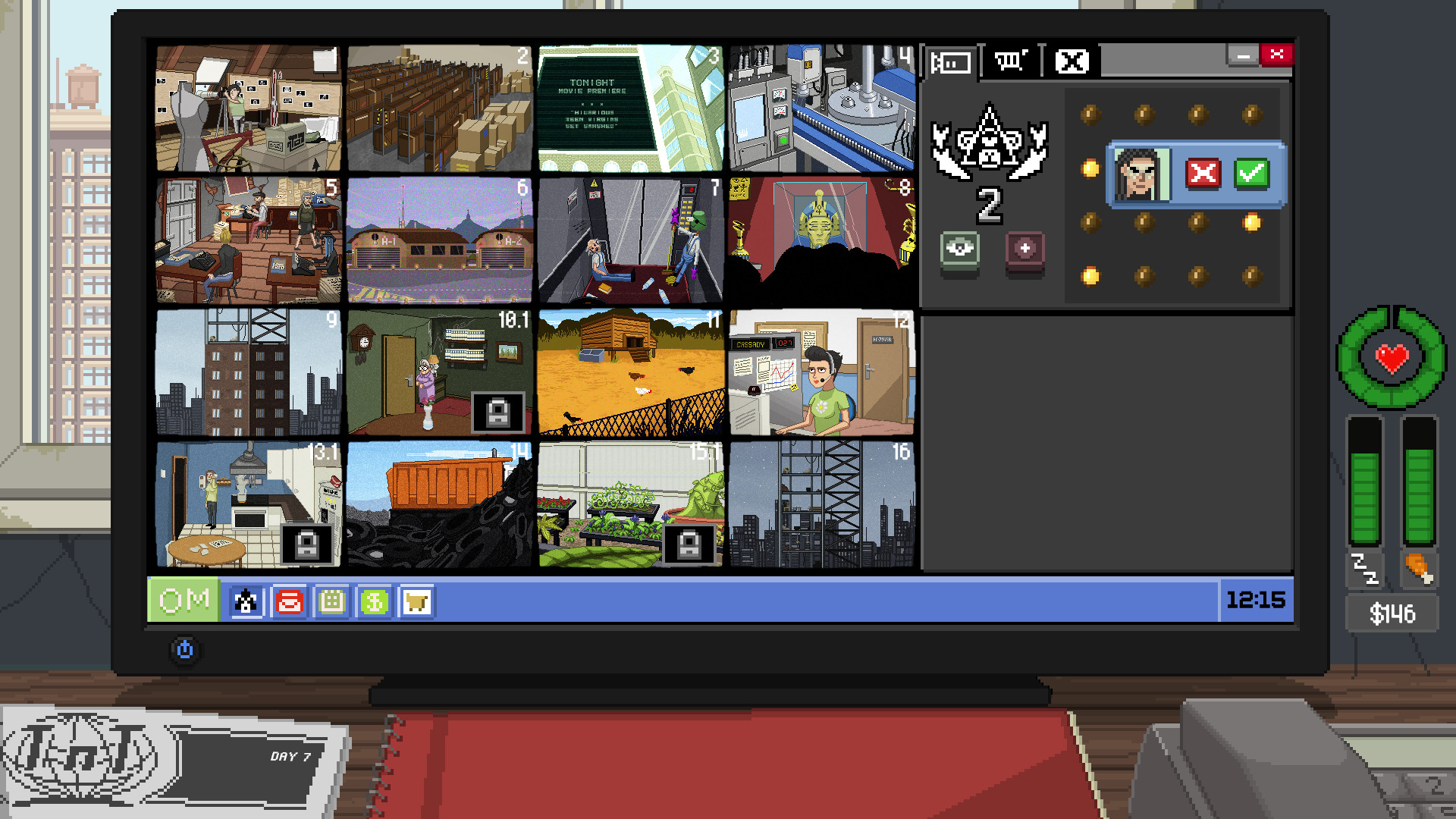
Do Not Feed the MonkeysImage: Alawar via Steam -
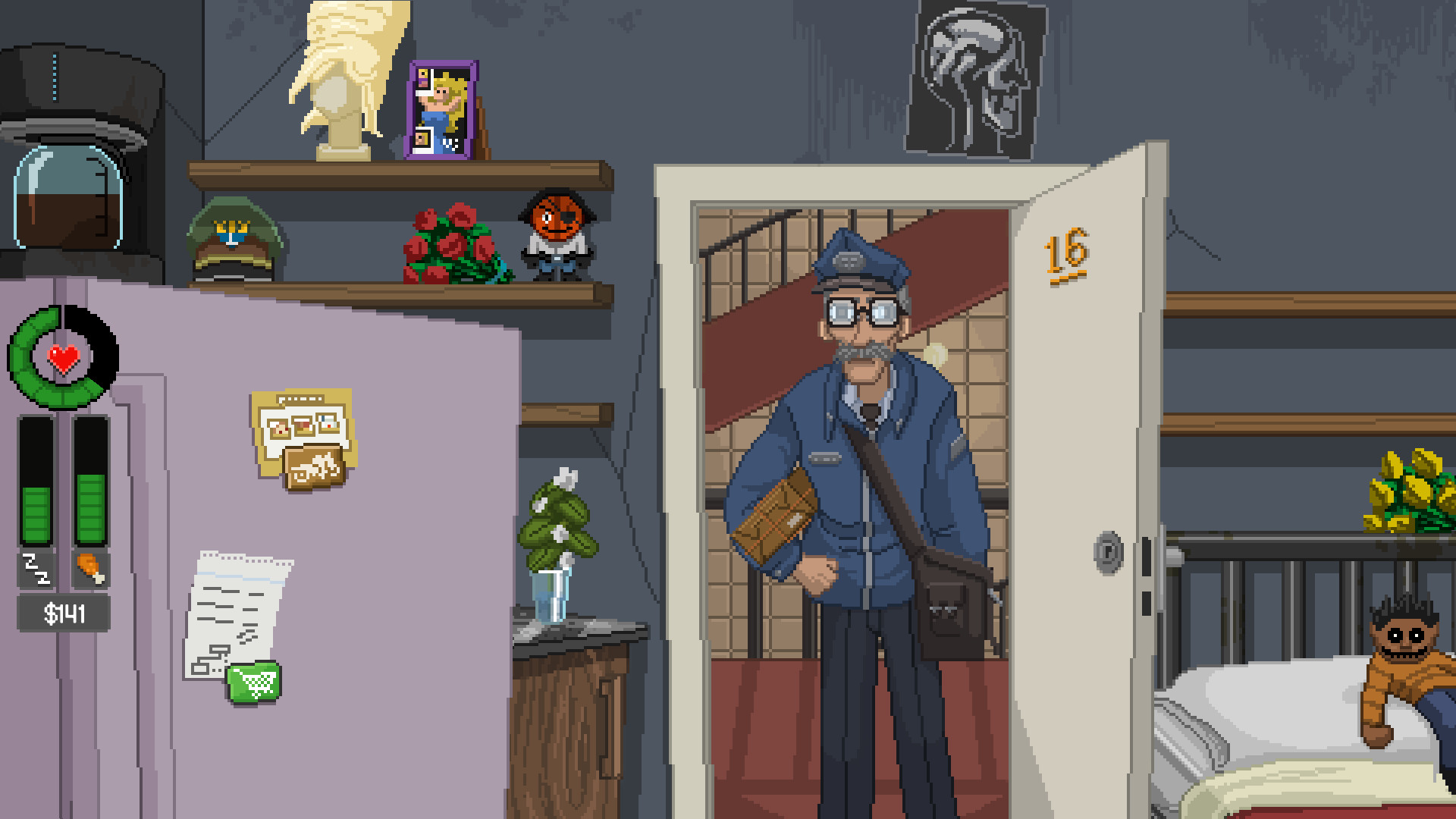
Do Not Feed the MonkeysImage: Alawar via Steam -
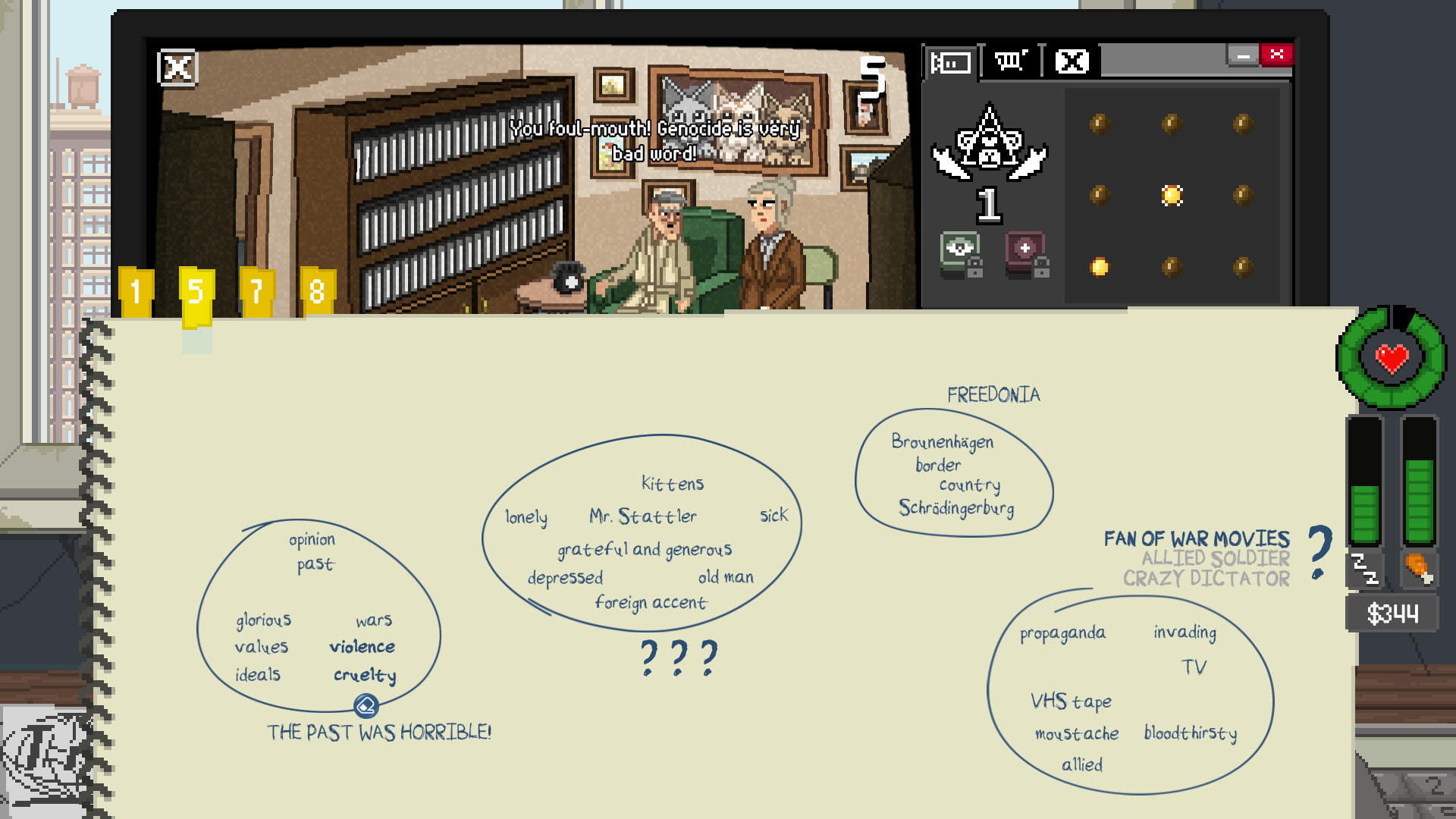
Do Not Feed the MonkeysImage: Alawar via Steam -
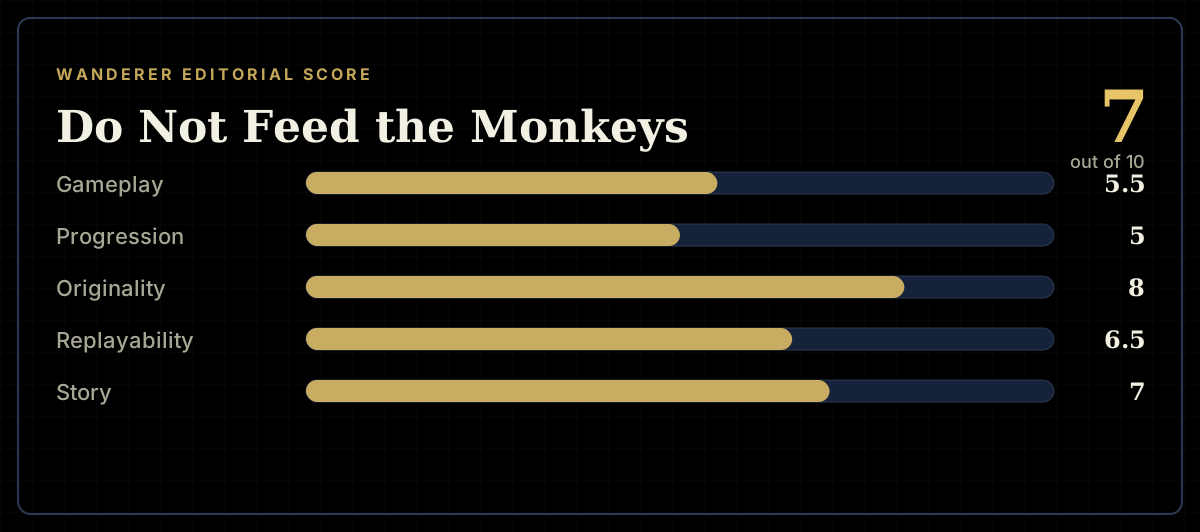
How the review scores each part of the gameWanderer Editorial -
The specsWanderer Editorial -
The short versionWanderer Editorial