Game review
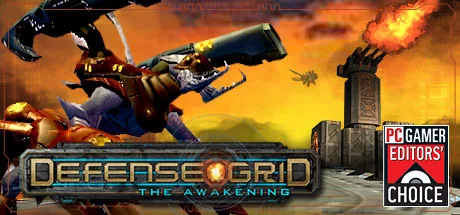
Defense Grid: The Awakening
8 / 10
- Developer
- Hidden Path Entertainment
- Publisher
- Hidden Path Entertainment
- Released
- 8 December 2008
- Platforms
- Windows
- Genre
- Tower Defense
- Monetisation
- Paid up front, no in-game store. Six DLC on top — two paid campaign expansions and four small map packs.
- Players
- Single-player only. No co-op, no versus, no leaderboards beyond Steam's own.
The short version
Defense Grid's one real invention — you can force enemies to take the long way round instead of just shooting them as they pass — is still the best idea most tower defense games have never copied properly. **96.1% of its 5,363 reviews are positive**, 87 of the last 100 English reviews are positive too, and the top positive reviews come from players with 1,300 and 2,479 hours logged.
The trade-off is real. There is **no progression between missions** — no persistent upgrades, no loadout, no carried-over currency — so every one of the 20 core levels is its own puzzle to re-solve from nothing, and a recurring group of critics report that the puzzle has one dominant answer once you find it. The mouse-and-camera scheme has drawn the same specific complaint from 2018 through 2024.
Biggest strengths
- The core mechanic — blocking a path to force a longer route rather than just shooting along it — is genuinely distinctive and still copied poorly elsewhere
- Achievement data confirms the campaign has real difficulty depth, from 93.3% for the first level down to 1.2% for full mastery of the last
- Extremely cheap for the amount of content, and the four Resurgence map packs are NZ$1.29 each
Biggest weaknesses
- No persistent upgrades or unlocks carry between missions, so nothing you do on level 4 changes how level 5 starts
- A recurring, detailed complaint across multiple years describes one tower type dominating almost every map once a player works out the meta
- The camera is locked to mouse movement with no free-look option, and reviewers from 2018 and 2024 describe the exact same friction
Who it's for: Puzzle-minded strategy players who want to master a level rather than build a character. Poor fit for anyone who plays tower defense for the meta-progression, the loot, or a controller they can put down and pick up mid-wave.
Our recommendation: Buy it, especially on a sale — it goes low often. NZ$12.39 for around eight hours of campaign plus score-chasing replays, four Resurgence maps at NZ$1.29 each and two proper expansions is a lot of tower defense for very little money. Skip it if what you actually want from the genre is character progression carried between missions; this game was never built to give you that.
8 / 10
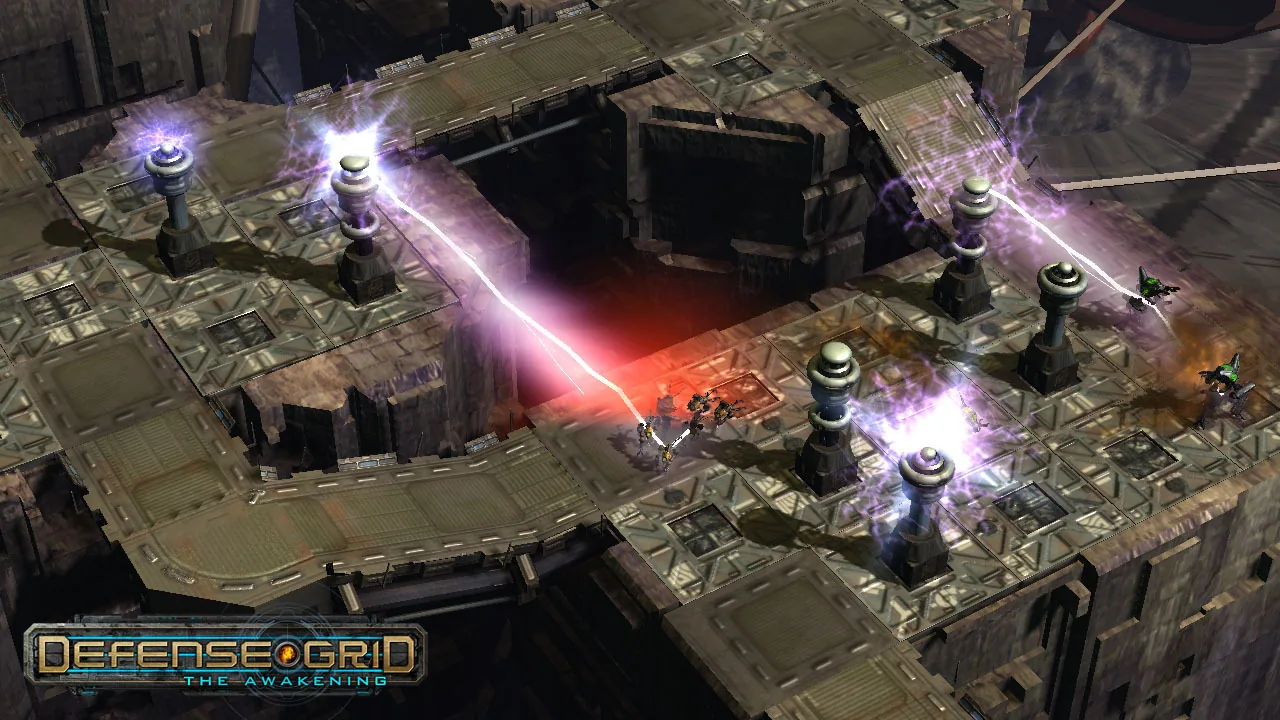
Most tower defense games let you guard a path. Defense Grid: The Awakening's whole reputation rests on the fact that you can also build one — put a tower in the right square and the enemies walking toward it will turn around and take the long way instead, straight into whatever else you've placed along that route. It's not a new idea in the abstract, but in 2008 almost nothing else in the genre did it this cleanly, and eighteen years later the trick still hasn't been copied properly by much of anything that followed it.
That's also roughly where the consensus on this game ends and the arguments start.
The idea that made it
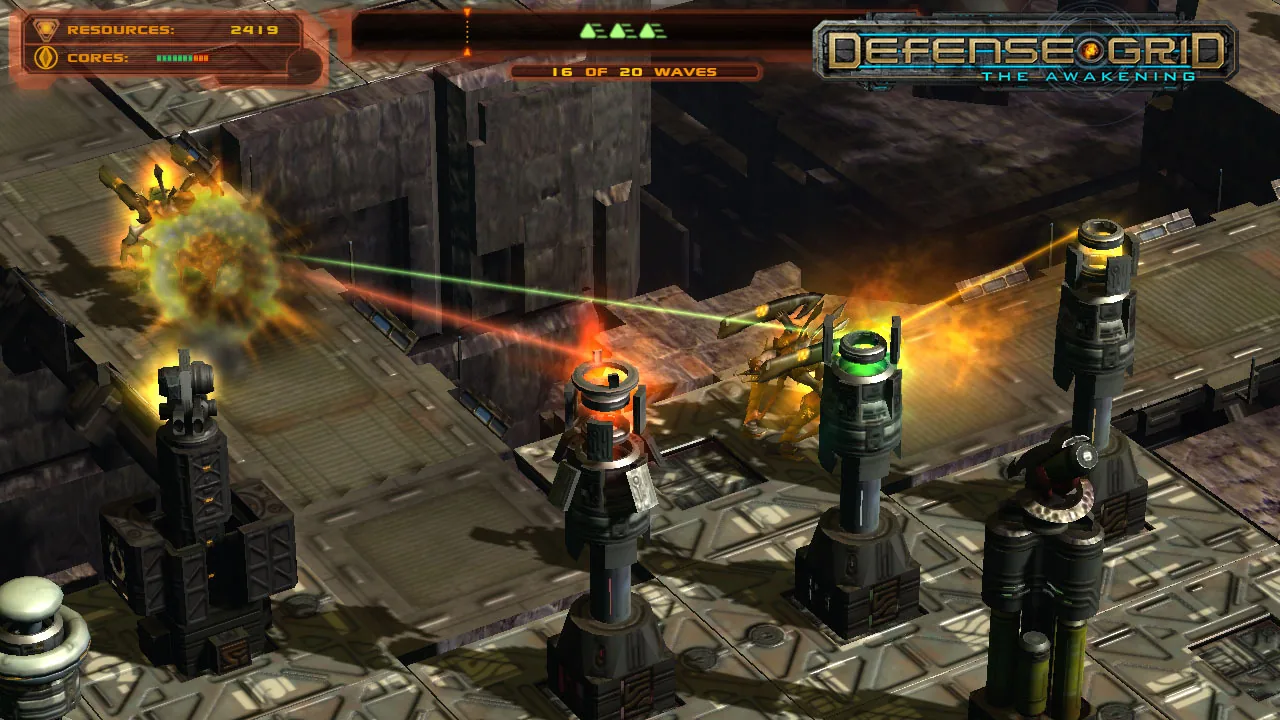
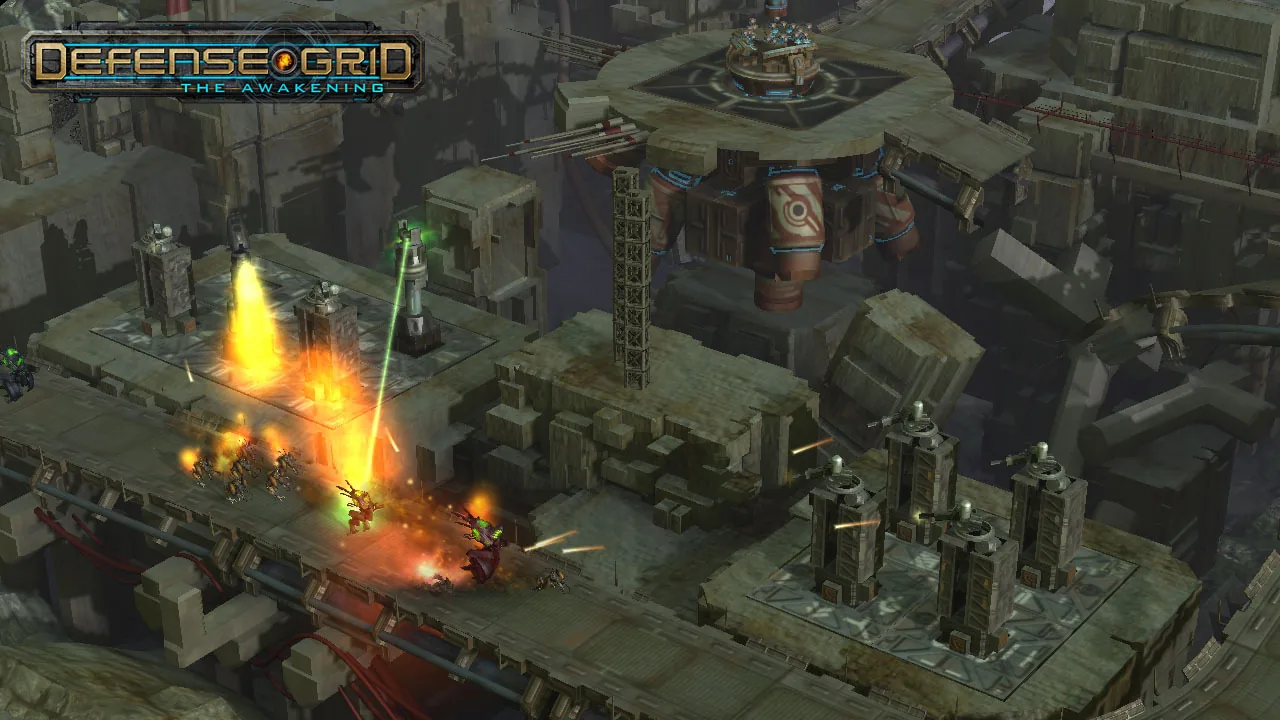
Ten tower types, three upgrade tiers each, twenty hand-built levels, and one power core per map that the aliens are trying to reach and steal. The twist is that most of your early towers don't kill efficiently at all — they redirect. A well-placed wall of slow-firing turrets isn't there to finish enemies off, it's there to make them walk an extra ninety seconds through everything else you own. One of the game's own achievement names, Salvage Rights, points at the same idea from the economy side: unspent money earns interest, so the best players are running a budgeting puzzle and a maze-building puzzle at the same time.
That's the game Hidden Path's store page describes, and it's real. It's also, per Steam's own numbers, still finding an audience: 96.1% of 5,363 reviews positive, and — more tellingly — 87 of the last 100 English reviews positive too, so this isn't a lifetime score being carried by a 2009 launch window. The top-voted positive review right now is from a player with 1,310 hours logged. The third-highest is from a player at 2,479 hours, who calls it "so special, so rare." A 40-vote reviewer with 138 hours singles out Grinder Mode, a 100-wave endless mode, as the reason they're "still playing for years."
The one true build
Set against all of that is a specific, recurring complaint that isn't about bugs or difficulty — it's about the maze-and-tower puzzle having a single dominant solution. A 29-vote reviewer with 407 minutes logged put real effort into disproving it before conceding: "all the most effective strategies completely ignore most towers in the game... the entire game can be boiled down to basic gun tower spam plus slowdown towers." An 18-vote review makes the same case with a different tower in mind: once you notice one turret type "can hit all enemy types, and also has the longest range and the best damage," there's little incentive to reach for anything else, "just start putting first level cannons everywhere and upgrade them if you run out of tiles."
I want to be precise about how load-bearing this complaint actually is in the review corpus, because it would be easy to overstate: it's a small number of detailed, well-argued reviews rather than a dominant theme across the hundred most-helpful negatives. But it's specific in a way generic "boring" complaints (17 of the 100 negatives use that exact word) aren't, and it matches a shape this library has seen before in randomised builders — a wide toolkit that narrows, in practice, to a much smaller viable subset. Defense Grid isn't randomised, so the fix available to a Slay the Spire or a Balatro (rerolls, targeted rewards) doesn't apply here. What a level designer can do instead is force variety through map layout, and on Defense Grid's better maps — the ones with genuine chokepoints and limited build space — that's exactly what happens. On its more open maps, the complaint has more room to be true.
No character sheet
If you come to this from an idle RPG or a modern tower defense with a meta-progression layer, the thing that will surprise you is what doesn't happen between missions: nothing. There's no persistent gold, no unlocked upgrades, no loadout you're building toward. Every level starts you back at zero towers with a fresh budget, and what you learned on level 6 helps you personally, not your save file.
A 28-vote reviewer names this directly: "no persistent upgrades, no customization of your loadout, not much story... I've played better TDs for free on my phone." An 11-vote review is blunter: "No upgrades to work towards." Three of the hundred negatives raise "progression" by name and seven raise "upgrade," which is a modest slice of the sample but a consistent one, and it's the complaint most worth flagging to this site's specific readers — if the appeal of a progression system is central to why you play, this genre choice will read as a missing feature rather than a design decision, even though it plainly is one. The 2008-era design brief was a puzzle box, not a character sheet, and it never pretended otherwise.
The controls that time forgot
The other complaint that recurs with real consistency, across real time, is the camera. Defense Grid locks camera movement to mouse position rather than offering a conventional click-drag or WASD free camera, and it has drawn the identical objection for well over a decade. A 15-vote review from January 2018: "why is there no option to use mouse the normal way like in almost every other game?" A review from July 2023: "the camera is locked to movement. It feels GODAWFUL to even attempt to try and play this thing." A review from August 2024 calls it "the WORST controls I have ever seen in a TD game." This isn't a fossil complaint from a launch-week patch that got fixed — it's the same friction reported six years apart, which means it's a design choice, not a bug, and it's one the game is never going to change now. Development effectively stopped after 2011; the only Steam news post since then, from January 2017, is a Kickstarter plug for an unrelated board game.
What the achievement curve actually shows
Steam's global achievement data settles one question cleanly: is the difficulty spike real, or is this a case of a small, old sample skewing the numbers? It's real, and it's a smooth curve rather than a cliff. The most commonly earned achievement, for finishing the first level, sits at 93.3%. Completing the whole campaign (Salvage Rights) sits at 84.9% — a healthy completion rate for a story campaign by this library's usual benchmarks. From there it tapers steadily through the mid-game challenge goals (Sharpshooter 70.2%, Liquidator 65.0%, Overseer 40.8%) down to the genuinely elite tier: Tower Expert at 25.7%, Untouchable at 13.5%, and the rarest achievement in the game, Core Container, at 1.2%. That shape — a gentle taper rather than an early-game collapse — backs up the store page's own claim that "a novice player may be able to survive the onslaught, but only an experienced player will be able to get all of the gold achievements." The steep-difficulty-wall complaints some reviewers raise are real for individual maps, but they aren't stopping most players from finishing the campaign; they're gatekeeping the last, hardest tier of optional mastery, which is a very different thing.
Content and what it costs
Twenty levels and roughly eight hours of first-time campaign play, per the store page, plus whatever score-chasing and challenge-mode time you want to add — and judging by the top reviewers' playtimes, some players add a great deal of it. On top of the base game sit six pieces of DLC: two proper expansions (Containment and You Monster, NZ$6.29 each) and four small Resurgence map packs at NZ$1.29 apiece, each adding two maps with several modes. Review samples on the DLC are small — 21 to 47 reviews each — but all three checked sit at a consistent 88–94% positive, so there's no sign of the base-game-versus-DLC quality gap this library has flagged on other franchises. NZ$12.39 for the base game, or NZ$24.79 for the Containment Bundle, is not a difficult price to justify against the hours on offer.
The verdict
Defense Grid: The Awakening earns an 8.0.
The pathing mechanic is a genuinely good idea, well enough executed that it's still drawing new positive reviews eighteen years on, and the achievement data backs up a campaign with real difficulty structure rather than a flat, padded one. It's an easy recommendation for anyone who wants a tower defense game to function as a puzzle box — plan the maze, spend the budget, solve the level — and an equally easy pass for anyone who wants what the genre has mostly become since: a meta-progression system layered on top of the waves.
It isn't a 9 because the two specific frictions here aren't launch bugs that got patched out — they're a decade-plus-old control scheme nobody's going to change and a strategy space that a credible minority of thoughtful players report narrows to one dominant answer. Both of those are honest trade-offs of a 2008 design, not failures of execution, and the review corpus backs that reading: 96.1% positive is not a score people give to a broken game. It's the score of a very good, very narrow one that never tried to be anything else.
Pros and cons
Pros
- The core mechanic — blocking a path to force a longer route rather than just shooting along it — is genuinely distinctive and still copied poorly elsewhere
- Achievement data confirms the campaign has real difficulty depth, from 93.3% for the first level down to 1.2% for full mastery of the last
- Extremely cheap for the amount of content, and the four Resurgence map packs are NZ$1.29 each
- Grinder Mode's 100-wave endless format gives the design a genuine long game, and reviewers with five-figure hour counts back that up
- Steam's own review split treats the base game and its DLC consistently — nothing here is a bait-and-switch
Cons
- No persistent upgrades or unlocks carry between missions, so nothing you do on level 4 changes how level 5 starts
- A recurring, detailed complaint across multiple years describes one tower type dominating almost every map once a player works out the meta
- The camera is locked to mouse movement with no free-look option, and reviewers from 2018 and 2024 describe the exact same friction
- Several maps drop players into a steep difficulty wall with no ramp-up, particularly past the midgame
- Development stopped in 2011 (aside from the 2017 board-game tie-in), so nothing about the friction points above is going to change
Screenshots
-
Defense Grid: The AwakeningImage: Hidden Path Entertainment via Steam -
Defense Grid: The AwakeningImage: Hidden Path Entertainment via Steam -
Defense Grid: The AwakeningImage: Hidden Path Entertainment via Steam -
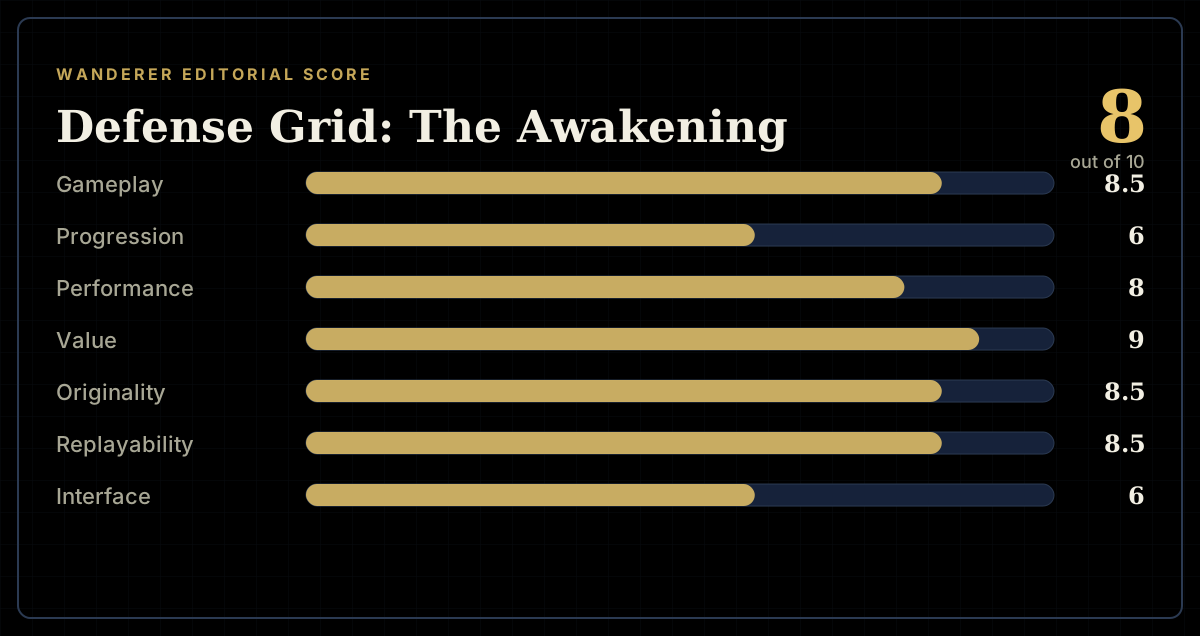
How the review scores each part of the gameWanderer Editorial -
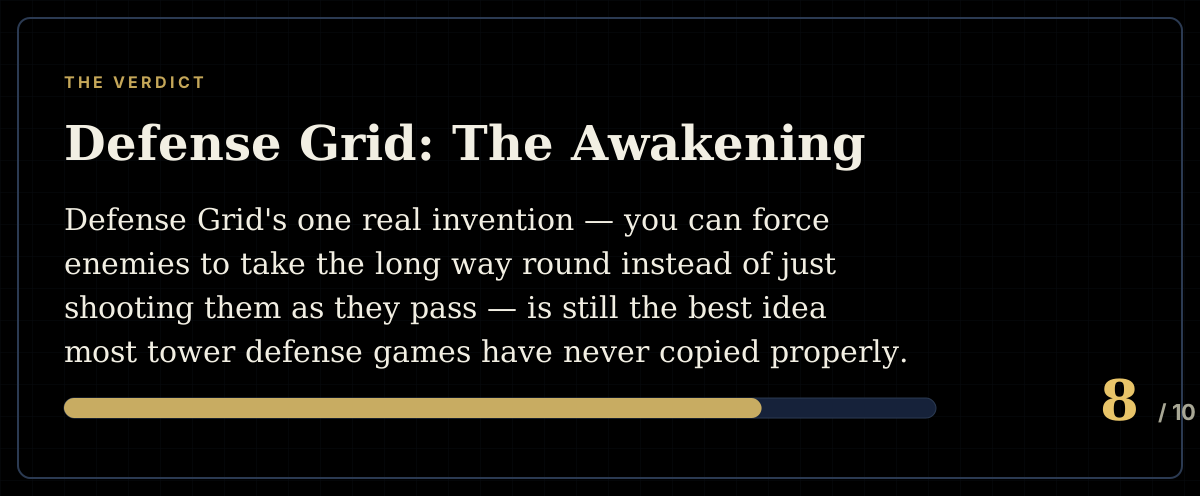
The short versionWanderer Editorial