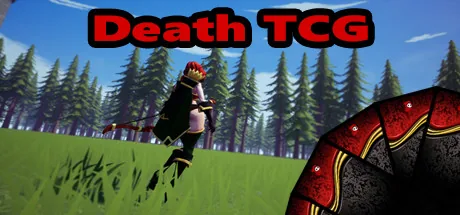
Game review
Death Trading Card Game
2.3 / 10
- Developer
- Death
- Publisher
- Death
- Released
- 20 May 2022
- Platforms
- Windows
- Genre
- Trading Card Game
- Monetisation
- One-time purchase, no storefront record of in-app purchases
- Players
- Online PvP and LAN PvP listed, though no players are reachable
The short version
Death Trading Card Game arrived on Steam in May 2022 promising the usual CCG pitch: build a deck, fight the AI, fight your friends, watch the card pool grow over time. Four years on, none of the parts that make a trading card game worth ten dollars are verifiably there. Steam's own concurrent-player counter reads zero. The storefront has never carried a single user review — not one positive, not one negative — in the entire time the listing has existed. There are no achievements registered for the game at all, which on Steam usually means none were ever configured.
What's left is a store page: five screenshots, one trailer, a system-requirements list built for a shooter rather than a card game, and a content warning for violence and adult language that reads oddly next to "collect spells and challenge your friends." None of that is enough to recommend spending money on a multiplayer game whose multiplayer appears to have no one in it.
Biggest strengths
- The store page's stated feature set — deck building, single-player practice against AI, online and LAN PvP — is the right shape for a budget TCG on paper
- A dedicated trailer and five screenshots exist, so the listing isn't completely bare
- A flat one-time price with no storefront evidence of card packs or gacha-style purchases
Biggest weaknesses
- Zero user reviews of any kind in over four years on sale — Steam's own review system has nothing to show a buyer
- Steam's live player counter reads zero, and the store page gives no indication anyone else is currently reachable for PvP
- No achievements are registered for the game, unusual for a title built around collecting and progressing a card pool
Who it's for: Nobody, at the current asking price — card-game fans are better served by literally any actively populated TCG, free or paid.
Our recommendation: Skip it. If curiosity wins, wishlist and watch for a permanent price cut rather than paying $9.99 for a game with an empty player count.
2.3 / 10
Introduction
Death Trading Card Game went up on Steam on 20 May 2022, self-published by a developer credited simply as "Death." The pitch, straight from the store page, is a familiar one for the genre: build decks from a growing pool of characters and spells, practise against an AI opponent, then take those decks online against other players or across a LAN. It's the entry-level CCG promise that's launched hundreds of budget Steam titles, priced here at $9.99 with no discount history recorded on the listing.
What makes this review unusual is how little there is to weigh it against. Most games earn a score against a backdrop of player reaction — hundreds or thousands of Steam reviews, forum threads, patch notes replying to complaints. Death Trading Card Game has none of that. Steam's own review tally for this listing reads exactly zero: not a handful of mixed reviews, not a cluster of early complaints that later softened — nothing has ever been posted, positive or negative, in the more than four years the game has been purchasable. That absence is itself the most useful piece of evidence available, and it shapes everything below.
Gameplay
The description promises deck construction, an AI opponent for practice, and PvP against other players, "as the game progresses" toward an "ever growing world of characters and spells." That is a coherent, if generic, TCG structure — nothing in the pitch is a red flag on its own. Plenty of small card games open with exactly this scope and expand later.
The trouble is verifying any of it holds up in practice. With no Steam reviews, no visible community wiki, and no forum threads describing actual matches, there is no external confirmation that the promised systems — deck limits, card rarities, AI difficulty, the mechanics that actually decide who wins a hand — work the way the store page implies. A card game lives or dies on its rules feeling fair and its matches feeling different from each other; that is precisely the kind of detail that normally surfaces in reviews within the first few weeks of a launch, and here it never did.
Visuals and presentation
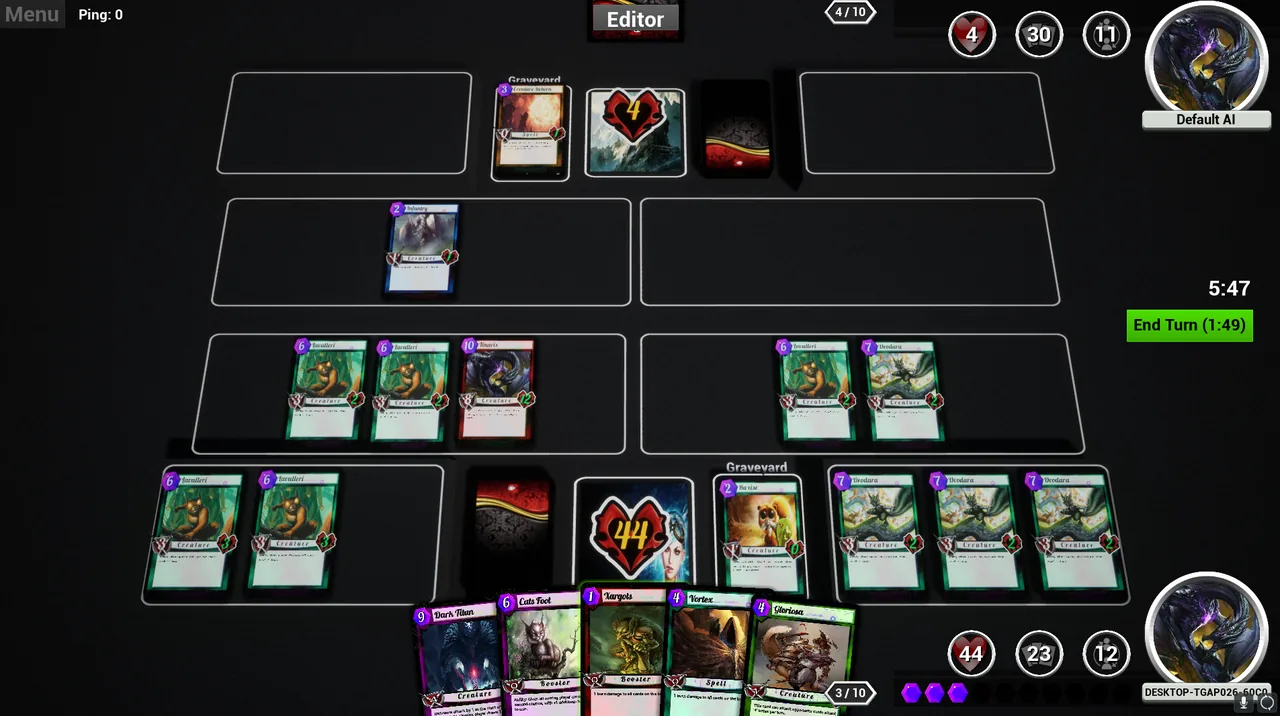
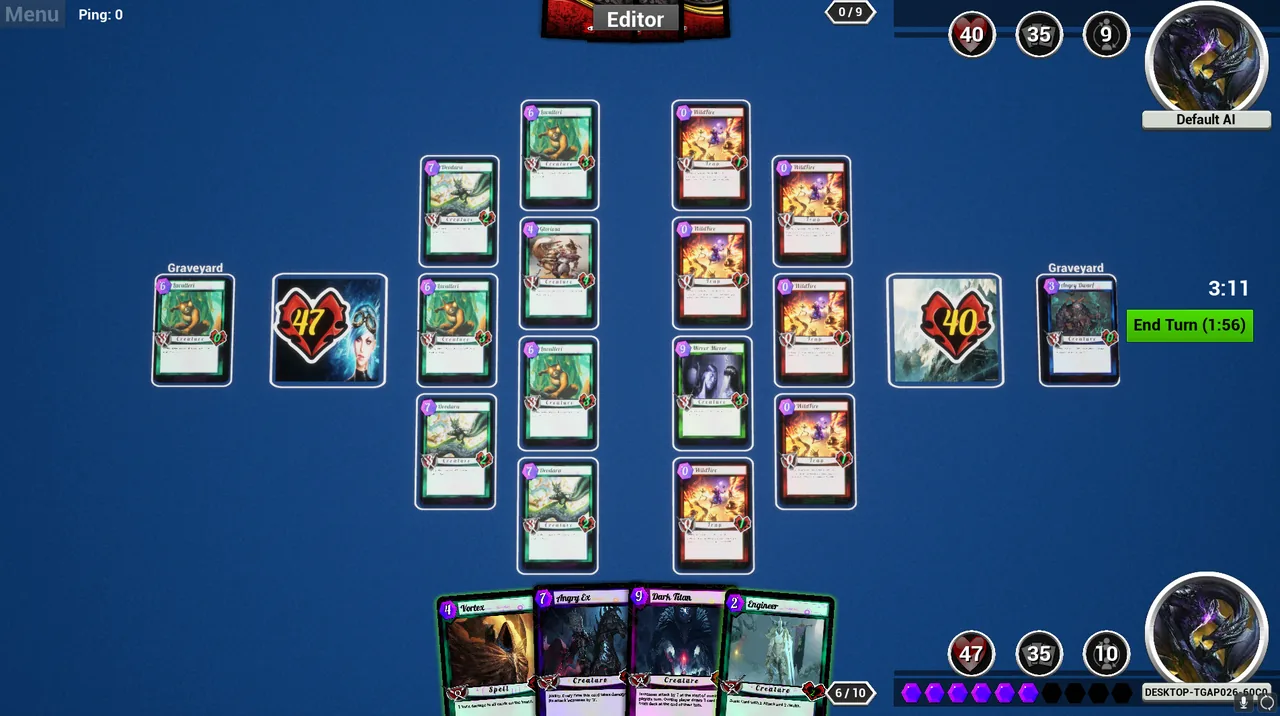
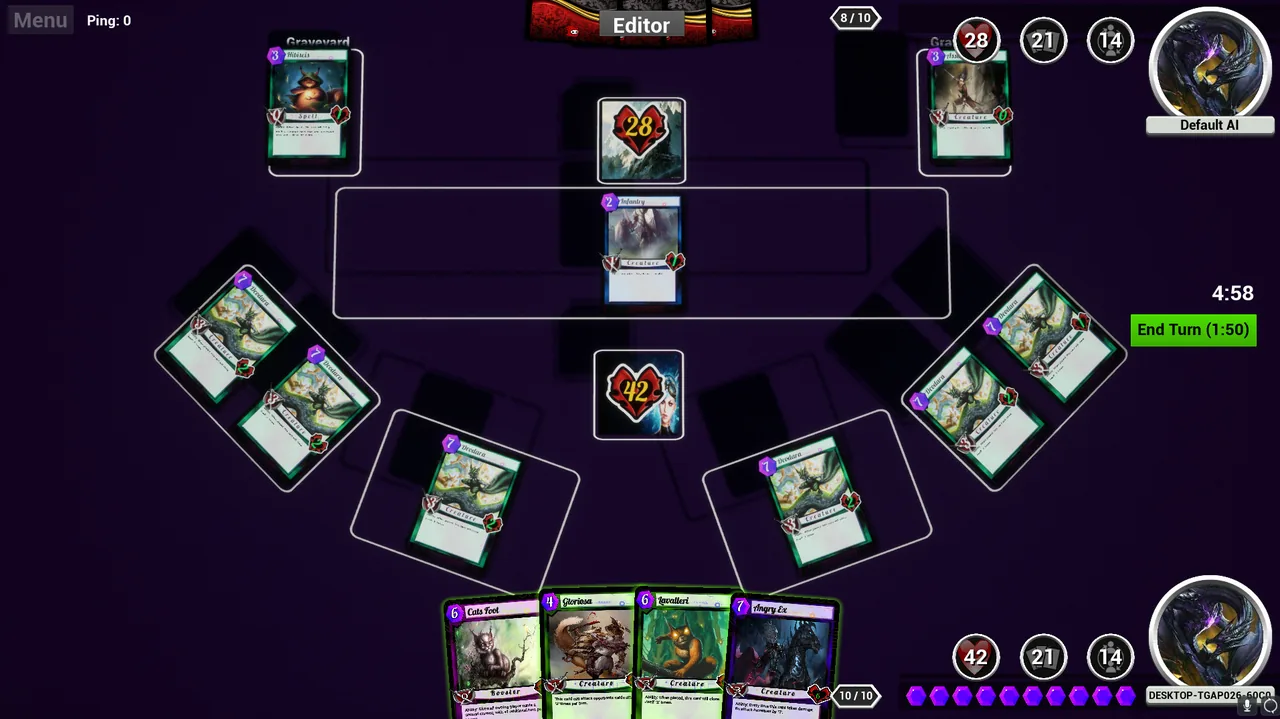
The storefront carries five screenshots and a single trailer, showing a 3D card-table presentation with character art on individual cards rather than a flat 2D interface. It's a reasonable, unremarkable take on how digital TCGs typically present themselves — closer to a budget indie card game's production values than a AAA one, which is exactly what the price point would suggest. There's nothing in the available art that looks broken or unfinished, but there's also nothing that distinguishes it from dozens of similarly scoped card games on the platform.
One detail is harder to square with what's shown: the minimum system requirements ask for a 64-bit Core i5-2400 or FX-8320, 8GB of RAM, a GTX 670 or Radeon HD 7870-class GPU, and 30GB of storage. That's a spec sheet built for a demanding 3D game, not a card game whose screenshots show static table layouts. Nothing in the public material explains the gap, and it's worth flagging for anyone checking compatibility before a purchase.
Multiplayer and community
This is where the review turns most decisively negative. The store page lists Online PvP and LAN PvP as supported modes, and the pitch leans on playing "against friends and family around the world" as a selling point. Steam's public player-count API for this listing currently reports zero concurrent players. Combined with the total absence of Steam reviews or community posts, there is no evidence of an active population to match against — a multiplayer card game is only as good as who's on the other side of the table, and right now nobody appears to be there.
A support Discord is mentioned in the store description as the channel for issues and feedback, but without visible activity feeding back into the Steam listing itself, it doesn't change the picture a prospective buyer sees on the page where they'd actually decide whether to purchase.
Achievements and progression
Steam's global achievement-percentage endpoint for this app returns nothing — the usual signature of a game that either shipped with no achievements configured at all, or has had literally no one unlock any that exist. Either reading points the same direction: there's no external signal of players progressing through the game over time, which matters for a card game whose whole appeal is meant to be a growing collection and improving decks.
Final verdict
Judge Death Trading Card Game purely on its store-page pitch and it reads as an unremarkable budget TCG: buildable decks, an AI to practise against, PvP for when you want a real opponent. Judge it on what four years of public data actually shows — zero Steam reviews in either direction, a zero concurrent-player count, no registered achievements, and requirements that don't match what the screenshots depict — and the picture is a $9.99 listing with no verifiable evidence anyone is currently getting the multiplayer experience it's sold on. Score this one on the numbers that exist rather than the pitch: there isn't enough here to recommend a purchase.
Pros and cons
Pros
- The store page's stated feature set — deck building, single-player practice against AI, online and LAN PvP — is the right shape for a budget TCG on paper
- A dedicated trailer and five screenshots exist, so the listing isn't completely bare
- A flat one-time price with no storefront evidence of card packs or gacha-style purchases
Cons
- Zero user reviews of any kind in over four years on sale — Steam's own review system has nothing to show a buyer
- Steam's live player counter reads zero, and the store page gives no indication anyone else is currently reachable for PvP
- No achievements are registered for the game, unusual for a title built around collecting and progressing a card pool
- Minimum specs ask for a GTX 670-class GPU and 30GB of storage, disproportionate for a card game and unexplained by anything shown on the store page
- The genre tags on the storefront span Action, Adventure, Casual, Indie, Massively Multiplayer, RPG and Strategy simultaneously — a spread that reads as storefront-visibility tagging rather than a real description of what's being sold
Screenshots
-
Death Trading Card GameImage: Death via Steam -
Death Trading Card GameImage: Death via Steam -
Death Trading Card GameImage: Death via Steam -
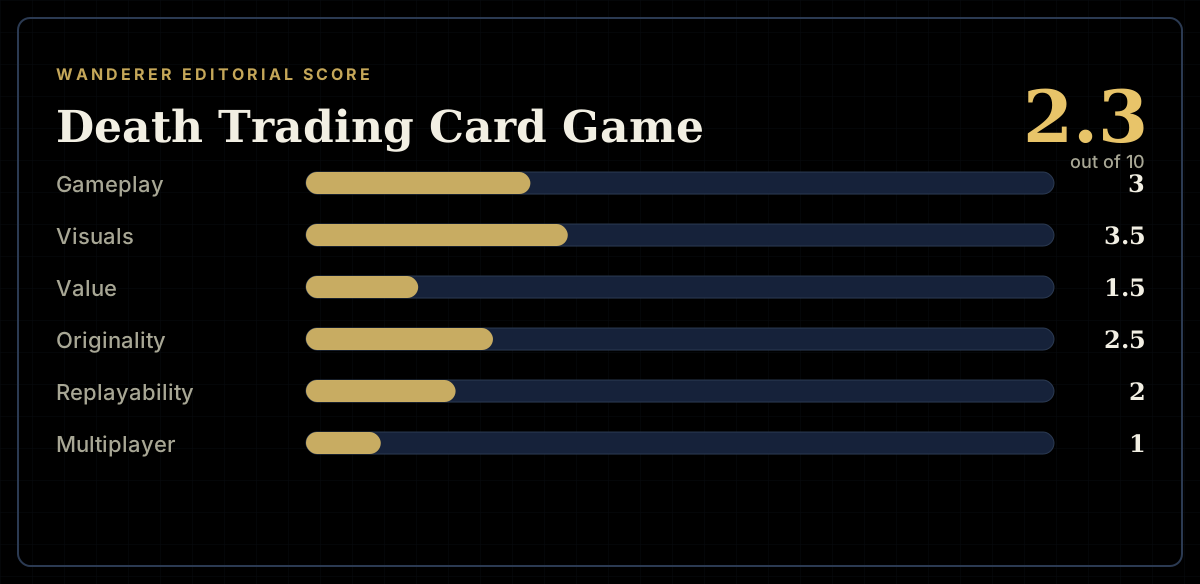
How the review scores each part of the gameWanderer Editorial -
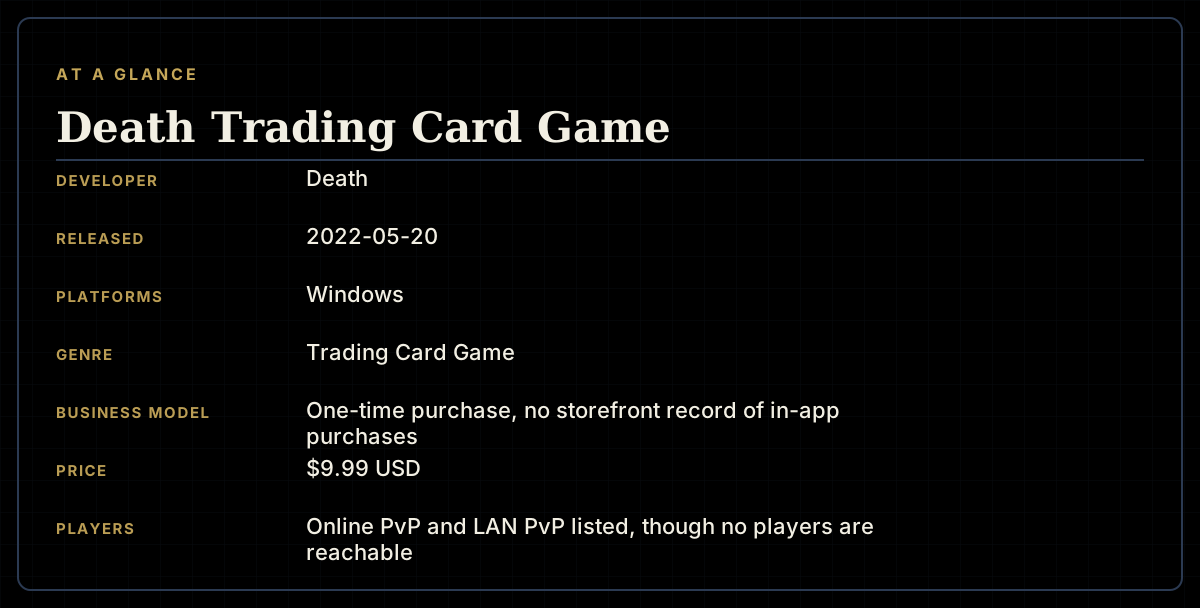
The game at a glanceWanderer Editorial -
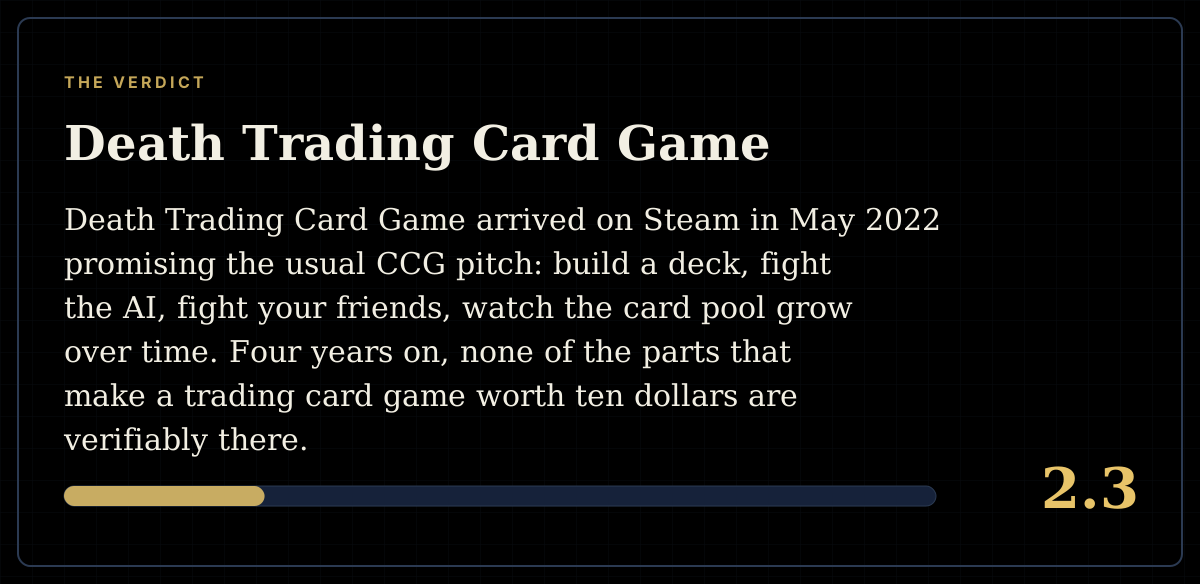
The short versionWanderer Editorial