Game review
Dawn of Heroes Review: Deep Customization, Divisive Prose
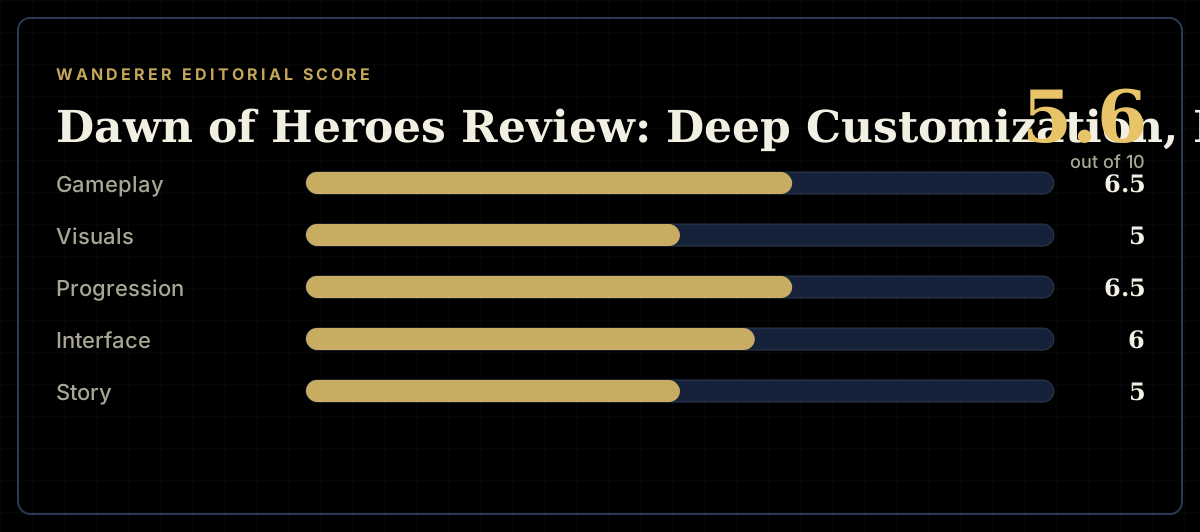
5.6 / 10
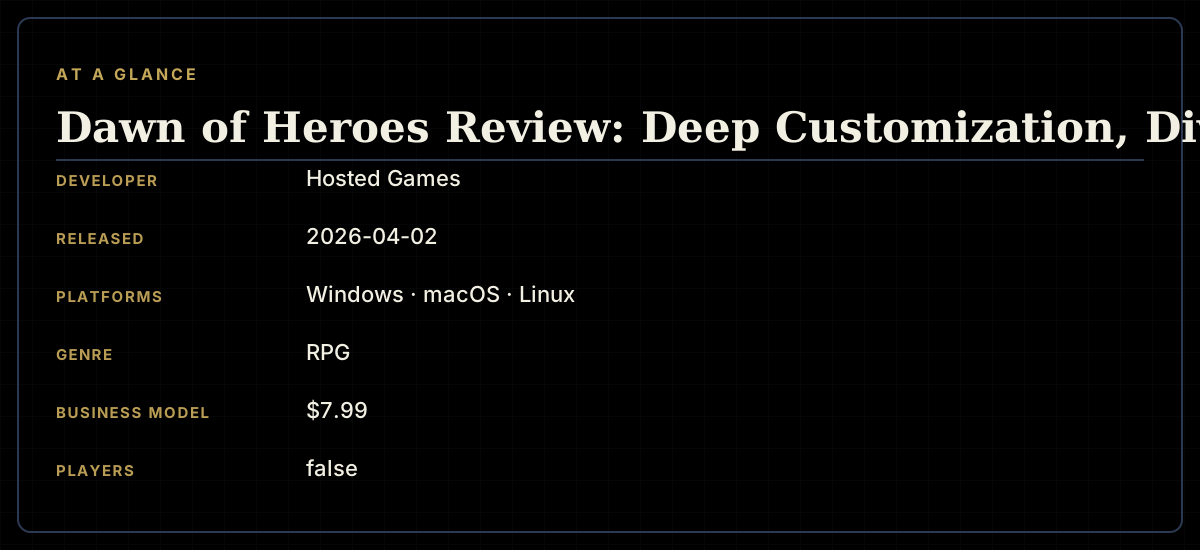
- Developer
- Hosted Games
- Publisher
- Hosted Games
- Released
- 2 April 2026
- Platforms
- Windows, macOS, Linux
- Genre
- RPG
- Monetisation
- $7.99
- Players
- false
The short version
Dawn of Heroes offers real, appreciated depth in its character customization and parallel civilian-life origin stories, but a repeated, specific complaint about disorienting point-of-view switches and a notable AI-authorship controversy keep its review sample genuinely split on whether the writing itself delivers.
Biggest strengths
- Unusually deep character customization spanning physical appearance, super-powers, and a choice of civilian backstory (CEO, factory worker, and others) that runs in parallel to the main plot rather than existing only as prologue flavor
- Detailed underlying systems — stats, karma, personality/morality tracking — that reviewers specifically credit for making choices feel consequential across the story's 450,000 words
- A genuinely engaging core premise, well-liked by several reviewers new to the interactive fiction genre who say it made them want to try more
Biggest weaknesses
- The most repeated specific complaint in the sample: the narrative frequently and jarringly switches point of view away from the player's character to other characters, sometimes before they've even been introduced, which multiple reviewers say breaks immersion and removes player agency during those sections
- Several reviewers, across English, German, and Russian reviews, independently suspect the prose reads as AI-generated or LLM-assisted, describing it as clunky or 'soulless'; Hosted Games reportedly responded directly to at least one reviewer disputing this, and this outlet has not independently verified the claim either way
- A detailed Simplified Chinese review specifically contrasts strong character-customization systems against what it calls a disjointed, fragmented story lacking narrative connection between scenes
Who it's for: Best suited to existing fans of Choice of Games/Hosted Games interactive fiction who value deep character-building systems and can tolerate some structural rough edges; a harder sell for readers who prioritize consistently strong, tightly controlled prose above mechanical depth.
Our recommendation: Consider it
5.6 / 10
A day job and a secret identity, told entirely in text
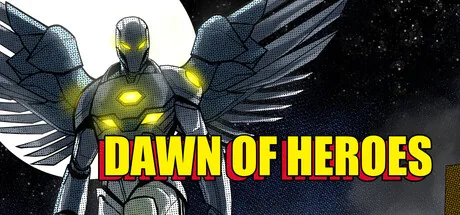
Dawn of Heroes is a 450,000-word interactive novel from Hosted Games, the Choice of Games-adjacent publisher known for stat-driven, choice-based text fiction with no graphics or sound. Players wake up with newly gained superpowers and must balance an ordinary day job with a secret life defending the city, making choices across hundreds of branch points that shape both their heroic identity and their civilian one. It's a pure text experience aimed squarely at readers of the genre rather than players looking for traditional game mechanics.
Customization depth that reviewers didn't expect
The clearest, most consistently praised strength in the sample is how deep the character-building systems run. One detailed English-language review, from a reviewer new to the interactive fiction genre entirely, specifically highlights the ability to choose a civilian backstory — CEO, factory worker, and other options — and notes, favorably, that unlike similar prologue-only origin systems in other games, these choices continue to shape parallel storylines throughout the full campaign rather than being isolated to an opening chapter. Combined with tracked stats, karma, and personality/morality systems, reviewers describe choices as feeling genuinely consequential across the story's considerable length.
The POV problem that comes up again and again
The single most repeated specific criticism in the sample targets structure rather than prose quality directly: the story frequently shifts perspective away from the player's own character to other characters, sometimes characters the reader hasn't even met yet, and sometimes asks the reader to make choices on behalf of those other characters without the context needed to reasonably decide. Multiple reviewers independently describe this as disorienting and immersion-breaking, with one calling it the main reason an otherwise well-written story with "likable, unique characters" earned only a hesitant recommendation, and another noting it undermined their sense of building real relationships with the cast around the main character.
A notable, unresolved AI-authorship dispute
A specific controversy recurs across several reviews from different language backgrounds: multiple reviewers, independently, describe the prose as reading like it could be AI-generated or LLM-assisted, citing stiff dialogue and a lack of distinct voice between characters as their reasoning. One English-language reviewer initially raised this concern directly, then publicly retracted it in an edit after stating that Hosted Games responded to dispute the claim, saying they trust the publisher's editorial process. This outlet has not independently verified either the original suspicion or the publisher's response, and is including this as reviewer-sourced, contested context rather than a settled fact — but it's specific and recurring enough across otherwise unconnected reviews to be worth flagging plainly for readers weighing the prose quality themselves.
Where the writing lands for readers who came in as fans
Not every reaction is critical of the prose itself. Several reviewers, including at least one who says they've enjoyed nearly every prior Choice of Games or Hosted Games release, frame their disappointment specifically around structural choices like the POV switching rather than sentence-level writing quality, suggesting the underlying craft has real defenders even among its more critical readers. Other reviewers who came in with no genre experience at all report a genuinely positive first impression, suggesting reactions may depend significantly on prior exposure to the genre's usual pacing and voice conventions.
Two ways to play, and they land differently
Dawn of Heroes offers a faster "story mode" alongside a deeper custom-character creation mode, and at least one detailed review illustrates just how much that choice can matter. That reviewer spent roughly seven hours in story mode agreeing with much of the prose criticism circulating elsewhere, while explicitly rejecting the AI-generation theory outright — arguing "the worst AI would have generated better prose" than what they were reading — before switching to the custom mode and coming away with a "tentative thumbs up," ultimately recommending it on sale rather than at full price. That kind of within-review reversal is a useful signal: the mode a reader chooses seems to meaningfully change how the writing lands, not just how much setup time it takes.
Pacing and the missing quiet moments
A smaller but specific complaint concerns pacing rather than perspective: one review otherwise satisfied with the story's overall flow notes "abrupt changes of scenery" that occasionally left them confused about where a scene was taking place, and separately flags a missing "daily life" dimension — more grounded, low-stakes civilian moments to balance out the hero work and the plot's bigger set pieces. It's a minor note compared to the POV-switching complaint, but it points in a similar direction: readers responding well to the premise and systems still want firmer narrative scaffolding around them.
Is it worth the asking price
A recurring pattern across more measured reviews is a conditional recommendation: several reviewers explicitly suggest buying on sale rather than at full price, citing a gap between the game's clear mechanical ambition and a prose execution that didn't fully land for them. That's a meaningfully different message than an outright pan, and reflects a review sample genuinely split on execution while broadly agreeing the underlying systems and premise have real merit.
Verdict
Dawn of Heroes succeeds most clearly as a systems-driven interactive novel, with character customization and parallel-storyline depth that reviewers say exceeds genre expectations, while its point-of-view structure and prose quality draw real, specific, and repeated criticism — including an unresolved AI-authorship dispute worth knowing about before buying. Existing fans of Hosted Games' catalog willing to tolerate some structural friction are likely to find real value here; readers prioritizing tightly controlled, consistently voiced prose above mechanical depth may want to wait for a sale.
Pros and cons
Pros
- Unusually deep character customization spanning physical appearance, super-powers, and a choice of civilian backstory (CEO, factory worker, and others) that runs in parallel to the main plot rather than existing only as prologue flavor
- Detailed underlying systems — stats, karma, personality/morality tracking — that reviewers specifically credit for making choices feel consequential across the story's 450,000 words
- A genuinely engaging core premise, well-liked by several reviewers new to the interactive fiction genre who say it made them want to try more
- A free custom-character creation mode alongside a faster 'story mode,' giving readers flexibility in how much system depth they want to engage with
Cons
- The most repeated specific complaint in the sample: the narrative frequently and jarringly switches point of view away from the player's character to other characters, sometimes before they've even been introduced, which multiple reviewers say breaks immersion and removes player agency during those sections
- Several reviewers, across English, German, and Russian reviews, independently suspect the prose reads as AI-generated or LLM-assisted, describing it as clunky or 'soulless'; Hosted Games reportedly responded directly to at least one reviewer disputing this, and this outlet has not independently verified the claim either way
- A detailed Simplified Chinese review specifically contrasts strong character-customization systems against what it calls a disjointed, fragmented story lacking narrative connection between scenes
- Multiple reviewers frame their recommendation as conditional on a sale price rather than full price, citing the gap between the game's mechanical ambition and its prose execution
Screenshots
-
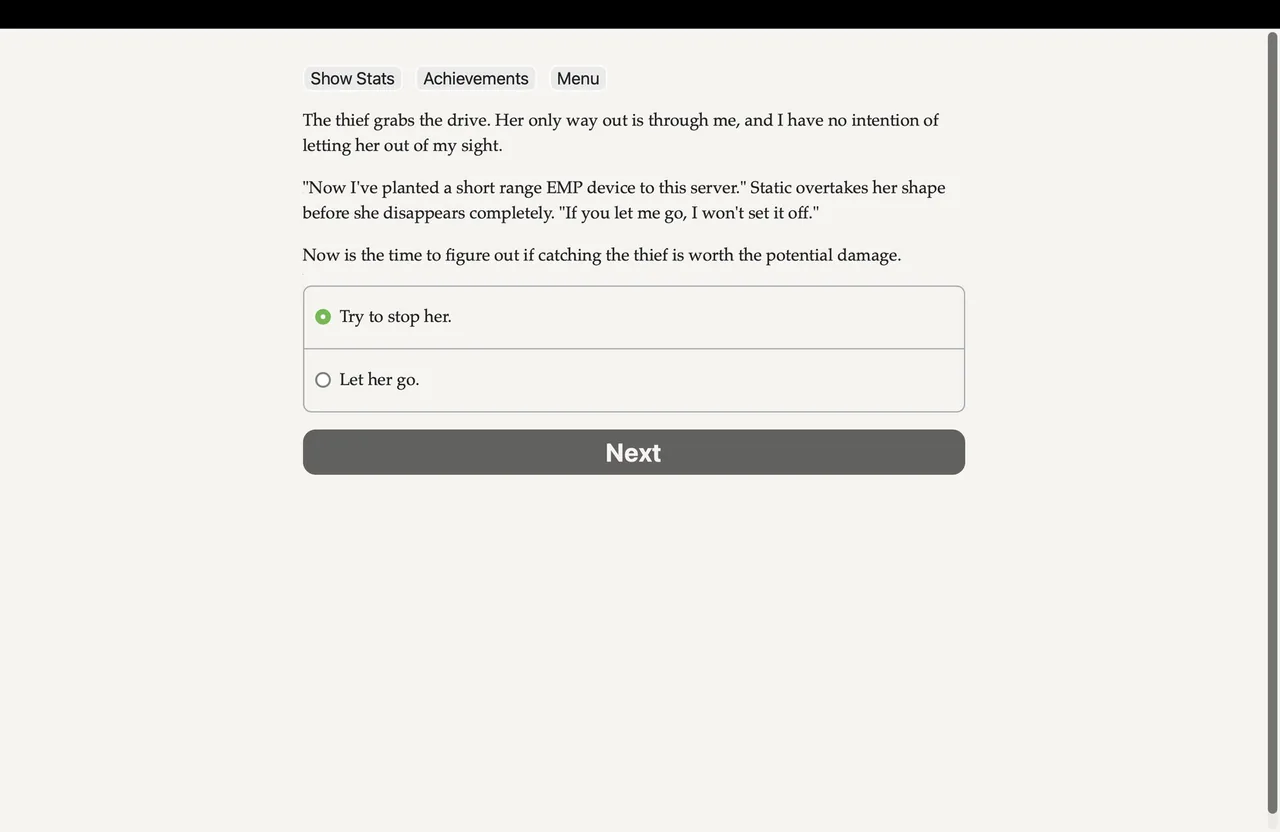
Image: Hosted Games via Steam -
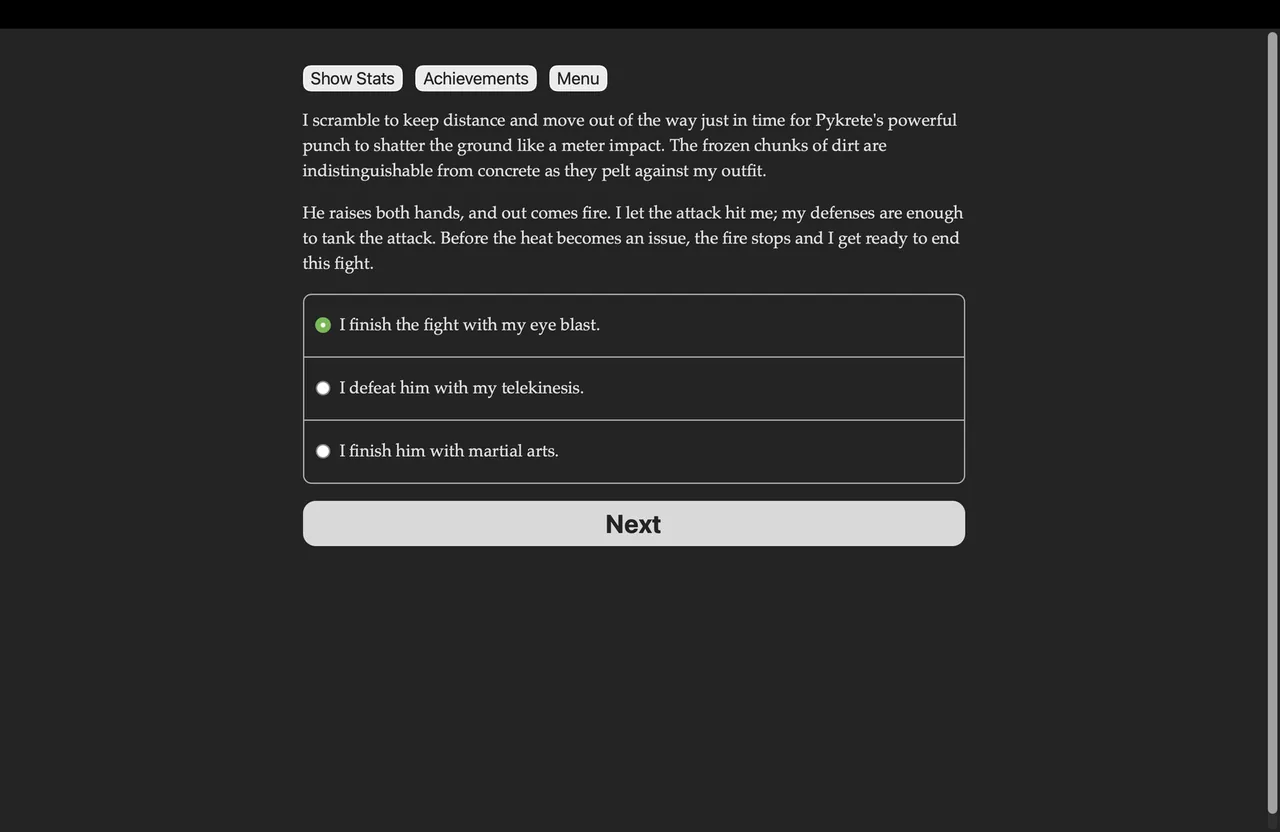
Image: Hosted Games via Steam -
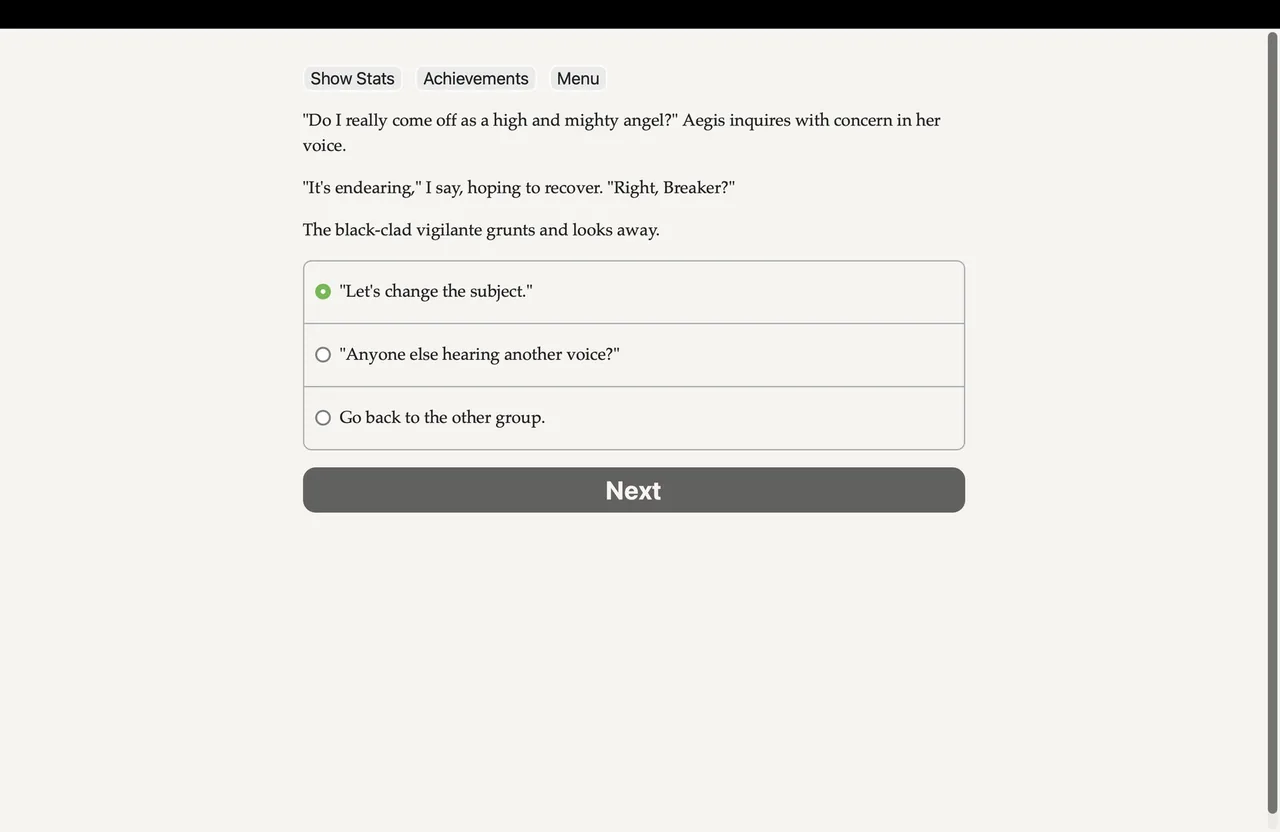
Image: Hosted Games via Steam -
Wanderer Editorial -
Wanderer Editorial -
Wanderer Editorial