Game review
DATA BREACH Review
6.6 / 10
- Developer
- Liminal Arc Studios
- Publisher
- Liminal Arc Studios
- Released
- 21 July 2026
- Platforms
- ["Windows"]
- Genre
- Adventure
Die on the Job, Steal the Data, Catch the Last Train Home
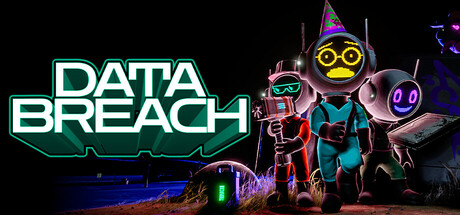
DATA BREACH puts you and up to three friends in the boots of expendable corporate robots sent into hostile facilities to steal data, dodge cryptid-style monsters, and make it to a departing train before it leaves without you. If that setup sounds familiar, that's because it's working the same genre Lethal Company popularized and R.E.P.O. more recently reinvigorated: quota-driven scavenging runs against a rising difficulty curve, punctuated by proximity voice chat, panicked callouts, and the specific brand of communal terror that comes from watching a teammate get dragged off while you're too far away to help. DATA BREACH doesn't hide from those comparisons, and its own review pool draws them constantly, but it distinguishes itself with a stronger production package than most genre entrants manage: a distinct dieselpunk-train aesthetic, a train-conductor and "Valkyron AI-assistant" framing device that carries the game's lore through murals and dialogue rather than text dumps, and a genuinely large roster of monster designs that reviewers describe hunting down and photographing like a cryptid field guide.
The game first reached players as a public demo, then launched into Early Access on July 21, 2026, and spent the weeks since steadily adding content and fixes before exiting Early Access into a 1.0 release on September 4. That trajectory, demo to Early Access to full launch inside about two months, is worth knowing going in: the game being reviewed here has a few months of iteration behind it already, not a day-one, untested build.
A Strong, Specific Review Pool Anchored by Direct Developer Engagement
The Steam aggregate sits at 32 positive against 4 negative out of 36 total reviews, a healthy Positive rating, and the English-language slice mirrors that closely at 32 positive against a single negative out of 33. What stands out most in the pool isn't the ratio so much as the specificity and repetition of the praise: reviewer after reviewer independently mentions the developers personally joining games, responding to bug reports, and being active in the community, to the point where it reads less like isolated anecdotes and more like a defining trait of how this small studio operates. Several reviewers explicitly frame that responsiveness as a reason to trust the game's future trajectory even where they flag current shortcomings.
The one clearly negative English review is worth quoting the substance of rather than glossing over: it dismisses the game as "just Lethal Company and Content Warning without all the fun," a blunt but real complaint about genre saturation that anyone tired of extraction-horror clones will recognize. A more constructive critical review, distinct from that dismissal, describes the game as "a solid foundation for a friendslop game" that "certainly needs a lot more work," specifically flagging sound design, a limited options menu, and enemy behavior and handling as the areas most in need of improvement, while still concluding the asking price is fair for where the game currently stands. Both complaints deserve to be weighed against the overwhelmingly positive majority rather than dismissed, since they're specific rather than reflexive.
The Casino, the Tablet, and a Cast of Genuinely Creepy, Goofy Monsters
Where DATA BREACH earns its praise is in the texture around its core extraction loop. A casino minigame, tucked under the in-game shop, lets players gamble their earned currency for a shot at more, and multiple reviewers single it out as an unexpectedly addictive side activity, with at least one review joking about losing an entire run's earnings there within minutes of starting. An in-game tablet handles customization and menu navigation, and reviewers praise it specifically for feeling smooth and satisfying to use rather than clunky, a detail that speaks to real UI polish in a genre where that's often an afterthought. Character customization goes deep enough for a small indie release that reviewers call out "so many cute and funny cosmetics" as a highlight in its own right.
The monster roster is the game's clearest strength. Reviewers describe a wide variety of distinct designs and behaviors, each cryptid photographed and logged individually as players encounter it, turning monster-hunting into a collection layer that sits on top of the core extraction gameplay. The tone lands somewhere between scary and charming, with reviewers describing the mobs as "annoying, but in a charming 'leave me alone' kind of way," and multiple reviews note that the game supports meaningful play even after death, letting downed players assist teammates or interact with the world rather than simply spectating until the run ends. Difficulty escalates by in-game day, with most reviewers agreeing that the early days are approachable and the curve steepens meaningfully by round five, giving the game real long-term challenge rather than a flat difficulty ceiling.
Missing Controller Support and Rough Edges Typical of a Young Studio's First Game
The complaints that recur most, once you look past the enthusiasm, are practical rather than fundamental. Multiple reviewers explicitly ask for controller support, currently absent, specifically for players who want a more relaxed, couch-style session rather than mouse-and-keyboard precision. At least one reviewer flags a specific broken feature, a defibrillator revive item that doesn't currently function despite repeated attempts, and another notes optimization dips around the seventh in-game day, though both describe the rest of the experience running smoothly. More than one reviewer, including one offering a review-copy playtest perspective, frames these as expected growing pains for a small studio's first game rather than symptoms of a project in trouble, a framing borne out by the pace of the developers' own patch history and their visible presence in games and feedback threads.
Verdict
DATA BREACH doesn't reinvent the extraction-horror genre it's so clearly working within, and it knows it, but strong monster design, a distinctive train-and-cryptid aesthetic, an addictive casino side loop, and unusually hands-on developer engagement make it one of the stronger entries in a genre that's gotten crowded fast. Missing controller support, a still-limited options menu, and a handful of features that don't fully work yet are real complaints from a young studio's debut, but for co-op groups burned out on the genre's bigger names, this is a worthwhile $7.99 alternative with a development team clearly still building.
Screenshots
-
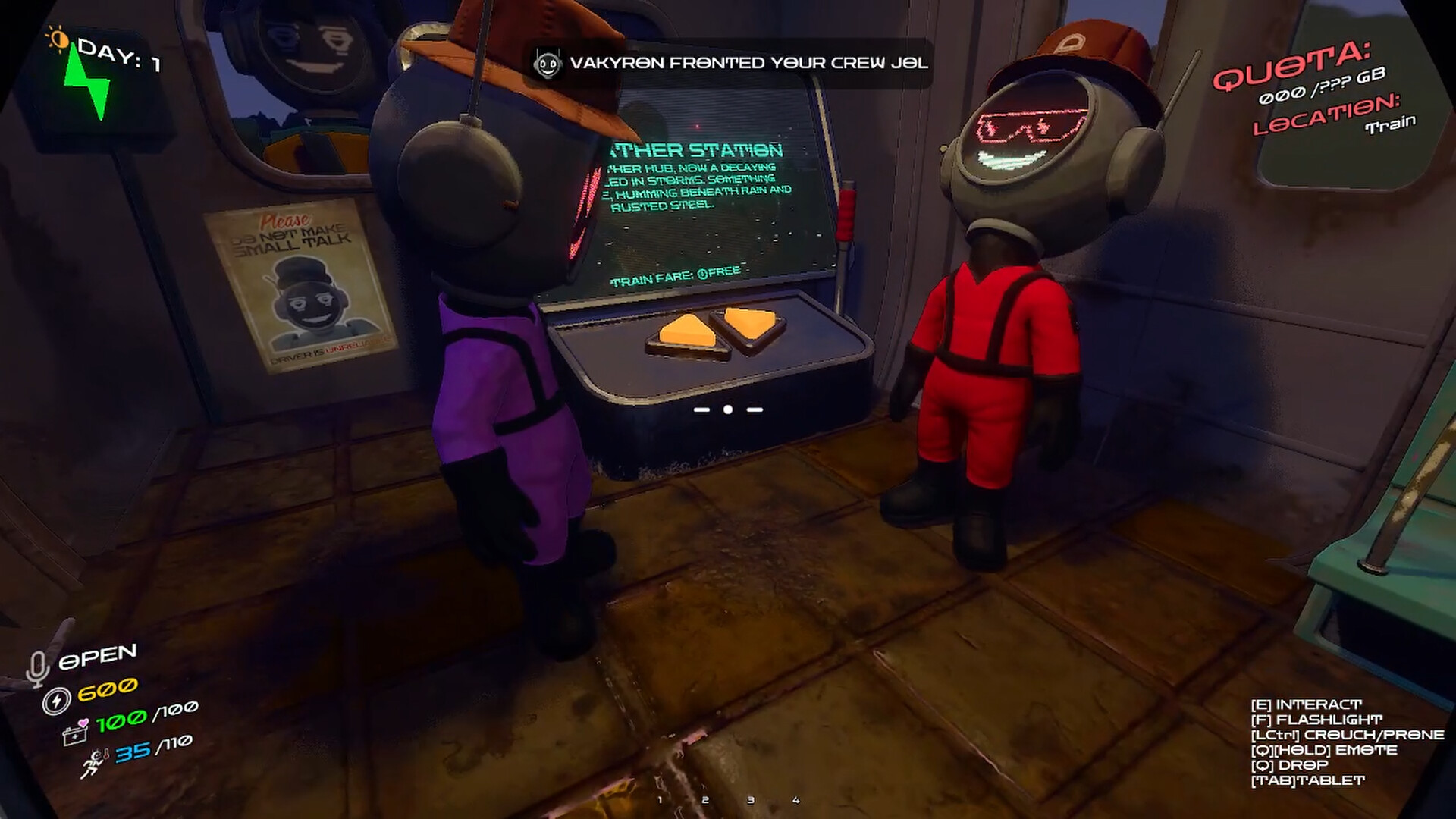
The train serves as the crew's mobile hub, dispatching runs and framing the game's between-mission lore.Image: Liminal Arc Studios via Steam -
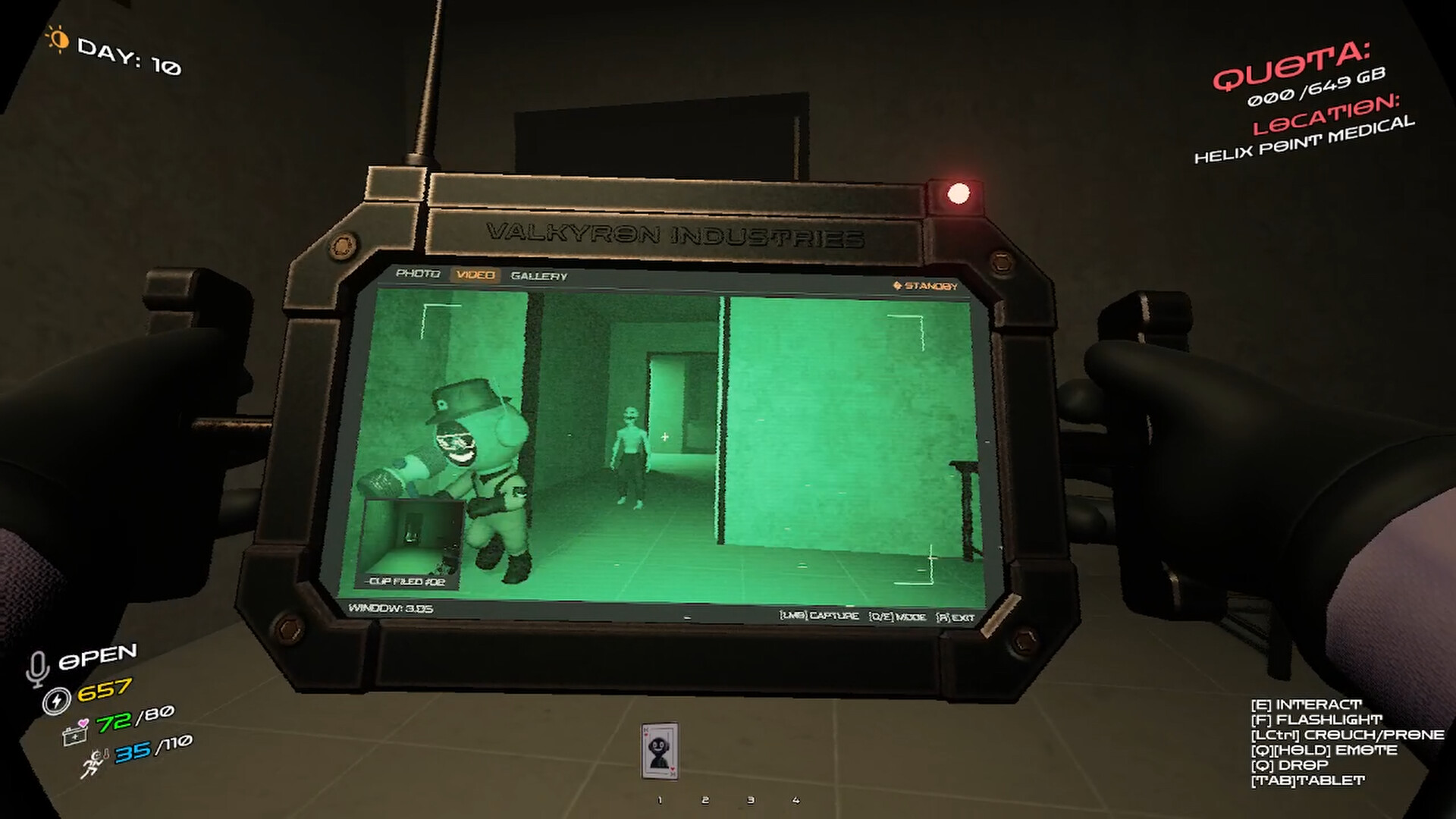
The tablet's night-vision camera captures footage of monster encounters for the game's cryptid-logging system.Image: Liminal Arc Studios via Steam -
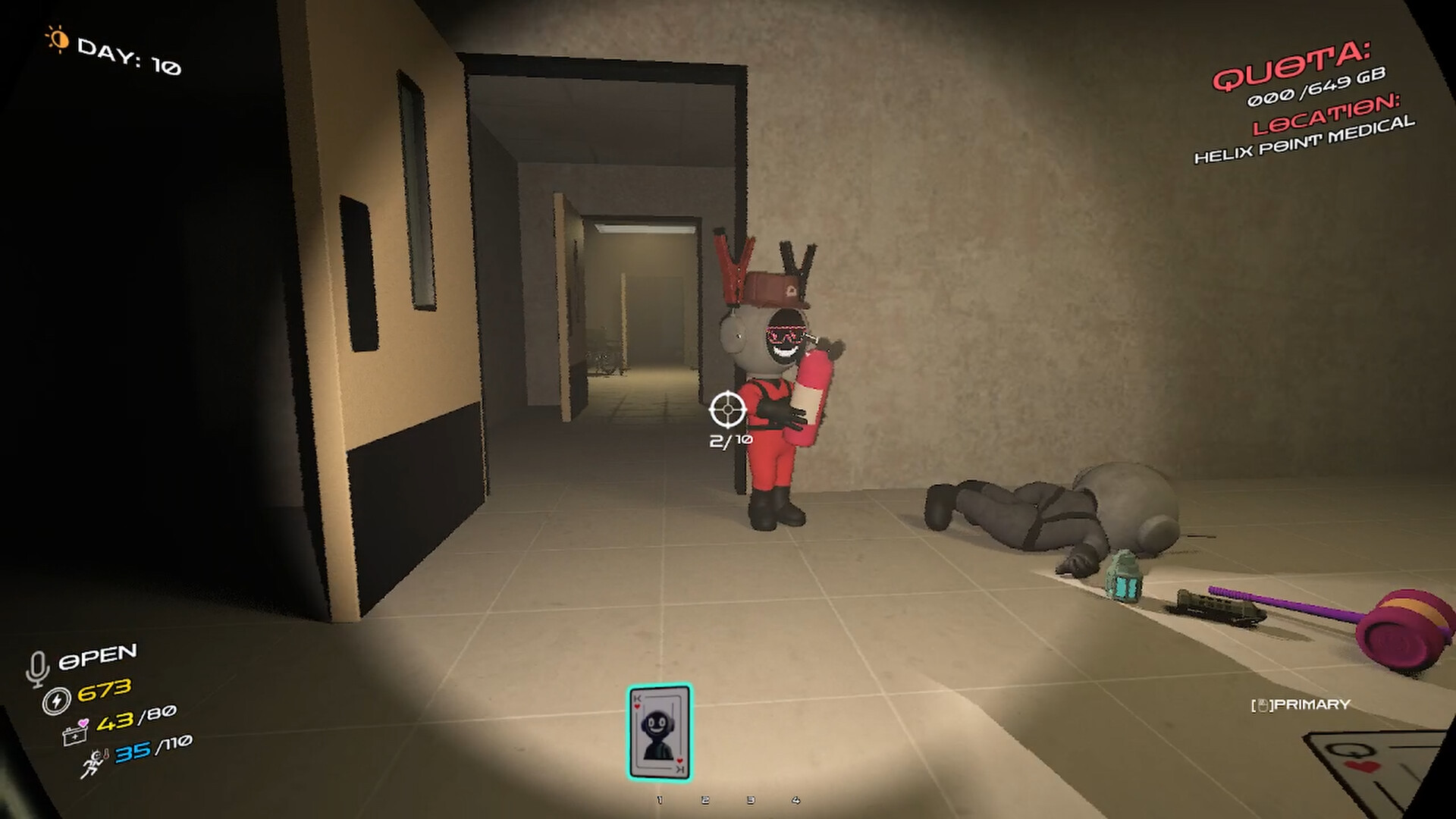
A downed teammate awaits rescue inside Helix Point Medical, one of the game's facility maps.Image: Liminal Arc Studios via Steam