Game review
Labhorror Review
6.3 / 10
- Developer
- Gamesforgames
- Publisher
- Gamesforgames
- Released
- 2 September 2026
- Platforms
- ["Windows"]
- Genre
- Horror
A Contractor, Not a Hero
Labhorror opens with a premise that immediately sets it apart from most first-person horror: you're not a chosen one, a paranormal investigator, or an unlucky bystander. You're a prisoner who's taken a job. The mansion you're sent into is framed, in the game's own words, as "an extraction job" — enter, recover three artifacts, walk back out, and a corporation wipes what's left of your sentence. That corporate-contractor framing does real work for a solo-developed horror game on a modest budget: it explains, in-fiction, why you have no weapons and no backup, and it gives the whole ordeal a bureaucratic coldness that's more unsettling than a typical "cursed house" setup. The fine print mentioning an "outsider on the premises, armed" and the flat, clinical way the briefing describes him — he can't stand direct light in the eyes, and that's the only useful thing you're told — reads like something out of a workplace safety memo for a job nobody should be doing.
A Flashlight That Is Also a Clock
The mechanical spine of Labhorror is deceptively simple: a 200-by-200-metre labyrinth of five-metre corridors under 4.6-metre ceilings, sixteen halls, 145 lamps, and one man with an axe who never stops moving. You have no weapon in the traditional sense. Your flashlight functions as your only defense — a six-second burst of protective light that pushes the hunter back, followed by two full minutes of total darkness while it recharges. That's an unusually punishing resource curve for a horror game, and it's the detail that most clearly signals this isn't a game about winning fights; it's a game about never needing to have one in the first place. Spend the light wrong, on a false alarm or a moment of panic, and the next encounter finds you defenseless for two minutes in a building the size of a city block.
The hunter himself is built around a genuinely tense set of rules rather than scripted jump-scare timing: he hunts by sight and by sound, reacting to sprinting footsteps, a dropped bottle, or any noise you make close enough for him to register. One reviewer's account of the loop captures the tension well: "He reacts dynamically to sprinting, dropped items, and environmental noise. You have no weapons, but your flashlight's powerful beam can briefly [blind him]." The system rewards patience and punishes haste in a way that feels earned rather than arbitrary — you're not dying to a scripted encounter, you're dying because you made noise you didn't need to make.
Wardrobes, Glowsticks, and Noise as a Tool
Beyond the core light-and-hide loop, Labhorror layers in a handful of systems that give the labyrinth some texture. Sixty wardrobes are scattered through the corridors, each one a place to duck into and simply wait, listening to the floor creak as the hunter passes — a mechanic that turns silence itself into the game's tensest moment. Since the labyrinth "does not remember your path," the game hands you an elegant solution: infinite coloured glowsticks, up to two dozen burning at once, that let you build your own breadcrumb trail through a space with no map and no loading screens. One reviewer specifically called out this detail: "Mark your path with glow sticks so you don't get lost in the dark." It's a smart piece of environmental design that turns a potential frustration — getting lost in a genuinely enormous, continuous space — into a small strategic decision every player makes for themselves.
Noise traps (24 of them) let you actively redirect the hunter away from where you need to go, while 36 water bottles keep your stamina from giving out mid-sprint. A tracker gives you ten seconds of directional guidance toward the scrolls once every minute, and flips to point you toward the exit once all three are collected — a clean, minimal-UI way of giving the player just enough information to keep moving without turning the hunt into a straightforward waypoint chase. Several reviewers drew comparisons to Backrooms-style liminal horror, with one summing the whole experience up in four words: "The Smoker's Backrooms." Whether that's meant as straightforward praise or dry commentary on the setting's disorienting sameness, it's a fair shorthand for the kind of dread the game is going for.
A Small, Quiet Launch
The review pool for Labhorror is genuinely tiny — eight English reviews, all positive, with playtimes ranging from ten minutes to over two hours — which makes it hard to say with real confidence how the game holds up across repeated runs, or whether the labyrinth's "no loading screens, one continuous space" design stays interesting once its novelty wears off. There's no news history on record for the game either, which means there's no visible evidence yet of post-launch patches, balance tweaks, or developer responsiveness to player feedback, unlike several other September releases that shipped quick fixes in their first week. That's not necessarily a red flag for a solo-developed $9.99 horror game with this few reviews — plenty of small horror titles ship complete and stable — but it does mean prospective buyers are relying almost entirely on a handful of early, largely brief accounts rather than a track record.
What those accounts agree on, consistently, is atmosphere. "The game captivates with its down-to-earth atmosphere: you are not the savior of the world, but a simple contractor serving out his sentence in a gigantic, frightening labyrinthine mansion," one reviewer wrote, and that's really the throughline across the whole pool — not jump-scare intensity, but a sustained, grounded dread built from scale, silence, and the constant awareness that your only real weapon runs out of charge.
Verdict
Labhorror takes a premise that could easily have been a gimmick — no weapons, one flashlight, one relentless hunter — and builds a surprisingly disciplined resource-management horror loop around it, backed by a genuinely evocative, specific setting: a corporate extraction job in a mansion the size of a city block. The wardrobe-hiding, glowstick-marking, and noise-trap systems all work together coherently rather than feeling bolted on, and the writing throughout the store page and the reviews alike leans into a bleak, bureaucratic framing that sets it apart from more generic haunted-house horror. The catch is simply that almost nobody has played it yet: eight reviews and no news history make this a genuine gamble on a solo developer's first outing rather than a known quantity. For horror fans drawn to tense, hide-and-seek-style extraction design and willing to be an early adopter, Labhorror looks like a smart, focused ten dollars. Everyone else might reasonably want to wait for the review pool, and the developer's post-launch track record, to grow.
Screenshots
-
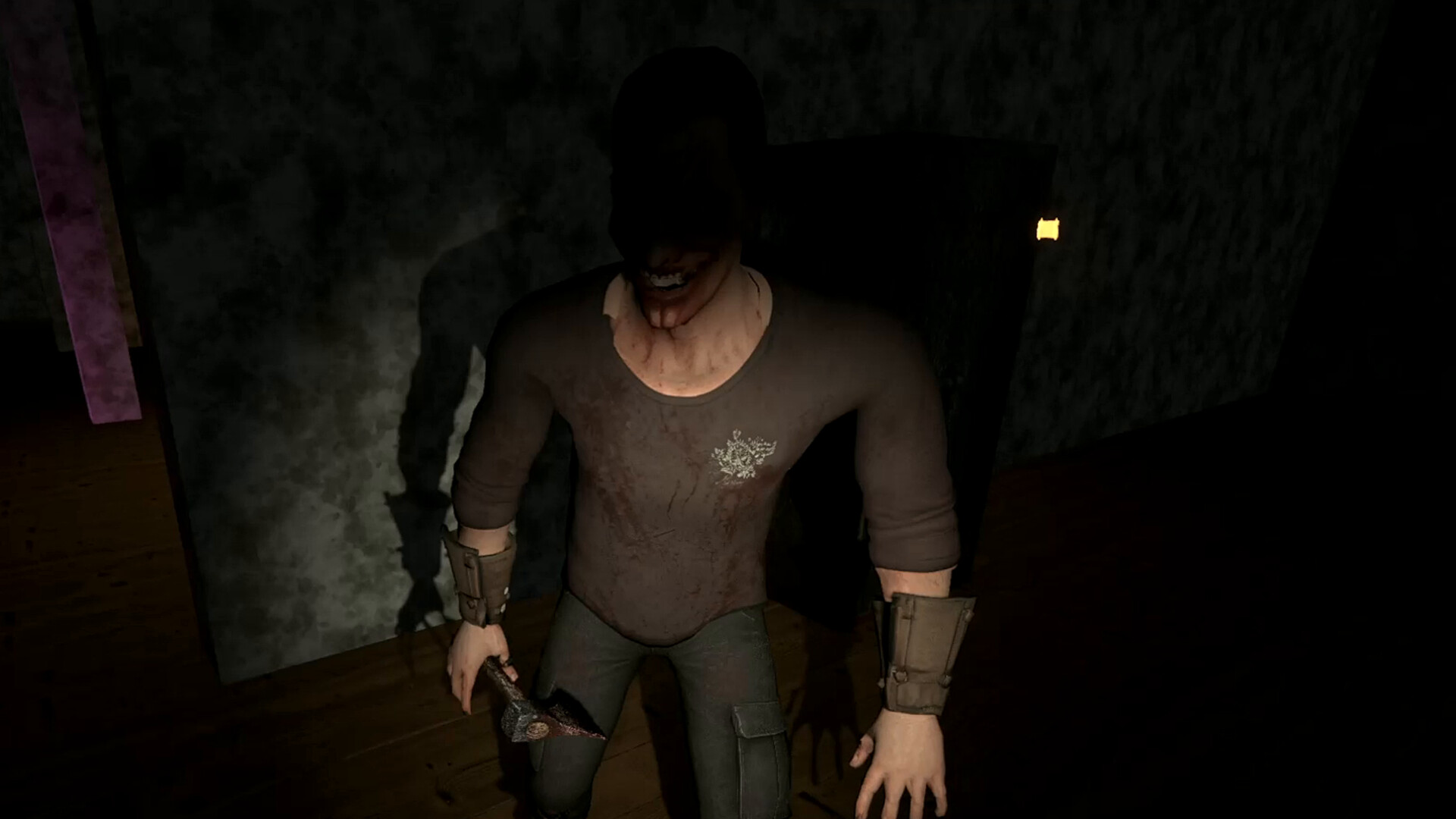
The hunter's face stays shadowed even at close range, a small design choice that keeps him more unsettling than a typical clear-cut slasher villain.Image: Gamesforgames via Steam -
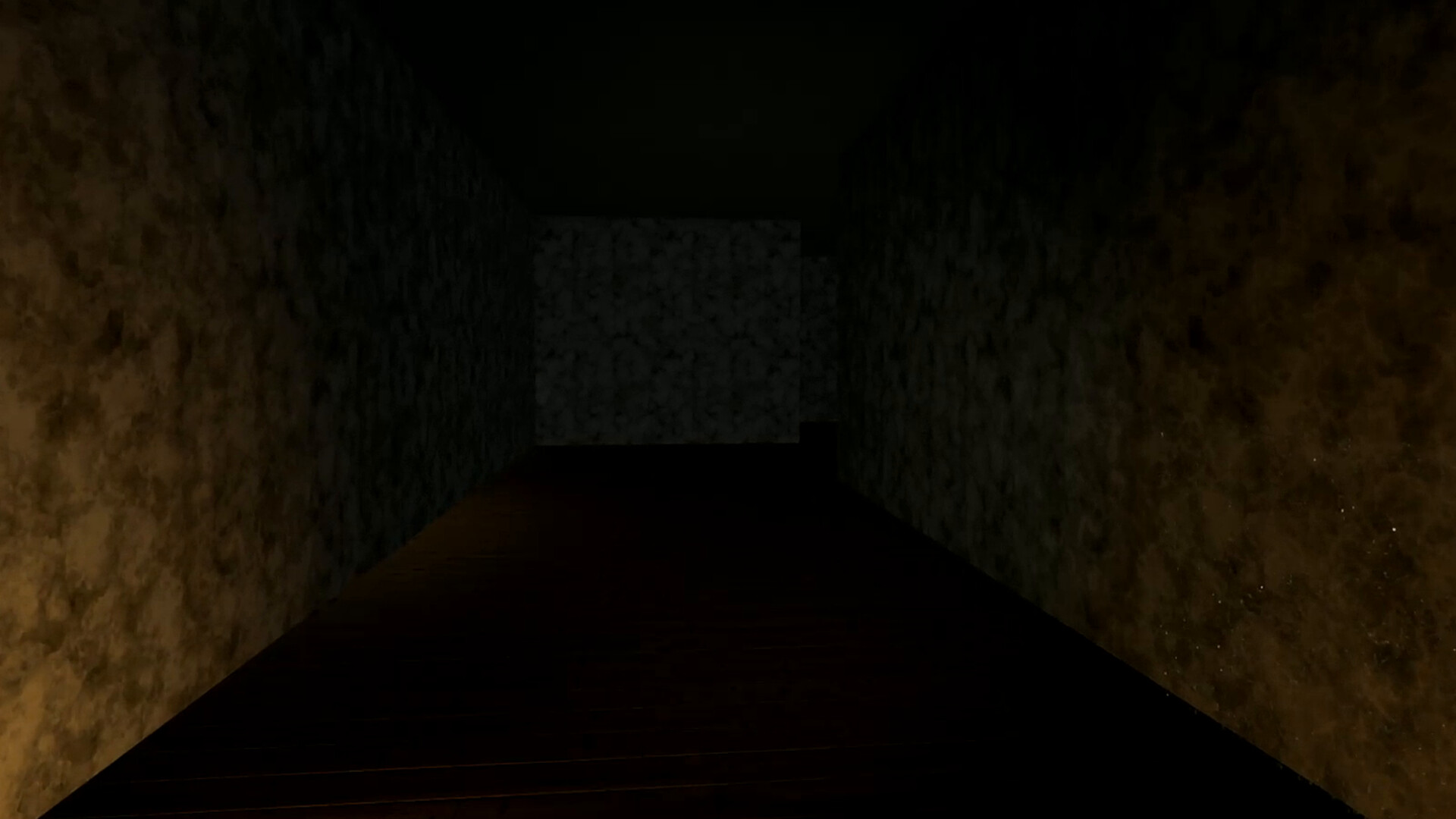
Most of the mansion looks like this: a corridor swallowed almost entirely by darkness, with only the faintest wall detail visible without a light source.Image: Gamesforgames via Steam -
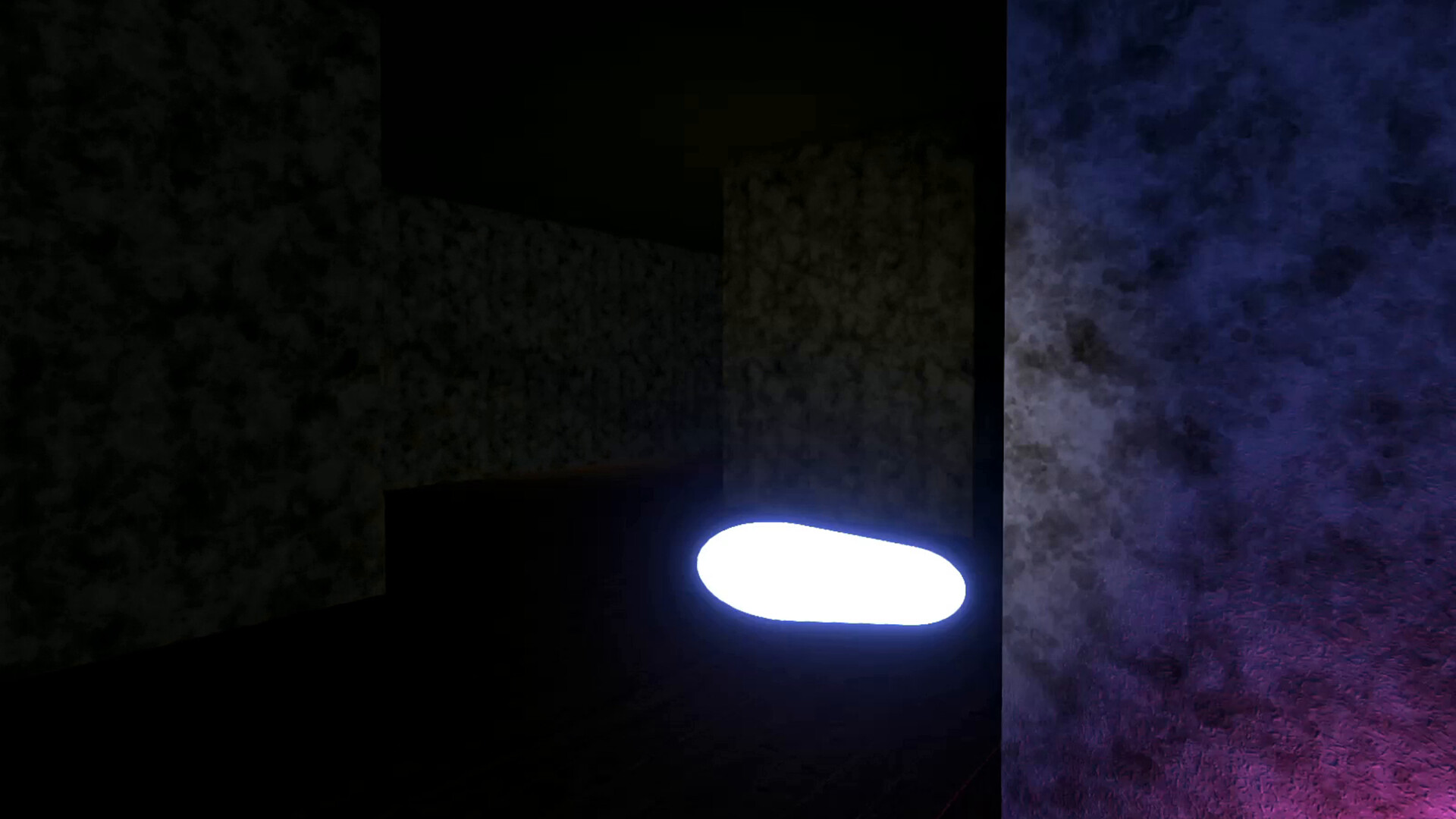
A single glowstick throws just enough light to mark a corridor junction, part of the breadcrumb trail players lay through the labyrinth's 200-metre span.Image: Gamesforgames via Steam