
Game review
Liminal Heist Review
6.2 / 10
- Developer
- Gamesforgames
- Publisher
- Gamesforgames
- Released
- 2 September 2026
- Platforms
- ["Windows"]
- Genre
- Horror
A Heist That Goes Wrong the Moment the Door Locks
Liminal Heist opens with a simple, almost mundane premise gone immediately sideways: you break into an abandoned mansion to steal something, and the door locks behind you. The hallway past the foyer is six meters long. You've been walking it for twenty minutes. Something else is in the house — and unlike most horror-game antagonists, it can't see you at all. It hunts entirely by sound. That single design decision is the whole game, and developer Gamesforgames builds a genuinely disciplined system around it rather than treating "sound matters" as a vague atmospheric gesture.
Notably, Gamesforgames released Liminal Heist the same day as its other September horror title, Labhorror — both $9.99, both first-person, both built around a lone unarmed-or-nearly-unarmed protagonist evading a single relentless threat in a sprawling, disorienting house. The two games share a clear creative throughline (sound-and-light survival horror, procedurally hostile spaces) while landing on genuinely different core mechanics: Labhorror's tension comes from a flashlight that doubles as a rechargeable weapon, while Liminal Heist's comes from a granular, decibel-driven noise model that governs almost everything you do.
Sound as a Currency, Not a Gimmick
The core sell of Liminal Heist is what the game calls "an honest sound model": every action has a specific loudness cost, walls muffle noise by more than half, and the hunting creature walks toward noise rather than toward a scripted silhouette or line-of-sight trigger. A crouched step is nearly silent. A full sprint down a straight corridor, by the developer's own description, is "suicide." Knocking a jar off a shelf or shattering a bottle registers as real, calculable risk rather than a random jump-scare trigger. One reviewer who engaged with the system in real depth called it out specifically: "The sound physics are perfect — every step or object hit has its own decibel value, and the walls realistically muffle noise, forcing you to calculate every move." That's a meaningfully different kind of tension than most horror games offer, because it turns ordinary movement decisions — do I sprint through this doorway or ease it shut behind me — into the actual gameplay, rather than dressing around a chase sequence.
Doors reinforce the same idea: a shut door muffles sound almost like a wall, so closing them behind you is a genuine tactical choice, and the creature doesn't open doors politely — it smashes them off their hinges, leaving wreckage that doubles as a readable trail of where it's already been. It's a small detail, but it's the kind of environmental storytelling that rewards players paying close attention rather than just reacting to whatever happens on screen.
Finding Your Way Through a House That Doesn't Want You To
Liminal Heist's objective is concrete: find three blueprint sheets and five teleporter parts, carry them to a pad in the great hall, and power it up without stepping out of the activation circle. The house itself is procedurally generated every run, using deterministic seed-based generation — type a word, get the same mansion back, which gives the game a built-in way to share or replicate specific layouts. The catch is that the generator deliberately confuses the player with repeating rooms, and the game gives you exactly one reliable way to fight that confusion: a spray can with genuine freehand wall-painting, letting you mark your own path exactly as your hand moves the cursor. Glow sticks mark dead ends with light, and craftable sound traps — assembled from an alarm clock, a spring, and a wire — go off after eighteen seconds and drag the creature to the far end of the house, buying a window to move freely.
Not every reviewer found that navigation layer sufficient. One brief but pointed review captured the frustration directly: "It's too complicated here no helpers you don't know where to go you're just walking in circles." That's a fair complaint about a game whose central hook — a labyrinthine, deliberately repetitive house — is also its biggest source of potential frustration for players who don't lean into the spray-can marking system early. The tools are there, but the game doesn't hold your hand into using them, and a player who skips the marking mechanic entirely is signing up for exactly the disorientation that reviewer describes.
Closets, Flashlights, and Two Shotgun Shells
When avoidance fails, Liminal Heist gives players a short, escalating toolkit rather than a straightforward fight option. Closets offer a hiding spot, contingent on holding your breath — a detail that keeps even a "safe" hiding moment tense rather than a free pause. A flashlight can blind the creature the instant it howls, buying a critical few seconds. And somewhere in the house lies a shotgun with exactly two shells — a genuinely last-resort option rather than a viable primary strategy, underlining that this is fundamentally an evasion game with a safety valve, not a combat game with stealth options bolted on.
Technically, the game is built entirely in WebGL2 with no third-party engine — every texture, piece of furniture, and frame generated by code at launch, according to the store page. That's an unusual and ambitious technical choice for a $9.99 indie horror release, and it's consistent with the same developer's pattern on Labhorror: small teams building bespoke systems rather than leaning on off-the-shelf horror-game templates.
Verdict
Liminal Heist takes "the monster can hear you" and builds an entire, carefully calibrated survival system around it, with a decibel-driven sound model that reviewers specifically single out as unusually well thought through. The procedural mansion and the spray-can navigation tool are a clever pairing, even if at least one player found the labyrinthine layout more disorienting than tense without leaning into that system early. As with Gamesforgames' companion release Labhorror, the review pool here is small — eight English reviews, all positive — and there's no visible post-launch news or patch history yet to speak to how the game holds up over time. But the design fundamentals are sound, genuinely distinct from most "sight-based" horror games on the market, and worth a look for horror fans who want tension built from careful movement rather than scripted scares.
Screenshots
-
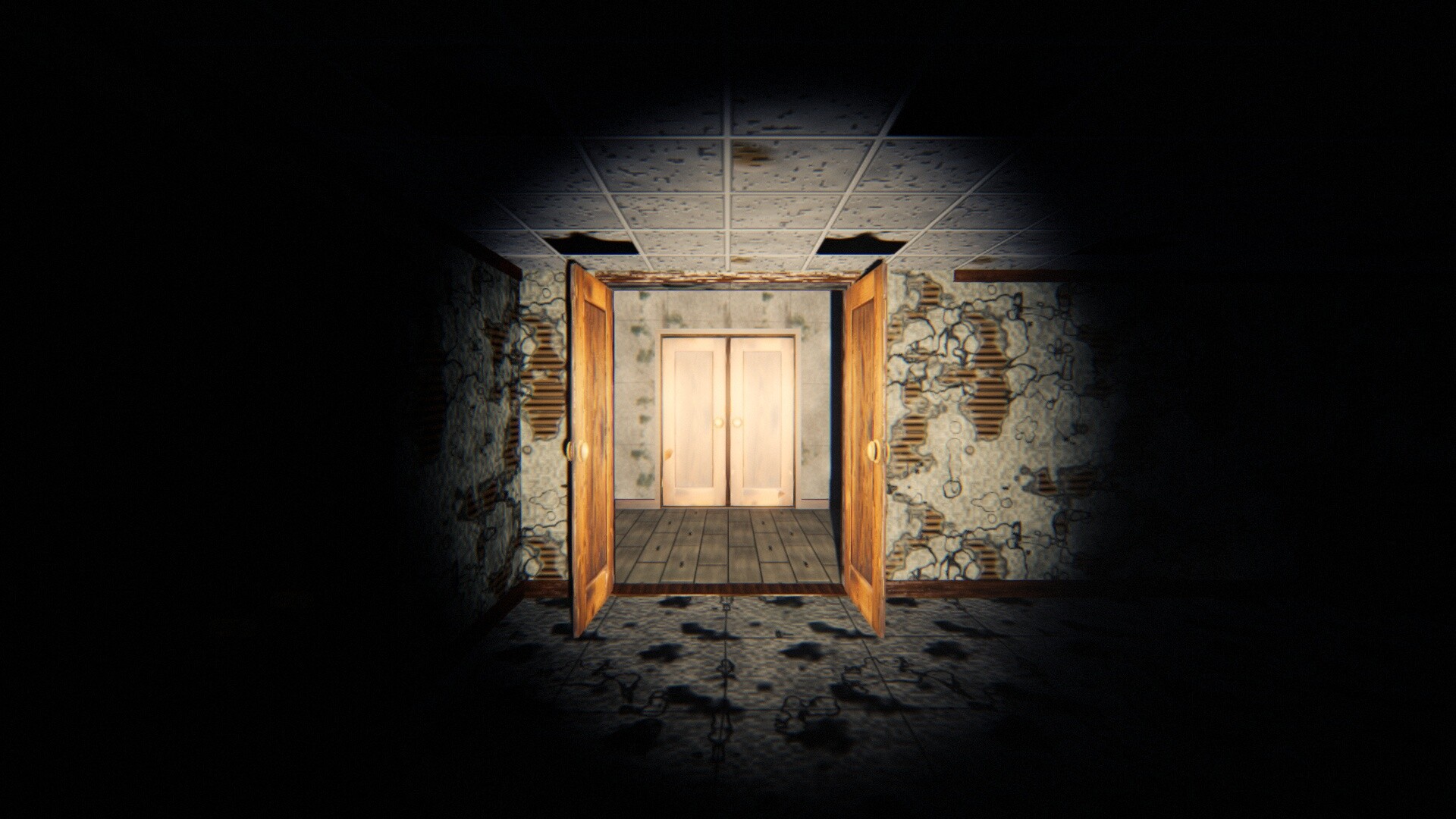
Light spilling through one open doorway is often the only visible landmark in an otherwise pitch-black corridor.Image: Gamesforgames via Steam -
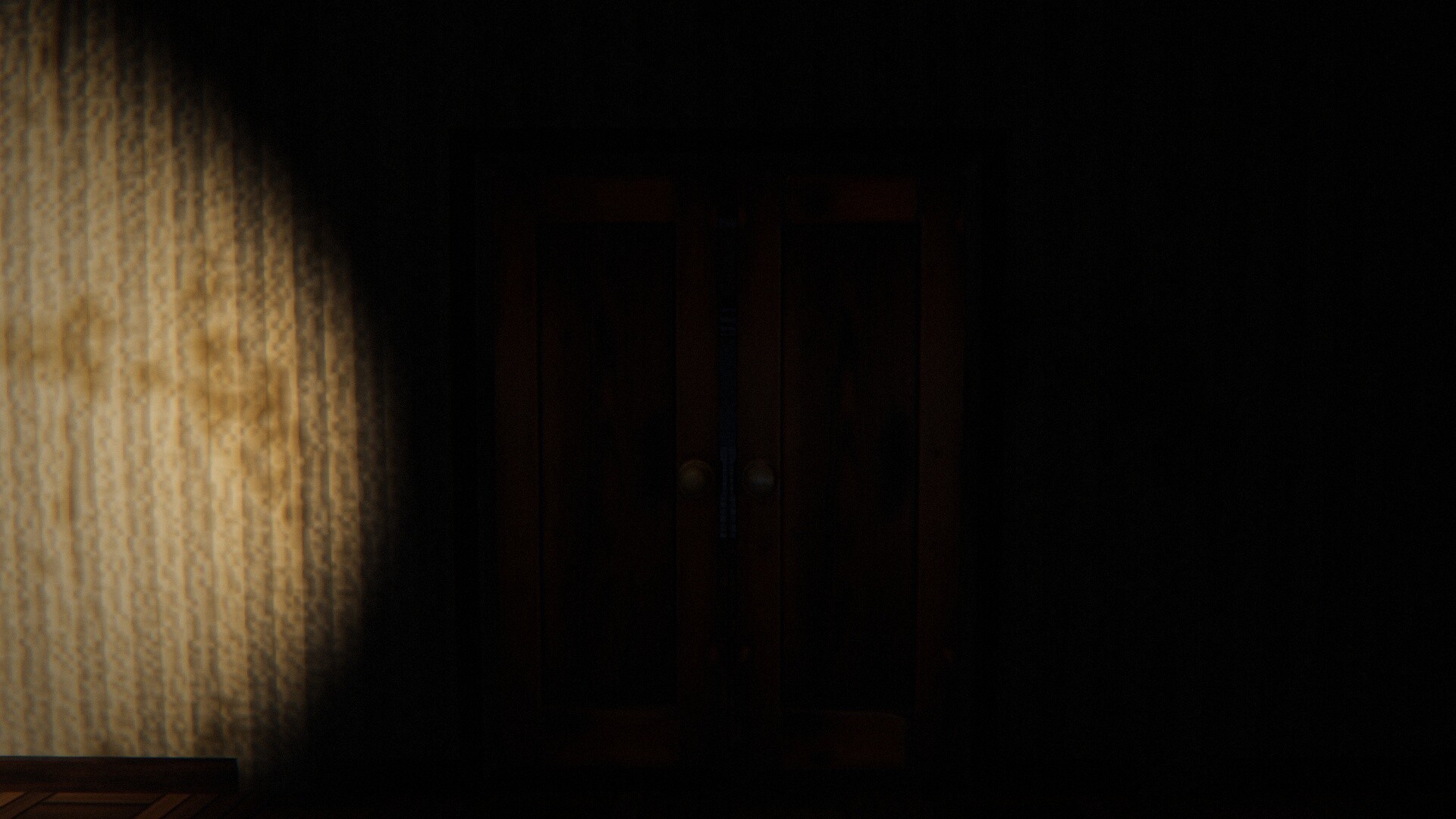
Most rooms sit at the edge of visibility, with only a faint light patch and a door's outline distinguishable in the gloom.Image: Gamesforgames via Steam -
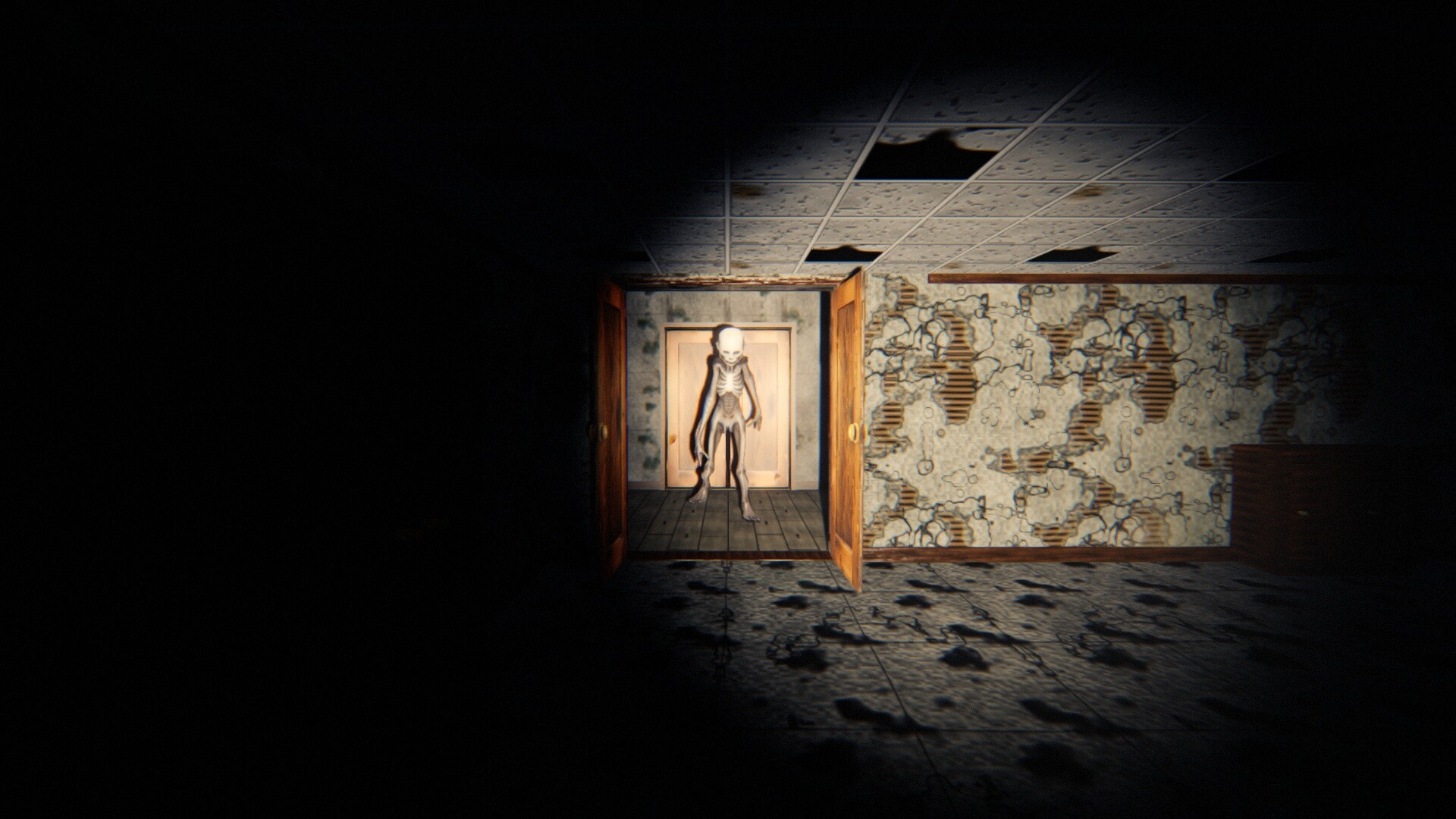
The creature itself appears rarely on screen — a gaunt, skeletal figure lit starkly in a doorway, closer than any player wants it to be.Image: Gamesforgames via Steam