Game review
Divider Dave Review
7 / 10
- Developer
- Louis Vidal 'Pignomaster' and José-Manuel Girona 'Gringo_Charlatan'
- Publisher
- Chancla Interactive
- Released
- 2 September 2026
- Platforms
- ["Windows", "Linux"]
- Genre
- Puzzle
Why Be Alone When You Can Be By Yourself
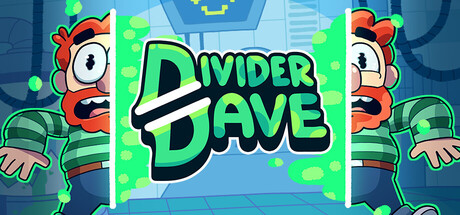
Divider Dave opens on its title character waking up in a pod with exactly one skill and no memory of how he got it: he can copy himself. That's the entire premise, delivered with the tagline "Why be alone when you can be by yourself?" and it's a fitting introduction to a puzzle-platformer that treats cloning less as a sci-fi mystery and more as a slapstick toolkit. Between Dave and the exit stand lasers, crushing blocks, and doors that, as the store page puts it, "have no business being locked." Every copy of Dave is simultaneously a tool, a platform, and — frequently — a sacrifice, and the game seems entirely at peace with that arrangement. "He doesn't mind," the marketing copy repeats more than once. "Probably."
This is the debut release from Chancla Interactive, a two-person studio consisting of Louis Vidal and José-Manuel Girona, and it's a genuinely accomplished first outing. The reception bears that out cleanly: every one of the eight English-language reviews at launch is positive, and the broader all-language pool sits at 18 positive out of 19 — an unusually clean reception for any indie debut, let alone a two-person studio's first game.
Cloning as a Full Toolkit, Not a Gimmick
The mechanical hook of Divider Dave is refreshingly deep for such a compact premise. Players don't just spawn a clone and move on — they launch, stack, and squash their doubles to reach places a single Dave never could, using a "Davebox beam" to zap clones into crates and shove them around the level. Add in lasers to dodge, detection zones to sneak past, tractor beams to ride, and portals to teleport through, and the puzzle vocabulary grows steadily across the game's 50-plus handcrafted levels, spread over four distinct zones: the Lab, the Vents, the Warehouse, and the Office.
Reviewers consistently praised how that mechanical complexity gets introduced. "The mechanics are not thrown at you all at once, but are introduced progressively," one player noted, while another appreciated that "every level have something new or a new way to use a mechanic." That kind of steady, deliberate pacing is exactly what separates a good puzzle game from a frustrating one, and it's the throughline across nearly every review in the pool — the difficulty curve builds real confidence rather than spiking unpredictably. As one reviewer summarized: "Great balance between hard enough levels but not enough to make you want to give up."
The one recurring mechanical complaint concerns the physical handling of stacked clones — specifically the "Davebox" crates. One reviewer with nearly seven hours logged put it plainly: "A bit clunky with 'Dave boxes' especially when stacking them on top of each other, when trying to jump on top you sometimes end up pushing one instead." It's a narrow, specific complaint rather than a broad criticism of the puzzle design, but it's a real one, and it's worth flagging for players who expect pixel-precise platforming alongside the puzzle logic.
A Sinister Undertone Beneath the Slapstick
What elevates Divider Dave beyond a straightforward mechanics showcase is the thread of unease the developers weave through the facility Dave is trapped in. A shadow watches from the vents. Mysterious "box-men" bear an unsettling resemblance to Dave himself. Somewhere above, a man in a suit laughs in an office the player hasn't reached yet. None of this derails the game's comedic tone — reviewers describe the vibe as closer to a "Dexter & Didi" cartoon than a horror story — but it gives the 50-level structure a narrative pull that a pure mechanics-driven puzzle game often lacks. One reviewer specifically credited the soundtrack, composed by Leo "Tolgy" Cakmak, for reinforcing that cartoon-lab atmosphere: "there is a 'Dexter & Didi' or cartoon lab feel that is so good!"
The presentation backs up that tone throughout. The game's expressive, hand-animated pixel art treats every squash, zap, and untimely clone death as a small comedic beat rather than a sterile puzzle-reset animation, and the game ships fully localized in 19 languages — an ambitious commitment for a first-time two-person studio's debut release.
A Small Studio That Kept Working After Launch
Divider Dave's development history shows real discipline for a first-time team. The demo went through a significant visual overhaul in April 2026 — new pixel art by Ryan Kamos, a new capsule by Jon Nielsen — and was relaunched with 19-language localization the following month, well ahead of the September full release. The game then ran through Steam Next Fest in June, explicitly soliciting player feedback that the developers say shaped the final product. One reviewer who played that demo months earlier and returned for the full release confirmed the payoff: "The developers have added a lot of interesting mechanics and polished the game overall. You can immediately see how much progress has been made since the demo."
That care continued after launch. A hotfix went out the day after release addressing monitor-selection issues, volume-slider ranges, and two specific broken level layouts. Two weeks later, the developers added 21 Steam achievements — "mostly silly puns and movie references," per their own description — retroactively unlocking for players who'd already finished the game. It's a small, considerate touch that signals a studio still paying attention well after the initial launch window, consistent with the studio's own candid post-launch note describing this as "our first game" from "a two-person studio."
Verdict
Divider Dave is a confident, well-paced puzzle-platformer that makes its central gimmick — self-cloning as a full toolkit rather than a one-note trick — feel genuinely fresh across 50-plus levels and four distinct zones. The near-unanimous positive reception isn't an accident: the difficulty curve is carefully tuned, the pixel art and soundtrack build real atmosphere around a slapstick premise with a sinister undercurrent, and the two-person studio behind it has shown real post-launch attentiveness, from day-one hotfixes to a considerate achievements rollout. The clone-stacking controls have some rough edges that a couple of reviewers flagged directly, but nothing that derails the experience. For seven dollars, particularly during its launch discount, Divider Dave is an easy recommendation for puzzle-platformer fans looking for a tight, funny, and surprisingly well-supported debut.
Screenshots
-
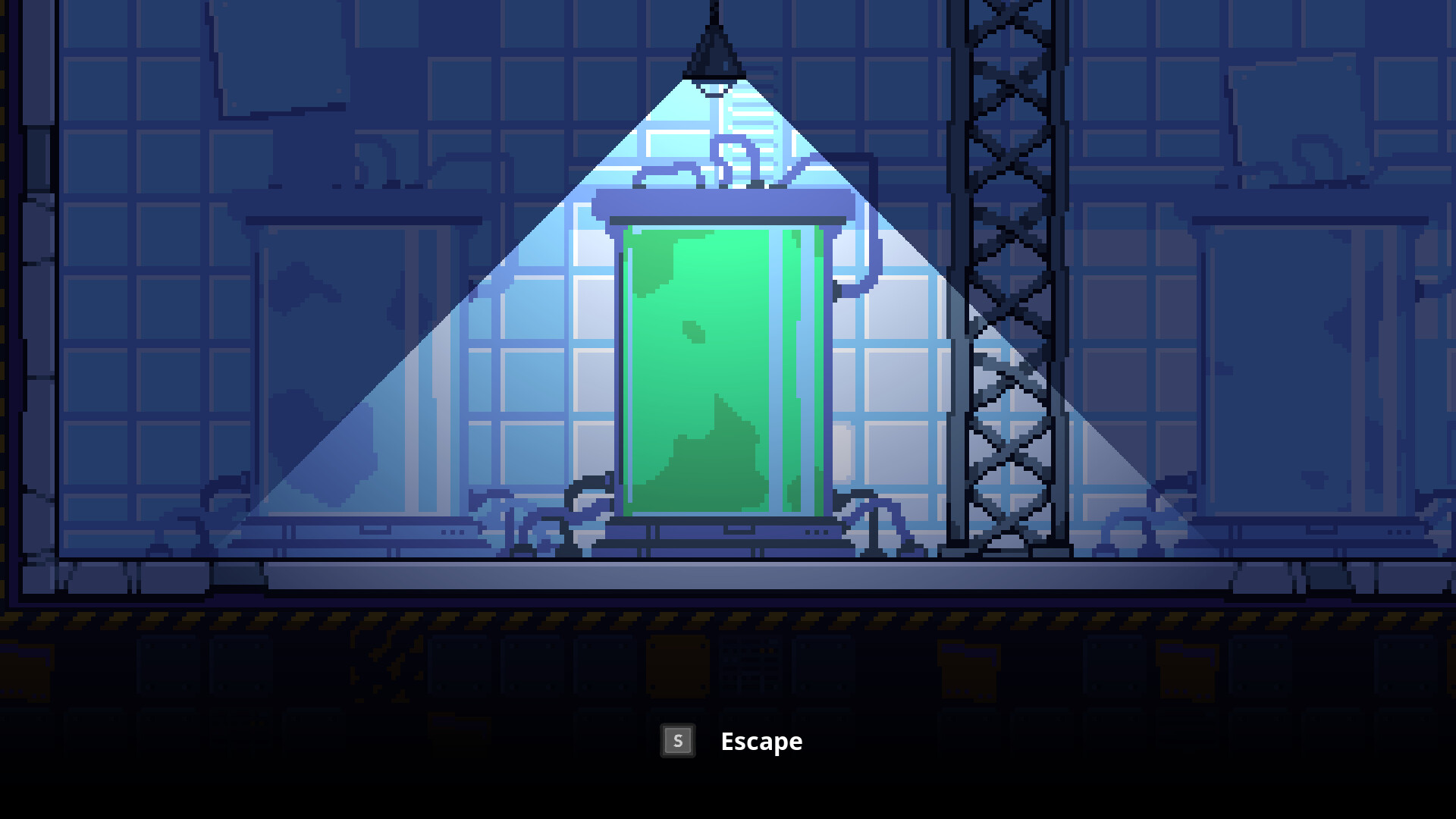
A glowing cloning pod sits at the center of one early lab room, the source of every extra Dave the player creates.Image: Chancla Interactive via Steam -
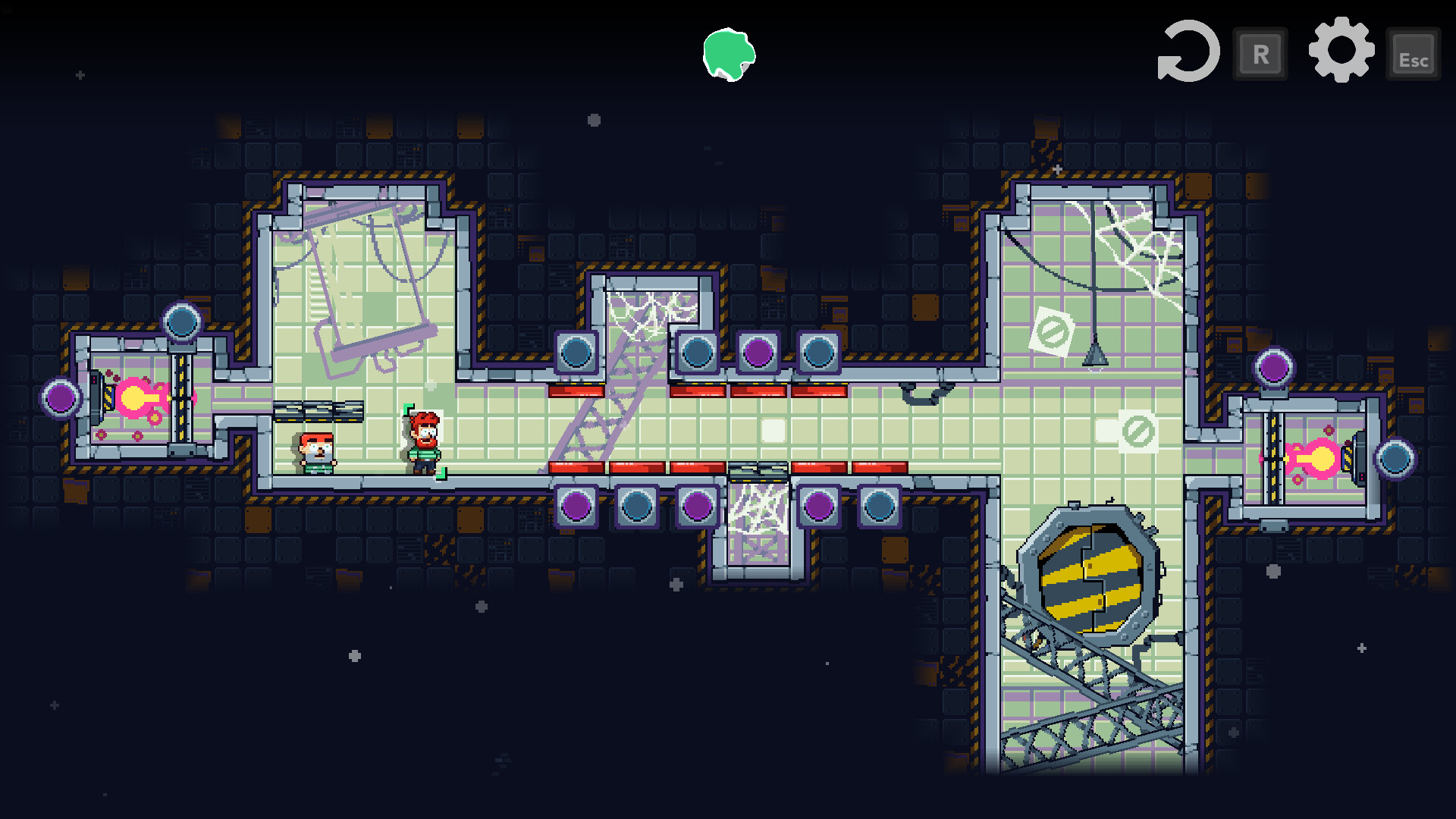
Puzzle rooms sprawl wide, mixing pressure-plate buttons, ladders, and a sealed hatch that clearly needs solving to open.Image: Chancla Interactive via Steam -
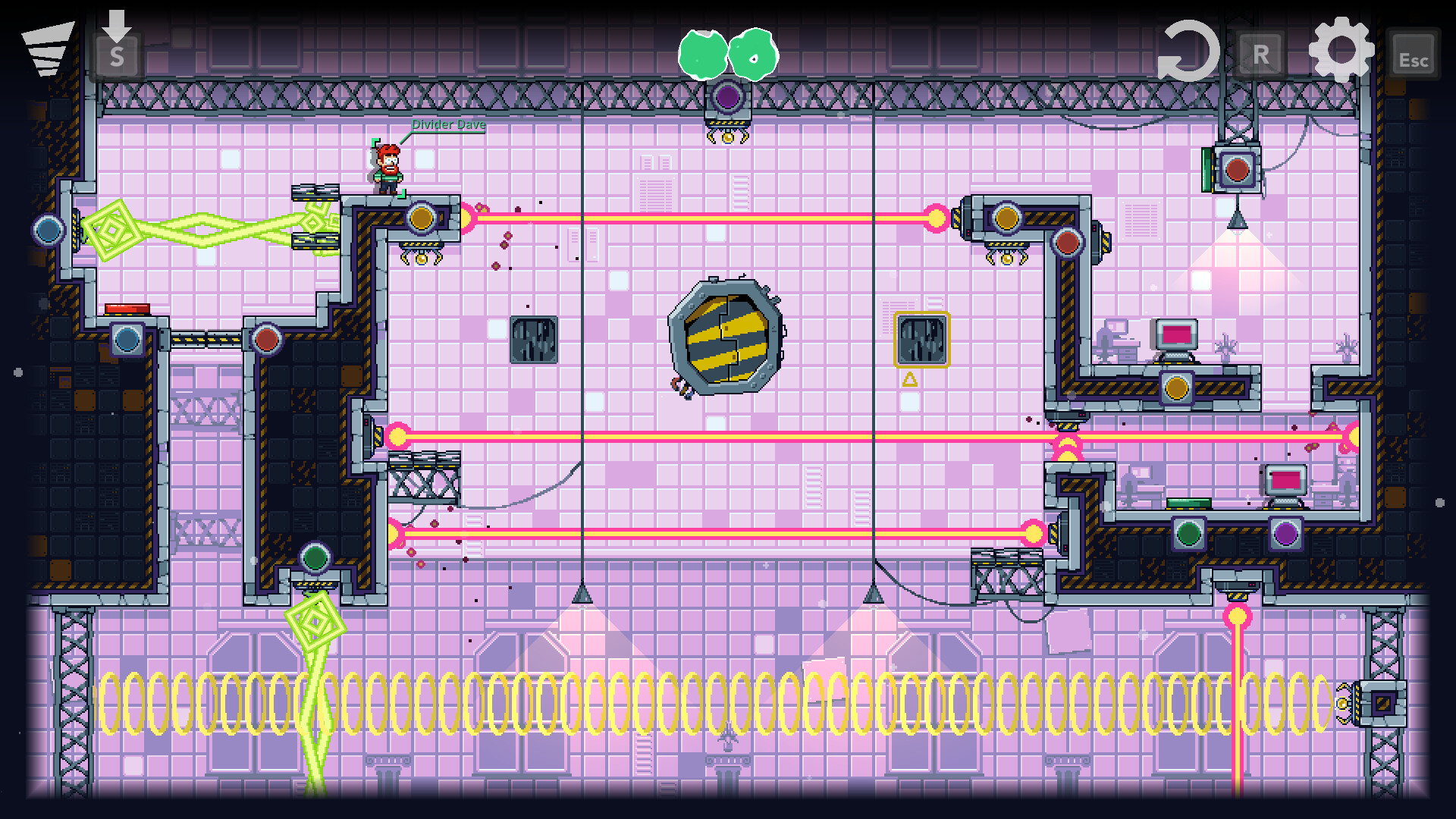
Later rooms stack multiple laser beams, buttons, and a portal ring into a single dense puzzle, with two spare clones tracked in the top HUD.Image: Chancla Interactive via Steam