Game review
MONOWAVE Review
6.5 / 10
- Developer
- Studio BBB Inc.
- Publisher
- Studio BBB Inc. / Phoenixx Inc.
- Released
- 16 September 2026
- Platforms
- ["Windows", "Mac"]
- Genre
- Adventure
Four Emotions, One Small Spirit, and a Withering Tree
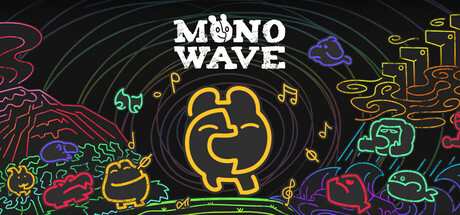
MONOWAVE casts the player as Mono, a newborn guardian spirit born to protect four scattered Emotions, Anger, Anxiety, Happiness, and Sorrow, after they vanish from the Prism Tree that once kept them in balance and plunge the world into chaos. Each emotion grants a distinct traversal power: Happiness lets Mono jump higher, Sorrow melts the body down to slip through narrow gaps, Anger fuels a wall-jump, and Anxiety heightens awareness to dodge hazards and read difficult terrain, and puzzles are built around swapping between these states on the fly. The whimsical, hand-drawn art style renders each of the four realms in glowing, neon-lined color palettes against dark backgrounds, and the game supports local co-op, with a second player controlling Prism, a flying companion who can't pass through walls but moves more freely than Mono and sees the world differently in shared puzzle spaces. Developed and published by Studio BBB Inc. alongside Phoenixx Inc., MONOWAVE launched on Steam on September 16, 2026, priced at $9.99, for Windows and Mac, after more than two years on the convention circuit, with demo builds shown at Steam Next Fest, BitSummit, gamescom, Tokyo Game Show, and BIC Festival going back to mid-2024.
Accessibility is a genuine focus alongside the puzzle design: the game ships with two difficulty levels, color-alternative and contrast options, an assist mode that can remove damage limits, and both keyboard-only and full controller support.
A Small, Positive Launch After a Long Convention Run
MONOWAVE has drawn 18 reviews so far, with 16 positive and 2 negative for an 89% "Positive" approval rating, spanning Korean, English, Simplified Chinese, German, Japanese, and Brazilian Portuguese players. Several reviewers explicitly describe having followed the game for years through its convention demos, some collecting merchandise along the way, giving this small launch pool an unusually long emotional runway going into release.
A Fresh Hook, Beautiful Art, and a Surprisingly Deep Co-op Mode
Reviewers consistently single out the core emotion-swapping mechanic as the game's strongest idea. One English-language reviewer says the concept of emotions influencing how the environment reacts feels really fresh and original, while another describes feeling genuinely sad watching what the Sorrow ability does to Mono's body even while enjoying the mechanic itself. A German reviewer compares the game directly to Nintendo's recent Kirby titles, dubbing it "Kirby-Lite," and says the neon-lit world-building alone is worth the roughly nine-euro price for several hours of fun, while praising some of the puzzles as genuinely challenging. A detailed Simplified Chinese review breaks down the presentation approvingly, describing the game's hand-drawn, colored-line art as clean and gentle without feeling oversaturated, paired with relaxing, cheerful music that together achieve the calming effect the developers were clearly going for. A Japanese reviewer calls it the kindest game they've played in a while, praising how carefully the four emotions are woven into the actual mechanics rather than used as a surface theme, and says the experience left them reflecting on understanding others' feelings and accepting their own. The co-op mode draws specific, detailed praise: one Simplified Chinese reviewer describes pulling a friend in once they discovered local two-player support, splitting Mono and the flying Prism between them, and being surprised at how meaningfully the two roles differ, citing a deep-sea section where Prism's screen stays lit while Mono's stays pitch dark except for nearby light, and a spiral seashell object that turns out to be a usable communication device rather than scenery. The same reviewer details puzzle mechanics discovered through play, like scaring a giant clam into moving away from whichever side Mono approaches from in order to reposition it against ice blocks, and calls the overall co-op experience very fun despite some early confusion. A Korean reviewer who cleared the first stage on hard difficulty says the cute art hides a spicier-than-expected challenge that demands both quick thinking and platforming skill, and comes away satisfied with the sense of accomplishment from solving it.
Floaty Jumps, Repetitive Instruction, and a Keyboard That Overshoots
The negative and mixed reviews cluster around how the movement actually feels to control. The more detailed negative review, written in Simplified Chinese, says the jump physics feel so off it made the reviewer question reality, comparing the sensation to leaping on the moon, and singles out the wall-jump specifically as inexplicably strange; after finishing the first chapter, they call the puzzles boring and overly padded with long backtracking just to fetch a color ability, and question what the emotion theme is even adding beyond a label, arguing the same game would work if the protagonist were simply reskinned as a painter who changes colors. A Brazilian Portuguese reviewer who otherwise praises the puzzle design and the way music reinforces each emotional transition flags a more specific technical complaint: movement precision, especially on keyboard, where the character appears to travel further than the input actually indicates, making tight platforming sections harder than they should be. The other negative review, written in Korean by a longtime fan who'd collected the game's merchandise at conventions, describes a more existential disappointment: the puzzle-then-picture-explanation loop repeats for over 30 minutes without ever building a sense of mastery, leaving them following moment-to-moment instructions rather than learning transferable rules, and says that after finally checking a solution through assist mode, they felt more like they'd finished homework than solved something satisfying. A separate, more casual Korean review admits enjoying the game but jokes about repeatedly getting lost and going in circles, warning other players to avoid a particular late-game area outright, while a Chinese reviewer flags occasional crashes during the more punishing anger-themed platforming sections alongside their generally positive impression.
Verdict
MONOWAVE pairs a genuinely thoughtful hook, four emotions that reshape both a character's abilities and the world's reactions around them, with a warm, hand-drawn visual style that reviewers across several languages single out as the game's clearest success, and its 89% approval rating after a long, well-attended convention run reflects real affection built up over more than two years of public demos. The local co-op mode in particular earns detailed, enthusiastic praise for how differently its two roles actually play, right down to shared puzzles that look completely different depending on which half you're controlling. Set against that is a puzzle-platformer whose actual feel divides opinion: a minority of reviewers report floaty, imprecise jumping and keyboard movement that overshoots its input, and at least one convention regular found the moment-to-moment instruction loop repetitive rather than rewarding once the charm of the art wore thin. At $9.99 for several hours of puzzle-platforming with real accessibility options built in, MONOWAVE is a reasonable pickup for players drawn to its emotional premise and its Kirby-adjacent visual charm, though anyone sensitive to floaty platforming controls should weigh that specific complaint before buying in.
Screenshots
-
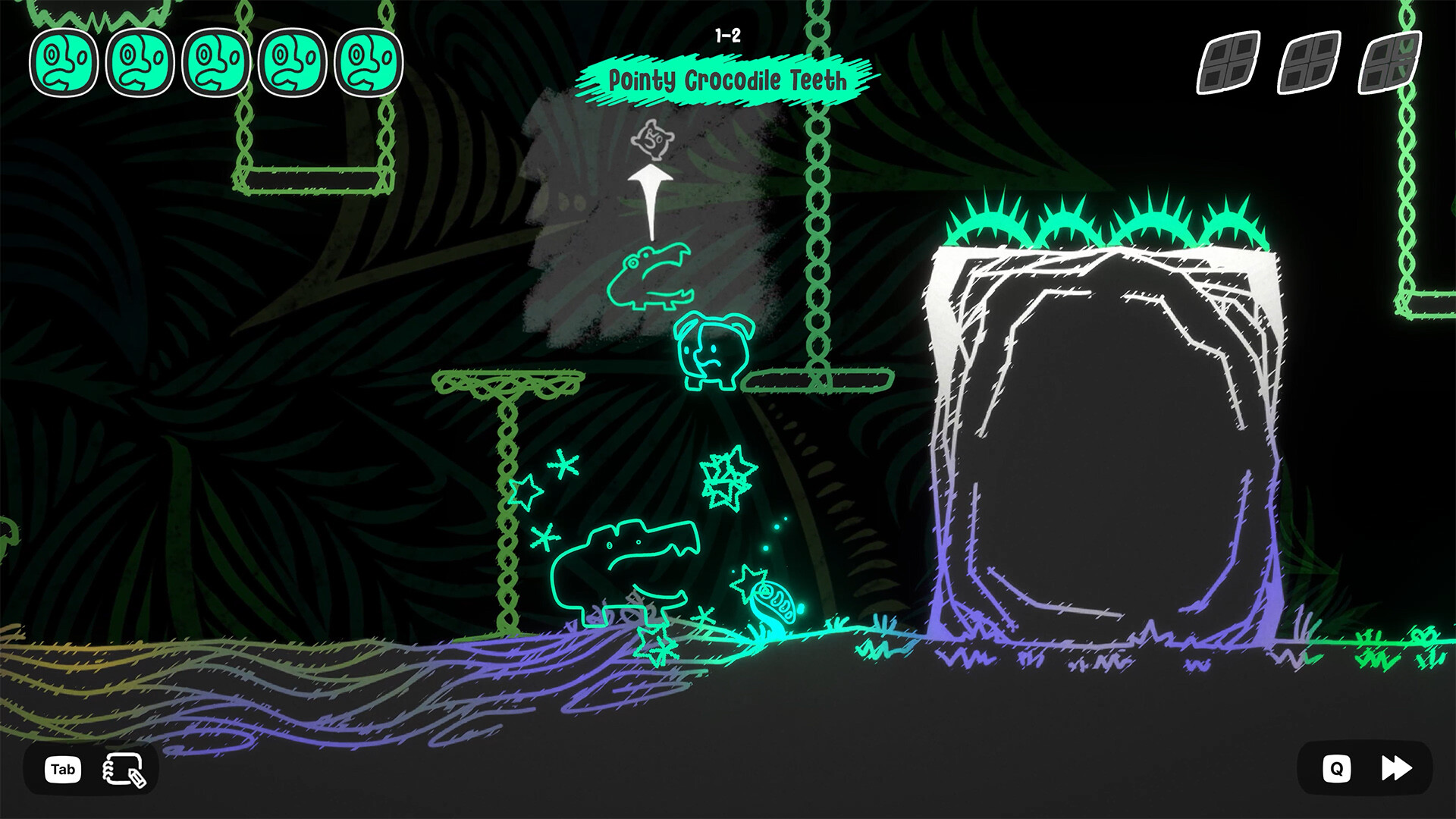
Each hazard, like these crocodile creatures in a jungle level, is introduced with an on-screen name callout as part of the game's gentle, readable tutorializingImage: Studio BBB Inc. via Steam -
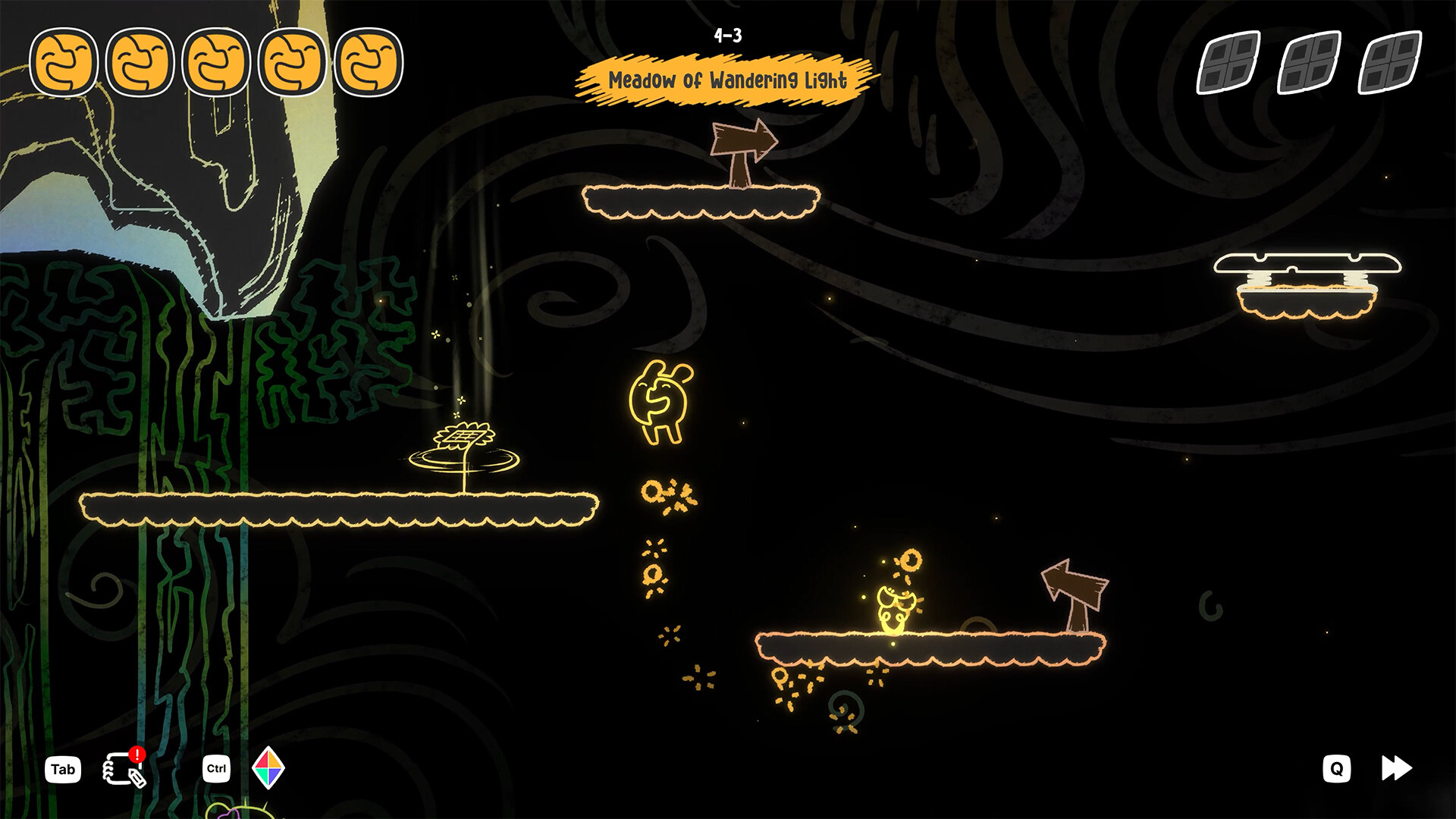
The Happiness state, shown here lighting up the 'Meadow of Wandering Light,' is one of four emotion-linked forms that each change Mono's color palette and movement optionsImage: Studio BBB Inc. via Steam -
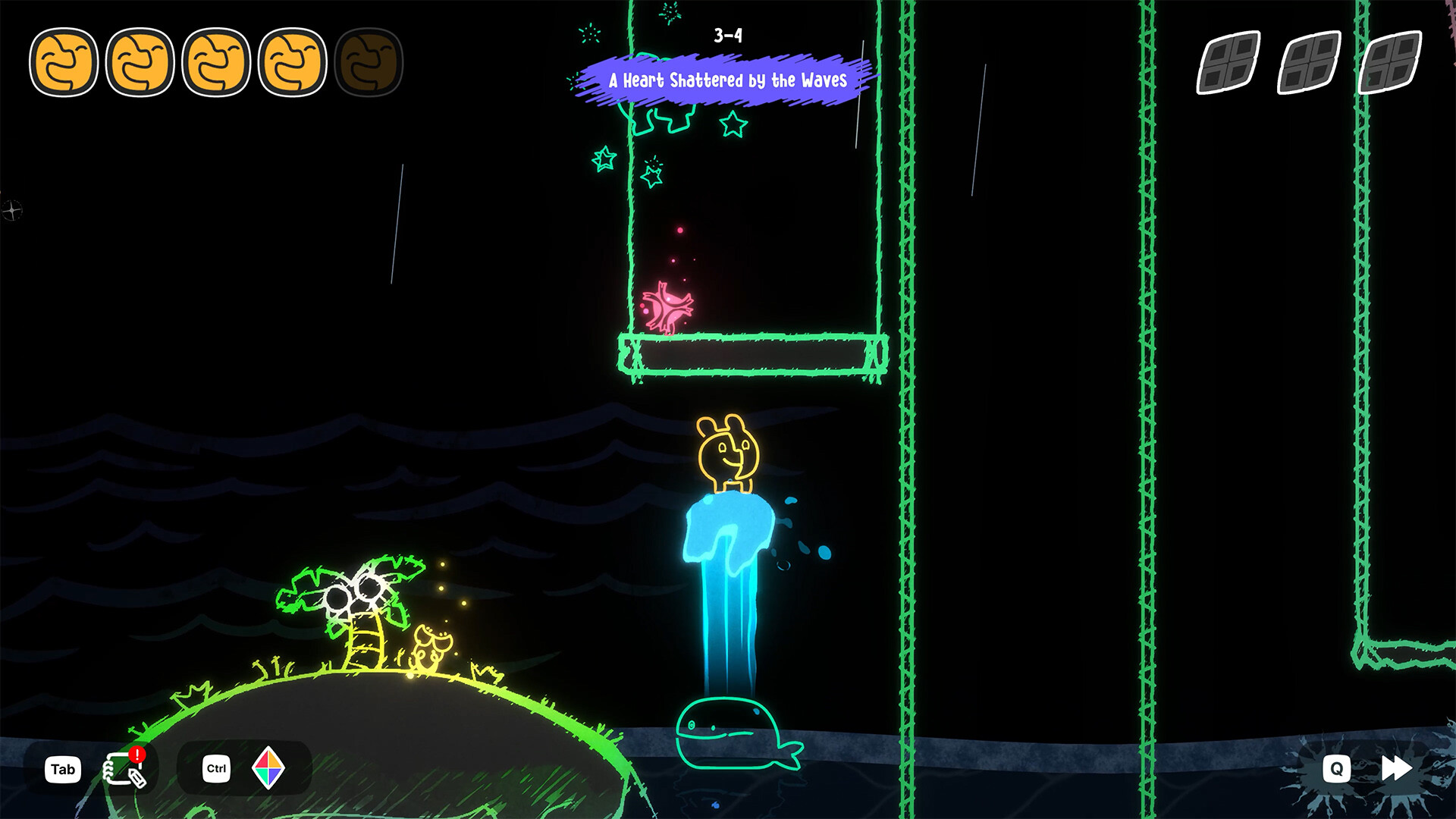
Underwater sections like this one, built around a water spout and a small whale companion, are where the co-op mode's asymmetric visibility between Mono and Prism becomes most noticeableImage: Studio BBB Inc. via Steam