Game review
Gravity Knight Review
4.9 / 10
- Developer
- Graviteam
- Publisher
- Graviteam
- Released
- 13 September 2026
- Platforms
- ["Windows"]
- Genre
- Indie
A Little Knight, a Dungeon, and a Gravity Button
Gravity Knight's pitch is a single sentence, and the whole game is built to deliver on exactly that sentence and nothing more: a third-person knight is trapped in a magical dungeon, and the only tool available is the ability to flip and manipulate gravity to reach ledges, trigger contraptions, and work through a short sequence of puzzle rooms until the exit is reached. There's no combat, no inventory, no dialogue trees — you walk, you jump, you redirect which way is down, and you solve small spatial puzzles built around that one rule.
It's a clean, legible idea, and the small handful of rooms on offer do vary the gravity-flip mechanic in reasonable ways, layering in moving platforms and simple contraptions that need to be triggered from an unconventional angle. But "clean and legible" is also a description of a tech demo, and Gravity Knight never really moves past that stage into something with more than one idea stacked on top of the first.
A Free Release That Turned Into a Steam In-Joke
Gravity Knight is free, and at review time it carried 19 user reviews, every one of them positive. What's unusual is what those reviews actually say. Rather than functioning as ordinary critical feedback, the overwhelming majority read as deliberate, escalating parody — mock-tragic personal testimonials crediting the game with saving the reviewer's life, declarations that Gravity Knight is the greatest game ever made, and running jokes about sacrificing everything for "one more level." This is a recognizable strain of Steam review culture, where a small, sincere free release gets adopted by a pocket of the community as a bit, and the review section becomes a collaborative joke rather than a genuine record of play experience.
Buried inside the bit, a few reviews do function as ordinary feedback, and it's worth taking that handful seriously rather than the theatrics around them: reviewers note they got genuinely stuck on a couple of the puzzle rooms, several ask for achievements that the game doesn't have, and there's repeated mention of unlockable cosmetic skins tied to how quickly you complete a run, including a pink skin apparently reserved for fast finishers. Recorded playtimes back up the honest read underneath the joke reviews — most sit between ten and fifty minutes, with a single outlier past an hour and a half, almost certainly from someone chasing that fastest-time skin rather than replaying for new content.
What's Actually Here Is Competent, in a Narrow Way
Taken on its own modest terms, Gravity Knight does what it sets out to do without any obvious rough edges. The gravity-flip traversal reads clearly on screen, the puzzle rooms are legible rather than obtuse, and the accessibility options listed on the store page — full controller support, DualShock and DualSense support, a mode playable without timed input, and configurable surround sound — suggest more care went into making the short experience approachable than you'd expect from a one-idea free release. For a knight-shaped mascot wandering a handful of gravity-bending rooms, the presentation holds together.
The speedrun-skin system is a smart, cheap way to give the fifteen-minute experience a second pass appeal, and it's clearly the mechanic doing the most work in the reviews that engage with the game honestly rather than ironically. Getting the fastest-completion skin gives players a concrete reason to run the same small set of rooms again with tighter movement, and for a free release that's a reasonable substitute for the achievements list several reviewers explicitly asked for and didn't get.
There Isn't Much Game Underneath the Meme
The honest problem with Gravity Knight is length and depth, not execution. A handful of puzzle rooms built around a single mechanical idea is a fine scope for a free weekend project, but it does not stretch into anything resembling a full release, and the review pool's own playtime numbers confirm most people are finished inside forty-five minutes. There's no story to speak of beyond the framing sentence, no achievement list to extend engagement past the speedrun skins, and no indication that the puzzle design escalates meaningfully across the short run — it introduces the gravity-flip idea and then ends before doing much with it.
None of that makes Gravity Knight bad, exactly, but it does mean the "Positive" reception has to be read carefully. A large share of the review pool isn't actually reviewing the puzzle design at all — it's performing a bit that treats the game's brevity and simplicity as the punchline rather than a flaw. That's a legitimate and fairly common way for small free releases to find an audience on Steam, but it's a different thing from broad, substantive praise for the game itself, and a reader relying on the star rating alone would come away with a much rosier picture of the content than what's actually there.
Verdict
Gravity Knight is a competently built, free, single-mechanic puzzle platformer that most people will finish in well under an hour, wrapped in a Steam review section that's more interested in performing affection for it than describing it. The gravity-flip idea is legible and reasonably well accessibility-supported for something this small, and the speedrun skins give it a sliver of replay value it would otherwise lack. But there's no getting around how little content sits underneath the joke reviews — a handful of rooms, one idea, no story, and no achievements to chase past the cosmetic unlock. At zero cost it's a harmless fifteen-minute diversion; judged as a piece of game design on its own merits, there just isn't enough here to call it more than a slight, forgettable tech demo.
Screenshots
-
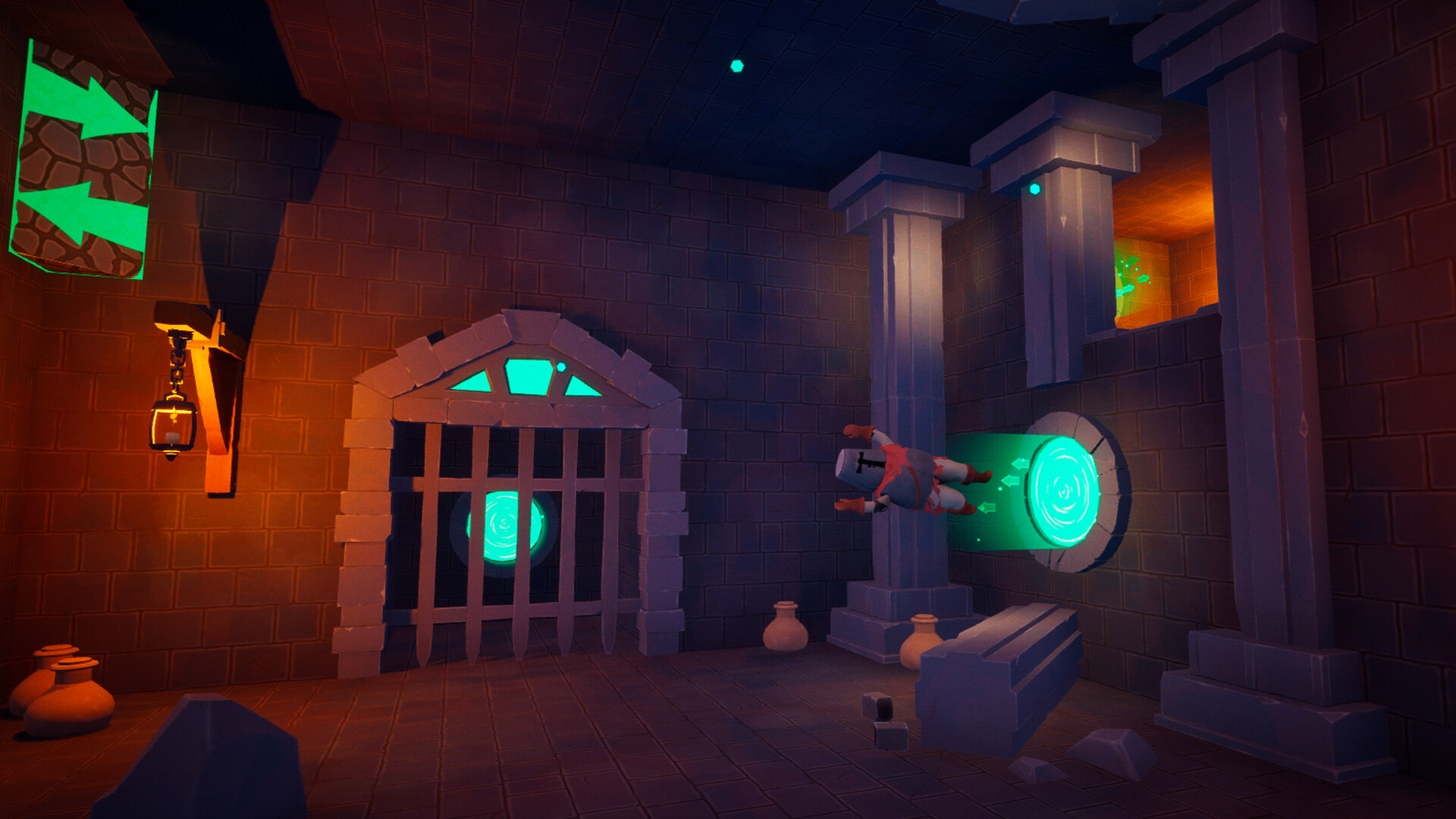
A glowing portal marks each gravity-flip trigger, redirecting the knight's fall toward the next platform.Image: Graviteam via Steam -
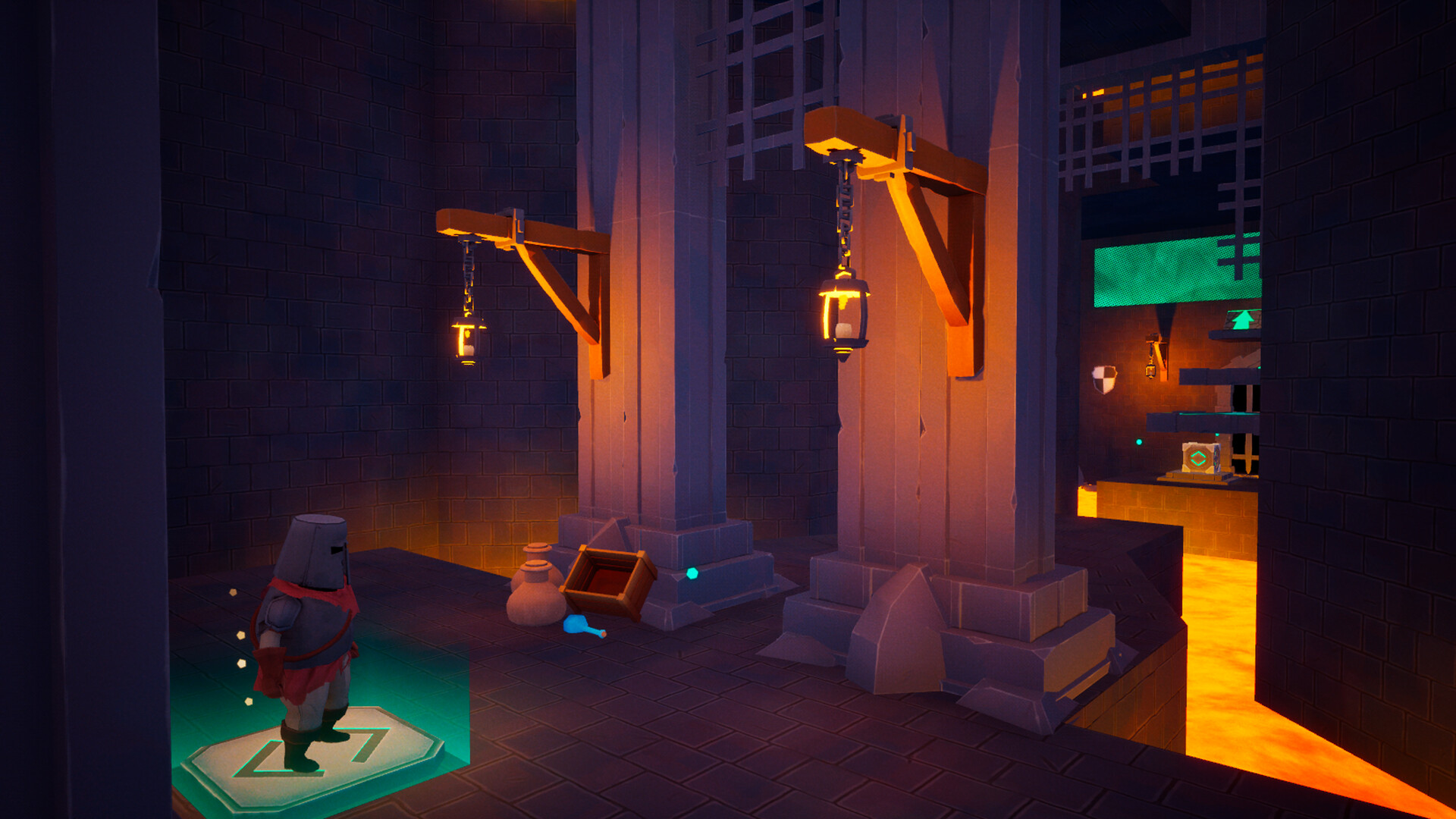
Puzzle rooms are small, torch-lit stone chambers built around one gravity-flip trigger apiece.Image: Graviteam via Steam -
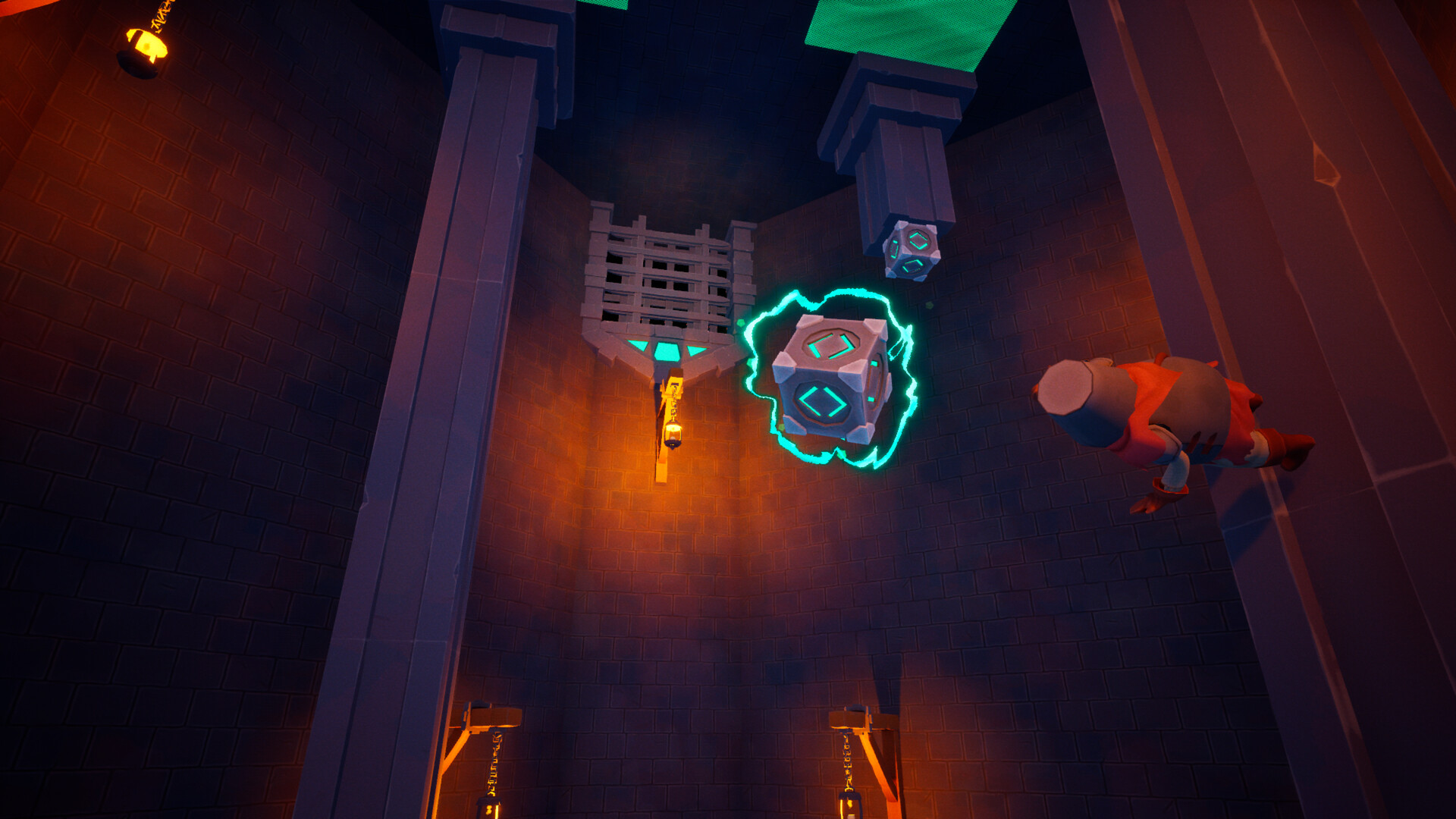
A gravity-shifted view of a cube contraption — the kind of angle-dependent puzzle the rooms are built around.Image: Graviteam via Steam