
Game review
Cyber Academy Review
5.8 / 10
- Developer
- JinjaGames
- Publisher
- JinjaGames
- Released
- 11 September 2026
- Platforms
- ["Windows"]
- Genre
- Simulation
Cybersecurity as the Mechanic, Not the Skin
Cyber Academy puts the player inside a fictional, self-contained virtual operating system and asks them to actually do the cybersecurity work its premise promises rather than dress up a generic puzzle game in hacker aesthetics. Structured learning modules walk through phishing awareness, password security, malware, networking, cryptography, forensics, web and API security and social engineering through interactive, hands-on challenges rather than text explanations, each one built as a real, working simulation of the tool or concept it's teaching. Clearing the learning modules unlocks the Dark Net, a separate, more freeform online layer where the player creates a virtual operator identity, takes contracts against fictional targets, and can be targeted right back by other virtual operators, tracing the footprints left behind an attack and launching a counter-operation of their own. A clan system, in-game forums, cosmetics, ranks and a branching skill tree round out the progression on top of the core module-and-contract loop. Developed and published by the small studio JinjaGames, Cyber Academy entered Steam Early Access on September 11, 2026, priced at $11.99 with a launch discount currently bringing it to $9.59, and the developer has already shipped two content and balance updates within its first week.
A Small, Fully Positive Early Access Start
Cyber Academy has drawn 5 reviews so far, all of them positive, for a 100% approval rating. It's a tiny sample, as expected for a brand-new Early Access release in a genuinely niche subgenre, but the reviews that exist are unusually long, detailed and specific about what the systems actually do, rather than a quick thumbs-up from players just passing through.
Puzzle Chains That Actually Understand Context
The strongest praise in the pool is aimed squarely at how the module puzzles connect to one another rather than existing as a disconnected menu of minigames. One reviewer, with well over 2,800 minutes logged, describes the Dark Net specifically as feeling dynamic: tracing the in-game footprints left by an attacking player, finding their virtual IP address, and launching a counter-operation, built from a blend of software, logic and math-based mini-games layered with genuine social interaction with other operators, rather than requiring deep real-world technical knowledge to enjoy. A second detailed reviewer, with over 600 minutes logged, singles out a specific design touch they didn't expect to appreciate as much as they did: a chaining system where one tool's output, a trace signature, feeds into a formula that produces a rule hash, which becomes the input for a bytecode tracer, whose output in turn unlocks the next tool in the sequence. By the end of a single run, that reviewer says, they'd hand-converted binary to hex, traced a program, fixed intentionally sabotaged Python code and solved four separate logic grids, and the whole sequence felt like one continuous job rather than a checklist of disconnected challenges, a structural choice they credit to a designer who clearly understood that context is what makes disparate puzzle types feel like a coherent skill rather than a random assortment. A Turkish-language reviewer separately praises the game's content richness relative to similar titles, specifically highlighting the absence of any comparable online infrastructure in competing games and the amount of player-to-player interaction available in the Dark Net layer.
Thin Content and Rough Edges, With More Promised
Even the enthusiastic reviews acknowledge Cyber Academy is an early, unfinished product. A Spanish-language reviewer says the virtual operating system itself is excellent and genuinely well suited to learning by doing, but reports blowing through the only two currently available modules quickly and being left wanting considerably more, adding that the Dark Net layer feels too confusing for newcomers without an intermediate guide bridging the gap, and specifically asks the developer to follow through on the additional cryptography, networking and malware modules the game's own achievement list already promises. Another detailed reviewer flags a more practical concern for anyone jumping in during the Early Access window: a few bugs currently block progress partway through certain tutorials, a real obstacle in a game built entirely around sequential, chained challenges where getting stuck on one step halts everything after it. Neither complaint describes anything close to a broken or unplayable state, and the developer's two content and balance patches inside the first week suggest active, responsive support, but the honest picture from even this small, unanimous review pool is of a promising foundation with genuinely limited content right now rather than a complete package.
Verdict
Cyber Academy is a genuinely unusual pitch executed with real craft in the parts that currently exist: cybersecurity concepts taught through interconnected, hands-on puzzle chains rather than passive reading, capped off by a freeform Dark Net layer where other players become both a threat and a source of genuine social interaction. Its small, fully positive early review pool backs up that craft with specific, detailed praise for how the puzzle systems interlock rather than vague enthusiasm, and the developer's rapid post-launch patching is a good early sign for an Early Access title. The honest catch, raised by the reviewers most invested in the idea, is that there's currently not very much of it, just two modules deep with a promised backlog of cryptography, networking and malware content still to come, alongside a Dark Net layer several reviewers found confusing without more onboarding and a handful of tutorial-blocking bugs still being ironed out. For players specifically drawn to the premise of learning real security concepts through play, Cyber Academy is worth an early look with the expectation that its most interesting ideas are still being built out around a genuinely strong core.
Screenshots
-
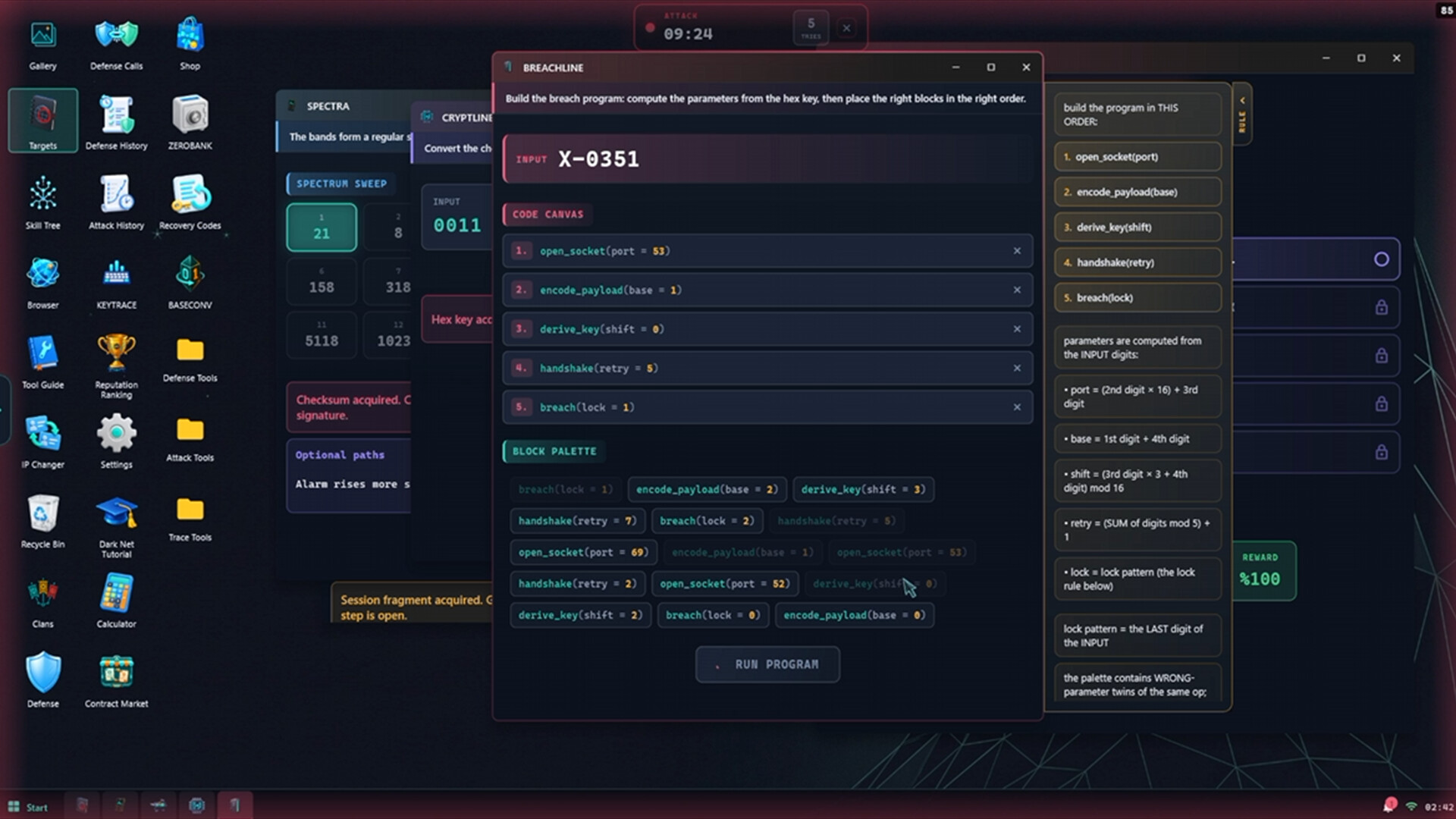
BREACHLINE is the kind of chained puzzle reviewers singled out, where one tool's output becomes the next tool's input rather than a standalone minigameImage: JinjaGames via Steam -
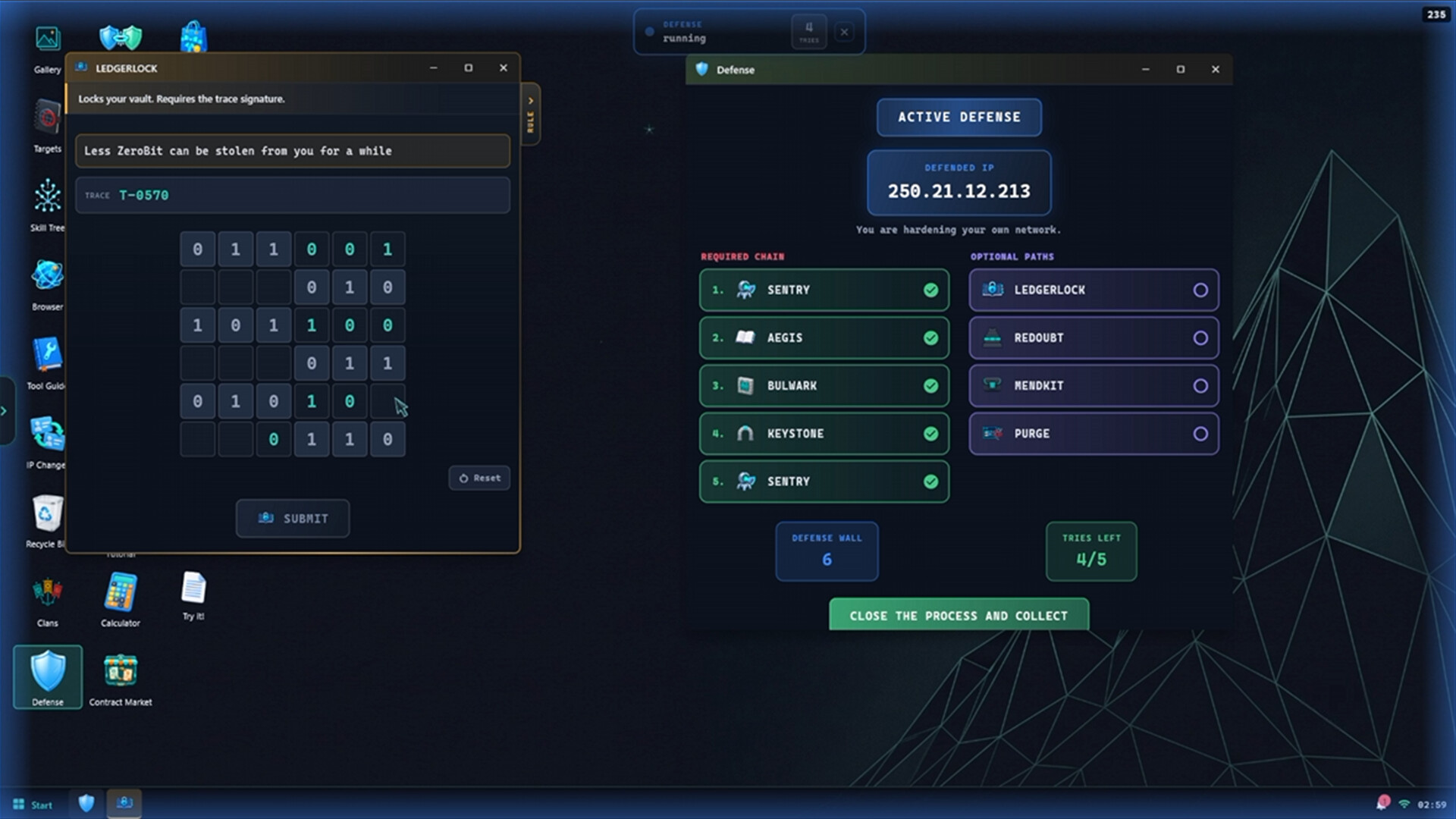
The Dark Net's defense side layers a binary-grid lock puzzle on top of a running defense-wall chain, the two-sided attack-and-defend structure reviewers described as genuinely dynamicImage: JinjaGames via Steam -
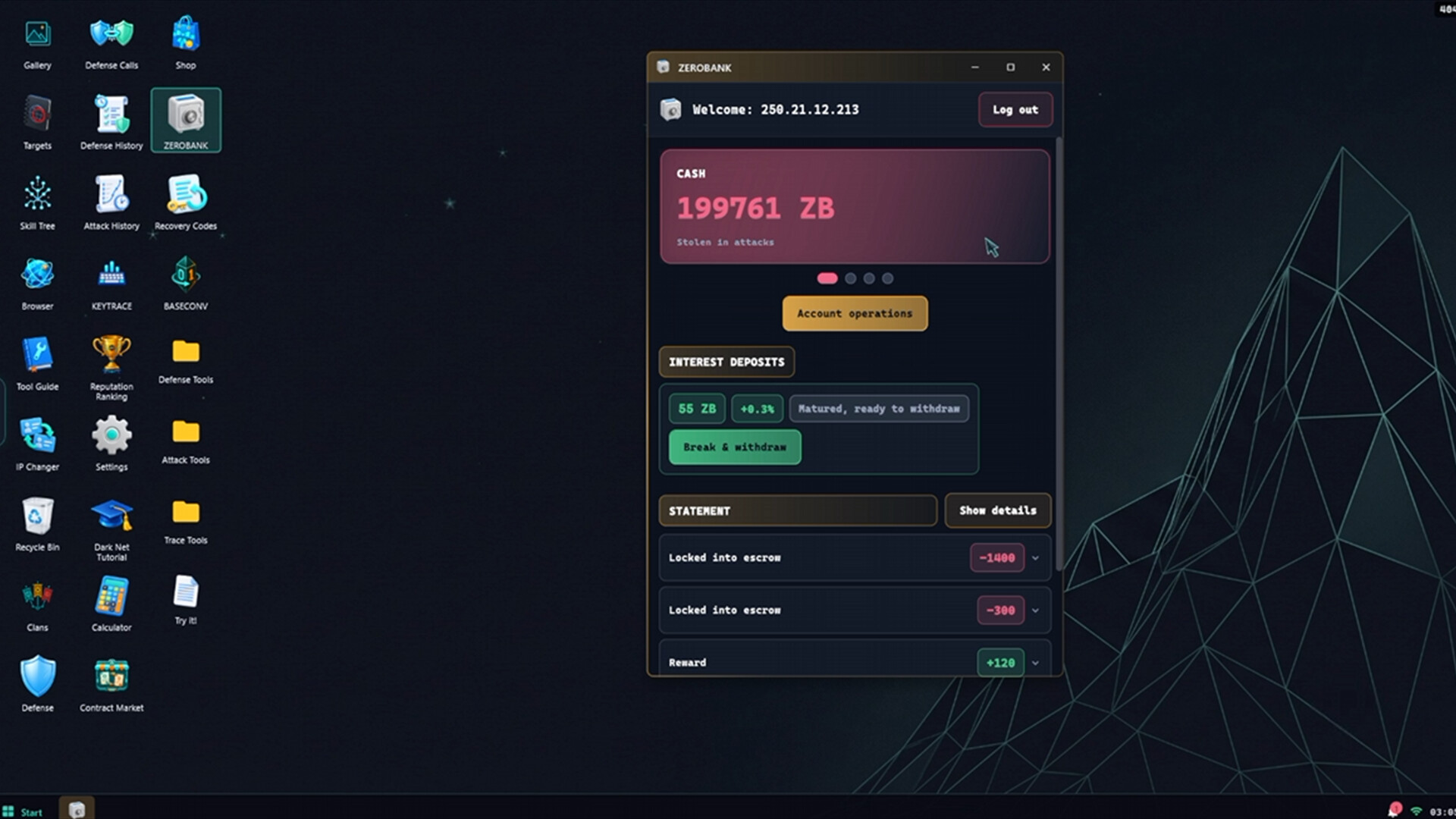
ZEROBANK tracks the virtual currency won and lost through Dark Net attacks and defenses, the economic layer underpinning the operator-vs-operator contracts reviewers highlightedImage: JinjaGames via Steam