Game review
Curse of the Dead Gods
7 / 10
- Developer
- Passtech Games
- Publisher
- Focus Home Interactive
- Released
- 3 March 2020
- Platforms
- Windows, PlayStation 4, Xbox One, Nintendo Switch
- Genre
- Action Roguelite
- Monetisation
- One-time purchase. The only paid add-on is a soundtrack; a free "Curse of the Dead Cells" crossover update (14 April 2021) added Dead Cells-inspired weapons at no cost, and no cash shop or battle pass was ever introduced
- Players
- Single-player only
The short version
Curse of the Dead Gods sends you into three procedurally generated cursed temples armed with whatever weapon you find first, and its best idea is the curse meter: entering dark rooms, spending blood at shrines, and other efficient but risky choices raise a mounting curse that unlocks powerful, permanently-active debuffs alongside its equally powerful blessings. It's a push-your-luck system layered over Spelunky-adjacent trap-and-treasure exploration and Dead Cells-style combat, and critics liked it a lot at launch — 79 on Metacritic for PC, a 9/10 from IGN calling it a "standout roguelite." Steam agrees at a lifetime Very Positive, 82.7% of 4,371 reviews (checked 13 August 2026).
The dissenting 17.3% cluster around two specific, related complaints rather than scattering randomly: the difficulty curve turns punishing rather than skillful in its later stretches, and the meta-progression between runs is thin next to the genre's current benchmark, Hades — no hub, no characters to return to, no story beats to soften a losing run. Global achievement data backs the "it gets brutal" read: 84.9% of players complete the tutorial, but only 7.3% ever defeat the final Death Champion boss.
Biggest strengths
- The curse meter is a genuinely distinctive risk/reward system — critics and players alike name it as the game's best idea, and it shapes almost every decision rather than sitting on the side
- Strong critical reception across the board (79 Metacritic PC, 9/10 from IGN) backed by a lifetime Very Positive rating on Steam from 4,371 reviews
- Passtech visibly iterated during a genuinely productive year in Early Access, and kept supporting the game post-launch with a free Dead Cells crossover weapon set
Biggest weaknesses
- Later-game difficulty is repeatedly described as punishing rather than fair — Valve's own data shows completion collapsing from 84.9% at the tutorial to just 7.3% for the final boss
- No persistent hub, characters or narrative thread between runs, which the negative-review corpus consistently and unfavourably compares to Hades' meta-progression
- A recurring complaint about currency and upgrade costs scaling faster than a normal run earns them, making later unlocks feel like a grind rather than a reward
Who it's for: Fans of tight, mechanically dense action roguelites — Spelunky, early Dead Cells, The Binding of Isaac players — who want push-your-luck risk management as the core hook rather than a narrative wrapper. A weaker fit for players who specifically want Hades-style character writing and a comforting hub to return to between deaths.
Our recommendation: A confident recommendation at full price for roguelite fans, and an easy one on sale for anyone curious. Go in for the curse-management combat rather than expecting a story, and be ready for a real difficulty wall in the later temples rather than a smooth curve throughout.
7 / 10
A trap for greed, built into the mechanics
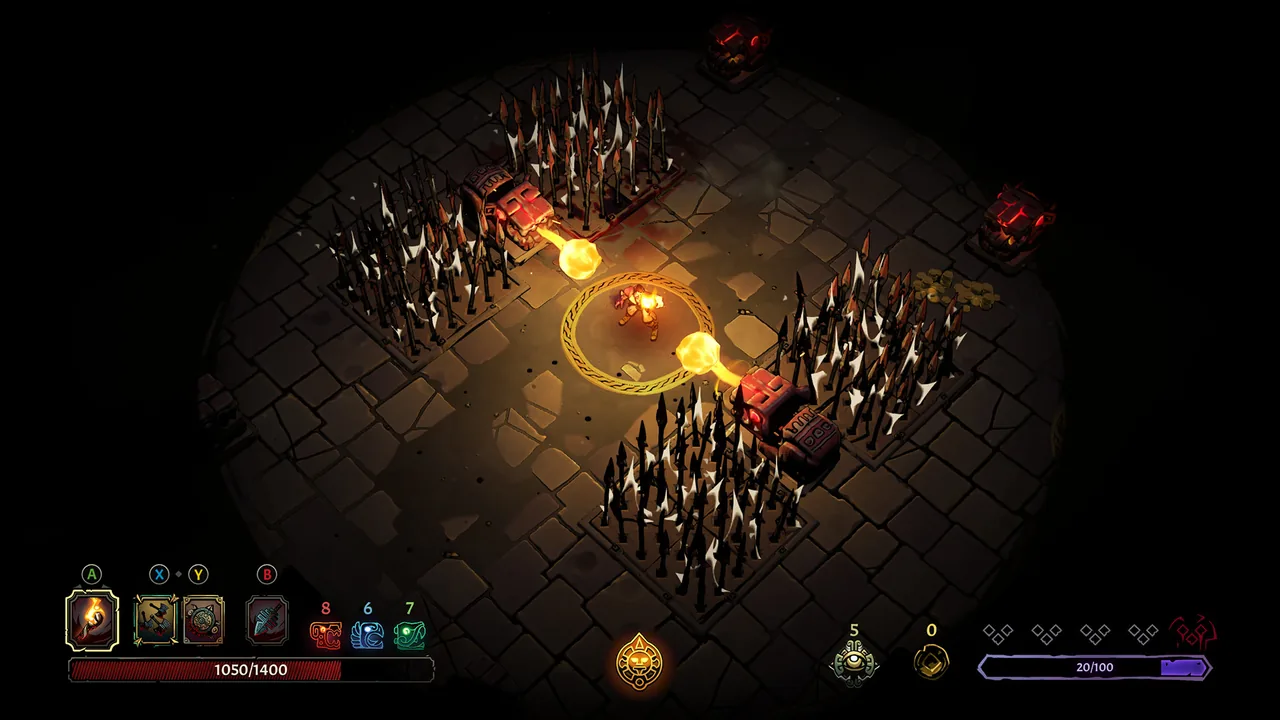
Curse of the Dead Gods puts you in a cursed temple with a weapon, a torch, and a rule the game never lets you forget: everything worth doing raises your curse. Fighting in darkness raises it. Paying blood at shrines for extra power raises it. Rushing through certain rooms rather than clearing them properly raises it. Once the curse meter fills, you get a permanent, powerful debuff — alongside an equally powerful blessing that offsets it, if you're lucky with the draw. It's a push-your-luck system in the tradition of Spelunky's greed mechanics, but woven far more tightly into the isometric, Dead Cells-adjacent combat than most roguelites manage: every fight is also a resource-management decision about exactly how much risk this room is worth.
Developer Passtech Games, based in Lyon, put the idea through a genuinely productive Early Access period. The game entered Steam Early Access in March 2020 with a single temple — the Jaguar section — available, and expanded across the following year with community-driven tweaks before leaving Early Access on 23 February 2021 with a simultaneous release across PC, PlayStation 4, Xbox One and Nintendo Switch. That's the trap this review's lane exists to catch: the visible Steam release date reads 2021, but the game's actual public debut, and the year its identity and mechanics were established, was 2020.
What critics and most players liked
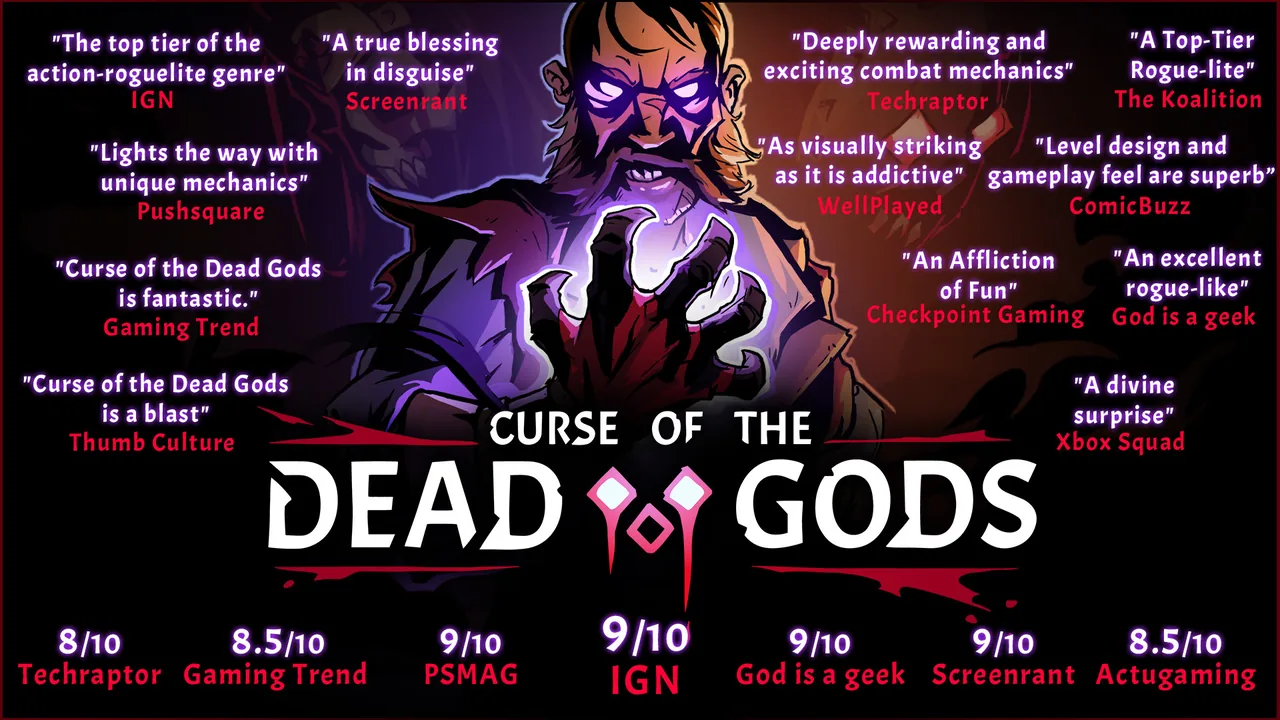
The reception at launch was strong, not just decent. Metacritic settled at 79 for the PC version (78 on PS4 and Switch, 90 on Xbox One), and IGN's 9/10 review called it a "standout roguelite" — high praise in a genre that, by 2021, already had Hades, Dead Cells and Slay the Spire setting the bar. Steam's lifetime user score has held at Very Positive since, 82.7% of 4,371 reviews as of this writing. Passtech kept working after the full release too: an April 2021 free update, "Curse of the Dead Cells," added weapons crossed over from Motion Twin's Dead Cells at no cost — the kind of goodwill gesture that tends to show up in a review corpus as gratitude rather than grumbling, and it does here.
The praise clusters consistently around the curse system itself and the combat's weight — parries, dodges and stamina management that reward patience over button-mashing — and around the game's relatively unusual dark, oppressive tone for the genre, built from Mesoamerican-inspired temple architecture and monster design rather than the more common pixel-art or cartoon aesthetics of its roguelite peers.
Where the 17% land, and why it's worth taking seriously
Curse of the Dead Gods isn't a divisive game in the way some titles in this lane are — a four-fifths-plus Very Positive score is a real consensus — but the minority opinion is unusually coherent rather than scattered, which is itself worth noting. Two complaints dominate the negative sample almost to the exclusion of anything else.
The first is difficulty. "In the final stretches of hard mode, the game becomes so punishingly insane that you have to want to hurt yourself to play this," reads one review from a player with nearly 100 hours logged — someone who clearly liked the game enough to invest heavily before souring on it. Valve's own achievement data gives that complaint hard numbers rather than leaving it as review-corpus vibes: 84.9% of players who've unlocked at least one achievement have completed the tutorial, but the curve collapses fast after that — 58.8%, 47.4% and 45.2% for each temple's first champion, down to just 17.0%, 13.5% and 12.2% for each temple's actual boss, and a mere 7.3% for the endgame Death Champion. Fewer than one in thirteen engaged players ever beats the game.
The second, raised almost as often, is the comparison to Hades — inevitable for anything in this genre released either side of Supergiant's 2020 breakout, but specific here rather than lazy. Reviewers don't fault Curse of the Dead Gods for lacking Hades' dialogue-driven narrative so much as for lacking any equivalent structure: no hub to return to, no characters whose relationships deepen across runs, nothing to soften a loss beyond the raw currency you banked. "That game had an overarching plot and a home base you could come back to... talk to people, pet the dog," reads one review with over 1,300 hours logged; "something [here] is missing." A related, recurring gripe about currency scaling — upgrade costs rising faster than a typical run earns them — reads as the mechanical symptom of the same structural gap: without a narrative reason to keep grinding, a slow currency curve reads as padding rather than pacing.
Reading the negative sample by year shows this isn't purely a launch phenomenon: 36 land in 2021 (the full-release year), but a second, comparably sized wave — 28 — lands in 2023, two years after launch, likely reflecting a fresh audience discovering the game via a sale or bundle and comparing it against a roguelite landscape that had, by then, fully absorbed Hades' influence. The complaints in that later wave are almost identical to the 2021 ones, difficulty and thin meta-progression, which suggests the game simply asks something different of players than the genre's current standard-bearer does, rather than having gotten meaningfully harder or worse with age.
Verdict
Curse of the Dead Gods is a well-made, well-reviewed roguelite with one genuinely distinctive mechanic — the curse meter — built by a developer that used its Early Access year properly and kept supporting the game afterward with free content rather than DLC. It is not, and was never trying to be, Hades; judged as the tighter, meaner, more mechanically demanding dungeon-crawler it actually is, both critics and the large majority of its 4,371 Steam reviewers rate it well. The clustered minority complaint — real difficulty spikes with no narrative cushioning to soften them — is worth taking at face value rather than dismissing, especially since Valve's own numbers confirm it: most players who start this game do not finish it.
Wanderer's own systems are built around the opposite instinct — steady, forgiving progression that keeps paying out even on a bad session — so it's worth saying plainly that Curse of the Dead Gods' appeal is exactly the audience that wants the alternative: real stakes, a real chance of walking away with nothing, and a curse meter that never lets you forget it.
Pros and cons
Pros
- The curse meter is a genuinely distinctive risk/reward system — critics and players alike name it as the game's best idea, and it shapes almost every decision rather than sitting on the side
- Strong critical reception across the board (79 Metacritic PC, 9/10 from IGN) backed by a lifetime Very Positive rating on Steam from 4,371 reviews
- Passtech visibly iterated during a genuinely productive year in Early Access, and kept supporting the game post-launch with a free Dead Cells crossover weapon set
- A clean, one-time price with no DLC beyond a soundtrack, no cash shop and no live-service layer
- Tight, isometric dungeon crawling that rewards careful risk assessment over twitch reflexes alone, distinguishing it from faster roguelites in the same space
Cons
- Later-game difficulty is repeatedly described as punishing rather than fair — Valve's own data shows completion collapsing from 84.9% at the tutorial to just 7.3% for the final boss
- No persistent hub, characters or narrative thread between runs, which the negative-review corpus consistently and unfavourably compares to Hades' meta-progression
- A recurring complaint about currency and upgrade costs scaling faster than a normal run earns them, making later unlocks feel like a grind rather than a reward
- Combat variety is real but shallow enough that several detailed reviews — including from self-described roguelite veterans — describe the loop turning repetitive well before the credits
Screenshots
-
Curse of the Dead GodsImage: Focus Entertainment via Steam -
Curse of the Dead GodsImage: Focus Entertainment via Steam -
Curse of the Dead GodsImage: Focus Entertainment via Steam -
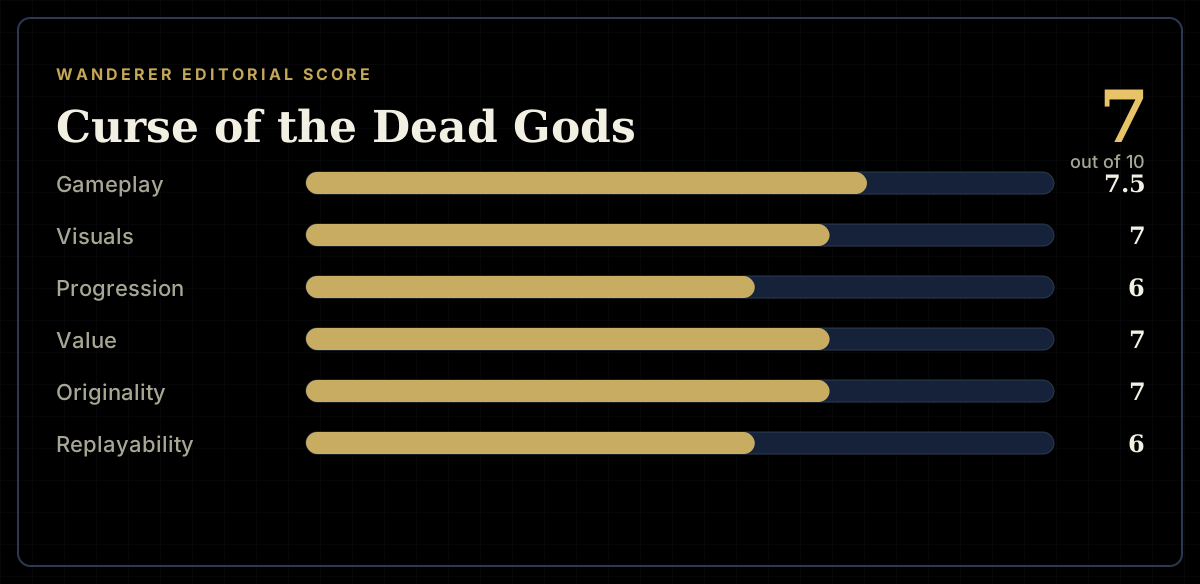
How the review scores each part of the gameWanderer Editorial -
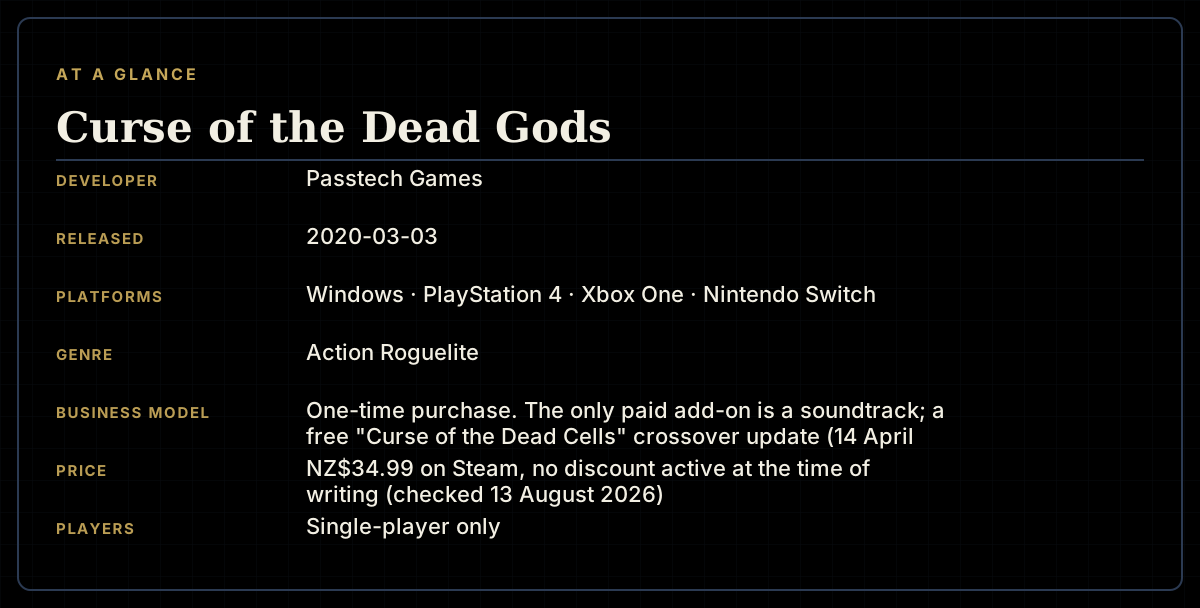
The essentials at a glanceWanderer Editorial -
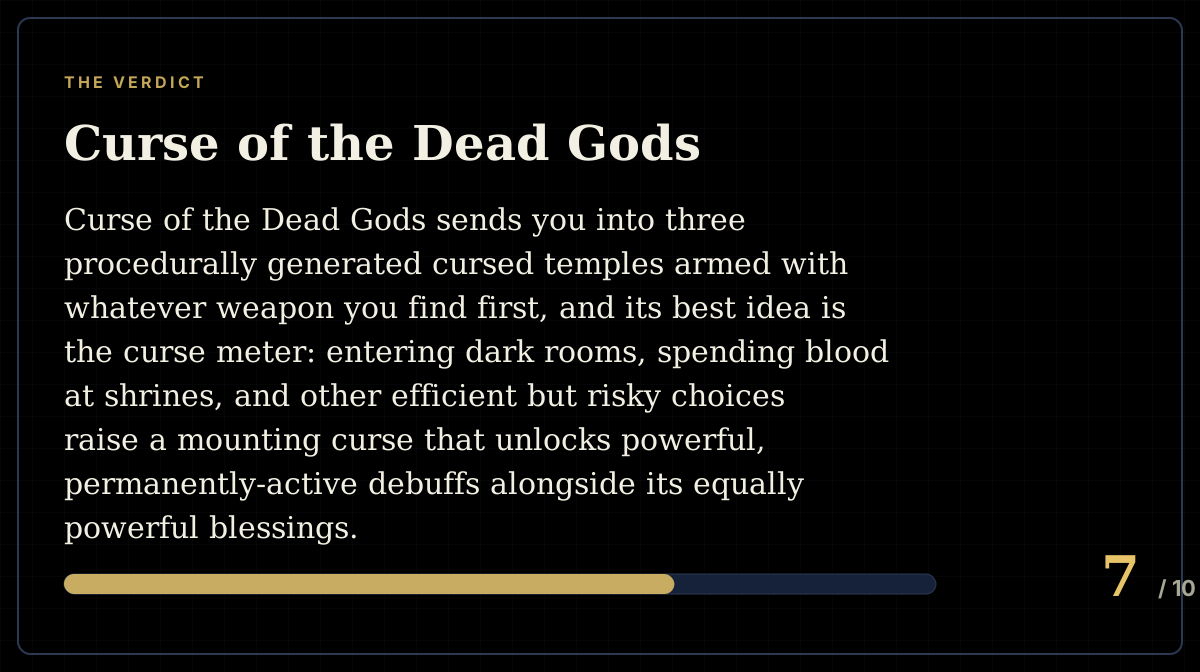
The short versionWanderer Editorial