Game review
Cooking Crusade Review
6.5 / 10
- Developer
- toogaryn, zeydean
- Publisher
- Pillow Lava
- Released
- 17 September 2026
- Platforms
- ["Windows"]
- Genre
- Simulation
Pottage, Ale, and a Queue That Won't Wait
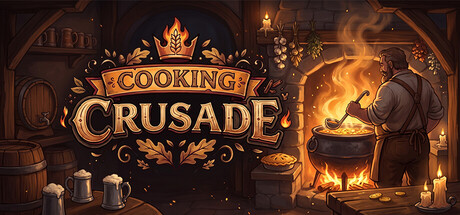
Cooking Crusade is a small, medieval-flavored order-service sim built around a premise that's instantly legible even if you've never played one of these before: brew pottage from whatever's in the cellar — grain, beans, cabbage, onion, turnip — toss it in the cauldron, watch it cook, and ladle it out before your guests lose patience. Developed by toogaryn and zeydean and published by Pillow Lava, it launched on September 17 at a modest $6.99, and it wears its inspirations openly — anyone who's played a Cook, Serve, Delicious or Overcooked-style timing game will recognize the rhythm immediately, just filtered through a tavern-keeper's apron instead of a professional kitchen. What starts as a single cauldron and a short menu of pottage expands over a run into ale poured from the barrel, sliced pies, cheese, dried fish, and meat roasted over an open fire, with the game explicitly promising that "the bigger your menu, the fussier the orders" — a fair warning that complexity here is a deliberate escalation, not an accident.
Twelve Guests Who All Break the Rules Differently
The single cleverest idea in Cooking Crusade is its cast of legendary guests, and it's a genuinely well-considered piece of design for a $6.99 casual sim. Rather than every customer behaving like a slight variation on the same patience-meter template, the game promises a dozen named characters who each break the tavern's normal service rules in their own specific way — one drops in through the ceiling rather than walking through the door, one overpays by ten times and showers the whole queue with coins as a result, one keeps changing their order while you're mid-delivery carrying their food, and one simply steals your gold and walks out without paying at all. That's a smart way to keep a simple loop from going stale over a full run: instead of just raising numbers, the game periodically hands you a guest who forces you to rethink your whole service pattern for a few minutes. It's paired with a tavern almanac that unlocks a portrait and a short backstory for every guest you serve, which gives the collection-completion instinct something to chase beyond just a leaderboard score, and nudges the whole thing a little closer to being about specific characters rather than an abstract stream of anonymous customers.
The Long Game: Building a Kitchen You Don't Recognize Anymore
Beneath the moment-to-moment cooking and serving sits a straightforward but well-paced progression system: profits earned from happy guests get poured back into the tavern itself, funding a second cauldron, a working tap on the barrel, a merchant who restocks ingredients faster, and shelves that stock themselves without a trip to the cellar. The game's own pitch leans on the promise that "by the end, your kitchen won't look anything like the one you started with," and that's a reasonable hook for a genre where the core minute-to-minute loop — grab ingredient, cook, deliver, repeat — doesn't change dramatically no matter how many upgrades you buy. What does change is how many of those loops you can run in parallel, and running two cauldrons and a full multi-course menu at once is clearly meant to be where the game's real difficulty and satisfaction live, once the early single-cauldron pottage stage has taught the basics. For players who bounce off pure time-pressure cooking games because the ceiling feels too low, that kind of steady mechanical unlock curve is exactly the thing that keeps a $6.99 casual title worth returning to across multiple sessions rather than one afternoon.
An Arcade Mode for Players Who Want the Pressure Turned Up
Alongside whatever the main campaign structure turns out to be, Cooking Crusade also ships an arcade mode aimed squarely at players who want the genre's classic high-score loop rather than a story-paced unlock curve: three lives, an endless stream of guests, and patience that shrinks the longer a run goes, with perks purchasable between runs and results tracked on a Steam leaderboard. That's a sensible way to extend a cooking sim's replay value past its main content without inventing a whole second game, and the built-in leaderboard gives the mode a competitive hook that the main mode's slower, upgrade-driven pacing doesn't really offer on its own. It's worth noting the game also ships a "Playable without Timed Input" option among its Steam categories, which is a genuinely useful accessibility nod for a genre that otherwise lives and dies by split-second reflexes — the kind of small, practical inclusion that's easy to overlook but meaningfully widens who can actually enjoy the core loop.
A Quiet Launch, but a Confident Little Game
Cooking Crusade launched with almost no fanfare — no pre-release news posts, no dev-diary trail, and as of this review just a single public review, a lighthearted Russian-language comment joking that the reviewer "forgot about my personal life and quit my job" playing it, which reads as enthusiastic if not exactly a rigorous critical assessment. That thinness is worth flagging honestly rather than papering over: at three days old, Cooking Crusade simply hasn't accumulated the kind of public track record that would let anyone confirm how the difficulty curve holds up over a full playthrough, whether the twelve-guest gimmick sustains its novelty for the whole run, or how stable the game is across different hardware. What is verifiable from the store page itself, though, is a clear, well-thought-through design on paper: a familiar core loop dressed in a distinctive medieval-tavern setting, a genuinely clever rule-breaking-guest system that should keep the routine from getting stale, a sensible upgrade curve, and a low asking price that doesn't overreach for what it's delivering.
Verdict
Cooking Crusade doesn't reinvent the order-service sim, but it dresses a familiar formula in a fresh medieval-tavern coat and backs it with one genuinely smart idea — twelve differently-broken guests instead of an undifferentiated customer stream — plus a sensible two-cauldron progression curve and a leaderboard-driven arcade mode for players who want pure score-chasing. At $6.99 it's a low-risk pickup for time-management fans, even with a launch this quiet leaving most of the finer balance questions unanswered for now.
Screenshots
-
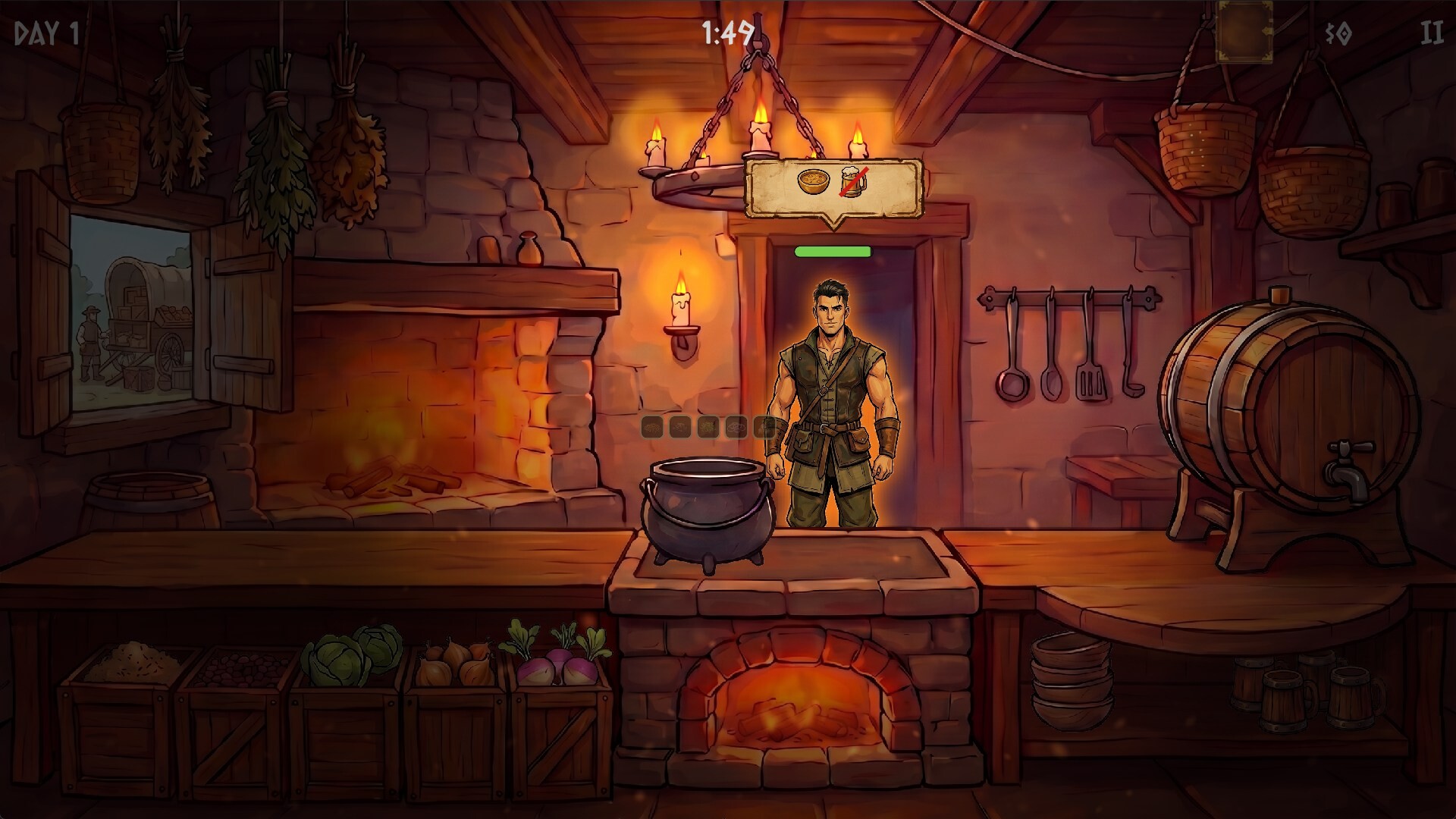
Day one starts small: one cauldron, one cook, and whatever's in the cellar crates.Image: Pillow Lava via Steam -
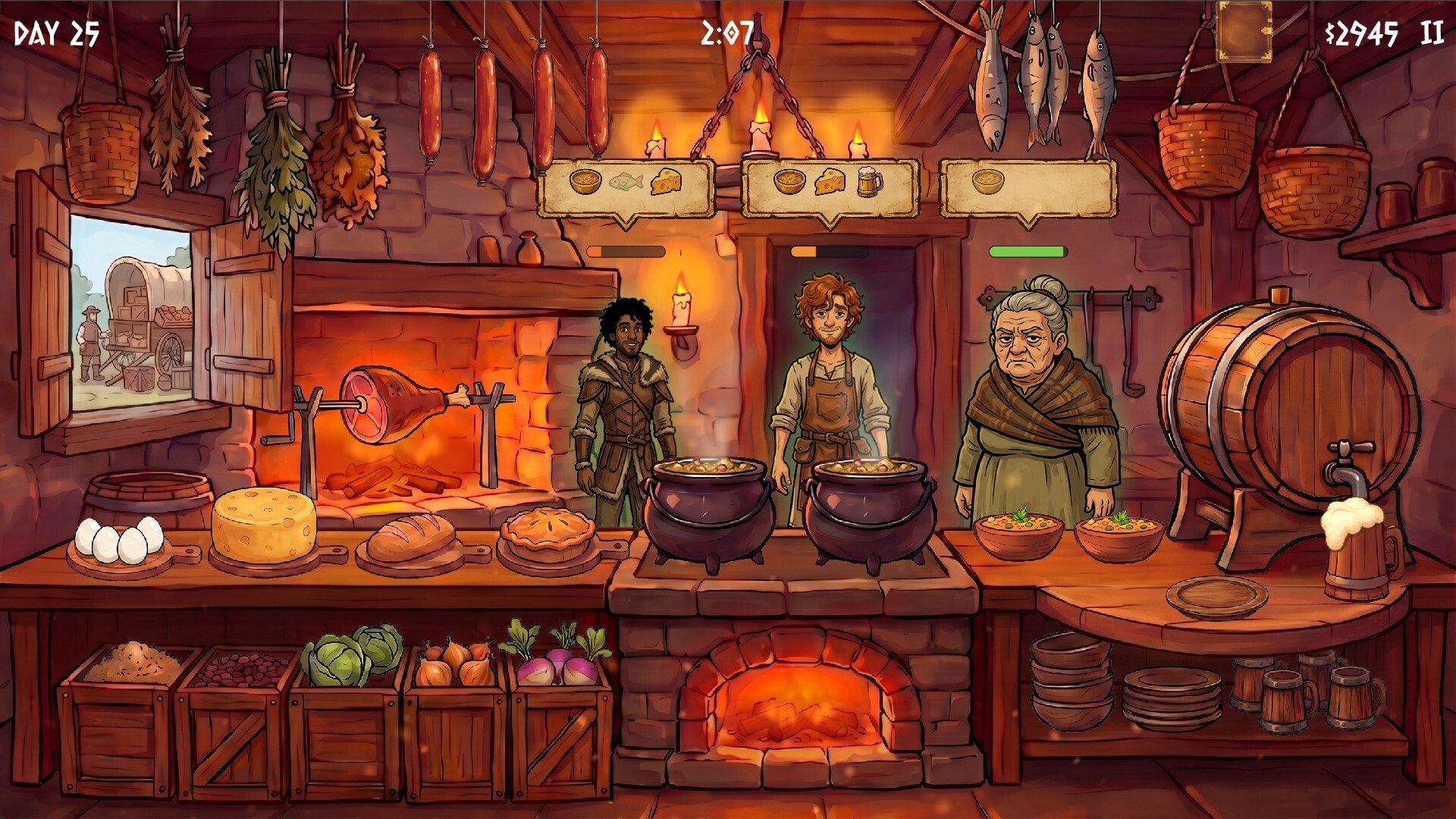
By day 25 the same kitchen runs two cauldrons and a full staff, juggling pottage, ale, and roast meat orders side by side.Image: Pillow Lava via Steam -
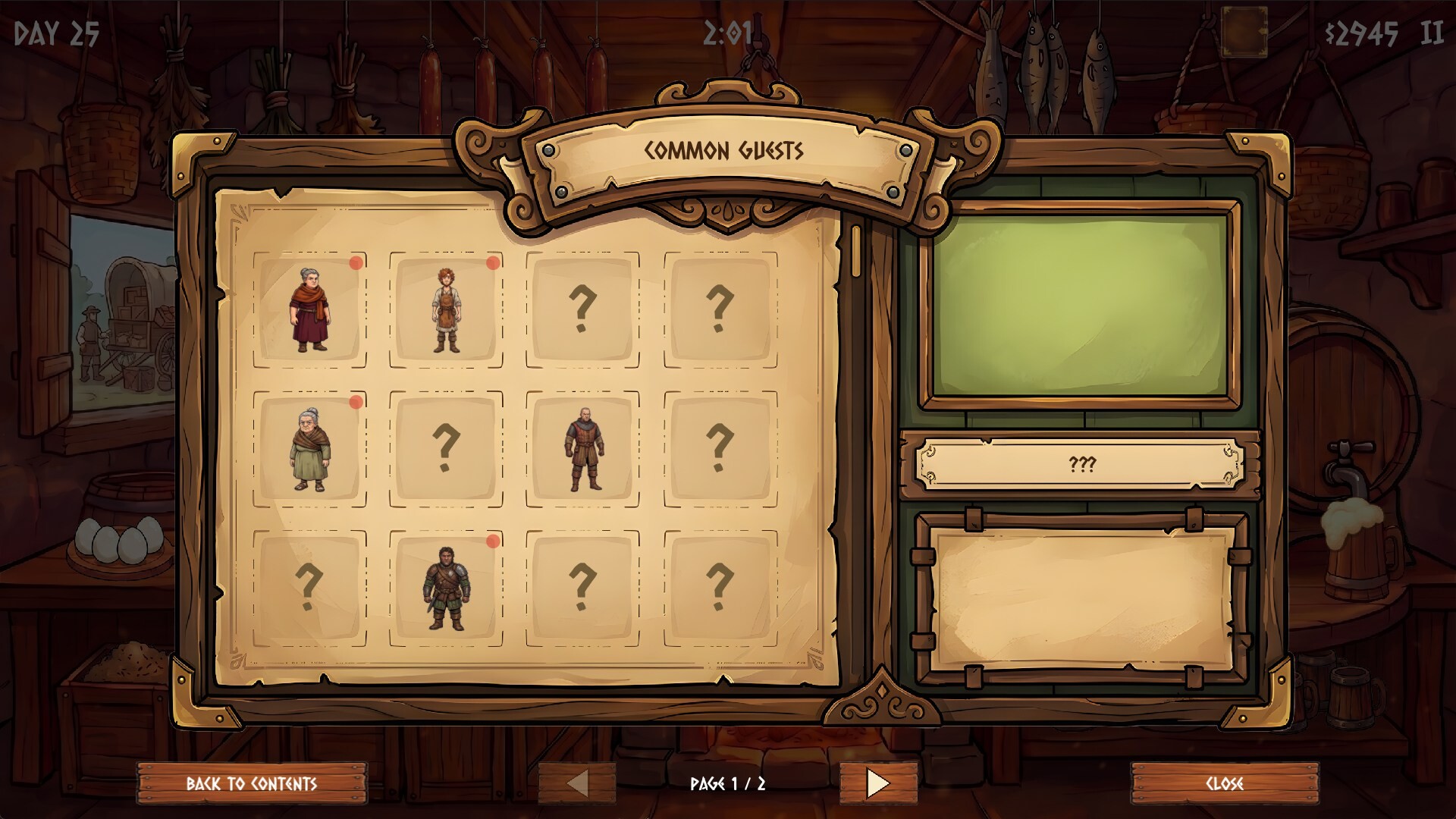
The tavern almanac tracks which of the game's guests you've met, with portraits unlocking as you serve them.Image: Pillow Lava via Steam