Game review
CaseCracker3
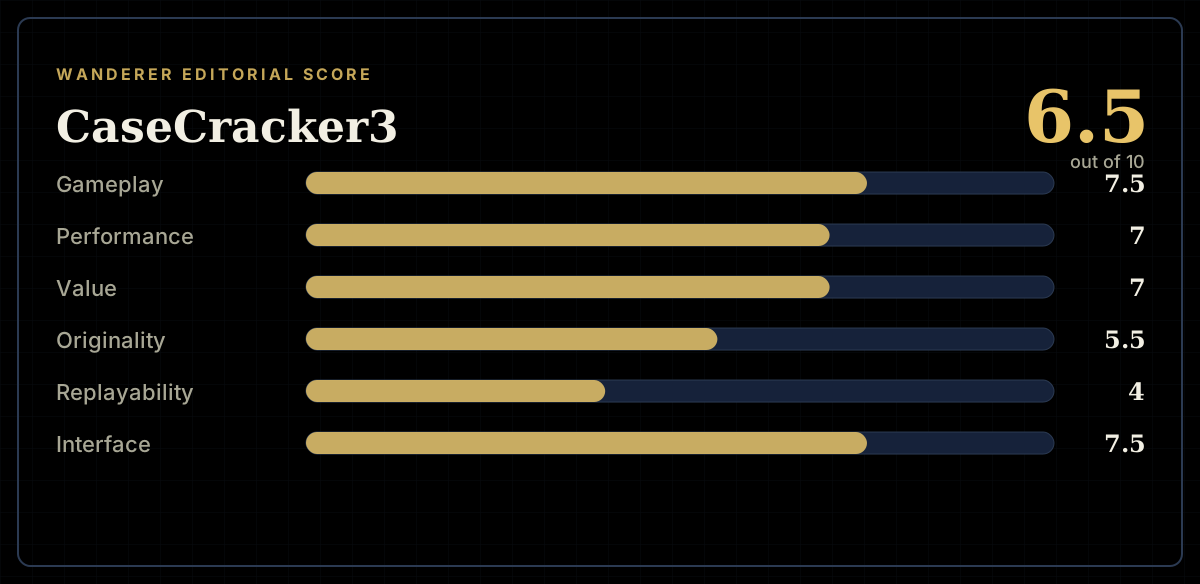
6.5 / 10
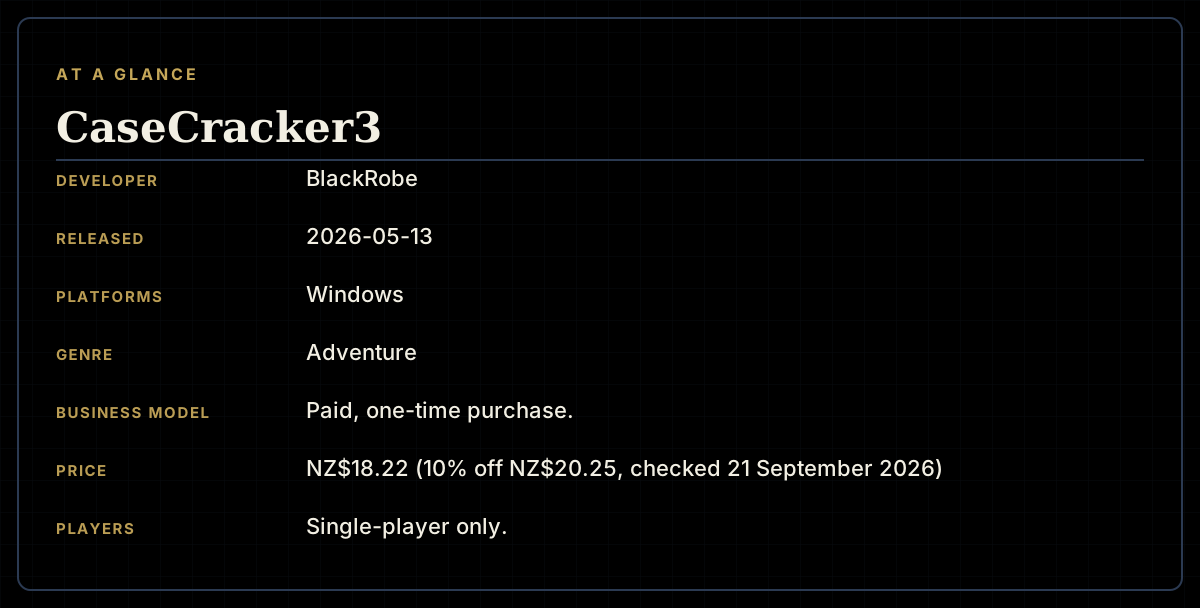
- Developer
- BlackRobe
- Publisher
- BlackRobe
- Released
- 13 May 2026
- Platforms
- Windows
- Genre
- Adventure
- Monetisation
- Paid, one-time purchase.
- Players
- Single-player only.
The short version
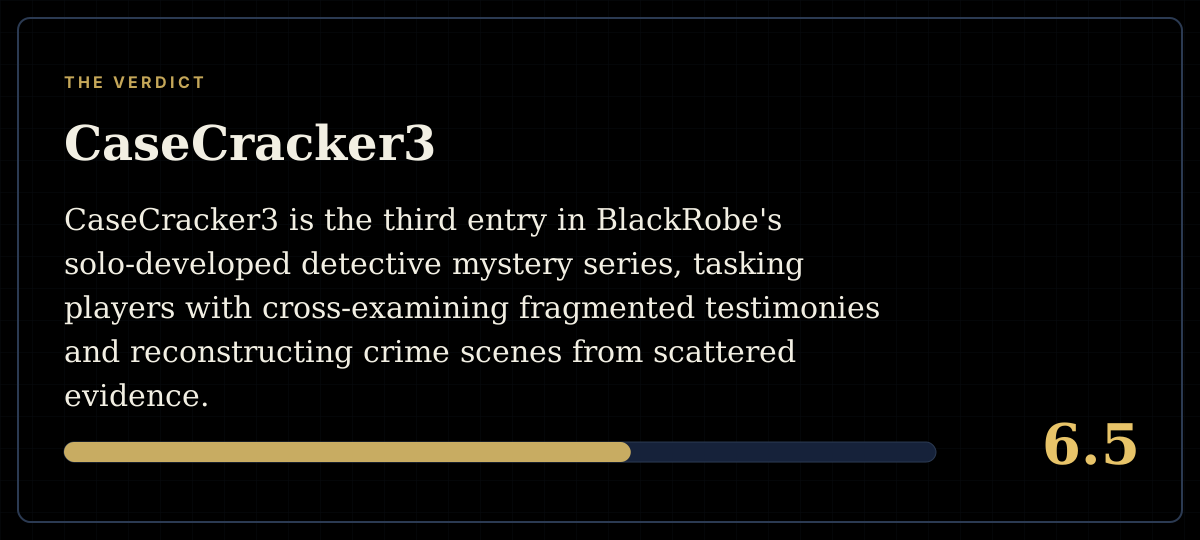
CaseCracker3 is the third entry in BlackRobe's solo-developed detective mystery series, tasking players with cross-examining fragmented testimonies and reconstructing crime scenes from scattered evidence. Its Positive rating comes from a thin but strikingly consistent English review sample, this review's own check finding real, specific praise for its logical puzzle design and an improved note-taking system, alongside a fair, top-voted complaint about the developer's use of generative AI for some in-game video and audio content.
Biggest strengths
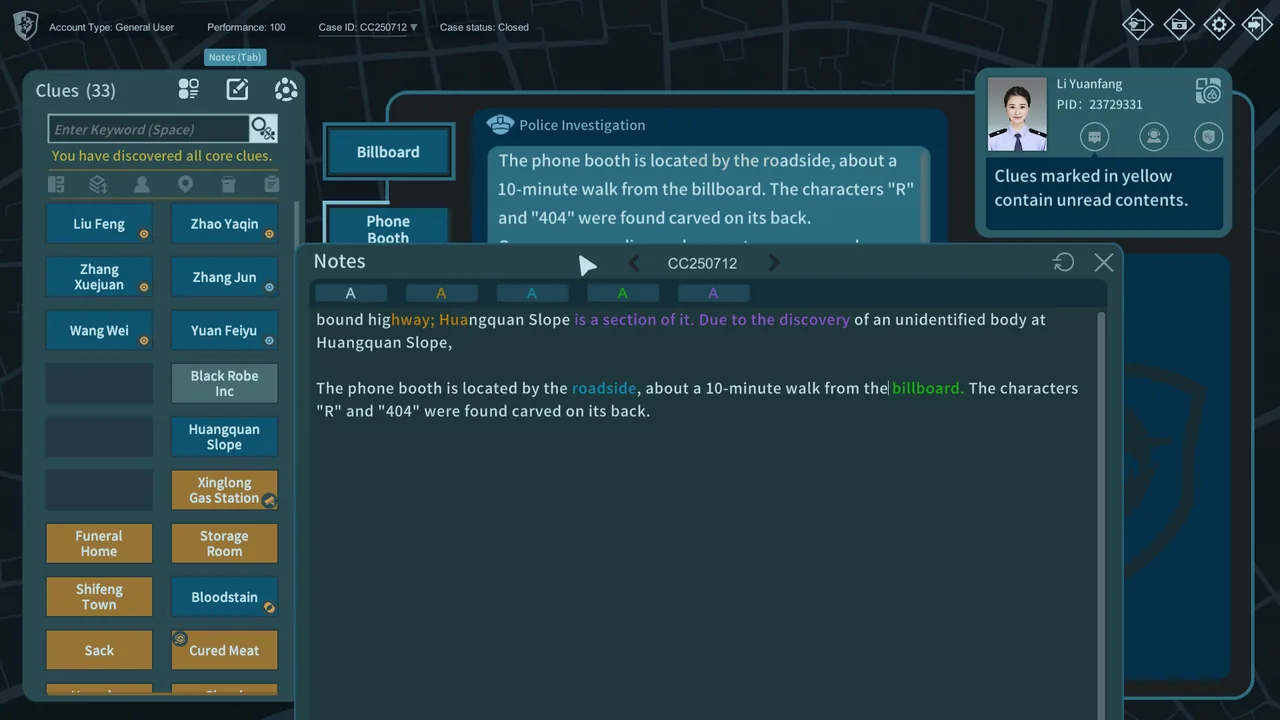
- Praised repeatedly by returning series fans as a worthy continuation, with one reviewer specifically noting a new right-click excerpt system removed the need for external notes.
- Praised for genuinely fair puzzle design, with one detailed reviewer specifically noting the number of "how was I supposed to figure that out" moments is basically zero.
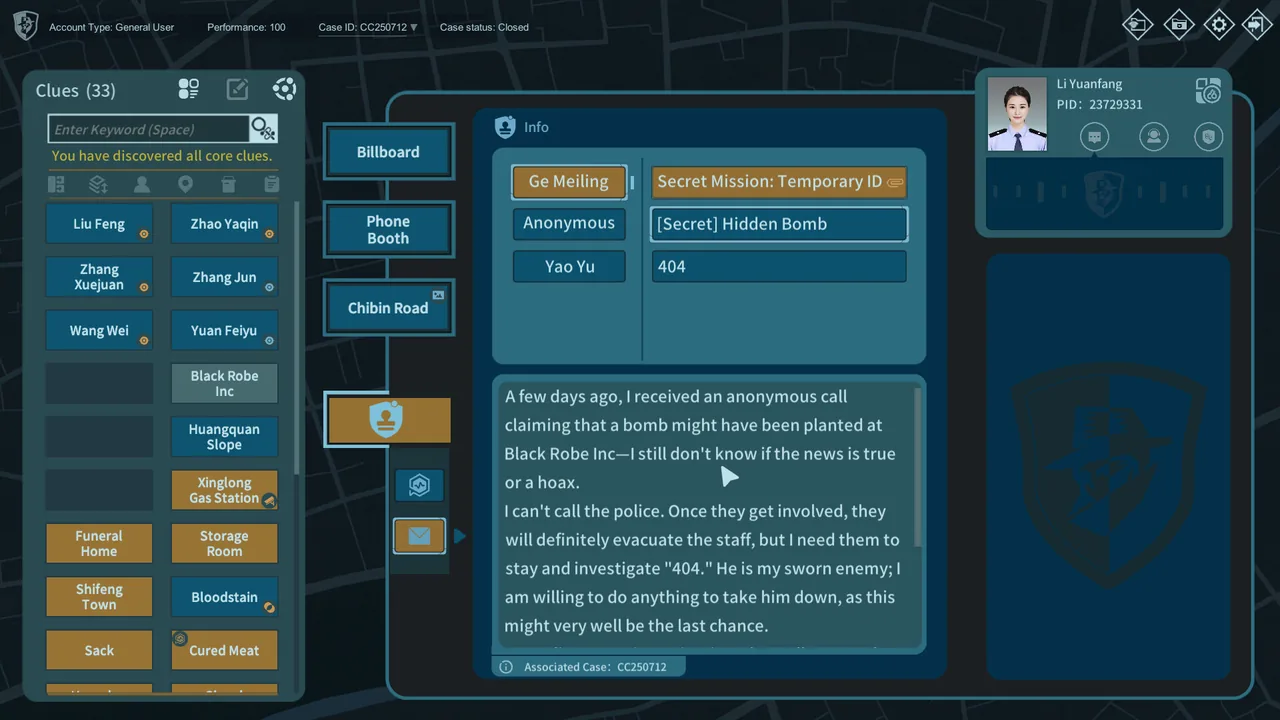
- Praised for new email and inquiry features that build meaningfully on the previous two entries' investigation tools.
Biggest weaknesses
- A fair, top-voted complaint reports the developer used generative AI for some in-game videos, a decision the reviewer calls disappointing and unnecessary.
- A separate, otherwise strongly positive review independently raises the same generative AI use for some image and audio content as the game's one big weakness.
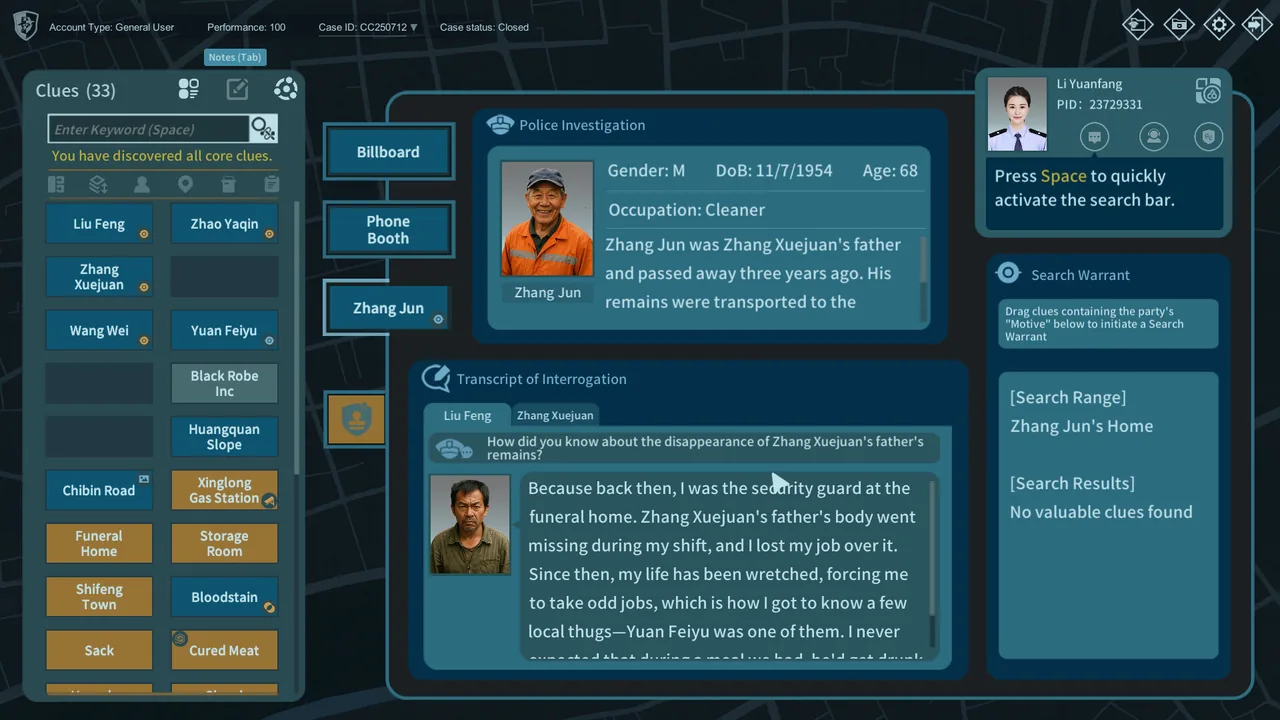
- A fair complaint reports some questions offer only a single attempt at an answer, which several reviewers found satisfying when correct but frustrating when a genuine mistake is made.
Who it's for: Returning fans of the CaseCracker series, and newcomers to logic-driven detective mystery games willing to start from the first entry; players who want to avoid generative AI content in games they buy should be aware of this review's central complaint before purchasing.
Our recommendation: A solid, logically fair third entry in a niche detective series, undercut for some players by the developer's use of generative AI for some video and audio content.
6.5 / 10
A thin but consistent review sample
CaseCracker3 had only 13 English-language Steam reviews at the time of this review, 12 positive and 1 negative, resulting in a Positive rating from a genuinely small sample. This review treats that thinness honestly: rather than diluting the few detailed, substantive reviews available against a headline score, the specific praise and complaints found across that small sample are treated as central to this review's assessment, in the same way this review has approached other thinly reviewed games this cycle.
Praised by returning series fans as a worthy continuation
CaseCracker3 earns clear praise from players who have followed the series through its first two entries. "More of the same as the past 2 games. And thats a good thing," reads one review. A separate, more detailed reviewer agrees: "If you're reading this, you probably played the first two games. It's CaseCracker, but with a 3 on it. It's good stuff." A third, having played all three entries, goes further: "Having played all 3 of the CaseCracker games, I think this one is my favorite. From the web-based mystery in the demo trailer, to the neat addition of emailing, and all the puzzles in this game, I think this is just a really well written game." This review treats that praise as fair: consistent, specific enthusiasm from players with direct points of comparison to the earlier games is a strong signal that the series' core formula continues to land.
Praised for fair, logical puzzle design and an improved note system
Beyond the series continuity, this review found real, specific praise for the game's puzzle-solving experience. "An improvement over the previous 2 with the additional email and inquiry features, it's still more of the same but also with a better note system imo... The number of 'how was I supposed to figure that out' bits are basically 0," reads one detailed review. A separate reviewer specifically credits a new tool: "The new right-click excerpt system (also added to the previous games in an update) is rudimentary but very useful; I didn't need to take any paper notes since I could summarise the useful info at a glance." This review treats that praise as fair and meaningful: a detective game living or dying on whether its logic is fair and its tools support the player's own deductions, and reviewers specifically crediting both, is a strong sign of solid design underneath the series' familiar formula.
A fair, top-voted complaint about generative AI content
Set against that praise, this review found a fair and prominent complaint: the sample's single highest-voted review, by a wide margin, is its one negative review, and it is entirely about the developer's use of generative AI. "Unfortunately they used generative AI for some of the videos you can find in the game, very dissappointing and unnecessary," reads that review in full. Notably, this review found the same concern raised independently within an otherwise strongly positive review: "The one big weakness is the solo dev so using AI for some image/audio stuff which is a little unfortunate. Hope one day they can go back and replace it with some better quality stuff but it works and it does at least fit the vibes of the game." This review treats that complaint as fair and central, not a minor nitpick: it is the most-upvoted single review in the entire sample, and a second, independent reviewer raises the identical issue unprompted while still recommending the game overall. For players who specifically want to avoid generative AI content in games they purchase, this is a legitimate and well-corroborated concern.
A fair complaint about single-attempt questions
This review also found a fair, narrower complaint about one specific design choice. "I'm torn about some of the questions only giving you one chance; it sucks when you make a mistake but feels pretty great if you nail it," reads one detailed review. This review treats that complaint as fair: it is a deliberate design tension rather than a flaw exactly, but it is a real point of friction that a genuinely careful player can still trip on, and is worth flagging directly for players who dislike high-stakes, no-retry puzzle moments.
A niche series best started from the beginning
This review also found a consistent, practical note from reviewers about how newcomers should approach the game. "As the other say, it's more Casecracker! If you haven't played the other games you should probably play those first, but that's fine, they're all about equally good I'd say," reads one review. A separate reviewer suggests an even deeper level of engagement for series newcomers: "Absolutely fantastic series of detective games. If you consider it: start from the first one, make ONE GIANT timeline OUTSIDE THE GAME and add all the events there... you will see, it is all connected." This review treats that guidance as fair and worth passing on directly: CaseCracker3 is not designed as a standalone entry point, and players unfamiliar with the series should expect to get more out of it by starting at the beginning.
Achievement data suggests a fair, consistently solvable mystery
This review's own check of Steam's global achievement data shows a comparatively gradual curve relative to other games covered this cycle: 96.6% of players clearing an early milestone, dropping steadily to a still-substantial 26.1% for the sample's lowest-ranked achievement, without the steep single-digit cliffs seen in more punishing genres. That gentler curve is broadly consistent with reviewer accounts of a fair, logically solvable mystery that most players who start are able to see through to a meaningful degree of completion, rather than one that abruptly locks out all but a tiny fraction of its audience.
Final verdict
CaseCracker3 is a solid, logically fair third entry in a niche detective mystery series, earning genuine praise from returning fans for its improved note-taking tools and consistently well-clued puzzles. Its clearest weakness, found in this review's own reading of its thin but pointed review sample, is a fair, top-voted complaint about the developer's use of generative AI for some in-game video and audio content, independently corroborated by a second, otherwise strongly positive review. For fans of the series, or newcomers willing to start from its first entry, this is a worthwhile continuation; players who specifically want to avoid AI-generated content in the games they buy should weigh that concern carefully before purchasing.
Pros and cons
Pros
- Praised repeatedly by returning series fans as a worthy continuation, with one reviewer specifically noting a new right-click excerpt system removed the need for external notes.
- Praised for genuinely fair puzzle design, with one detailed reviewer specifically noting the number of "how was I supposed to figure that out" moments is basically zero.
- Praised for new email and inquiry features that build meaningfully on the previous two entries' investigation tools.
- This review's own check of achievement data shows a comparatively gradual completion curve relative to other games reviewed this cycle, consistent with reviewer accounts of a fair, consistently solvable mystery.
Cons
- A fair, top-voted complaint reports the developer used generative AI for some in-game videos, a decision the reviewer calls disappointing and unnecessary.
- A separate, otherwise strongly positive review independently raises the same generative AI use for some image and audio content as the game's one big weakness.
- A fair complaint reports some questions offer only a single attempt at an answer, which several reviewers found satisfying when correct but frustrating when a genuine mistake is made.
- As with the series' prior two entries, this is a fundamentally linear, one-time mystery experience with limited replay value once its central case is solved.
Screenshots
-
CaseCracker3Image: BlackRobe via Steam -
CaseCracker3Image: BlackRobe via Steam -
CaseCracker3Image: BlackRobe via Steam -
How the review scores each part of the gameWanderer Editorial -
The specs at a glanceWanderer Editorial -
The short versionWanderer Editorial