
Game review
Break Siege
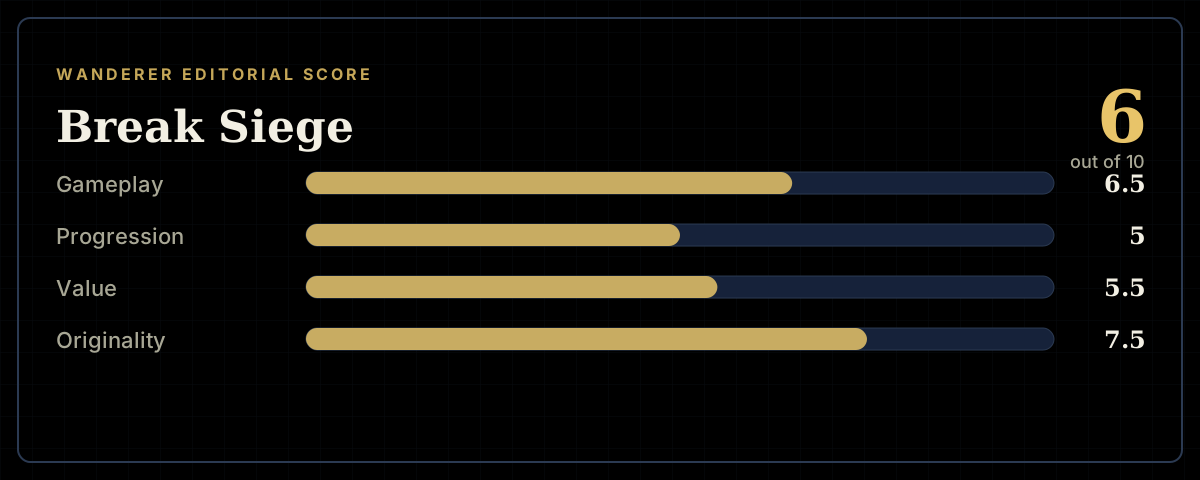
6 / 10
- Developer
- FojoGames
- Publisher
- Edigger
- Released
- 7 May 2025
- Platforms
- Windows
- Genre
- Adventure, Indie, Strategy
- Players
- Single-player
The short version
Biggest strengths
- A genuinely fresh combination of real-time combat and deckbuilding that reviewers consistently say sets it apart from typical turn-based genre entries
- Charming, well-liked pixel art, especially for elite enemies and bosses, alongside a solid soundtrack
- A Slay the Spire-style branching map layered onto a train-upgrade and resource-management structure that reviewers say adds a genuinely distinct strategic layer
Biggest weaknesses
- Significant untranslated text and inconsistent terminology throughout, a real localization gap rather than simply rough phrasing, in a game reviewers say depends heavily on clearly understanding card and system text
- Confirmed, specific balance problems reported by at least one player with over 60 hours invested, who flags them as an ongoing concern rather than early-access growing pains alone
- The current deckbuilding incentive structure reportedly rewards stripping down to a small, optimal set of cards rather than building out a large, varied deck, undercutting a core pillar of the genre
6 / 10
FTL meets Slay the Spire, with a train doing the fighting
Break Siege asks a genuinely interesting design question: what happens if you take the branching, node-based map structure of Slay the Spire, the resource-and-crew management of FTL, and layer real-time combat on top of a deckbuilder's card system? Based on the available English-language review sample — a thin 14 reviews, 12 positive and 2 negative, landing at an overall Positive rating — the answer, for a meaningful share of players, is a genuinely compelling combination worth watching closely through Early Access. "Basically, FTL 2.0, which is a good sign, needs a lot of work with language to be completely enjoyable since it's mostly language-based but the variety so far is quite nice," one reviewer writes, immediately flagging both the strong comparison and a real, specific caveat in the same breath.
A separate, especially detailed reviewer breaks down exactly what's working: "The pixel art style (especially the Elite enemies and the Bosses)... Real time combat mixed with deck building (Synergies!)... Train upgrade and resource management... Slay the spire type map (and the planning that comes with that style of progression)... Good soundtrack." That list captures the specific, layered ambition of the design — this isn't simply a reskinned deckbuilder, but a genuine attempt to fuse several distinct, well-regarded genre mechanics into something new. A separate reviewer frames the appeal in terms of genre-specific "one more run" pull: "Great game so far, and scratches that FTL itch that nothing else has (and want one more turn) really since while being its own unique game/style."
A translation gap serious enough to affect comprehension
The most consistent, most specifically flagged criticism concerns localization, and it's raised as a genuinely structural problem rather than minor rough phrasing. "Much of the game remains untranslated. Large sections of text are missing, nomenclature is inconsistent, tooltips can be inaccurate, balance is a mess, there's nothing to reward building a large deck so you're motivated to strip everything and just play the same five cards every turn, and the turrets all look the same," one detailed reviewer writes, packing several distinct, specific complaints into a single account. For a genre that depends entirely on players understanding exactly what each card and system does before making meaningful strategic decisions, missing or inconsistent text isn't a cosmetic issue — it directly undermines the core deckbuilding experience the game is built around.
That same reviewer's complaint about deck-building incentives is worth taking seriously on its own terms: a system that currently rewards narrowing down to a small, optimal card loadout rather than building out a large, varied deck runs directly against what most deckbuilding roguelikes are designed to reward, and it's a specific, structural balance concern distinct from the translation gap.
Confirmed balance problems from a genuinely invested player
One especially valuable data point in this small review sample comes from a player who tracked the game's balance over an extended period rather than forming a snap judgment. "Idk what I'm doing but it's fun. Lol. Edit: Now I know what I'm doing and it's even more fun. Edit 2: After 60+ hours into the game I can say that as of 20.08.2025 the game has some serious balancing issues which I hope will get patched out with time. The gameplay loop is solid though." That's a genuinely useful account precisely because it comes from someone who clearly enjoys the underlying game enough to invest 60-plus hours, and still identifies real, ongoing balance problems rather than dismissing early frustration as a learning curve. A separate reviewer independently confirms real inconsistency between play sessions: "Every time I jump into this game its 80% different. No idea what changes they made or how I should be playing," describing the practical experience of trying to learn a game whose balance is visibly still in significant flux.
Genuine, if cautious, optimism about where it's headed
Despite these real concerns, this review sample's overall tone toward the developer's trajectory is notably patient and hopeful rather than dismissive. "An incredible niche of an idea in a rogue-like brought to fruition, and unfortunately saddled by the realities of a small production team. Give it time, and with the right direction it's an experience that I believe could be a staple for those who love Mad Max, Snowpiercer, and the Hogwarts Express on a cocktail of adrenaline," one reviewer writes, framing the game's current rough state as a resourcing constraint rather than a fundamental design failure. A separate reviewer offers a similarly patient, specific assessment: "Wow, what a fun little gem! It's still an early ver so it has many minor issues, but the core gameplay loop is pretty solid... Issues I hope will be improved: 1. The tutorial really isn't great."
One reviewer identifies a specific, more mechanical complaint worth including for completeness: "Very cool concept for a deck builder roguelike with some very cool ideas and a great theme. Has some nice looking enemy design and the real-time combat is really interesting, but there isn't much making this unique among deck builders beyond that, and playthroughs get very samey pretty quick. The second train shakes things up in a pretty fun way though. If more updates in the future add more variety like that then I'd say this game might have enough replayability to be worth checking out."
The achievement data reflects a genuinely young, unsettled Early Access state: across 29 total achievements, the spread runs from 69% at the top down to two achievements sitting at a literal 0.0%, meaning essentially no tracked player has completed them yet. That's an unusually extreme range even by Early Access standards, consistent with a game whose hardest content and balance are still very much in flux.
Where this leaves it
Break Siege combines real-time combat with deckbuilding in a way that reviewers consistently credit as genuinely fresh, backed by charming pixel art and a well-liked branching-map structure inspired by two distinct, respected genre touchstones. Its current Early Access state carries real, specific problems — significant missing translation, confirmed balance issues from long-term players, and a deck-building incentive structure that currently discourages the genre's usual variety-seeking play — but this review sample's overall tone remains patient rather than dismissive, treating these as fixable growing pains for a small team's ambitious idea. Worth watching closely and trying now specifically for FTL and Slay the Spire fans excited by the concept and willing to tolerate real, acknowledged rough edges; worth waiting for further updates for anyone who wants a more polished, balanced experience before committing.
Pros and cons
Pros
- A genuinely fresh combination of real-time combat and deckbuilding that reviewers consistently say sets it apart from typical turn-based genre entries
- Charming, well-liked pixel art, especially for elite enemies and bosses, alongside a solid soundtrack
- A Slay the Spire-style branching map layered onto a train-upgrade and resource-management structure that reviewers say adds a genuinely distinct strategic layer
- Meta-progression across multiple unlockable trains and crews, giving dedicated players real build variety to chase across runs
Cons
- Significant untranslated text and inconsistent terminology throughout, a real localization gap rather than simply rough phrasing, in a game reviewers say depends heavily on clearly understanding card and system text
- Confirmed, specific balance problems reported by at least one player with over 60 hours invested, who flags them as an ongoing concern rather than early-access growing pains alone
- The current deckbuilding incentive structure reportedly rewards stripping down to a small, optimal set of cards rather than building out a large, varied deck, undercutting a core pillar of the genre
- Progression is described by at least one detailed reviewer as growing samey fairly quickly once the initial novelty of the real-time-plus-deckbuilding hook wears off
- An unclear tutorial, and no way to swap between multiple unlocked train cores before starting a run despite having them available
Screenshots
-

Break SiegeImage: Edigger via Steam -

Break SiegeImage: Edigger via Steam -

Break SiegeImage: Edigger via Steam -
How the review scores each part of the gameWanderer Editorial -
The short versionWanderer Editorial