Game review
Blast Off! Summer Showdown
6 / 10
- Developer
- SAT-BOX
- Publisher
- SAT-BOX
- Released
- 5 August 2026
- Platforms
- Windows
- Genre
- Party, Racing, Sports
- Monetisation
- One-time purchase, no DLC listed at launch
- Players
- Up to 4 players in shared/split-screen PvP, plus Remote Play Together; CPU opponents fill out single-player. Steam's own category list does not include a dedicated online-play tag.
The short version
Blast Off! Summer Showdown packs ten short, summer-themed party minigames — rocket-firework duels, a somen-noodle slide race, a mosquito-swatting shooting gallery — into a Free Mode and a scored Party Mode, with CPU opponents standing in when a human fourth player isn't around. It's a clean, cheap entry from a developer that has built dozens of similarly-sized collections before, and the individual game concepts read as more varied than most budget party packs manage. Two days after launch there is no independent record of how it actually plays: zero user reviews, zero concurrent players at the time of this check, and no achievement list to read for a completion curve.
Biggest strengths
- Ten distinct minigame concepts (firework duels, a noodle-slide race, a beetle-sumo battle, a grilled-skewer grab) show more variety of idea than most budget party collections bother with
- CPU opponents fill every game in Free Mode and Party Mode, so the collection is playable solo or with fewer than four humans rather than requiring a full lobby
- A clean one-time NZ$9.36 launch price with no DLC or season pass currently listed, unlike the developer's earlier "Party Party Time" series, which sells several paid content packs per entry
Biggest weaknesses
- Two days after release the Steam page carries zero user reviews and a live player-count check returned zero concurrent players, so there is no independent record of how the ten games actually feel to play
- Steam's own category list for this build shows split-screen PvP and Remote Play Together but no dedicated online-multiplayer tag, despite a separate Nintendo Switch announcement describing an "Online Mode" — buyers should not assume the PC version matches that
- The store page states controllers are required for local multiplayer, which is a real limitation for a genre players often expect to run on keyboard-and-mouse for at least one player
Who it's for: Small groups or families who want a cheap, controller-based couch party game for an afternoon, and who are comfortable being among its first buyers with no reviews to check against.
Our recommendation: The minigame list and modes look like reasonable value at the discounted price, and local play doesn't depend on anyone else owning the game — but there's no outside evidence yet that any of the ten games actually holds up, and the developer's past collections draw recurring complaints about rough, unpolished minigames.
6 / 10
Ten small games, built by a studio that's made fifty of them
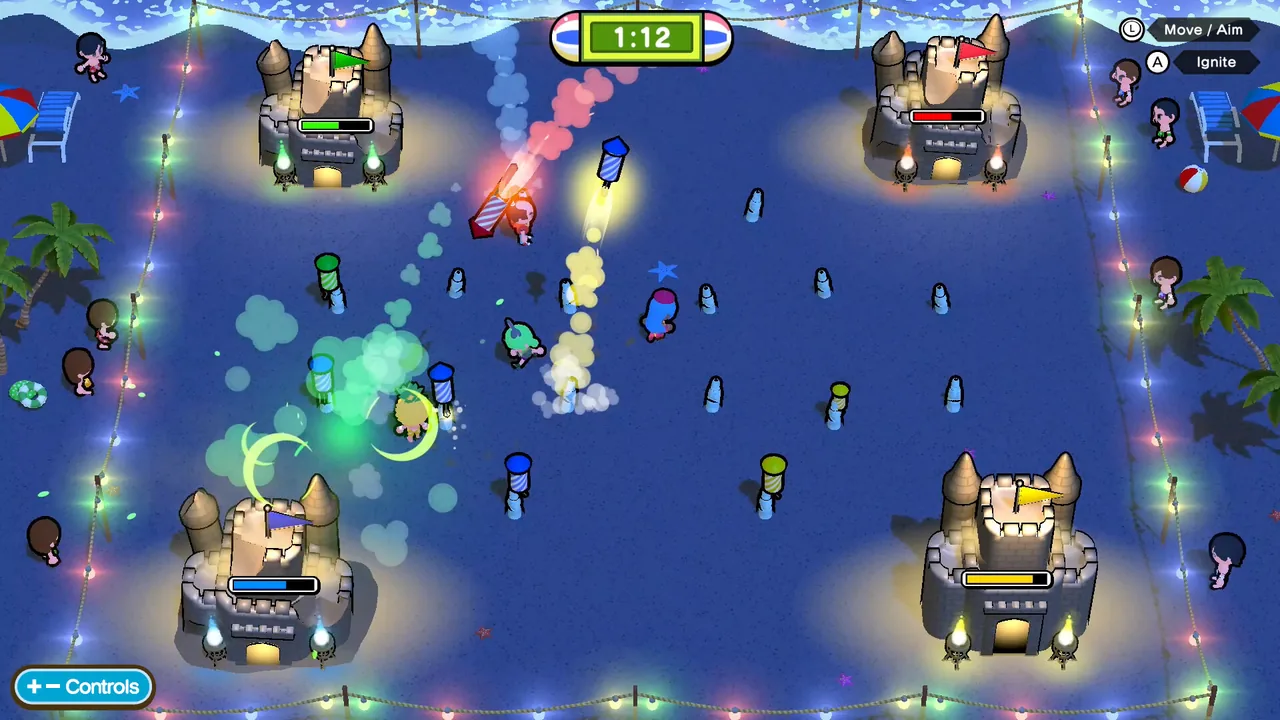
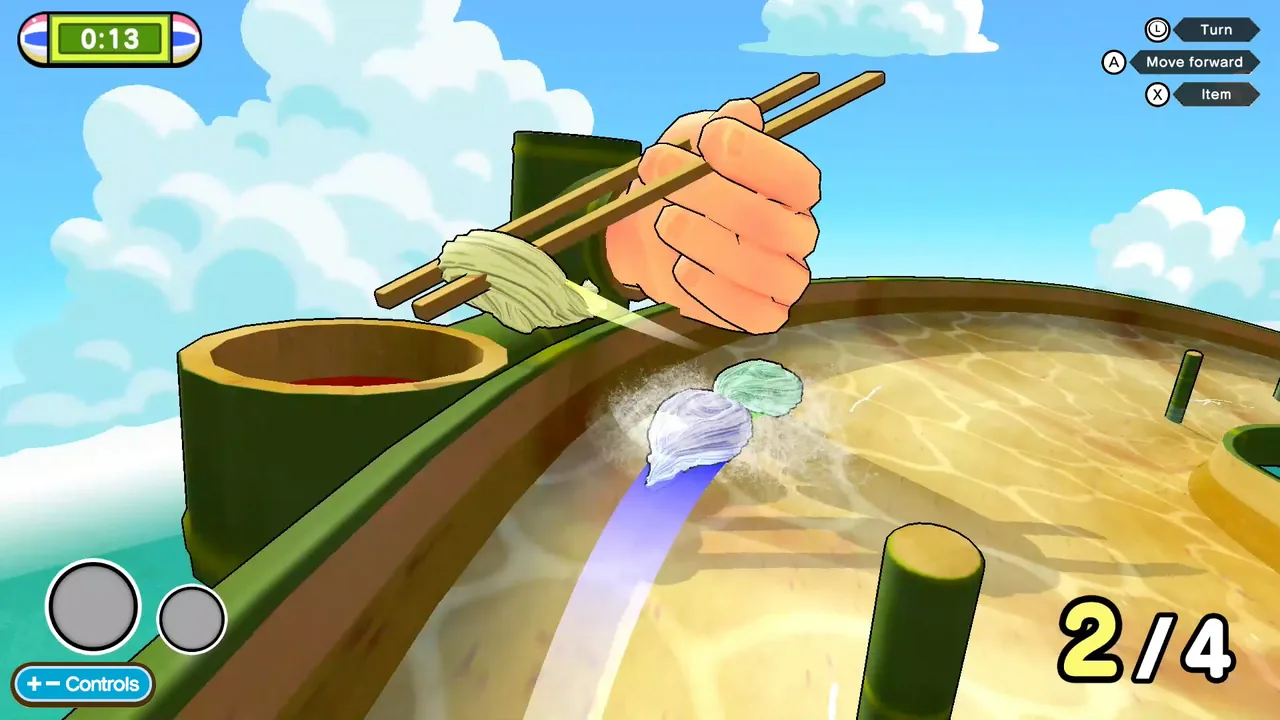
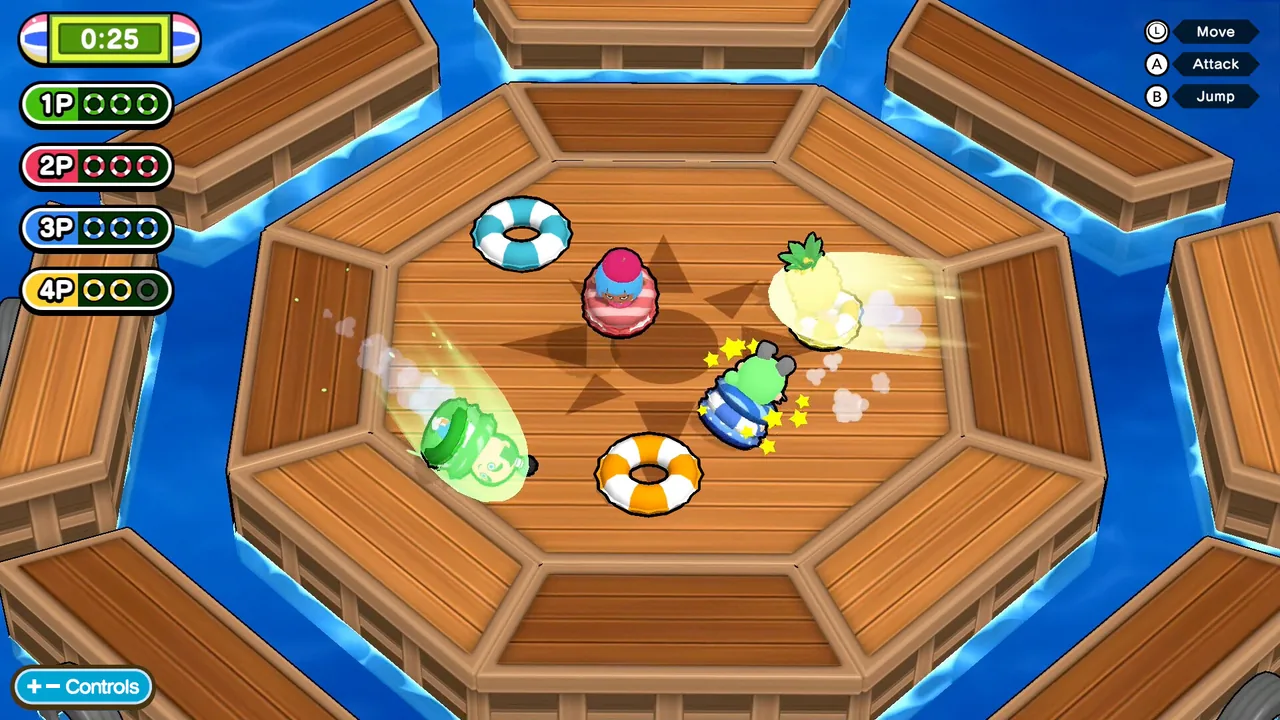
Blast Off! Summer Showdown is a couch party collection built around a single premise: ten short, summer-themed minigames, playable alone against CPU opponents or with up to four players on one screen. The list reads more inventively than most games in this budget bracket manage. Fire! Rocket Fireworks has players launching fireworks to knock down rivals' sandcastles. Somen Slide races players down a flowing noodle chute, dodging obstacles. Float Ring Battlers is inflatable- ring sumo, knocking opponents into the sea three times to win. Fan Blast! hands players a remote- controlled fan and has them use wind direction to steer collectibles their way. BBQ Grab Battle is a timing minigame around flipping and grabbing skewers off a grill. Frozen Treat Tower is a stacking game, Beetle Battle a head-to-head shoving match between rival beetles, Trick Surfing a wave-riding trick contest, Sandal Toss a target-throwing game that lets players knock rivals' sandals off target, and Smack the Mosquitoes! a swatting gallery that rewards chasing rare gold and rainbow bugs for bonus points. None of these ideas are individually new to the party genre, but ten distinct verbs — launch, slide, ram, blow, flip, stack, shove, ride, throw, swat — is a wider spread than a lot of collections at this price offer, where the same core mechanic often gets reskinned three or four times to pad the count.
Free Mode, Party Mode, and what "multiplayer" actually means here
The structure sits on two modes. Free Mode is exactly what it sounds like: pick a game, jump straight in. Party Mode strings a chosen set of the ten games together back-to-back and totals the score across all of them, so the player or team with the best combined run across the set takes the title — a real structural improvement over just cycling one favourite game, since it forces engagement with weaker entries in the lineup to stay competitive overall. CPU opponents are available throughout, so a solo player, or a group smaller than four, isn't locked out of any game.
Multiplayer needs a careful read, because the marketing for this game isn't consistent across platforms. A Nintendo Switch announcement for the same title describes a dedicated "Online Mode" with quick matches and private rooms. The Steam store page for this build does not list an online- multiplayer or online-co-op category anywhere — its category tags are Single-player, Multi-player, PvP, Shared/Split Screen PvP, Shared/Split Screen and Remote Play Together, the last of which streams a local session to remote friends rather than running true networked matches. Buyers expecting the Switch version's online rooms to be present on Steam should not assume that without checking the store page themselves closer to purchase. The store page is also specific about one practical requirement that's easy to miss: controllers are required for local multiplayer, which rules out the common party-game fallback of splitting one keyboard between two players.
The SAT-BOX pattern, and what it predicts
SAT-BOX isn't a first-time developer finding its feet — its Steam catalogue runs to roughly fifty titles, mostly small VR sports sims, crane-game machines, cooking simulators (the "Make it!" series covers gyoza, takoyaki, sushi, pancakes and more) and, most relevantly, a "Party Party Time" minigame-collection series now three entries deep. That back catalogue is the closest thing to evidence available for how Blast Off! is likely to play, since the game itself has none yet.
The pattern is mixed but not alarming. Party Party Time 2's own review sample — a small one, eleven positive against three negative — praises it as decent casual couch entertainment for the price while repeatedly calling the individual minigames "rough around the edges" next to genre leaders like Mario Party, and criticising missing online play and thin exit options. Party Party Time 3 fares better in its (smaller still) sample, six positive against one negative, with reviewers specifically calling out Remote Play Together as a working way to play with distant friends. Both entries in that series also sell several small paid "pack" DLCs — extra minigame bundles at a few dollars each — a monetisation habit worth knowing about even though Blast Off! currently lists no DLC of its own. None of this transfers directly to a different game, but it's the honest shape of what a buyer is betting on: a developer that reliably ships playable, inexpensive party content, and just as reliably draws "needed more polish" as its most common complaint.
What the numbers say two days in
Checked against Steam's own public data on 7 August 2026, two days after release: zero user reviews of any kind, in any language. A direct call to Steam's GetNumberOfCurrentPlayers endpoint returned zero concurrent players at the moment of the check — a single dated snapshot, not a claim about any other moment. There is no achievement list on the store page, and Steam's public achievement-percentage API returns nothing for this app, so there's no completion curve to read for where interest falls off, the way there sometimes is on a game with a populated achievement set. The news feed carries no posts. None of this means the game is broken or that nobody has bought it — Steam's review threshold takes real purchase volume to clear, and a party game bought for a family weekend may simply not generate reviews quickly — but it does mean nobody outside SAT-BOX has said anything checkable yet about whether these ten games are fun in practice.
The one structural point in the game's favour here, unlike some brand-new multiplayer launches, is that a population of zero doesn't strand it: Free Mode and Party Mode both work solo against CPU opponents, and local split-screen for up to four doesn't need anyone else to own the game at all. Whatever verdict eventually forms in the reviews will be about whether these ten specific minigames are worth ten dollars and an evening, not about whether there's anyone left to play with.
Final verdict
Blast Off! Summer Showdown earns a 6.0. The minigame list is more varied than its price bracket usually delivers, the Free Mode and Party Mode structure gives it more shape than a loose collection, and CPU opponents mean it doesn't need a full house to be playable. It doesn't score higher because there is currently nothing beyond the store page and its developer's track record to confirm any of that holds up in practice — zero reviews, zero concurrent players at the time of writing, no achievement data, and a developer whose most comparable prior release drew consistent "needed more polish" complaints alongside its praise. If a cheap, controller-based party game for a summer evening sounds appealing and the minigame list reads well to you, the discounted price makes it a low-risk buy. Anyone wanting confirmation that Blast Off! specifically delivers on that promise will have to wait for a review sample that doesn't currently exist.
Pros and cons
Pros
- Ten distinct minigame concepts (firework duels, a noodle-slide race, a beetle-sumo battle, a grilled-skewer grab) show more variety of idea than most budget party collections bother with
- CPU opponents fill every game in Free Mode and Party Mode, so the collection is playable solo or with fewer than four humans rather than requiring a full lobby
- A clean one-time NZ$9.36 launch price with no DLC or season pass currently listed, unlike the developer's earlier "Party Party Time" series, which sells several paid content packs per entry
- Party Mode's back-to-back scoring across a chosen set of games gives repeat sessions a structure beyond replaying one favourite minigame on loop
Cons
- Two days after release the Steam page carries zero user reviews and a live player-count check returned zero concurrent players, so there is no independent record of how the ten games actually feel to play
- Steam's own category list for this build shows split-screen PvP and Remote Play Together but no dedicated online-multiplayer tag, despite a separate Nintendo Switch announcement describing an "Online Mode" — buyers should not assume the PC version matches that
- The store page states controllers are required for local multiplayer, which is a real limitation for a genre players often expect to run on keyboard-and-mouse for at least one player
- The developer's directly comparable earlier release, Party Party Time 2, drew recurring complaints in its own review sample about minigames feeling "rough around the edges" next to genre leaders, and its sequel shipped without online play at all
- English and Japanese are the only supported languages, and there is no achievement list on the store page or through Steam's public achievement API to check completion or drop-off
Screenshots
-
Blast Off! Summer ShowdownImage: SAT-BOX via Steam -
Blast Off! Summer ShowdownImage: SAT-BOX via Steam -
Blast Off! Summer ShowdownImage: SAT-BOX via Steam -
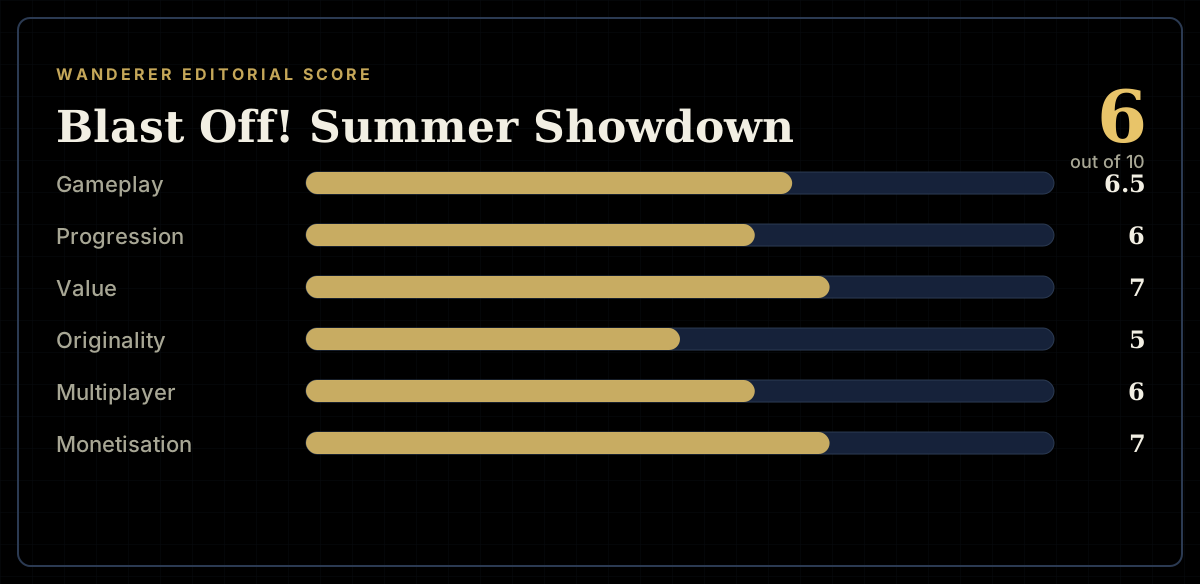
How the review scores each part of the gameWanderer Editorial -
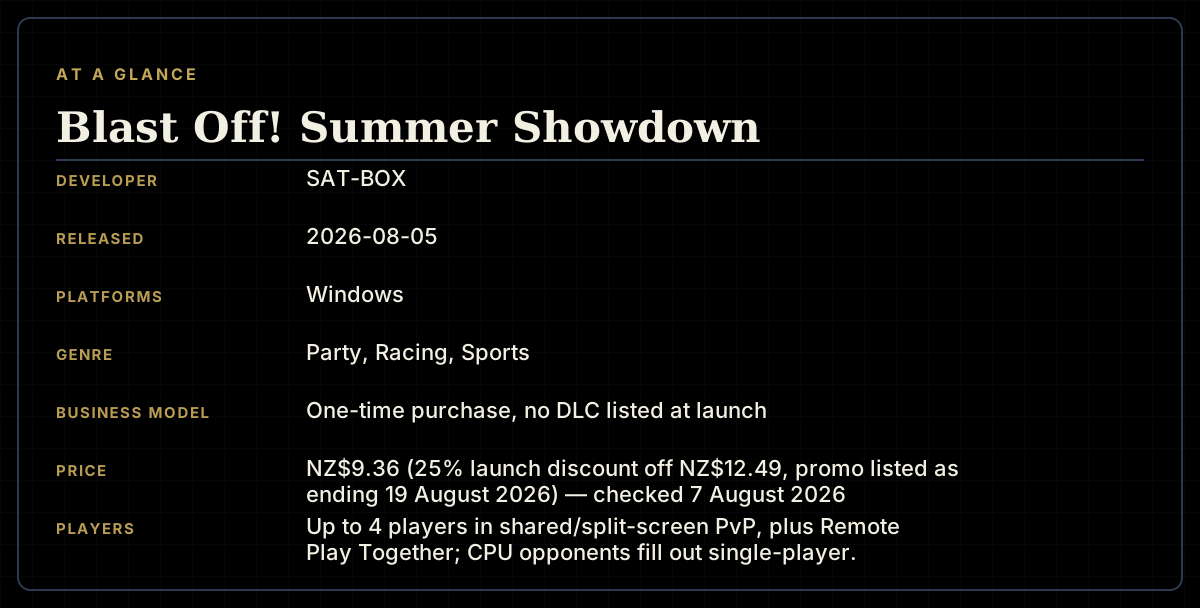
The game at a glanceWanderer Editorial -
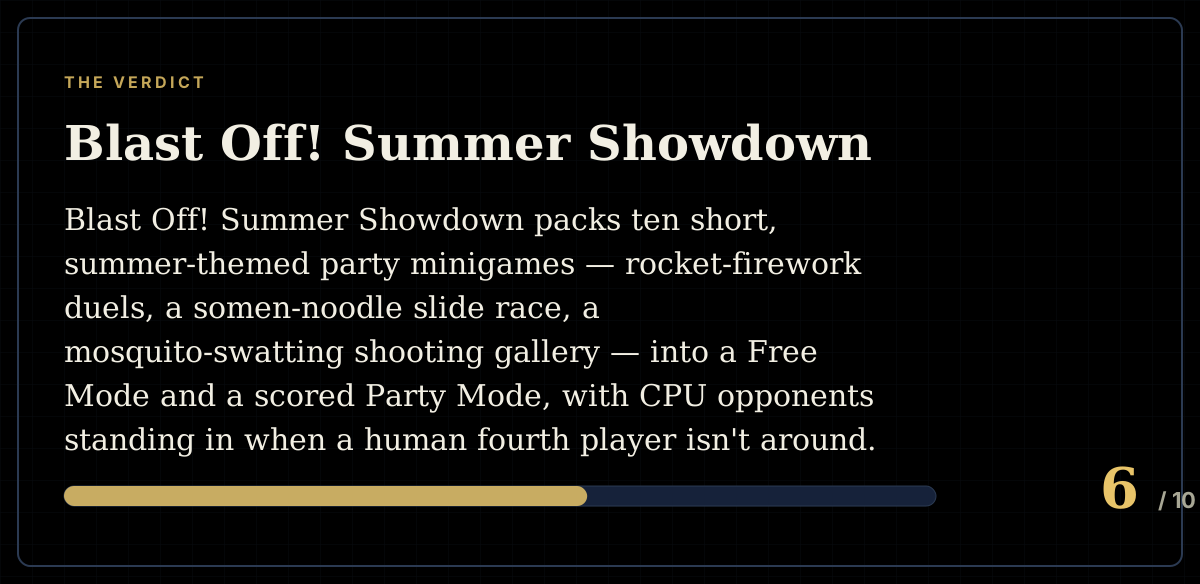
The short versionWanderer Editorial