Game review
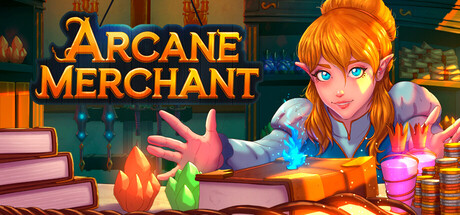
Arcane Merchant
5 / 10
- Developer
- Findie Studios
- Publisher
- Findie Studios
- Released
- 1 June 2026
- Platforms
- Windows
- Genre
- Simulation, Casual, RPG
- Monetisation
- One-time purchase, with a paid expansion available
- Players
- Single-player
The short version
Arcane Merchant, released 1 June 2026 by Findie Studios, hands players a shop in a medieval fantasy town to stock, staff and grow while sending adventurers out for rare goods. It sits Very Positive with English-speaking players, 84.6% across a large sample of 273 reviews as of this check, and reading through a wide slice of that sample turns up an unusually strong pattern: fans and critics converge independently on the same specific gaps rather than disagreeing about quality. Multiple reviewers on both sides say the game underdelivers on its own magical premise — one detailed positive review notes the "arcane" element amounts to casting a single spell and otherwise hitting thieves with a book, with no enchanting or potion-making despite the concept clearly inviting it. A similarly wide cross-camp consensus describes progression as heavily railroaded through a mandatory research tree, and several reviewers, again on both sides, independently say the game feels more like an early access build than a finished full-price release. Separately, multiple reviewers state as fact, rather than speculation, that the game uses AI-generated art for its icons and adventurer map, and one detailed review makes a specific, serious allegation — that particular NPC outfits were lifted directly from Baldur's Gate 3 — that this review has not investigated and cannot verify.
Biggest strengths
- The core loop of stocking shelves, managing customers and sending adventurers out for rare goods draws genuine, repeated praise as addictive, with multiple reviewers describing losing hours to it despite normally avoiding tycoon games for exactly that reason
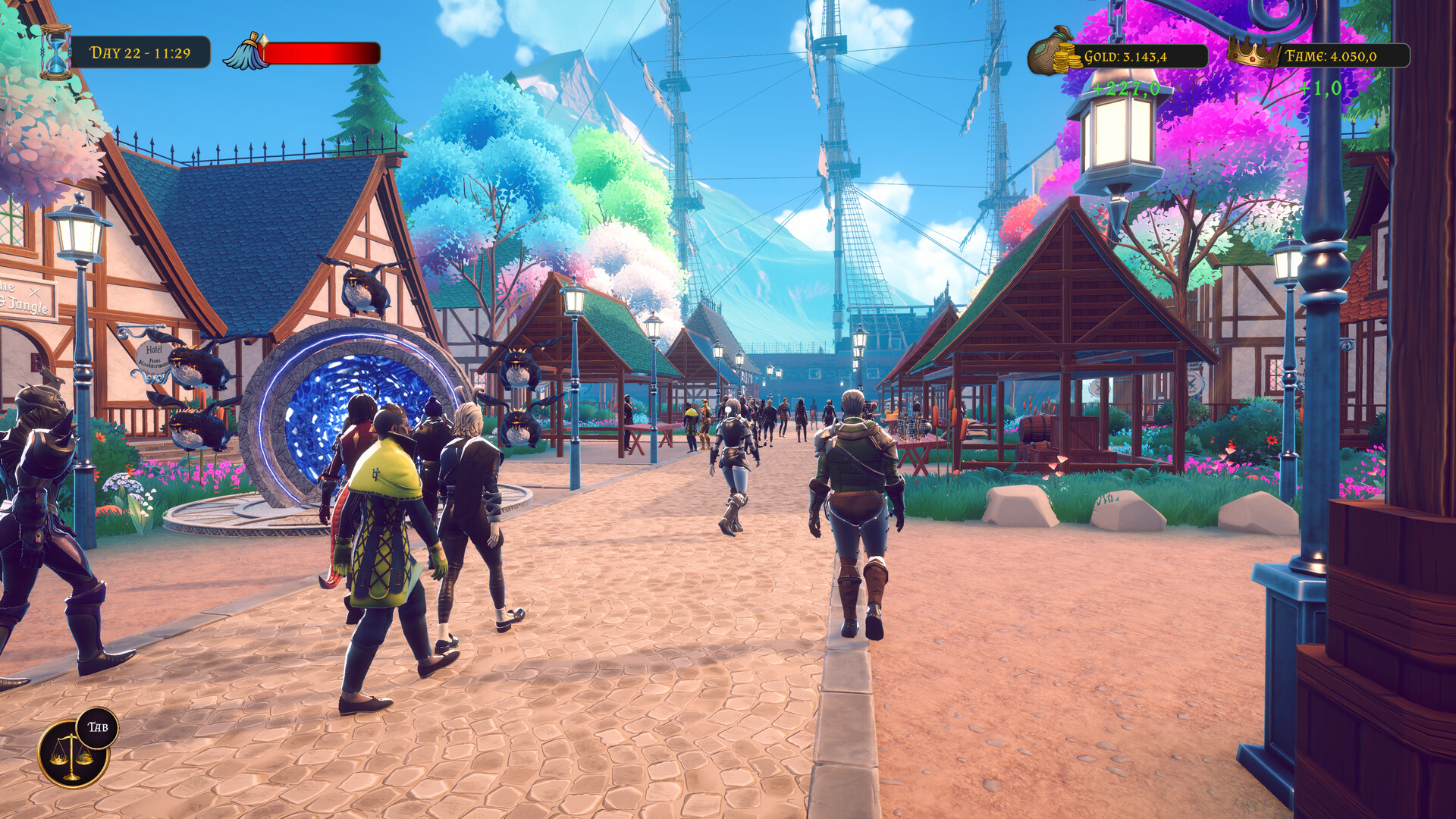
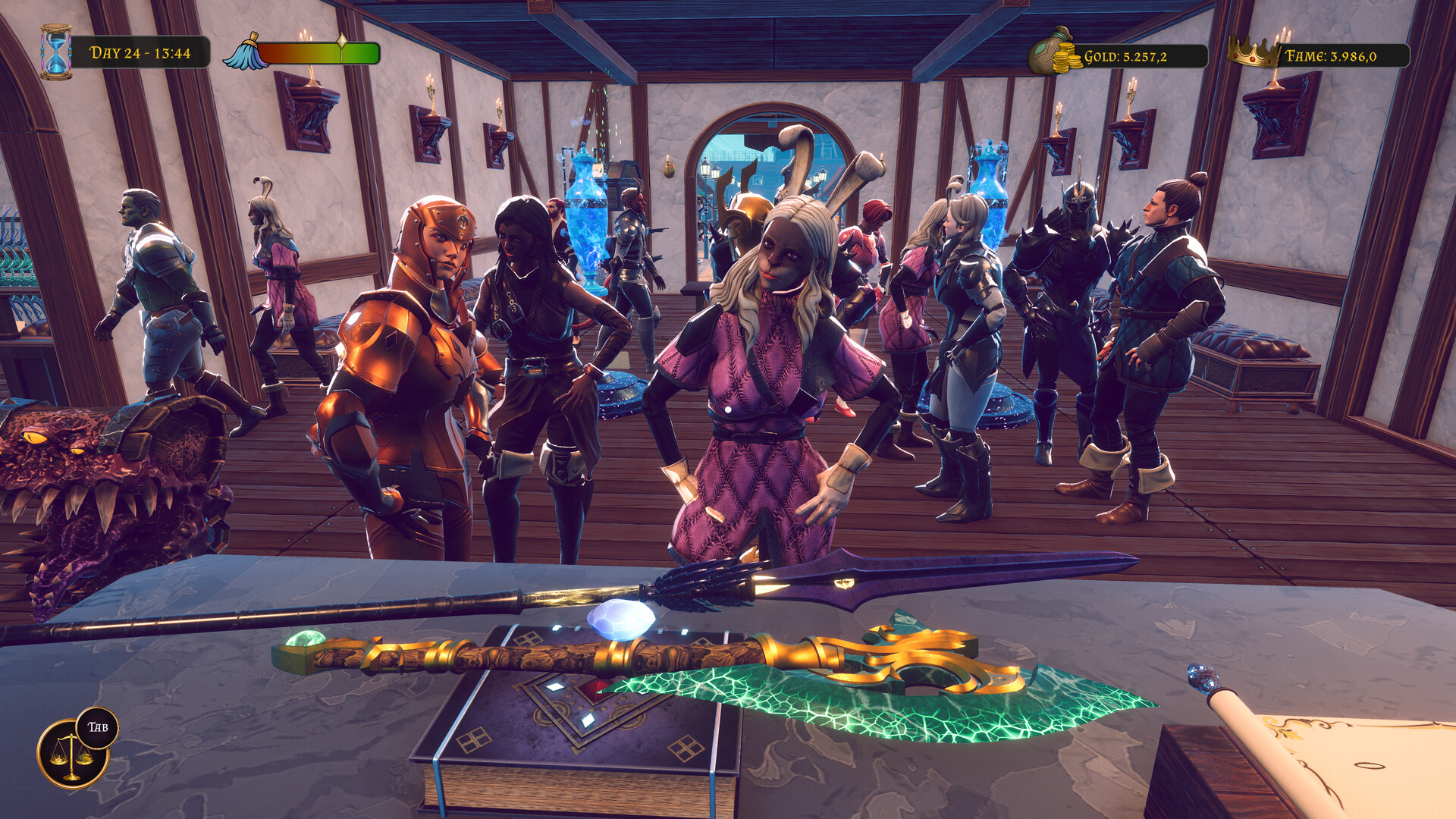
- NPC customers are specifically praised for distinct visual designs rather than repeated character models, and the shop visibly attracting wealthier-looking customers as it grows draws specific praise as a satisfying visual progression signal
- The fantasy art style and overall atmosphere are described by many reviewers as charming and genuinely cozy, and the late game's ability to let systems run with less manual input draws specific approval from players who want a more relaxed pace once established
Biggest weaknesses
- A cross-camp consensus, including from reviewers who otherwise recommend the game, reports that the "arcane" premise is underdelivered: one detailed positive review notes combat amounts to casting a single spell and otherwise hitting enemies with a book, with no enchanting or potion-making system despite the concept plainly inviting one
- Progression is widely described, by both fans and critics, as heavily railroaded through a mandatory research tree that gates nearly every shop customization option behind requirements players may not want to pursue, with several reviewers on both sides explicitly asking for a less restrictive mode
- Multiple reviewers, independently and on both sides of the recommendation split, describe the full release as feeling more like an early access build than a finished product, several saying they would be less critical if it had simply launched labelled as such
Who it's for: Fans of cozy shop-management tycoon games who want a charming fantasy setting and are comfortable with the game currently delivering less magical depth and more restrictive progression than its premise promises.
Our recommendation: Worth it on sale if the core shopkeeper loop appeals to you and you go in without expecting deep spellcraft or open-ended shop design; wait for updates addressing the reported progression bugs and railroading before paying full price.
5 / 10
Introduction
Arcane Merchant, released 1 June 2026 by Findie Studios, invites players to open a shop in a medieval fantasy town — stocking shelves with potions and artifacts, sending adventurers out for rare goods, and growing a business from a single counter into a thriving storefront. It sits Very Positive with English-speaking players, 84.6% across a substantial 273-review sample, and reading through a wide slice of that sample turns up something more specific and useful than a simple quality split: fans and critics converge independently on the same handful of gaps, which makes this a game whose actual shape is unusually easy to describe with confidence, even where its overall reception stays high.
A genuinely addictive shopkeeper loop
The praise here is real and specific. Multiple reviewers describe losing hours to the core loop of stocking, selling and expanding despite normally avoiding tycoon games for exactly that reason, and NPC customers draw particular credit for distinct visual designs rather than the same repeated character model — a detail several reviewers say too many similar games get wrong. The shop visibly attracting wealthier-looking customers as it grows is repeatedly cited as a satisfying signal of progress, and the late-game ability to let established systems run with less manual intervention draws specific approval from players who want the pace to ease once the early grind is behind them.
A magic premise both sides agree is underdelivered
The single most interesting pattern in this review's research is a specific complaint that shows up from reviewers who clearly like the game as much as from those who don't. One detailed, heavily positive review states plainly that the "Arcane" half of Arcane Merchant amounts to casting exactly one spell and otherwise resorting to hitting thieves with a book, with no enchanting or potion-making system despite the premise obviously inviting one. Separate reviewers, including critical ones, make the identical point independently. When fans and critics reach the same specific conclusion about a headline feature without any apparent coordination, that's a strong signal about where the current build genuinely falls short of its own concept.
Progression that both camps call railroaded
A second cross-camp consensus concerns structure rather than content. Reviewers on both sides of the recommendation split describe progression as heavily gated behind a mandatory research tree that must be worked through in a fixed order to unlock nearly anything — staff, shop customization, new stock — regardless of what a given player actually wants to prioritize. More than one otherwise satisfied reviewer explicitly asks for a mode with less railroading, echoing almost word-for-word the frustration voiced by critical reviewers who found the same structure a dealbreaker. Related complaints about pacing appear on both sides too: several reviewers, fans included, describe the late game dragging once the novelty of unlocking new tiers wears off.
"Feels like early access," from people who like it
A third specific, cross-camp pattern is worth naming directly because of how consistently it's phrased. Multiple reviewers — again, on both sides of the recommendation line — independently describe the full release as feeling more like an early access build than a finished product, with more than one saying explicitly they'd judge it less harshly if it had simply launched under that label rather than as a complete NZD 23-plus release. That's a meaningfully different criticism than "the game is bad" — it's specific feedback about scope and finish relative to price, made by people who otherwise recommend buying it.
Claims about the game's assets this review cannot verify
Two related but distinct claims recur in this sample and deserve careful, separate treatment. First, multiple reviewers state as established fact — not as a guess or a vibe — that the game uses AI-generated art for its icons and its adventurer map, and more than one reviewer reports refunding the game specifically for that reason. Second, and more seriously, one detailed reviewer makes a specific allegation that goes beyond AI-art concerns entirely: that particular NPC outfits in the game were directly lifted from Baldur's Gate 3, and that reviewer references an ongoing, visible dispute with the developer in that review's own comment section over the claim. This review has not inspected the game's asset files, has not compared them against Baldur's Gate 3's assets, and has no way to verify either claim independently. Both are reported here only as specific, attributed statements from reviewers — the first stated with unusual confidence across multiple independent sources, the second a serious single-source accusation this review cannot corroborate — not as confirmed facts about how the game was made.
Real bugs, and a marketing tone mismatch
Beyond the structural complaints above, this review found concrete technical reports worth noting. One detailed reviewer describes purchasing a paid expansion that the game's research tree failed to recognize as owned, blocking further progress entirely, and separate reviewers report crashes within their first hours of play. Separately, several reviewers push back specifically on the game's own marketing: sold as cozy and stress-free, they report that mandatory cleaning and restocking busywork actively undercuts that promised tone rather than supporting it, with one detailed review titling their complaint "This Is Stressful, Not Cozy."
Final Verdict
Arcane Merchant has a genuinely addictive core loop and real charm that a large, mostly satisfied review sample backs up clearly. What keeps this score down is that its most substantive criticisms aren't one-sided — fans and critics alike independently point to the same underdelivered magic premise, the same railroaded progression, and the same sense that a full-price release currently plays like an early access build. Layered on top of that, this review found both a multiply-confirmed use of AI-generated art and a serious, single-source, unverified allegation of lifted assets that any prospective buyer deserves to know exists, even though this review cannot settle it either way. Worth trying if the core loop appeals to you and your expectations are set accordingly; not yet the complete, magical shopkeeper experience its own premise promises.
Pros and cons
Pros
- The core loop of stocking shelves, managing customers and sending adventurers out for rare goods draws genuine, repeated praise as addictive, with multiple reviewers describing losing hours to it despite normally avoiding tycoon games for exactly that reason
- NPC customers are specifically praised for distinct visual designs rather than repeated character models, and the shop visibly attracting wealthier-looking customers as it grows draws specific praise as a satisfying visual progression signal
- The fantasy art style and overall atmosphere are described by many reviewers as charming and genuinely cozy, and the late game's ability to let systems run with less manual input draws specific approval from players who want a more relaxed pace once established
- Several reviewers who tested earlier betas and Next Fest demo versions confirm real, substantial development history behind the release, and multiple reviewers frame their criticism as hope for meaningful post-launch expansion rather than a reason to give up on it
Cons
- A cross-camp consensus, including from reviewers who otherwise recommend the game, reports that the "arcane" premise is underdelivered: one detailed positive review notes combat amounts to casting a single spell and otherwise hitting enemies with a book, with no enchanting or potion-making system despite the concept plainly inviting one
- Progression is widely described, by both fans and critics, as heavily railroaded through a mandatory research tree that gates nearly every shop customization option behind requirements players may not want to pursue, with several reviewers on both sides explicitly asking for a less restrictive mode
- Multiple reviewers, independently and on both sides of the recommendation split, describe the full release as feeling more like an early access build than a finished product, several saying they would be less critical if it had simply launched labelled as such
- Multiple reviewers state as established fact, not speculation, that the game uses AI-generated art for icons and its adventurer map, with more than one explicitly refunding the game on that basis alone
- One detailed reviewer makes a specific, serious allegation that particular NPC outfits were directly lifted from Baldur's Gate 3, and references a follow-up dispute with the developer in the review's comment section; this review has not investigated the game's assets and cannot verify this claim, and reports it only as a specific, attributed accusation
- Multiple reviewers report real bugs, including one detailed account of a purchased paid expansion not being recognized by the research tree, blocking further progress, and separate reports of crashes within the first hours of play
- The game is marketed as cozy and stress-free, but multiple reviewers report mandatory cleaning and restocking busywork that they say actively works against that promised tone
Screenshots
-
Arcane MerchantImage: Findie Studios via Steam -
Arcane MerchantImage: Findie Studios via Steam -
Arcane MerchantImage: Findie Studios via Steam -
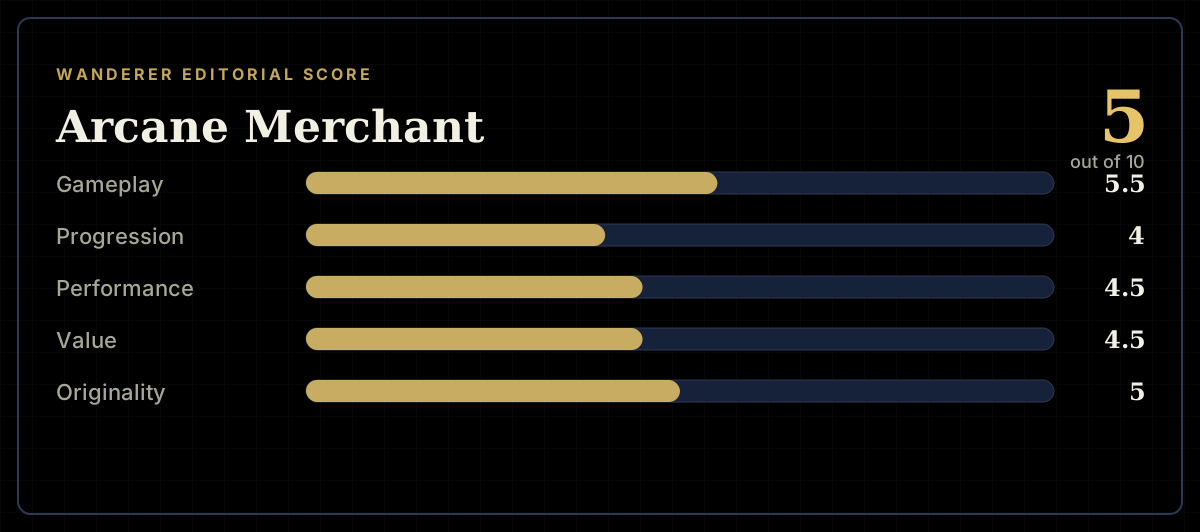
How the review scores each part of the gameWanderer Editorial -
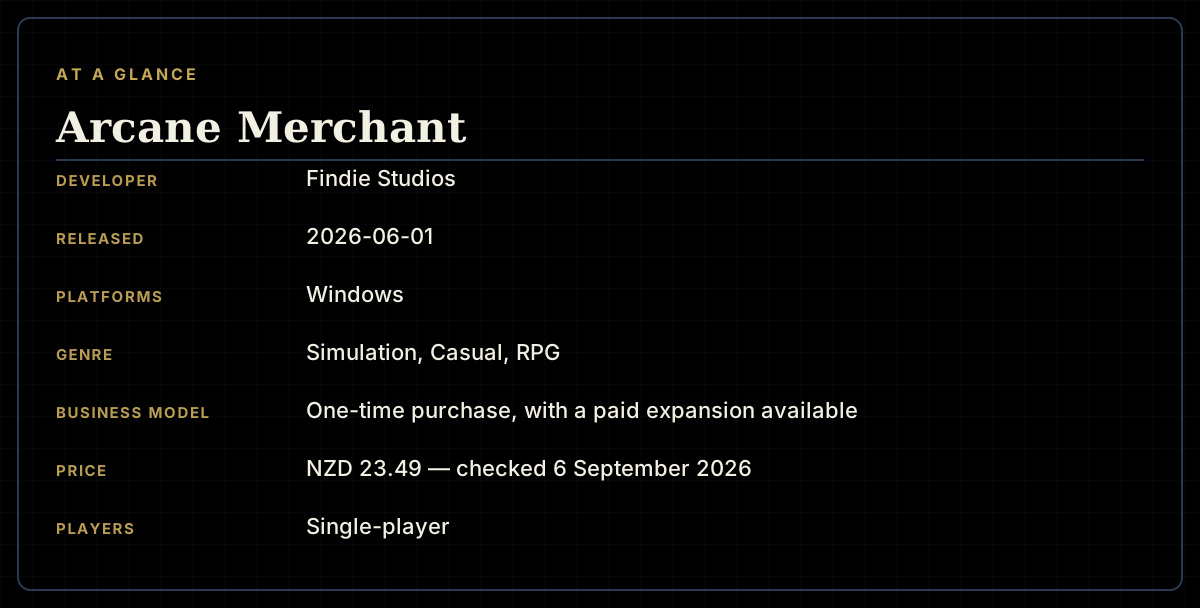
The essentials at a glanceWanderer Editorial -
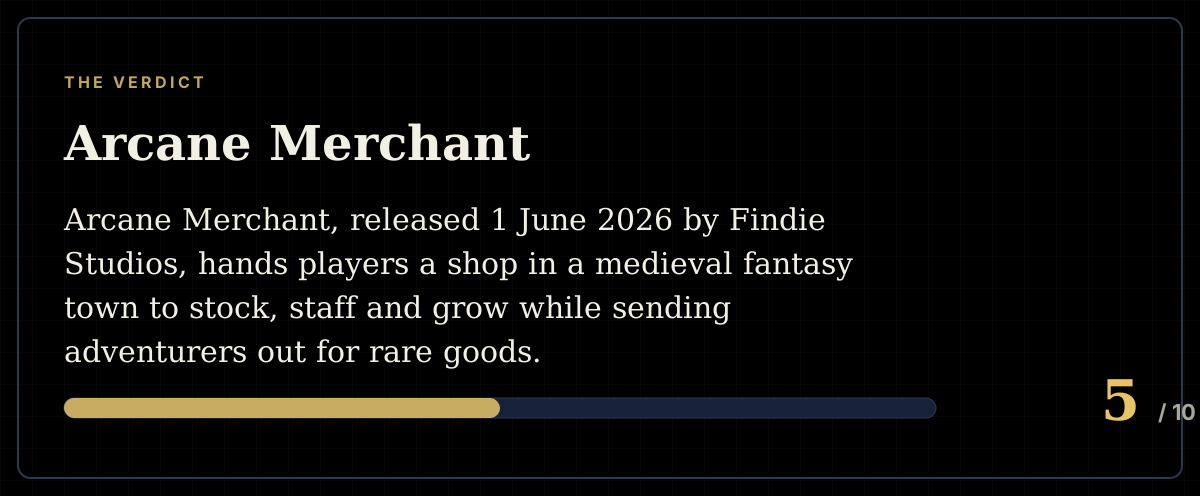
The short versionWanderer Editorial