Game review
Amnesia: The Dark Descent
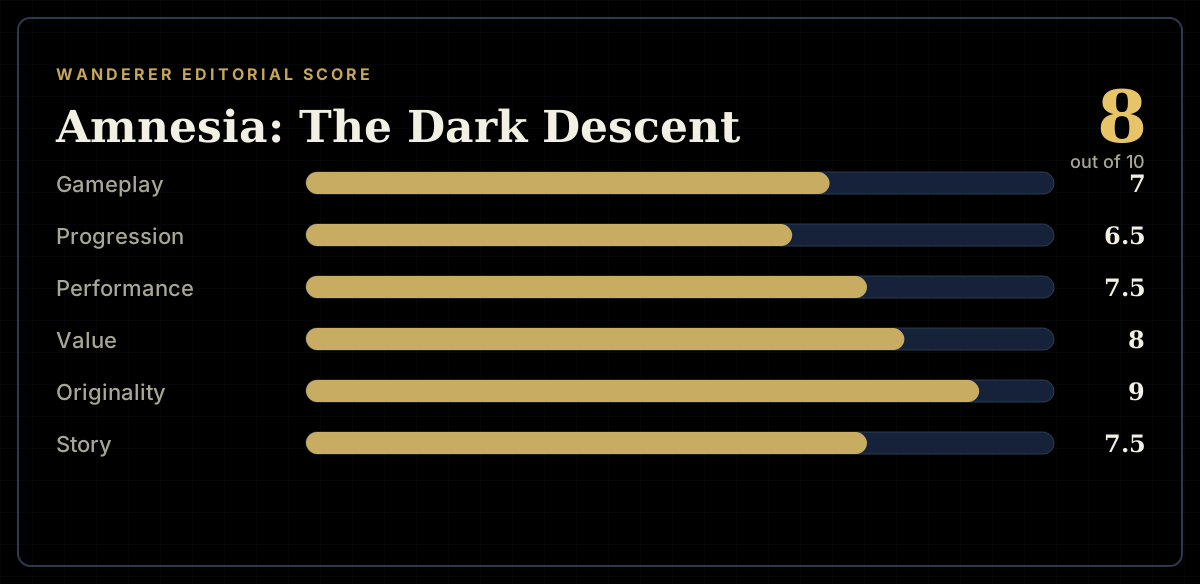
8 / 10
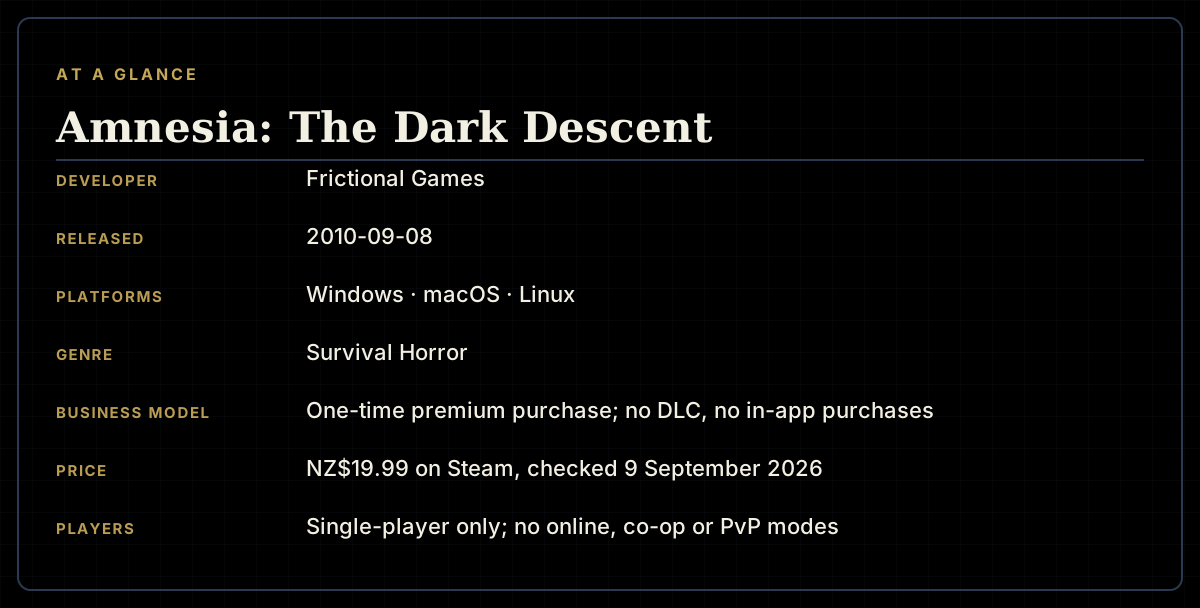
- Developer
- Frictional Games
- Publisher
- Frictional Games
- Released
- 8 September 2010
- Platforms
- Windows, macOS, Linux
- Genre
- Survival Horror
- Monetisation
- One-time premium purchase; no DLC, no in-app purchases
- Players
- Single-player only; no online, co-op or PvP modes
The short version
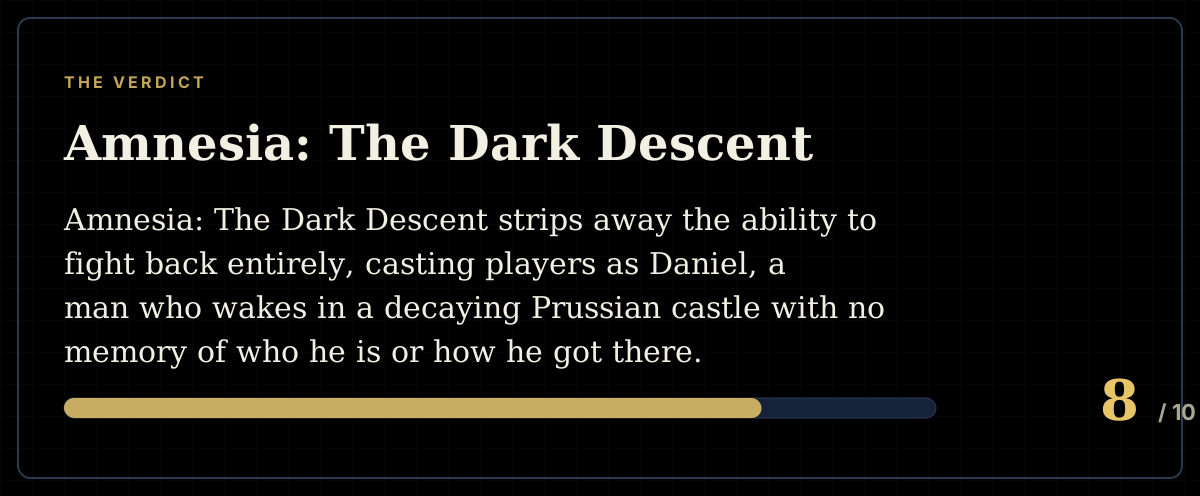
Amnesia: The Dark Descent strips away the ability to fight back entirely, casting players as Daniel, a man who wakes in a decaying Prussian castle with no memory of who he is or how he got there. Reviewers widely credit that single design decision — total powerlessness against whatever's hunting you — with making the game genuinely, uniquely frightening in a way combat- capable horror games rarely achieve. "Games like Doom, Resident Evil, Dead Space... fail to send chills up my spine," one reviewer writes, "because they made the mistake of giving me a way to fight back."
A specific, mechanically literate dissent runs alongside that praise, worth engaging with directly rather than dismissing as a minority complaint: several detailed reviewers argue the game's scripted monster encounters follow a learnable, exploitable pattern — hide in a dark corner, wait for the scare music to subside, and the enemy disappears permanently rather than patrolling persistently. That's a real critique of the game's underlying systems distinct from its atmosphere, and it's worth understanding before assuming every player's experience matches the game's fearsome reputation.
Biggest strengths
- A genuinely unique sense of powerlessness, with reviewers consistently crediting the total absence of combat options with making the game more frightening than action-capable horror titles
- Exceptional atmosphere and sound design, widely described as still effective and unsettling well over a decade after release
- A genuinely engaging mystery-driven story, told through environmental details and notes as Daniel pieces together his own forgotten past
Biggest weaknesses
- A specific, detailed critique worth taking seriously: several reviewers describe the game's scripted monster encounters as exploitable once understood, since enemies disappear permanently after a set period of successful hiding rather than patrolling persistently or remaining a systemic threat
- A recurring complaint several reviewers describe as "tinderbox simulator" fatigue — extended stretches spent searching dark rooms for light-source resources feel more like busywork than horror
- Puzzle design draws consistent criticism as obtuse by modern standards, with some reviewers reporting having to consult guides for solutions that felt arbitrary rather than logically discoverable
Who it's for: Horror fans who want a genre-defining example of powerlessness-driven dread and don't mind old-school puzzle design. Less suited to players who want persistent, systemically threatening enemies rather than scripted set-piece encounters, or who dislike resource-management busywork.
Our recommendation: A must-play for horror fans and genre historians alike — go in with the lights off and headphones on as reviewers universally recommend, and know the scares are largely scripted rather than systemic once you've learned the pattern.
8 / 10
Amnesia: The Dark Descent arrived in 2010 with a design decision that seems almost quaint by today's action-heavy horror standards: no weapons, no way to fight back, nothing to do when something's hunting you except run, hide, and hope. Reviewers overwhelmingly credit that single choice with making Frictional Games' castle-set mystery one of the most genuinely frightening games ever released, and this review sample makes a compelling, detailed case for exactly why.
Powerlessness as the entire design philosophy
The praise here is specific and comes from players who've tried plenty of other horror games first. "Games don't scare me. Movies don't scare me," one reviewer opens, before explaining precisely why Amnesia is the exception: "in this game, I am powerless. I cannot fight back. Games like Doom, Resident Evil, Dead Space... fail to send chills up my spine... because they made the mistake of giving me a way to fight back." Another reviewer calls it plainly "the benchmark by which all other horror games are judged," crediting the game's insistence on withholding any sense of control with keeping tension present throughout rather than letting it dissipate once a threat becomes manageable. Several reviewers offer nearly identical practical advice: play at night, lights off, with a good headset — treating the setup itself as part of the experience rather than optional flavor.
A specific, mechanically grounded critique of the scares themselves
Set against that reverence, a detailed and mechanically specific dissent recurs across several reviews, and it's worth engaging with directly rather than dismissing as contrarianism. One reviewer lays out the exact pattern: "'optimal gameplay' boils down to crouching in a corner and waiting for an enemy to 'disappear.' And I mean disappear literally... they don't give any enemy a patrol route or let them stay on the map... but instead the monsters just randomly turn up at scripted points, give you a small spook... and that enemy is gone forever." That's a genuinely different kind of criticism than simple personal taste — it's a specific claim about how the game's underlying systems work, arguing the fear is generated by scripted, one-time set pieces rather than a persistent, systemic threat that continues escalating the way later horror games like Alien: Isolation are built around.
A sanity system that reinforces rather than decorates the theme
Beyond hiding from monsters, Daniel's sanity meter drops when he lingers too long in darkness or witnesses disturbing events, producing visual and auditory distortion effects and, at its worst, attracting unwanted attention. Reviewers generally credit this system with mechanically reinforcing the game's core themes rather than existing as a cosmetic gauge, since it actively discourages the safest possible playstyle of simply standing still in a lit room and forces players to keep moving through genuinely frightening spaces even when no immediate threat is present. That design choice is part of why, even with the specific monster-encounter critique above, several reviewers argue the game's tension holds up across an entire playthrough rather than only during scripted chase sequences.
Resource management that some find tedious rather than tense
A second, related complaint concerns the game's tinderbox and oil resource systems, used to light matches and refill Daniel's lantern. One reviewer describes growing frustrated with what they call a "tinderbox simulator" quality to extended stretches of play, arguing the constant need to search dark rooms for resources shifts focus away from horror and toward fetch-quest busywork. That critique pairs naturally with the puzzle-design complaints elsewhere in this sample, where several reviewers report solutions that felt arbitrary enough to require outside help rather than logical deduction from in-game clues.
What the completion data suggests
Steam's achievement statistics offer a striking, if indirect, confirmation of something several reviewers joke about directly: a meaningful share of buyers apparently never get very far. Even this game's single most-earned achievement sits at just 23.5% of the tracked playerbase, with the curve falling away sharply from there and the hardest achievements sitting below 3%. That's consistent with the recurring, half-joking pattern across this review sample of players installing the game, getting genuinely frightened within the first hour, and uninstalling entirely — "Played it for about 15 mins. Found it too scary. Turned it off and uninstalled. 10/10," as one reviewer puts it, treating their own retreat as evidence the game succeeded rather than a complaint.
A game that shaped an entire generation of horror content
It's worth noting the wider cultural footprint this game had beyond its own sales. Amnesia became one of the defining games of early "let's play" horror content on YouTube, with reviewers repeatedly citing famous creators' playthroughs as their first exposure to the game years before actually buying it themselves. That secondary life as spectator entertainment, alongside its direct sales, is a significant part of why its reputation as a genre landmark has held up so consistently across a much wider audience than typically plays a decade-and-a-half-old indie horror title directly.
Where it lands
Amnesia: The Dark Descent earns its status as a genre-defining horror landmark through a powerlessness-driven design philosophy reviewers consistently describe as uniquely effective, backed by atmosphere and sound design that still holds up well over a decade later. The specific, mechanically detailed critique of its scripted, learnable monster encounters is concrete enough to factor into expectations honestly — this is a game whose scares are largely one-time set pieces rather than a persistently escalating systemic threat, and knowing that going in doesn't have to diminish the experience so much as set it accurately. For horror fans and genre historians alike, this remains close to essential.
Pros and cons
Pros
- A genuinely unique sense of powerlessness, with reviewers consistently crediting the total absence of combat options with making the game more frightening than action-capable horror titles
- Exceptional atmosphere and sound design, widely described as still effective and unsettling well over a decade after release
- A genuinely engaging mystery-driven story, told through environmental details and notes as Daniel pieces together his own forgotten past
- Historically significant as one of the games most credited with establishing "run and hide" horror as its own respected subgenre, directly influencing the wave of horror games and YouTube let's-plays that followed
- A sanity system that reinforces the game's themes mechanically, discouraging simply staring down the darkness rather than treating fear as pure set dressing
Cons
- A specific, detailed critique worth taking seriously: several reviewers describe the game's scripted monster encounters as exploitable once understood, since enemies disappear permanently after a set period of successful hiding rather than patrolling persistently or remaining a systemic threat
- A recurring complaint several reviewers describe as "tinderbox simulator" fatigue — extended stretches spent searching dark rooms for light-source resources feel more like busywork than horror
- Puzzle design draws consistent criticism as obtuse by modern standards, with some reviewers reporting having to consult guides for solutions that felt arbitrary rather than logically discoverable
- At least one reviewer notes a specific, jarring design inconsistency: memory-flashback sequences trigger sudden bright white screen flashes, directly undercutting the game's own recommendation to play in a fully darkened room
- As an old-school horror title now approaching two decades old, some reviewers report the scares diminish noticeably on replay or after exposure to the genre's later, more systemically driven entries
Screenshots
-
Amnesia The Dark DescentImage: Frictional Games via Steam -
Amnesia The Dark DescentImage: Frictional Games via Steam -
Amnesia The Dark DescentImage: Frictional Games via Steam -
How the review scores each part of the gameWanderer Editorial -
The specsWanderer Editorial -
The short versionWanderer Editorial