Game review
AI Roguelite
6.5 / 10
- Developer
- Max Loh
- Publisher
- Max Loh
- Released
- 25 October 2023
- Platforms
- Windows
- Genre
- AI-Generated Text RPG
- Monetisation
- One-off premium purchase; an optional monthly subscription unlocks higher-quality cloud language and image models, but the base game runs on free default cloud settings with no subscription required
- Players
- Listed on Steam with Multi-player and Remote Play Together support; the marketed feature is a party of up to four AI-controlled companions rather than other human players
The short version
AI Roguelite's pitch is genuinely unlike anything else on Steam: a text RPG with no authored content at all, where every location, NPC, enemy, crafting recipe and combat outcome is decided live by a language model reacting to whatever the player types. Reception sits at Very Positive, and a real slice of its audience is deeply devoted — some of the most enthusiastic reviewers have logged well over a thousand hours across four years of continuous solo development.
The trouble is that its single mechanic is also its single point of failure. The dominant theme running through its negative reviews, by a wide margin, is the AI acting arbitrarily — ignoring stated player choices, contradicting its own established facts, or resolving a dice roll in a way that has no relationship to the roll itself. Because that mechanic is the entire game, there is no way to route around it when it misfires, and Steam's own achievement data show a steep early drop-off that matches the complaint.
Biggest strengths
- A genuinely original concept executed with real ambition — no template encounters or authored content anywhere; every entity, item, recipe and outcome is generated live and reactively
- The base game works out of the box on free default cloud settings; no subscription or account cost is required to try the core experience
- Continuous solo development from the same developer since Early Access began in March 2022, which longtime reviewers consistently credit for real, ongoing improvement
Biggest weaknesses
- The single most common complaint by a wide margin describes the AI acting arbitrarily — overriding stated player choices, contradicting established facts, or resolving dice-roll checks with no discernible connection to the roll itself
- Steam's own achievement data show barely a third of players ever complete a single quest and fewer than a fifth reach twenty locations, evidence of a rough, disorienting opening rather than a handful of isolated bad runs
- Generation speed is a recurring complaint, particularly on local hardware, with waits of 30 seconds to several minutes per action described repeatedly across years of reviews
Who it's for: Players fascinated by generative AI as a game system in its own right, and specifically willing to tolerate inconsistency, setup friction and the occasional flatly nonsensical outcome in exchange for genuine novelty. Not for anyone wanting a polished, reliably fair RPG.
Our recommendation: Worth the low asking price as a curiosity or a long-term tinkering project for the right player, at default free settings, with expectations set for real rough edges rather than a finished game.
6.5 / 10
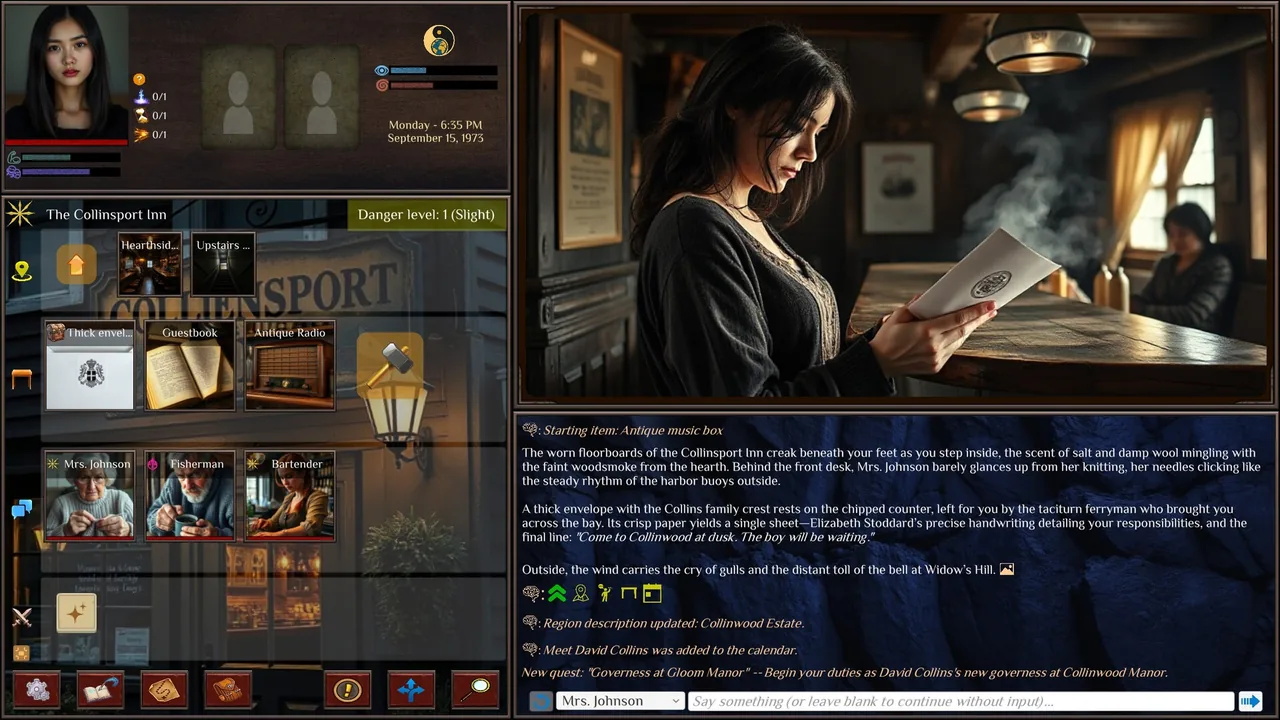
Most games described as "AI-powered" use the term loosely — a chatbot bolted onto a scripted quest, a procedural generator dressed up with a buzzword. AI Roguelite is not that. Its Steam page states the premise flatly: every location, NPC, enemy, item, crafting recipe and game mechanic is "100% determined by artificial intelligence." There is no authored quest content anywhere in the game. A large language model decides what exists in the world in response to what the player types, and — unusually, even among the small crop of AI-driven text games — it also arbitrates whether the player's actions succeed, using a mix of stat checks, dice rolls and its own judgment of narrative plausibility. Developer Max Loh has been building this alone since it entered Early Access on 2 March 2022, exiting into a full 1.0 release on 25 October 2023 and continuing active solo development ever since.
Steam requires an AI Generated Content Disclosure on any listing that uses it this heavily, and the developer's own wording is worth quoting in full, because it's the most honest starting point for a review: "This game heavily uses AI to live-generate in-game content such as text, images, and sound effects. It also uses AI to make a variety of game mechanics decisions in real time." That is exactly what the review sample confirms, for better and for worse.
What the pitch actually delivers
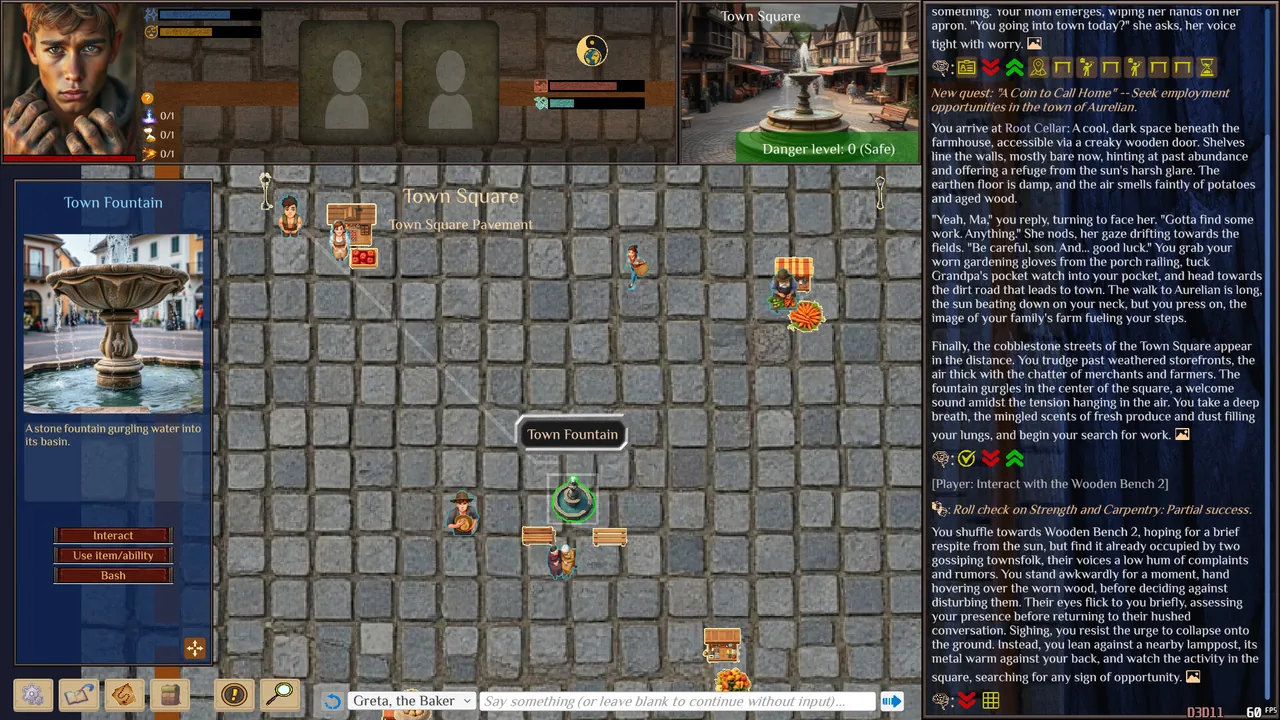
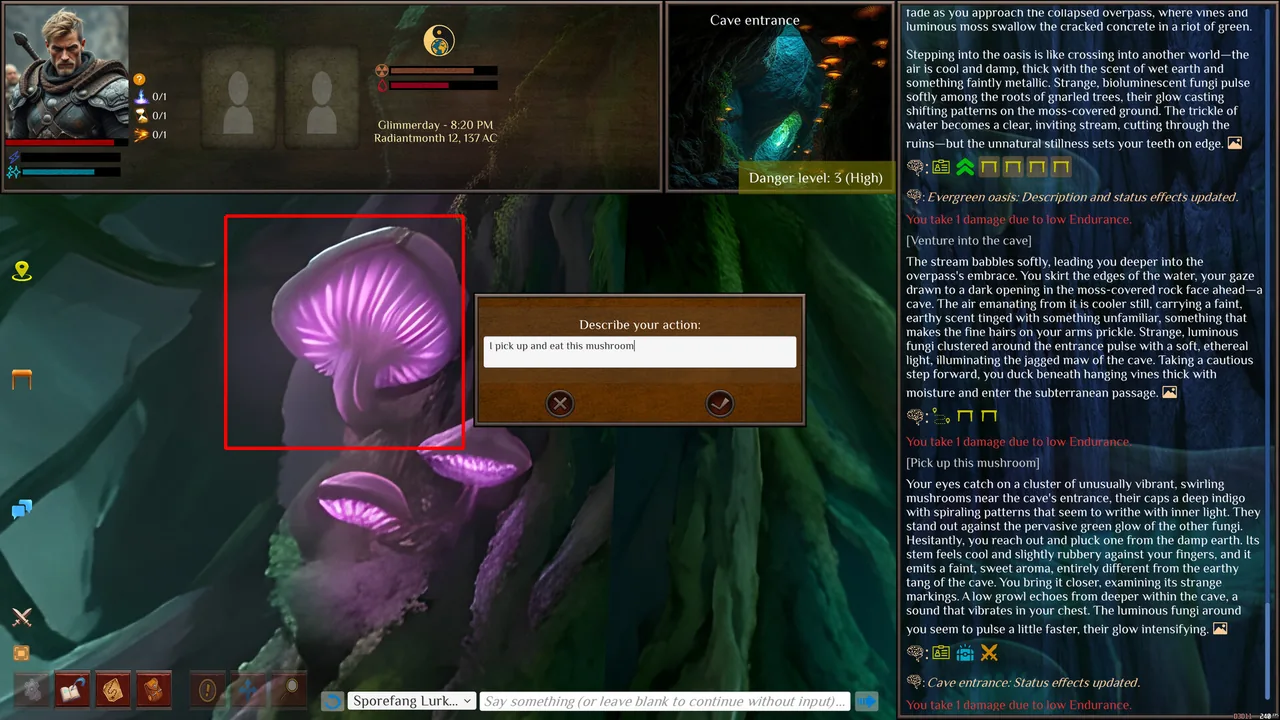
The store page's own examples of what the AI does are a fair preview of the appeal: what weapon might turn up in an underwater city, what happens when a wooden stick is combined with a rock, what a "terminator robot" does when attacked with a raw salmon. Combat drops conventional item stats in favour of resolving actions against the plausibility of what the player describes, a dice check against their attributes, and a generated narrative of the outcome — which the AI then re-reads to decide whether the enemy died, was injured, or was unharmed. Recent updates add a party system, letting a player recruit and direct up to four AI-controlled companions, each with their own stats, items and perks. Players choose between free default cloud models, a paid subscription for higher-quality cloud generation, or bringing their own models via OpenRouter, LM Studio, KoboldAI and similar tools.
The positive side of the review sample takes this premise seriously and rewards it. "This is more of the original vision of what AI Dungeon was going for, but with actual game mechanics and rules behind the curtain," is a common framing, and several long-time reviewers describe watching the game specifically improve as its underlying models and prompt engineering matured — one, with over 1,700 hours logged, writes that "the current round of updates have essentially solved all issues for me... you can actually play a coherent story now." That kind of endorsement, from players who have clearly put in the time to judge it fairly against its own history, is real and it matters. So does the volume of goodwill toward the developer specifically: reviewers repeatedly praise how quickly reported bugs get addressed by a single person still actively shipping updates more than four years after Early Access launch.
The recurring problem: an AI that won't stay on the rails
Set against that is a remarkably consistent thread running through the negative reviews, across every year from 2022 through 2026: the AI making decisions that feel arbitrary, contradictory, or simply disconnected from the player's own input. "The AI will arbitrarily make decisions for you, it can't keep its own prompts straight, routinely changes characters that you're directly addressing into other characters," reads one detailed review. Another, from mid-2026 with over 1,200 hours logged — again, not a drive-by complaint — puts it in mechanical terms: "Every action and every dialogue is a roll. And the outcome and consequences of each roll seems completely unrelated to what the roll is. I could lie to someone and get a critical fail but they believe me. Or a critical success but they don't believe me." A separate 2026 review describes the same failure from a different angle: "it has a tendency to act for the player and neglect player inputs... a tendency of disregarding player inputs, words, and tone or twisting it to whatever it wants."
This is the sharpest edge of a pattern that shows up whenever a game hands its core loop to an AI system with no way for the player to work around it when it fails: the flaw compounds rather than staying contained, because the AI isn't one feature among many, it's the entire game. A weak inventory system or a clunky menu can be tolerated alongside strong combat; an AI that periodically overrides the player's stated choice, in a game whose entire premise is player-authored freedom, undercuts the pitch directly. One reviewer with 953 hours invested captures the frustration of loving the idea while running into this specific wall: "I really want to like this, it has so much promise, but it's unplayable to me... So since the roll itself doesn't matter, it serves no purpose." Content moderation surfaces occasionally too, with a smaller number of reviewers objecting to what they characterise as excessive filtering on cloud-hosted models — though the developer's own notice on the store page states plausibility and dice-roll blocks are "intentional and not caused by AI censorship," and can be bypassed via options or console commands.
Achievement data backs up how early this friction bites. The most-earned achievement — reaching just five locations — sits at only 48% of players. Completing a single quest sits at 36%, a basic side quest at 35%, and reaching twenty locations drops to 18%. For a game built around exploring an effectively infinite generated world, that curve describes a large share of buyers bouncing off somewhere in the first hour or two, consistent with a genuinely steep, unguided learning curve on top of the AI's own inconsistency.
Setup friction and generation speed
A second, more practical complaint runs alongside the first: getting the game to actually run well takes effort, and running it slowly is common even when it works. Reviewers report generation times ranging from tens of seconds to several minutes per action, particularly when using local models on modest hardware — "every turn takes too much time, every image generated takes too much time," reads one review from a player running a 3090Ti, hardware that would be considered strong for most purposes. Others describe genuine difficulty getting external API keys and services like OpenRouter or Gemini working correctly, with one 2026 review describing a two-hour setup attempt that ended in a refund request. None of this is necessarily a fair complaint about the base game's design — using a locally-run model is inherently slower than a purpose-built game engine, and the developer clearly states the recommended specs (16GB RAM, a capable GPU or a basic internet connection) — but it is a real, frequently-repeated barrier between installing the game and getting a fair look at what it does well.
The subscription question
AI Roguelite is not free to play, and the base purchase includes no mandatory subscription — the Steam listing is explicit that "the game works well out of the box with default settings and no additional cost to the player." But an optional monthly subscription for access to more capable cloud models draws sustained, specific criticism in the review sample, with multiple reviewers citing costs in the US$15–20 per month range as steep next to general-purpose AI subscriptions many of them already pay for elsewhere. "None of my streaming services are 20 and even MMOs are 15 a month," one review states, a comparison that lands because it's a genuinely fair one to make. This review can't verify the exact current subscription pricing tier-by-tier, since Valve's storefront data doesn't expose it, but the pattern in the reviews — that the free tier is usable but noticeably behind the paid tier, and that the paid tier's price surprised people — is consistent enough across years to treat as a real, ongoing point of friction rather than a one-off complaint.
Where this leaves a buyer
AI Roguelite is, without qualification, doing something no other Steam release is doing at this scale: building an entire RPG's content and mechanics live, out of a language model, rather than authoring any of it in advance. That ambition alone makes it worth a paragraph in the history of what AI-driven games have tried. Reception reflects real, earned enthusiasm from players willing to meet it on its own terms — Very Positive over its lifetime, with a core of reviewers logging hundreds or thousands of hours and a solo developer who has kept shipping meaningful updates for over four years.
But the honest throughline across that same review history, from 2022 to 2026, is that the AI occasionally doesn't do what it's supposed to do, and when it doesn't, there's no fallback system to catch the failure — because the AI is the system. Arbitrary rolls, contradicted facts, and overridden player choices show up across the negative sample too consistently to write off as bad luck, and the achievement curve suggests a meaningful share of buyers never get past that friction long enough to reach the game the enthusiasts describe. At NZ$21.99, with a genuinely free way to try it, that's a fair bet for a player specifically drawn to generative AI as a game mechanic and willing to tolerate real inconsistency along the way. It's a much harder recommendation for anyone wanting a reliably fair, polished RPG experience out of the box.
Pros and cons
Pros
- A genuinely original concept executed with real ambition — no template encounters or authored content anywhere; every entity, item, recipe and outcome is generated live and reactively
- The base game works out of the box on free default cloud settings; no subscription or account cost is required to try the core experience
- Continuous solo development from the same developer since Early Access began in March 2022, which longtime reviewers consistently credit for real, ongoing improvement
- A genuinely dedicated core audience — some of the most enthusiastic reviews come from players with well over a thousand hours logged, a level of investment that isn't easy to fake
Cons
- The single most common complaint by a wide margin describes the AI acting arbitrarily — overriding stated player choices, contradicting established facts, or resolving dice-roll checks with no discernible connection to the roll itself
- Steam's own achievement data show barely a third of players ever complete a single quest and fewer than a fifth reach twenty locations, evidence of a rough, disorienting opening rather than a handful of isolated bad runs
- Generation speed is a recurring complaint, particularly on local hardware, with waits of 30 seconds to several minutes per action described repeatedly across years of reviews
- The optional subscription for higher-quality models draws sustained criticism as steep, especially from reviewers who already pay for general-purpose AI subscriptions elsewhere
Screenshots
-
AI RogueliteImage: Max Loh via Steam -
AI RogueliteImage: Max Loh via Steam -
AI RogueliteImage: Max Loh via Steam -
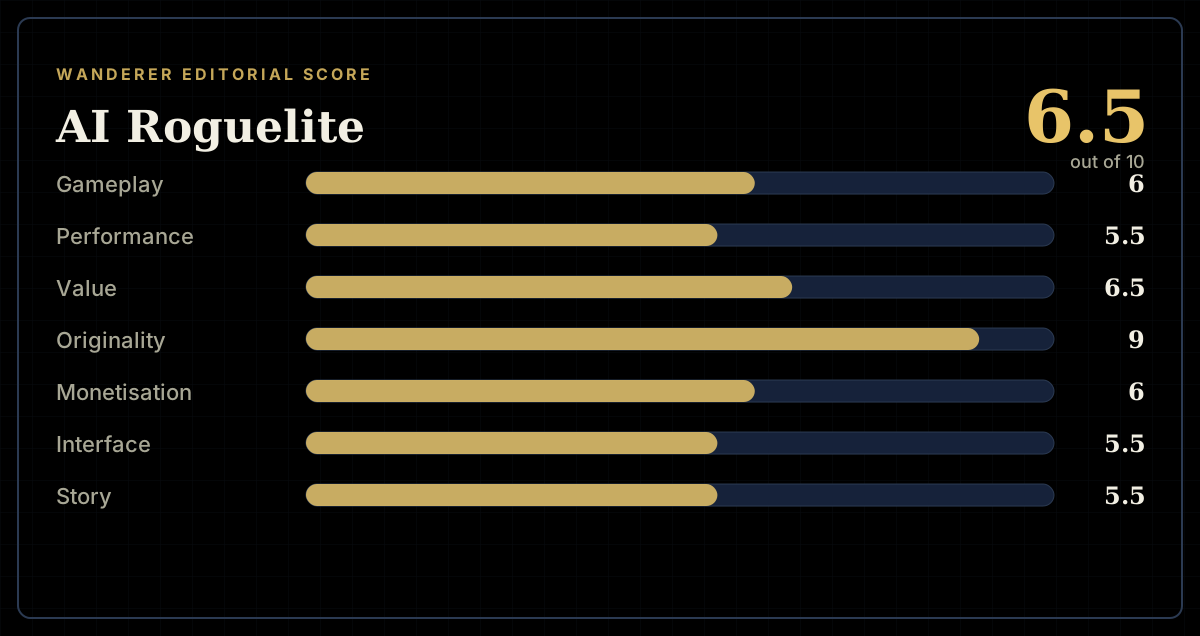
How the review scores each part of the gameWanderer Editorial -
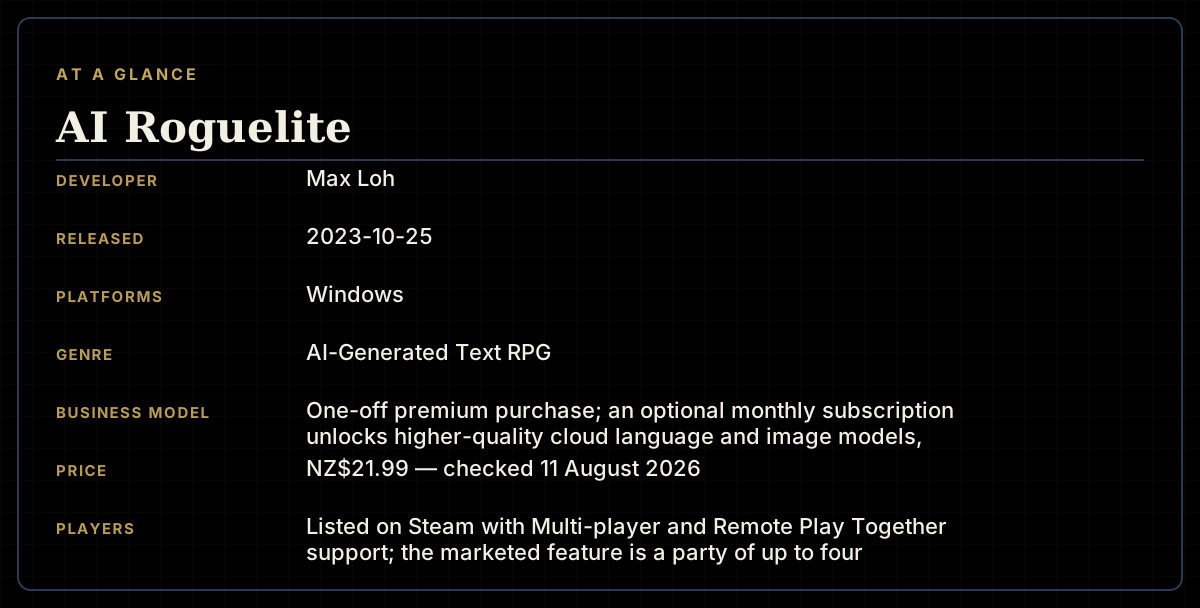
The specsWanderer Editorial -
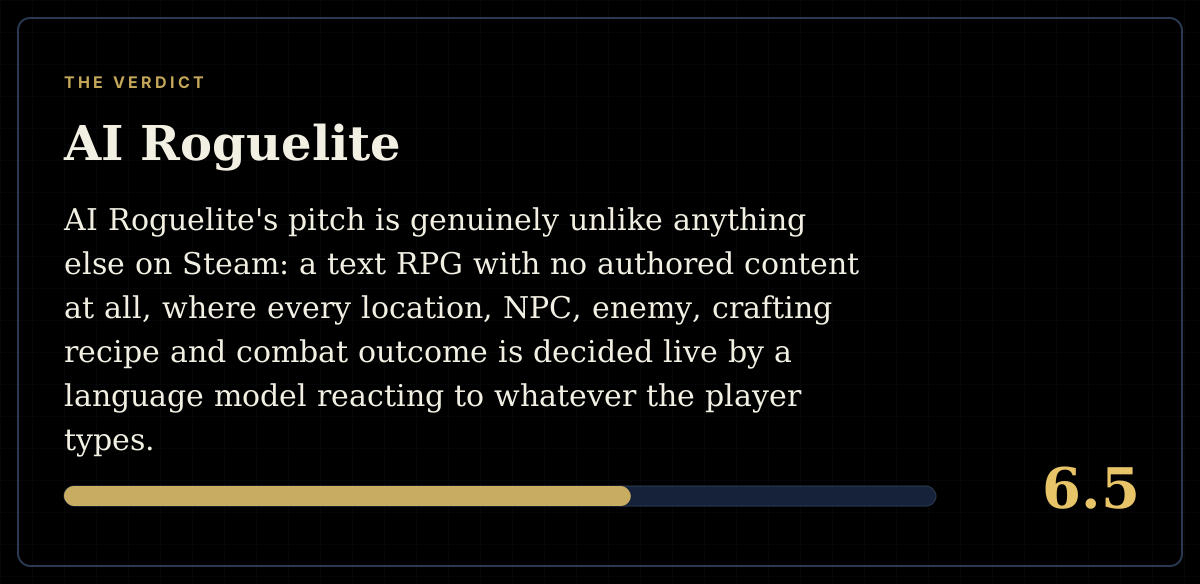
The short versionWanderer Editorial