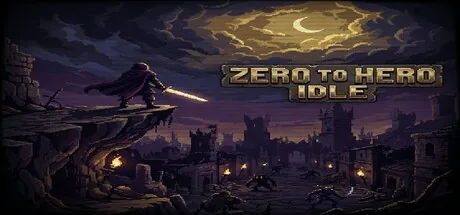
Game review
Zero To Hero Idle
6.5 / 10
- Developer
- AlexBR
- Publisher
- F&S Labs
- Released
- 15 July 2026
- Platforms
- Windows
- Genre
- Idle RPG
- Monetisation
- One-time purchase (NZ$7.89); the developer states directly on the store page that there are no microtransactions of any kind, describing the game as "made for my son, not shareholders"
- Players
- None; fully single-player
The short version
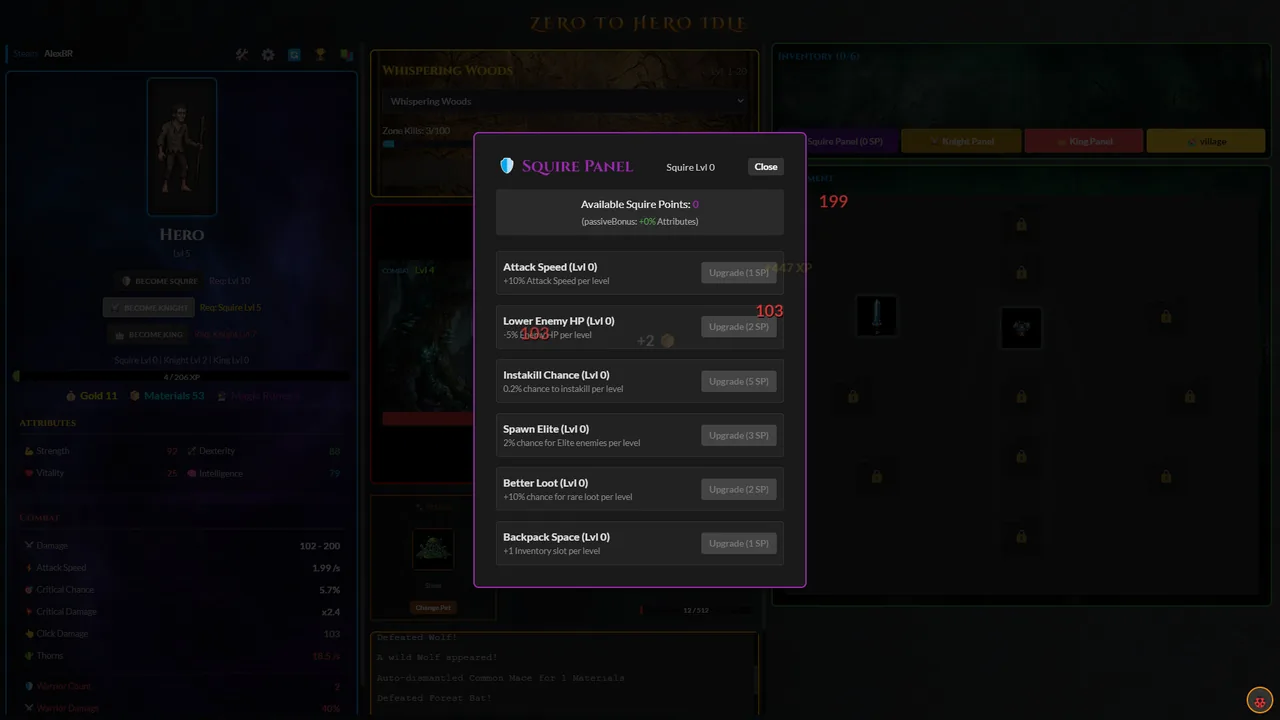
Zero to Hero's own store page tells you exactly where it came from: a self-taught, non- professional programmer built it after his eight-year-old son asked for "a game where I can find cool swords and fight monsters forever." That's not marketing copy — it reads like exactly what it says it is, and it shows in a design built around loot tiers, a Squire-to-King prestige ladder, and an explicit refusal to add microtransactions to something made for a kid rather than shareholders.
Three weeks after launch, Steam calls the reception "Mixed," and reading through the reviews explains why without contradicting the sweetness of the origin story. Players who've sunk real hours in — one reports 86 — describe systems that are explained only at their most basic level, resources that eventually pile up with nowhere left to spend them, and at least one account of a serious dispute with the developer over the game's difficulty curve. None of that erases what this project clearly is at its core. It does mean the execution hasn't caught up to the heart behind it yet.
Biggest strengths
- A genuinely verified, heartfelt origin story — a non-professional programmer built this after a promise to his young son — that shows up directly and specifically in the design choices
- No microtransactions of any kind, stated explicitly on the store page, and nothing in the review sample contradicts that
- A real prestige structure with distinct tiers — Prestige, Become a Knight, Coronation — each unlocking new systems like the Village and skill trees rather than just resetting numbers
Biggest weaknesses
- Steam's own aggregate reads "Mixed," and detailed reviews from players with dozens to nearly a hundred hours logged describe genuinely confusing systems explained only at a basic level
- More than one reviewer describes late-run resources — gold, materials, rune stones — piling up with nothing left to spend them on once available content is unlocked
- One detailed negative review alleges the developer banned them from the community for criticising the game's pacing and monetisation stance; this review cannot verify that claim independently and reports it only as one player's account, in direct tension with the developer's own stated "made for my son" philosophy
Who it's for: Idle RPG players who want a straightforward Squire-to-King prestige loop with genuinely no monetisation pressure, and who are willing to accept thin in-game guidance in exchange for a developer who's visibly still learning and iterating in public.
Our recommendation: Worth the price for the loot-and-prestige loop and the complete absence of any cash shop, but go in expecting to work out several systems for yourself, and expect the back half of a long run to feel more like maintenance than escalation.
6.5 / 10
Most idle RPG store pages open with a pitch. Zero to Hero's opens with a confession: "I'm not a professional programmer. I'm a dad." What follows, in the developer's own words, is the story of an eight-year-old son asking for "a game where I can find cool swords and fight monsters forever," and a father who didn't know how to code teaching himself, loop by loop, late at night, to build it for him. It's a genuinely disarming way to open a store listing, and unlike a lot of "passion project" framing, the design choices that follow actually back it up — starting with a flat, unambiguous refusal to put a cash shop in front of a game built as a promise to a kid.
Squire to King, the honest way
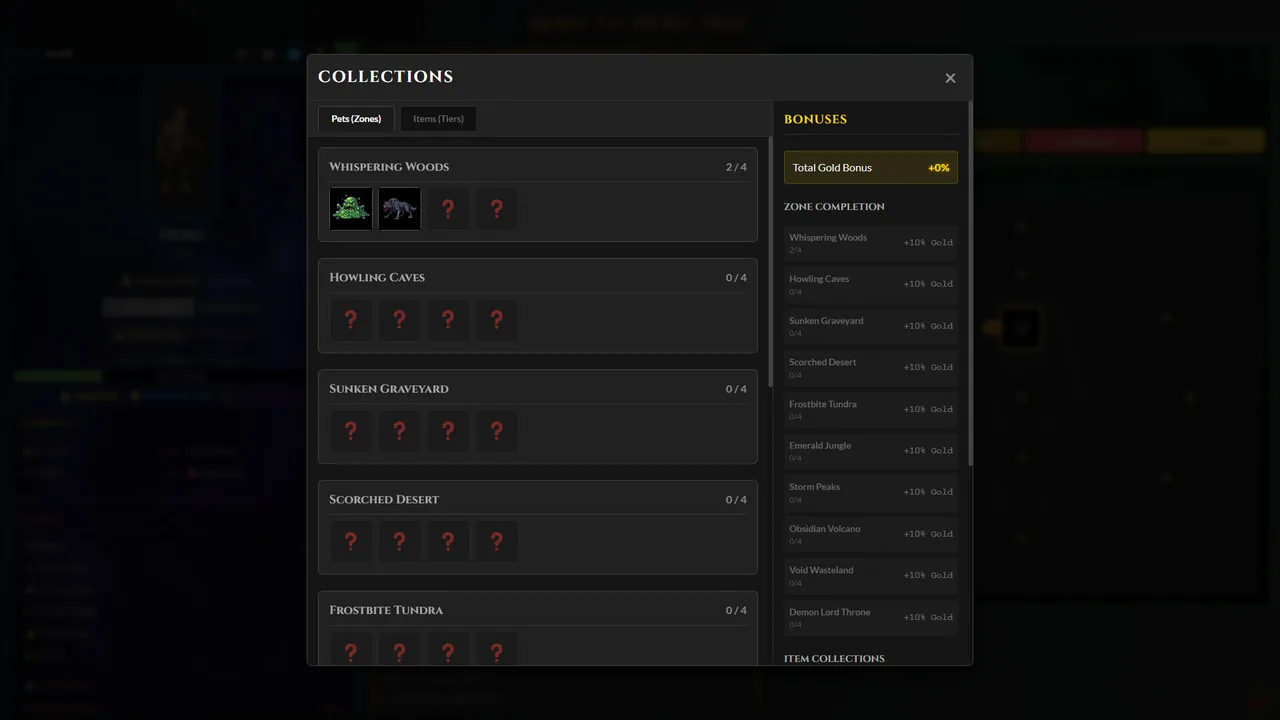
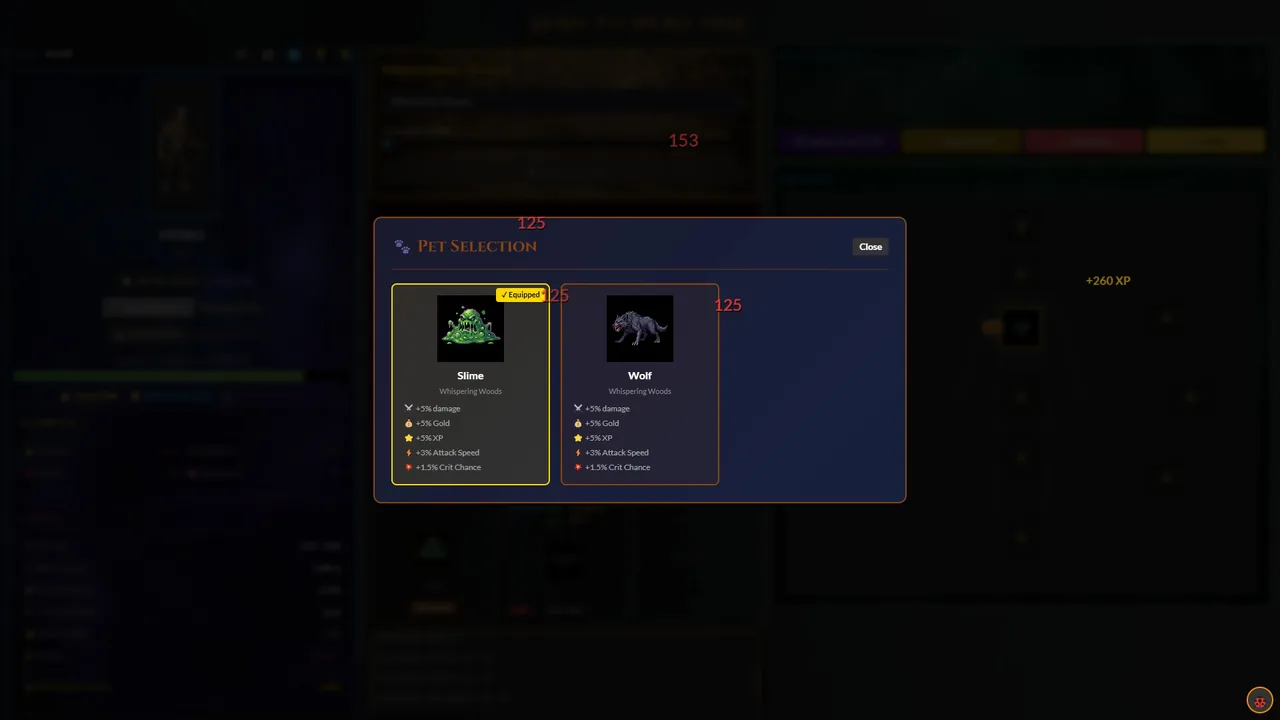
Strip away the origin story and Zero to Hero is a fairly conventional idle RPG built around loot tiers and a prestige ladder: begin as a lowly Squire with a rusty sword, fight automatically to gather Gold, XP and Materials whether you're watching or not, and climb toward Knight and eventually King through layered resets. Loot spans Common through Celestial rarity with randomised stats on every drop, and the Forge gives a genuinely useful outlet for the inevitable bad rolls — melt an unwanted item down and it permanently boosts an equipment slot instead of sitting in your inventory as dead weight. The Village, unlocked at the Knight tier, adds skill trees and Keep upgrades that automate clicks and improve drop rates, giving each prestige layer a reason to exist beyond a bigger multiplier.
None of this reinvents the genre, and the store page doesn't claim it does — it's pitched plainly as "the incremental and idle RPGs we played together," stripped to loot, progression and big numbers. For what it is, reviewers who've stuck with it are often genuinely enthusiastic: one calls the progression "very nice and not as slow as some of the others I have tried," another describes "a neat balance between active play and automation" that shifts from hands-on clicking early to automated efficiency later. A French reviewer specifically credits the developer's self-taught background as part of the appeal, calling the project "réellement impressionnant" — genuinely impressive.
Where the reception splits
Steam's own "Mixed" badge, at 8 of 12 reviews positive three weeks after launch, isn't a fluke of a small sample — it reflects a real split visible in the reviews themselves, and it's not simply positive-newcomers versus negative-quitters. One of the most detailed negative reviews comes from a player who logged 86 hours before writing it, describing systems that are "only explained at their most basic level" and an overall effort that "becomes tiring" once the easy guidance runs out. A Russian-language review separately complains that gold, materials and rune stones become "useless" once you've unlocked everything the developer built — resources that keep accumulating with nowhere left to spend them, a familiar problem in idle games whose content generation outpaces their sink design. A different English reviewer, having pushed for an early long run to unlock equipment slots and gear, reports hitting an XP soft cap that blocked the intended final boss encounter earlier than expected.
More seriously, one negative review makes a specific, pointed allegation: that after criticising what they call the game's grind and "predatory game practices," the developer banned them rather than address the feedback. This review has no way to independently verify a ban, a moderation decision, or the surrounding conversation, and reports the claim only as that one player's account — not as an established fact. It's worth including precisely because it sits in direct tension with the developer's own stated position, on the very same store page, that the game carries no microtransactions and was built for his son rather than for revenue. Both things can be true at once: a game can be genuinely free of predatory purchases while a specific interaction between one player and its developer still went badly. Readers weighing this should treat it as an open dispute rather than a settled character judgment either direction.
A separate, less corroborated report describes a full progress reset after logging in the following day, alongside a black-screen display bug specific to Steam Deck. Neither issue repeats elsewhere in this small review sample, which suggests — without confirming — an isolated technical problem rather than a systemic one, though anyone playing on Steam Deck specifically should treat it as a known risk worth watching for.
A developer visibly still iterating
Whatever the disputes in the review section, the patch history doesn't read like a project left to rot. Seven separate updates landed in Zero to Hero's first eight days on sale, including dedicated fixes for achievement tracking, playtime synchronisation and a specifically-named "Unyielding Will" achievement bug — the kind of granular, responsive patching that suggests a developer reading his own feedback closely, even if not every player agrees with how he's responding to it.
Final verdict
It's hard to be fully cynical about a game whose store page opens with a father teaching himself to code for his son, and Zero to Hero mostly earns the benefit of that doubt: the prestige structure has real shape, the Forge gives bad loot a purpose, and the complete absence of any in-game purchase is a genuinely rare thing to see stated this plainly and, as far as this review can confirm, held to. What keeps the score from climbing higher is that the "Mixed" reception isn't noise — invested players with dozens of hours are describing real clarity and pacing problems, and one serious, unverified allegation about how criticism gets handled deserves to be read rather than smoothed over.
If a straightforward loot-and-prestige idle RPG with zero monetisation pressure appeals to you, this is a fair trade at its price, with the understanding that the guidance thins out well before the systems do.
Players who like the idea of steady, generous progression built to last well past the first prestige reset may also want to look at Wanderer.
Pros and cons
Pros
- A genuinely verified, heartfelt origin story — a non-professional programmer built this after a promise to his young son — that shows up directly and specifically in the design choices
- No microtransactions of any kind, stated explicitly on the store page, and nothing in the review sample contradicts that
- A real prestige structure with distinct tiers — Prestige, Become a Knight, Coronation — each unlocking new systems like the Village and skill trees rather than just resetting numbers
- The Forge lets you melt unwanted drops to permanently upgrade equipment slots, giving bad rolls a use instead of making them dead weight
- Seven patches in its first eight days, including dedicated achievement-tracking and playtime-sync fixes, show a developer actively responding to reports
Cons
- Steam's own aggregate reads "Mixed," and detailed reviews from players with dozens to nearly a hundred hours logged describe genuinely confusing systems explained only at a basic level
- More than one reviewer describes late-run resources — gold, materials, rune stones — piling up with nothing left to spend them on once available content is unlocked
- One detailed negative review alleges the developer banned them from the community for criticising the game's pacing and monetisation stance; this review cannot verify that claim independently and reports it only as one player's account, in direct tension with the developer's own stated "made for my son" philosophy
- A separate report describes a full progress reset after logging back in the next day, plus a black-screen bug on Steam Deck; neither is corroborated elsewhere in the small review sample
- A soft level cap can block the final boss encounter earlier than expected for players pursuing an early long run, according to one detailed account
Screenshots
-
Zero To Hero IdleImage: F&S Labs via Steam -
Zero To Hero IdleImage: F&S Labs via Steam -
Zero To Hero IdleImage: F&S Labs via Steam -
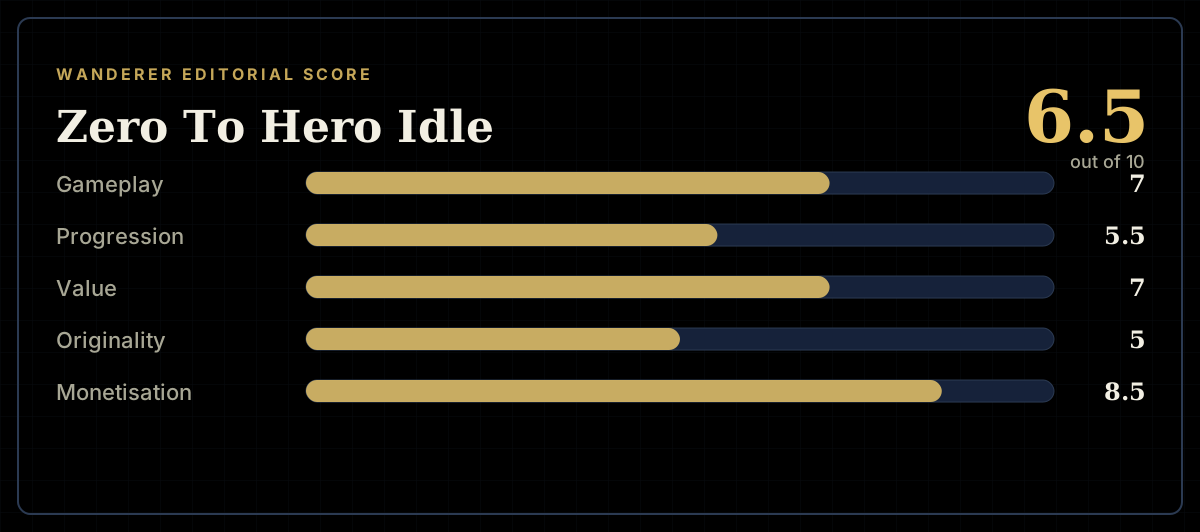
How the review scores each part of the gameWanderer Editorial -
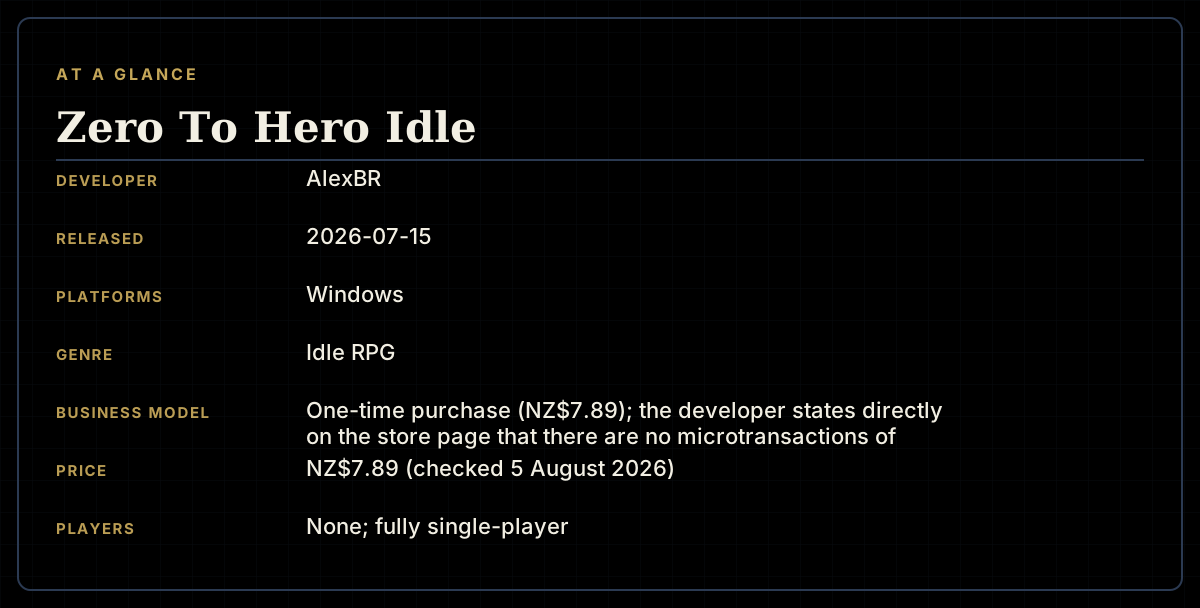
The game at a glanceWanderer Editorial -
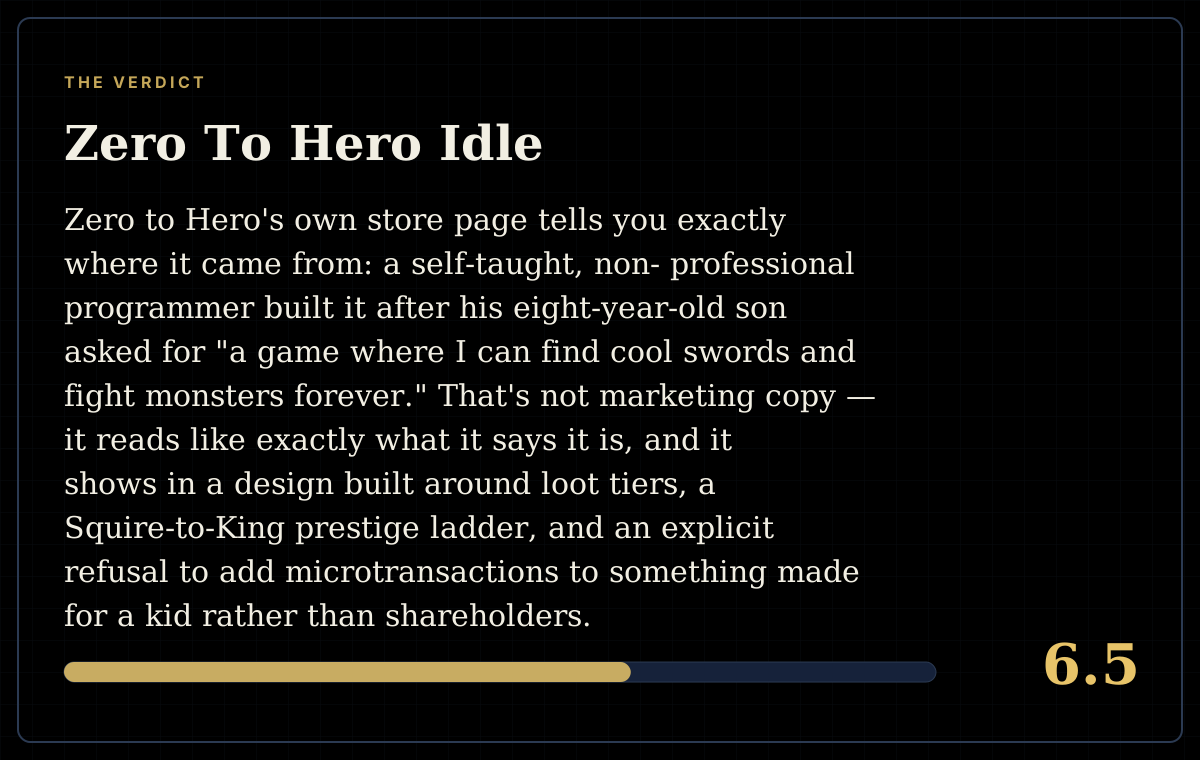
The short versionWanderer Editorial