
Game review
Worldcrusher - a survival clicker game
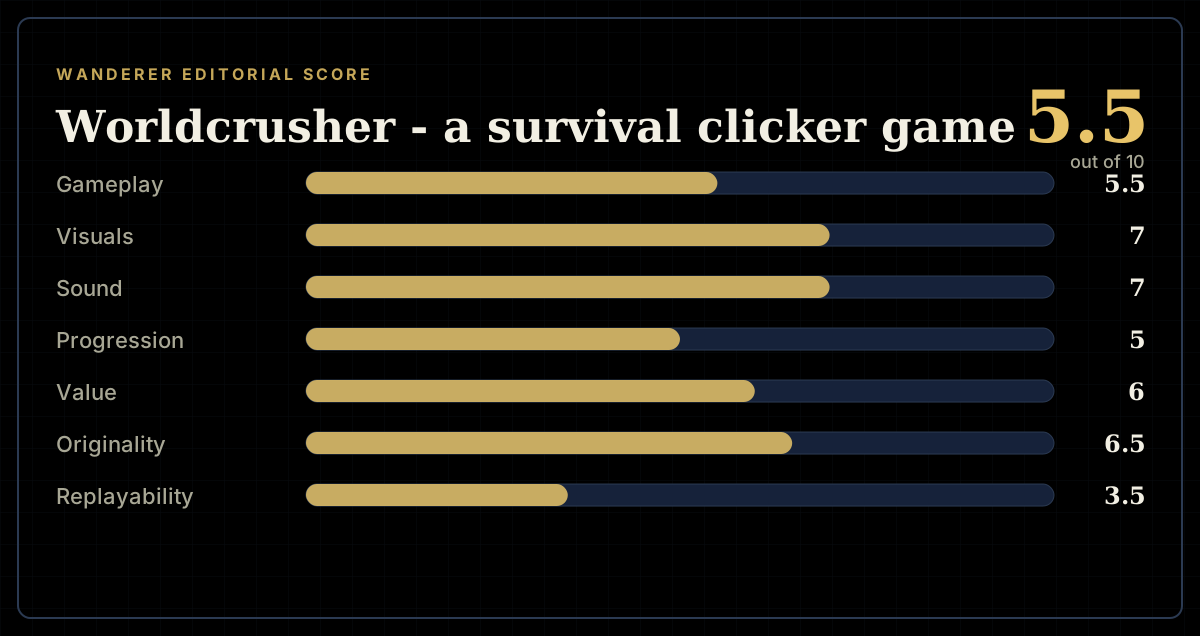
5.5 / 10
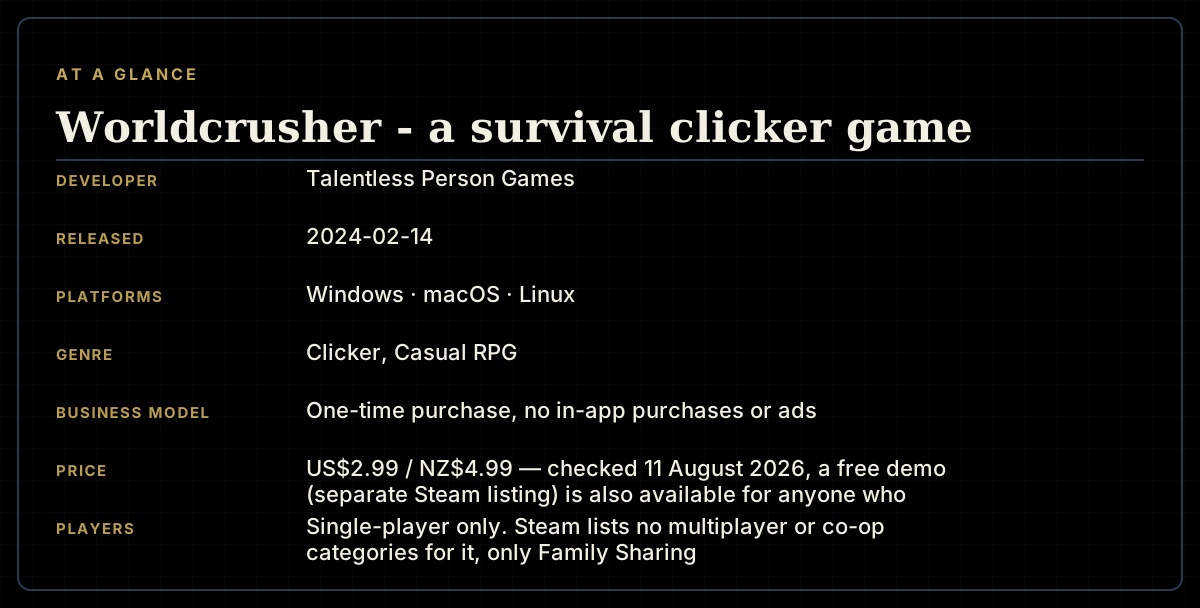
- Developer
- Talentless Person Games
- Publisher
- Talentless Person Games
- Released
- 14 February 2024
- Platforms
- Windows, macOS, Linux
- Genre
- Clicker, Casual RPG
- Monetisation
- One-time purchase, no in-app purchases or ads
- Players
- Single-player only. Steam lists no multiplayer or co-op categories for it, only Family Sharing
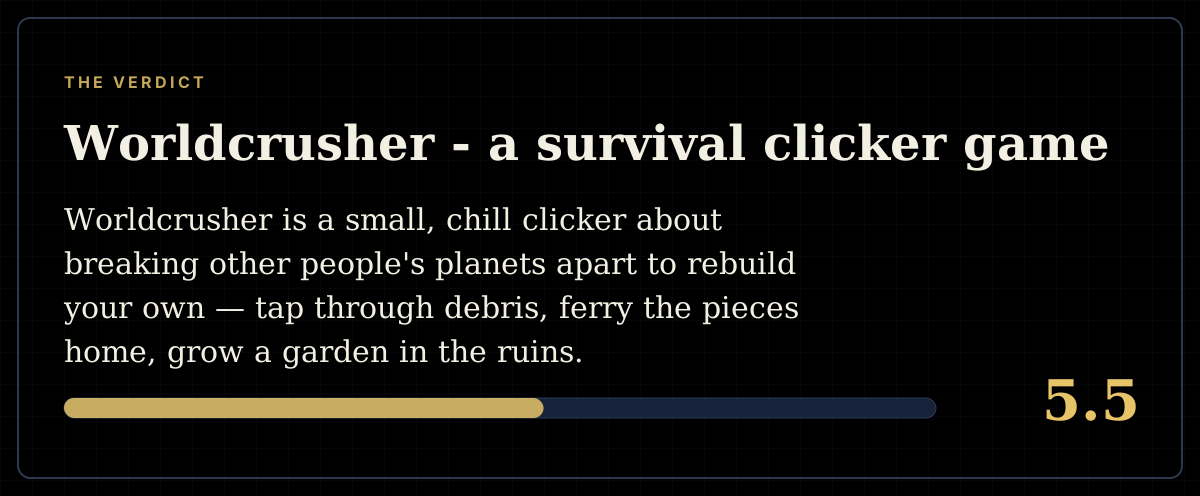
The short version
Worldcrusher is a small, chill clicker about breaking other people's planets apart to rebuild your own — tap through debris, ferry the pieces home, grow a garden in the ruins. It's a likeable hour of low-stakes destruction for three dollars, but an hour is close to the whole game: there's one arc, no achievements to chase, and nothing resembling the hunger, health or hostile-world systems the word "survival" usually promises. Judge it as a short, cheap mood piece rather than the survival game its own title claims to be, and it's a fair trade for the asking price. Judge it as anything more and it runs out fast.
Biggest strengths
- The core hook — smash other worlds apart to rebuild your own — is a tidy, slightly wistful spin on the standard clicker premise
- A LoFi soundtrack runs the whole way through and does most of the heavy lifting for the game's relaxed mood
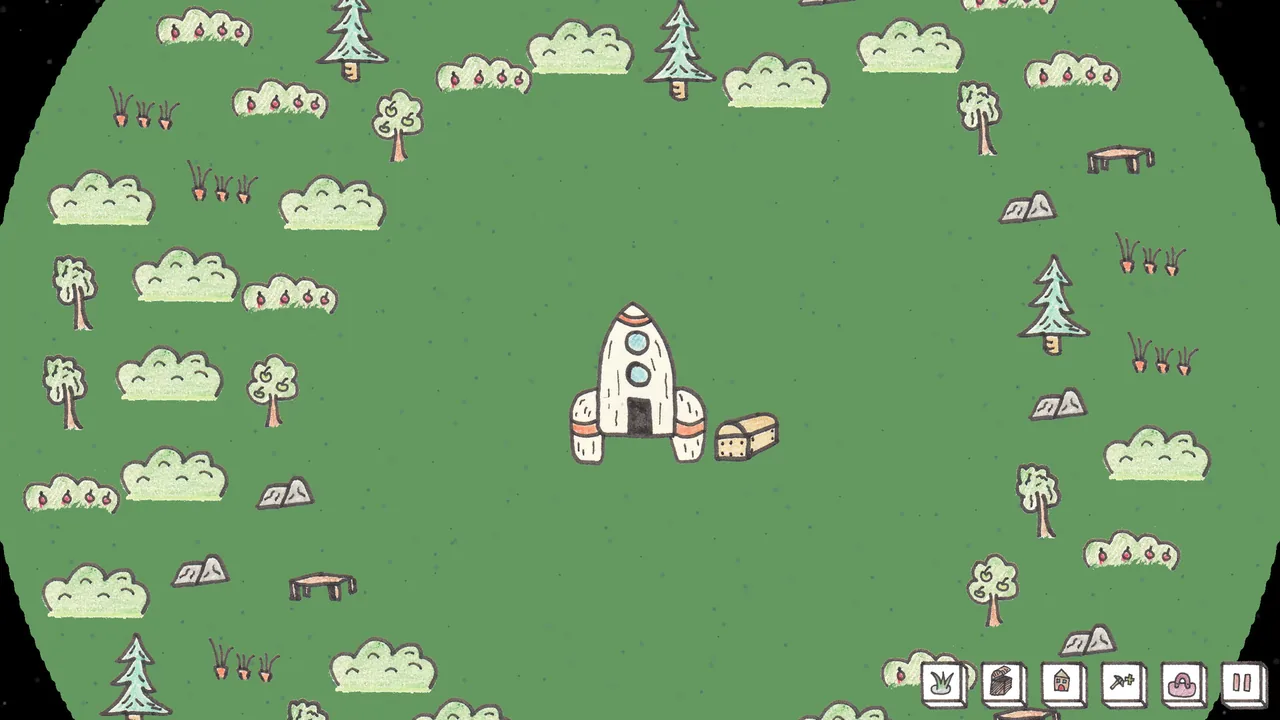
- Hand-drawn, stylised art keeps the planets and debris readable and pleasant to look at across every screenshot on the store page
Biggest weaknesses
- Despite "survival" sitting in the title, there is no hunger, health, hazard or threat system of any kind — Steam's own category tags don't even list Survival among the game's primary genres, only Casual, RPG and Strategy
- Every user review on record clocks under an hour and a half of playtime, and one reviewer says outright there's "not much to it" — this is a single arc, not an ongoing game
- No Steam achievements are configured at all, so there's no scaffolding pulling a player back in once the one story beat is finished
Who it's for: Anyone who wants a pocket-sized, low-pressure clicker to burn a single lunch break on, and isn't looking for a survival game, an achievement list, or a reason to come back a second time
Our recommendation: Worth the three dollars for a single relaxed sitting; skip it if you were hoping the "survival" in the title meant hunger meters, threats or a base to defend
5.5 / 10
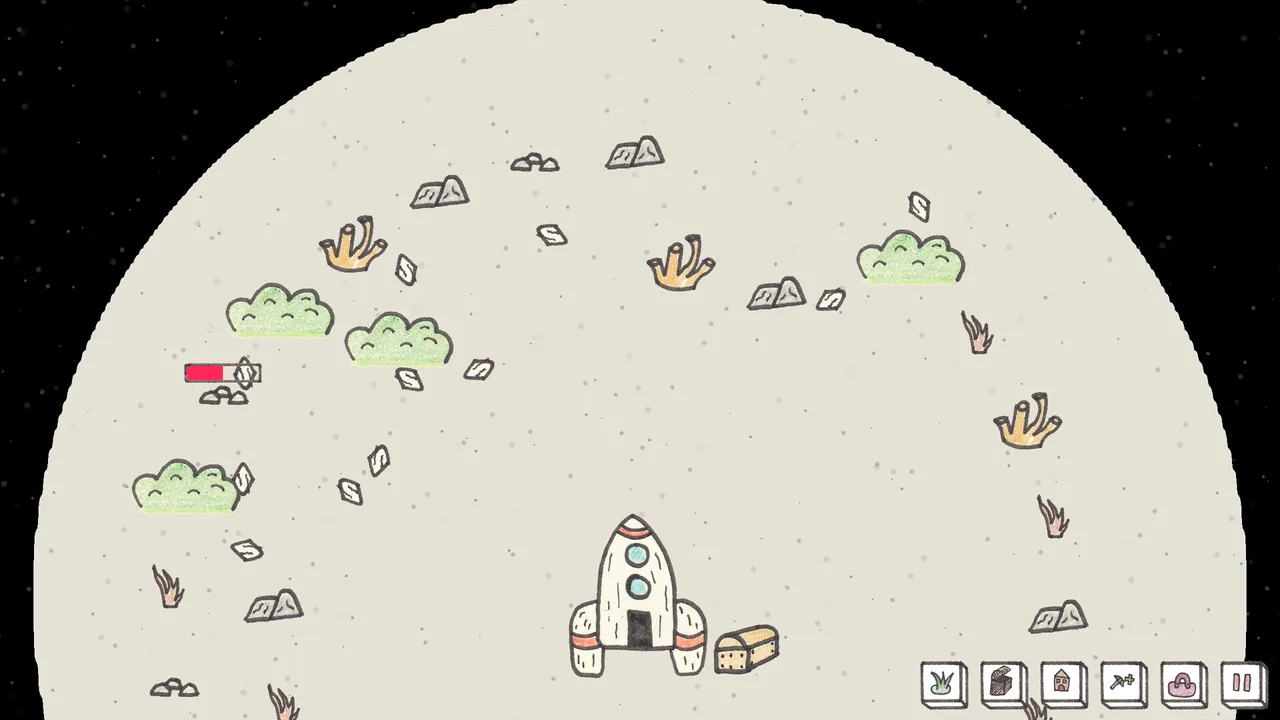
Talentless Person Games' own pitch for Worldcrusher reads almost apologetically small: "a simple clicker game that involves destruction of worlds, farming and a bit of space travel." That modesty turns out to be the most accurate marketing copy in the listing. You've lost your home planet, and the only way to get it back is to fly to other people's worlds, click them apart piece by piece, haul the salvage home and use it to regrow a garden on the wreck you started from. It's a small, slightly melancholy premise wrapped around a very standard clicker skeleton, released for $2.99 on 14 February 2024 and, going by every scrap of public feedback it has, mostly delivering exactly what it says on the tin — for about an hour, and not much longer.
A destruction loop with a surprisingly gentle mood
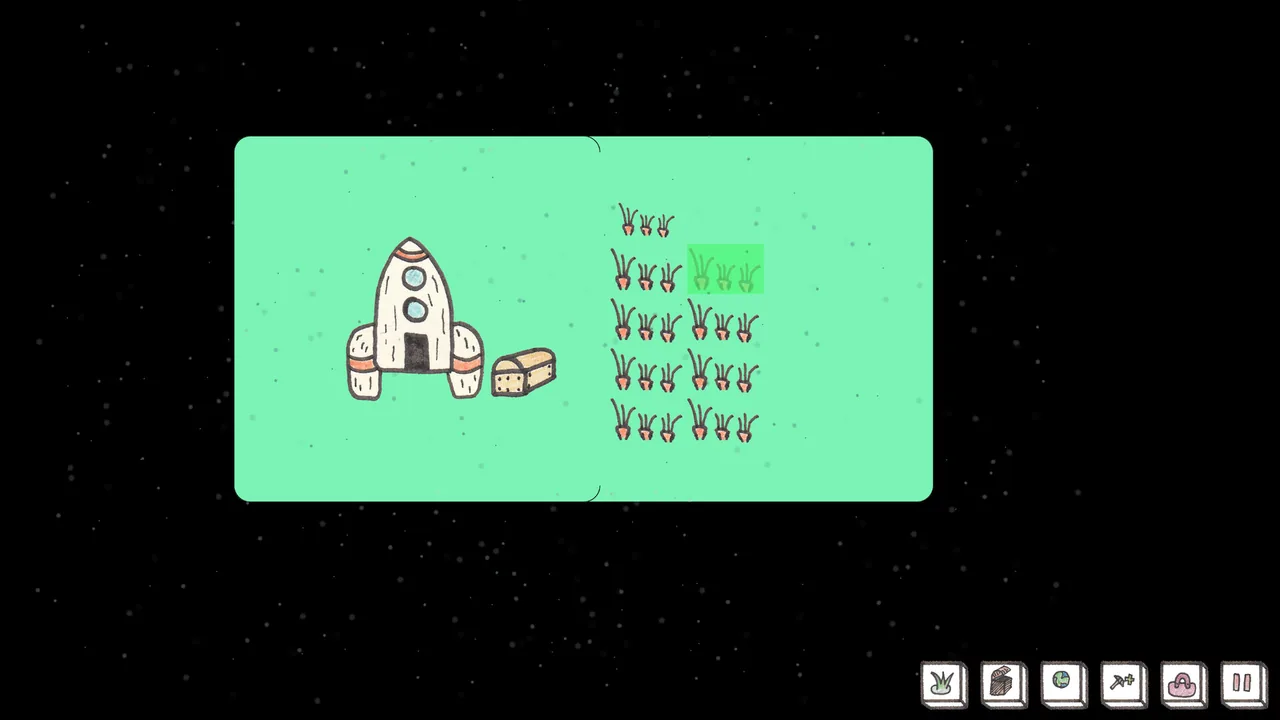
Strip away the space-travel framing and Worldcrusher's moment-to-moment loop is the genre's oldest one: click an object, watch a resource counter climb, spend the resource on the next upgrade, repeat somewhere new. What makes it land better than a bare-bones template is the mood Talentless Person Games builds around that loop. The store page's own trailer and screenshots lean on hand-drawn, stylised planetscapes rather than the flat vector shapes most $2.99 clickers settle for, and one of the small handful of user reviews on record singles out the soundtrack specifically: "listen to LoFi, click on things, travel to new planets." That's not faint praise so much as an accurate summary of what the game is actually selling — a chill, low-stakes destruction toy you can half-watch while something plays in the background, closer in spirit to a fidget game than a systems-heavy incremental. The farming layer back on your own homeworld gives the loop a second gear once the first planet's rubble is cleared, letting you watch the garden fill back in as a visible payoff for the clicking rather than just a number going up in a menu. None of it is deep, but the presentation carries a loop that would feel thin on its own.
The title promises a game this one isn't
"A survival clicker game" sits right there in Worldcrusher's own storefront name, and it's the single most misleading thing about the listing. Steam's own genre tags for the game are Casual, RPG and Strategy — Survival doesn't even crack the official genre list, and the community tag for it trails well behind Clicker, Sandbox and God Game in vote count. Nothing in the official description, the trailer or any of the six store screenshots suggests a hunger meter, a health bar, environmental hazards or anything a player would recognise as survival-genre pressure. What's actually here is closer to a pocket god-game: you travel, you demolish, you collect, you rebuild, and at no point is anything trying to kill you or run out on a clock. That's a perfectly reasonable game to make — the loop described above works fine without threat systems bolted on — but a shopper who takes "survival" at face value and expects base defence or a starvation timer is going to be disappointed by a game that never had any intention of delivering either. Read the actual feature list before the genre word in the title.
An hour, then the credits, then nothing pulling you back
Every piece of public playtime data on Worldcrusher points the same direction. The handful of Steam reviews on record clock in at 48, 67 and 78 minutes of playtime respectively, and the longest of the three describes it as "a neat little game, about an hour or so of game play depending on how fast you go." That's not a snapshot of someone quitting early — it reads as the full arc, credits included. Steam's category list confirms there's no achievement system configured to extend that arc artificially, and nothing in the store material describes alternate paths, difficulty tiers or a New Game Plus that would give a second run a different shape from the first. For a $2.99 asking price, an hour of content is a fair trade — you're not being asked to pay incremental-game prices for a fraction of an incremental game's length — but it does mean the "worth playing" case rests entirely on that single sitting landing well, since there's very little game left once it's over. The free demo Talentless Person Games ships alongside the paid version is the honest way to find out before spending anything, and given how short the full game is, trying the demo first isn't a small time-saving — it's close to seeing most of what's on offer.
A verdict built on a thin sample, on purpose
Worldcrusher is the kind of small release that never accumulates much of a public record, and this one hasn't: five user reviews total at the time of writing, every one of them positive, which is too small a sample for Steam to even generate a percentage score for it. I read every review this game has — all five — and there isn't a single negative one to weigh against the praise, which is worth being honest about rather than papering over with false confidence. What the positive reviews agree on is consistent, at least: a chill, short, pleasant clicker that does what it sets out to do without overstaying its welcome. Read alongside the store page's own description and screenshots, that matches what Worldcrusher plainly is — a modest, well-composed mood piece, not the survival game its own title advertises, and not a game with much reason to open twice.
Pros and cons
Pros
- The core hook — smash other worlds apart to rebuild your own — is a tidy, slightly wistful spin on the standard clicker premise
- A LoFi soundtrack runs the whole way through and does most of the heavy lifting for the game's relaxed mood
- Hand-drawn, stylised art keeps the planets and debris readable and pleasant to look at across every screenshot on the store page
- A free demo lets anyone try the actual loop before spending anything, which is more honesty than most $2.99 clickers offer
- Cheap enough that its short length isn't really a rip-off — at three dollars for roughly an hour, the price and the runtime roughly match
Cons
- Despite "survival" sitting in the title, there is no hunger, health, hazard or threat system of any kind — Steam's own category tags don't even list Survival among the game's primary genres, only Casual, RPG and Strategy
- Every user review on record clocks under an hour and a half of playtime, and one reviewer says outright there's "not much to it" — this is a single arc, not an ongoing game
- No Steam achievements are configured at all, so there's no scaffolding pulling a player back in once the one story beat is finished
- The review sample is tiny — five user reviews total at time of writing, all positive, which is too small a base to know how the wider audience actually reacted
- Nothing in the store description or screenshots suggests meaningful build variety between runs; once the loop is seen, a second playthrough has little new to offer
Screenshots
-
Worldcrusher - a survival clicker gameImage: Talentless Person Games via Steam -
Worldcrusher - a survival clicker gameImage: Talentless Person Games via Steam -
Worldcrusher - a survival clicker gameImage: Talentless Person Games via Steam -
How the review scores each part of the gameWanderer Editorial -
The essentials at a glanceWanderer Editorial -
The short versionWanderer Editorial