Game review
Wordatro!
6.5 / 10
- Developer
- Le Poulet
- Publisher
- Abiding Bridge
- Released
- 23 June 2025
- Platforms
- Windows
- Genre
- Indie, Strategy
- Monetisation
- paid
- Players
- false
The short version
Biggest strengths
- A genuinely satisfying, easy-to-learn core loop of building the highest-scoring word possible from a limited letter pool against a rising round target
- Multi-language dictionary support, repeatedly praised as unusual for the word-game genre, letting multilingual players test their vocabulary in more than English
- A daily challenge mode with a shared-letters scoreboard that reviewers consistently cited as the game's most replayable feature
Biggest weaknesses
- A widely and heavily corroborated complaint that the game launched thin on content and long-term replay value, independently described by well over a dozen reviewers as lacking unlocks, meaningful progression, or reasons to keep playing after clearing the five difficulty tiers
- A separately, extensively corroborated dictionary problem, with many reviewers independently reporting common valid English words being rejected while some proper nouns are accepted
- A frequently repeated complaint that hands can become unsalvageable through bad luck, with vowel-heavy draws and a limited, dual-purpose reroll system leaving little room to recover or express skill
Who it's for: Word game fans who enjoy Scrabble or Words With Friends and want a score-chasing roguelite spin, but who should set expectations around content depth rather than a full Balatro-scale experience
Our recommendation: mixed
6.5 / 10
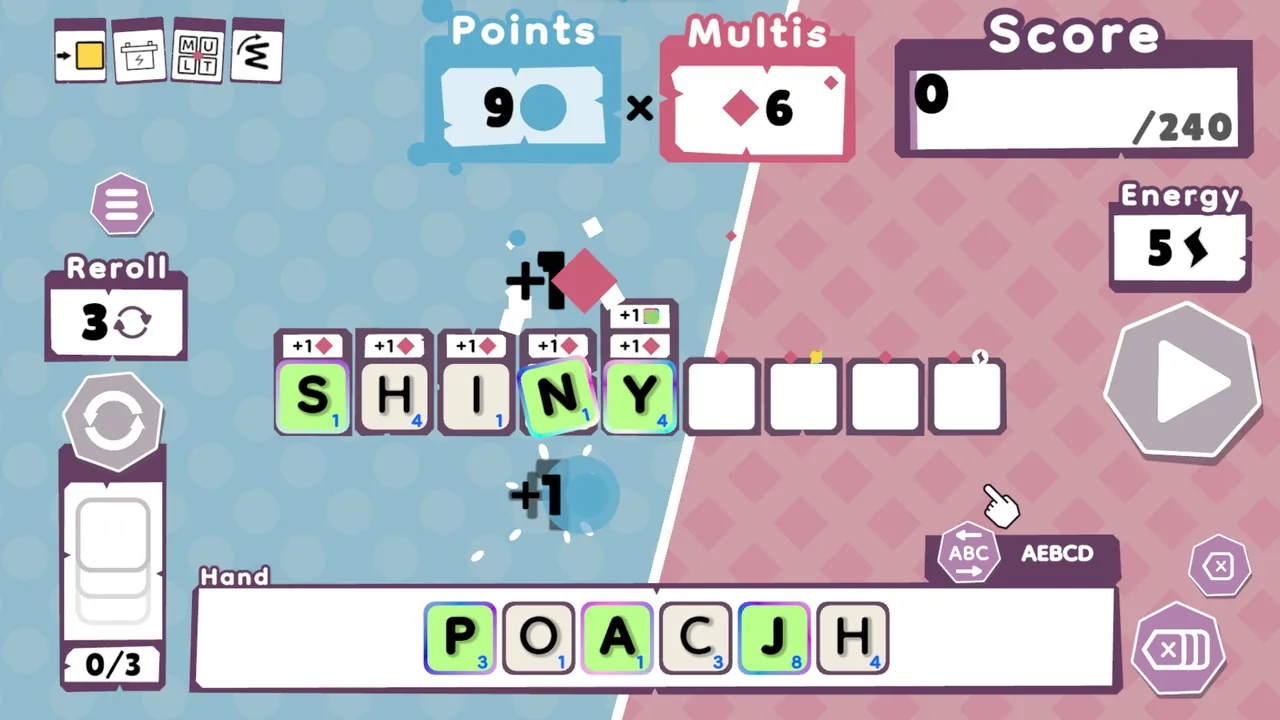
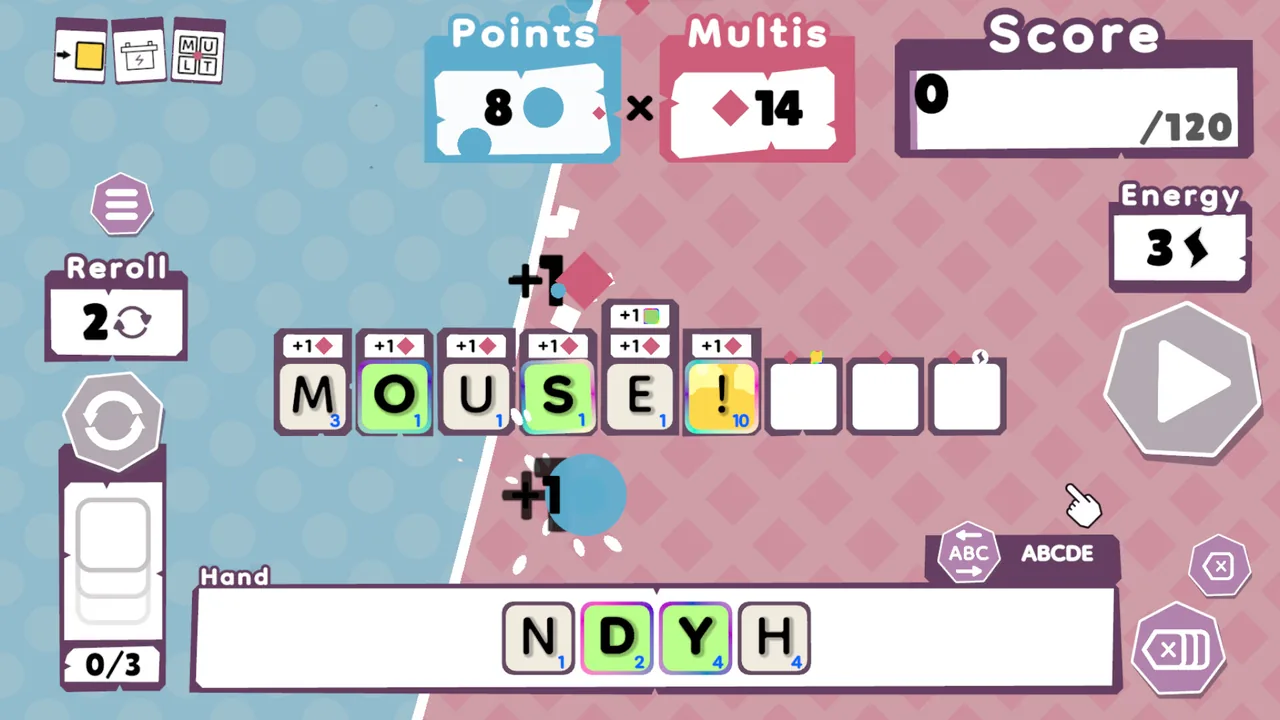
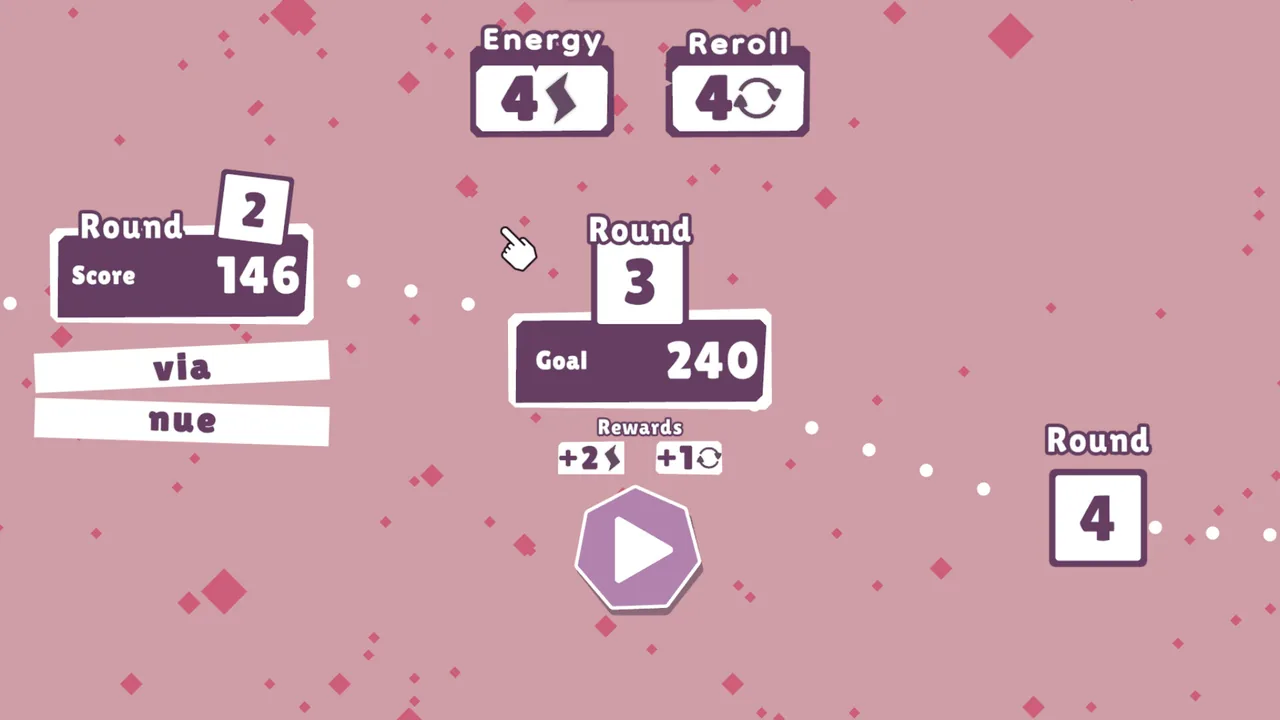
Wordatro! launched on Steam on June 23, 2025, a $9.99 word-based roguelite from developer Le Poulet and publisher Abiding Bridge that swaps Balatro's poker hands for Scrabble-style word building, tasking players with spelling the highest-scoring word they can from a limited letter pool to clear a rising round target. A substantial 265-review English pool sits at Very Positive, 213 to 52, a real but notably softer margin than most titles reviewed this segment, and digging into the specifics explains why: reviewers consistently praise the core loop while independently, and at real volume, flagging the same set of content and polish gaps.
The core hook draws consistent, specific praise. One reviewer described the appeal plainly: "you realise that hours of your day has gone by as you try to not only remember words in the English language... while also trying to think about your strategy and letter placement," adding that "the game's a lot more complicated than it lets on." A separate reviewer, a self-described Scrabble tournament player, wrote that the game "really helps flex my mental muscles for longer words that I would rarely use in Scrabble," calling it "a very good deal" at its price for genre fans specifically. Multi-language dictionary support drew its own specific praise, with one reviewer noting they hadn't "found ONE word game on Steam that supports other languages than English" before this one.
Set against that, the pool's single most heavily corroborated complaint concerns content depth and replay value, raised independently across a remarkable number of reviewers spanning both recommendation camps. One detailed positive review still felt compelled to note "some updates are definitely necessary in order to increase the replay value of this game." A separate critical reviewer wrote there's "nothing like the stakes in Balatro or the ascensions in Slay the Spire. That, I think, is the main thing holding the game back," while another summarized bluntly: "there doesn't feel like there's a lot of room for replayability or progression beyond beating a run... you don't really seem to unlock anything." A fourth reviewer, who received the game in a charity bundle, noted it "has only gotten one bug fix update and no other changes besides the removal of a game mode" since its June 2025 launch. That this same complaint, a lack of meta-progression and long-term reasons to keep playing, recurs from reviewers with wildly different playtime totals and opinions on the core mechanics makes it the review's clearest, best-sourced weakness.
A second, separately and extensively corroborated complaint concerns the in-game dictionary. Multiple independent reviewers reported common English words being rejected as invalid: one listed "Powers, Cower, Cowers, Debt, Debted, Dieted, Diet, Bided, and many more" that the game refused to recognize, while a separate reviewer specifically flagged "LAGGY" being disallowed "for not being real dictionary words yet allowing many proper nouns or names." A third reviewer, more sympathetic overall, still wrote "English dictionary is SUPER lacking....geeky is a word." That this specific frustration, real words rejected in a game built entirely around knowing words, recurs with different example words across multiple unconnected reviewers is a strong signal of a genuine, unresolved gap rather than isolated confusion about the rules.
A third, closely related complaint concerns the game's luck-versus-skill balance. Several reviewers described getting stuck with vowel-heavy hands that are nearly impossible to salvage, compounded by a reroll system that pulls double duty rerolling either letters or bonus choices, leaving little room to recover from a bad draw. One reviewer wrote plainly that the game "relies way too much on RNG... you very often pull entire hands of vowels," with "very little ability to express skill," while a separate reviewer made the identical point independently: "it is honestly fairly cool" on higher difficulty "but it also sticks you in a loop of immediately resetting until you get good enough RNG." The bonus system itself drew a related complaint, with reviewers repeatedly and explicitly comparing it unfavorably to Balatro's jokers, one noting Wordatro has "54 bonuses vs 150 jokers" and that "your strategy really comes down to whether you're going to use short words or long ones" rather than any deeper build variety.
A smaller but pointed complaint concerns the game's naming and branding: several reviewers noted, sometimes sharply, that borrowing so directly from Balatro's name and scoring structure invites exactly the unfavorable comparison the game then struggles to live up to, though most reviewers making this point still found real, if limited, enjoyment in the underlying word game once they set genre-benchmark expectations aside.
A handful of more technical complaints round out the pool, though with less corroboration than the issues above. One detailed reviewer flagged a specific design choice that struck them as an outright oversight: your hand of letters carries over between rounds rather than resetting, meaning "whatever letters you had left in your hand at the end of one round carry over to the next," forcing players to work with a letter set they'd already struggled to build words from. A separate reviewer reported a more severe bug, that quitting mid-run and rejoining could wipe most of the letters from their hand, leaving "3 random letters" behind. UI friction came up more than once as well, with one reviewer asking why "the letter points popup obscure the letter when rearranging your hand" and reporting they were "frequently unable to rearrange my hand at all." None of these technical complaints reached the volume of the content, dictionary, or balance issues above, but they contribute to an overall impression, echoed by several reviewers in their own words, of a game that shipped with real promise but not quite enough refinement.
Wordatro! succeeds at what it sets out to do in its first hour: a genuinely satisfying word-scoring loop wrapped in an approachable, cheap package that word-game fans specifically will enjoy. But its Very Positive score, the softest margin among the titles this lane has covered recently, reflects real reviewer patience running thin against a shared, specific, and well-documented set of complaints about thin post-launch content, dictionary gaps, and balance that leans too heavily on luck. Recommended cautiously, and primarily to committed word-game players rather than Balatro fans expecting a comparable depth of replayable strategy.
Pros and cons
Pros
- A genuinely satisfying, easy-to-learn core loop of building the highest-scoring word possible from a limited letter pool against a rising round target
- Multi-language dictionary support, repeatedly praised as unusual for the word-game genre, letting multilingual players test their vocabulary in more than English
- A daily challenge mode with a shared-letters scoreboard that reviewers consistently cited as the game's most replayable feature
- Genuinely addictive for committed word-game fans, with some reviewers reporting 35-75+ hour completionist playthroughs chasing every achievement
Cons
- A widely and heavily corroborated complaint that the game launched thin on content and long-term replay value, independently described by well over a dozen reviewers as lacking unlocks, meaningful progression, or reasons to keep playing after clearing the five difficulty tiers
- A separately, extensively corroborated dictionary problem, with many reviewers independently reporting common valid English words being rejected while some proper nouns are accepted
- A frequently repeated complaint that hands can become unsalvageable through bad luck, with vowel-heavy draws and a limited, dual-purpose reroll system leaving little room to recover or express skill
- A bonus/modifier system reviewers repeatedly compared unfavorably to Balatro's jokers, citing far fewer options with limited synergy and little sense of build identity between runs
Screenshots
-
Wordatro!Image: Abiding Bridge via Steam -
Wordatro!Image: Abiding Bridge via Steam -
Wordatro!Image: Abiding Bridge via Steam