
Game review
Wildgate
6 / 10
- Developer
- Moonshot Games
- Publisher
- Dreamhaven
- Released
- 22 July 2025
- Platforms
- Windows
- Genre
- PvPvE, Shooter, Multiplayer
- Monetisation
- Full box price plus a post-launch cosmetic premium-currency store
- Players
- Online PvPvE, crews of multiple players per ship
The short version
Wildgate crews you up with a small team to pilot a ship through a dangerous, procedurally generated stretch of space called the Reach, blending tactical ship-to-ship combat with fast-paced first-person boarding action across three modes — snatch-and-escape Artifact Brawl, large-scale Fleet Battle, and a more relaxed Treasure Hunt. It comes from Moonshot Games under Dreamhaven, the studio founded by former Blizzard president Mike Morhaime, and the underlying idea draws real, specific praise: reviewers describe genuine tactical creativity in both ship combat and boarding enemy vessels that few other multiplayer shooters attempt. What dominates the review corpus instead is a familiar and uncomfortable story reviewers keep naming outright — Evolve, the acclaimed 2015 multiplayer shooter whose inventive design couldn't survive bad monetisation and marketing decisions. Multiple detailed reviewers explicitly invoke that history as the closest parallel to what's happening here: a full-price game layered with an aggressive premium-currency cosmetic store, a brutal new-player experience with no skill-based onboarding, and a shrinking playerbase several reviewers say now threatens whether the game can be played at all.
Biggest strengths
- The core ship-to-ship combat and boarding mechanics draw genuine, specific praise for tactical creativity, with reviewers describing real strategic depth in both piloting and infiltrating enemy vessels that few multiplayer shooters attempt to combine
- Multiple long-term players, including one with over 1,200 hours logged across beta and live release, report sustained daily enjoyment and describe still finding genuinely memorable matches well past launch
- The procedurally-generated Reach setting and varied hazards give repeat matches real variety, with reviewers crediting the environmental design for keeping encounters unpredictable beyond just player-versus-player tactics
Biggest weaknesses
- The single most repeated complaint concerns monetisation: a full box price of up to NZ$43.95 (with a Deluxe Edition costing more) is layered with a premium-currency cosmetic store multiple reviewers call shameless or greedy for a game that isn't free-to-play, with several saying they wouldn't object to the same store on a genuinely free release
- New players face an unusually brutal onboarding experience according to many reviewers, with no skill-based beginner lobbies separating newcomers from veteran players — one reviewer describes a 77-win expert boarding their ship and eliminating their team almost every match, making it very difficult to retain friends who try the game
- Multiple detailed reviewers explicitly compare the situation to Evolve, the 2015 multiplayer shooter whose inventive design was undermined by monetisation and marketing missteps rather than gameplay failure, and several report the current playerbase has fallen to a level — one estimates 30-40 concurrent players — that puts matchmaking and the game's survival genuinely at risk
Who it's for: Fans of inventive, tactical multiplayer shooters who are prepared to accept a genuine risk that the playerbase may not sustain matchmaking long-term, and who can look past a premium-currency cosmetic store on top of a full purchase price. Best enjoyed now, with a full pre-formed group of friends, rather than waited on.
Our recommendation: Worth buying now, at a discount, specifically because reviewers are warning the playerbase may not last — if the core ship-and-boarding gameplay appeals to you, this is a case where waiting risks missing the game entirely rather than catching it in better shape.
6 / 10
Space piracy, done with real tactical depth
Wildgate's core loop combines two things multiplayer shooters rarely attempt together well: tactical ship-to-ship combat, where crews manage fuel, ammo and hazards while hunting rival vessels, and fast-paced first-person boarding action, where sneaking or fighting your way onto an enemy ship can turn a losing fight around entirely. Reviewers consistently credit this combination with genuine strategic creativity — piloting, defending your own ship, and infiltrating someone else's all demand different skills, and the procedurally-generated Reach setting keeps individual matches varied with environmental hazards layered on top of the player-versus-player tension. Long-term players back this up with real numbers: one reviewer specifically updates their own review at the 200-hour mark of live play — more than 1,200 hours total including beta — to say they still find at least one genuinely memorable match most days.
The comparison reviewers keep making, unprompted
What dominates Wildgate's review corpus, though, isn't a debate about the gameplay — it's a specific, recurring historical parallel multiple reviewers reach for independently: Evolve, the 2015 multiplayer shooter now remembered less for its design (which was well-regarded) than for how quickly bad monetisation and marketing decisions killed its playerbase. One reviewer states the comparison directly: "At launch, this looks like another case of Evolve... But you know what? I'm damn glad for the hours I got with Evolve, and this game is just as worth experiencing while you can." That a reviewer with lived experience of Evolve's decline reaches for it specifically, and frames their recommendation around urgency rather than confidence in the game's future, is a serious signal about where Wildgate's reputation currently sits — not as a bad game, but as a good one whose survival isn't guaranteed.
Monetisation on top of a full price tag
The specific complaint driving that comparison is monetisation. Wildgate launched at a full box price of up to NZ$43.95 for a Deluxe Edition, with a premium-currency cosmetic store added on top that multiple reviewers call shameless given the game isn't free-to-play. Several reviewers are explicit that they wouldn't object to the identical store on a genuinely free release — their objection is specifically to paying full price and then encountering a monetisation structure built for a different business model entirely. That's the same underlying tension that dogged Evolve, and reviewers drawing the comparison are doing so with that precedent directly in mind rather than reaching for a vague insult.
New players are having a rough time
A second, compounding problem concerns onboarding. Multiple reviewers describe an unusually brutal experience for new players, with no skill-based beginner lobbies separating newcomers from veterans — one reviewer specifically describes a 77-win expert player boarding their ship and eliminating their entire team in nearly every match, making it extremely difficult to keep new friends interested in a second session. Combined with reports the concurrent playerbase has fallen to as low as 30-40 players at points, several reviewers argue the matchmaking and long-term viability of the game are now genuinely at risk — not a hypothetical concern, but one already affecting queue times and match quality for the players still around.
A broken promise on top of it all
A more specific, recent grievance concerns Treasure Hunt, a calmer, loot-focused mode the developers removed post-launch, describing it as a temporary experiment. Reviewers who specifically enjoyed that mode with a regular play partner report real frustration at losing content they'd already paid for, regardless of the developer's stated intent to potentially bring it back — a concrete example of the kind of live-service uncertainty that erodes trust in exactly the way Evolve-style comparisons predict.
A studio built by veterans, in a crowded market
Wildgate carries real pedigree behind the scenes: developer Moonshot Games operates under Dreamhaven, the studio founded by Mike Morhaime after his departure from Blizzard, a company whose own history includes some of the most successful live-service and multiplayer titles ever shipped. That background makes the Evolve comparison sting a bit more for reviewers who expected a team with this much institutional experience in building and sustaining online communities to have anticipated the exact pitfalls their own game is now facing. It's also part of why several reviewers frame their criticism constructively rather than dismissively — the underlying talent and design sense is evident, which makes the monetisation and onboarding missteps read as avoidable rather than inevitable.
On the character side, players choose from a roster of "prospectors," each with distinct abilities suited to different roles — reviewers mention options built around piloting and ship defence alongside more mobile, infiltration-focused builds for boarding enemy vessels. That variety supports the tactical depth praised elsewhere in the review corpus, giving coordinated crews real room to specialise rather than everyone filling an identical role across a match.
The verdict
Wildgate's core idea is genuinely good, and reviewers who've spent real time with it back that up with specific, credible praise for its tactical depth and variety. But its own community keeps reaching for the same warning from recent multiplayer history, and the underlying evidence — an aggressive monetisation model on top of full price, a hostile new-player experience, a shrinking concurrent playerbase, and a fan-favourite mode already pulled — gives that comparison real weight rather than treating it as unfair pessimism. At its current discounted price, the honest recommendation from this review echoes the game's own most thoughtful reviewers: if the concept appeals to you, play it now, because the window in which Wildgate has enough players to actually deliver on its own design may not last indefinitely.
Pros and cons
Pros
- The core ship-to-ship combat and boarding mechanics draw genuine, specific praise for tactical creativity, with reviewers describing real strategic depth in both piloting and infiltrating enemy vessels that few multiplayer shooters attempt to combine
- Multiple long-term players, including one with over 1,200 hours logged across beta and live release, report sustained daily enjoyment and describe still finding genuinely memorable matches well past launch
- The procedurally-generated Reach setting and varied hazards give repeat matches real variety, with reviewers crediting the environmental design for keeping encounters unpredictable beyond just player-versus-player tactics
- Reviewers with direct Evolve experience specifically say Wildgate is "just as worth experiencing while you can" as that earlier game was, framing their recommendation around getting genuine enjoyment now rather than waiting and potentially missing the window entirely
- As a rare full-price multiplayer release in a market dominated by free-to-play live services, several reviewers explicitly credit the model itself as a welcome, increasingly uncommon choice, even while criticising how the cosmetic store was layered on top of it
Cons
- The single most repeated complaint concerns monetisation: a full box price of up to NZ$43.95 (with a Deluxe Edition costing more) is layered with a premium-currency cosmetic store multiple reviewers call shameless or greedy for a game that isn't free-to-play, with several saying they wouldn't object to the same store on a genuinely free release
- New players face an unusually brutal onboarding experience according to many reviewers, with no skill-based beginner lobbies separating newcomers from veteran players — one reviewer describes a 77-win expert boarding their ship and eliminating their team almost every match, making it very difficult to retain friends who try the game
- Multiple detailed reviewers explicitly compare the situation to Evolve, the 2015 multiplayer shooter whose inventive design was undermined by monetisation and marketing missteps rather than gameplay failure, and several report the current playerbase has fallen to a level — one estimates 30-40 concurrent players — that puts matchmaking and the game's survival genuinely at risk
- The removal of the Treasure Hunt mode post-launch — described by the developers as a temporary experiment — has specifically angered reviewers who say it was the mode they and their regular play partner enjoyed most, with several framing its removal as a broken promise on a game they already paid full price for
- Several reviewers explicitly state the game released before it was finished, citing incomplete features and a general sense of a strong creative concept shipped ahead of the polish and player-retention systems it needed to survive in a crowded multiplayer market
Screenshots
-

WildgateImage: Dreamhaven via Steam -

WildgateImage: Dreamhaven via Steam -

WildgateImage: Dreamhaven via Steam -
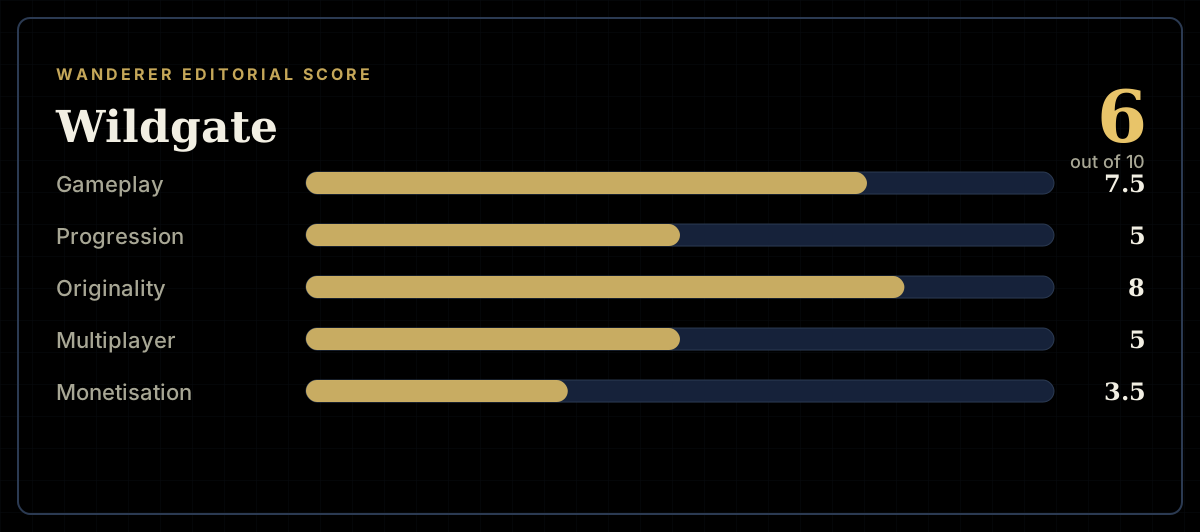
How the review scores each part of the gameWanderer Editorial -
The short versionWanderer Editorial