
Game review
Killer Klowns from Outer Space: The Game
5 / 10
- Developer
- IllFonic, Teravision Games
- Publisher
- Balor Games
- Released
- 4 June 2024
- Platforms
- Windows
- Genre
- Asymmetric Multiplayer Horror
- Monetisation
- One-time purchase, with ongoing paid cosmetic DLC
- Players
- Online PvP and co-op, asymmetric (Klowns vs. human survivors), cross-platform
The short version
Killer Klowns from Outer Space: The Game adapts the beloved 1988 cult film into an asymmetric multiplayer format from IllFonic, the studio behind Friday the 13th: The Game, casting one team as alien clowns harvesting humans for cotton-candy cocoons and the other as survivors trying to escape. Critics were genuinely mixed at launch — 66 to 71 across Metacritic's platform scores — and Steam's own audience landed at a correspondingly softer Mostly Positive, 74% across roughly 3,400 reviews, well below the typical scores this library records. What's happened since launch is the more serious story: a remarkably consistent, dated stream of reviews — including at least one from a player who logged 277 hours and returned in August 2025 to find the same game-breaking exploits still present — describes a dwindling player population, a day-one patch that introduced new matchmaking bugs rather than fixing existing ones, and post-launch content updates leaning almost entirely on paid cosmetic DLC rather than the balance fixes reviewers say the game actually needs.
Biggest strengths
- The core concept translates the film's tone well, with genuine visual and tonal fidelity to the source material that fans of the 1988 cult classic consistently credit
- Some critics specifically praised the game's balance, downtime and match length, ranking it among the better examples of the asymmetric horror genre on pure design terms
- The Klowns' arsenal of gimmick weapons — cotton candy cocoons, popcorn guns and the like — gives the alien side of matches a genuinely distinct identity from more conventional slasher-style asymmetric games
Biggest weaknesses
- Multiple detailed reviews, spanning from launch week through reviews posted more than a year later, describe a steadily dwindling player population, with one reviewer specifically citing a 24-hour concurrent peak of just 55 players
- A day-one patch reportedly introduced new matchmaking problems rather than resolving existing ones, and several reviewers say lobby backfilling has effectively replaced normal matchmaking as the population has shrunk
- Balance issues are a specific, repeated complaint: levelled-up Klowns gain weapons strong enough to solo-stop three or four coordinated human players, while newer players report feeling lost without adequate tutorialisation even at moderate character levels
Who it's for: Fans of the film specifically, and groups of friends able to fill a full lobby themselves, are the safest audience — several reviewers note the game is considerably more fun with a coordinated group than relying on public matchmaking. Solo players hoping to jump into a healthy, active public playerbase should check current concurrent player counts before buying, since multiple detailed reviews report the population declining sharply well before this review was written.
Our recommendation: A cautious recommendation at best, and only if you can gather your own full lobby of friends or find it on a steep discount. An asymmetric multiplayer game lives or dies on population health, and a remarkably consistent stream of dated reviews describes this one dying slowly rather than being actively sustained by its developers' post-launch support.
5 / 10
A beloved film, and a studio with a specific reputation to live down
Killer Klowns from Outer Space: The Game adapts Stephen Chiodo's 1988 cult horror-comedy into an asymmetric multiplayer format, one team playing alien clowns harvesting human victims for cotton-candy cocoons, the other playing survivors trying to escape before that happens. The pedigree behind it is a double-edged sword from the outset: IllFonic, co-developer here alongside Teravision Games, previously built Friday the 13th: The Game, a title whose eventual death by lawsuit over licensing rights has become a well-known cautionary tale in the genre. Killer Klowns owns its rights outright and isn't subject to that specific legal risk — several Steam discussions explicitly make this distinction — but reviewers went in watching closely for whether IllFonic's other, more controllable habits from that earlier game would repeat regardless. Critics' initial reception was genuinely mixed rather than warmly positive: 66 to 71 across Metacritic's platform-specific scores, and Steam's own audience landed at a correspondingly softer Mostly Positive, 74% across roughly 3,400 reviews — notably lower than most 2024 releases this library has covered.
What works when the population is healthy
It's worth crediting what critics who liked the game specifically praised, because the core design isn't the problem reviewers keep returning to. Some critics singled out the balance between downtime and action, and match length, as genuinely well-tuned for the asymmetric genre — a real achievement given how difficult that balance is to strike. The Klowns' gimmick-heavy arsenal, built around the film's own absurdist props like cotton-candy cocoon guns and popcorn shooters, gives their side of the match a genuinely distinct identity rather than reskinning a generic slasher-style hunter. For a full lobby of friends who already love the film, several reviewers describe a genuinely fun, tonally faithful experience.
The trajectory that's harder to ignore
What dominates the negative review sample, though, is less about any single design flaw and more about a trajectory — the game getting worse, or at least no better, over time rather than improving the way healthy live multiplayer titles typically do. Reviews describe a day-one patch that introduced new matchmaking problems rather than fixing pre-existing ones, with lobby backfilling effectively becoming the normal way matches fill as the population shrank. Balance complaints are specific and repeated: levelled-up Klowns access weapons strong enough to solo-handle several coordinated human players at once, tilting matches decisively in a way multiple reviewers say undermines competitive fairness at higher levels. A separate, specific bug allows human players to leave mid-match while being killed in a way that can deny the Klown team a match win entirely — described by one reviewer simply as "game breaking."
The most striking single data point comes from a reviewer who logged 277.7 hours in the game's early period, then returned specifically to update their review in August 2025 — well over a year after launch — only to report the same exploits and glitches were still present, unaddressed across that entire span. That's a meaningfully different, more serious claim than a rough launch month: it's a specific, dated, first-hand account of stagnation rather than improvement. Several other reviews corroborate the population concern directly, with one citing a 24-hour concurrent player peak of just 55, and multiple reviewers explicitly connecting the population decline to a content strategy that's leaned on paid cosmetic DLC rather than the balance and bug fixes they say the game actually needs to retain players.
A pattern the community itself was already watching for
It's worth noting that this trajectory wasn't a surprise to the game's own community even at launch. Steam discussion threads from the first weeks explicitly ask whether the game would "die as fast" as Friday the 13th, and other threads push back specifically that F13's death was a legal event rather than a playerbase one — a genuine, fair distinction, since Killer Klowns owns its license outright and faces no comparable legal risk of forced shutdown. That distinction matters, but it also means the population decline documented above can't be blamed on external legal circumstances the way Friday the 13th's ending could. Whatever is driving the dwindling numbers here, it's a result of ordinary post-launch decisions - content priorities, balance patching, communication with players - rather than anything forced on the studio from outside, which makes the pattern a fair thing to hold against this specific release rather than treating it as history repeating for reasons beyond anyone's control.
Verdict
Killer Klowns from Outer Space: The Game has a genuinely fun core concept and, according to some critics, solid asymmetric-horror fundamentals underneath its licensed premise — this isn't a story about bad game design at the foundation. It's a story about what happened after launch: a mixed critical reception that Steam's own softer-than-usual score echoes, followed by a documented, multi-year pattern of balance issues and exploits left unresolved while cosmetic DLC kept shipping, and a player population multiple independent reviewers describe as declining sharply rather than being actively sustained. If you can bring your own full lobby of friends and go in with modest expectations about ongoing support, there's a fun weekend here. If you're hoping to find a healthy public matchmaking scene two years after launch, check current player counts first — the dated reviews above suggest real reason for caution, and a $57 asking price is a lot to risk on a population that a growing, well-documented share of its own reviewers say is already thinning out.
Pros and cons
Pros
- The core concept translates the film's tone well, with genuine visual and tonal fidelity to the source material that fans of the 1988 cult classic consistently credit
- Some critics specifically praised the game's balance, downtime and match length, ranking it among the better examples of the asymmetric horror genre on pure design terms
- The Klowns' arsenal of gimmick weapons — cotton candy cocoons, popcorn guns and the like — gives the alien side of matches a genuinely distinct identity from more conventional slasher-style asymmetric games
- Cross-platform play helps keep matchmaking pools larger than a PC-only population would otherwise support
- The developers have continued releasing free maps alongside paid cosmetics, at least maintaining some ongoing content cadence rather than going completely silent
Cons
- Multiple detailed reviews, spanning from launch week through reviews posted more than a year later, describe a steadily dwindling player population, with one reviewer specifically citing a 24-hour concurrent peak of just 55 players
- A day-one patch reportedly introduced new matchmaking problems rather than resolving existing ones, and several reviewers say lobby backfilling has effectively replaced normal matchmaking as the population has shrunk
- Balance issues are a specific, repeated complaint: levelled-up Klowns gain weapons strong enough to solo-stop three or four coordinated human players, while newer players report feeling lost without adequate tutorialisation even at moderate character levels
- At least one reviewer who returned in August 2025, more than a year after their original 277-hour review, reports the same game-breaking exploits were still present, including cocoon-related bugs affecting match outcomes
- Post-launch content has leaned heavily on paid cosmetic DLC, which multiple reviewers explicitly contrast with a lack of meaningful balance patches, arguing the studio's priorities post-launch don't match what the actual playerbase says it needs
Screenshots
-

Killer Klowns From Outer Space: The GameImage: Balor Games via Steam -

Killer Klowns From Outer Space: The GameImage: Balor Games via Steam -

Killer Klowns From Outer Space: The GameImage: Balor Games via Steam -
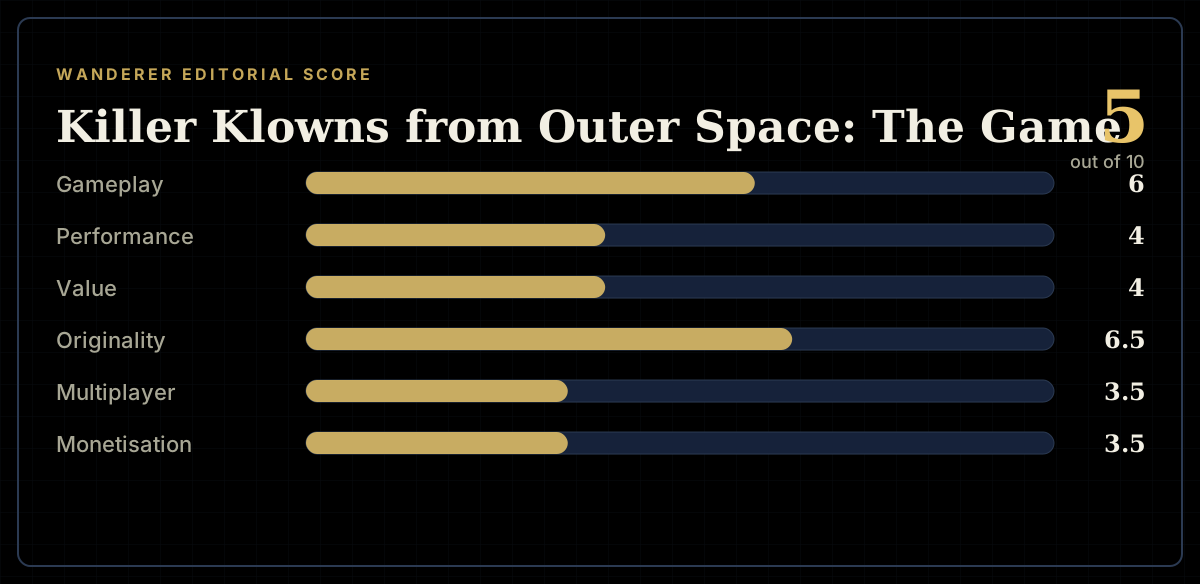
How the review scores each part of the gameWanderer Editorial -
The short versionWanderer Editorial