
Game review
Dig, Dig, Die
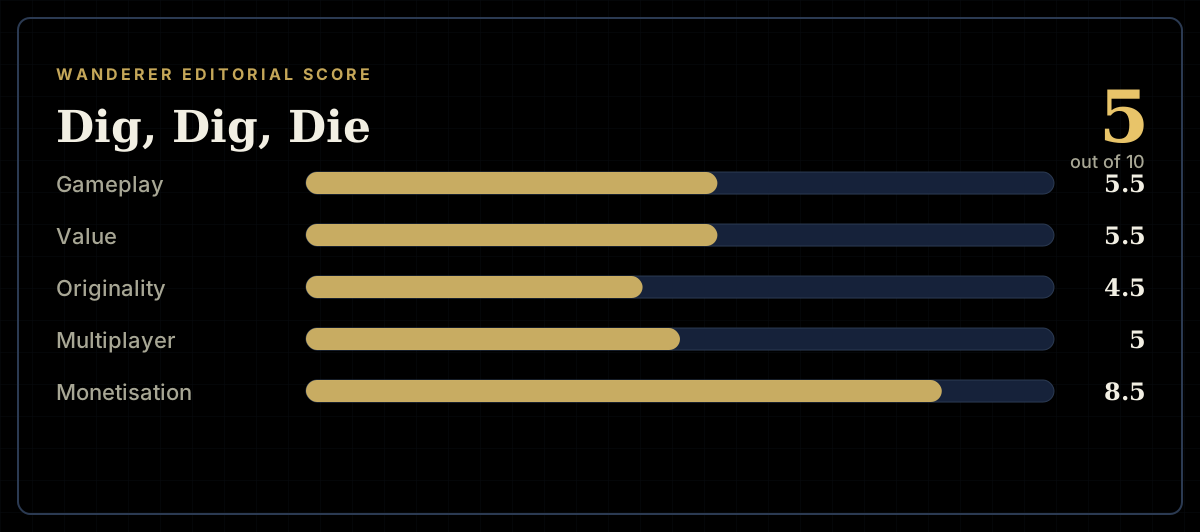
5 / 10
- Developer
- Alice Games
- Publisher
- Alice Games
- Released
- 6 August 2026
- Platforms
- Windows
- Genre
- Co-op horror extraction
- Monetisation
- One-time purchase. No DLC, battle pass or in-app purchases listed on the store page.
- Players
- Online co-op for 1–6 players, invite-only through the Steam friends list; no public lobby browser or matchmaking. No persistent shared world.
The short version
Dig, Dig, Die drops one to six players onto a cursed flying pirate ship, then out into graveyards where you dig up graves for loot while trying not to make enough noise to wake whatever's underneath. It's an unmistakable entry in the extraction-horror lineage that Lethal Company and R.E.P.O. built, right down to the proximity voice chat and the friendly-fire chaos, and Steam lists it under "Massively Multiplayer" alongside Action, Adventure and Indie. That tag doesn't survive contact with the store page's own multiplayer description: sessions are capped at six players, invited individually off a friends list, with no lobby browser and no shared persistent world. Launch-day reception is split almost evenly — 19 positive against 25 negative — and the negative half repeatedly names the exact games it's being compared against and finds it thinner.
Biggest strengths
- A clean, honest one-time purchase with no DLC, battle pass or premium currency anywhere on the store listing
- The core loop of digging graves under a noise-detection threat, then spending loot on the ship's vending machines and casino, gives every raid a reason to keep pushing your luck
- Voice chat and friendly-fire systems produce the kind of chaotic, self-inflicted stories the genre is built on — one of the higher-voted launch reviews jokes that their own friends are scarier than the monsters
Biggest weaknesses
- Multiplayer is invite-only through the Steam friends list with no public lobby browser, so a solo buyer without a full squad already on Steam has no way to fill a session with strangers
- Launch-day player reviews repeatedly compare it unfavourably to Lethal Company and R.E.P.O. by name, calling it thinner on content and rougher in feel
- Multiple reviewers describe clipping through geometry, an abrupt crouch-to-standing camera transition, and item stat effects that only reveal themselves once you drop the item on the ground
Who it's for: Small friend groups who already like Lethal Company or R.E.P.O. and want a cheap, lighter variant with a graveyard-heist theme; not for anyone hoping the Massively Multiplayer tag means an actual persistent or open shared world.
Our recommendation: Worth a look at its discounted launch price if you have five friends who already own it too and just want a goofy few hours of grave-robbing chaos. Everyone else should wait and see whether the promised post-launch content — new bosses, weapons and a survival mode — actually narrows the gap with the genre leaders it's being measured against on its own review page.
5 / 10
Steam files Dig, Dig, Die under four genres: Action, Adventure, Indie and Massively Multiplayer. Read past the tag list to the game's own multiplayer description and the fourth one falls apart immediately — sessions cap at six players, you invite them individually off your Steam friends list, and there's no public lobby, no matchmaking, and no shared persistent world for anyone to be massed inside. What Alice Games actually built is a small co-op extraction horror game about looting a haunted graveyard, in the lineage that Lethal Company and R.E.P.O. established and that a chunk of its own launch-day reviewers cite by name, usually unfavourably.
The loop: dig, get noticed, decide whether to run
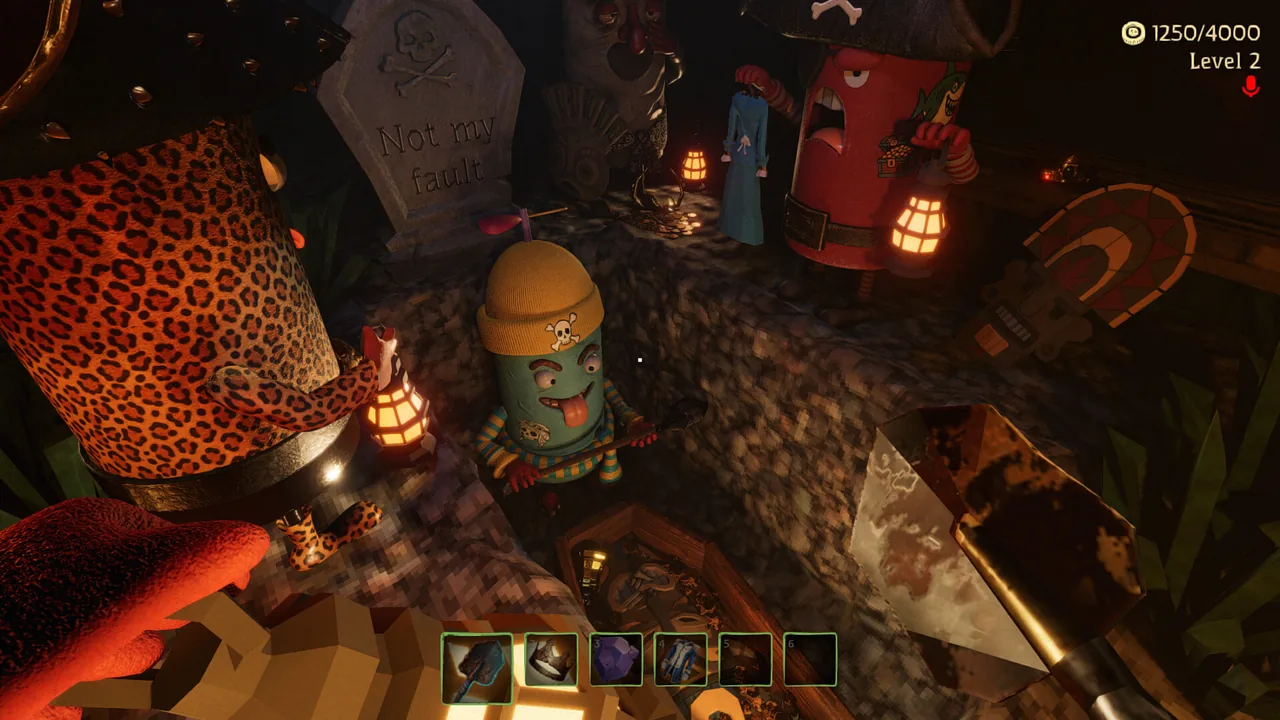
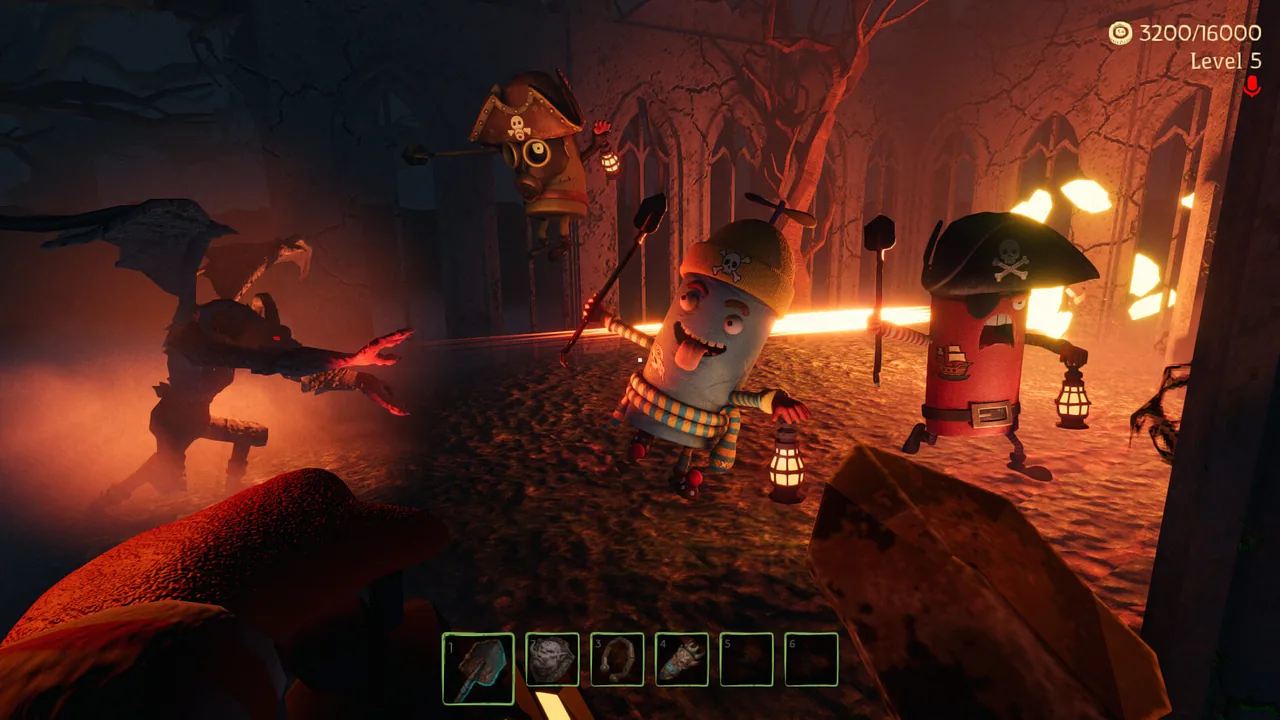
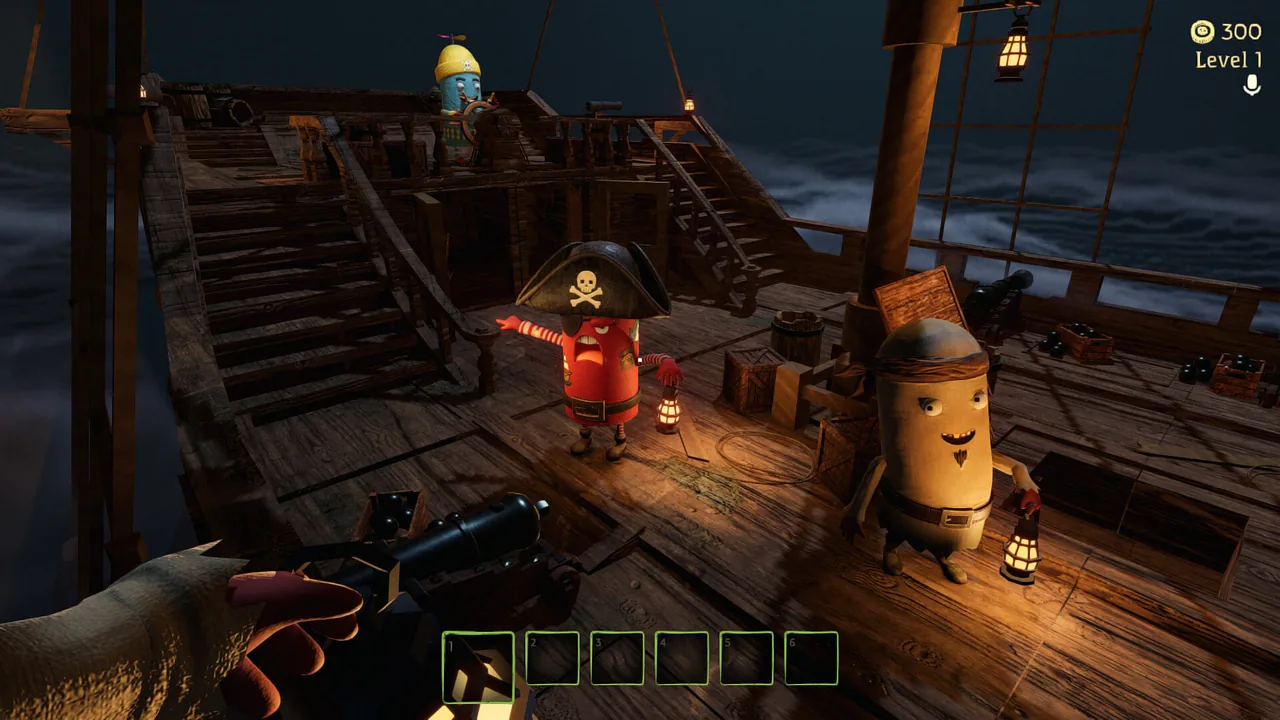
The pitch is specific and legible. One to six players board a cursed flying pirate ship, drop into a graveyard, and dig up coffins and crypts for loot — some of it beneficial (speed boosts, a super-jump), some of it cursed. The tension comes from noise: shovels, voice chat, screaming, all of it draws monsters that hunt by sound rather than sight, and the store page's own framing leans into the idea that your friends yelling into proximity chat is as dangerous as anything buried in the ground. A wildcard UFO abduction mechanic sits on top of that as a random punishment for being unlucky or loud. Back on the ship, loot converts into vending-machine boosters and a casino — blackjack, roulette, thimbles — that can multiply a haul or erase it in one bad hand.
It's a familiar shape by now, and Dig, Dig, Die doesn't pretend otherwise; the graveyard-pirate skin is really the only thing distinguishing the premise from its more established peers. What matters is execution, and the 44-review launch sample splits almost evenly on exactly that: 19 positive, 25 negative, landing on Steam's "Mixed" tag on day one.
What the positive reviews are buying
The reviews that land positive describe a loop that works when you're playing it as intended — with a full or near-full group of friends who treat every death and every accidental UFO beam-up as a bit. "Bro this is not a horror game, this is an exorcism and my friends are the demons," reads one of the higher-voted English reviews, and that captures the appeal better than anything on the store page: this is a game about the group, not the graveyard. A German review specifically praises how quickly the controls click, and an English review calls the noise-and-loot loop "dumb fun" with "no timers, no weird bs mechanics" getting in the way. One Russian review describes losing three hours without noticing. None of that is faint praise — it's the exact kind of chaotic, self-inflicted-story appeal that makes this genre sell copies through word of mouth rather than marketing.
The global achievement data adds a small, honest wrinkle to that picture. The kill_friend achievement sits at 81.9% completion after one day — friendly fire and betrayal aren't an edge case here, they're close to universal — while six_players sits at just 30.4%, suggesting a full six-person lobby, the game's own stated ceiling, isn't what most sessions actually look like this early. That's consistent with a friends-only invite system: filling a lobby depends entirely on how many people in your group already own the game and are online at once.
What the negative reviews are naming
The negative half is unusually specific for a day-one sample, and a meaningful share of it is a direct comparison to genre peers. Several Chinese-language reviews — the largest single-language bloc in the sample at 27 of 44 — name Lethal Company and R.E.P.O. explicitly and rate Dig, Dig, Die below both on feel and content depth: one calls it "a low-end version of R.E.P.O.," another says its playability and controls fall short of both named games specifically. Recurring complaints inside that bloc describe clipping through geometry, a jarring crouch-to-standing camera cut, item buffs and curses that only reveal their effect once dropped on the ground rather than on pickup, and a graveyard map that spawns enemies too densely for its size. One review flags that dying leaves you reviving on only a quarter of your max health, which reads as a specific balance complaint rather than a general one.
The structural complaint worth taking most seriously, because it's a design decision rather than a bug: multiplayer here is friends-list invite only, with no public lobby browser. A Chinese review calls this out directly as a weak point, and it lines up with what the "Massively Multiplayer" tag gets wrong — there's no mechanism in the game for meeting strangers at all, which is close to the opposite of what that genre label usually promises. A solo buyer without an existing group already on Steam has no built-in way to fill a session.
One further claim is worth reporting rather than resolving: a Chinese-language review argues the store page's promotional key art looks AI-generated and doesn't match the game's actual in-game presentation. That's a serious-sounding claim, but it rests on a single reviewer's visual impression rather than anything independently verifiable, and it should be weighed as exactly that.
Value and monetisation
There's nothing to complain about on the commercial side. Dig, Dig, Die is a one-time purchase — NZ$11.99, or NZ$9.59 during its current 20% launch discount — with no DLC, no battle pass and no in-app purchases anywhere on the store listing. Twenty-one Steam achievements and a published, specific post-launch roadmap (new bosses, new weapons, new enemies, level modifiers, a dedicated survival mode) at least signal an intent to keep building rather than a one-and-done cash-in, though a roadmap is a promise until it ships.
Final verdict
Dig, Dig, Die is a competent, budget-priced entry in a genre that already has two better-regarded reference points, and its own launch-day reviewers keep drawing that comparison unprompted rather than the review needing to make it. The core loop — dig, get noticed, decide whether to push your luck or run — is sound enough to produce the chaotic co-op stories the genre trades on, and the commercial terms are as clean as they come. But the rough edges named repeatedly on day one — clipping, an awkward camera transition, opaque item effects, dense spawns, a punishing revive state — are the kind of thing a genre-leading alternative doesn't currently have, and the friends-only invite system with no lobby browser makes the "Massively Multiplayer" label actively misleading rather than just generous. A cheap night with a full group you already have is a fair trade at this price; anyone hoping the tag meant a bigger, more open game should look elsewhere.
Price and platform details checked 7 August 2026.
Pros and cons
Pros
- A clean, honest one-time purchase with no DLC, battle pass or premium currency anywhere on the store listing
- The core loop of digging graves under a noise-detection threat, then spending loot on the ship's vending machines and casino, gives every raid a reason to keep pushing your luck
- Voice chat and friendly-fire systems produce the kind of chaotic, self-inflicted stories the genre is built on — one of the higher-voted launch reviews jokes that their own friends are scarier than the monsters
- A published post-launch roadmap names concrete additions (new bosses, weapons, enemies, level modifiers, a survival mode) rather than vague promises
Cons
- Multiplayer is invite-only through the Steam friends list with no public lobby browser, so a solo buyer without a full squad already on Steam has no way to fill a session with strangers
- Launch-day player reviews repeatedly compare it unfavourably to Lethal Company and R.E.P.O. by name, calling it thinner on content and rougher in feel
- Multiple reviewers describe clipping through geometry, an abrupt crouch-to-standing camera transition, and item stat effects that only reveal themselves once you drop the item on the ground
- One of the higher-voted Chinese-language reviews argues the store page's own key art looks AI-generated and doesn't match the in-game presentation, a claim worth flagging even though it can't be independently confirmed here
Screenshots
-
Dig, Dig, DieImage: Alice Games via Steam -
Dig, Dig, DieImage: Alice Games via Steam -
Dig, Dig, DieImage: Alice Games via Steam -
How the review scores each part of the gameWanderer Editorial -
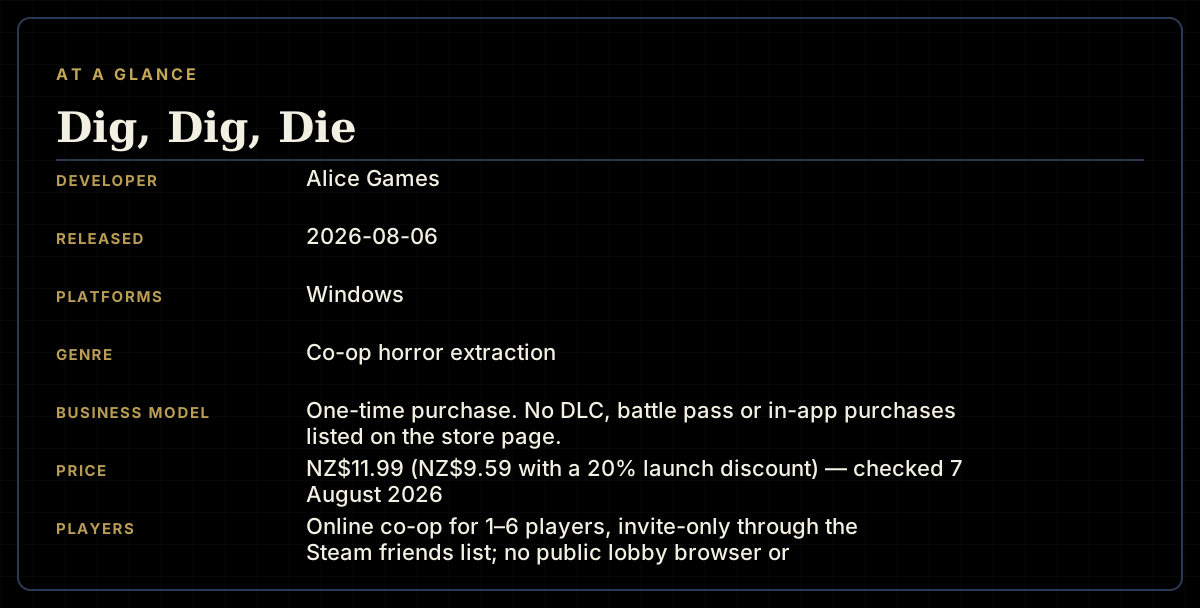
At a glanceWanderer Editorial -
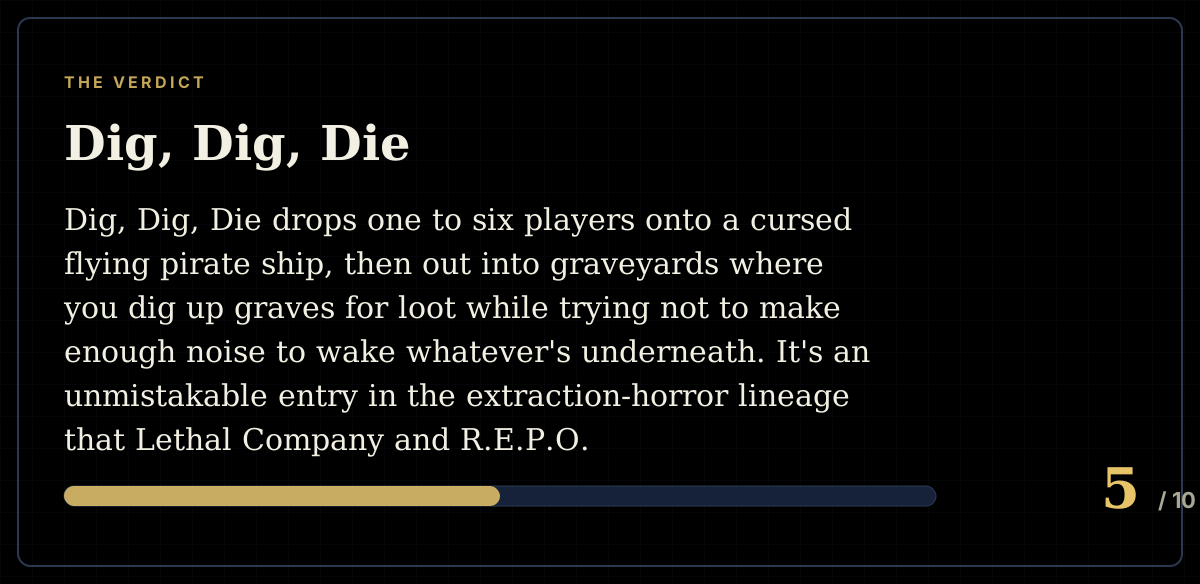
The short versionWanderer Editorial