Game review
Wandering Willows
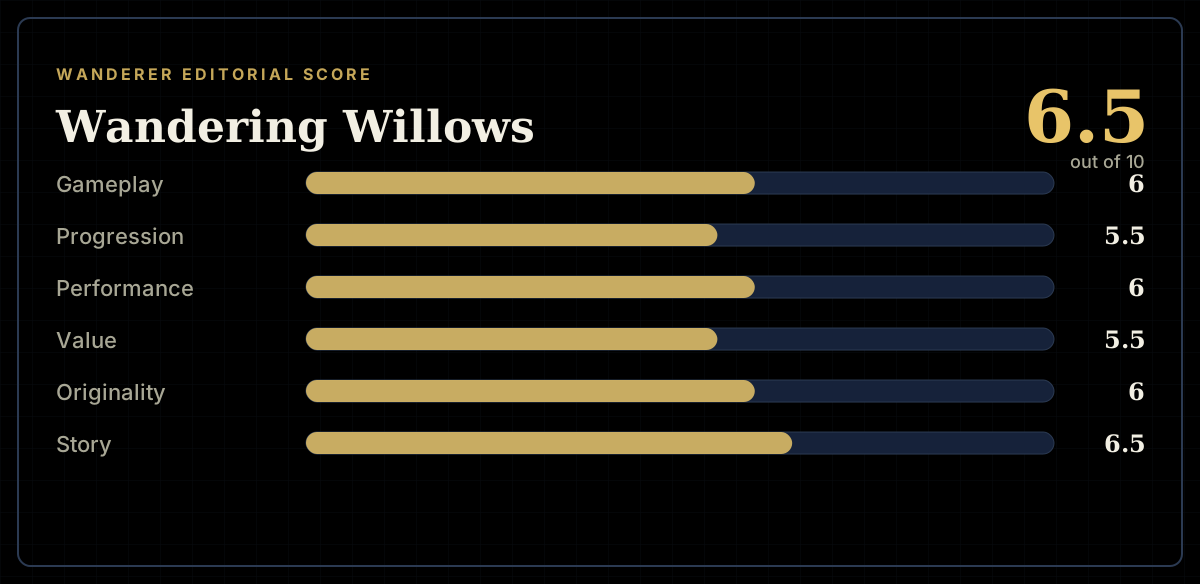
6.5 / 10
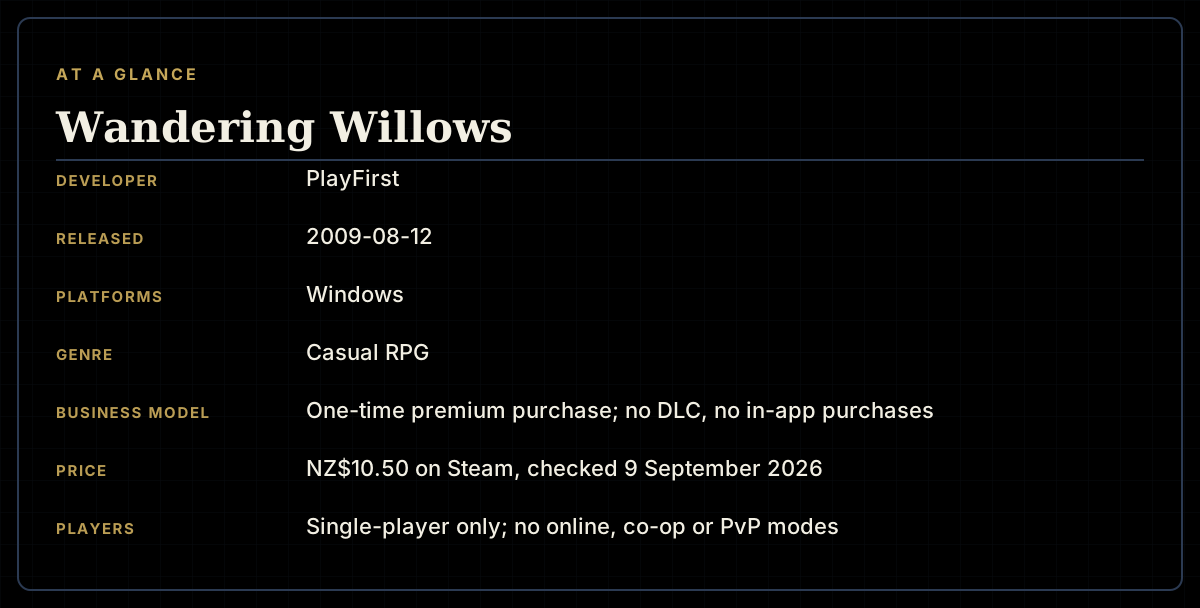
- Developer
- PlayFirst
- Publisher
- PlayFirst
- Released
- 12 August 2009
- Platforms
- Windows
- Genre
- Casual RPG
- Monetisation
- One-time premium purchase; no DLC, no in-app purchases
- Players
- Single-player only; no online, co-op or PvP modes
The short version
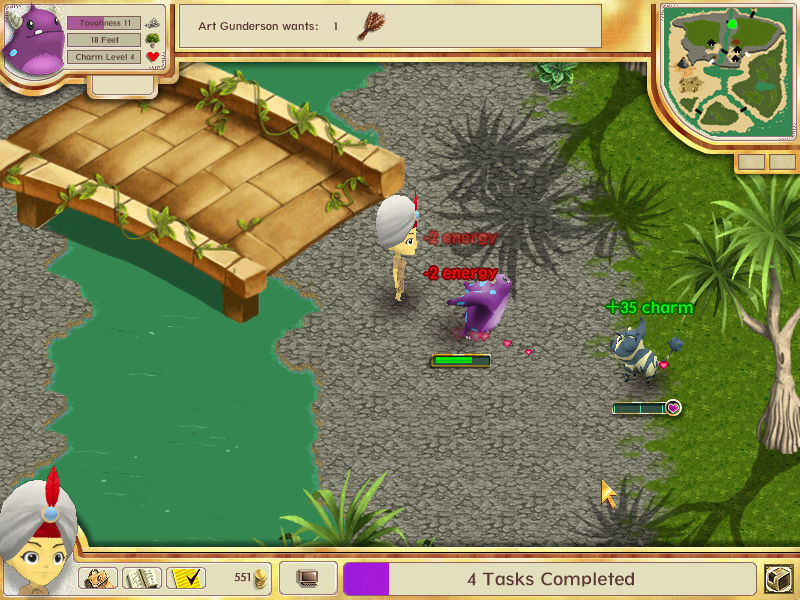
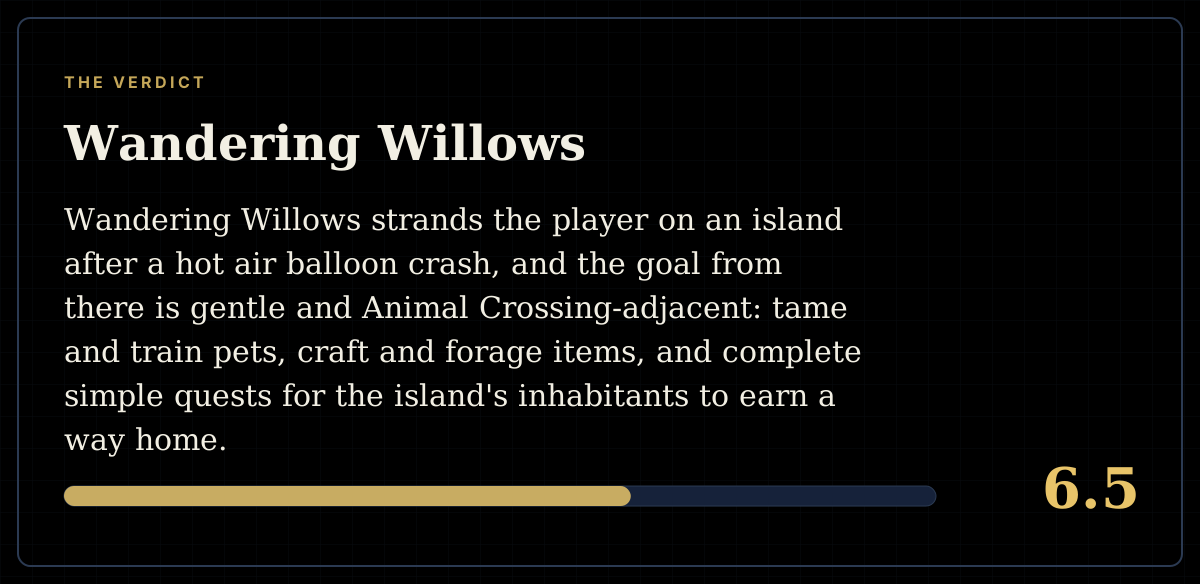
Wandering Willows strands the player on an island after a hot air balloon crash, and the goal from there is gentle and Animal Crossing-adjacent: tame and train pets, craft and forage items, and complete simple quests for the island's inhabitants to earn a way home. Reviewers with real history with the game, some going back to its earlier life on Yahoo Games before this Steam release, describe it as an underrated, charming comfort game they return to every few years.
One detailed dissenting review complicates that picture with a real, specific account: after buying four copies of the game, this reviewer reports every version except the Steam release crashing on startup, alongside genuinely slow character movement and pet training the reviewer found tedious rather than relaxing. That's a useful, if unusual, data point — a reviewer whose complaint about instability specifically excludes the version being reviewed here, while still finding the underlying gameplay loop repetitive regardless of platform.
Biggest strengths
- A genuinely charming, low-stakes premise built around taming and training pets to help complete quests, with a pet cross-breeding system multiple reviewers specifically enjoy
- Real, sustained nostalgic affection from longtime players, some of whom recall the game from its earlier life on Yahoo Games and describe returning to it every few years since
- Simple but effective storytelling and world-building that reviewers say holds up well and is genuinely suitable for all ages
Biggest weaknesses
- One detailed reviewer, having purchased four separate copies of the game, reports every version except this Steam release crashing on startup, a serious instability issue for the game more broadly even if not for this specific version
- The same reviewer describes character movement as "cripplingly slow" and pet training as tedious rather than relaxing, completing the entire game to 100% in about two days despite the slow pace
- Multiple reviewers note the main campaign is short, at around ten to twelve hours, with limited reason to continue once the central story wraps up
Who it's for: Fans of gentle, low-stakes life-sim RPGs like Animal Crossing who want a short, cozy game about pet care and simple quests. Less suited to players wanting depth, challenge, or a long campaign with substantial post-completion content.
Our recommendation: A worthwhile, cheap pickup for fans of cozy pet-taming life sims, especially at a discount — just know the pace is genuinely slow and the campaign genuinely short.
6.5 / 10
Casual life-sim RPGs live or die on a simple question: does their slow, repetitive core loop feel relaxing or tedious to a given player, and there's rarely much middle ground. Wandering Willows opens with a hot air balloon crash and a simple goal: repair the balloon and get home, one small favor for the island's inhabitants at a time. It's a gentle, low-stakes premise that reviewers consistently compare to Animal Crossing, built around taming and training pets, foraging and crafting, and working through a steady stream of simple quests. What stands out most about this review sample is how many reviewers have real, sustained history with the game — some recall discovering it on Yahoo Games years before this Steam release, and describe coming back to it repeatedly ever since.
A genuine comfort game with real staying power
The praise here is specific and personal rather than generic. "I used to play this game when I was younger and had a really crappy laptop... It is charming, has a pretty compelling story, and is pretty in depth in terms of characters and overall world-development," one reviewer writes, describing rediscovering it on Steam years later. Another states plainly: "I wish more people knew about it, this is 1 of the most underrated games I will always recommend," having personally finished the game at least twenty separate times. A recurring detail several reviewers single out specifically is the pet cross-breeding system, praised as a genuinely engaging layer on top of the core quest loop. One reviewer frames the whole experience precisely: "perfect game to accompany a binge watch of a fairly complex TV show" — cute, easy, and undemanding in exactly the way that's sometimes the point.
A detailed account of real instability elsewhere
Set against that warmth is the single most detailed critical review in this sample, and it's worth reading carefully rather than dismissing. Having purchased four separate copies of the game across different storefronts, this reviewer reports that "the steam release was the only one that didn't crash on startup," with the other versions crashing "after making more than one account." That's a specific, useful finding for anyone comparing where to buy this particular game — the instability described is real, but it specifically doesn't implicate the Steam release being reviewed here. The same reviewer is less forgiving about the underlying design, though, describing character movement as "cripplingly slow" and pet training as tedious "as boring as completing every mission," despite completing the entire game to 100% in only about two days.
A short campaign, and a real question about value
Beyond that detailed account, a quieter but recurring theme concerns length and value. Multiple reviewers describe the main story as short — one specifically notes completing "the main scenario" in around twelve hours and feeling there wasn't "much left" afterward. A separate reviewer, while recommending the game overall and describing it as "somewhat addicting," states directly that "paying the full price isn't worth it." These aren't complaints about the core experience so much as fair, practical guidance on when to buy: this is a game reviewers consistently suggest catching on sale rather than paying full price for, regardless of how fondly they otherwise describe it.
A range of playtime experiences worth acknowledging honestly
This review sample includes accounts spanning wildly different investment levels, and it's worth being transparent about that range rather than smoothing it into a single narrative. One reviewer reports beating the game "at least 20 times," while another played for barely five minutes before concluding it "wasn't my type of game" and moving on. That spread is itself informative: this is a genre-specific game whose appeal depends heavily on whether cozy, repetitive pet care and crafting loops genuinely relax a given player or simply bore them, and the reviewers who bounced off it quickly did so for reasons of genre fit rather than any specific flaw in execution.
What "boring" and "relaxing" have in common here
It's worth noting directly that the same core loop — slow movement, repetitive pet training, simple fetch-and-craft quests — gets described by different reviewers as either the game's biggest weakness or its central appeal, sometimes using nearly identical language to reach opposite conclusions. The detailed critical reviewer calls the pet training "incredibly boring." A separate, positive reviewer describes the same mechanic as ideal for unwinding during a TV binge. Neither reviewer is wrong about what the game actually does; they simply want different things from the time they spend with it, which is a genuinely useful way to think about whether this specific game suits a given buyer before purchasing.
Where it lands
Wandering Willows earns real, specific affection from a review base with genuine, sometimes decades-long history with the game, and its low-pressure pet-taming loop clearly still works for the audience it's built for. The detailed account of instability on other platforms is worth knowing, even though it specifically clears the Steam version reviewed here, and the shared concerns about slow pacing, repetition, and full-price value are concrete enough to weigh seriously. A relaxing, nostalgic pickup for the right audience, best bought on sale rather than at full price, and one worth revisiting periodically the way several of its longtime fans clearly do — and this specific Steam release, per the reviewer with the most direct comparison available, appears to be the more technically reliable way to experience it besides.
Pros and cons
Pros
- A genuinely charming, low-stakes premise built around taming and training pets to help complete quests, with a pet cross-breeding system multiple reviewers specifically enjoy
- Real, sustained nostalgic affection from longtime players, some of whom recall the game from its earlier life on Yahoo Games and describe returning to it every few years since
- Simple but effective storytelling and world-building that reviewers say holds up well and is genuinely suitable for all ages
- A relaxing, low-pressure pace reviewers specifically recommend as ideal background entertainment alongside something like a TV show
- Reported as stable specifically on Steam by at least one reviewer who experienced crashes on other versions of the same game, suggesting this particular release is a more reliable way to play it
Cons
- One detailed reviewer, having purchased four separate copies of the game, reports every version except this Steam release crashing on startup, a serious instability issue for the game more broadly even if not for this specific version
- The same reviewer describes character movement as "cripplingly slow" and pet training as tedious rather than relaxing, completing the entire game to 100% in about two days despite the slow pace
- Multiple reviewers note the main campaign is short, at around ten to twelve hours, with limited reason to continue once the central story wraps up
- At least one reviewer explicitly states the game isn't worth its full asking price, even while still recommending it on sale
- No Steam achievement schema exists for this release, removing one of the usual independent ways to corroborate completion or engagement patterns
Screenshots
-
Wandering WillowsImage: PlayFirst via Steam -
Wandering WillowsImage: PlayFirst via Steam -
Wandering WillowsImage: PlayFirst via Steam -
How the review scores each part of the gameWanderer Editorial -
The specsWanderer Editorial -
The short versionWanderer Editorial