
Game review
University 33 Review: A Co-op Spot-the-Difference Game That Trips Over Its Own Bugs
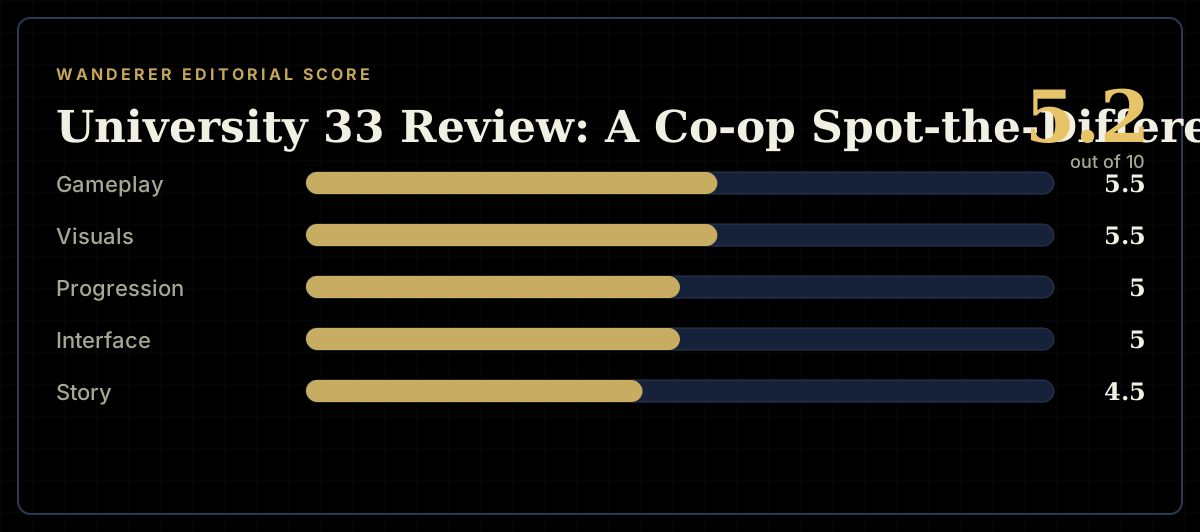
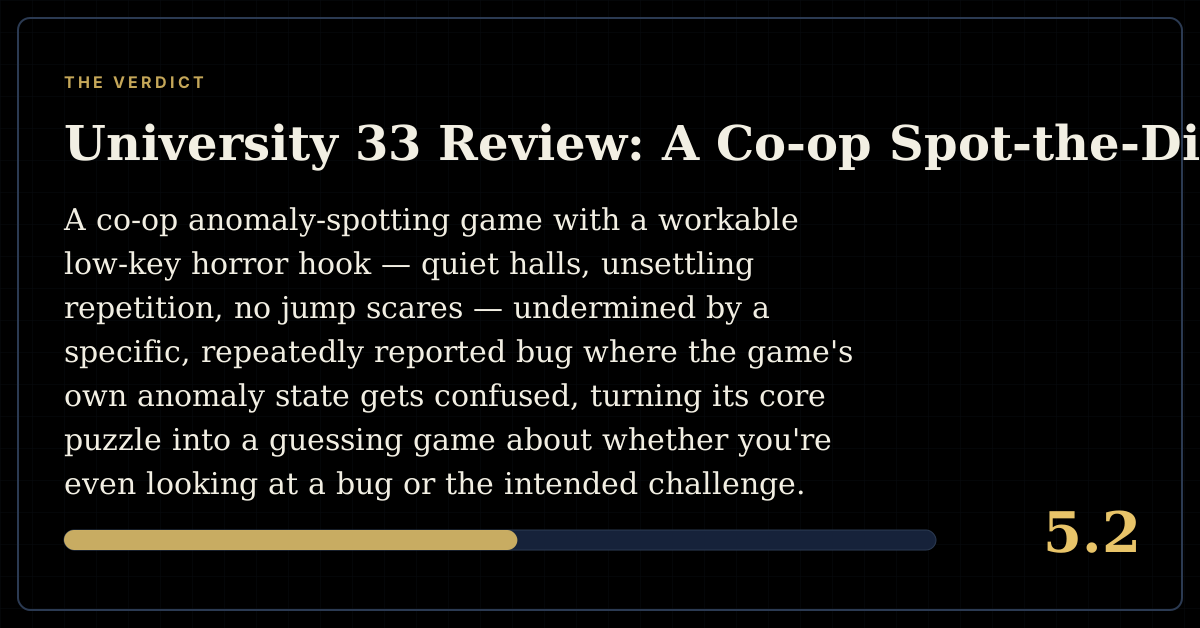
5.2 / 10
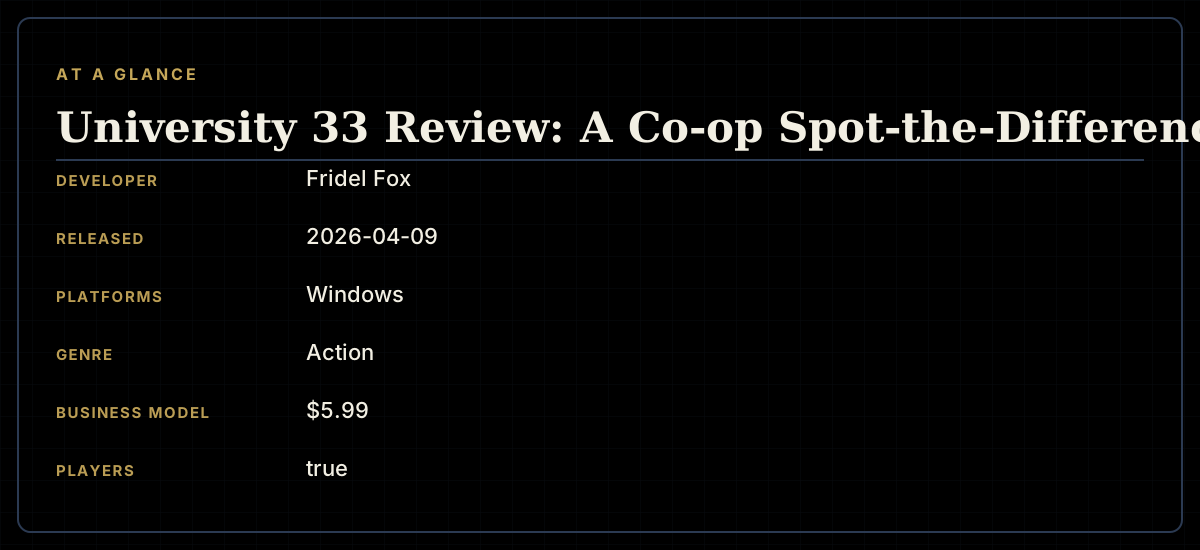
- Developer
- Fridel Fox
- Publisher
- Fridel Fox
- Released
- 9 April 2026
- Platforms
- Windows
- Genre
- Action
- Monetisation
- $5.99
- Players
- true
The short version
A co-op anomaly-spotting game with a workable low-key horror hook — quiet halls, unsettling repetition, no jump scares — undermined by a specific, repeatedly reported bug where the game's own anomaly state gets confused, turning its core puzzle into a guessing game about whether you're even looking at a bug or the intended challenge.
Biggest strengths
- A workable low-key horror premise: an unsettlingly quiet, shifting university corridor with over 40 anomalies to spot, no reliance on jump scares
- Genuine co-op value: reviewers who played with friends describe communicating and cross-referencing observations as a meaningful part of the experience
- Two difficulty settings that reviewers confirm are meaningfully different, giving both casual and hardcore spot-the-difference fans a way to engage
Biggest weaknesses
- A specific, repeatedly reported bug where a previously spotted anomaly persists incorrectly into the next loop, making it impossible to tell whether you're seeing a bug or a genuine new anomaly — several reviewers call this the single biggest problem
- Multiple reviewers report real content thinness once you look past the 33-floor structure, with the pool of unique anomalies feeling smaller than the premise suggests
- Motion blur cannot be disabled, and the loop's entry/exit point flips direction unpredictably between runs, both cited as sources of disorientation and nausea
Who it's for: Fans of 'spot the difference' horror games like The Exit 8 who want a co-op version to play with friends; not for solo horror fans wanting a tightly polished, bug-free experience, or anyone easily annoyed by unclear rules.
Our recommendation: Wait for a patch, or buy cheap with friends who'll laugh off the bugs
5.2 / 10
Trust nothing on the way to Floor 33
University 33 puts you and up to three friends inside a quiet, shifting university campus, tasked with climbing 33 floors by spotting subtle anomalies — a swapped photo, a changed sign, a footstep that shouldn't be there — and choosing the correct exit each time. Get it wrong, and the loop resets you back to the start. It's a direct descendant of the "spot the anomaly" horror formula popularized by The Exit 8, but built around cooperative play from the ground up: the store page's core pitch is that communication between players, cross-referencing what each of you noticed, is survival.
A calm, low-key horror hook that mostly works
The reviews that land positive consistently credit the game's restrained tone. A German-language review specifically praises that it gets by "without big jump scares," offering two difficulty settings where "Hard" genuinely earns the name. An English review in the same vein calls it laggy at times but otherwise "just another anomaly game" — a backhanded compliment that still credits it with delivering on the core promise of the genre it's imitating. Multiple reviewers who played in groups describe the social element — talking through what changed, disagreeing about whether something is real — as the part of the experience that elevated it above a solo curiosity.
The bug that breaks the puzzle's own rules
The most serious and most frequently repeated complaint, showing up independently across Korean, Chinese, and Traditional Chinese reviews, is a specific bug: an anomaly correctly identified on one loop incorrectly persists into the next loop rather than resetting, so players can't tell whether a change they're seeing is a real new anomaly or a leftover glitch from before. One detailed Korean review describes reaching floor 29 after considerable effort, encountering exactly this bug, and being sent back to floor zero as a direct result — arguably the worst possible failure state for a puzzle game, since it punishes players for a mistake the game itself caused. That's a fundamentally different, more damaging kind of bug than a simple visual glitch: it directly undermines the core mechanic the entire game is built around.
Thinner content than the premise implies
Beyond the bug, several reviewers separately flag that the game's advertised depth doesn't fully hold up once you're playing. A Chinese-language review notes that the loop structure lacks the directional consistency of similar games (leaving through exit A starts the next loop from A, leaving through B starts from B, making the flow of exploration confusing rather than a clean repeating cycle), and adds that despite the "33 floors" framing, there isn't actually much unique content once you account for repetition. That criticism, paired with the persistence bug above, paints a picture of a game whose central 40-plus-anomaly promise is thinner in practice than its marketing suggests.
What the achievement and patch data show
University 33 currently has no Steam achievements configured at all, despite the store page listing achievement support — an unusual gap that leaves no achievement-based corroboration available for this review, worth noting honestly as a data gap rather than glossing over it. Steam's news feed shows exactly one post-launch update, a "V1.0.3" patch released just two days after the April 9 launch, and nothing since — a thin but real signal of at least some immediate follow-through, though not enough visible activity to say whether the anomaly-persistence bug driving the worst reviews has been addressed. That single-patch, then-silence pattern is worth weighing against the review timeline itself: the floor-29 persistence-bug complaint and the "not much content once you look past 33 floors" complaint both post-date that one patch, meaning the fixes it did contain evidently didn't touch the issues players kept running into afterward.
A short, easy-to-brush-off review sample worth taking seriously anyway
Part of what makes University 33 tricky to assess fairly is the sheer amount of noise in its review sample: a handful of reviews amount to little more than "gg ez" or a slur-laden one-liner, and at least two mention politics or nationalism unrelated to the game itself. It would be easy to write off the whole 23-review sample as too thin or too noisy to trust. But strip those out, and what's left is a small, consistent core of detailed, specific complaints — the anomaly-persistence bug, the direction-flipping loop structure, the un-disableable motion blur — repeated independently across players who don't appear to know each other and who wrote in different languages from different regions. That kind of independent convergence on the same specific, mechanically precise problems is exactly the sort of signal worth trusting even when the surrounding sample is small and partly low-effort.
A game that plays better with friends and low expectations
Taken as a whole, University 33's review base splits fairly evenly between players who found a fun, communicative co-op loop and players who ran into a specific bug serious enough to sour the entire experience. Motion blur that can't be toggled off and multiplayer lag add friction on top of that split, both mentioned across multiple, unrelated reviews. For $5.99, it's a low enough bar that curious fans of the genre playing with friends who won't mind a rough edge or two can reasonably have a good time with it — but going in solo, or expecting the tight polish of the games it's borrowing from, is likely to disappoint.
Verdict
University 33 has a workable hook and a real cooperative angle that elevates it above a solo curiosity, but a specific bug that breaks its own core anomaly-tracking logic — turning "spot the difference" into "spot the difference, or is this just broken" — is a serious enough problem that it drags the whole experience down, corroborated independently by reviewers across several different languages. Worth a cheap co-op session with friends who'll laugh off the rough edges; not yet worth trusting on its own terms.
Pros and cons
Pros
- A workable low-key horror premise: an unsettlingly quiet, shifting university corridor with over 40 anomalies to spot, no reliance on jump scares
- Genuine co-op value: reviewers who played with friends describe communicating and cross-referencing observations as a meaningful part of the experience
- Two difficulty settings that reviewers confirm are meaningfully different, giving both casual and hardcore spot-the-difference fans a way to engage
- A quick post-launch patch shipped within two days of release, showing at least some active maintenance
Cons
- A specific, repeatedly reported bug where a previously spotted anomaly persists incorrectly into the next loop, making it impossible to tell whether you're seeing a bug or a genuine new anomaly — several reviewers call this the single biggest problem
- Multiple reviewers report real content thinness once you look past the 33-floor structure, with the pool of unique anomalies feeling smaller than the premise suggests
- Motion blur cannot be disabled, and the loop's entry/exit point flips direction unpredictably between runs, both cited as sources of disorientation and nausea
- Multiplayer performance issues (lag/stutter) recur across several reviews regardless of language or region
Screenshots
-
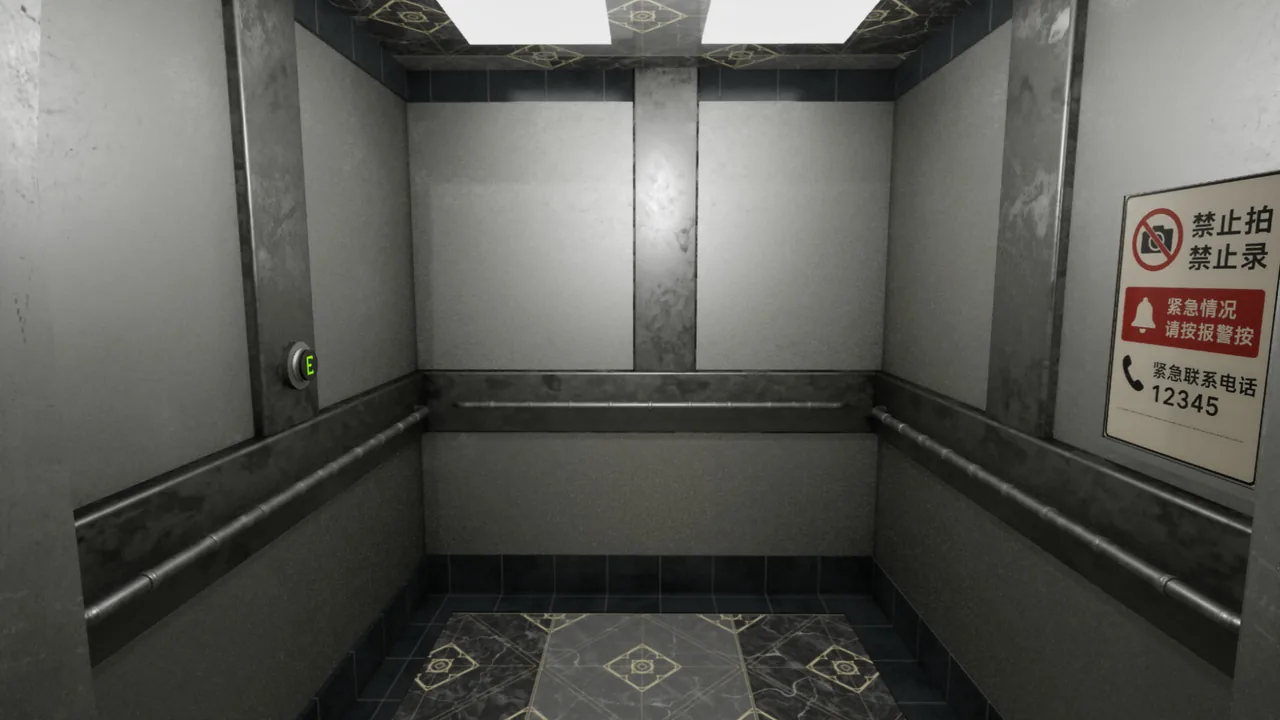
Image: Fridel Fox via Steam -
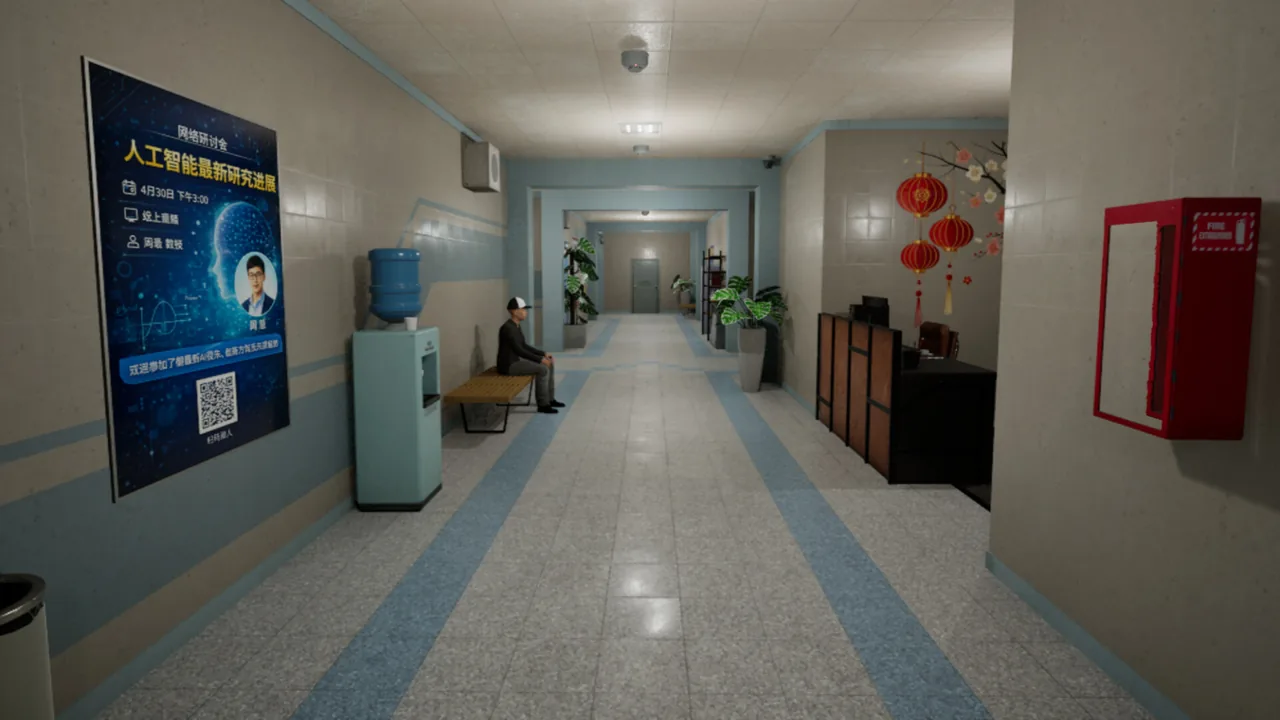
Image: Fridel Fox via Steam -
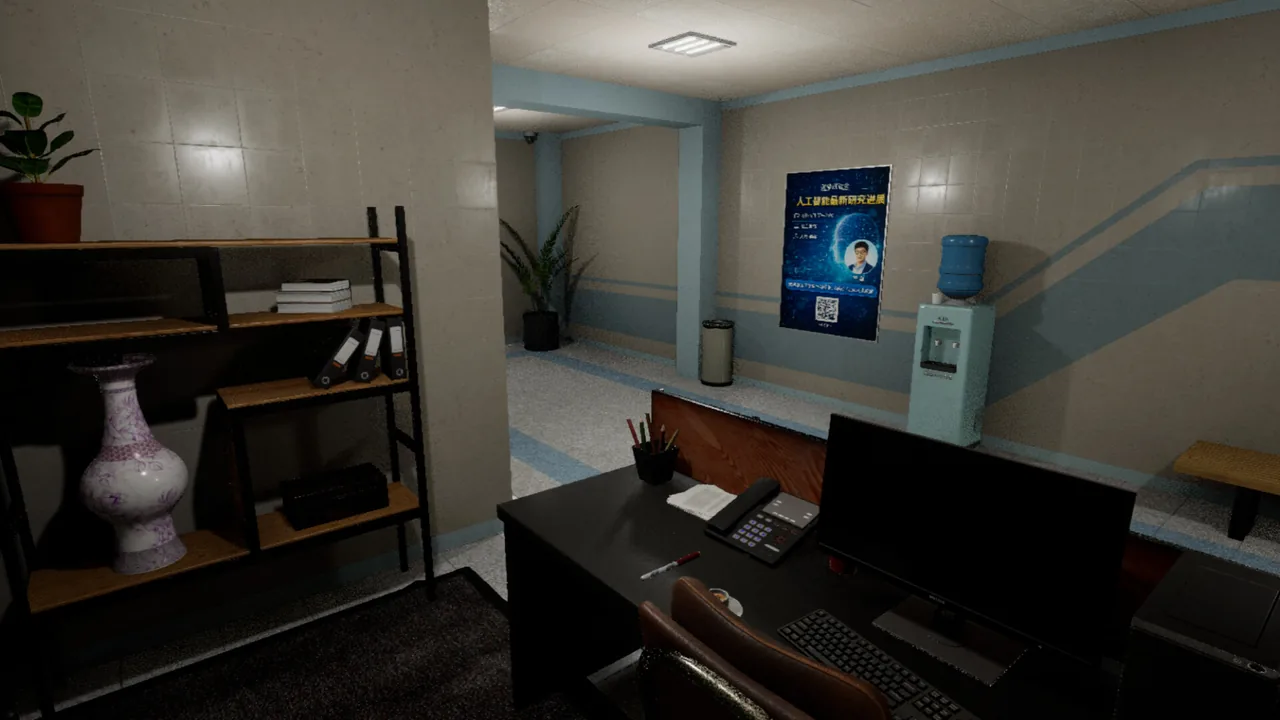
Image: Fridel Fox via Steam -
Wanderer Editorial -
Wanderer Editorial -
Wanderer Editorial