
Game review
Universal Harvest: Incremental Review
4.5 / 10
- Developer
- MyDreamForever
- Publisher
- Andgo Games
- Released
- 16 July 2026
- Platforms
- ["Windows"]
- Genre
- Strategy
A Peaceful Premise, Undercut by a Punishing Start
Universal Harvest: Incremental promises exactly what its title suggests: a calm, meditative incremental game about traveling between planets, gathering resources, and slowly growing an interplanetary harvesting operation without timers or pressure. It's a solo-developed $5.99 release, and its review sample so far is small and leaning negative — one positive review against three negative — with a specific, recurring complaint sitting at the center of nearly every review regardless of verdict: the opening hours are punishingly slow, with fuel running out far too fast to make meaningful progress before you've had a chance to understand the systems.
The Core Action Is Hovering a Cursor Over Dots
Multiple reviewers describe the moment-to-moment gameplay in almost identical terms: most of a run consists of hovering the mouse over resource nodes and waiting for them to be extracted, a loop the store page's own promotional video represents accurately and completely. One reviewer states plainly that the trailer shows "essentially everything the game has to offer," and warns that nothing meaningfully deepens as runs continue. For a genre where the appeal is often watching a simple action gradually get automated and abstracted away, more than one reviewer specifically notes that this game never really gets there — the hovering interaction remains the whole experience from the first planet to the last.
A Big Upgrade Tree That Doesn't Add Depth
The store page advertises more than 100 upgrades, and reviewers confirm that number is technically accurate, but the substance behind it draws the sample's sharpest criticism. One detailed reviewer breaks the tree down bluntly: most of those upgrades are simply small, separate increases to fuel capacity, resource value, and similar stats, with no meaningful synergies, interesting combinations, or distinct builds to experiment with. That reviewer contrasts this directly with what they expect from a well-designed incremental game, where new upgrades should gradually transform how a run feels rather than just making the same numbers bigger, and concludes the game currently lacks the sense of accelerating momentum the genre is built around.
Occasional Shoot-'Em-Up Breaks, Widely Seen as an Afterthought
Beyond straightforward harvesting, the game intersperses basic bullet-hell shooting sections as its other pillar of gameplay. Reception here is uniformly unimpressed: one reviewer calls the shooting "abysmal," reducing it to another chore alongside resource collecting, while another says flatly that even Space Invaders offers more engaging shooting gameplay than what's on offer here. It's a notable gap, since the genre blend of incremental progression and light shoot-'em-up action is exactly the kind of hook that could differentiate this game from its many idle-game peers, and reviewers consistently feel that potential goes unrealized.
One Reviewer Found the Back Half More Rewarding
Not every account is negative. One reviewer who reached the game's "dark planet" describes a difficulty curve that eases considerably in the back half — asteroids that once took several hits become easier, health regeneration unlocks and takes real pressure off, and progress noticeably speeds up once the early fuel crunch is behind you. That reviewer specifically praises the graphics and music, reports smooth performance on both Steam Deck and PC, and recommends the game as a solid one- or two-evening experience rather than a long-term incremental commitment. It's a meaningfully different read on the same game, and it's worth noting the difficulty complaint that dominates the negative reviews isn't dismissed here either — it's acknowledged as real, just eventually outgrown.
A Prestige System That Reviewers Say Undersells Itself
The game includes a prestige-style loop for returning to the start with accumulated advantages, but the sample's most detailed critical reviewer waves it off as functionally closer to a simple new-game-plus than a genre-defining prestige mechanic, and says one loop through it was enough. Combined with the repetitive core loop and shallow upgrade tree, the prestige system reads less like a deliberate long-term hook and more like a structural checkbox the game needed to have without fully committing to what makes that structure compelling in stronger genre entries.
A Solo Developer's Project, Reviewed as Charitably as Possible
More than one reviewer is careful to note this is a solo-developed game and expresses genuine reluctance to be harsh about it, but ultimately reviews it on the state it currently ships in rather than its potential. That's a fair distinction to draw: nothing in the sample suggests bad intent or a cash-grab, and the store page's own pitch for a calm, unhurried space journey is a reasonable ambition. The problem reviewers keep landing on is execution — a loop that doesn't meaningfully change shape as it scales, and a difficulty curve that front-loads its worst moment right when a new player is least equipped to push through it.
Verdict
Universal Harvest: Incremental has a genuinely appealing pitch — a stress-free, meditative journey across planets with a huge nominal upgrade tree — but its small review sample consistently finds the execution thinner than the premise promises: a punishing opening hour, a core loop that never evolves past hovering a cursor over glowing dots, shooting sections that undercut rather than complement the pacing, and an upgrade tree whose scale is mostly an illusion of small, disconnected number increases. One reviewer found real reward in pushing past the rough start, and at $5.99 the financial risk is low, but the weight of the negative sample and the specificity of its complaints make this hard to recommend at full price until the early game gets a real rebalance.
Screenshots
-
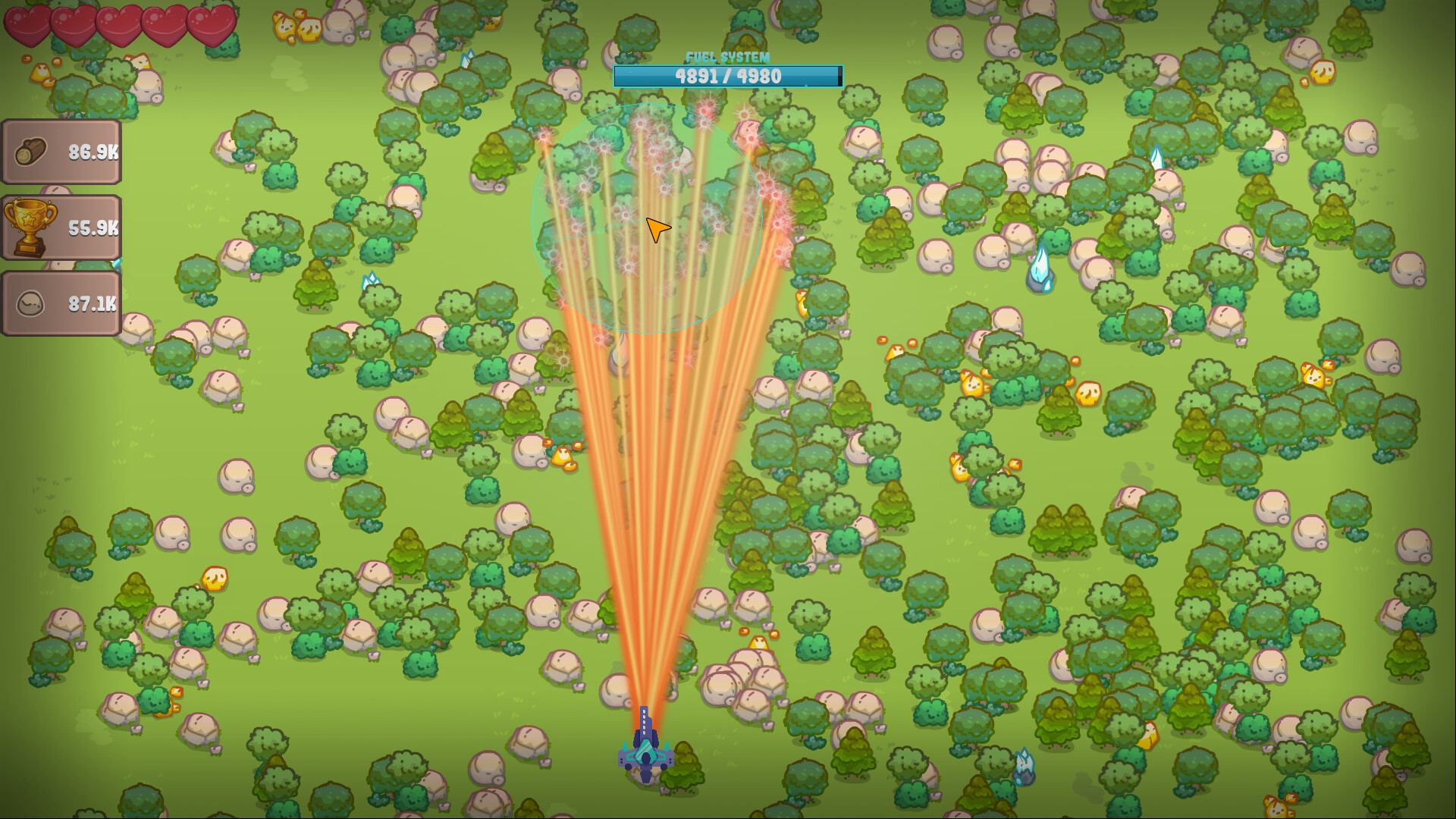
The core action, on every planet, is aiming this harvesting beam at a resource cluster and watching the Fuel System gauge instead of a health bar.Image: Andgo Games via Steam -

Later planets swap the color palette and add drifting asteroids, but the underlying beam-and-gauge loop reviewers found repetitive stays the same.Image: Andgo Games via Steam -
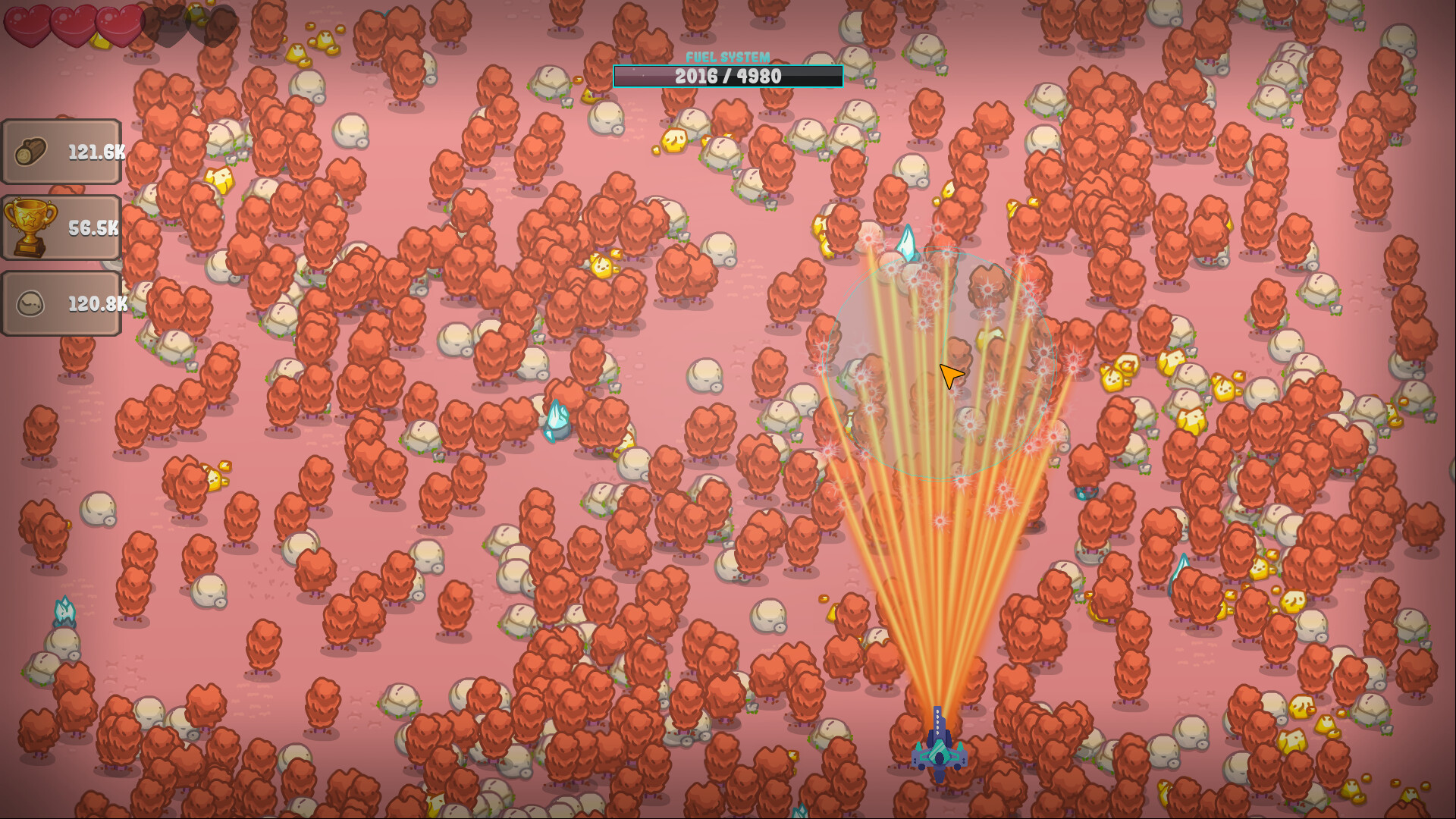
A third biome, a third coat of paint on an identical harvesting loop, echoing reviewers' complaint that the trailer shows everything the game has to offer.Image: Andgo Games via Steam